S. apulica was first described from Foggia, Italy by Baumann and Kunkele in 1989 and its name refers to the region of Puglia in south eastern Italy, where it was originally recognized. Whilst some authors regard this is as a species in its own right, the Italian group for research on wild orchids (GIROS) classify the plant as a subspecies of S. orientalis, closely related to S. siciliensis but with a significantly longer hypochile and a larger flower overall.
The species has a very narrow range which although once thought to extend from the Gargano peninsula to the south east of Italy around Lecce is now known to be limited to to the peninsula and immediate environs only. Further south it has been replaced by several new taxons ( S, uxentina, S. brundisina, S. neretina and S. meesapica ). It can be relatively abundant in its favoured stations and as with most of its genus, can form intermediate populations with neighbouring species such as S. cordigera and S. vomeracea. Some of these populations are reaching a stabilized status.
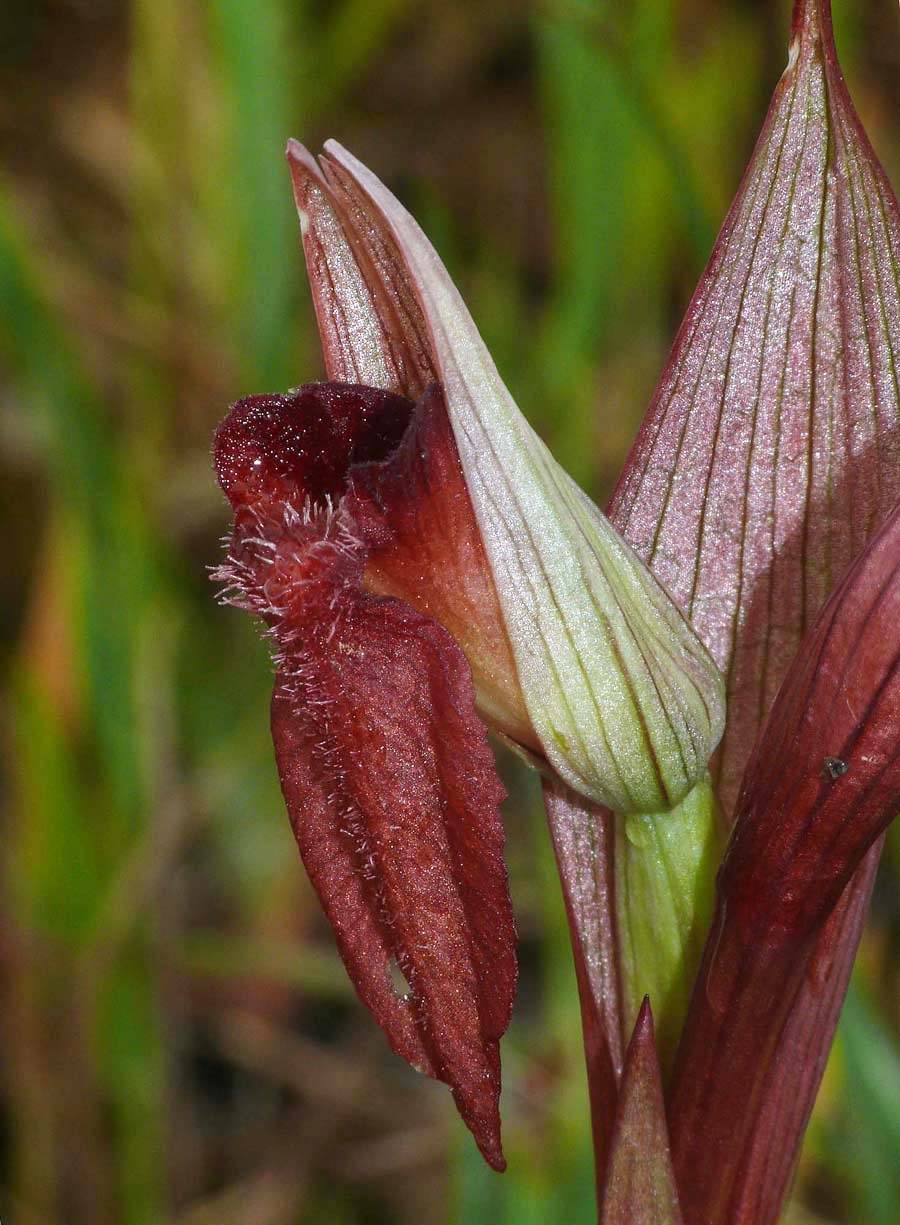
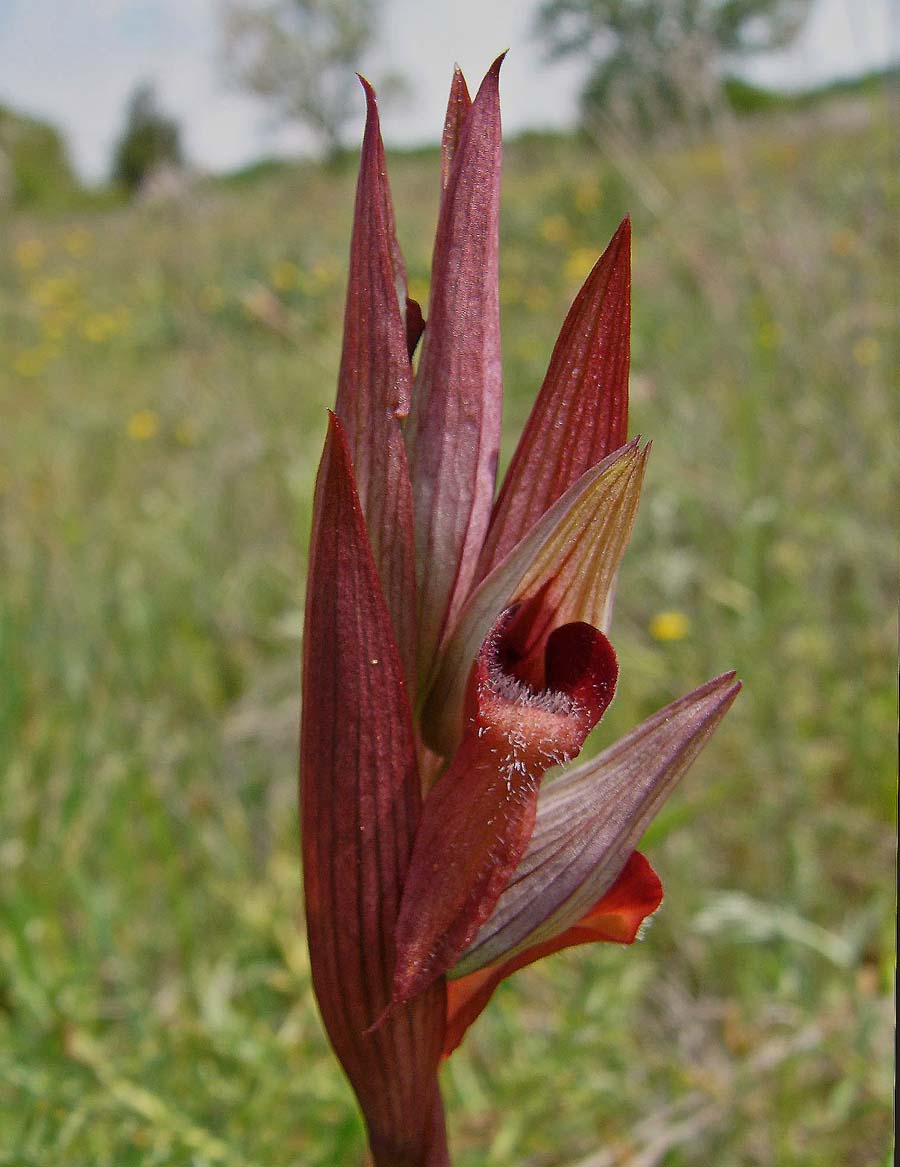
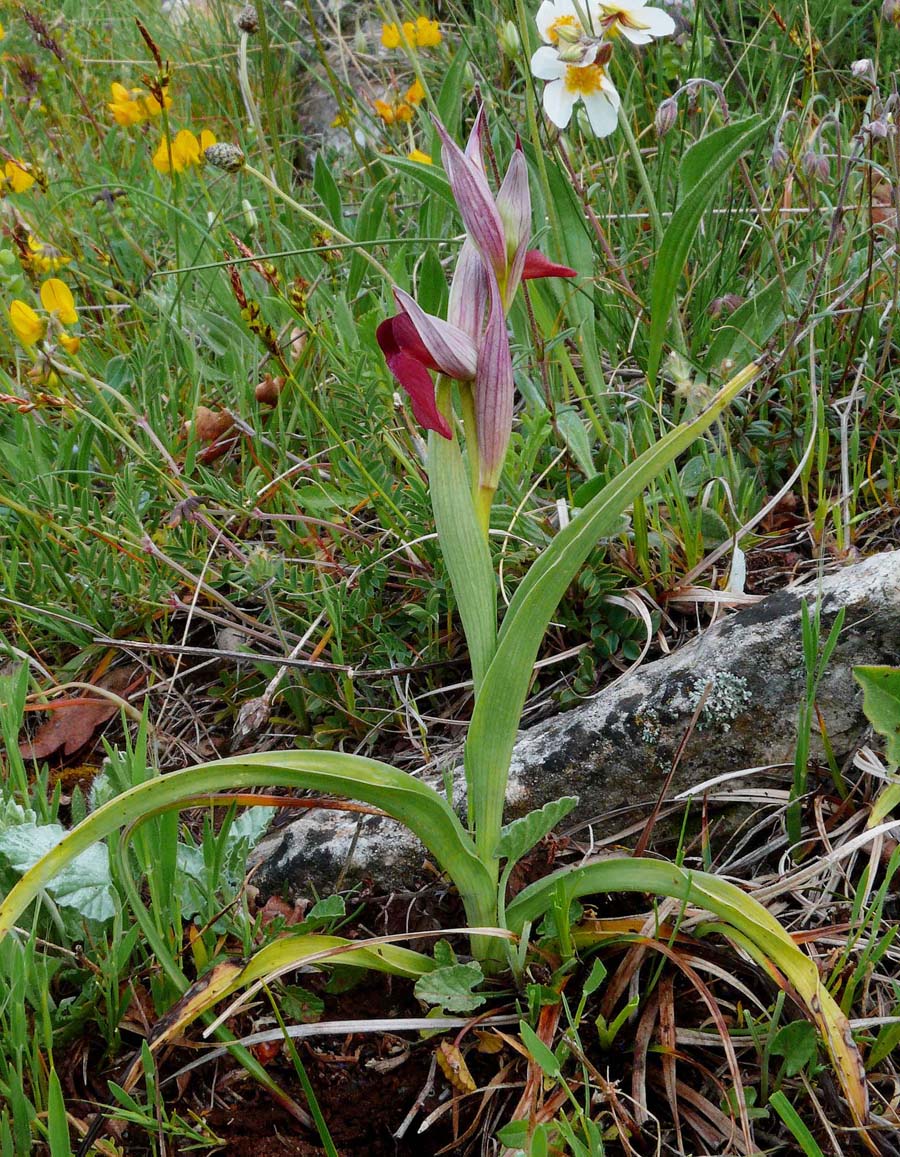
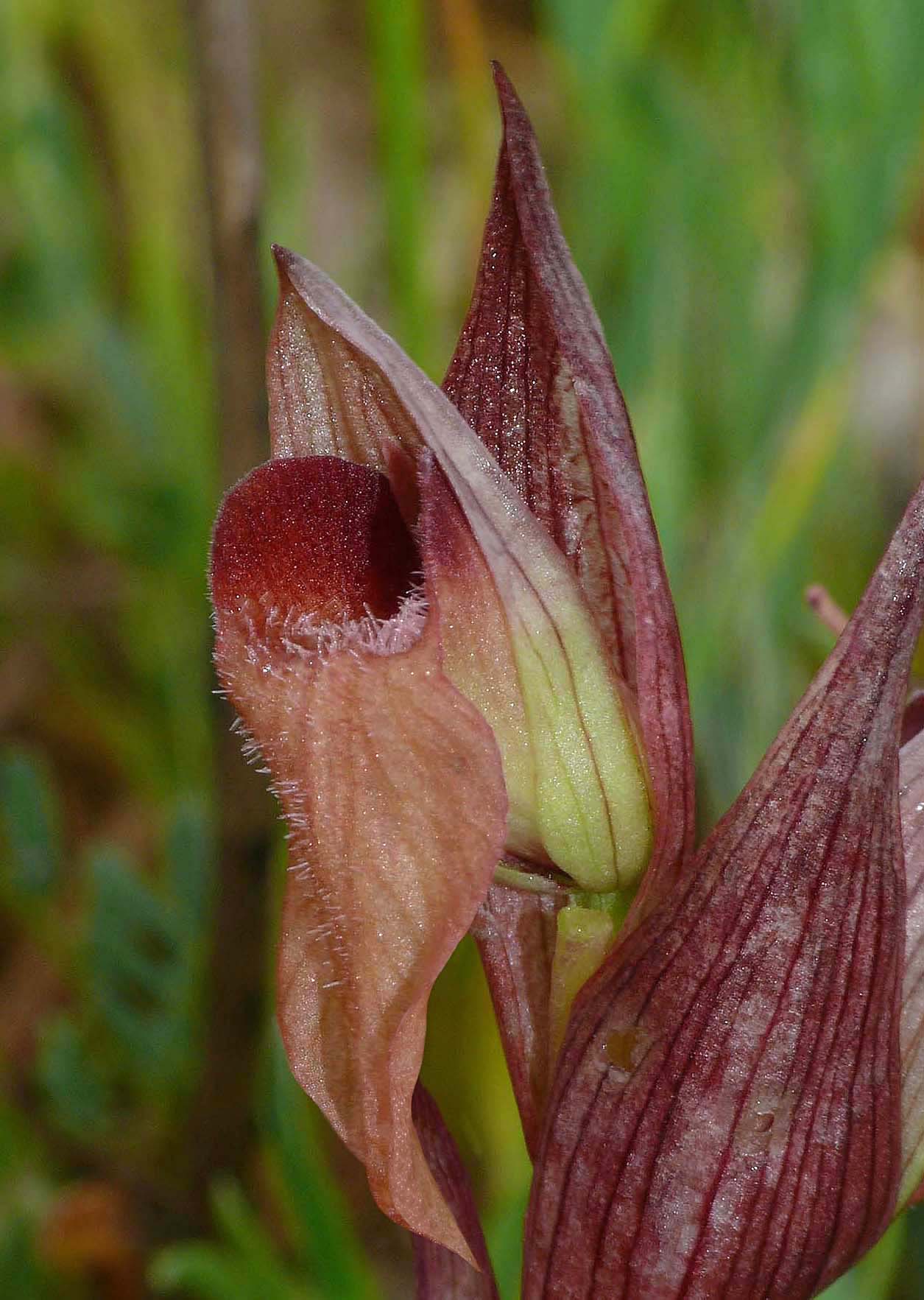
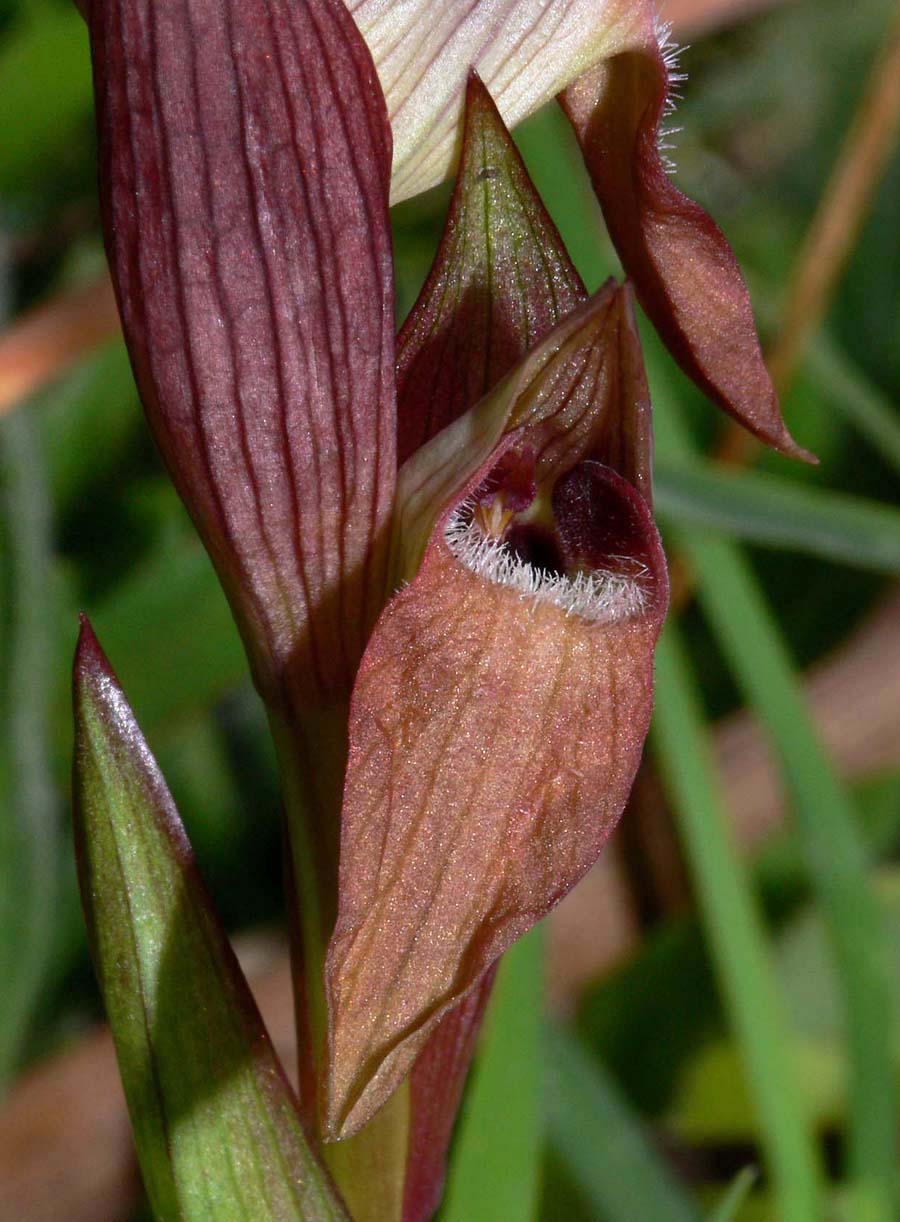
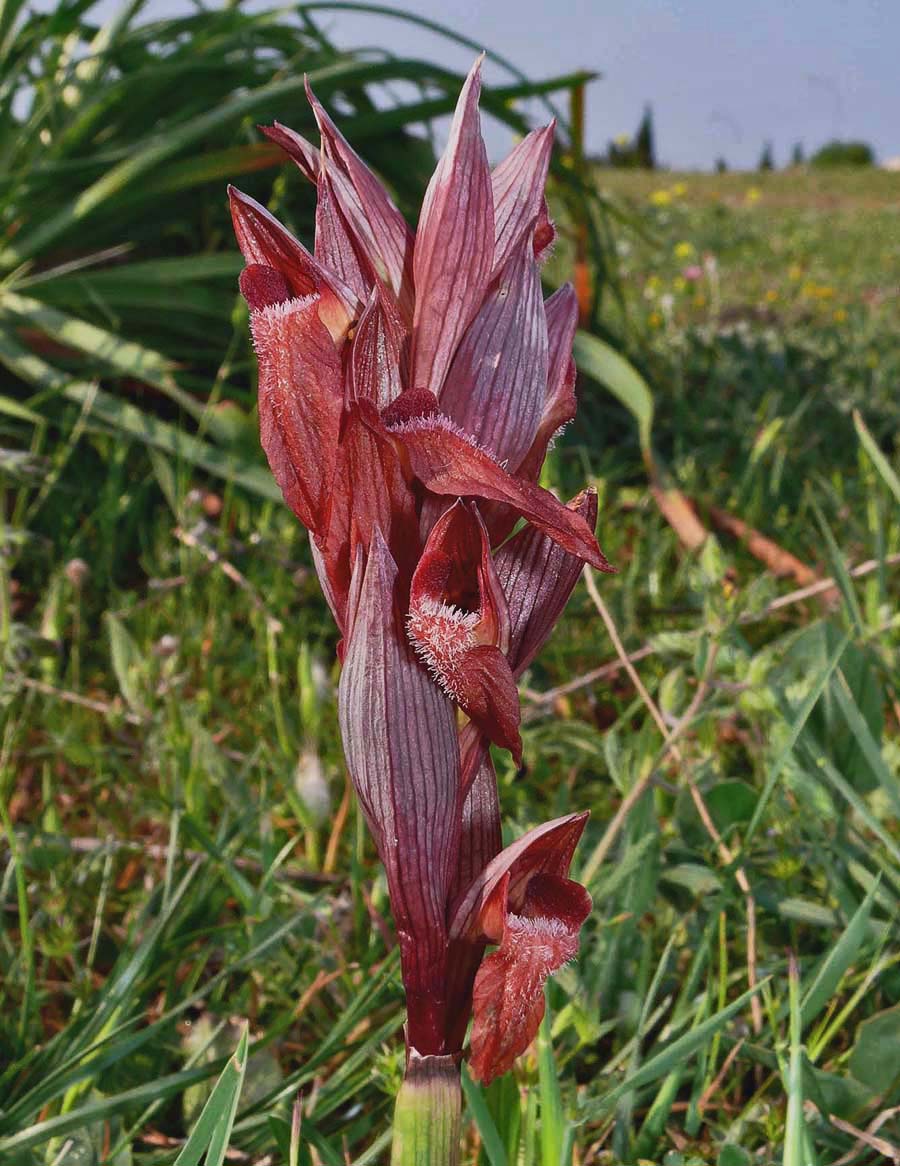
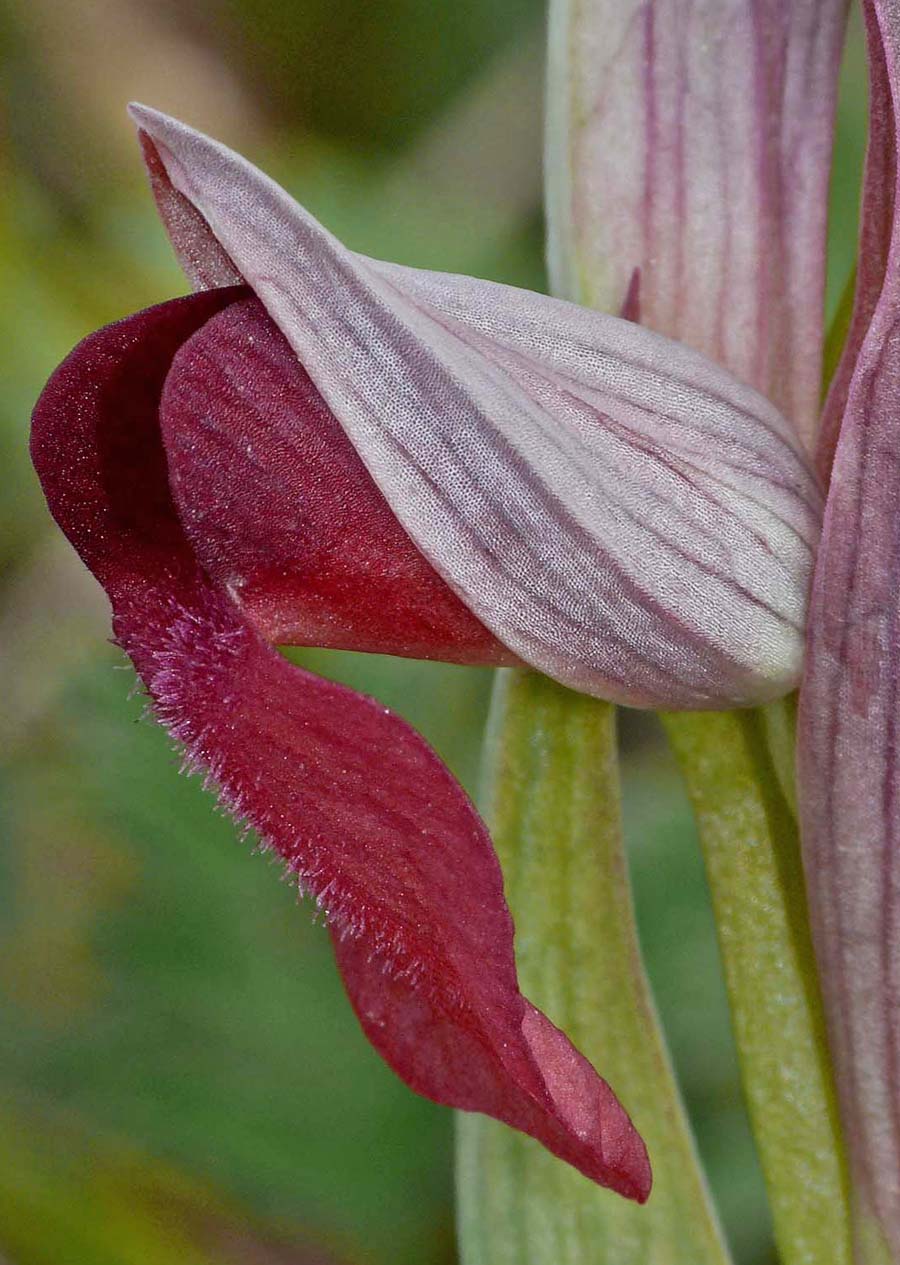
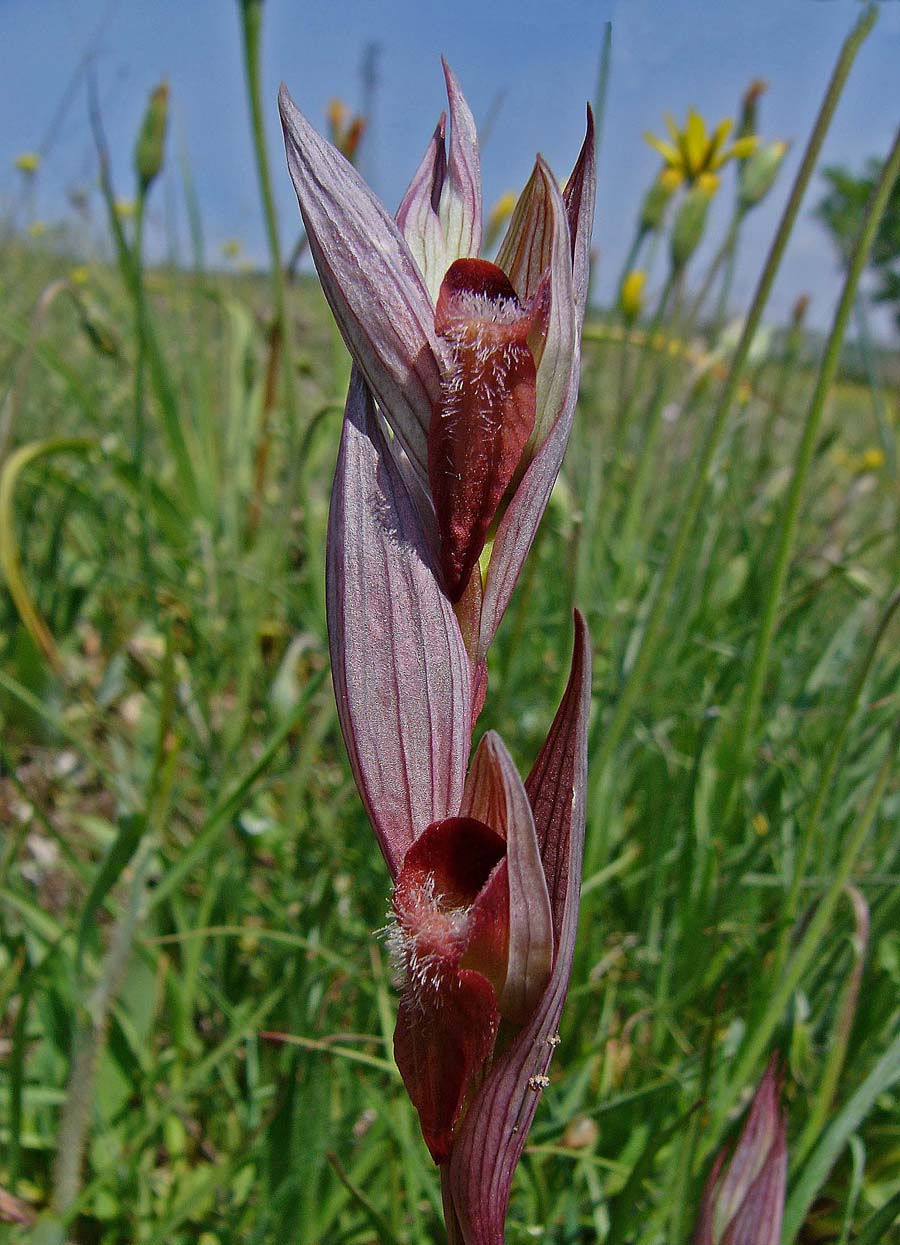
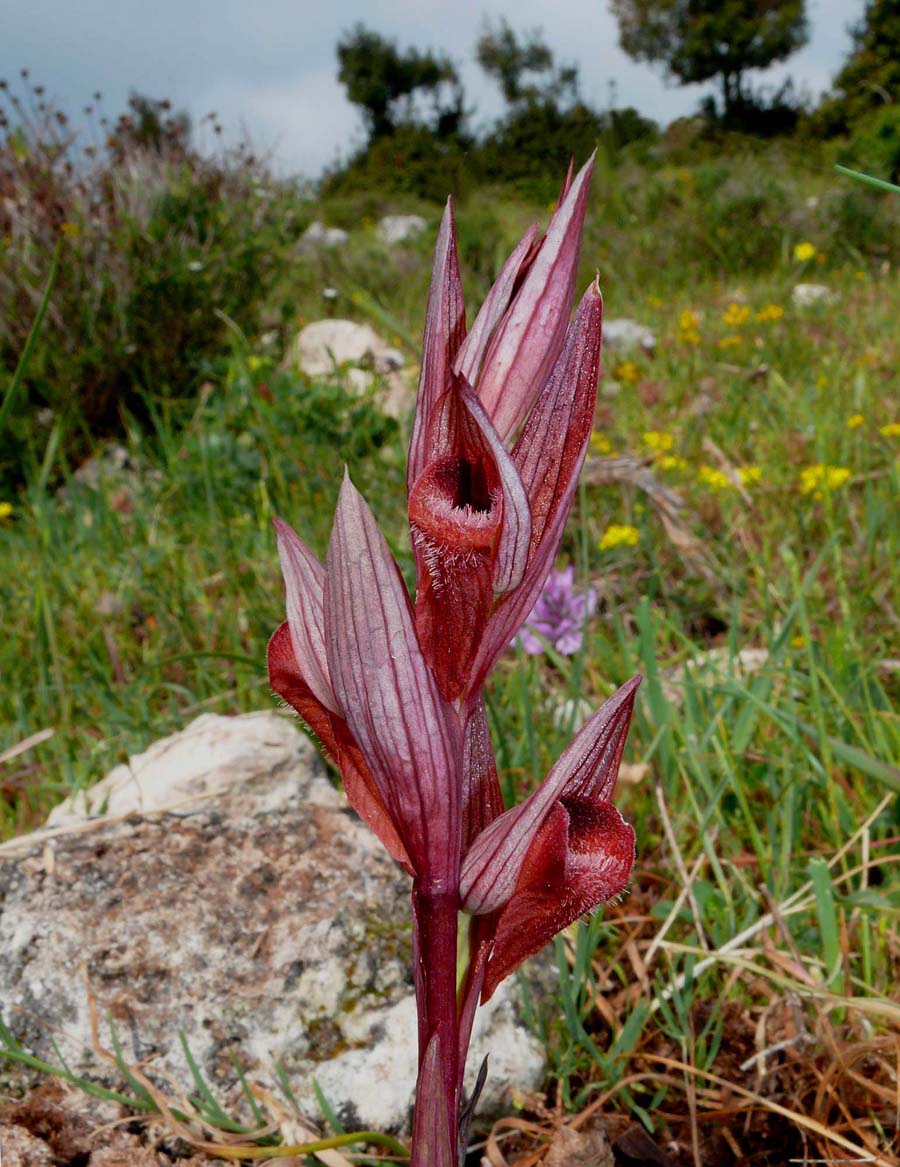
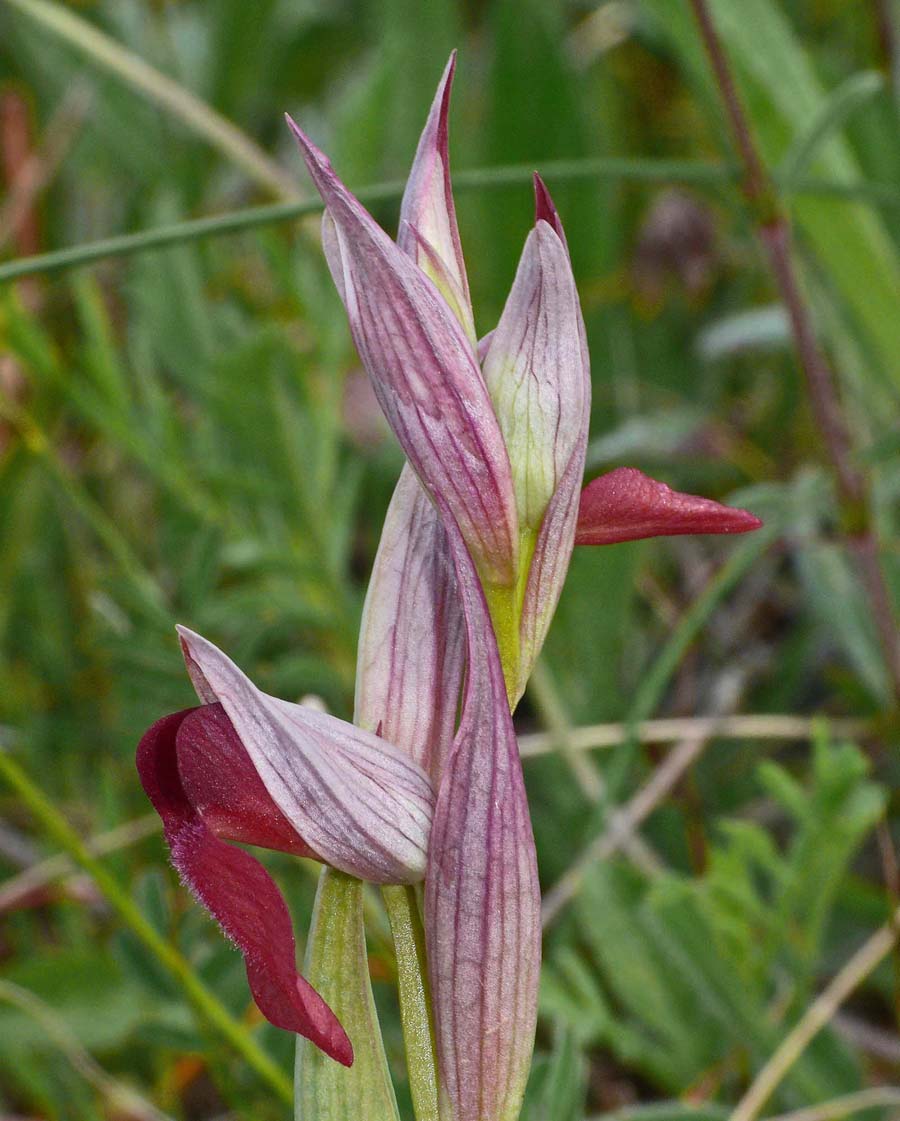
Interestingly S. apulica has also been discovered to hybridize outside its genus and there are documented examples of crosses with Anacamptis morio and also with a further and as yet unidentified member of the Anacamptis genus. Even where a population is considered to be free of genetic interference, it is a highly variable species which can be difficult to identify with confidence. Typical characteristics are the wide, seemingly compressed hypochile and the bract like leaves which clasp the stem, often reaching well beyond the lower parts of the inflorescence. S. apulica is an early species which flowers from March but with April being more usual. The pictures are all from Mount Gargano, dating from the middle of April.
.