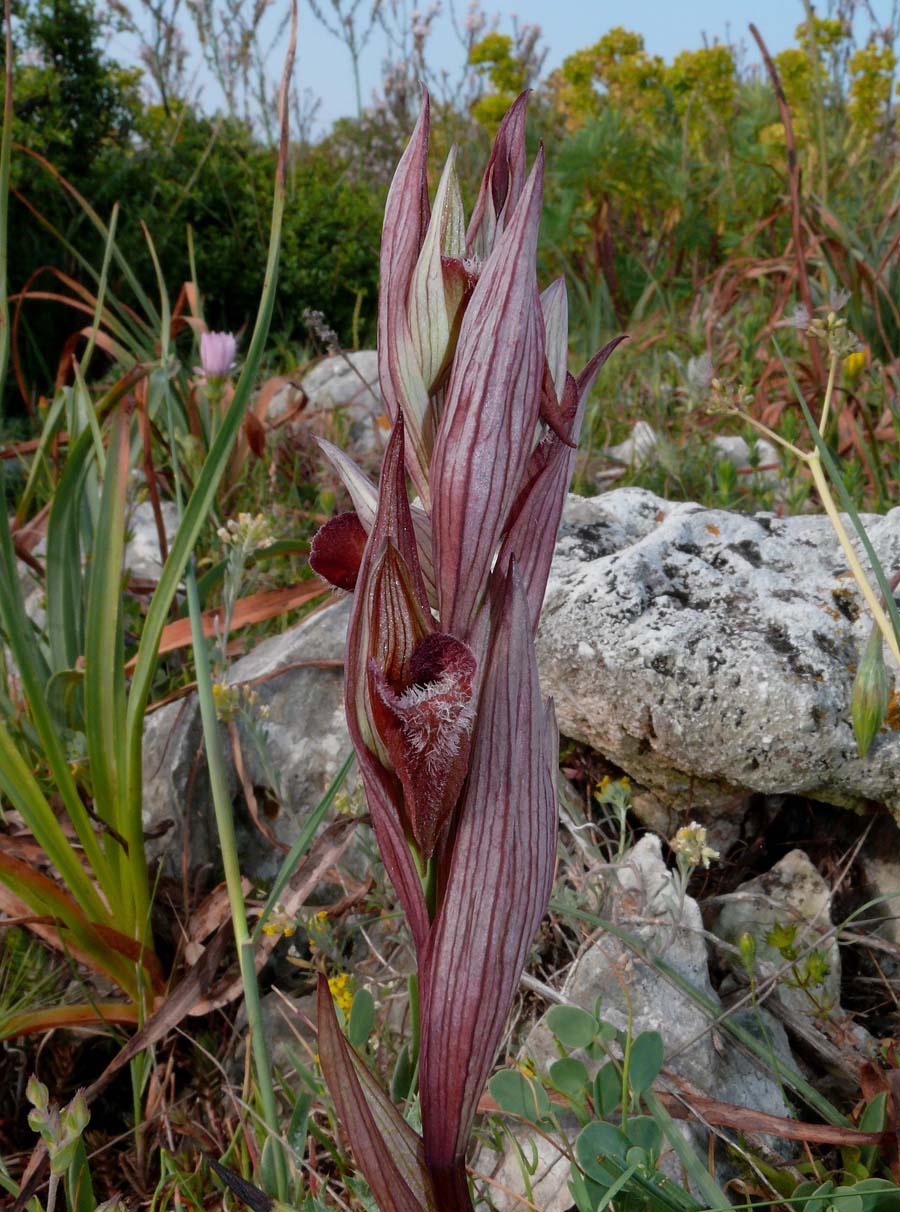
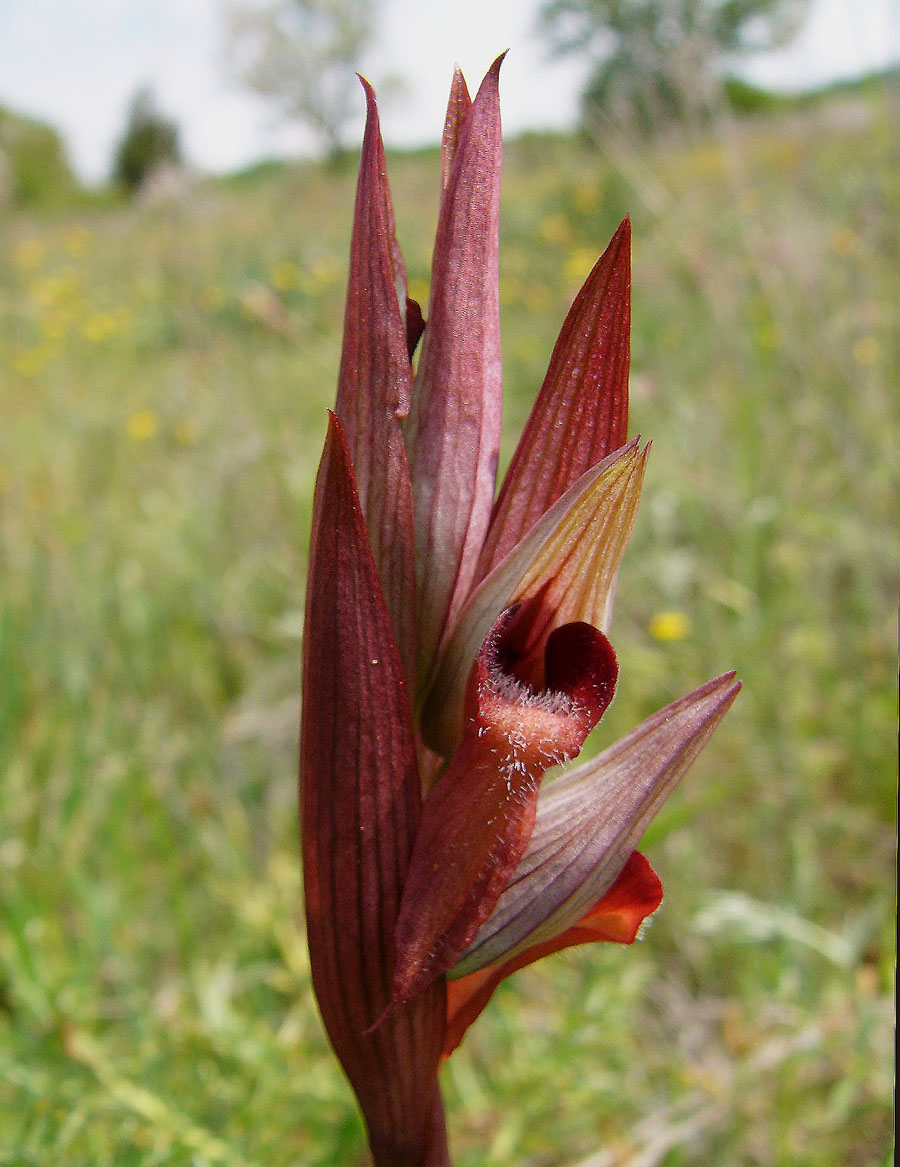
This is one of the commoner members of an expanding genus whose name refers to the ploughshare shape of its lip. S. vomeracea was first described from Verona (Italy) by Burman in 1770, thus making it the second of the Serapias genera to be formally identified, S. cordigera being the first. It is comfortably the largest of the genera and on occasion can reach a height of 60cms, with up to 12 individual flowers ranging in colour from yellow/orange to deep mahogany red.
Its distribution is currently a matter of open discussion, as although it was once thought to occur from the lower Alpine regions of Switzerland, southern France, Spain and throughout the Mediterranean as far as Cyprus in the east, the recognition of several new and very similar taxa has greatly restricted its probable range. Although not a view held by all, new thinking suggests that in the south of peninsula Italy (not including Sicily), southern Croatia, Albania and Greece, S. vomeracea is replaced by S. longipetala, a taxon previously regarded as simply a subspecies. In the south of France S. joaninae, also previously regarded as a subspecies and known since 1988, has been promoted to full species status.
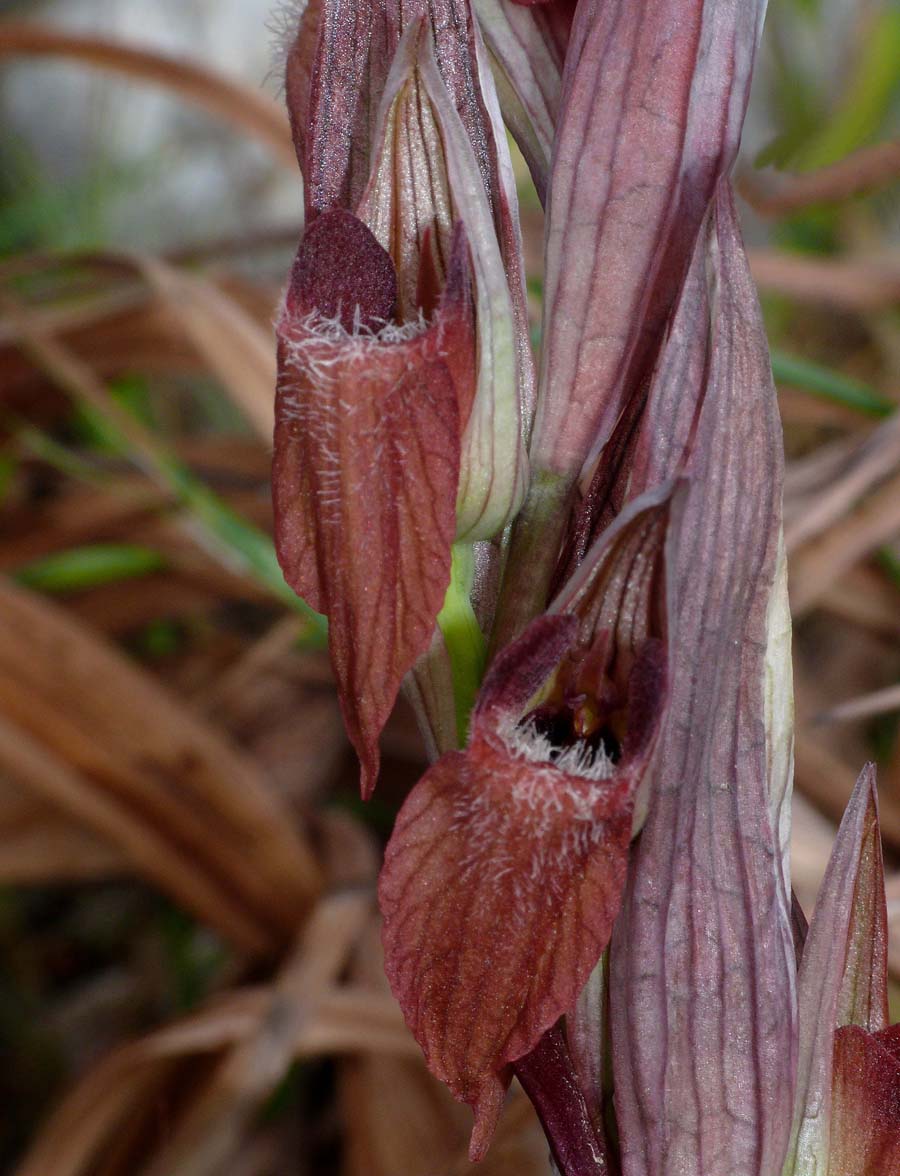
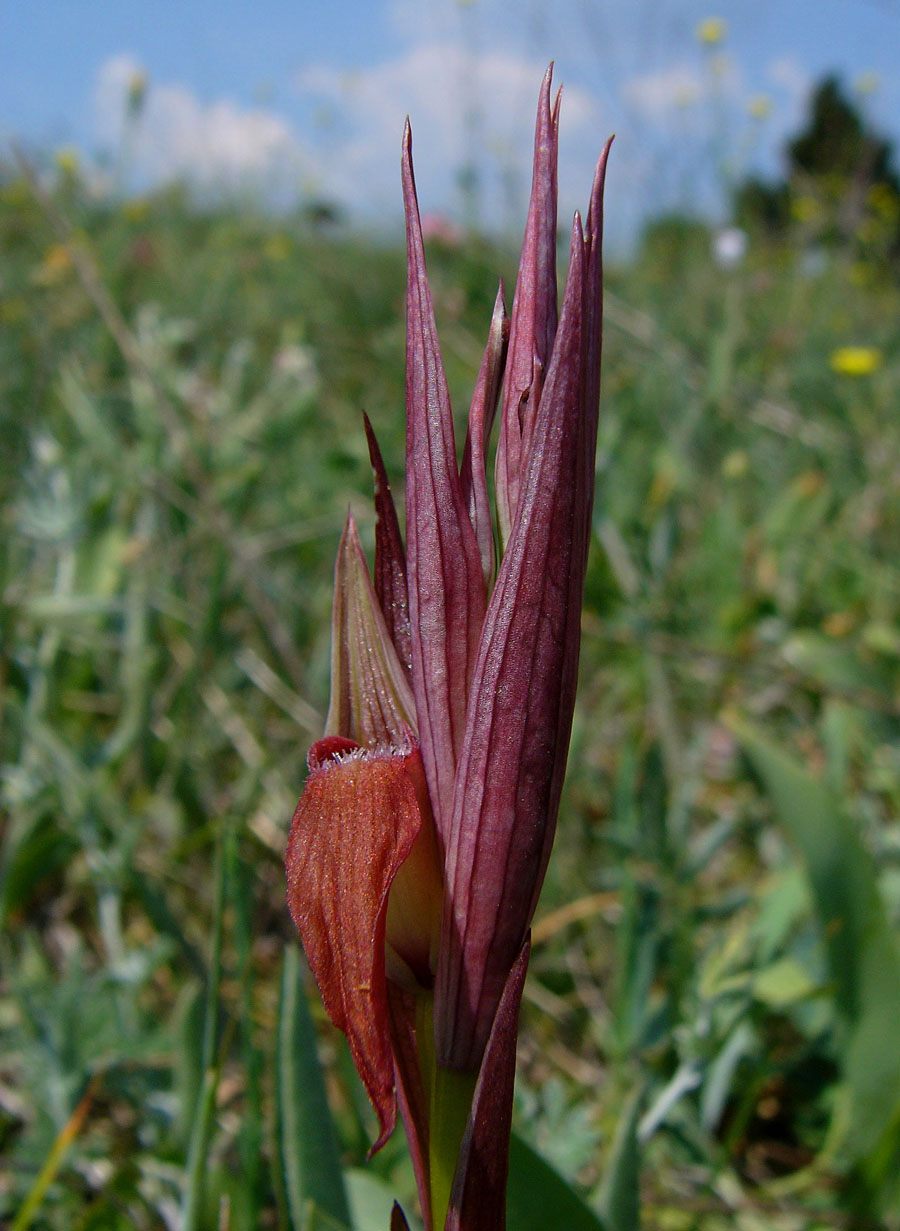
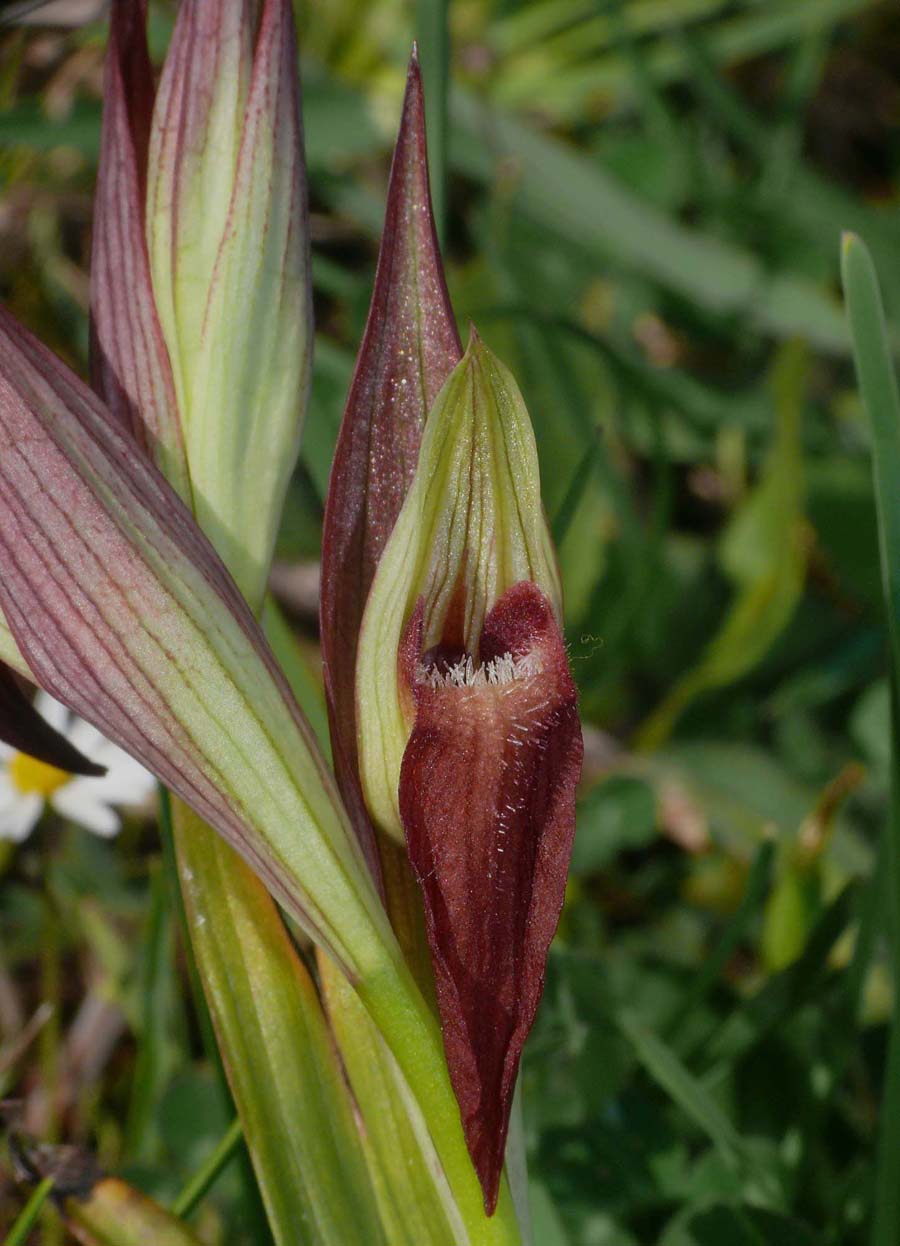
Identification can be difficult as interbreeding with S. bergonii and other Serapias species has in many places produced large hybrid swarms. In its typical form it is most easily recognized by the bracts which are significantly longer than the hood and by the many flowered, usually loosely packed inflorescence. The epichile is wide ans this serves to separate it from S. longipetala.
The pictures are from central Italy and Sicily, dating from late April.




.