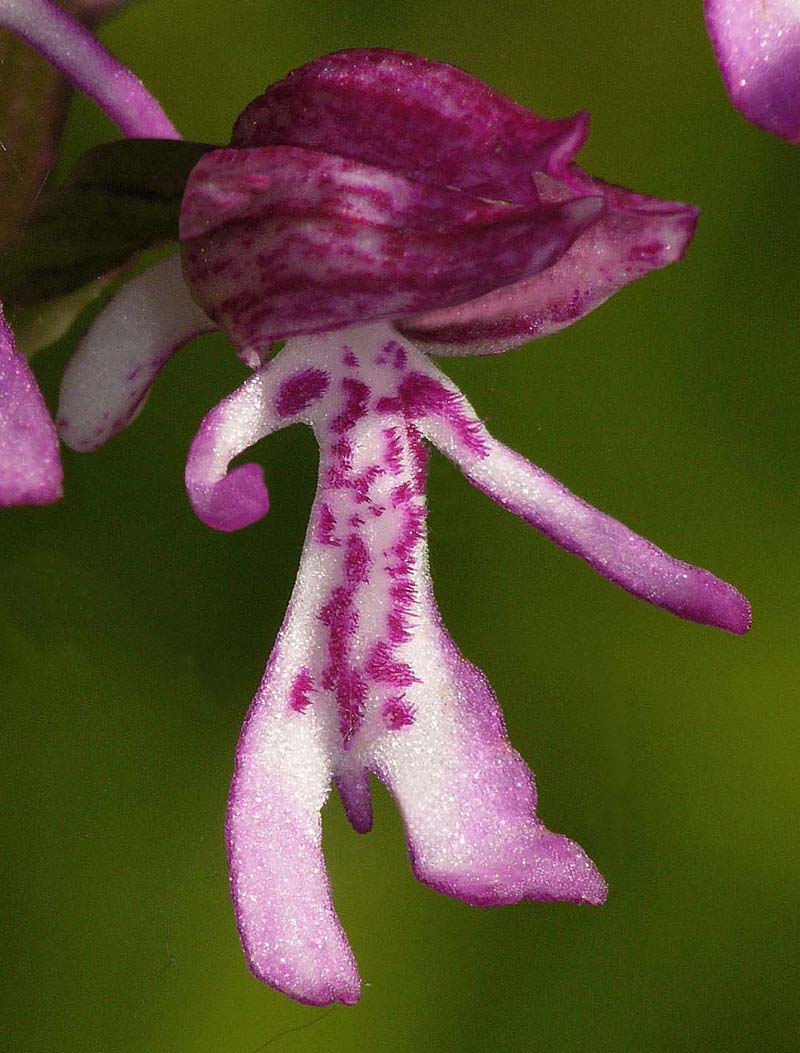
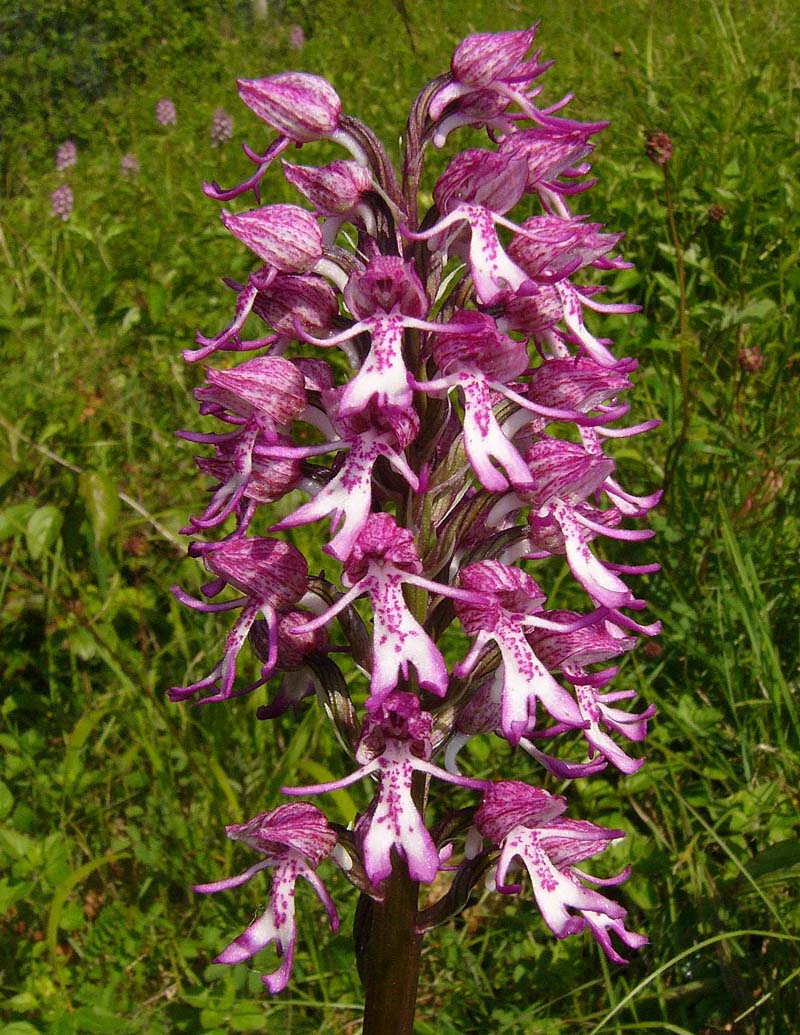
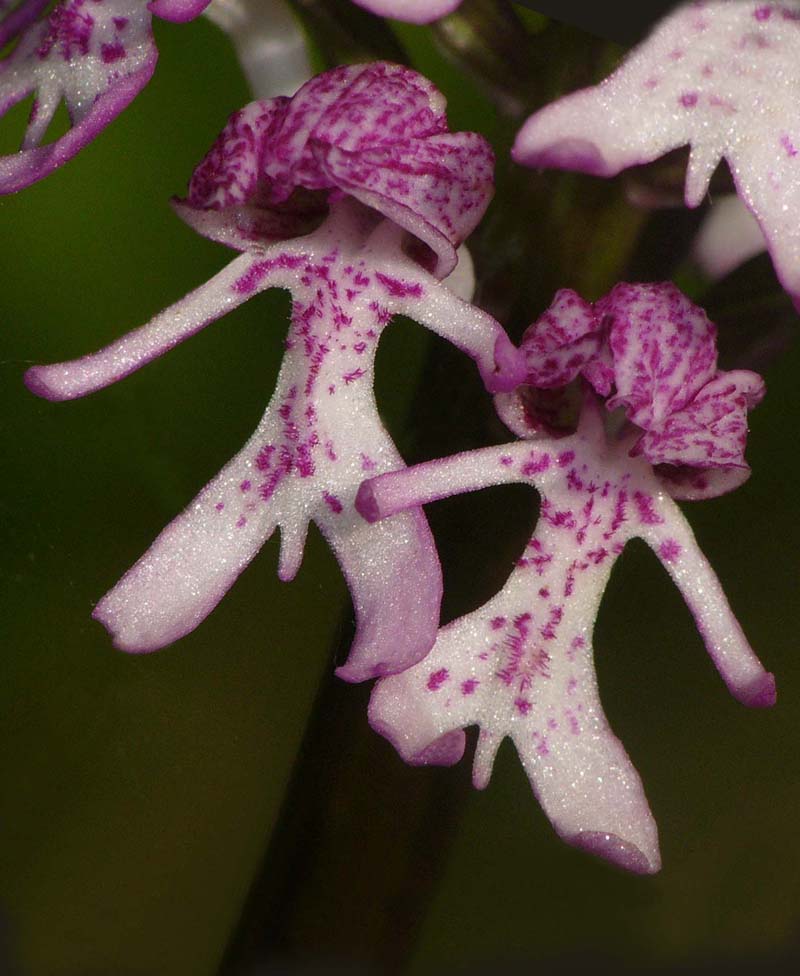
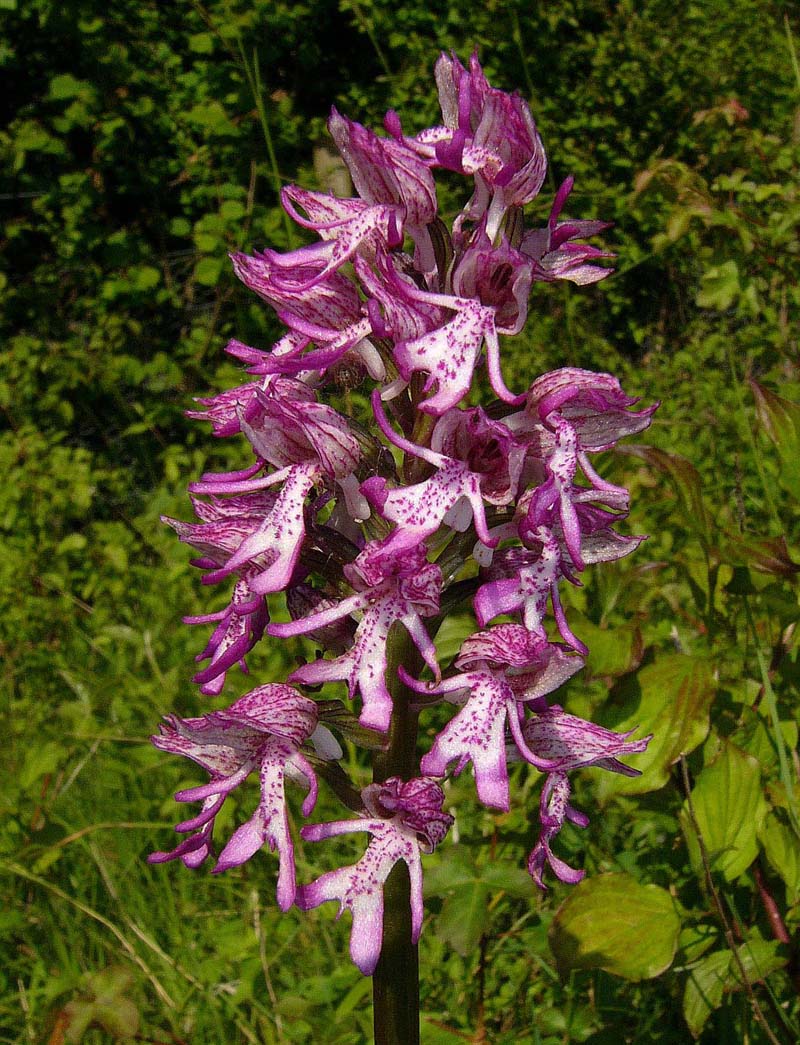
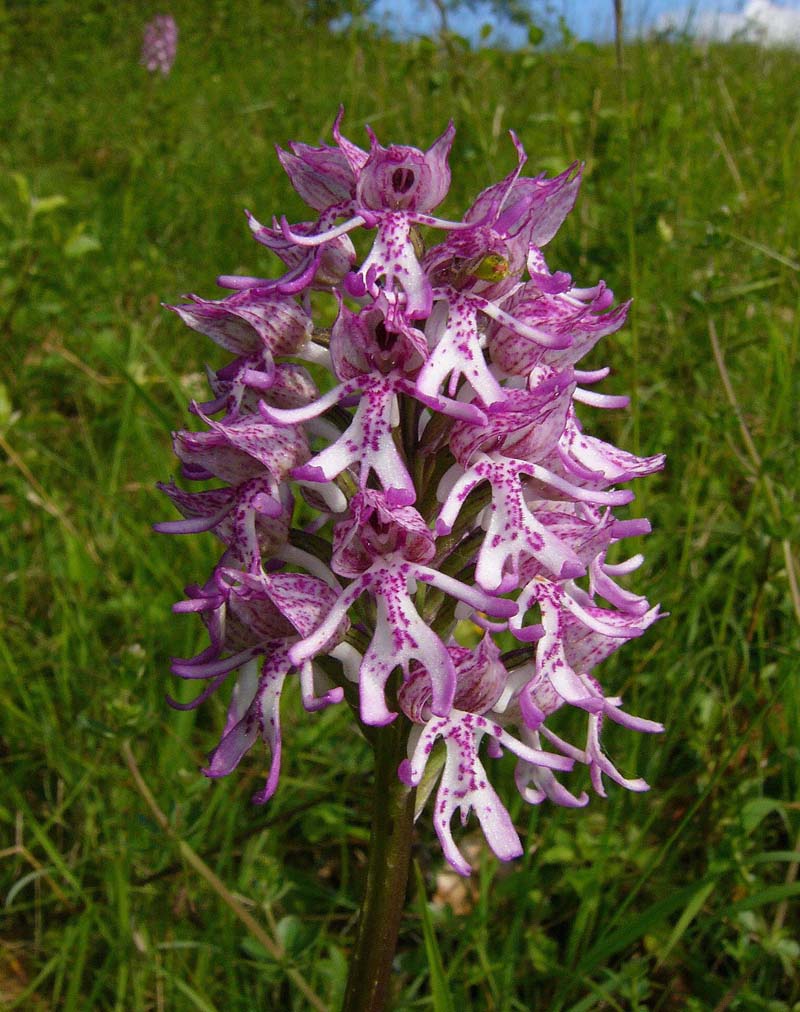
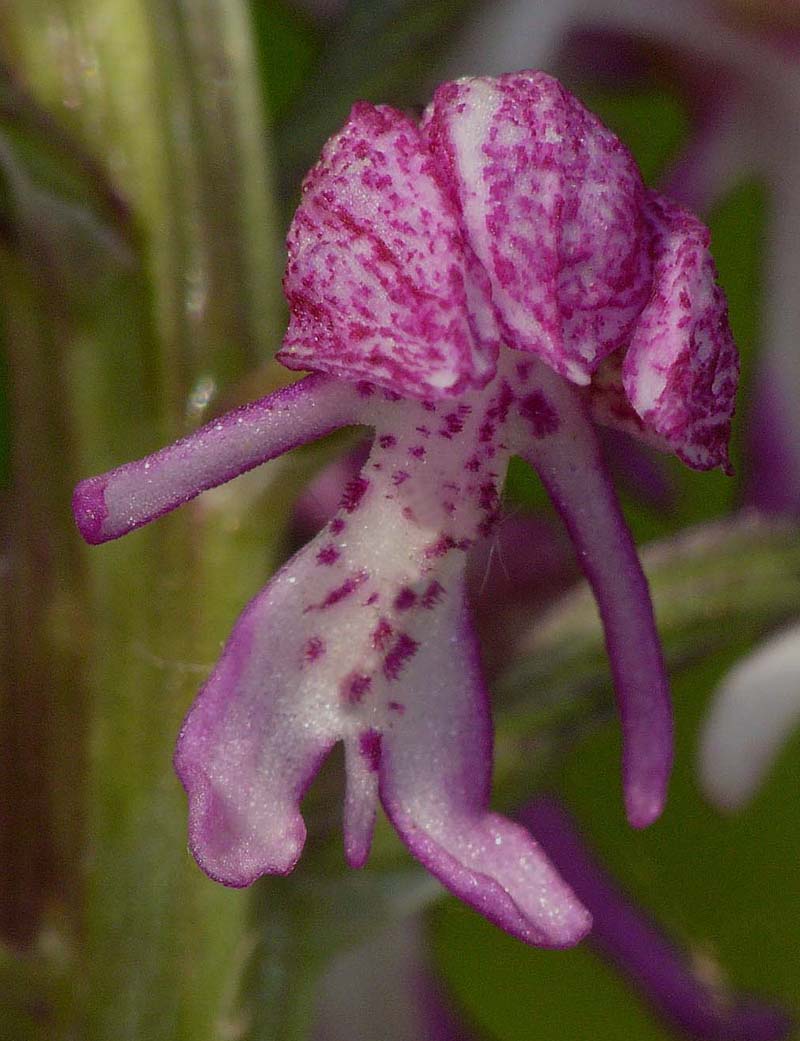
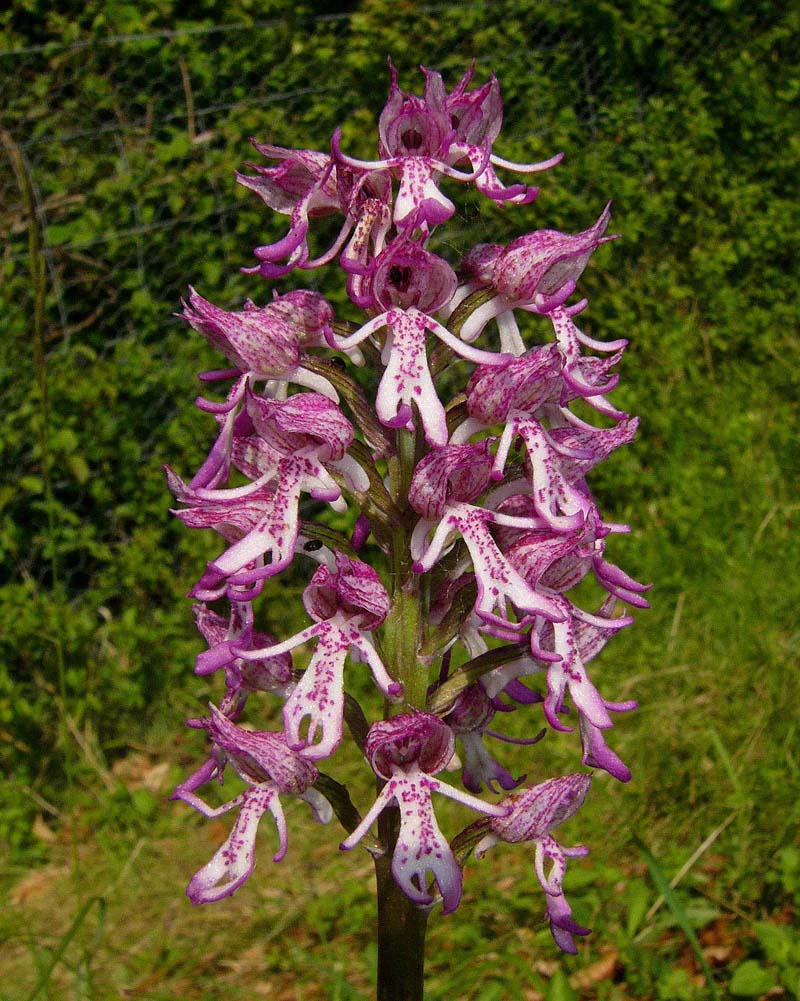
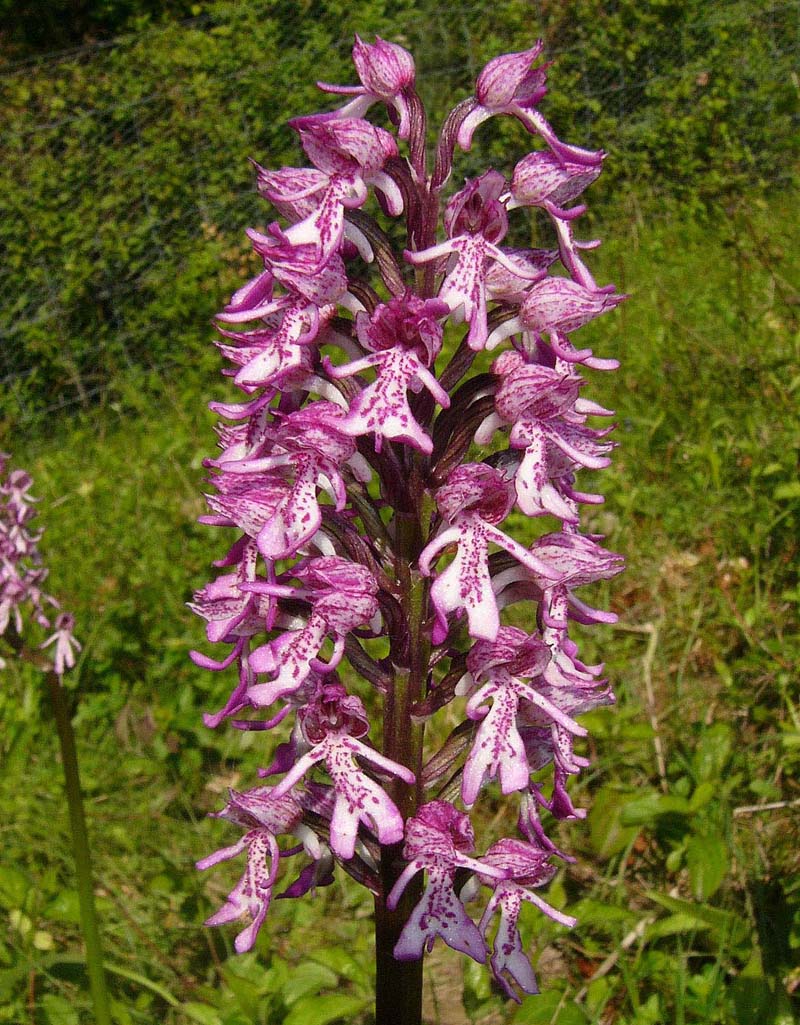
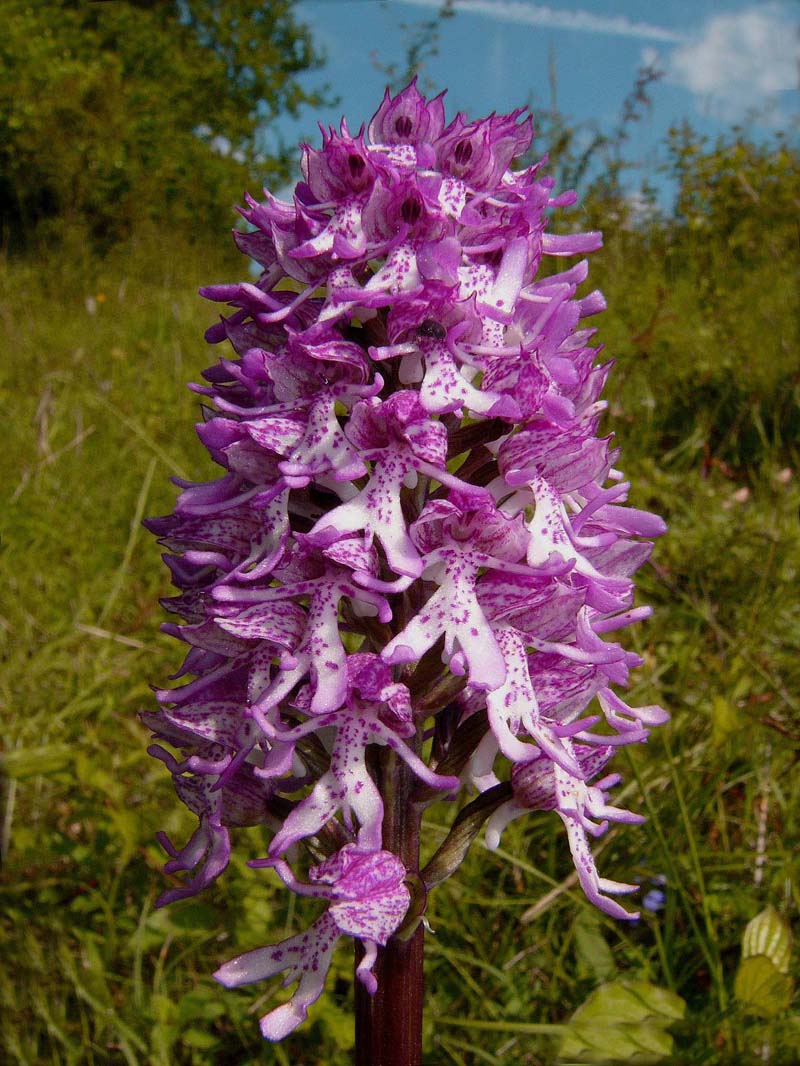
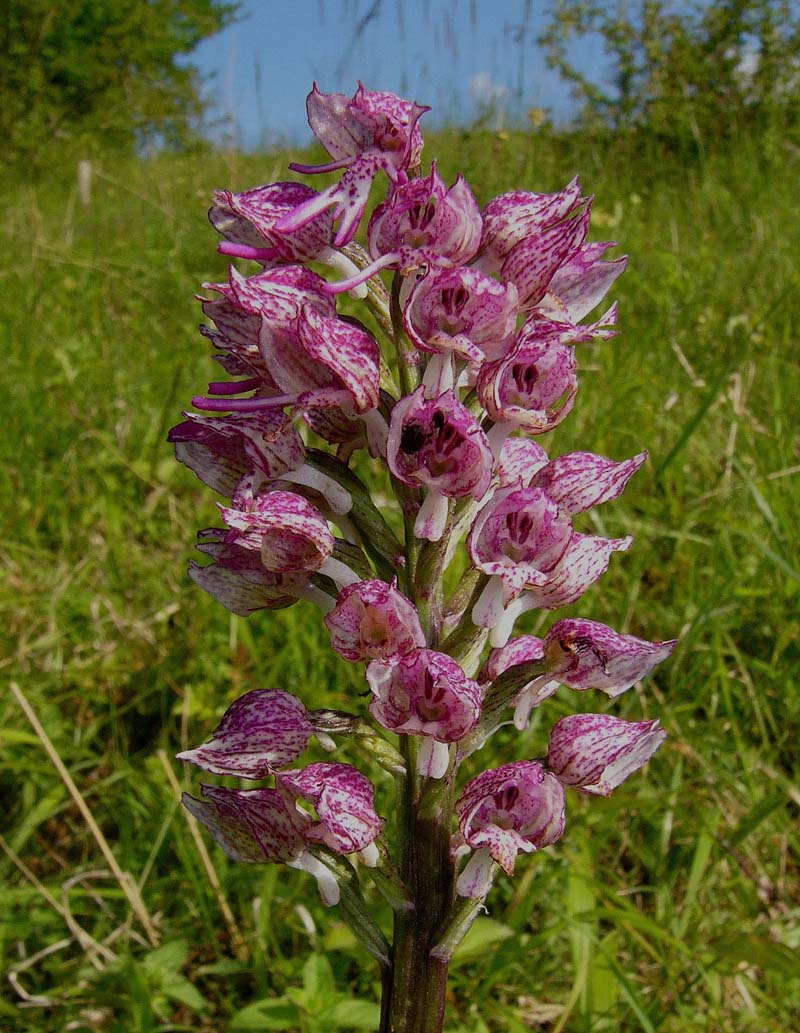
Hybridization amongst the O. militaris group of Orchis is by no means an uncommon phenomenon and particularly with the five more common members (O. simia, O. purpurea, O. italica, O. anthropophora and O.militaris) which can often be found growing together in huge mixed populations and forming intermediates of often bewildering variety.
O. simia x purpurea is one of the less frequent hybrids due largely to the fact that whereas its cousins can tolerate less alkaline soils, O. simia has a preference for strongly calcareous sub-strates, the consequence being that, although Monkey Orchid is often to be found in the vicinity of these other orchids, it's less frequently found actually amongst them.
In Britain, large concentrations of O. militaris group orchids don't occur and its to some of the southern regions of France and northern Spain that one has to travel to see these impressive drifts of Orchis. There is however a notable exception to this and it occurs in the Chiltern Hills of England. The Hartslock Nature Reserve has been the natural home of Monkey Orchid since at least the 19th century but some years ago and without any historical precedent, quantities of O. purpurea turned up at the site. Its arrival there has been a subject of debate for years but few really believe its appearance occurred naturally. Whatever the story however, O. purpurea prospered and today a visit to the reserve will yield the two parent Orchis and a host of hybrids.
These plants are of great interest but there are many who refer to the site as merely a farm and advocate the destruction of the introduced O. purpurea and its offspring ?