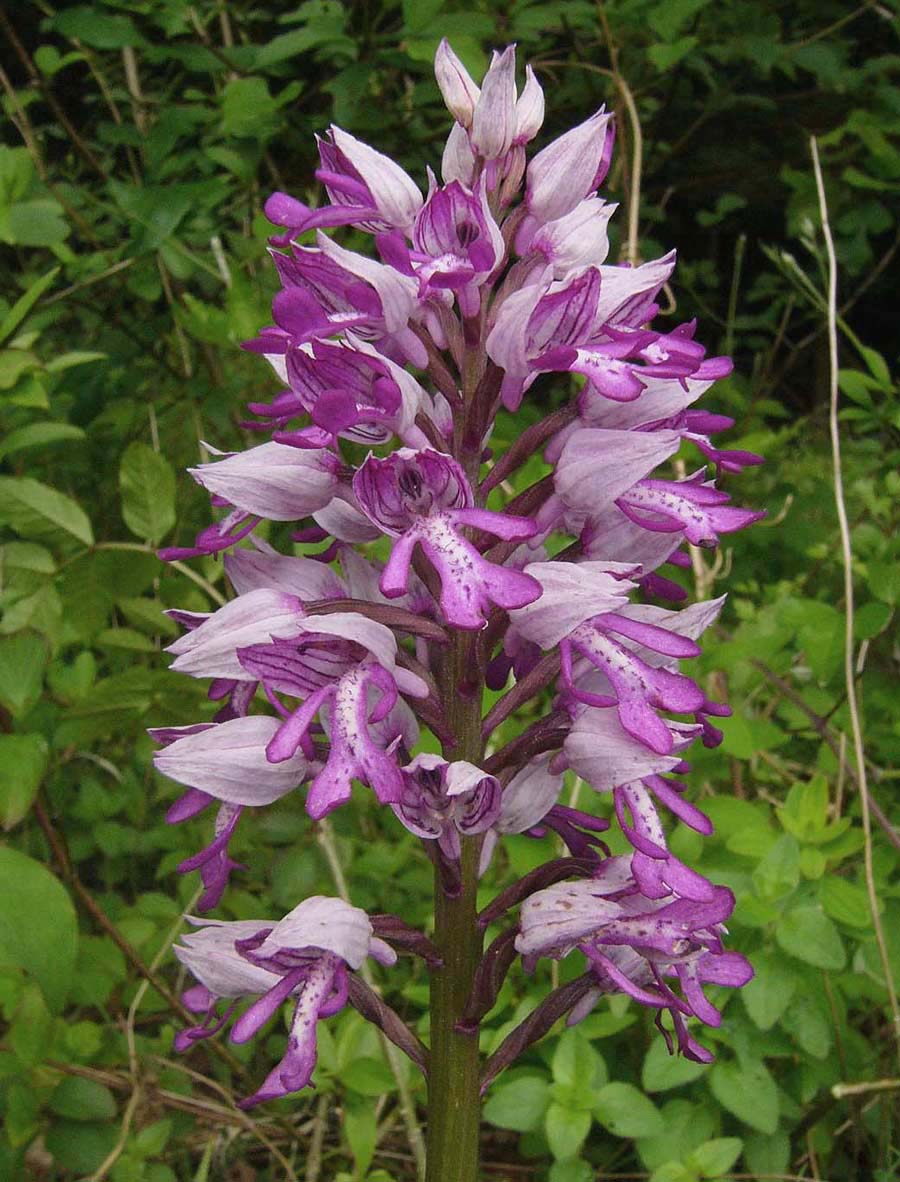
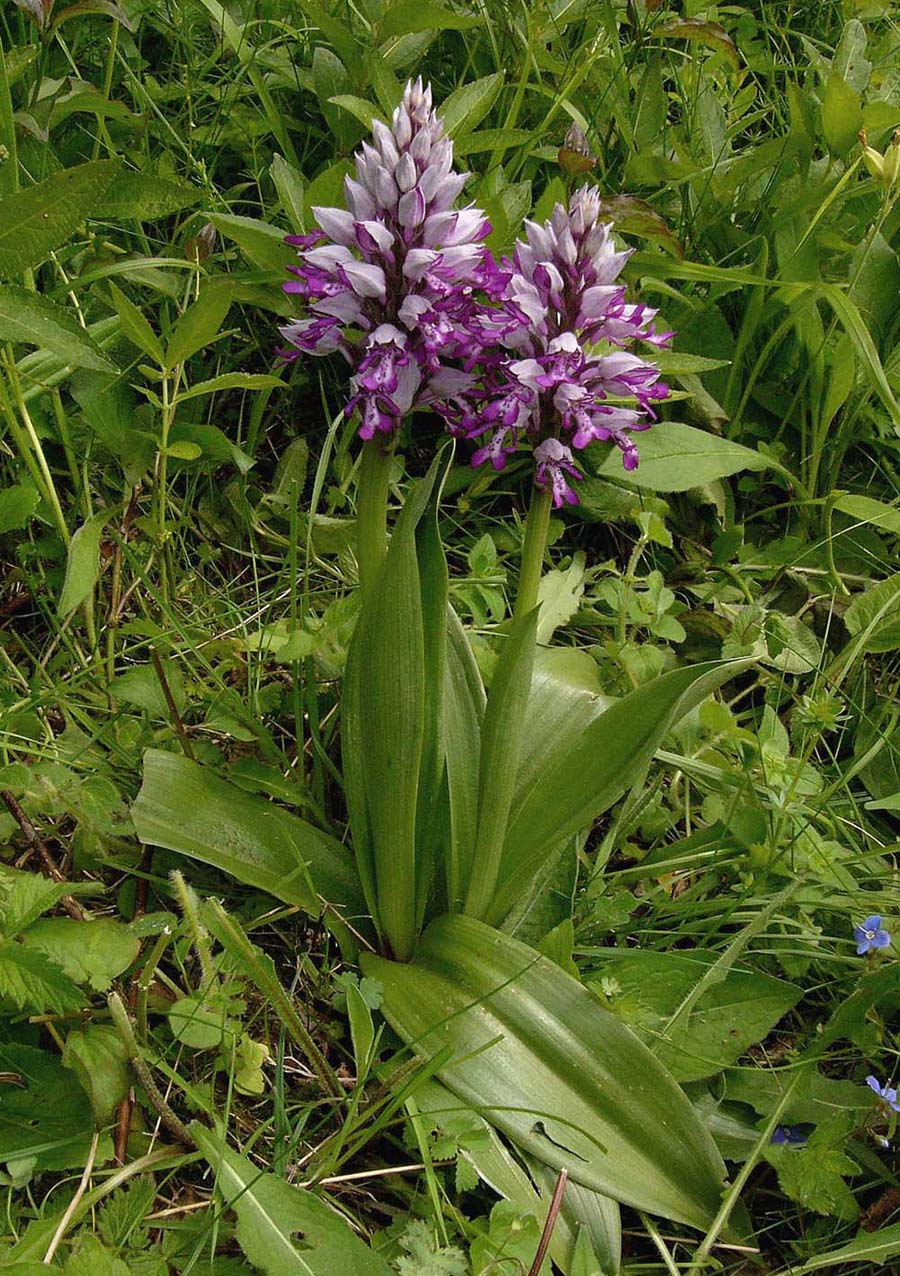
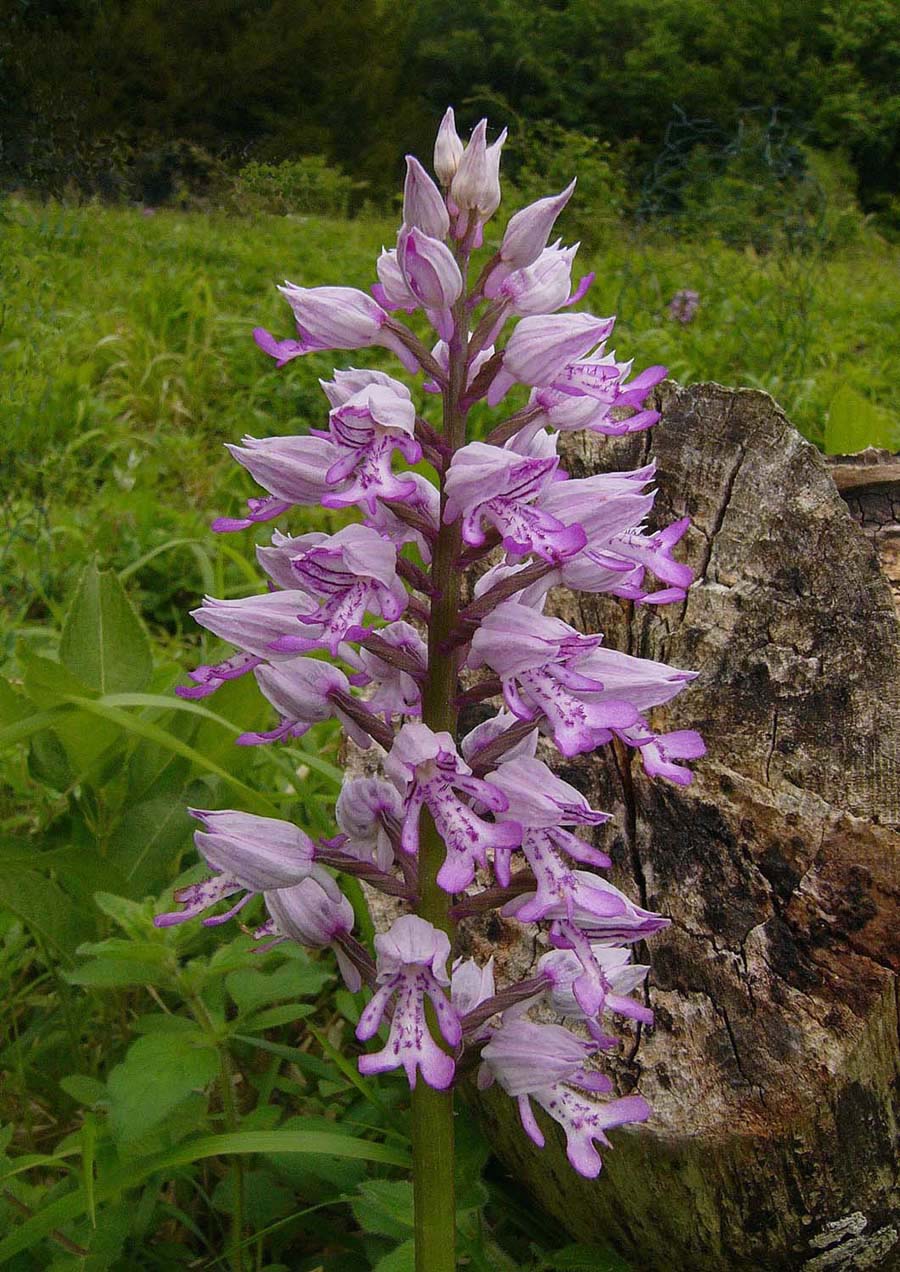
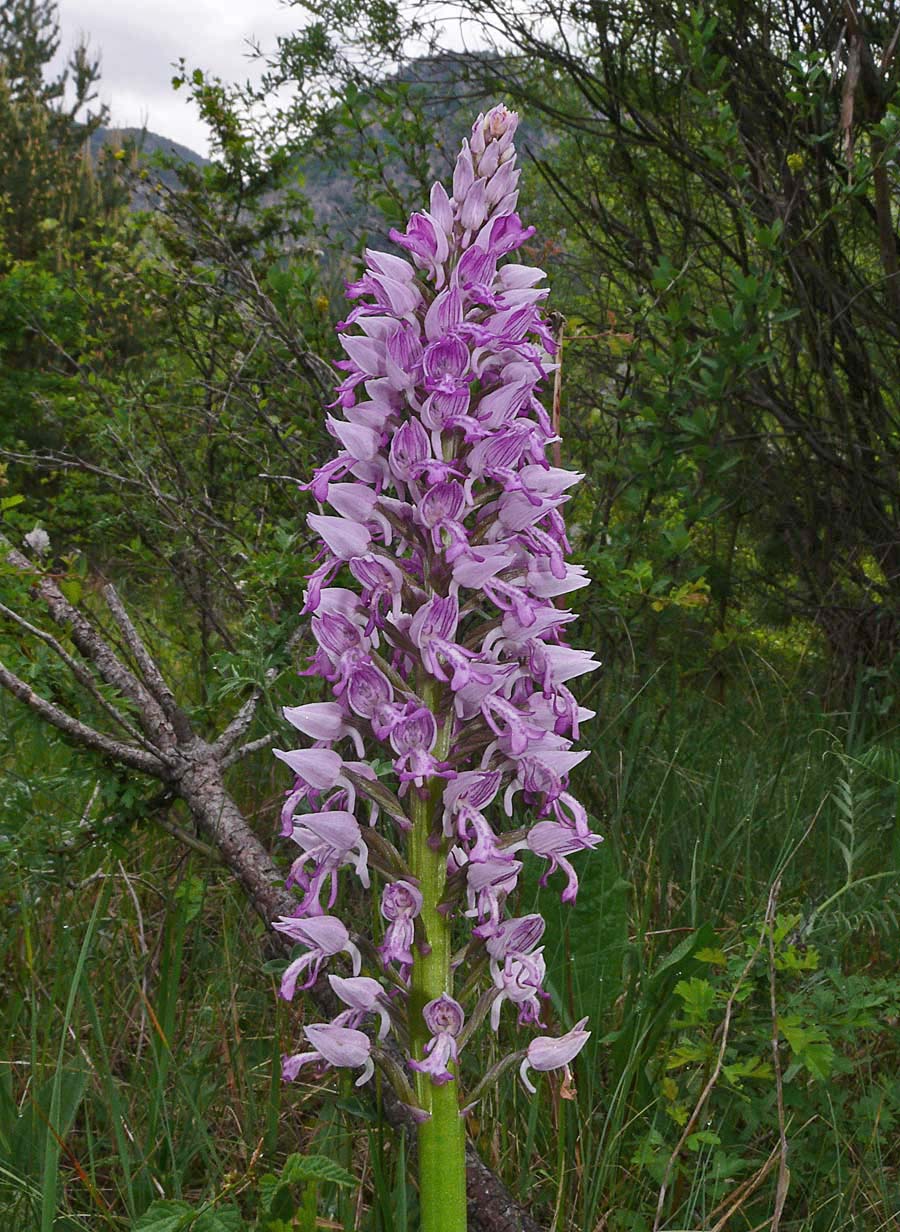
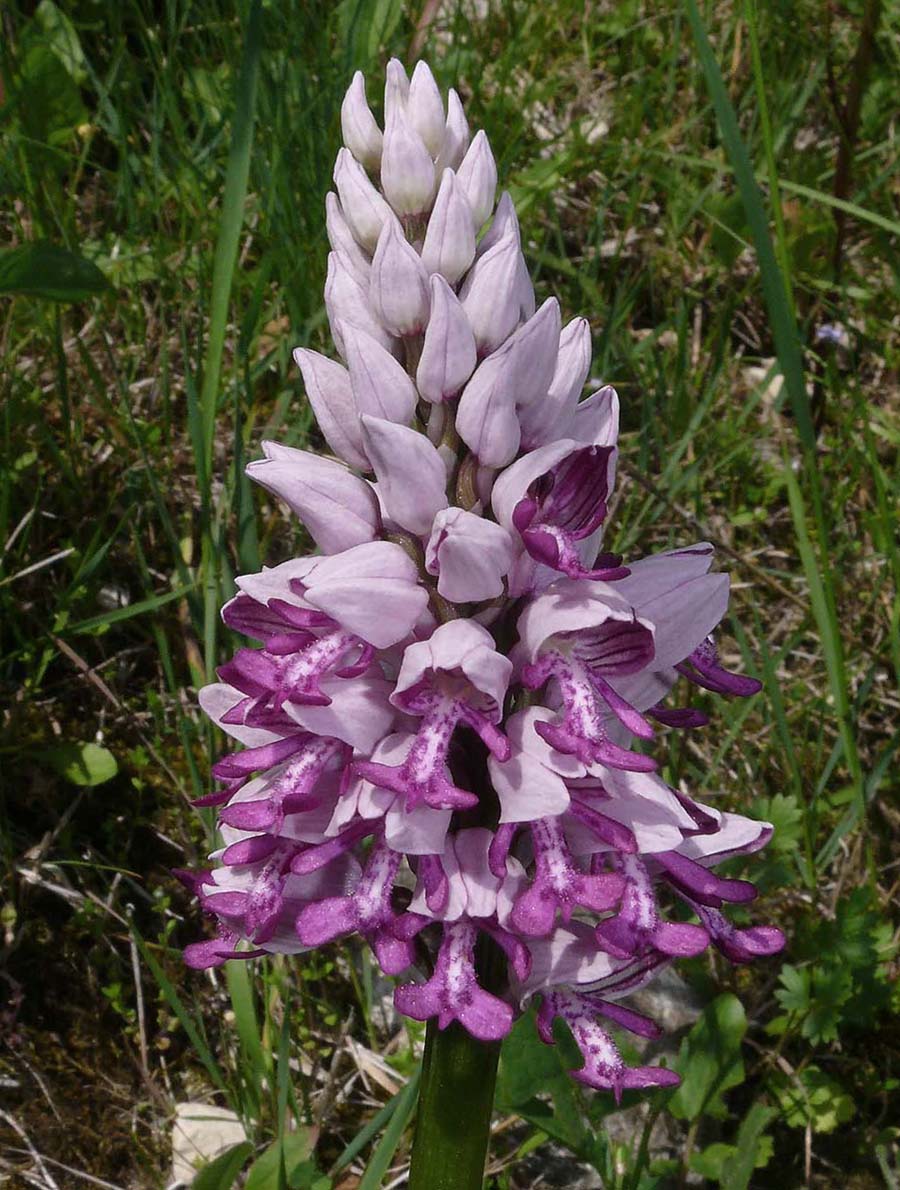
This widespread but handsome orchid was first described from Germany in 1753 and its name refers to the helmeted, soldier like appearance of the individual flowers.
Despite its huge Euro-Siberian range it is a local species, although abundant in its favoured sites in continental Europe. The distribution of O. militaris takes it from England in the north, through the northern Mediterranean to Russia in the east. It is at its least common in the Mediterranean regions and also in the UK where it was thought to have become extinct in 1914. The story of J. E Lousley's picnic and its consequent rediscovery in Britain is well known but since that day in 1947, O.militaris has been closely protected. The need for this plants protection was regrettably stressed again recently when a dozen plants were dug up and stolen from its biggest and best known Buckinghamshire colony by a wretched collector. Happily the species is now also being preserved in a few other less well known sites.
Its habitat requirements are varied and whereas in Britain it is exclusively a chalk downland plant, there are colonies in France and Switzerland that thrive in marshes with their feet quite literally in standing water. In continental Europe where O. militaris grows in huge numbers with both O. simia and O. purpurea, hybridization is common and the resultant progeny can appear in bewildering and often highly attractive variety.
The illustrations are from the Chilterns (UK), France and Italy, dating from the month of May. Photo 12 is one of the marsh growing plants from Chirens in Southern France.