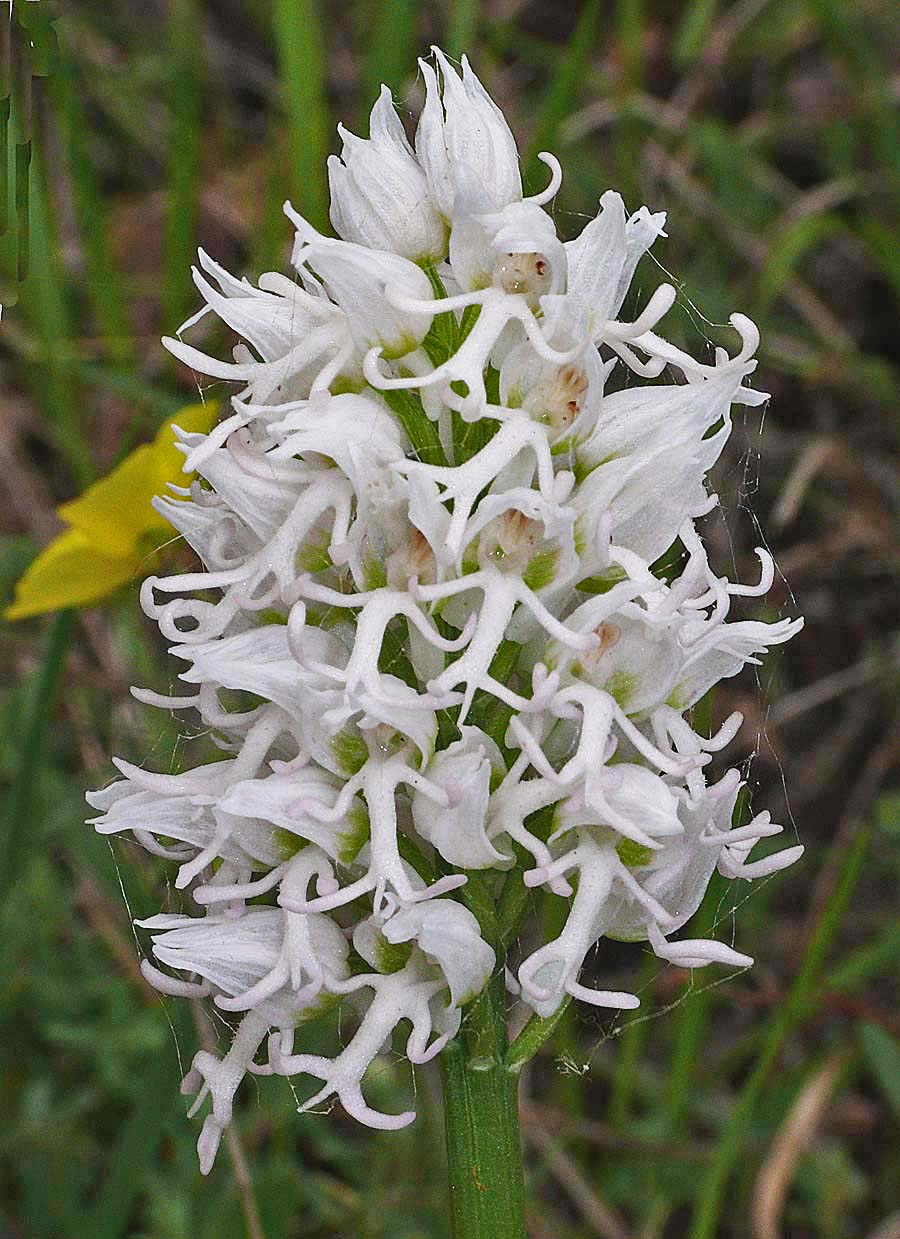
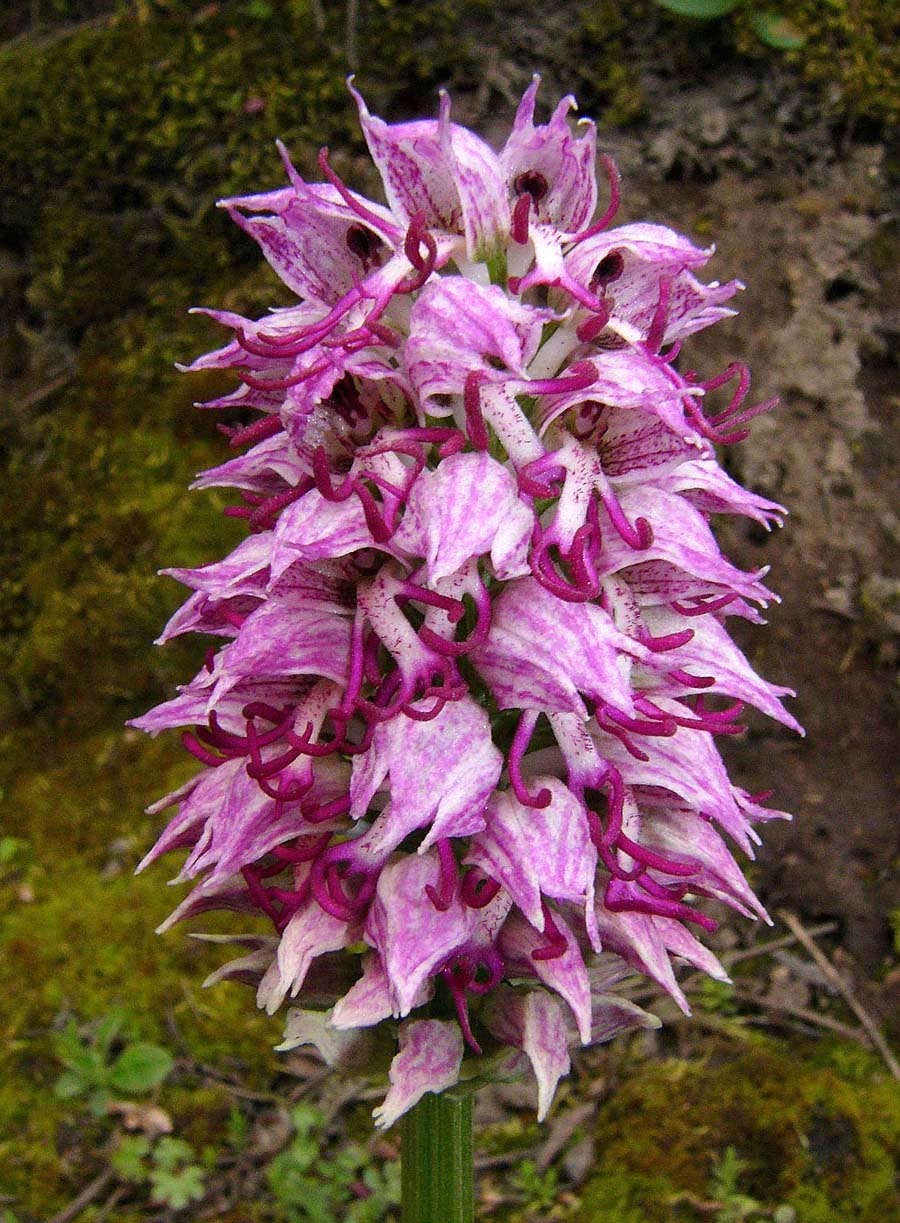
This
showy orchid was first described from France in 1779
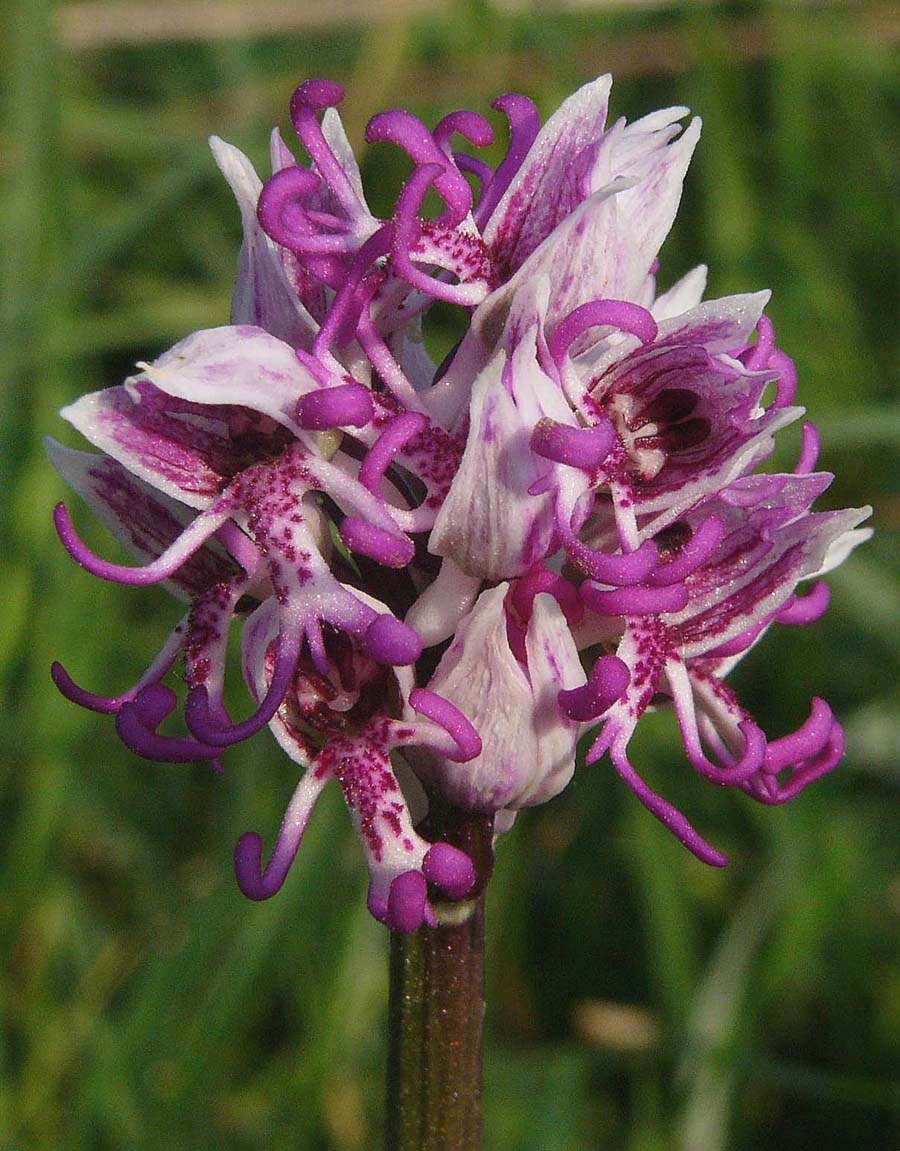
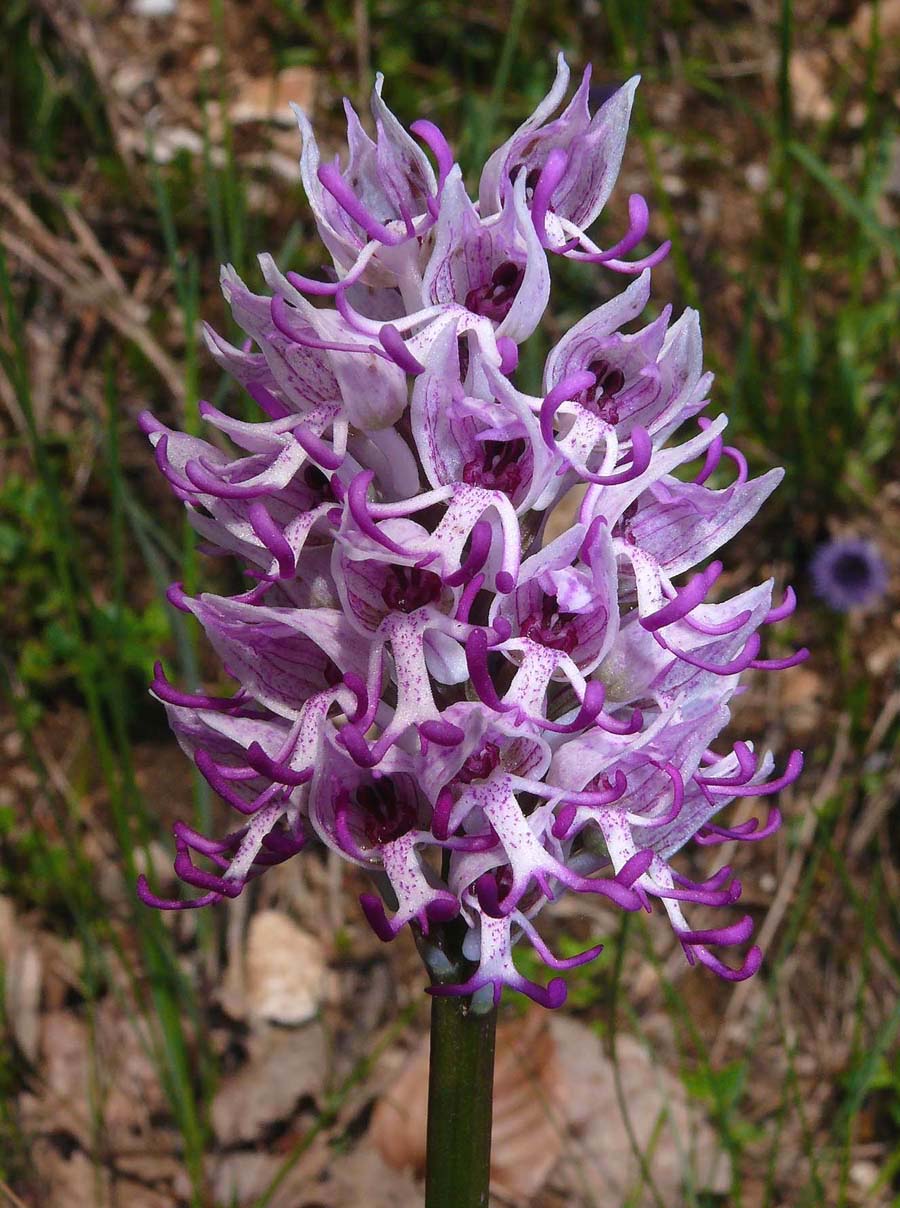
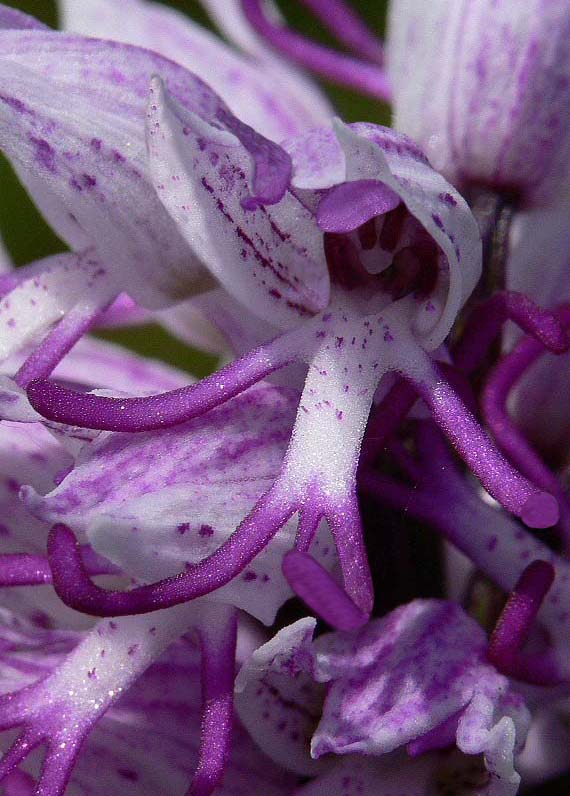
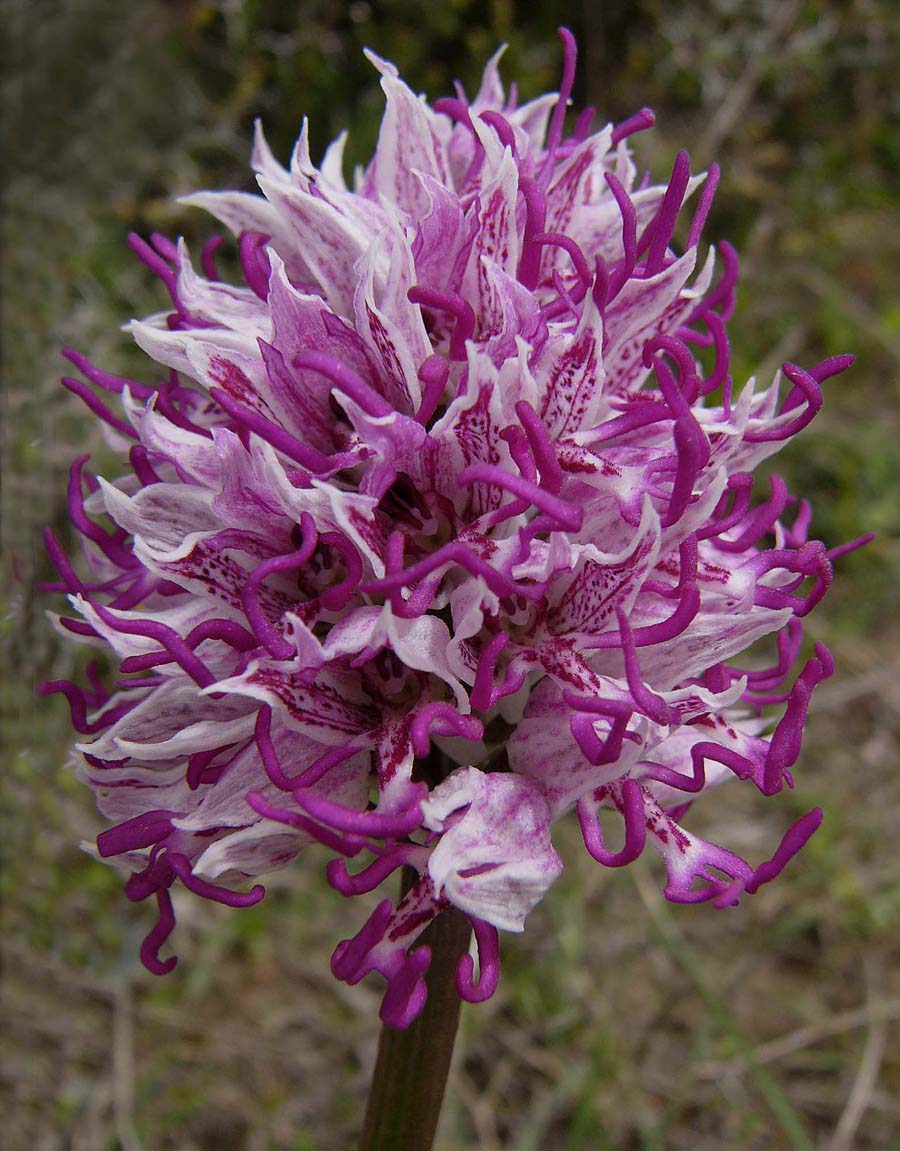
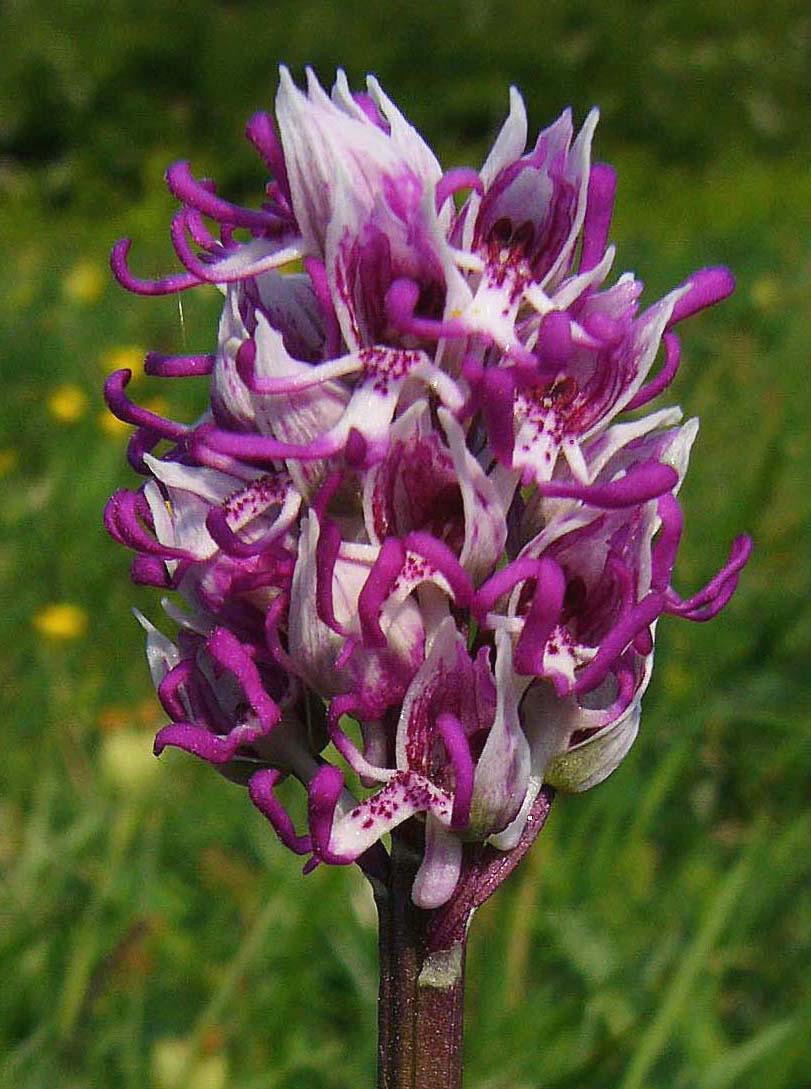
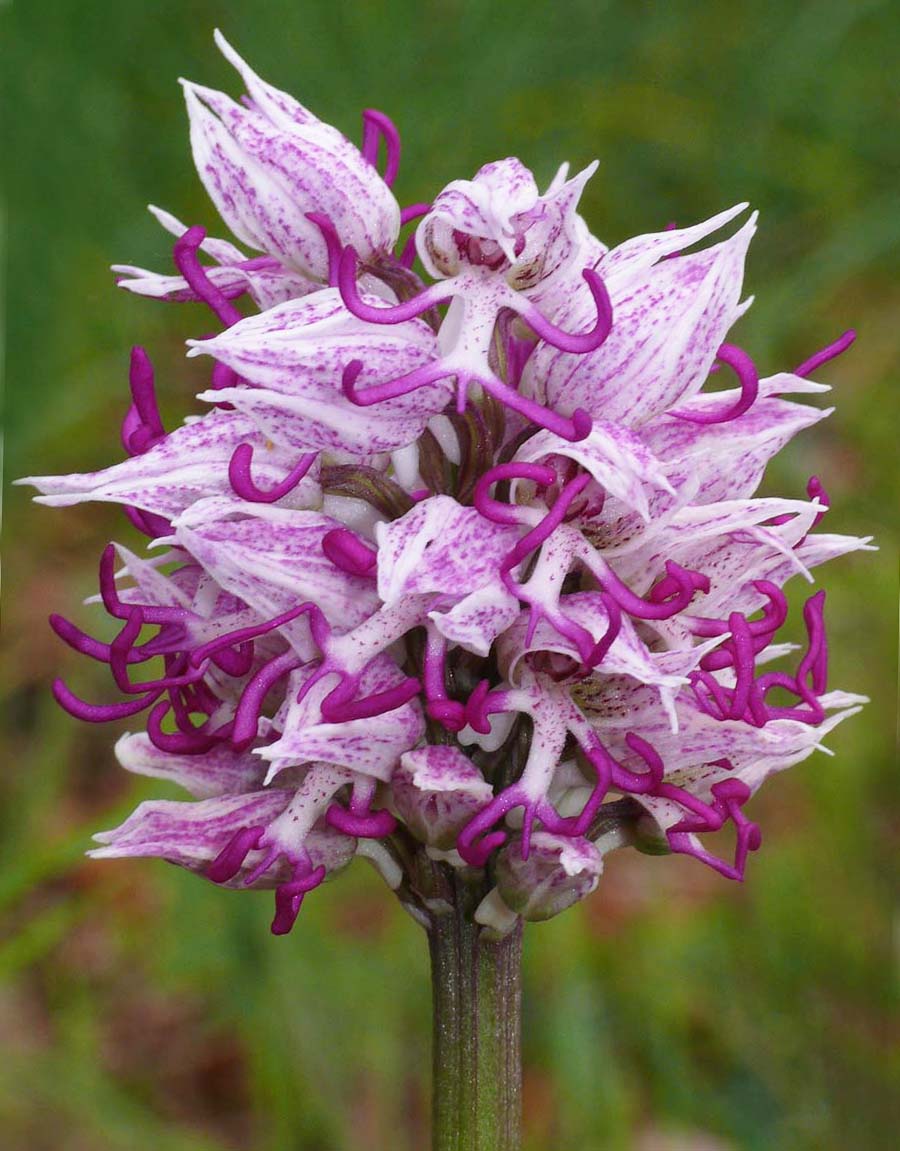
and its name refers to the appearance of the lip which is also, and
unsurprisingly how it gets its common name of Monkey orchid.
It is a common but local species which ranges from Southern England down to North Africa and eastwards as far as Iran. In Britain it was once a relatively easy plant to find and particularly in the area where the Thames Valley cuts through the Chiltern Hills in the vicinity of Wallingford and Pangbourne. It's thought that changing agricultural methods employed on the meadows and grassy slopes were unhelpful and when coupled with the depredations of early 20th century orchid collectors, its fate was becoming predictable and by the late 1920s it had become exceedingly rare.
All was not lost however and a lot of very hard work by dedicated groups has returned O. simia to a position where although still a British rarity, its future seems secure. Visits to Hartslock nature reserve in Oxfordshire or Park Gate Down in Kent will yield good sized colonies of this endearing Orchis .
O. simia is a member of the O. militaris group and as with its cousins is highly promiscuous when growing in mixed colonies, particularly with O. militaris, O. anthropophora or O purpurea. A good example of this can be seen at the aforementioned Hartslock reserve where the O. simia colony has been considerably influenced by the (probably mischievous) introduction of O. purpurea. In parts of France this introgression is common and it can often be difficult to say with confidence that any individual plant is a thoroughbred.
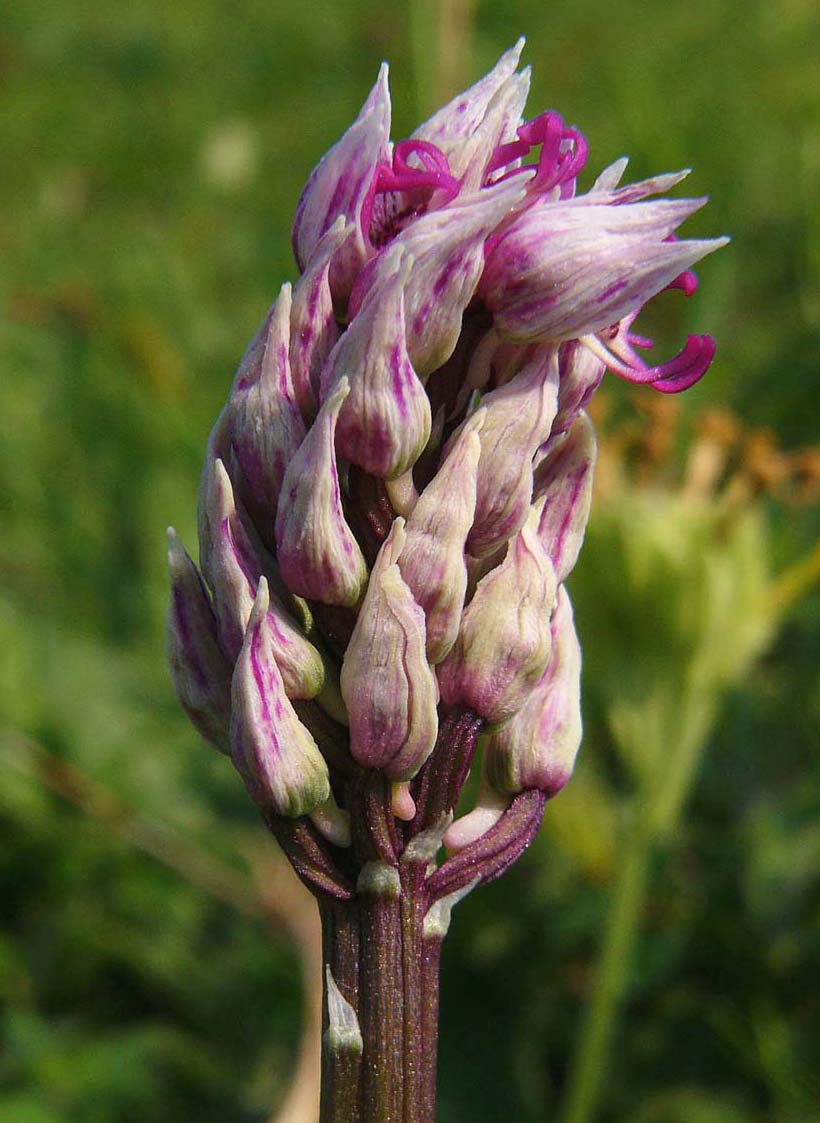
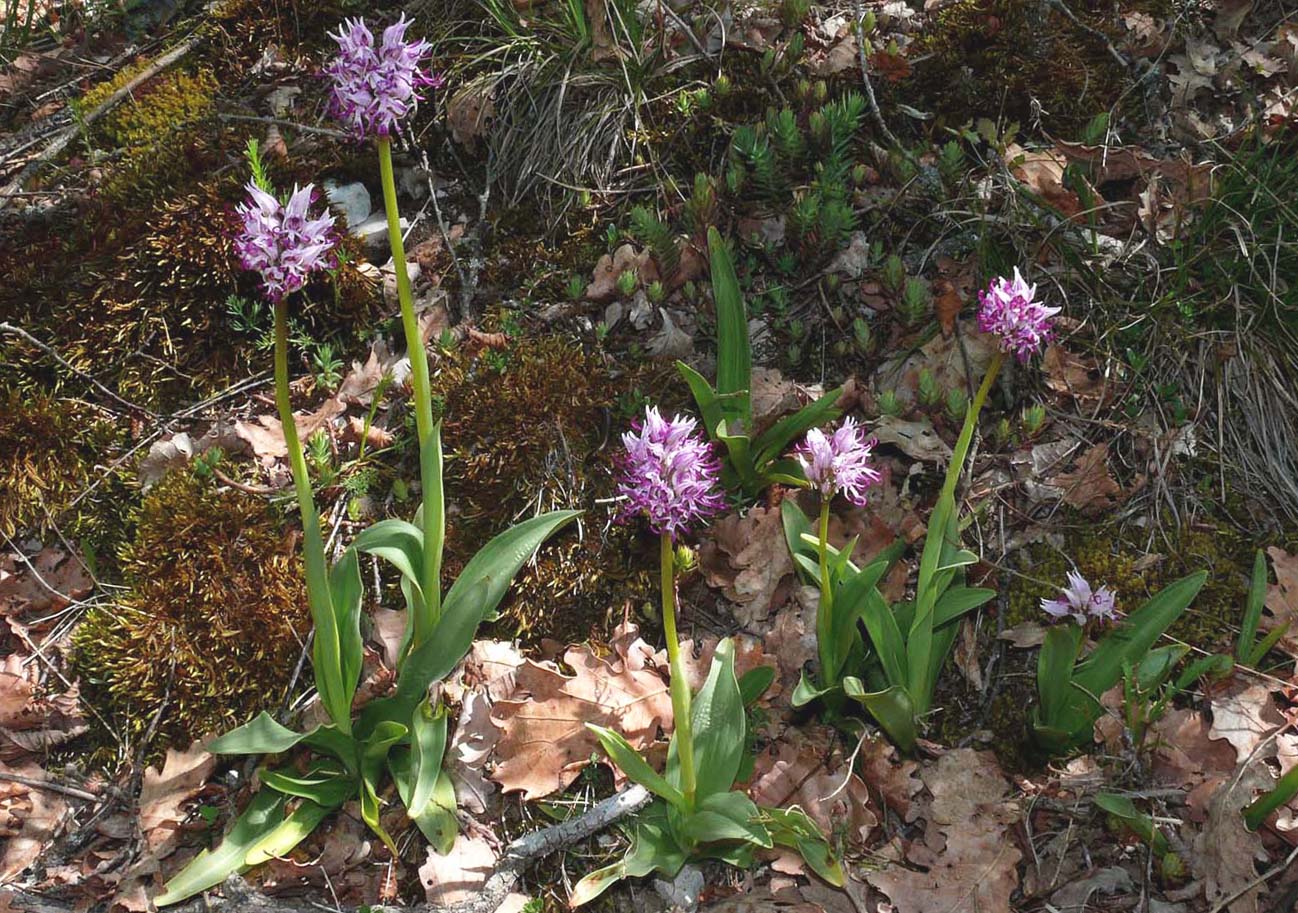
The illustrations are from Vercors (France), Cilento (Italy), Lesbos, and Oxfordshire (UK) dating from late April in the Aegean to mid May in the UK.
It is a common but local species which ranges from Southern England down to North Africa and eastwards as far as Iran. In Britain it was once a relatively easy plant to find and particularly in the area where the Thames Valley cuts through the Chiltern Hills in the vicinity of Wallingford and Pangbourne. It's thought that changing agricultural methods employed on the meadows and grassy slopes were unhelpful and when coupled with the depredations of early 20th century orchid collectors, its fate was becoming predictable and by the late 1920s it had become exceedingly rare.
All was not lost however and a lot of very hard work by dedicated groups has returned O. simia to a position where although still a British rarity, its future seems secure. Visits to Hartslock nature reserve in Oxfordshire or Park Gate Down in Kent will yield good sized colonies of this endearing Orchis .
O. simia is a member of the O. militaris group and as with its cousins is highly promiscuous when growing in mixed colonies, particularly with O. militaris, O. anthropophora or O purpurea. A good example of this can be seen at the aforementioned Hartslock reserve where the O. simia colony has been considerably influenced by the (probably mischievous) introduction of O. purpurea. In parts of France this introgression is common and it can often be difficult to say with confidence that any individual plant is a thoroughbred.
The illustrations are from Vercors (France), Cilento (Italy), Lesbos, and Oxfordshire (UK) dating from late April in the Aegean to mid May in the UK.