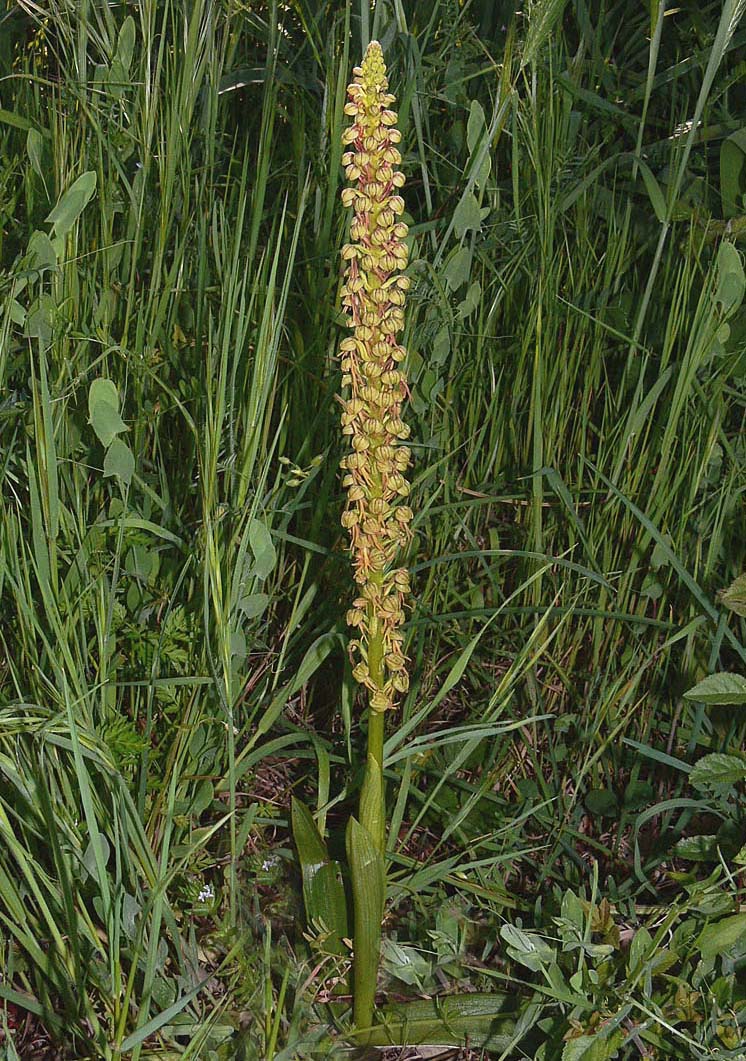
This species was first described from France in 1753 and until recently was placed in a genus of its own, Aceras. The primary reason for this taxonomic isolation was its lack of a spur, subsequent molecular studies however, revealed that it was indeed an Orchis and further, that it is very closely related to O. simia. The frequent occurrence of hybridization with O. simia and O. militaris had already been noted, so the results didn't come as a particularly great surprise and the Man Orchid has now been reclassified into the O. militaris group.
O. anthropophora has a wide range from Britain and Northern France, through much of Europe down to North Africa in the south and across to Syria in the east. It can be rare in some parts of this range but is generally common without ever being abundant. As well as having a large range, it is also relatively unfussy about habitat and will grow in full sun or surprisingly deep shade, though always on calcareous soils. O. anthropophora is a wintergreen, maintaining leaves throughout the winter and producing flowers from April to June depending on location. Rather like O. apifera it is known to experience periods of vegetative dormancy, when plants will fail to appear for a season, only to re-emerge the following year with full vigour.
This Orchis is unlikely to be confused with any other species but as has already been mentioned, it will readily hybridize with members of its own group, the results of which can be very eye catching and separate pages within this site have been devoted to these plants. In the Mediterranean area there are records of intergeneric hybridization with Dachtylorhiza, Neotinea and Himmantoglossum.
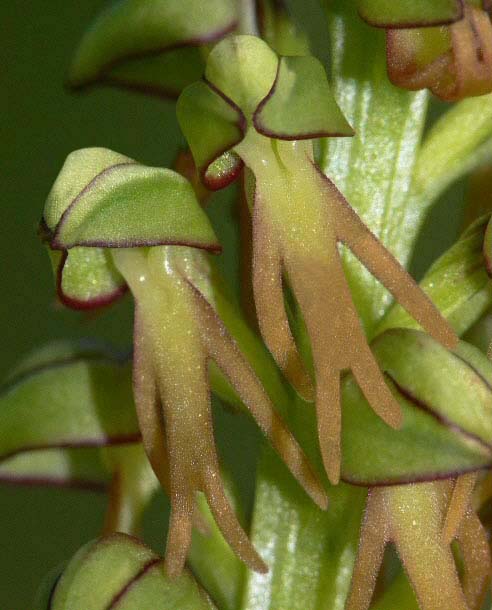
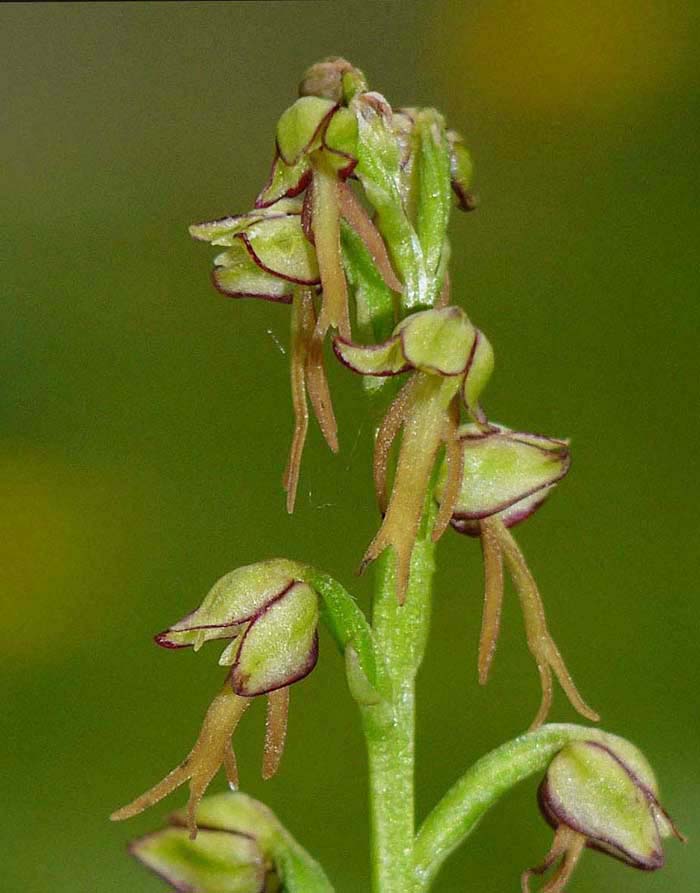
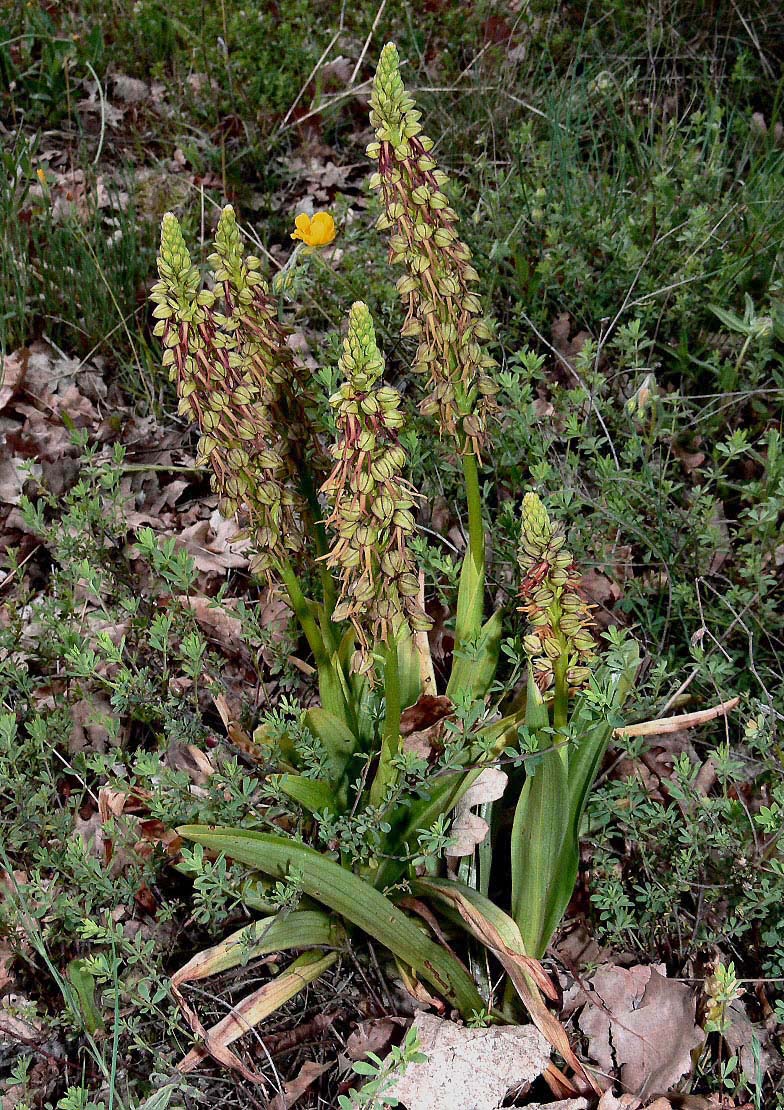
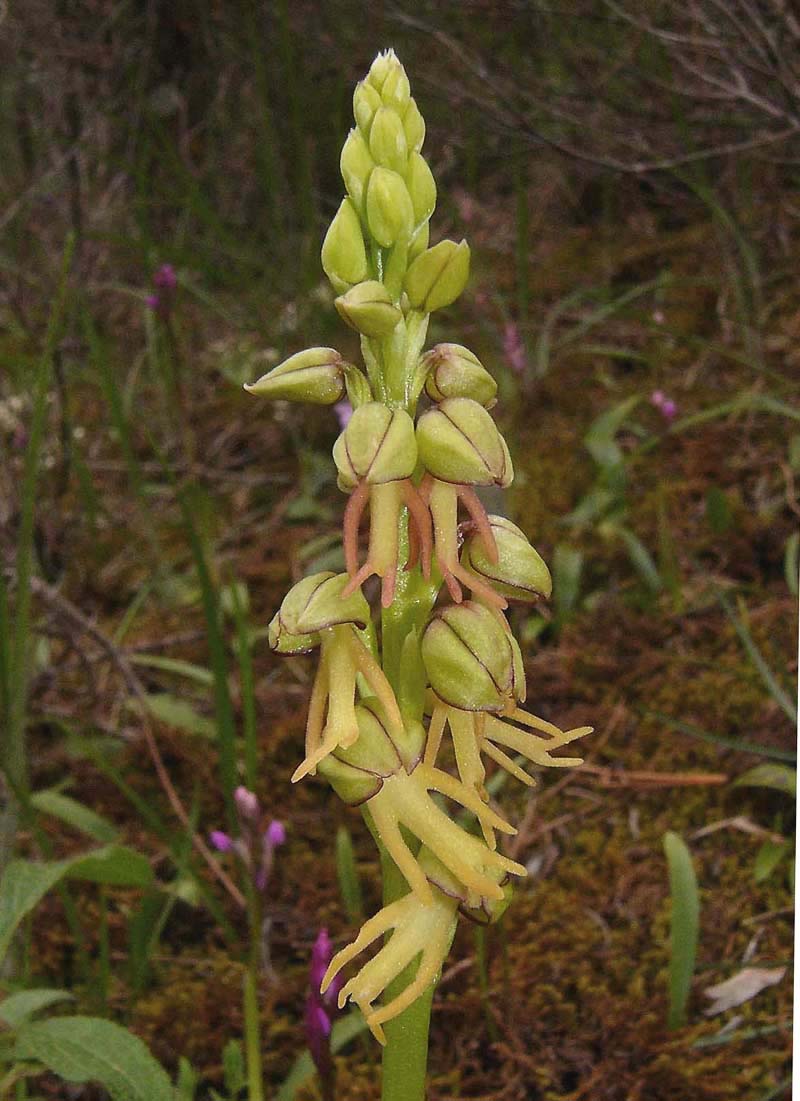
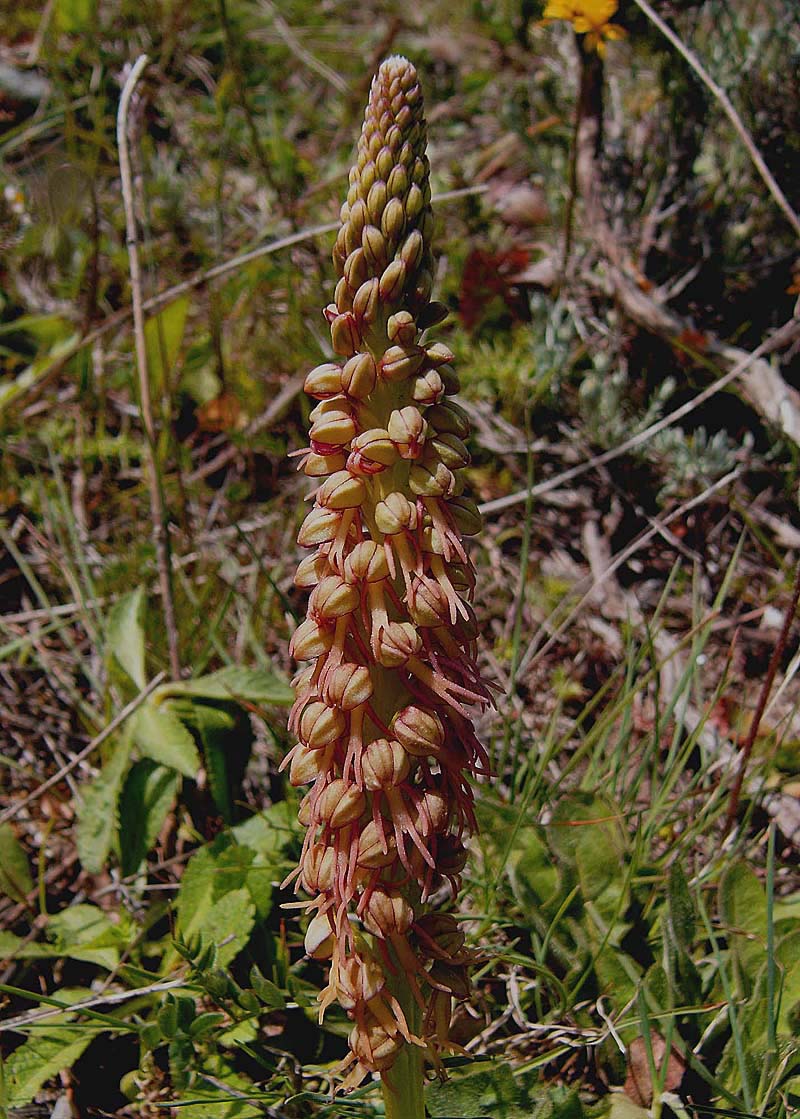
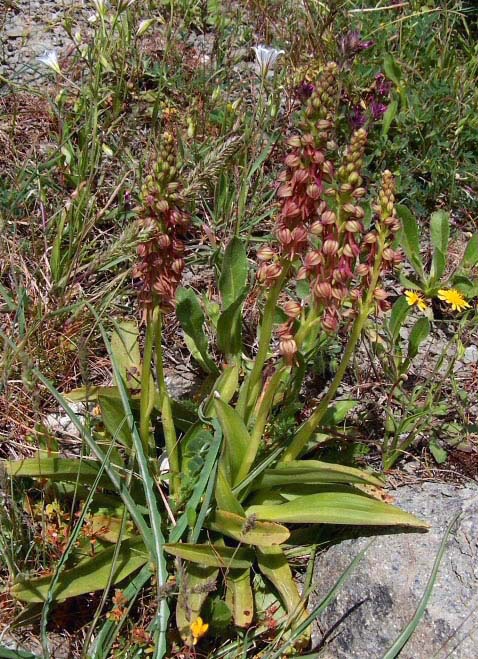
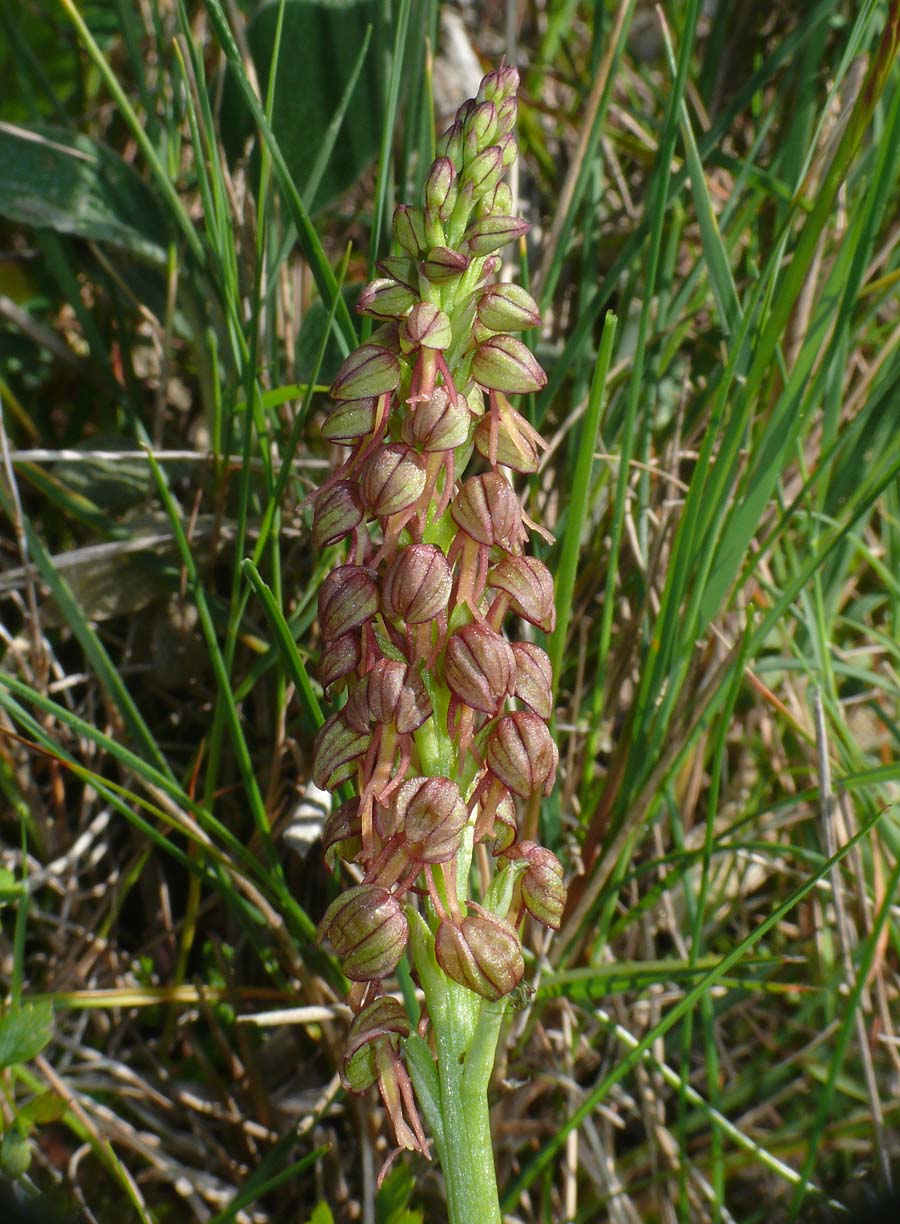
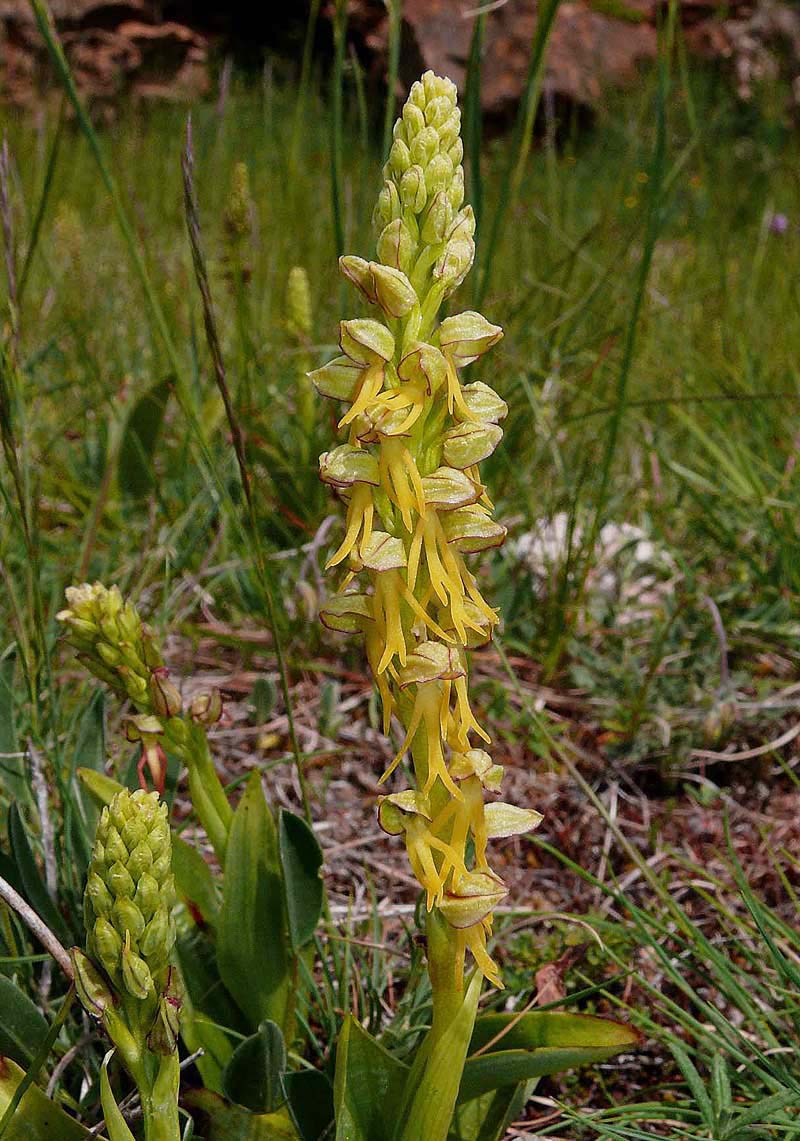
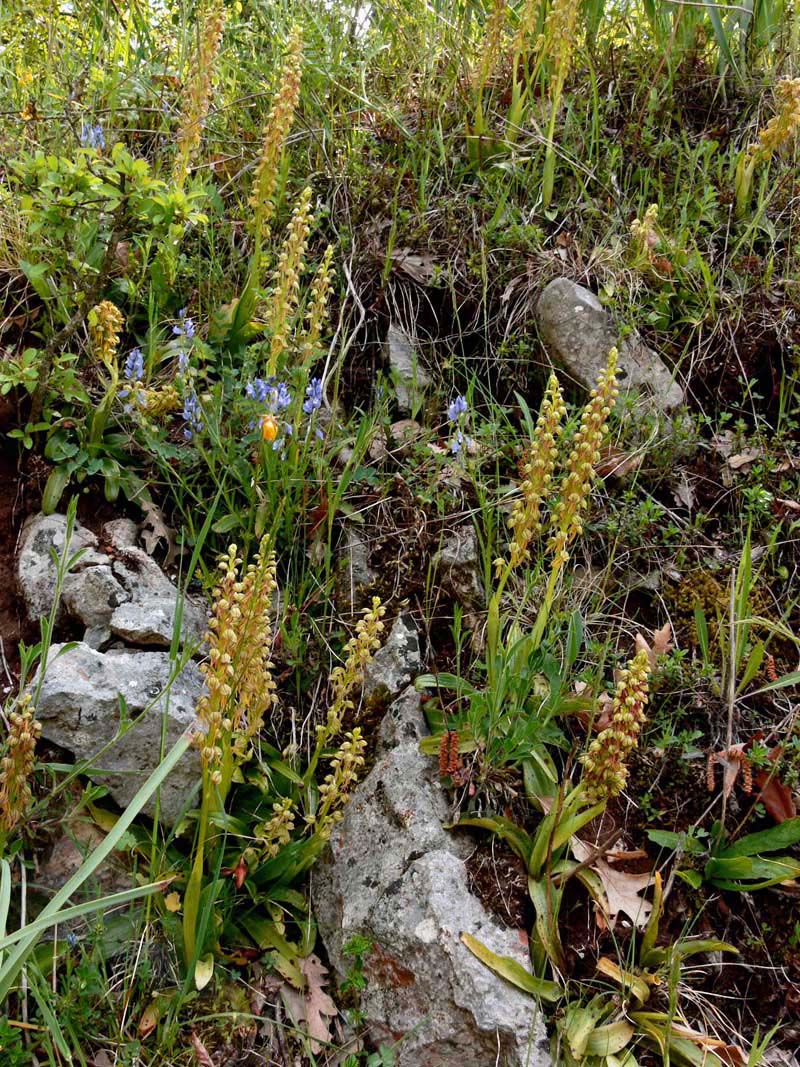
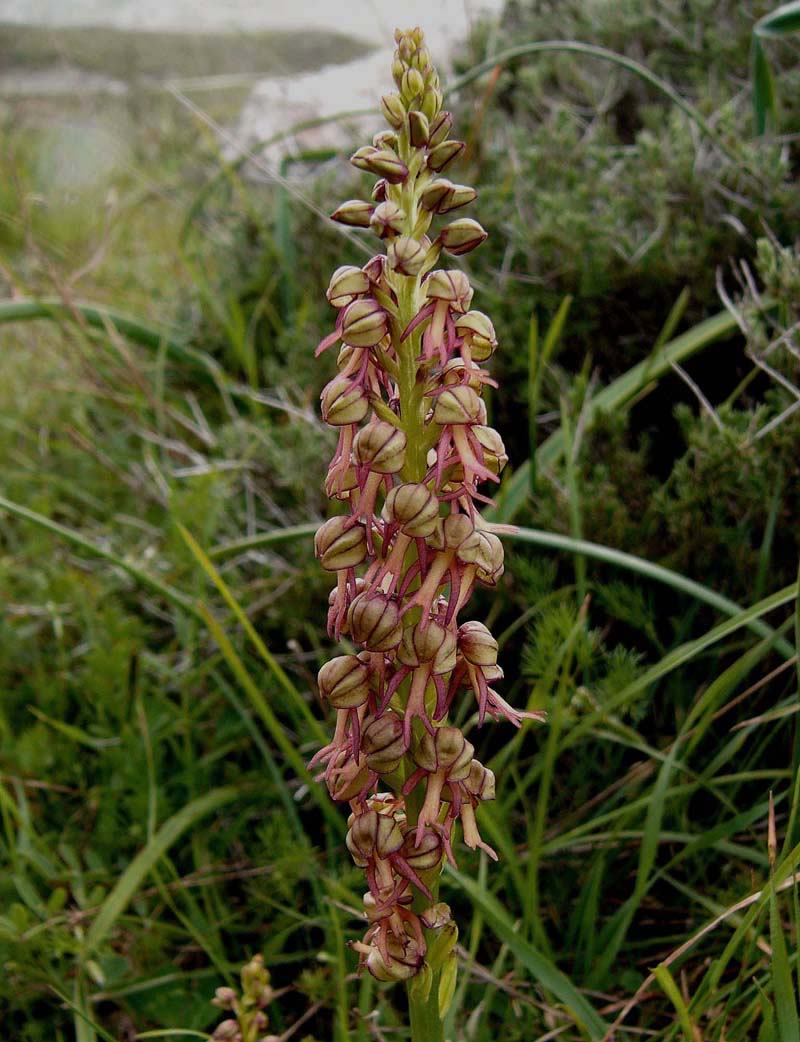
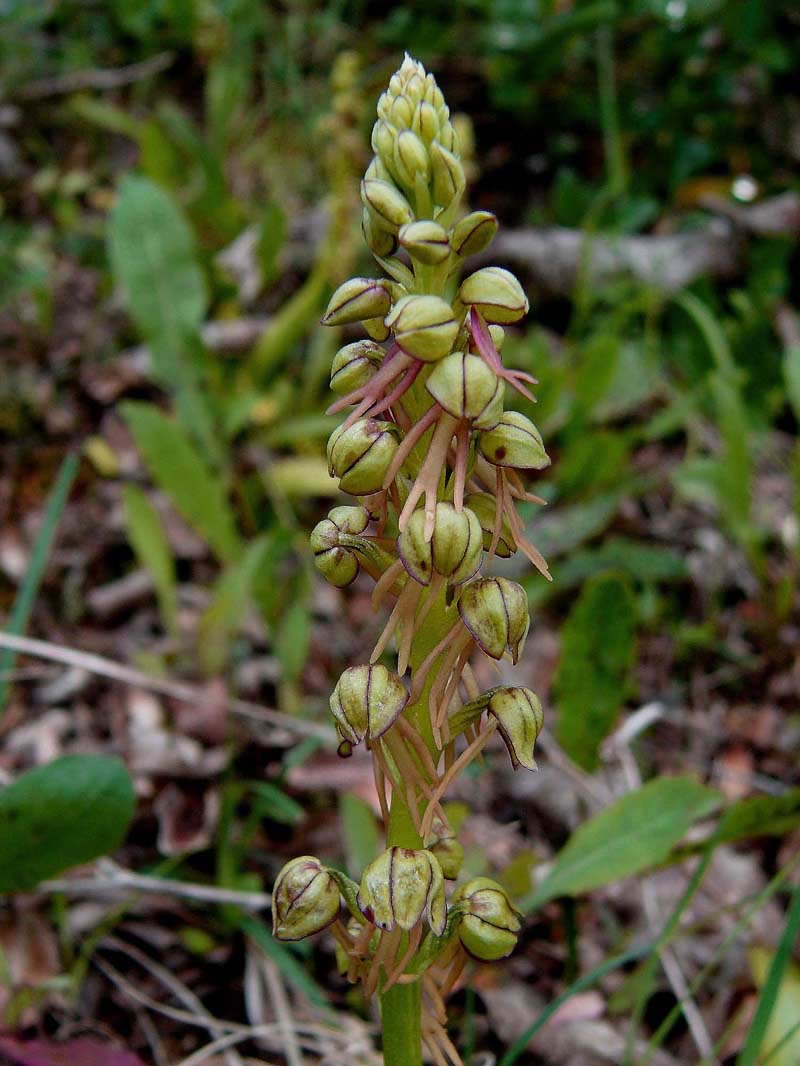
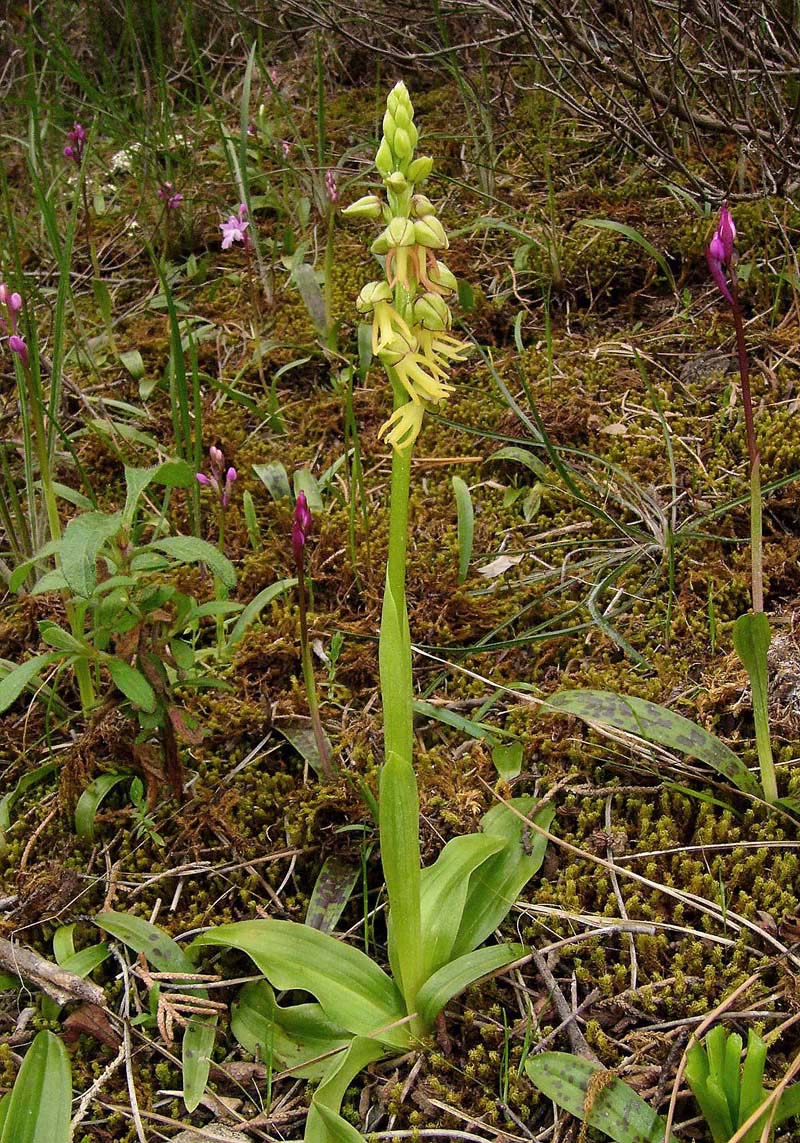
The pictures come from the south of England, Gargano, Cephalonia and Mount Hymettus (Athens).
.