This
is one of the eastern Mediterranean's rarer Ophrys occurring only in the eastern Aegean basin, Anatolia and Crete. It's a member of the O. omegaifera group and takes its name from Sitia, this being the
district of Crete from where it was first described in 1988.
O. sitiaca is generally thought to be of hybrid origin with O. omegaifera and one of the O. fusca group as progenitors. This hybrid background almost certainly accounts for its variability and consequent difficulties with identification. Crete is very much viewed as the home of this Ophrys and other populations outside of the island are now being carefully studied. In Lesbos and Chios, the later flowering plants once assumed to be O. sitiaca have now been split off and reclassified as either O. pelinaea or O. polycratis. It is highly probable that further taxonomic revision will occur over the coming years.
The most reliable guide to identification is flowering time, which is generally but not unanimously held to be very early (January to March). O. sitiaca should be finished in the eastern Aegean before O. pelinaea starts and on Crete O. omegaifera will appear some three weeks after O. sitiaca has expired. This taxon is widely acknowledged as a difficult and variable taxon that can exhibit strong characteristics of both its O. fusca and O. omegaifera lineage.
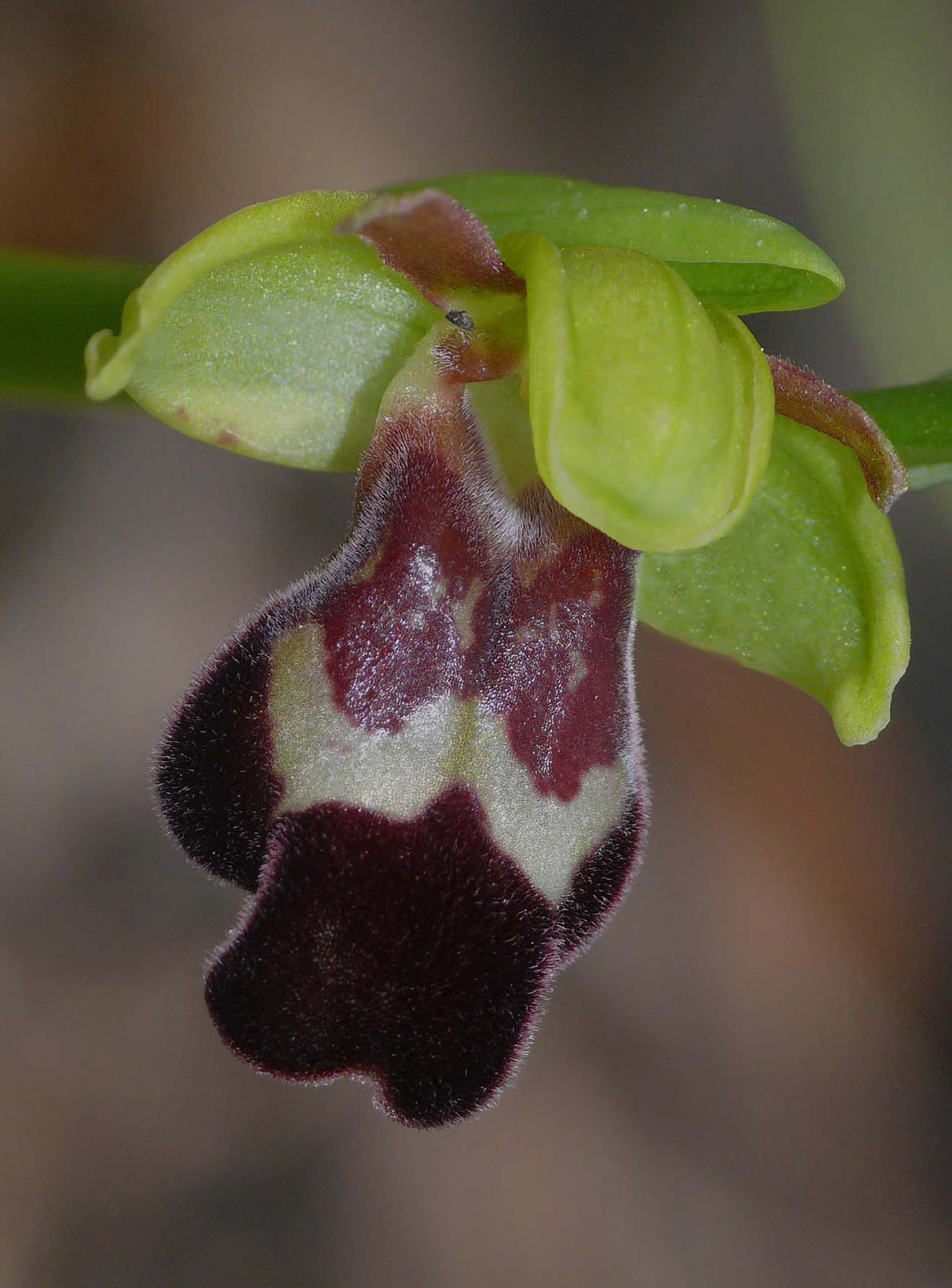
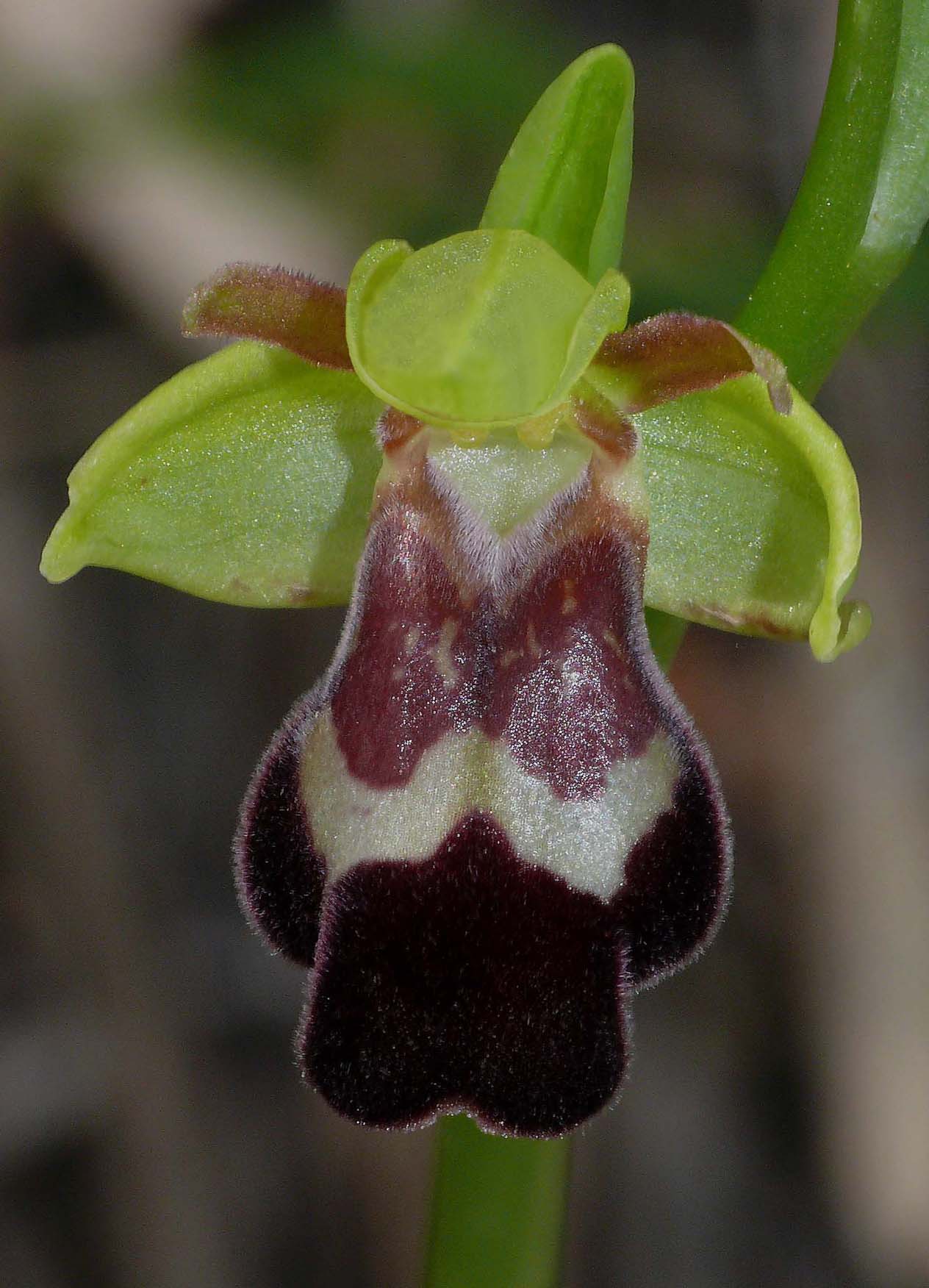
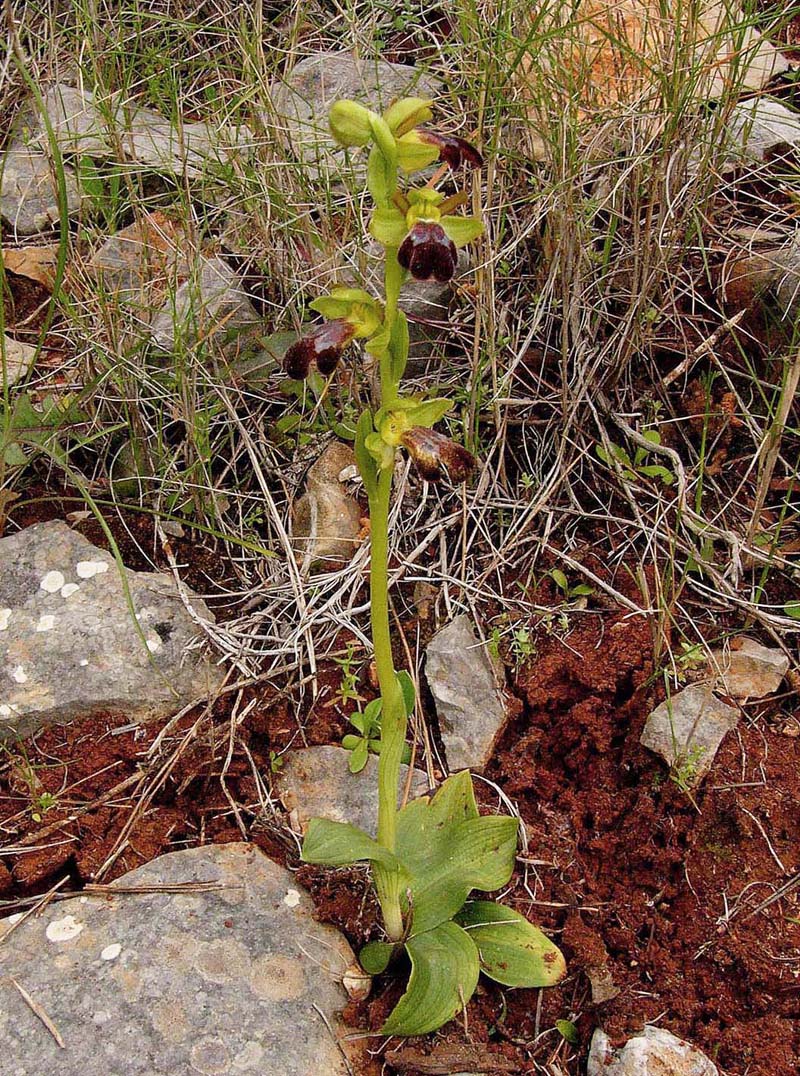
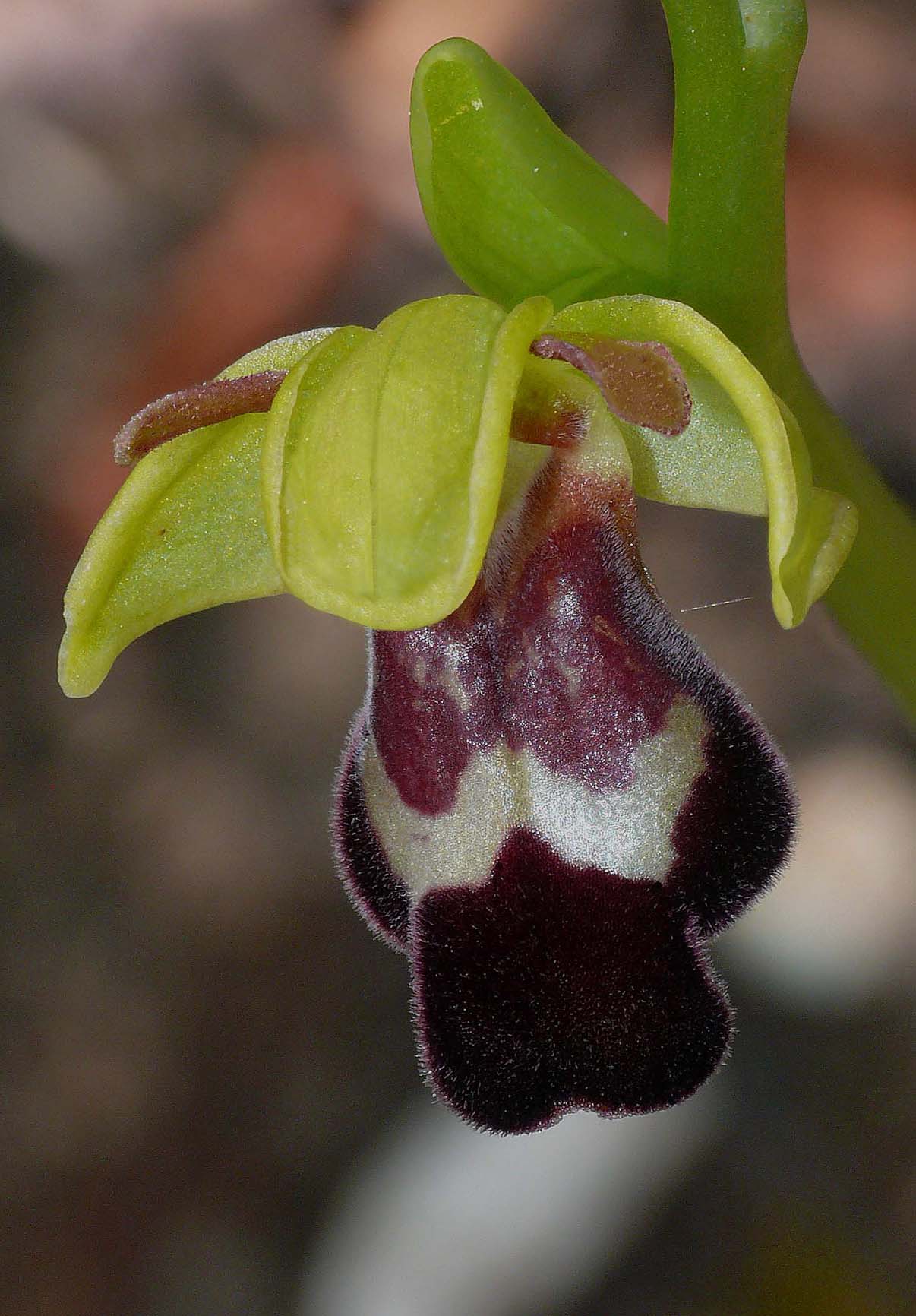
A further complication is the existence of O. omegaifera hybrids that can appear very similar and be flowering at later dates. The photographs here could represent such a case.
O. sitiaca is generally thought to be of hybrid origin with O. omegaifera and one of the O. fusca group as progenitors. This hybrid background almost certainly accounts for its variability and consequent difficulties with identification. Crete is very much viewed as the home of this Ophrys and other populations outside of the island are now being carefully studied. In Lesbos and Chios, the later flowering plants once assumed to be O. sitiaca have now been split off and reclassified as either O. pelinaea or O. polycratis. It is highly probable that further taxonomic revision will occur over the coming years.
The most reliable guide to identification is flowering time, which is generally but not unanimously held to be very early (January to March). O. sitiaca should be finished in the eastern Aegean before O. pelinaea starts and on Crete O. omegaifera will appear some three weeks after O. sitiaca has expired. This taxon is widely acknowledged as a difficult and variable taxon that can exhibit strong characteristics of both its O. fusca and O. omegaifera lineage.
A further complication is the existence of O. omegaifera hybrids that can appear very similar and be flowering at later dates. The photographs here could represent such a case.
.