In 2015, Paulus and Hirth compiled research that established this orchid to be a widespread species throughout the eastern Aegean and that it encompassed a range of Pseudphrys, then variously considered to be late flowering forms of O. sitiaca or O. leucadica and separate taxons including O. parosica and O. phaseliana. It was proven by exhaustive testing that they all shared the same pollinator, Andrena gravida and therefore, despite significant morphological differences were a single species.
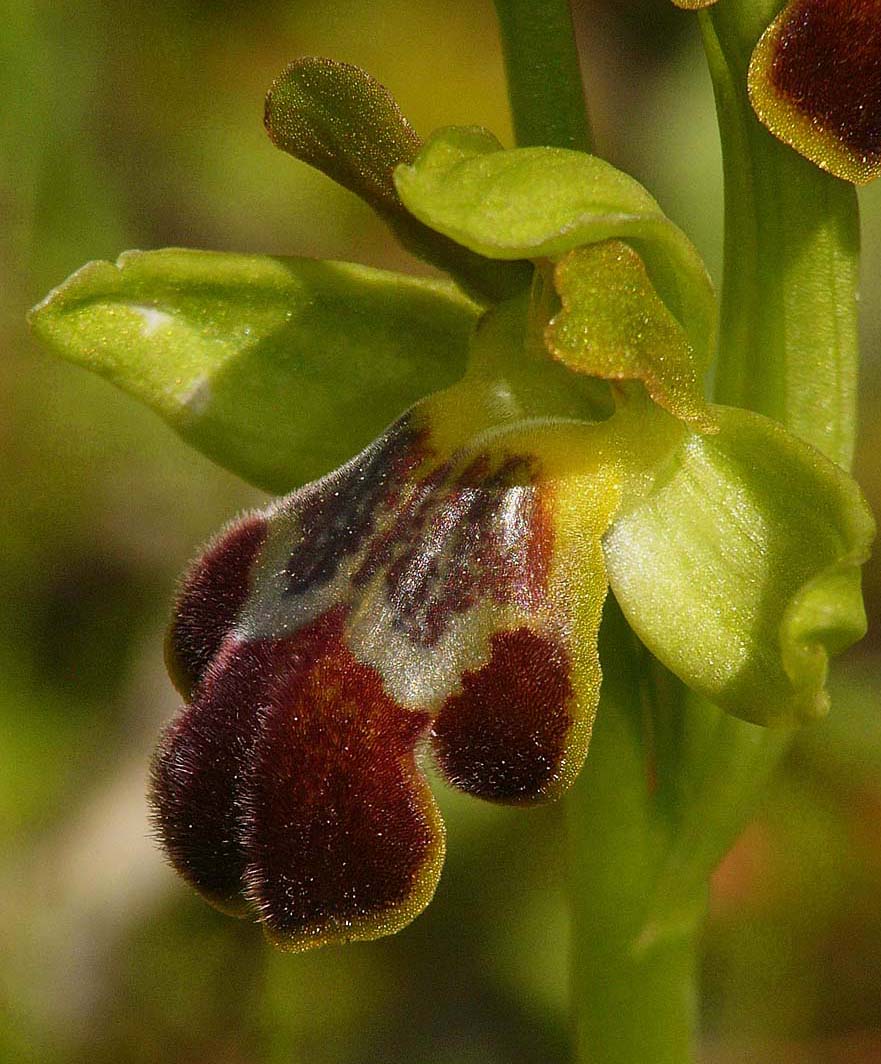
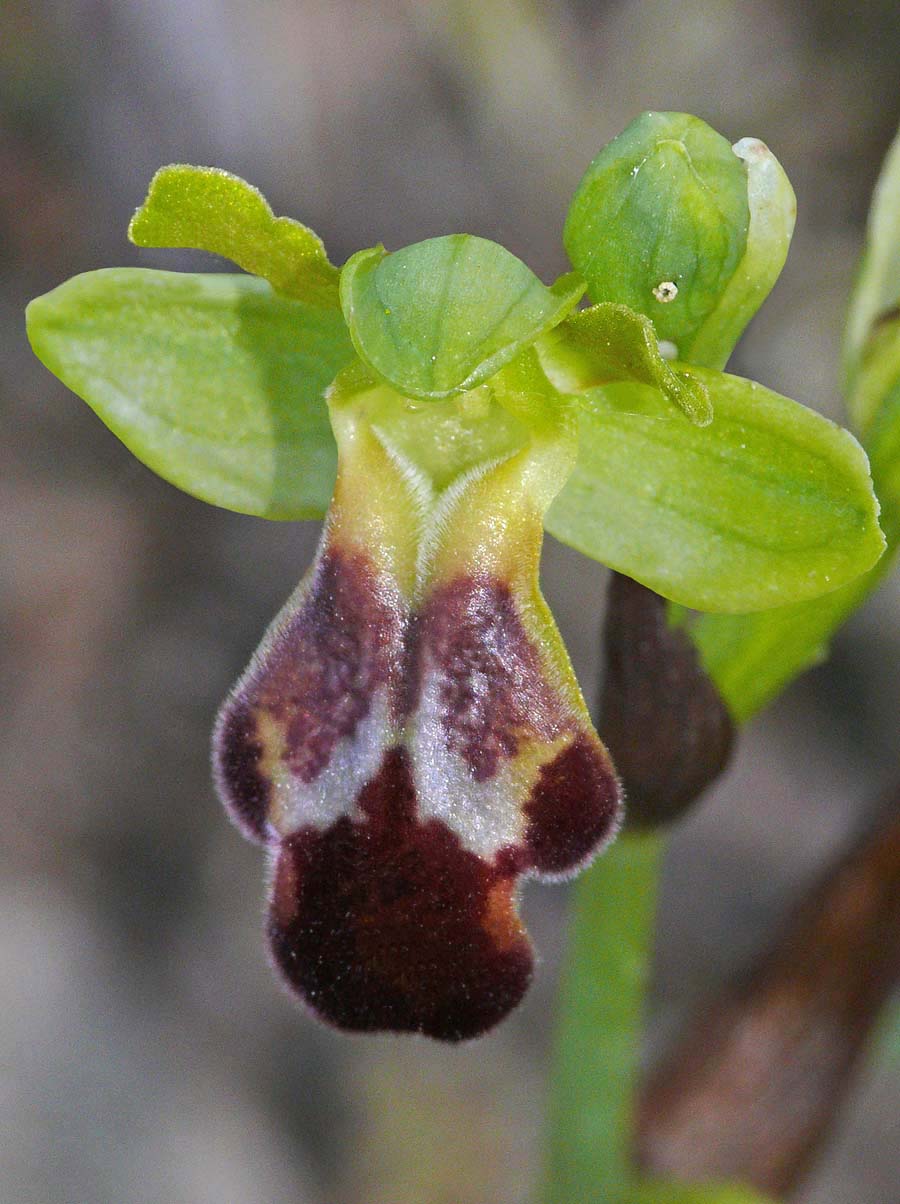
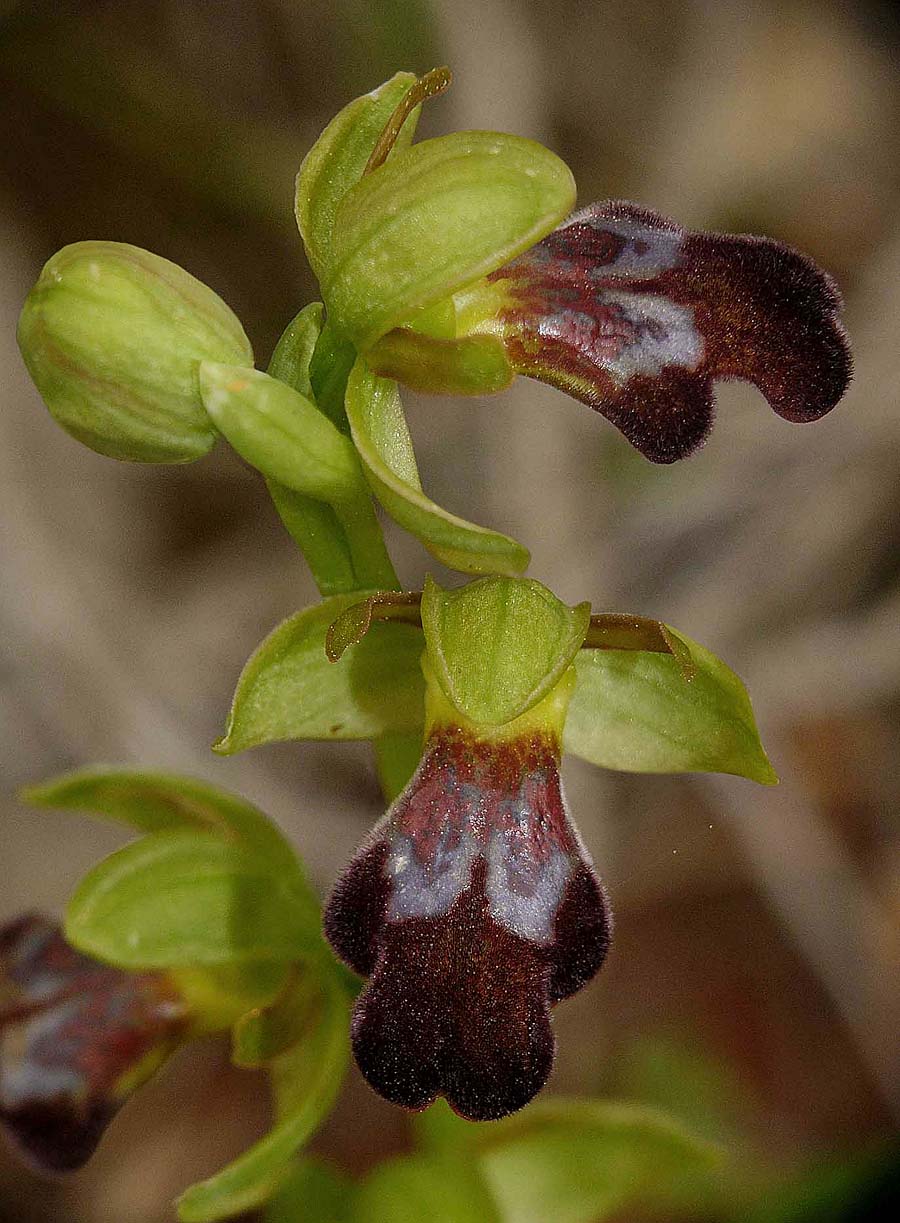
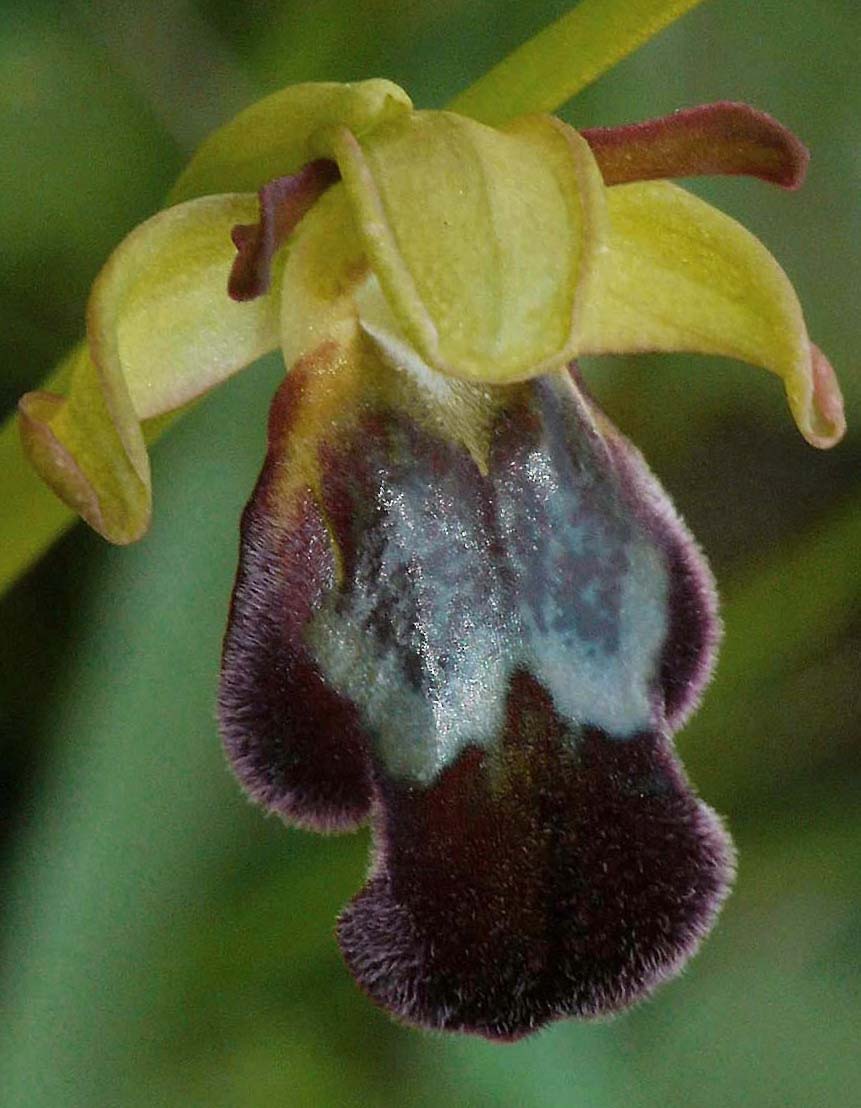
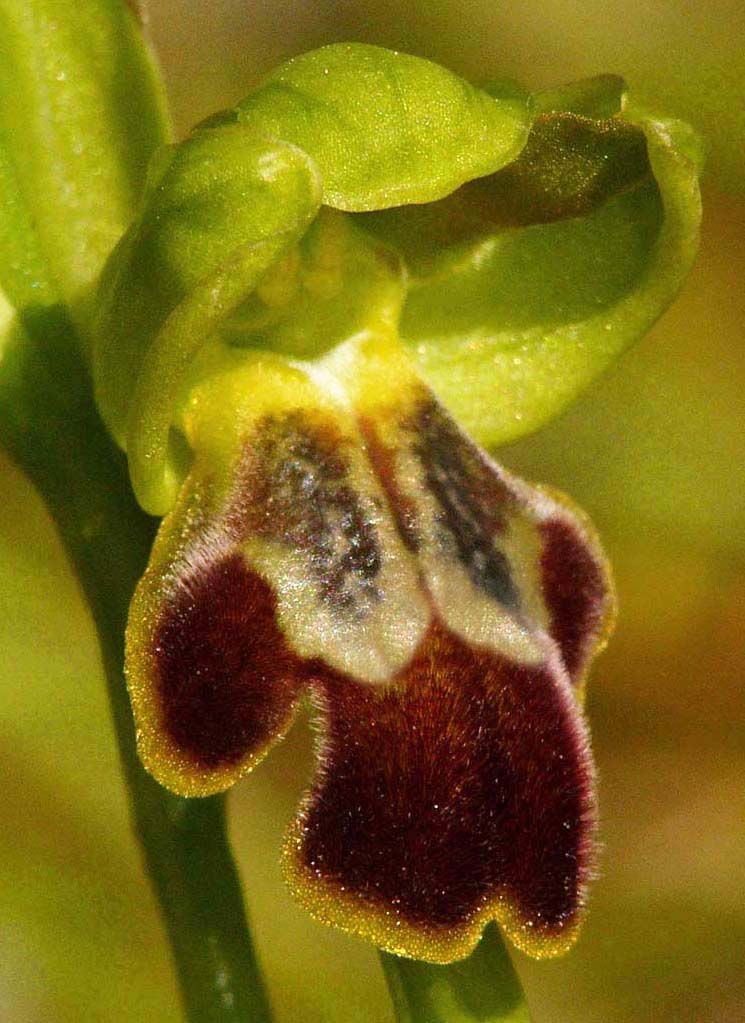
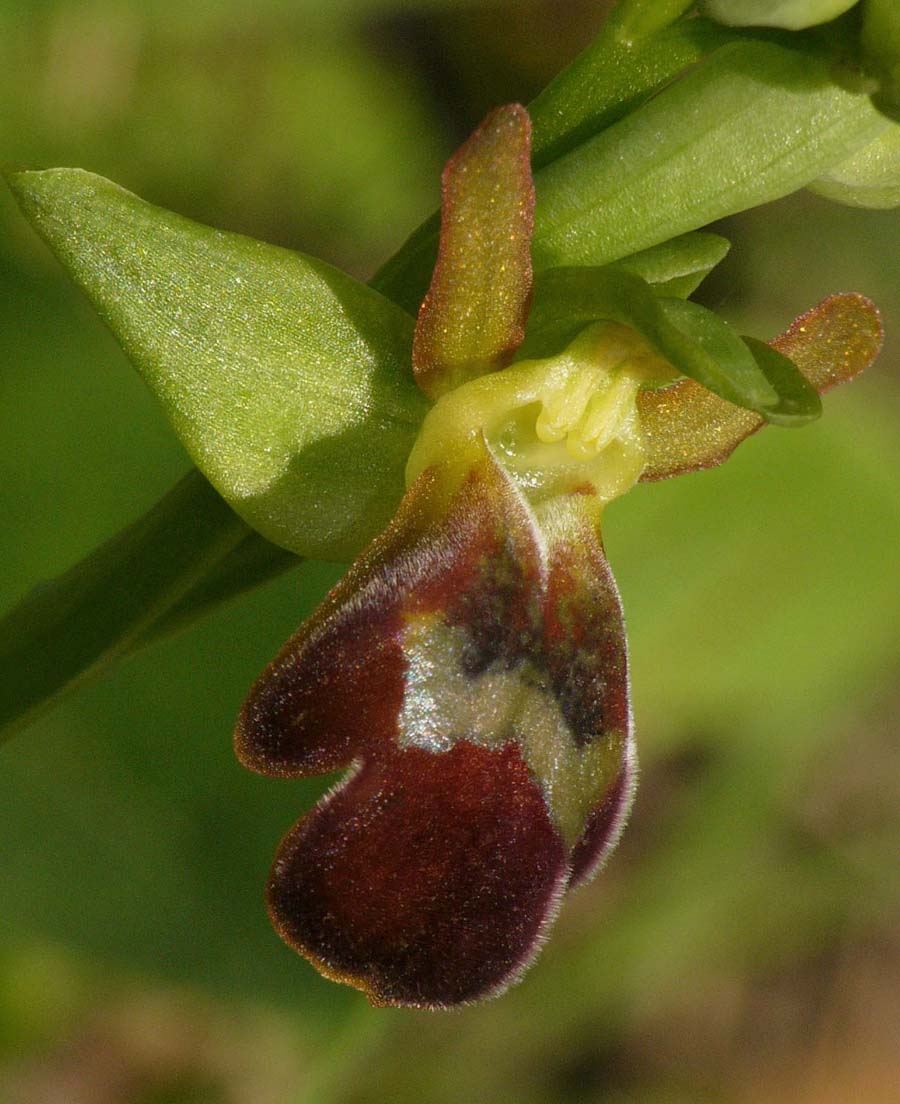
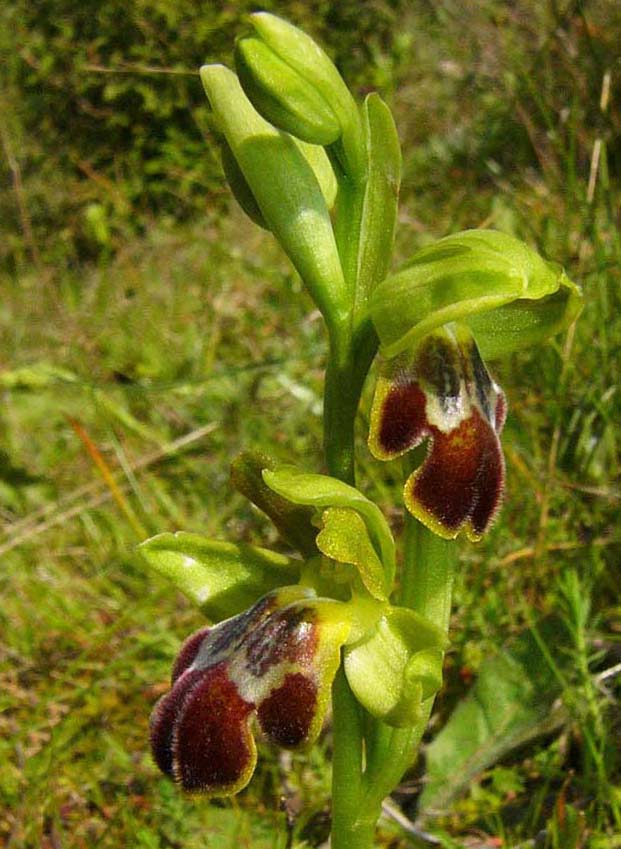
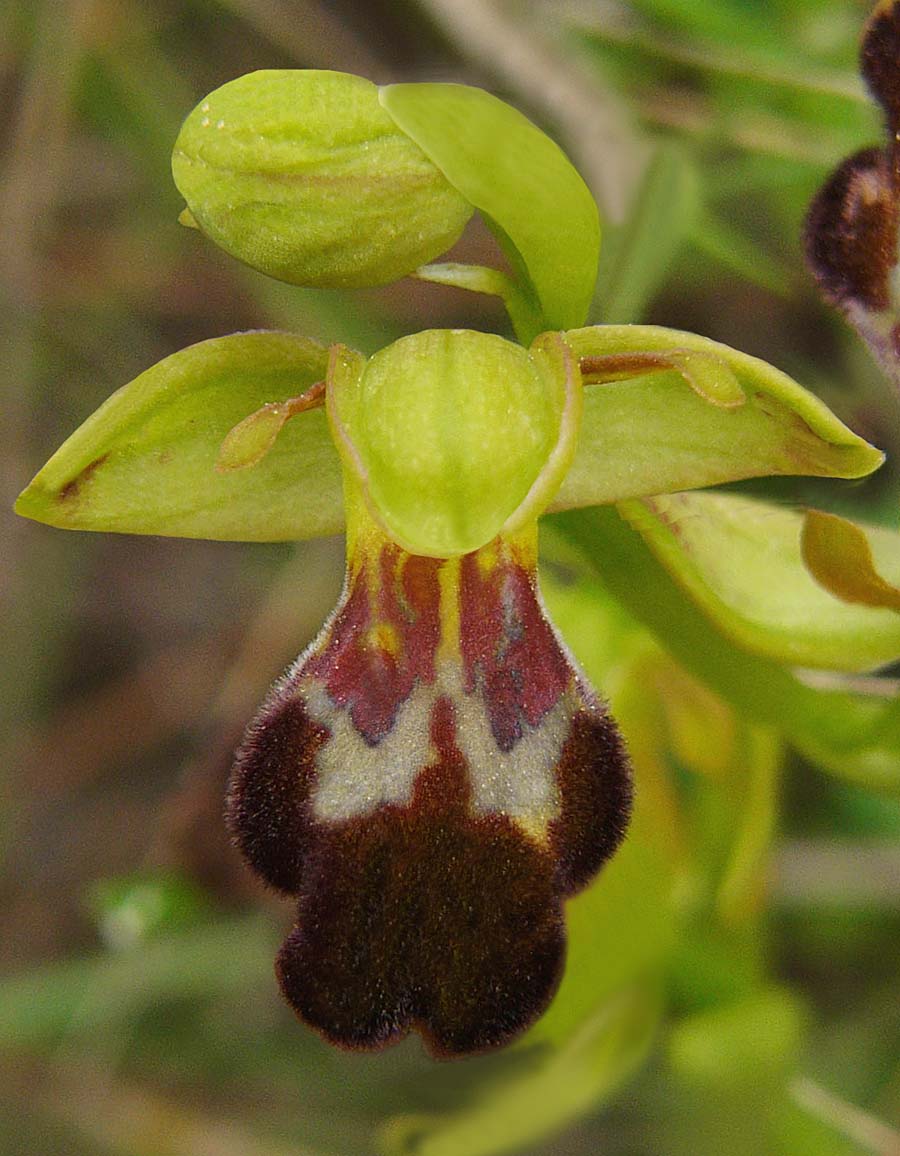
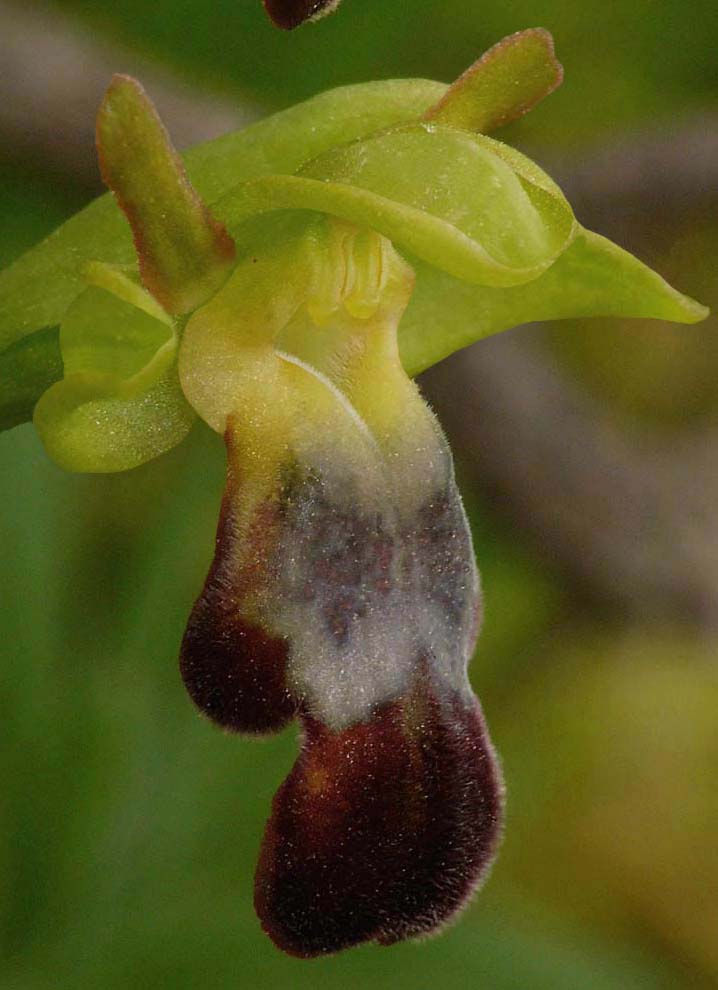
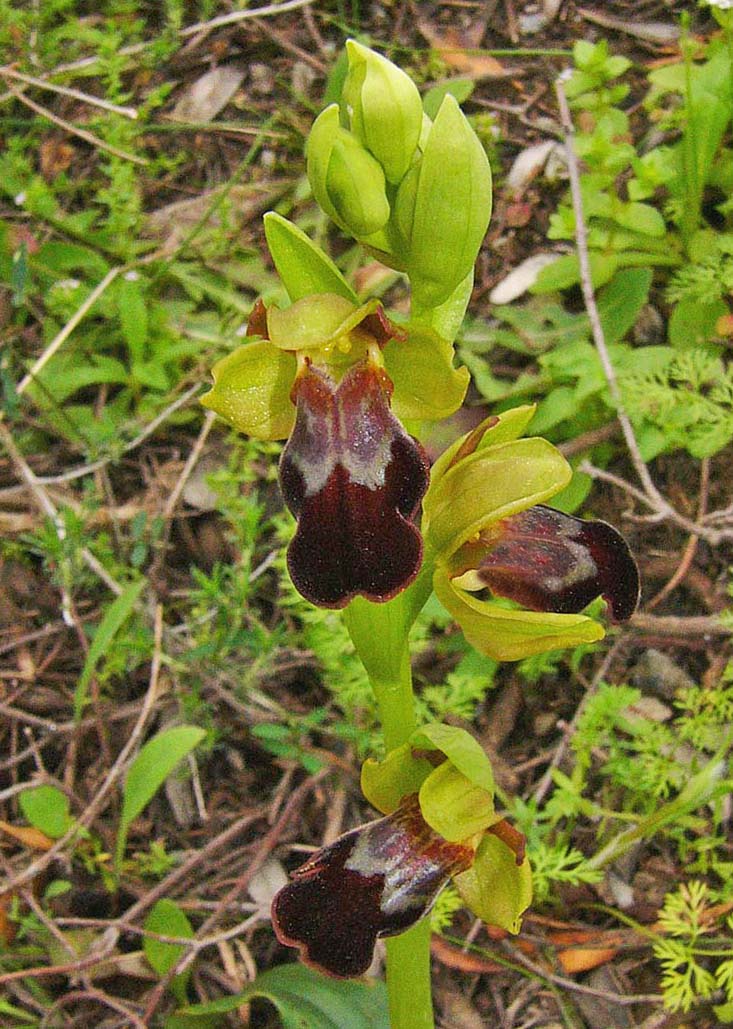
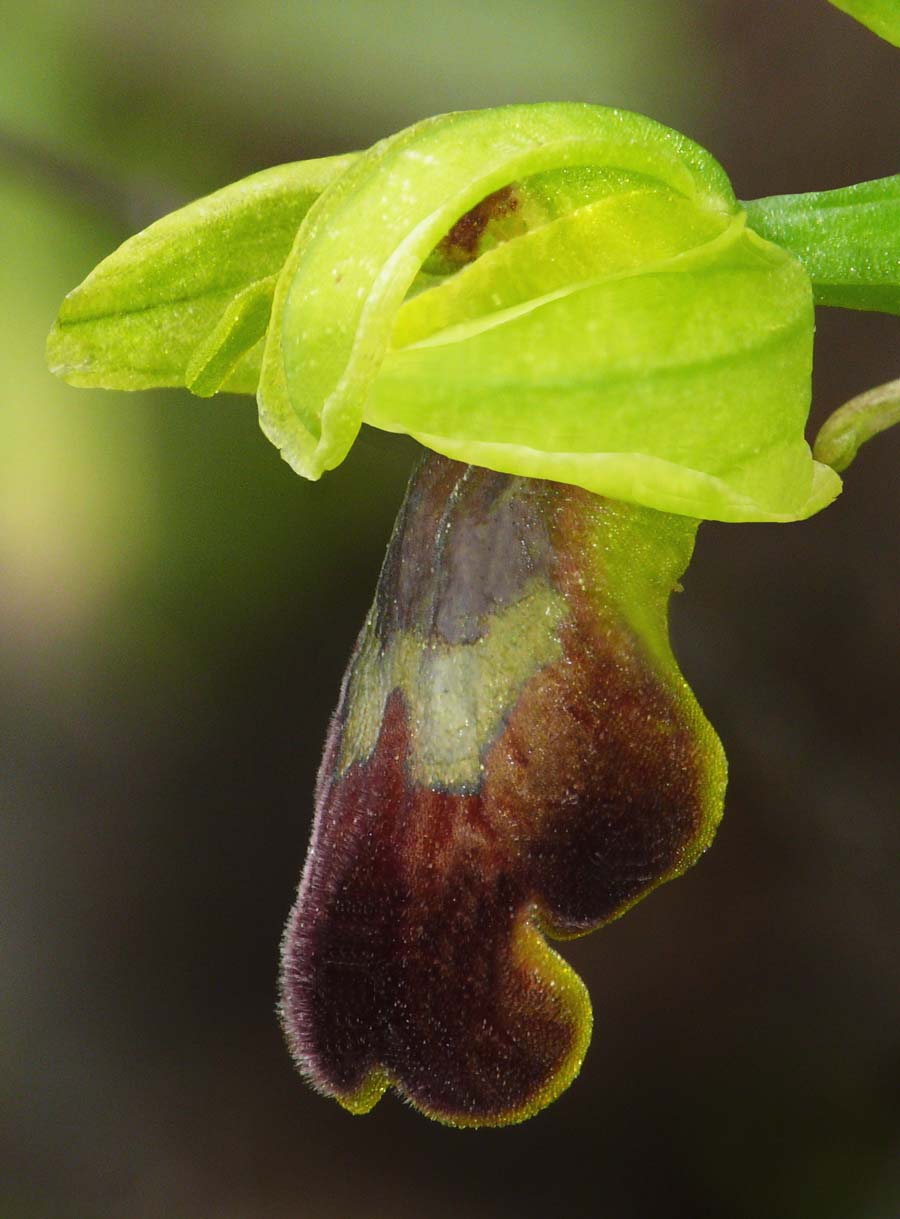
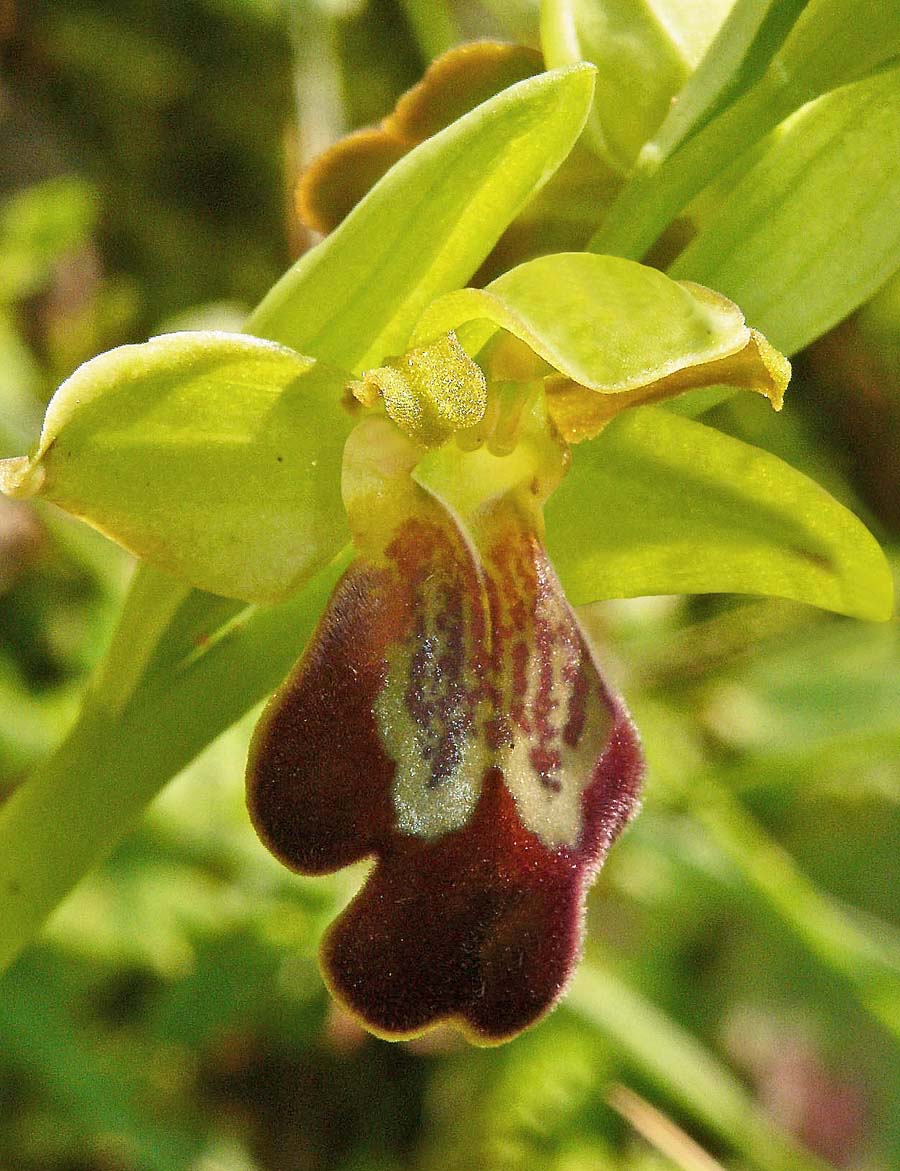
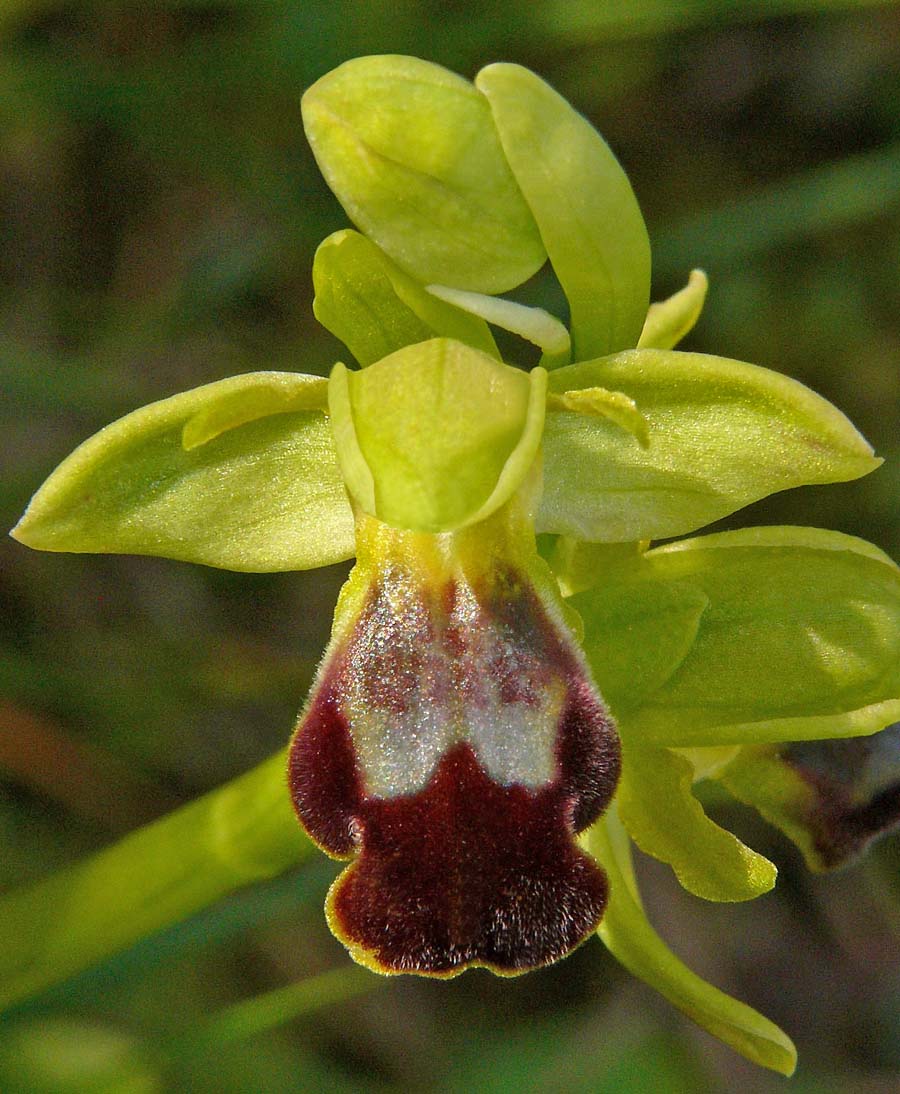
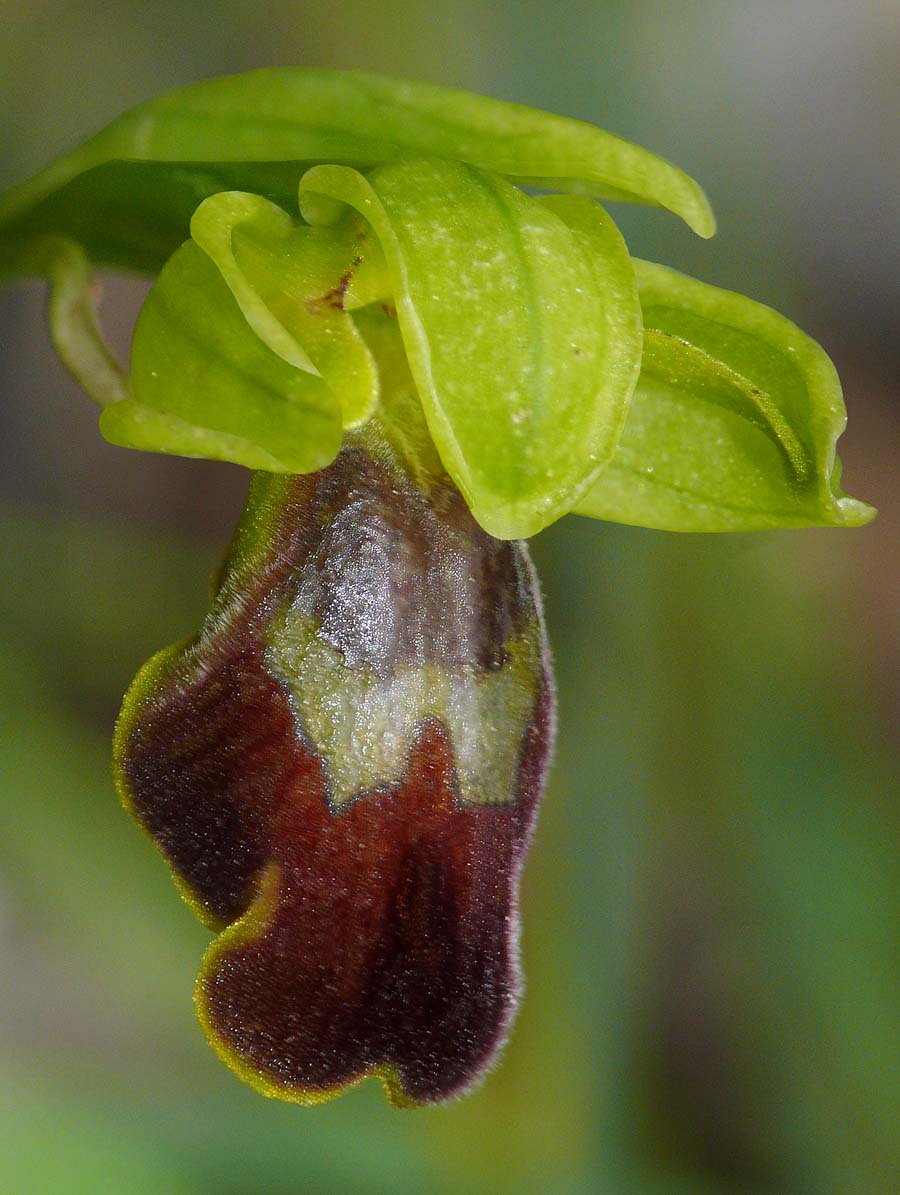
Delforge first described O. pelinaea in 2007 from the island of Chios where it was found on Mount Pelineo but since then it has been discovered to be widespread and common on many other eastern Aegean islands and probably also occurs in western Turkey. The illustrations are from Lesbos, Kos and Chios, demonstrating very well the significant variation in appearance of this species. It is thought to be of hybrid origin, with the hybridogenous O. sitiaca as one of its forebears. Its perhaps unsurprising therefore that O. pelinaea is so variable.
Perhaps the most consistent identifying feature of O. pelinaea is the broad silvery omega at the tip of the speculum, very reminiscent of O. sitiaca but with a pronounced V shaped groove in the basal area. The lip is three lobed and generally with a yellow or orange margin though this feature is often disguised by the strong reflexation. As with other members of the O. omegaifera grouping, it is both large flowered and a particularly robust plant. The photographs date from the first week of April.

.