O. sicula was first described by Tineo from Palermo, Sicily in 1846 and is a member of the O. lutea group of Ophrys. This species was first recognized as a variety of O. lutea , but over the years it has enjoyed several synonyms, including O. minor and O. minor ssp galilaea. The turn of the century however has seen some substantial reclassification within the group and the species most affected has been O. sicula. Studies by Henneke and Munzinger (2014) concluded that the eastern Mediterranean populations of O. sicula differed from those in the west and further that they were a separate species closely resembling O. galilaea as described from Israel by Fleichmann and Bormueller in 1923. Additionally, some populations of the more darkly marked variants of O. sicula are also being reclassified, O. praemelena being but one example.
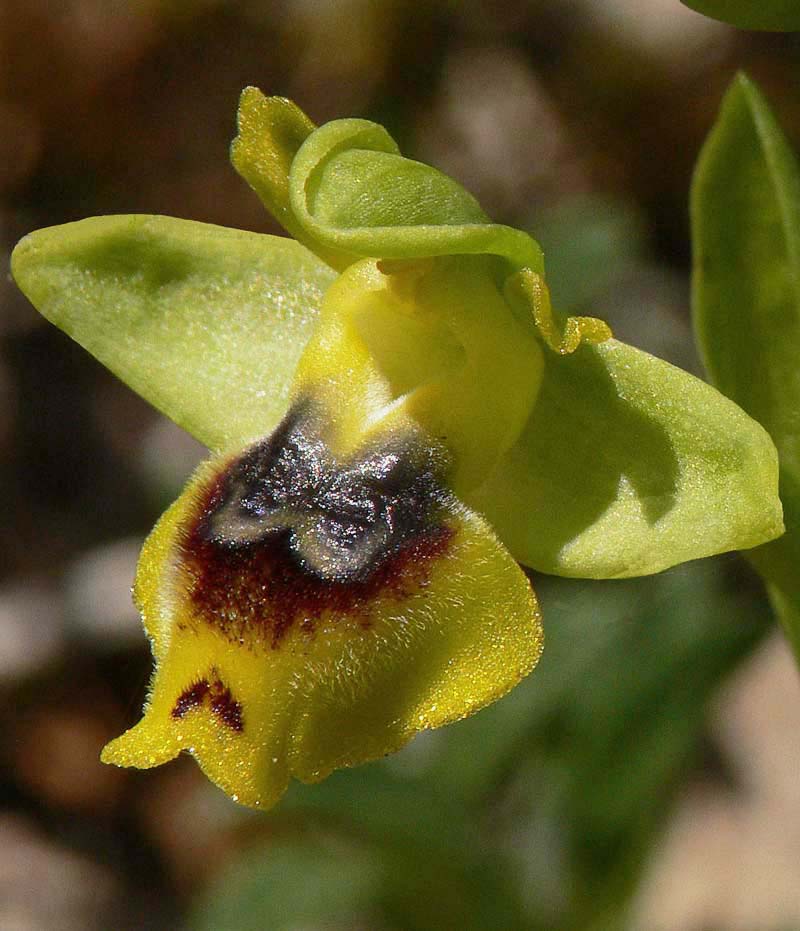
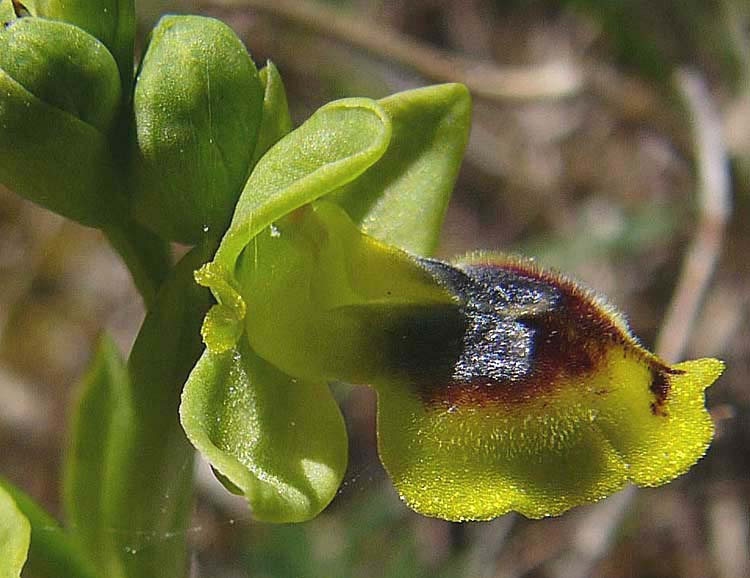
The distribution of O. sicula has therefore been reduced by a significant geographic proportion and now comprises mainland Italy, Sicily, Sardinia, Corsica, Croatia and Slovenia. The identity of Greek populations seem to depend on which expert opinion you prefer and the status of north African plants is not currently known. In terms of identification, the key, as with O. phryganae, is to study its lateral profile, from which you will note that the median lobe from the top of the stigmatic cavity to the inner edge of the margin is only gently rounded and in some examples may appear virtually flat. In O. phryganae this area is noticeably geniculated and gives the impression of a knobbly knee joint ! The first photo illustrates this point very well and also highlights the relatively large stigmatic cavity as compared to O. lutea.
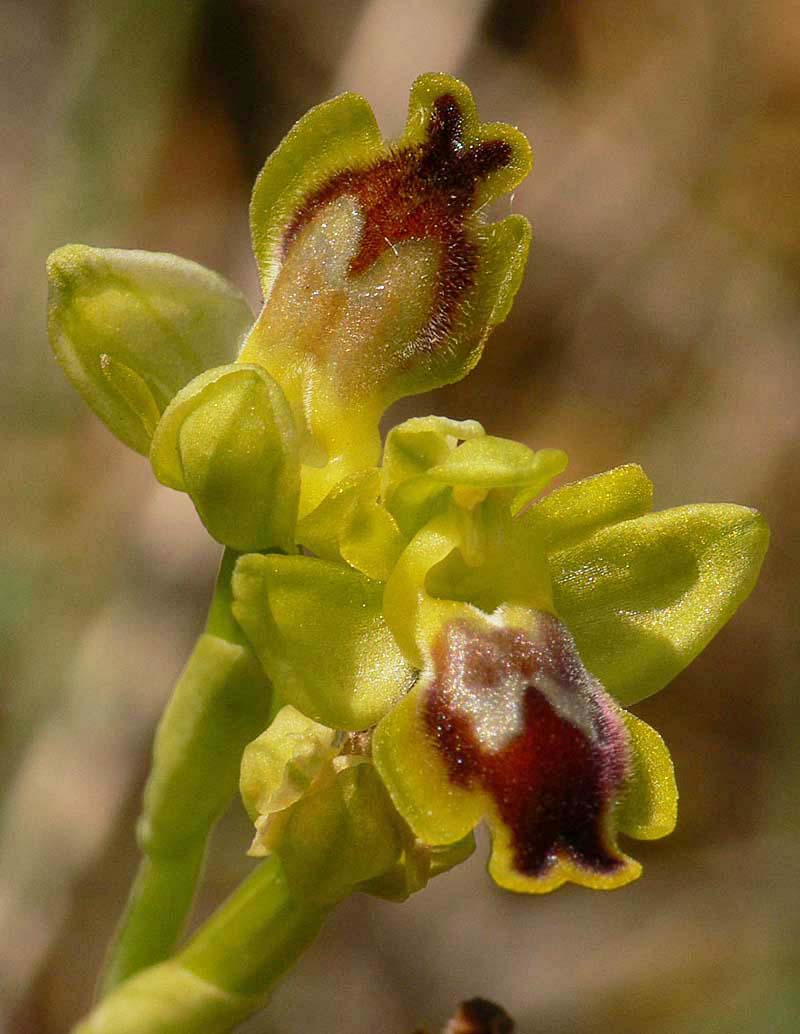
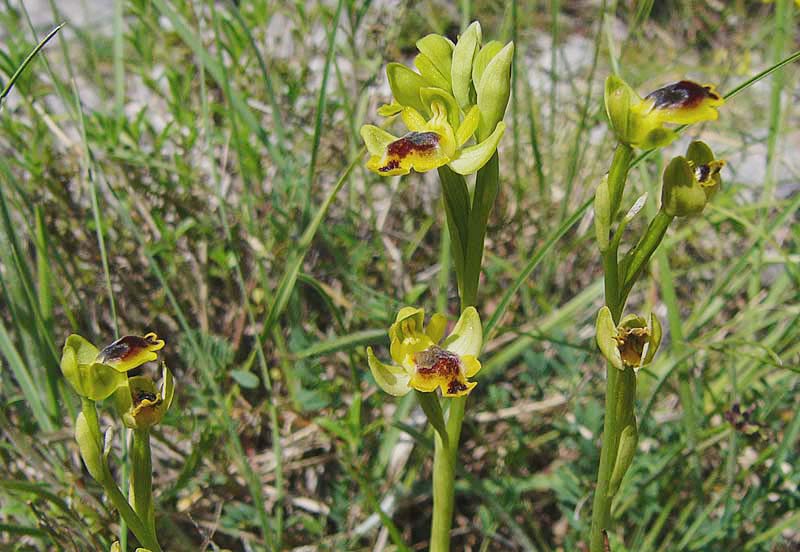
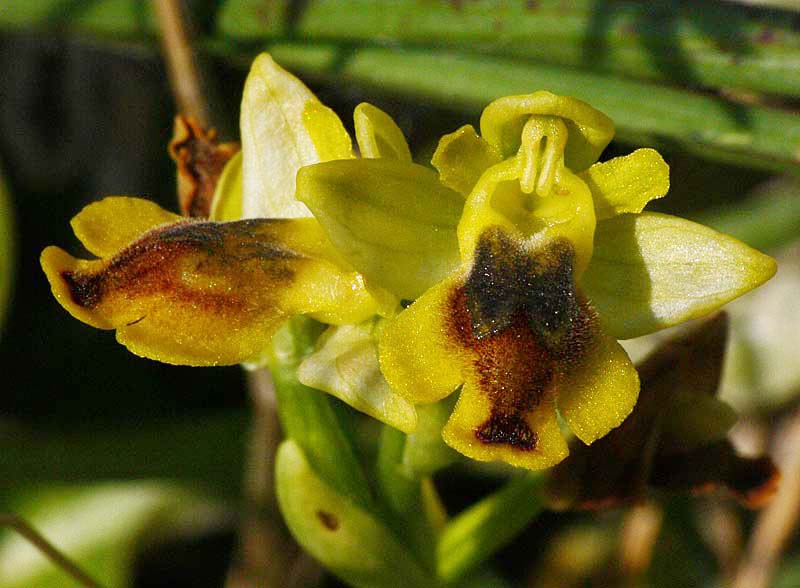
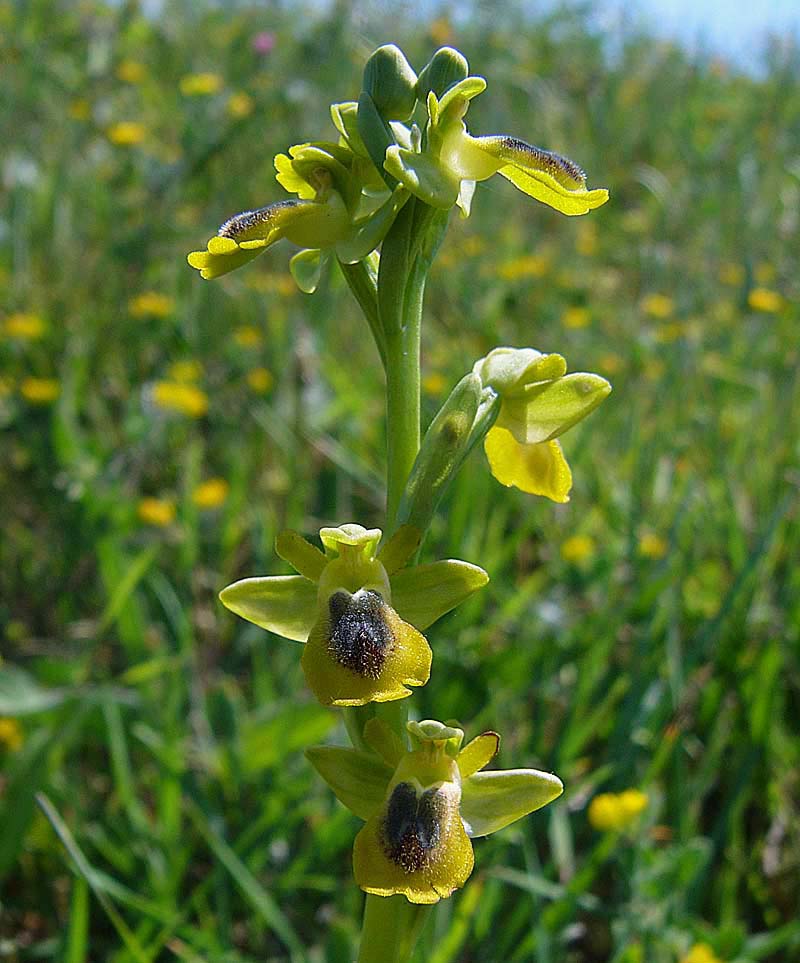
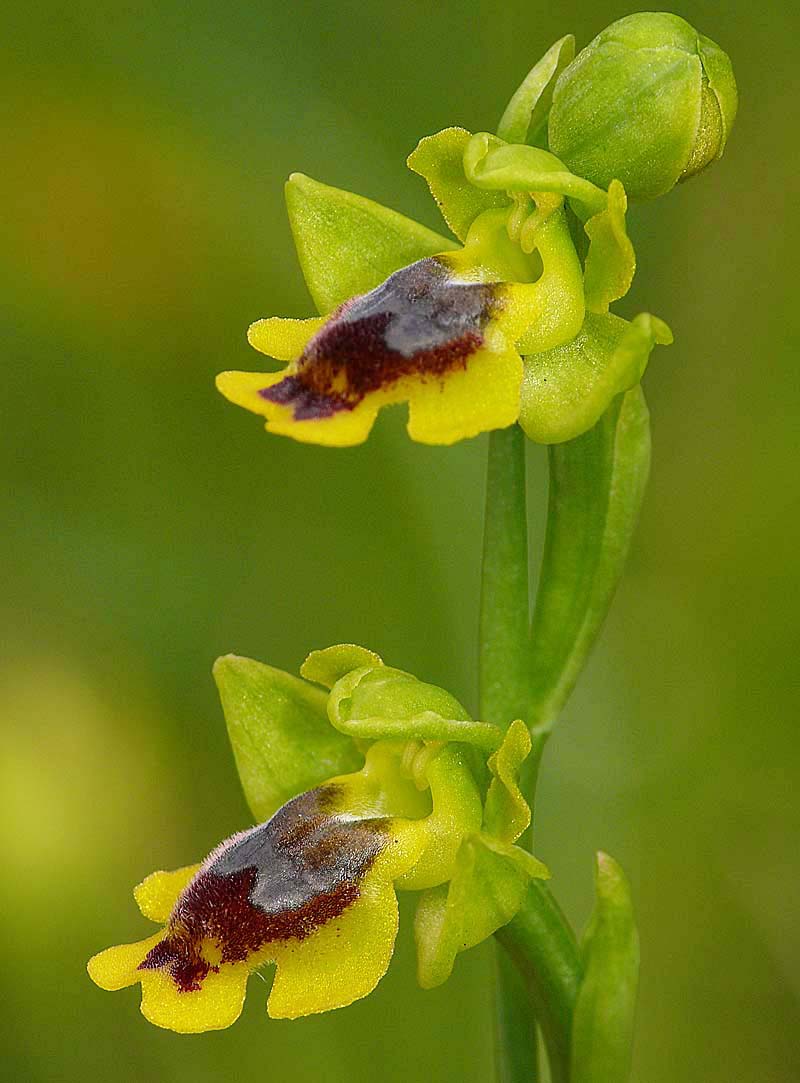
The photos come from Gargano, Italy and date from the end of April.


.