O. phryganae is one of 11 members of the O. lutea group and was first described from Crete in 1991. Its name refers to the plant phrygana which gives its name to a habitat type, particularly in Greece (in France it is more familiarly known as garigue).
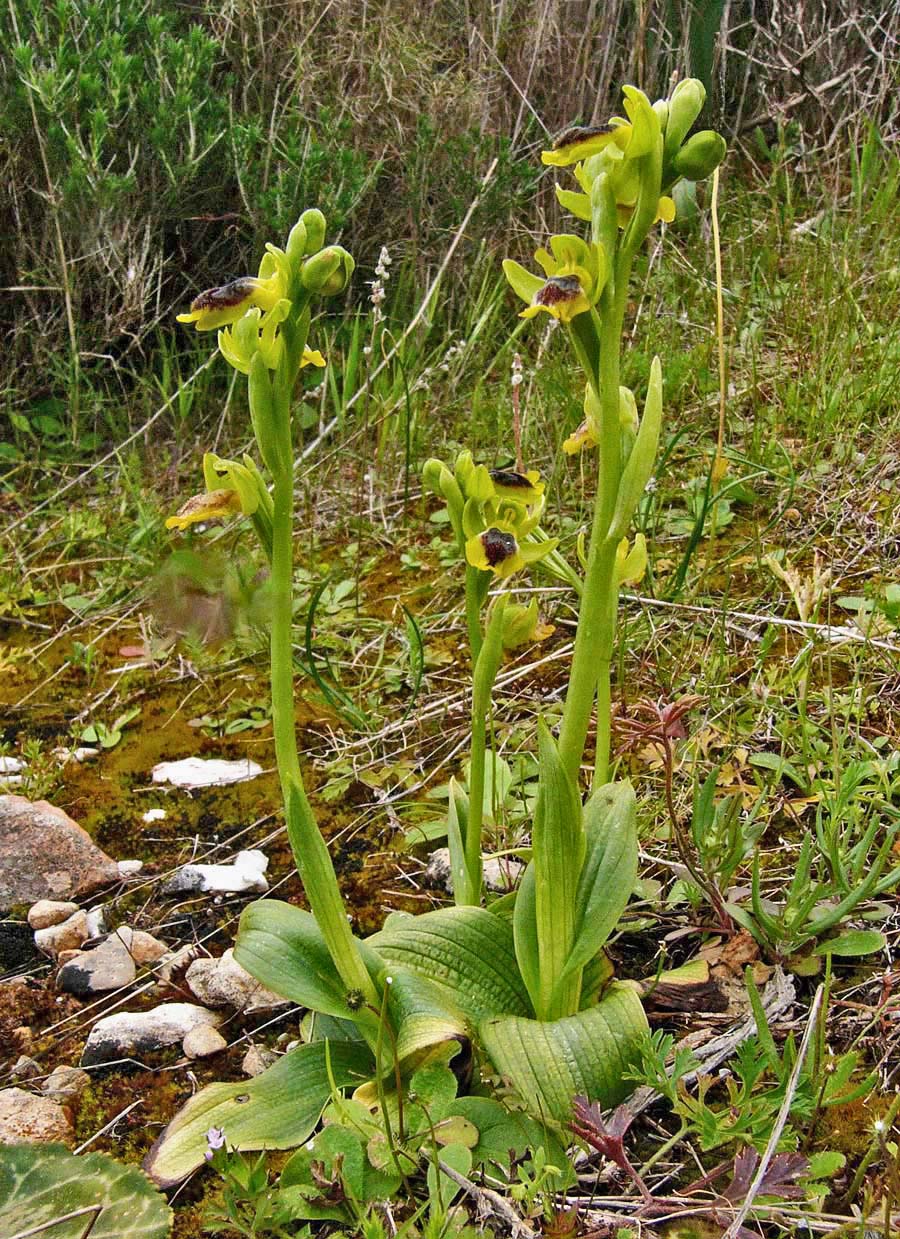
Although widespread through the central and eastern Mediterranean this species is not generally found in the huge numbers that can be the case with O. sicula and O. lutea. The fact that it can grow individually or in smaller groups and often amongst large colonies of its commoner brethren probably accounts in part for its perceived scarcity. In fact we suspect that it is a much overlooked orchid that is probably locally common.
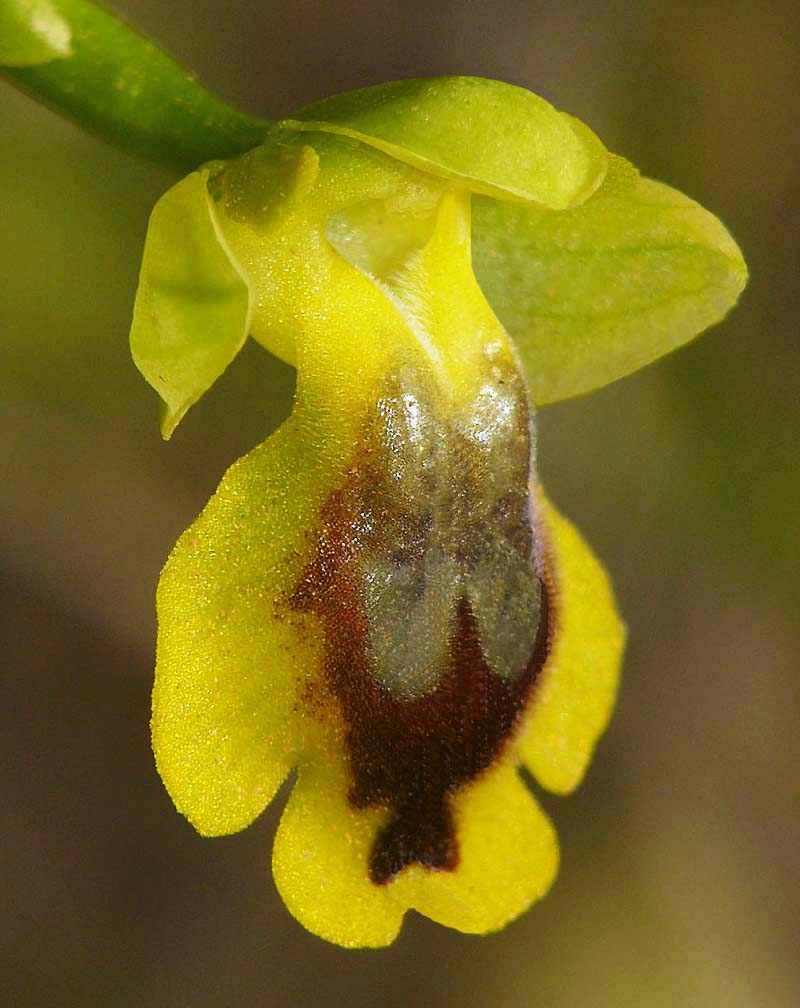
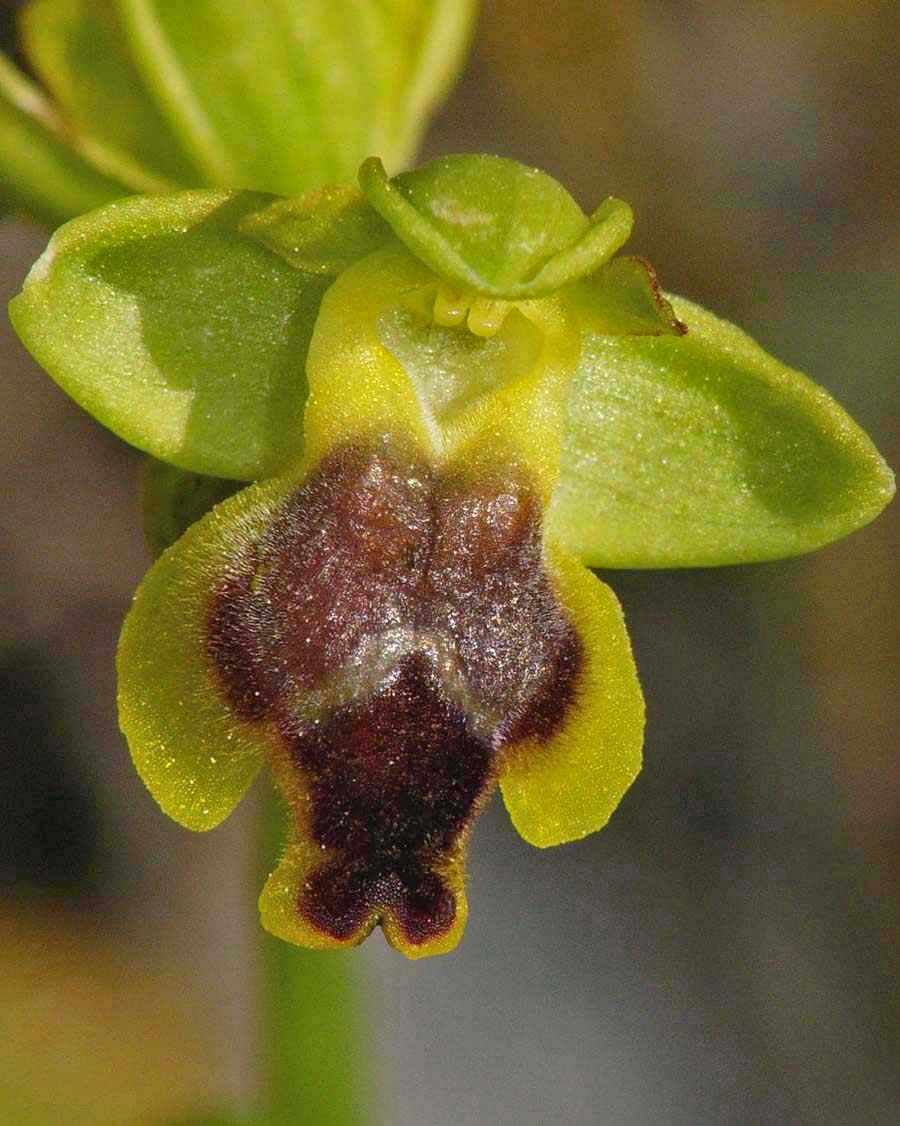
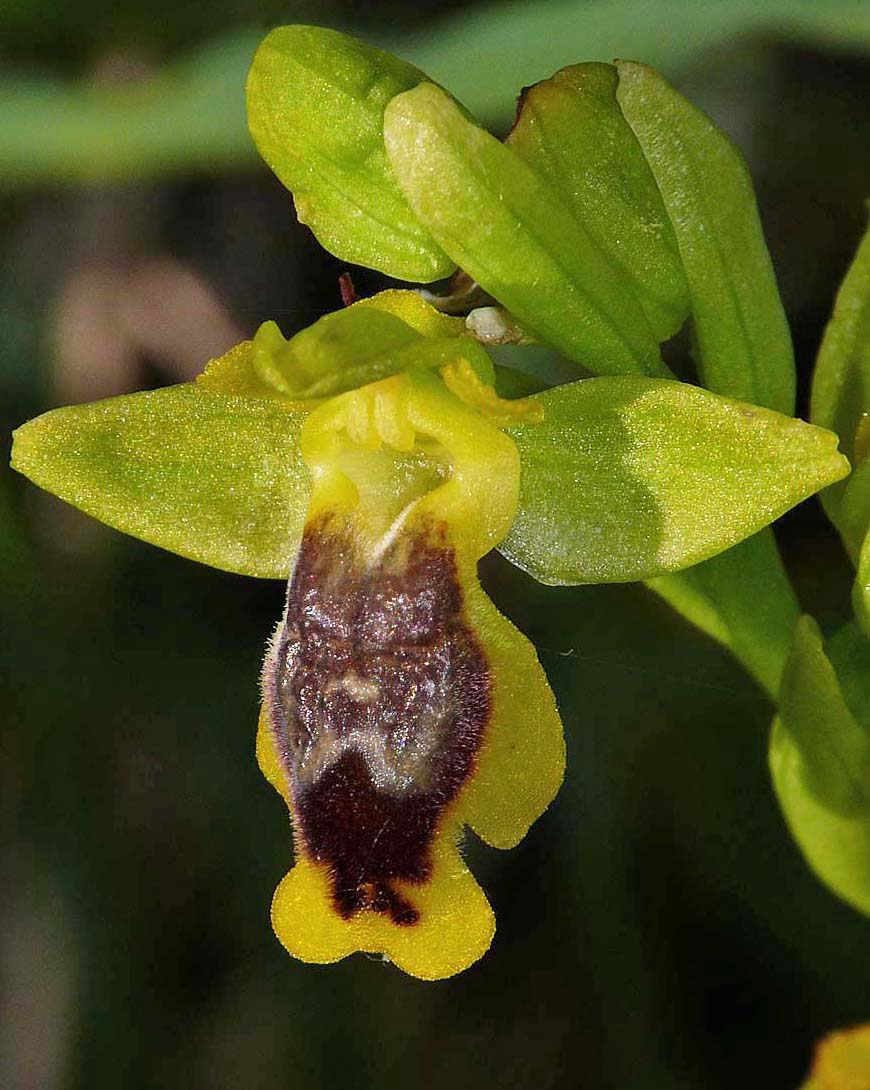
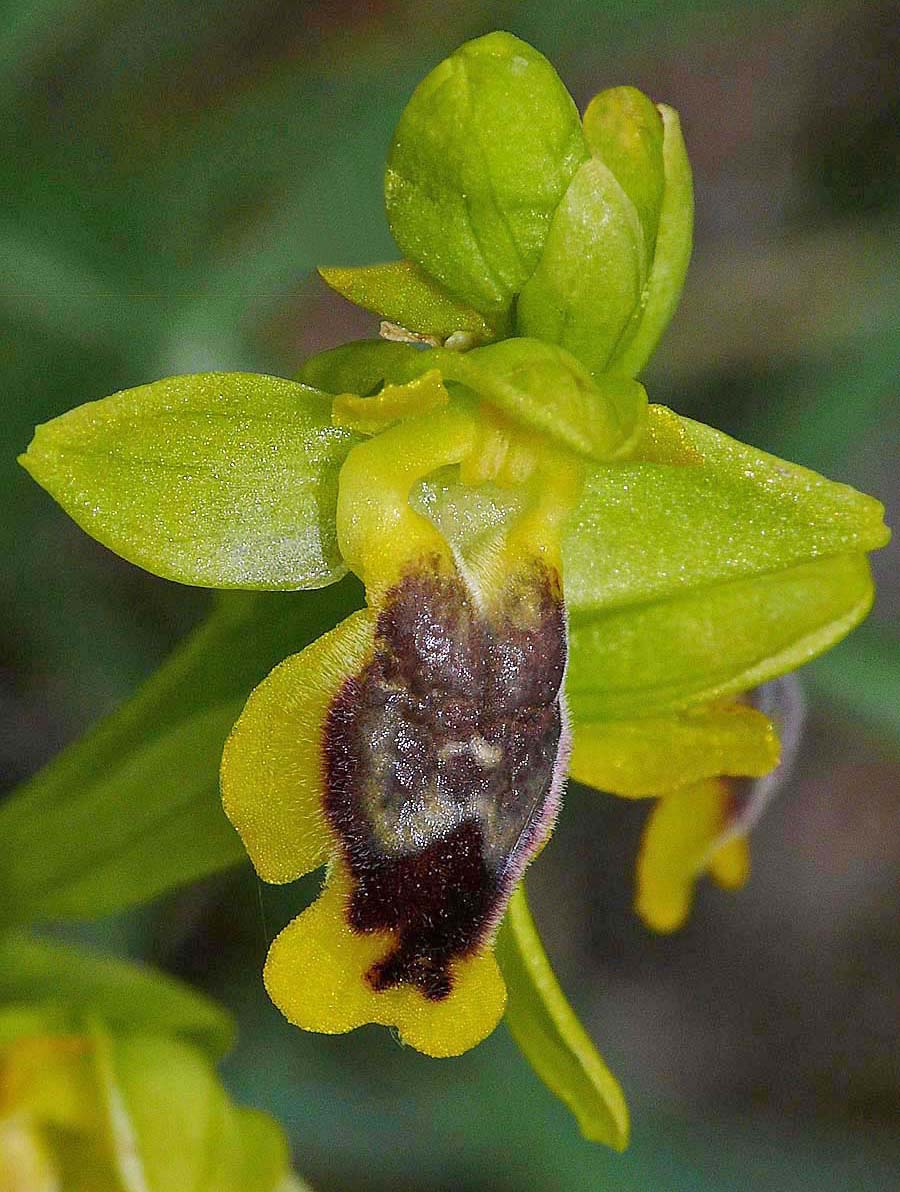
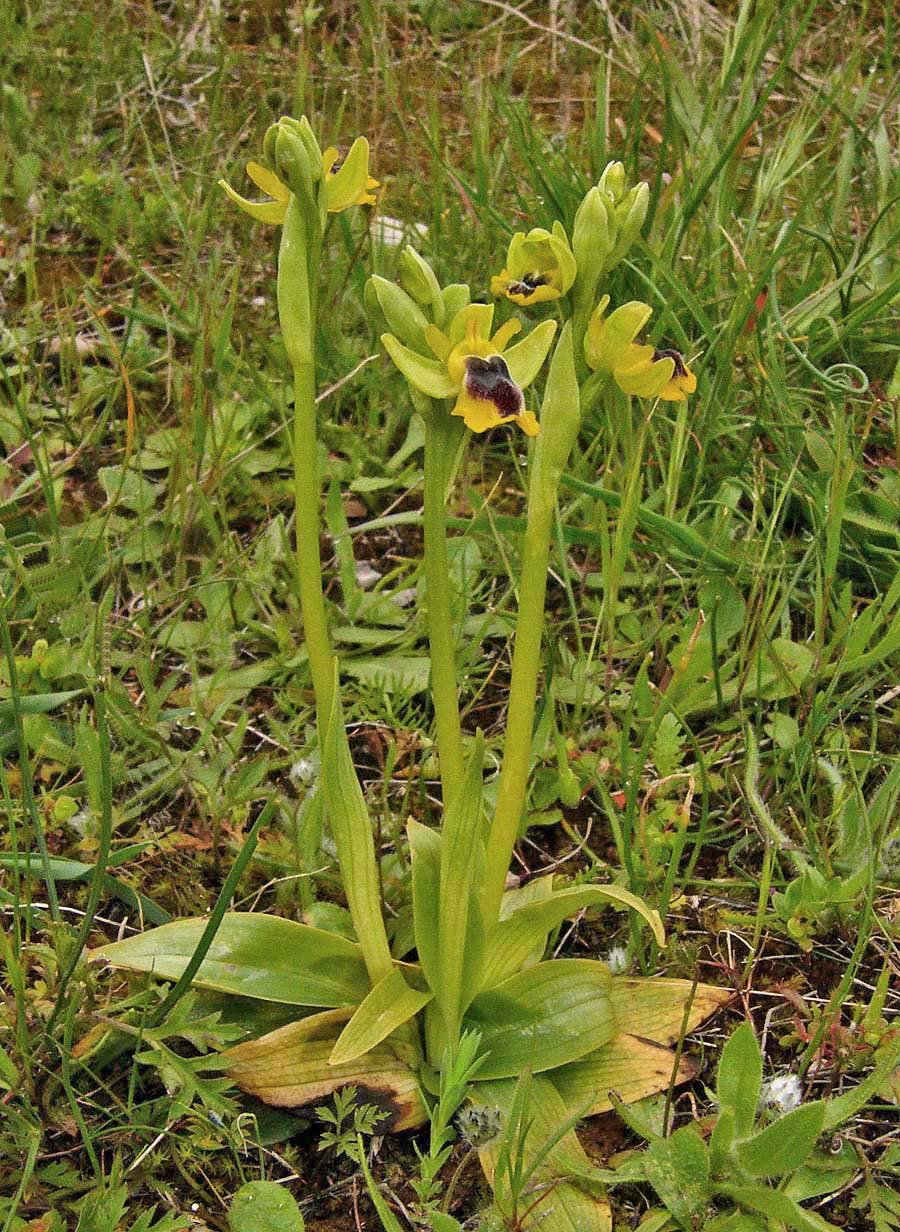
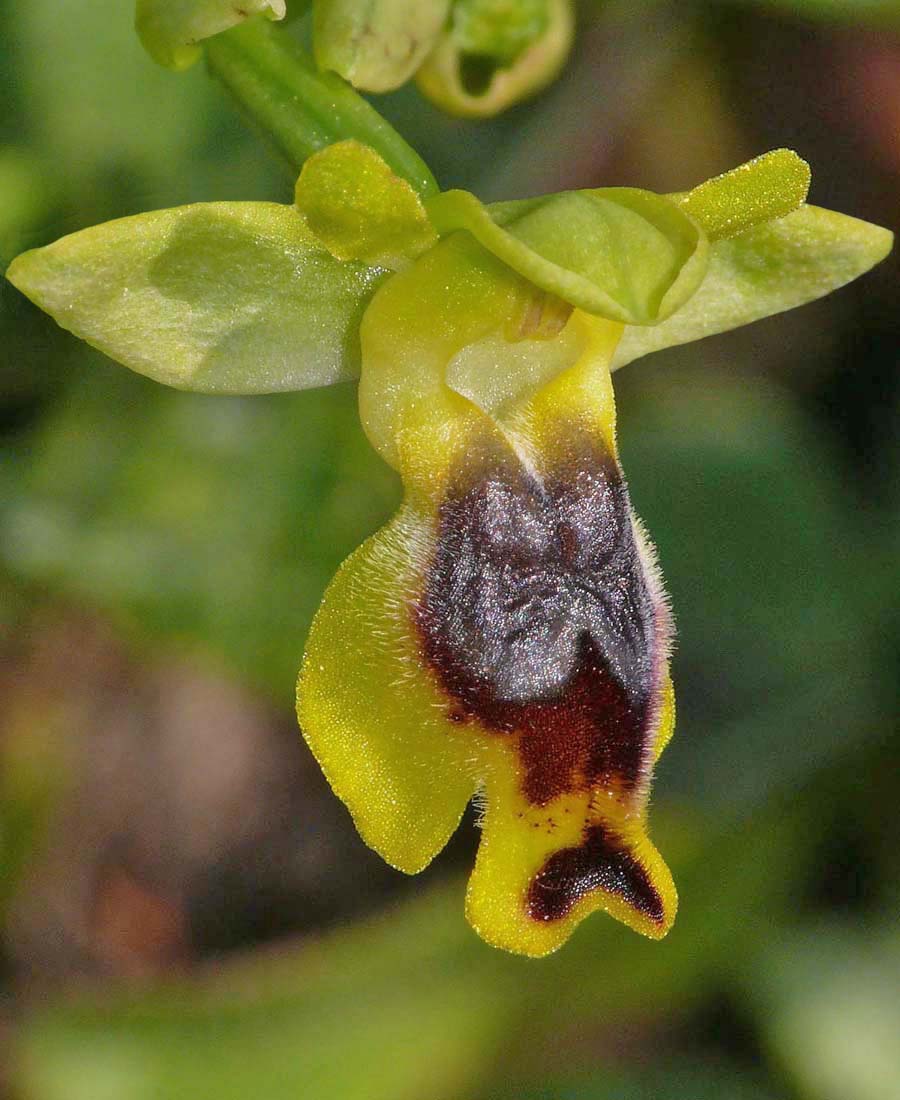
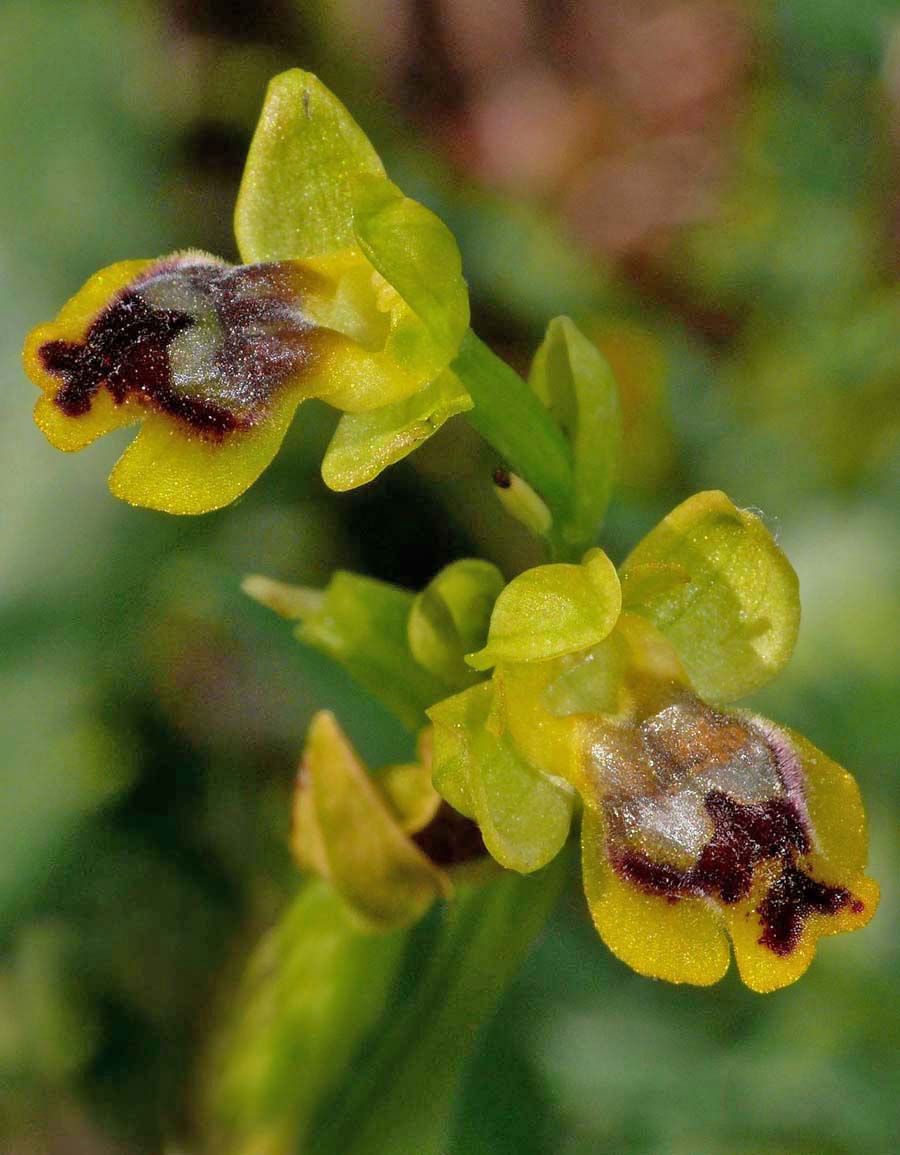
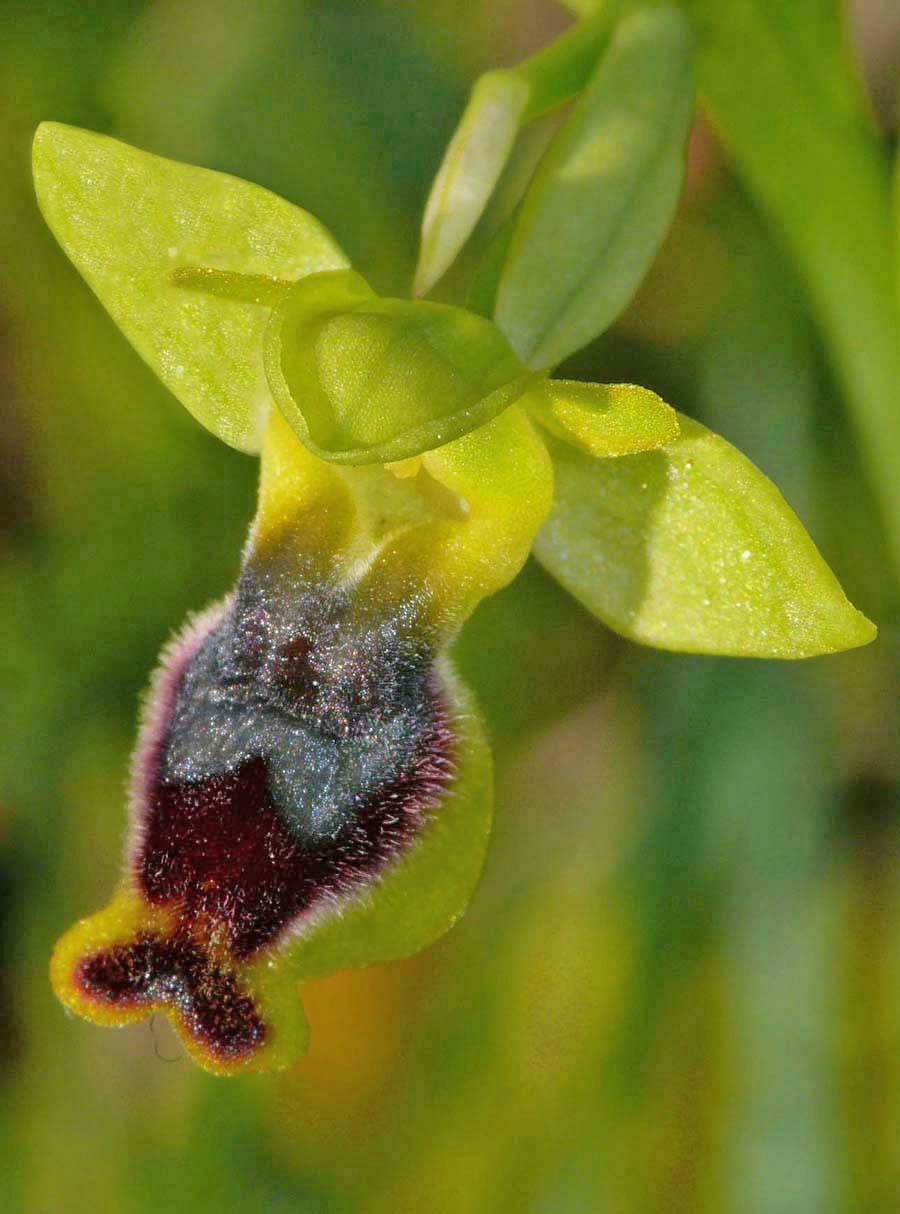
Identification is not difficult and there are two important features that differentiate it from its cousins. The first of these is size, which is small, being around half that of O. lutea. The second feature is the flower's profile, which as can be seen from pictures 1 and 4 features two highly prominent basal prominences that produce the appearance of a flexed knee joint. In O. sicula the longitudinal profile is comparatively flat by comparison.
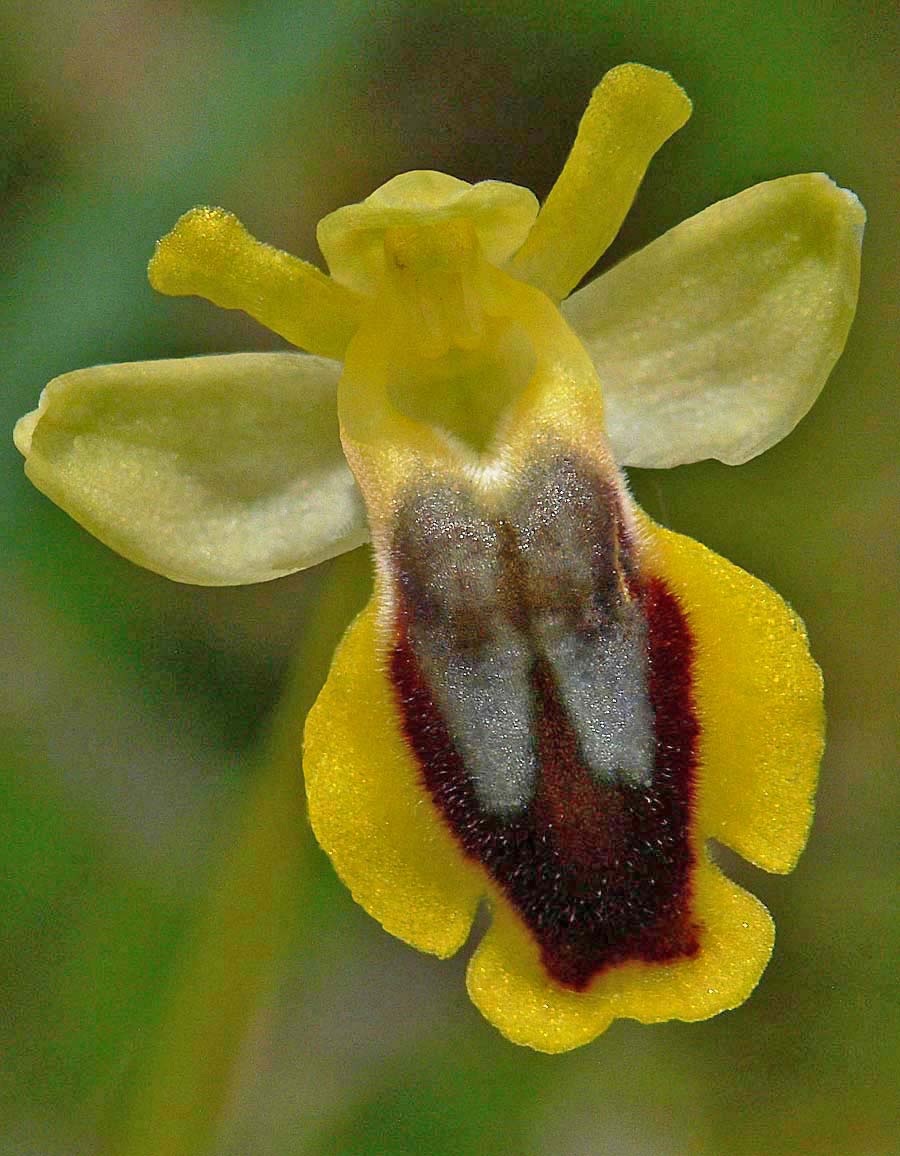
A further characteristic that differentiates it from O. lutea is the angle at which flowers are held relative to the stem. With O. lutea this is usually no more than 45 degrees whereas both O. phryganae and O. sicula hold them almost horizontally and occasionally even beyond this. The photos come from Lesbos, Gargano and Sicily, dating from the end of March to the last week of April.