This
species was first described by Cavanilles from Spain in 1753 and is probably the most
familiar of the "yellow bee orchids" throughout the Mediterranean.
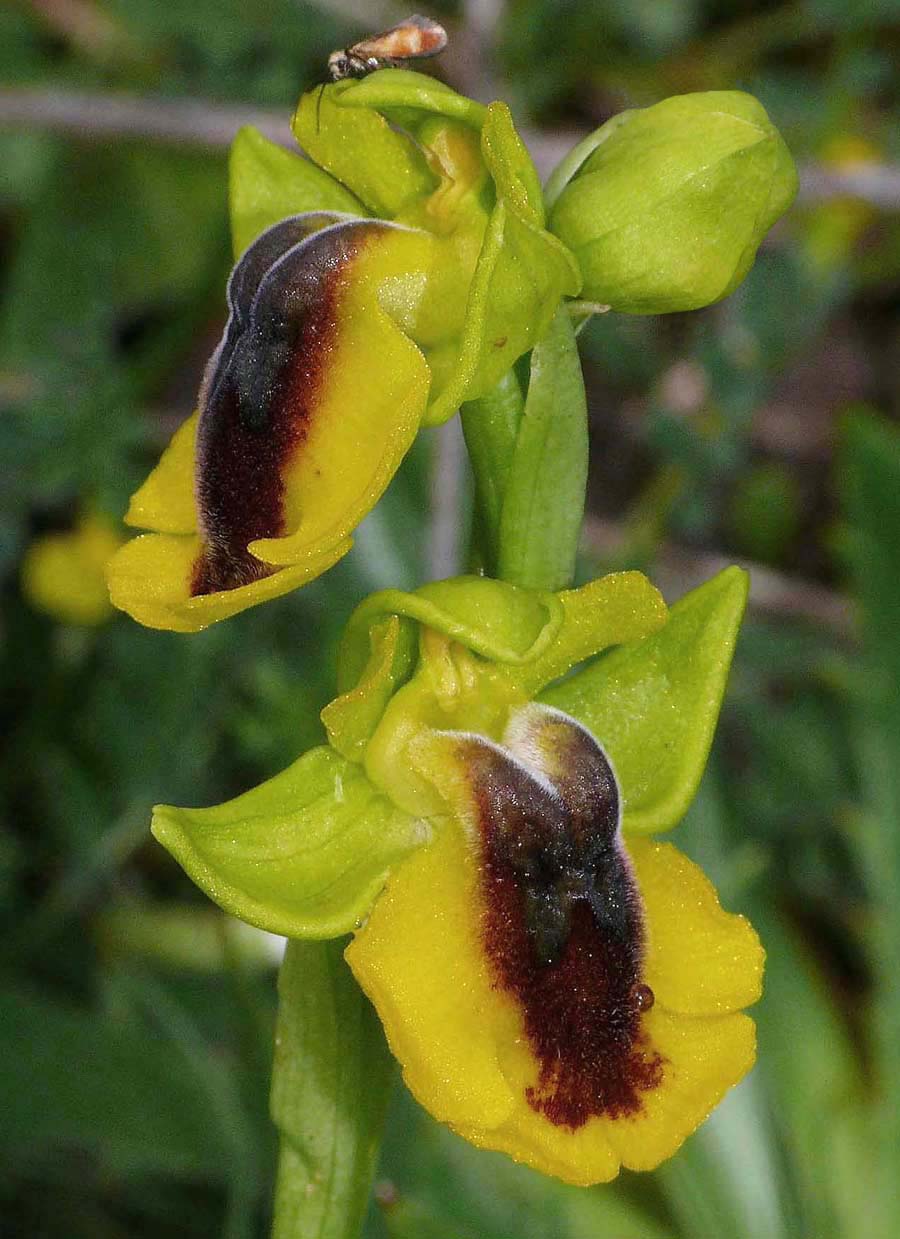
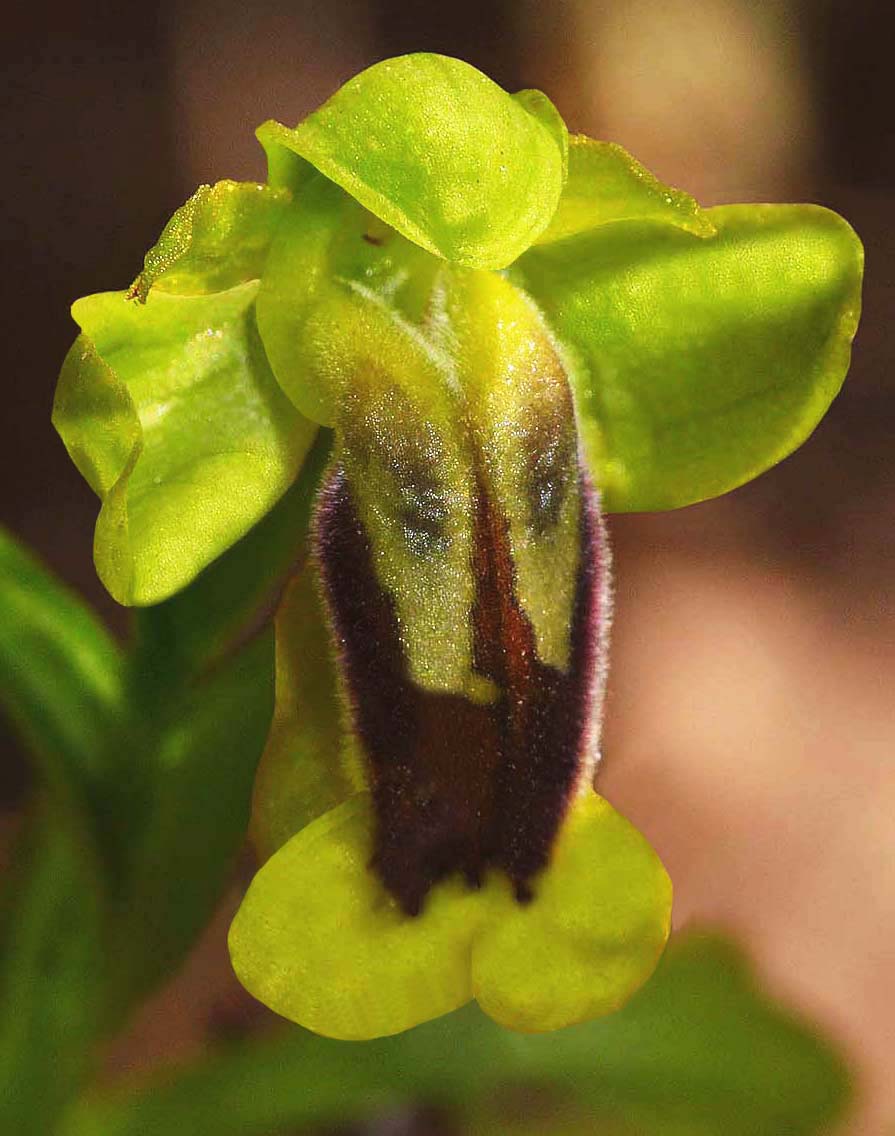
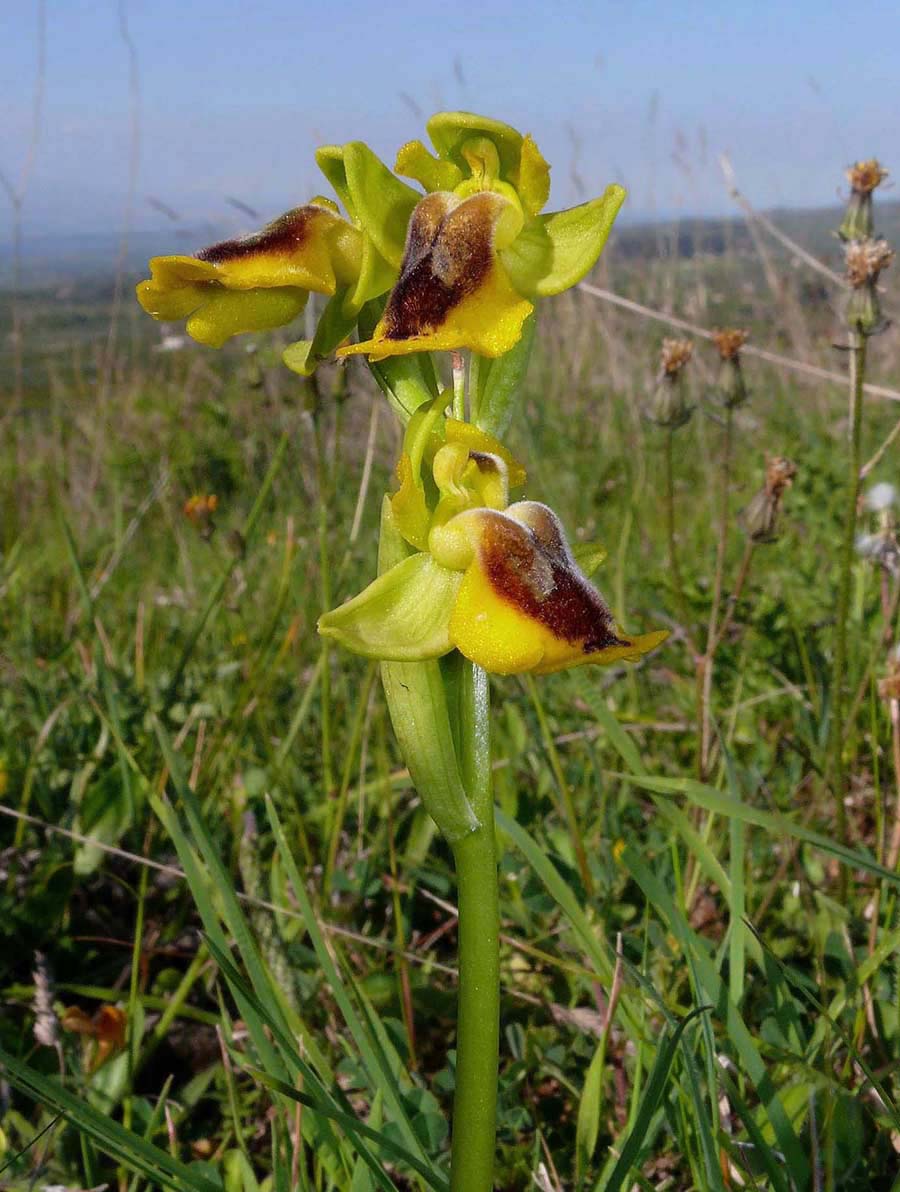
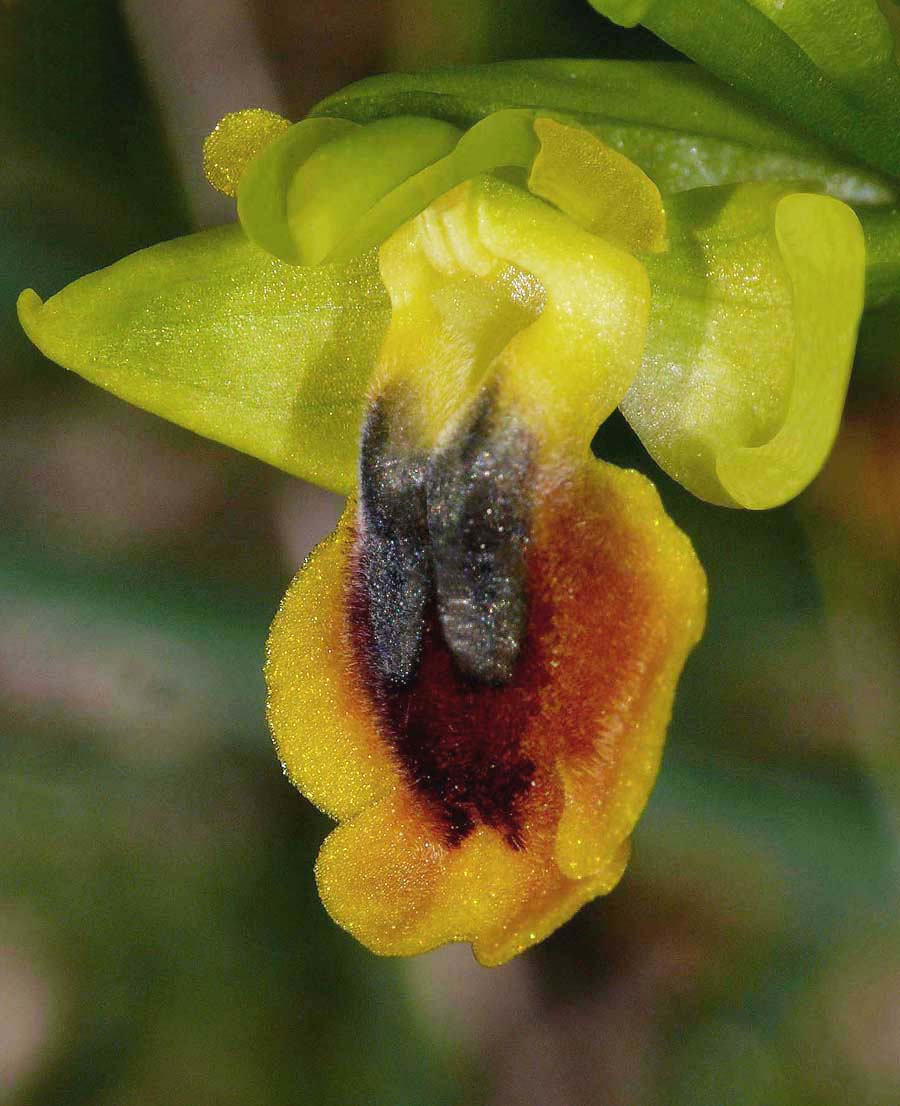
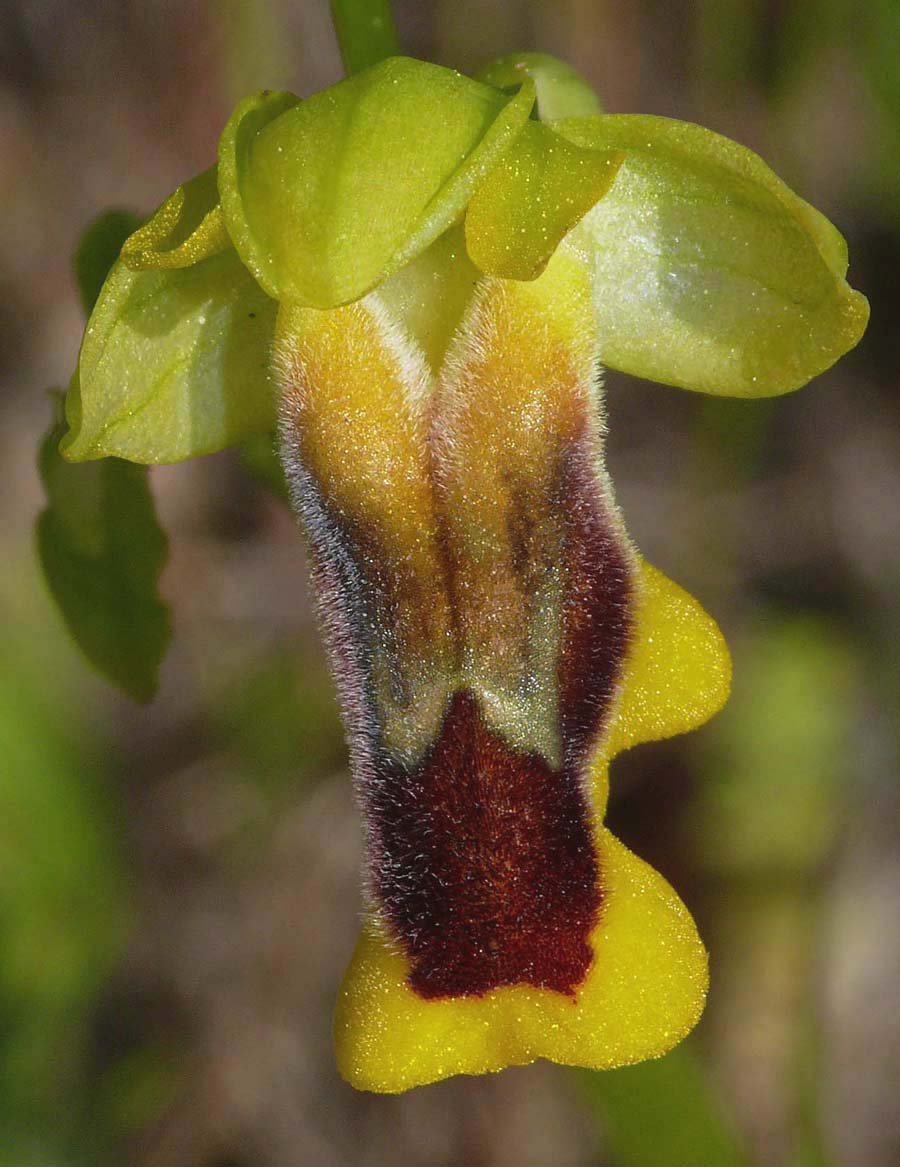
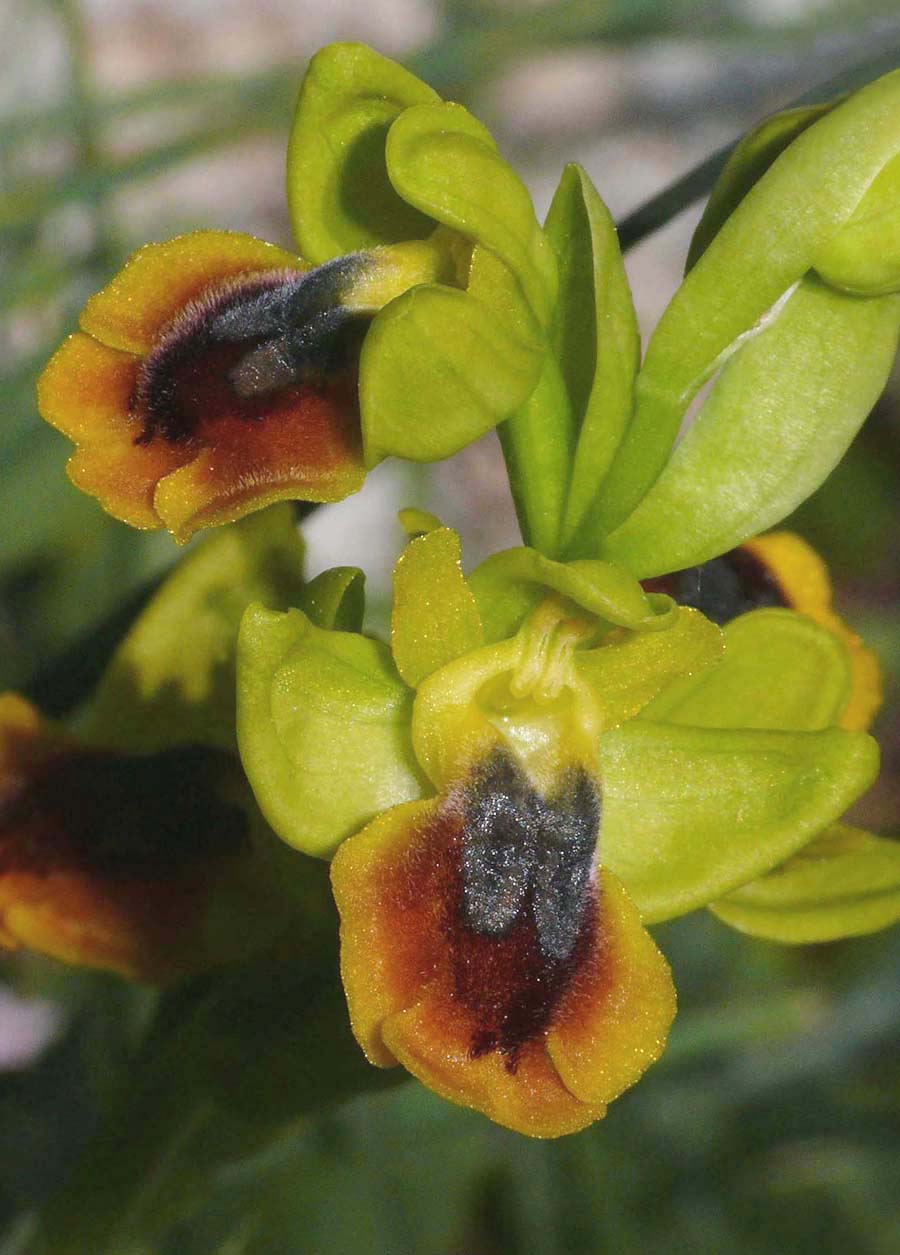
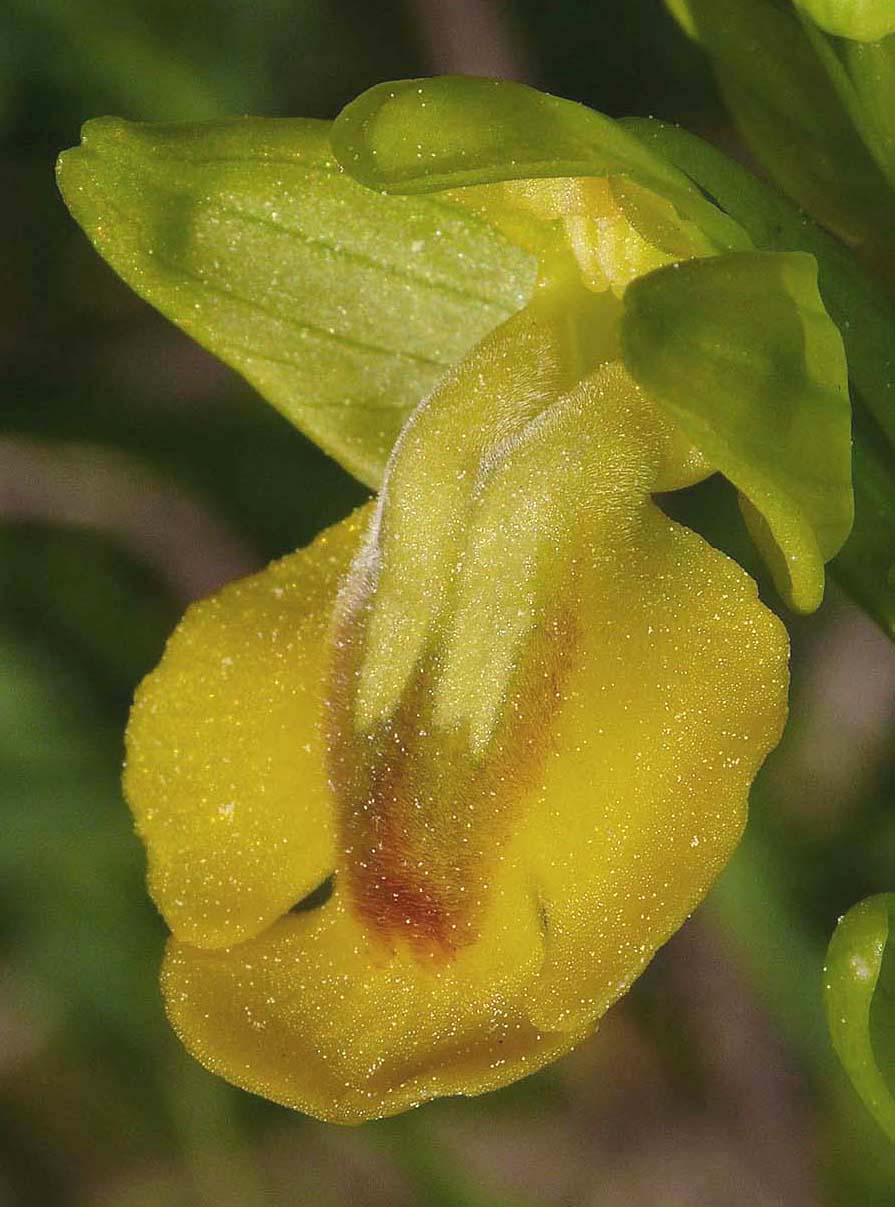
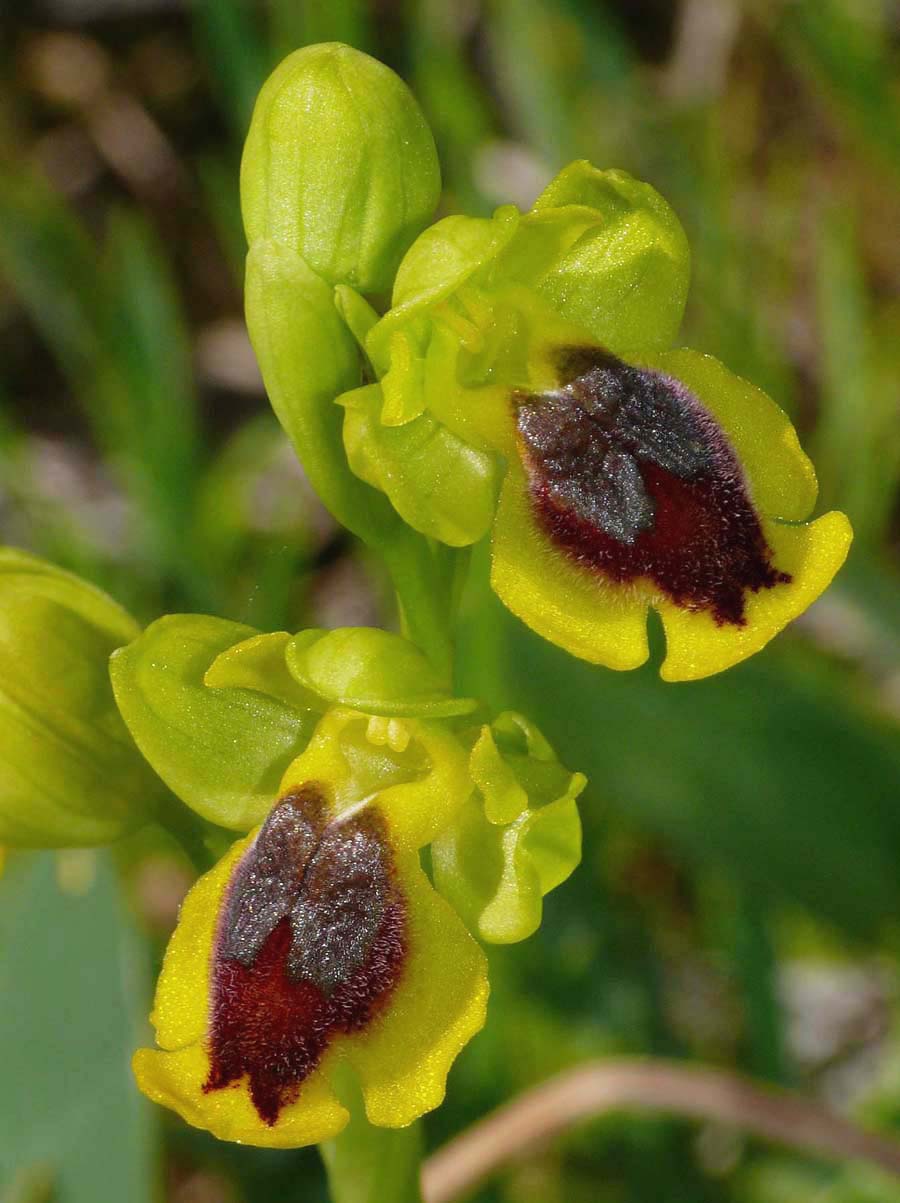
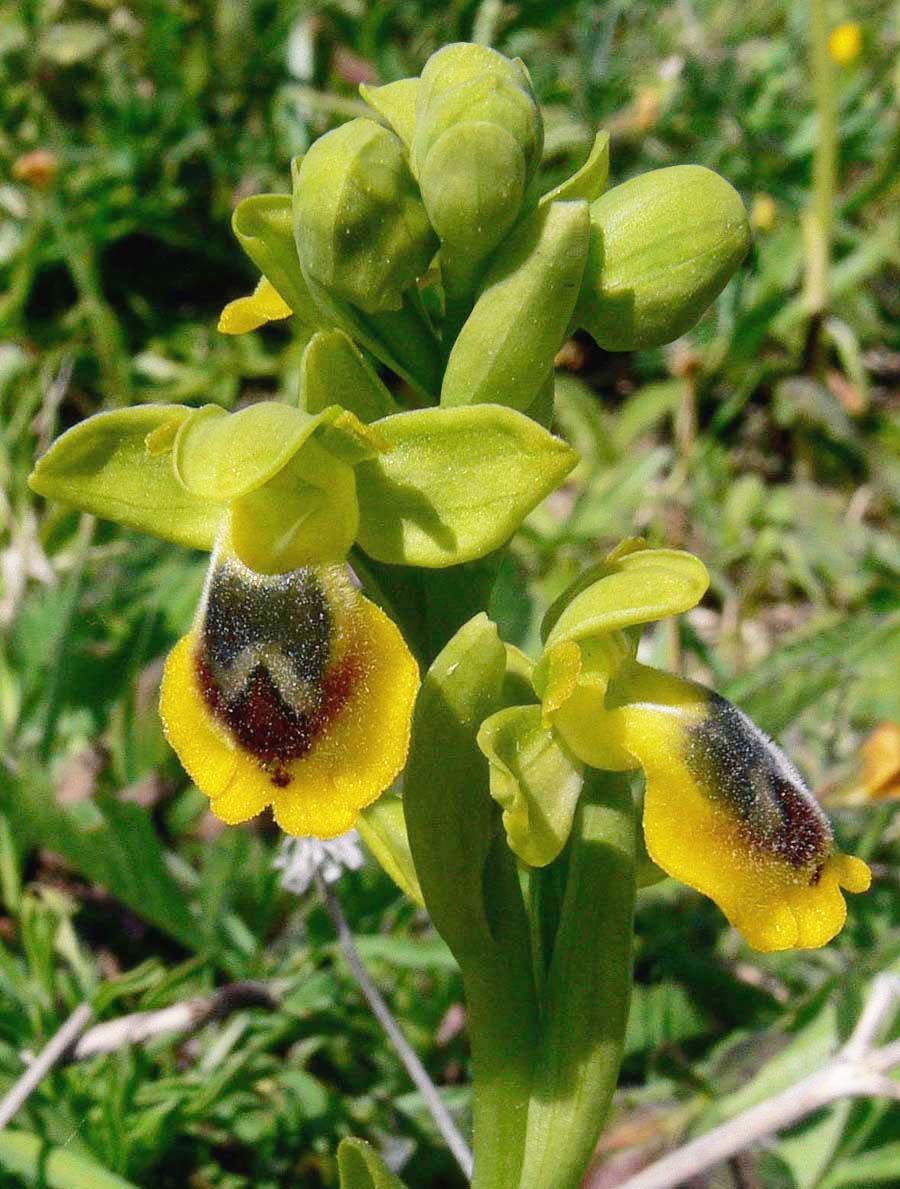
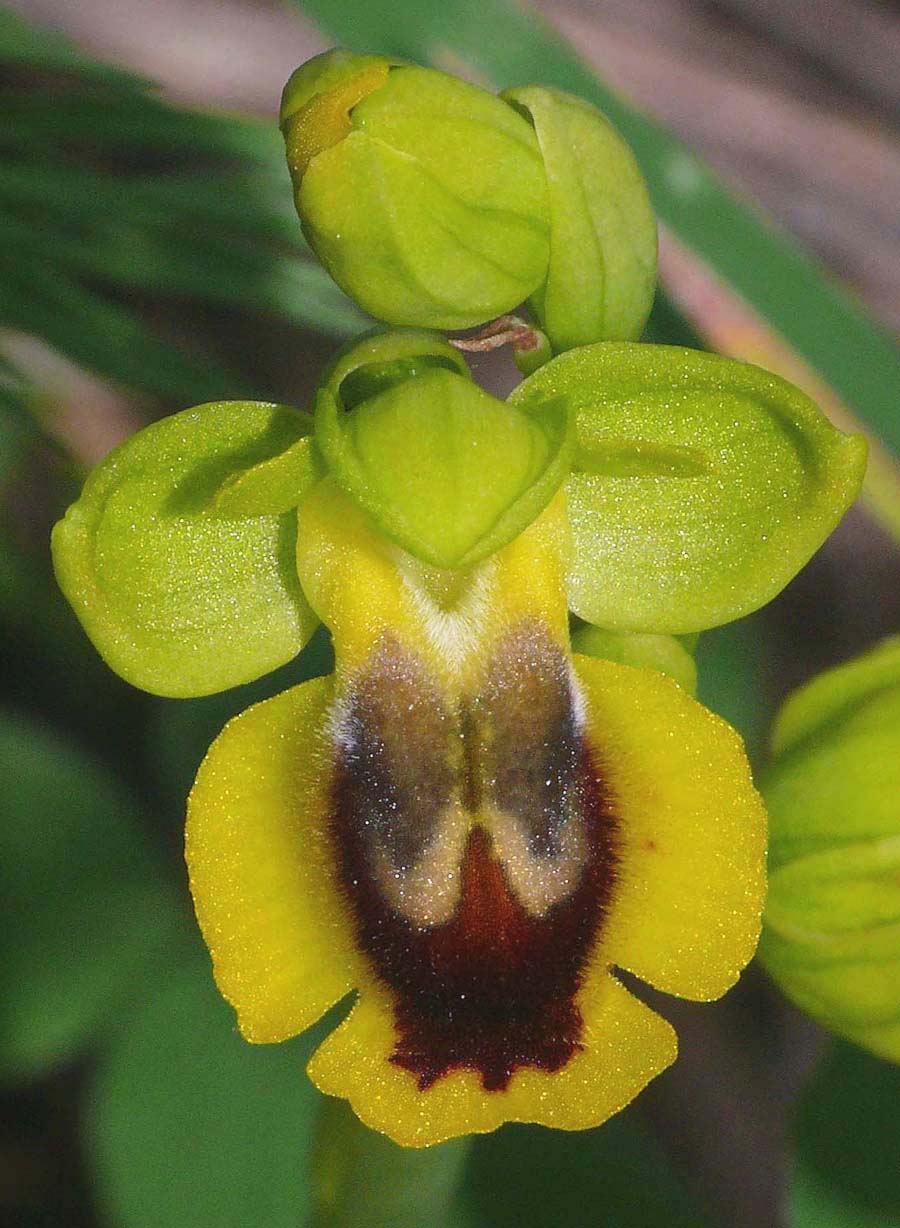
As may be seen from the pictures, the flowers of O. lutea
can vary in structure, colour and size
but the species nonetheless remains easily recognized with characteristics which are generally
consistent throughout the populations. The flowers are
the largest of the group and further, it is the only species where flowers are held at an angle of 45 degrees (or less) to the stem, both O. sicula and O. phryganae are held almost horizontally.
A second feature widely taken to be a reliable distinguishing characteristic, is the longitudinal basal prominences, which create both a deep central groove and a strong kink at the base of the labellum. The lateral lobes are rounded and the sinuses usually (though by no means always) closed or overlapping the median lobe, creating the impression of a complete wavy yellow margin. This species has a long flowering season, running from February to June and generally a month later than the smaller O. sicula.
A second feature widely taken to be a reliable distinguishing characteristic, is the longitudinal basal prominences, which create both a deep central groove and a strong kink at the base of the labellum. The lateral lobes are rounded and the sinuses usually (though by no means always) closed or overlapping the median lobe, creating the impression of a complete wavy yellow margin. This species has a long flowering season, running from February to June and generally a month later than the smaller O. sicula.
O. lutea
has a widespread distribution that takes in the western Mediterranean
including north Africa. Its range was formerly thought to be larger but
has been considerably reduced in 2013 when O. hellenica was formally described as the O. lutea group representative from mainland Greece and the Ionian islands. The
pictures come from Gargano
and Sicily and date from the first two weeks of April.