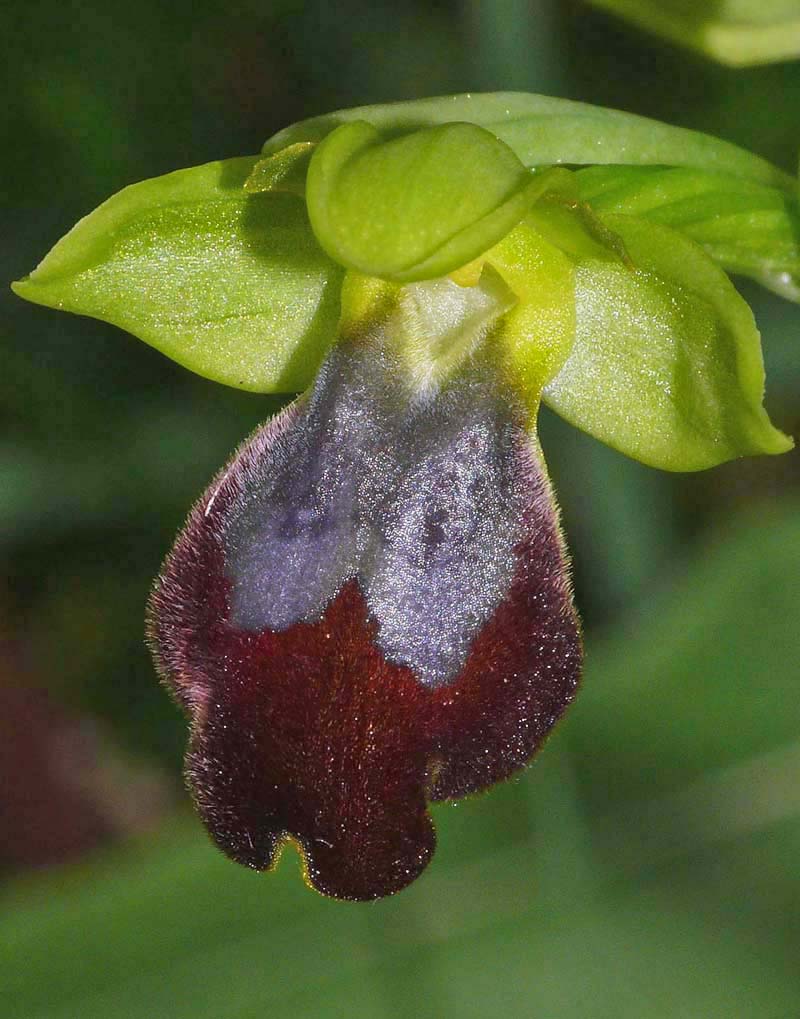
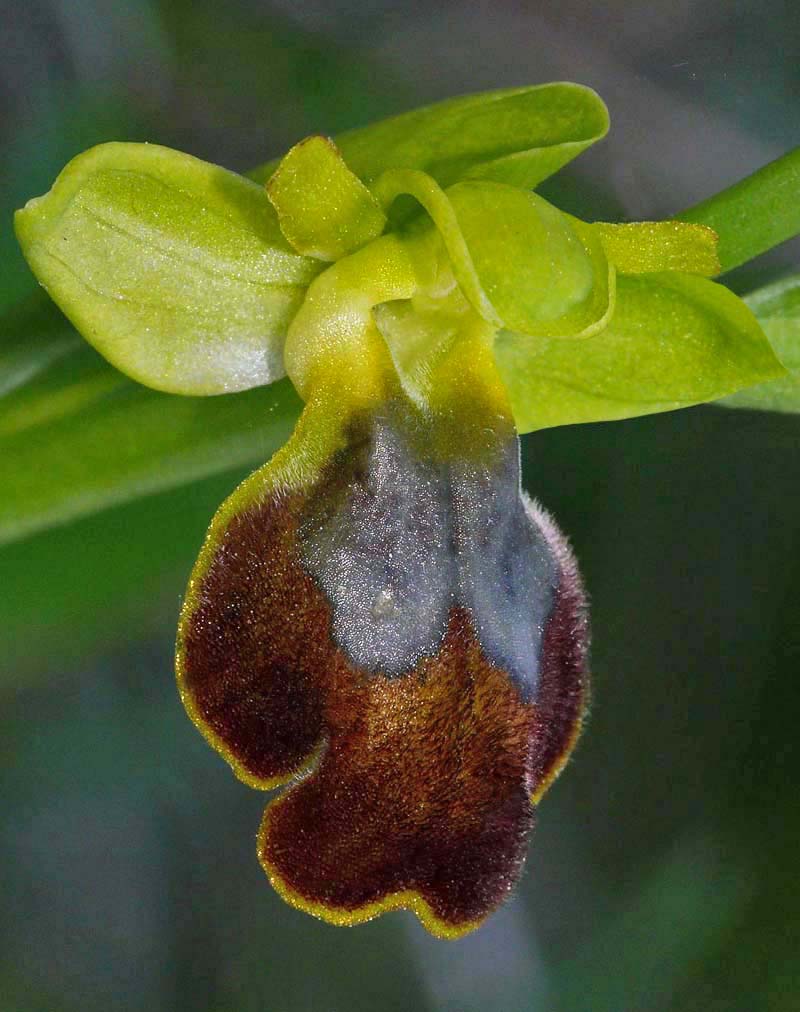
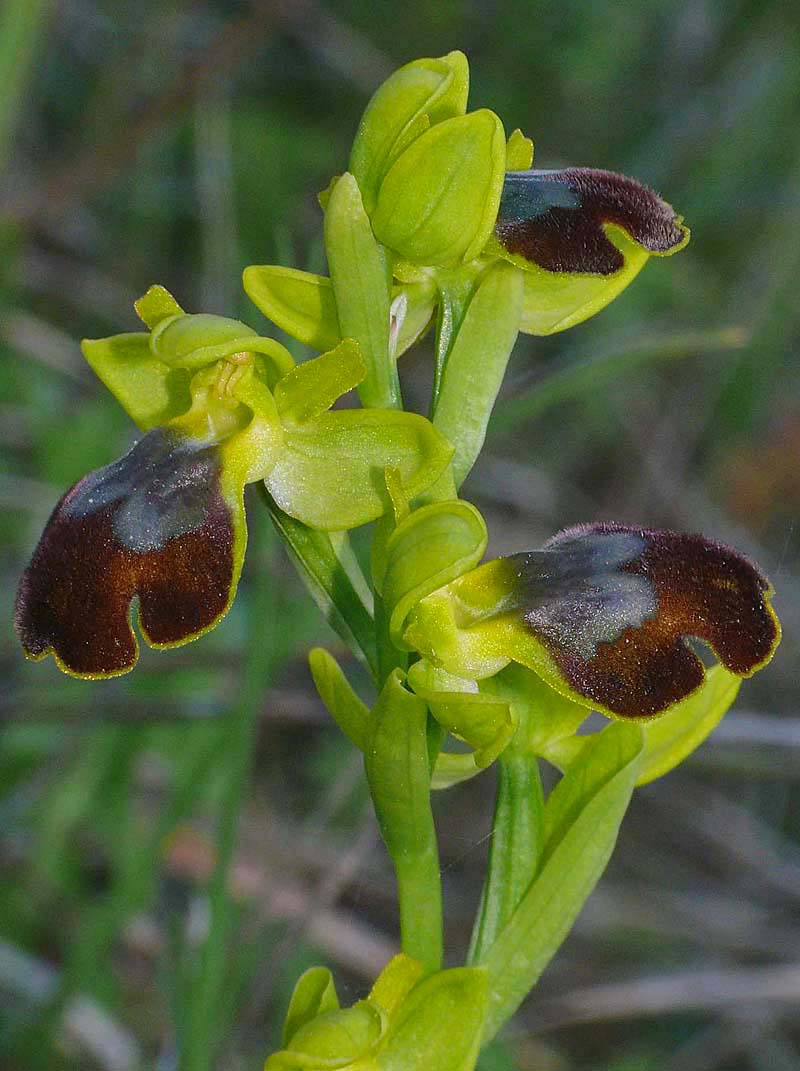
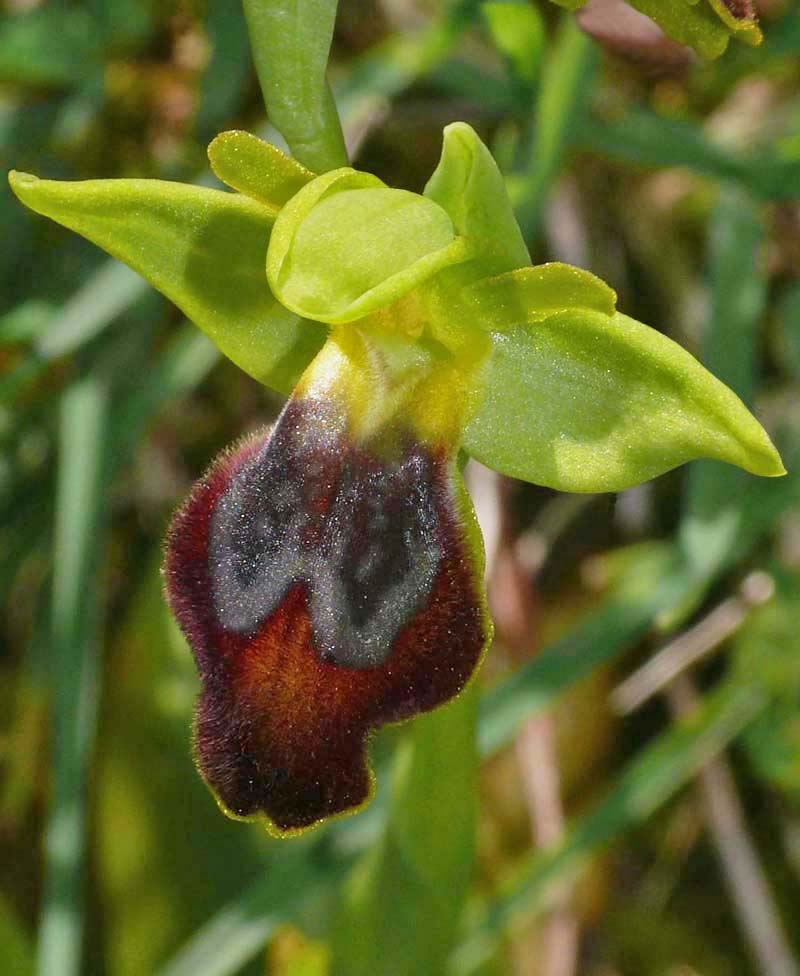
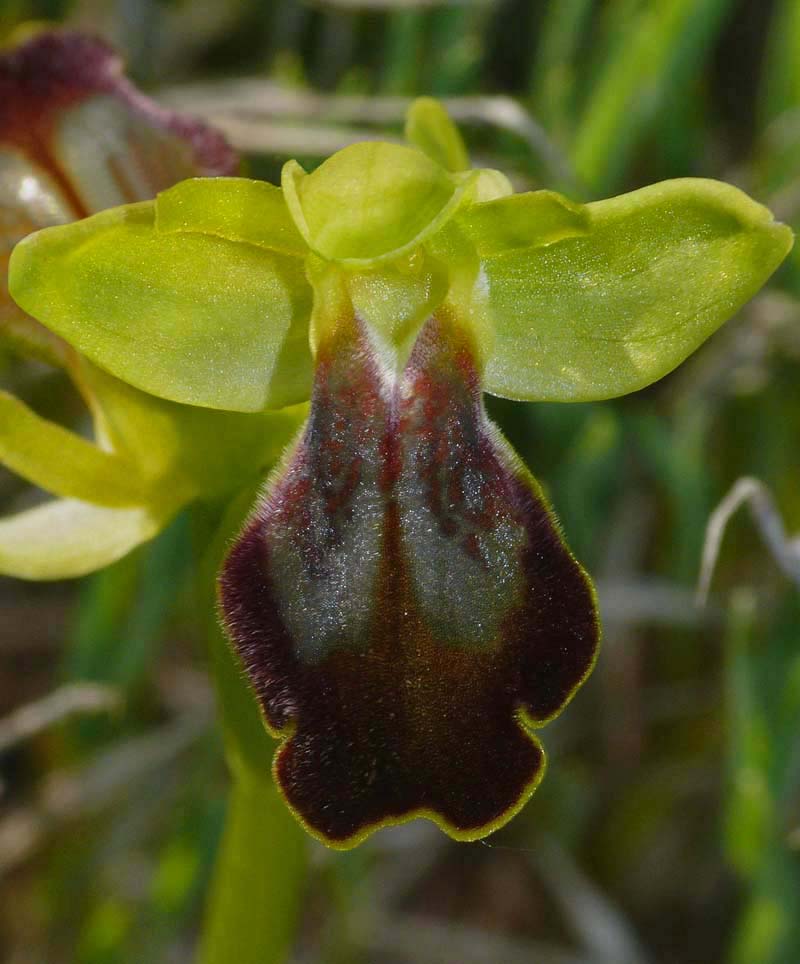
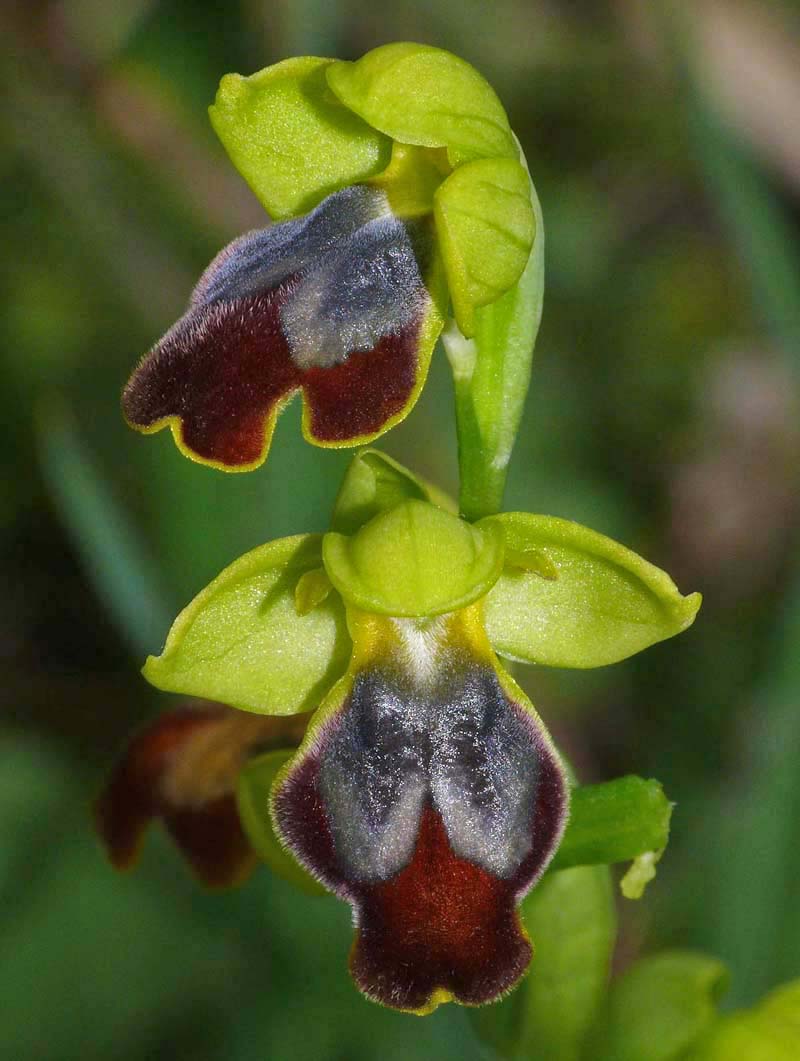
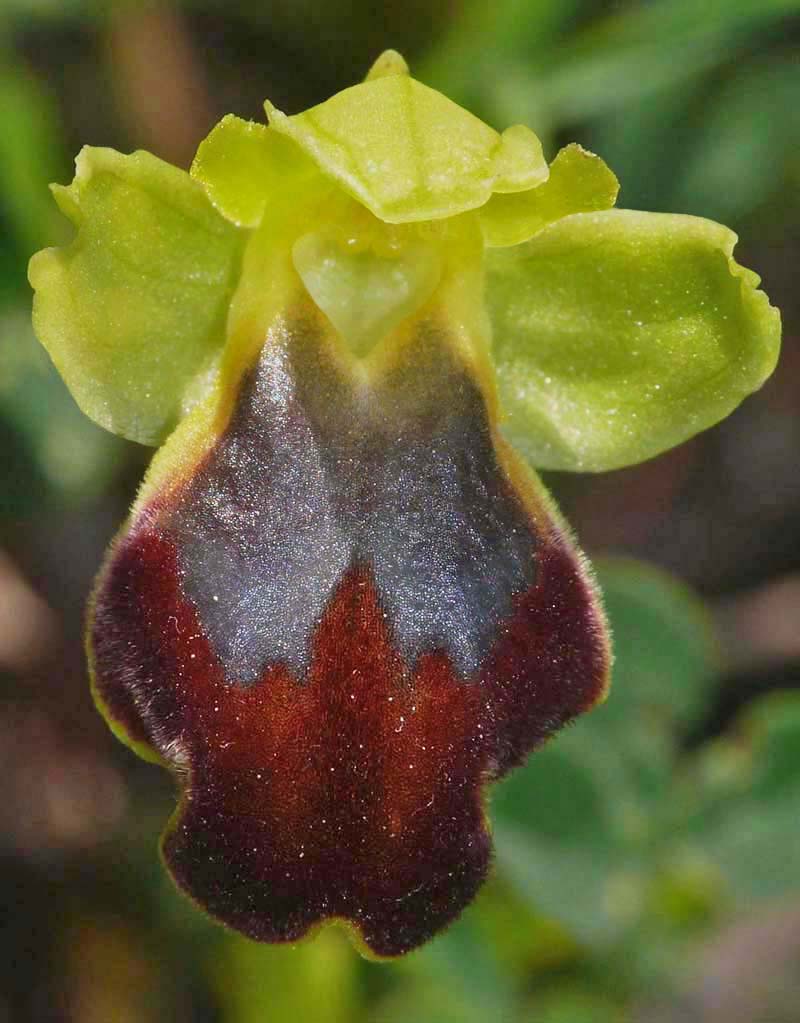
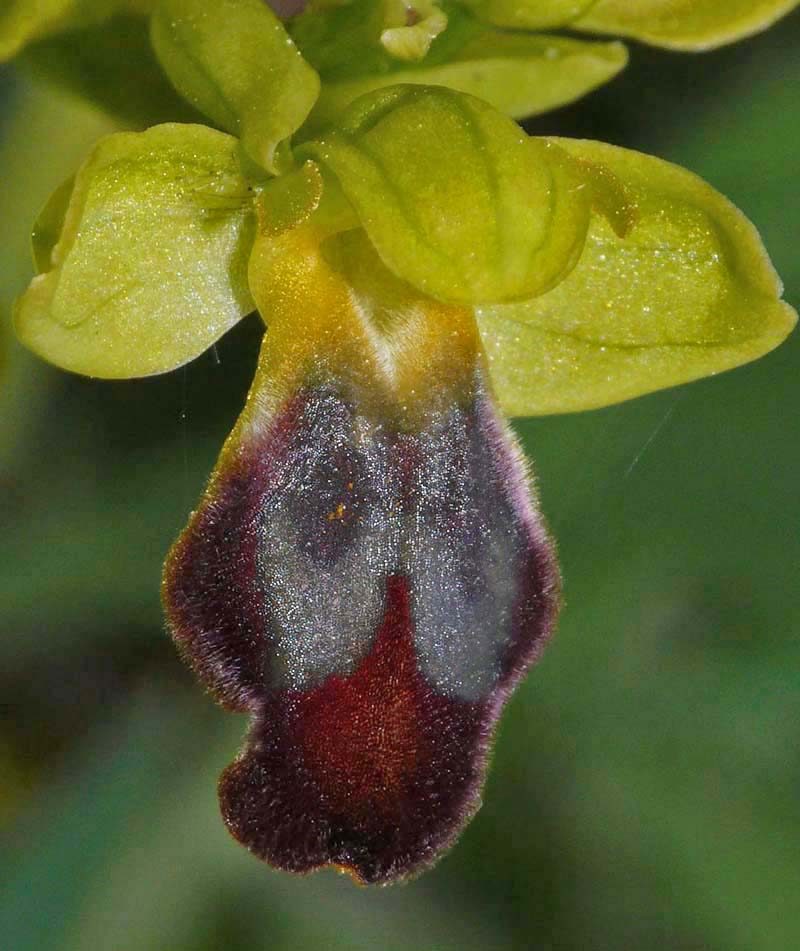
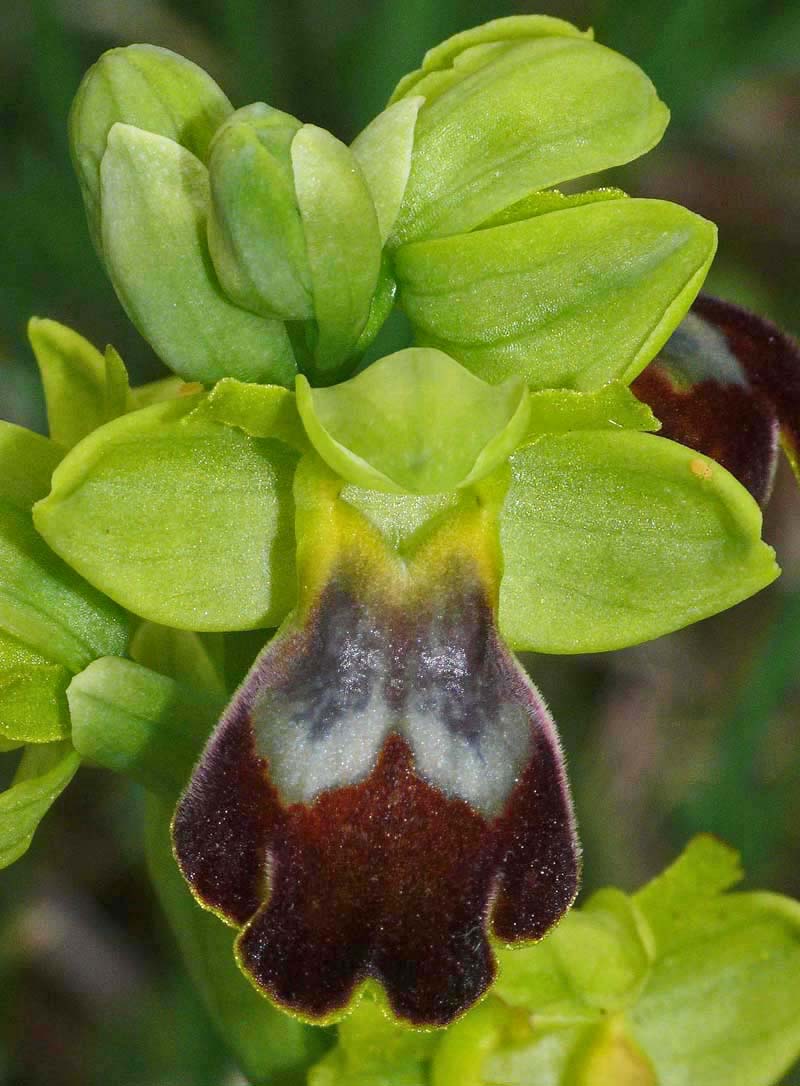
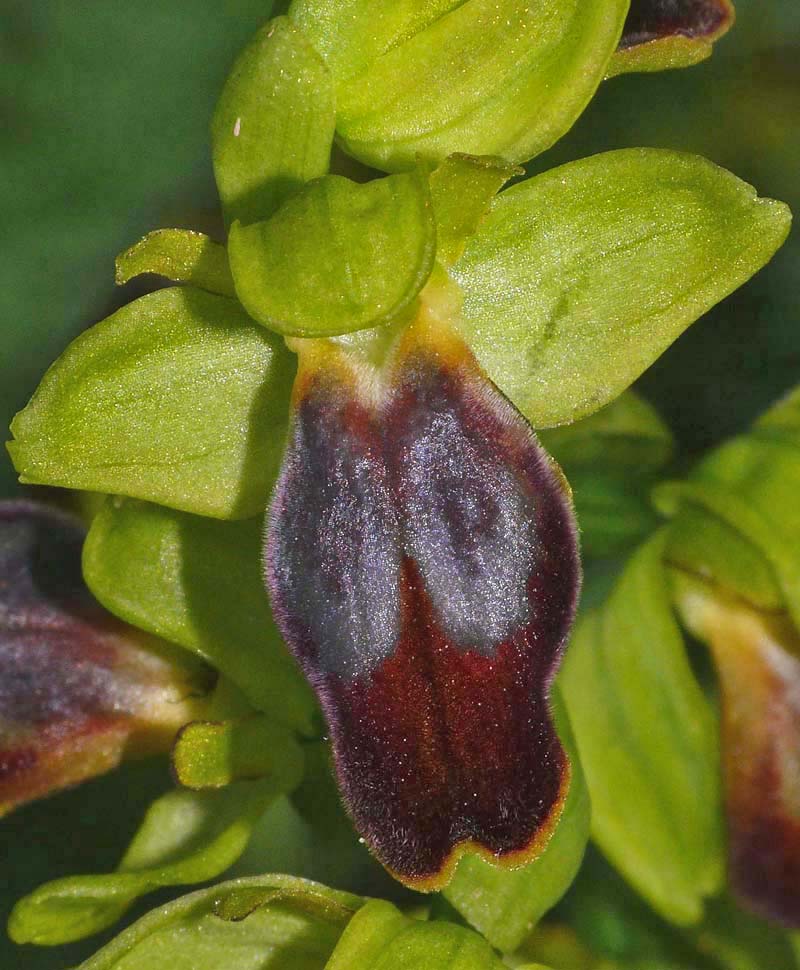
This Ophrys was first described by Delforge from Siracusa, Sicily in 2004 and is a member of the O. funerea group of Pseudophrys. It is one of several Sicilian species that have generated considerable professional disagreement, principally between Messrs Gack and Delforge.
According to he latter, O. gackiae was first formally described by him in 2004, but named in honour of Gack as a recognition of the research she had undertaken in the early 1990's, which had resulted in the plant being provisionally named O. florentina-fusca. Delforge's detractors maintain that O. gackiae is not that plant and that it was O. flammeola that should bear the name of the German biologist. The plant studied by Gack was thought to be hybridogenous, with O. lutea and O. fusca sl as progenitors and it's clear that O. flammeola more obviously demonstrates these characteristics than does O. gackiae.
The Sicilian Pseudophrys are a difficult group to separate and the main sources of confusion arise when trying to separate O. sabulosa, O. gackiae and O. lupercalis. There are however features which although difficult to demonstrate through photography, may help in the field, the first of these being the significantly larger flowers and general sturdiness of O. sabulosa . Both O. gackiae and O. lupercalis bloom much earlier and will be in poor condition by the time O. sabulosa appears. O. gackiae is a small plant with few flowers (rarely more than 5) whereas O. sabulosa and to a lesser extent O. lupercalis are both more robust and more floriferous (up to 10 flowers per stem). Finally, the latter's lip has a smaller average width to length ratio and therefore appears to be both longer and narrower.
These pictures date from the second two weeks of April.