O. lupercalis was
first described by Devillers and Devillers-Terschuren from Aude (France) in 1994 and takes its
name from the Ancient Roman festival of Lupercalia
which was historically always celebrated on the 15th
of February every year. This name refers to the early flowering of the species which is a key distinguishing characteristic
O. lupercalis
was up until recently thought to have a wide range through the
Mediterranean but research in 2010 concluded that it had been
misidentified in Southern France and eastern Spain and that the orchid in these regions should more correctly be regarded as O. forestieri. Given
that the type was established in Aude, it's presently unclear how this
reassessment leaves the species authenticity in the more easterly parts of its
range. For the time being however we will assume it is still valid
in Sicily, Sardinia, Corsica, southern Spain and Italy.
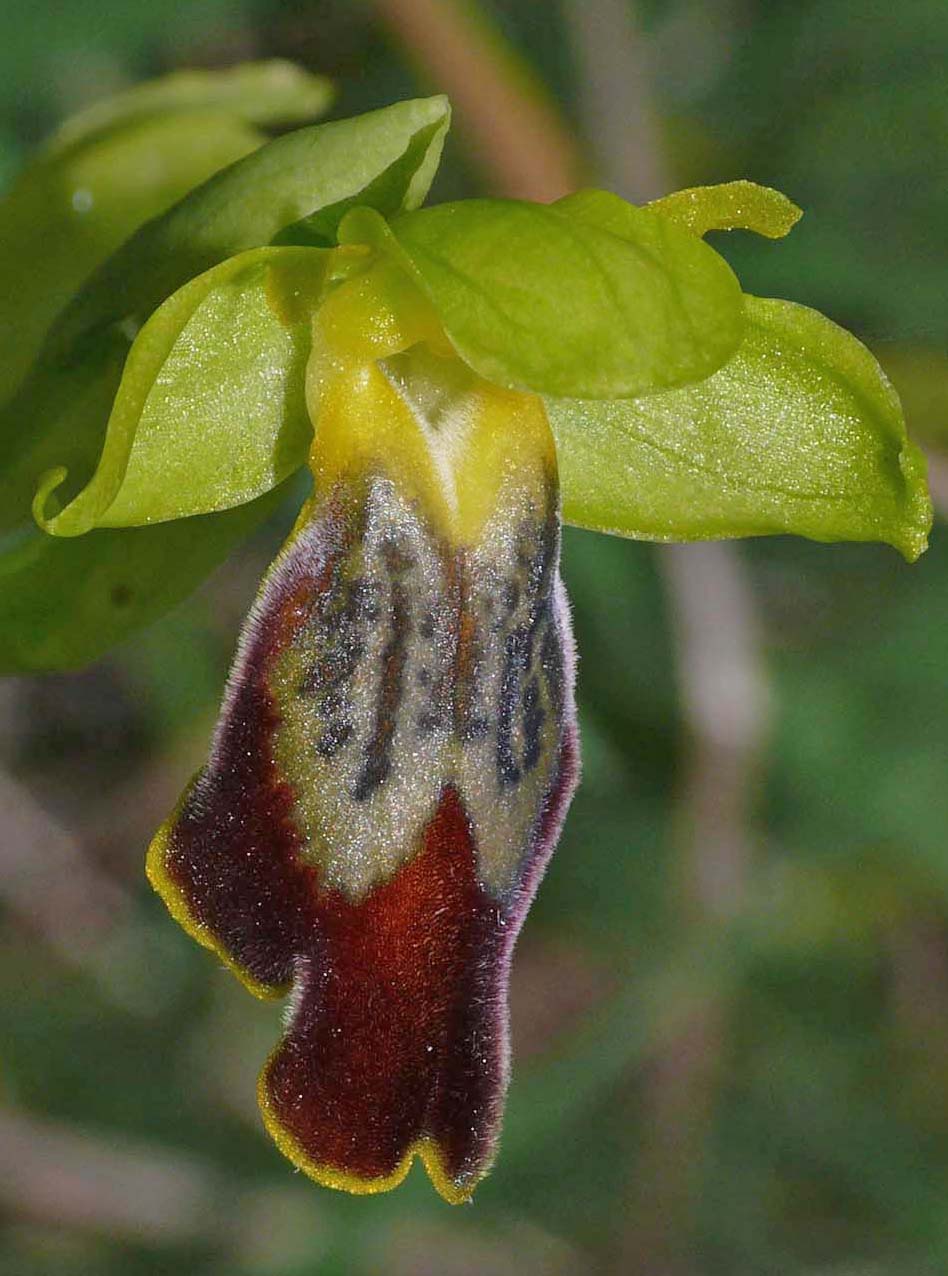
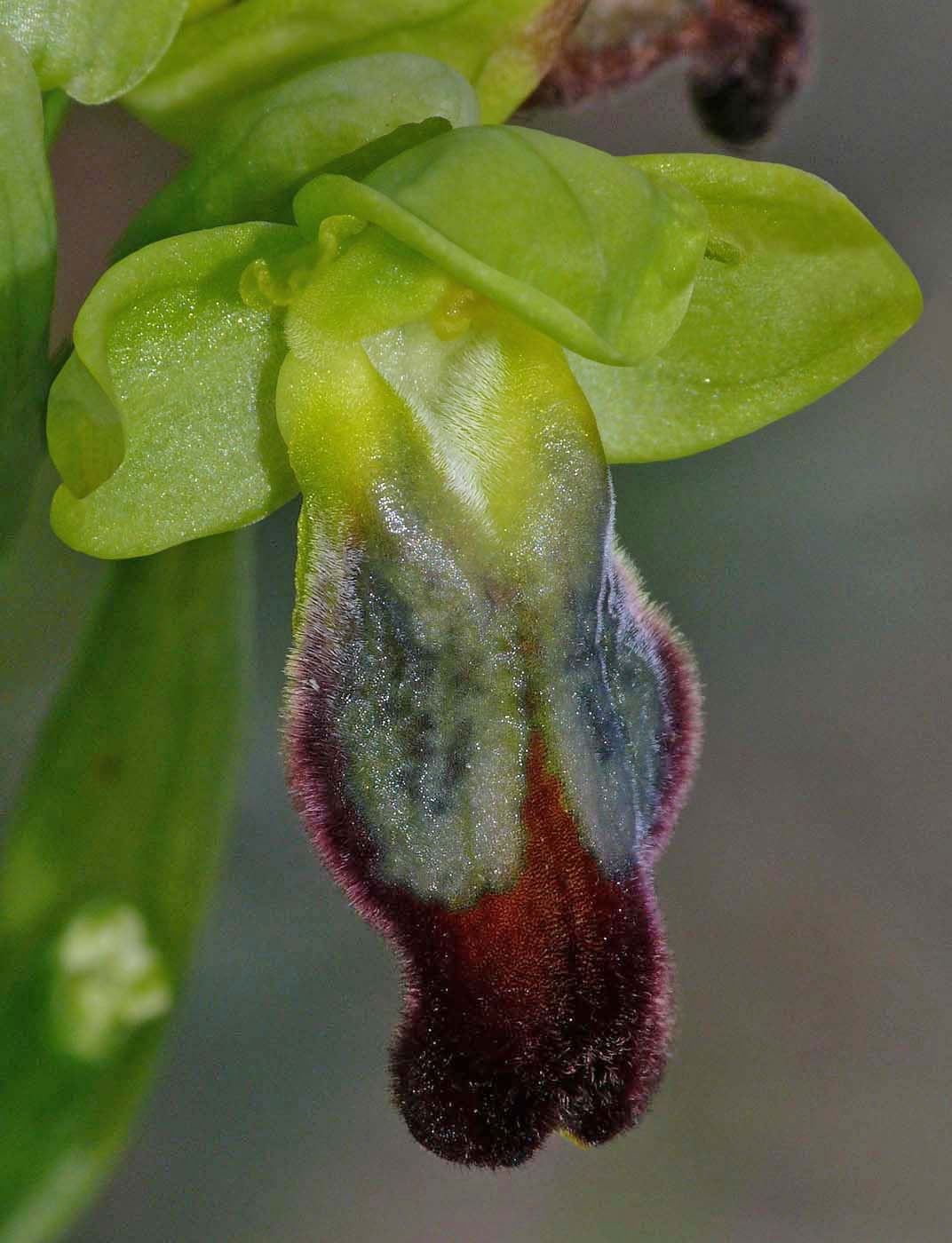
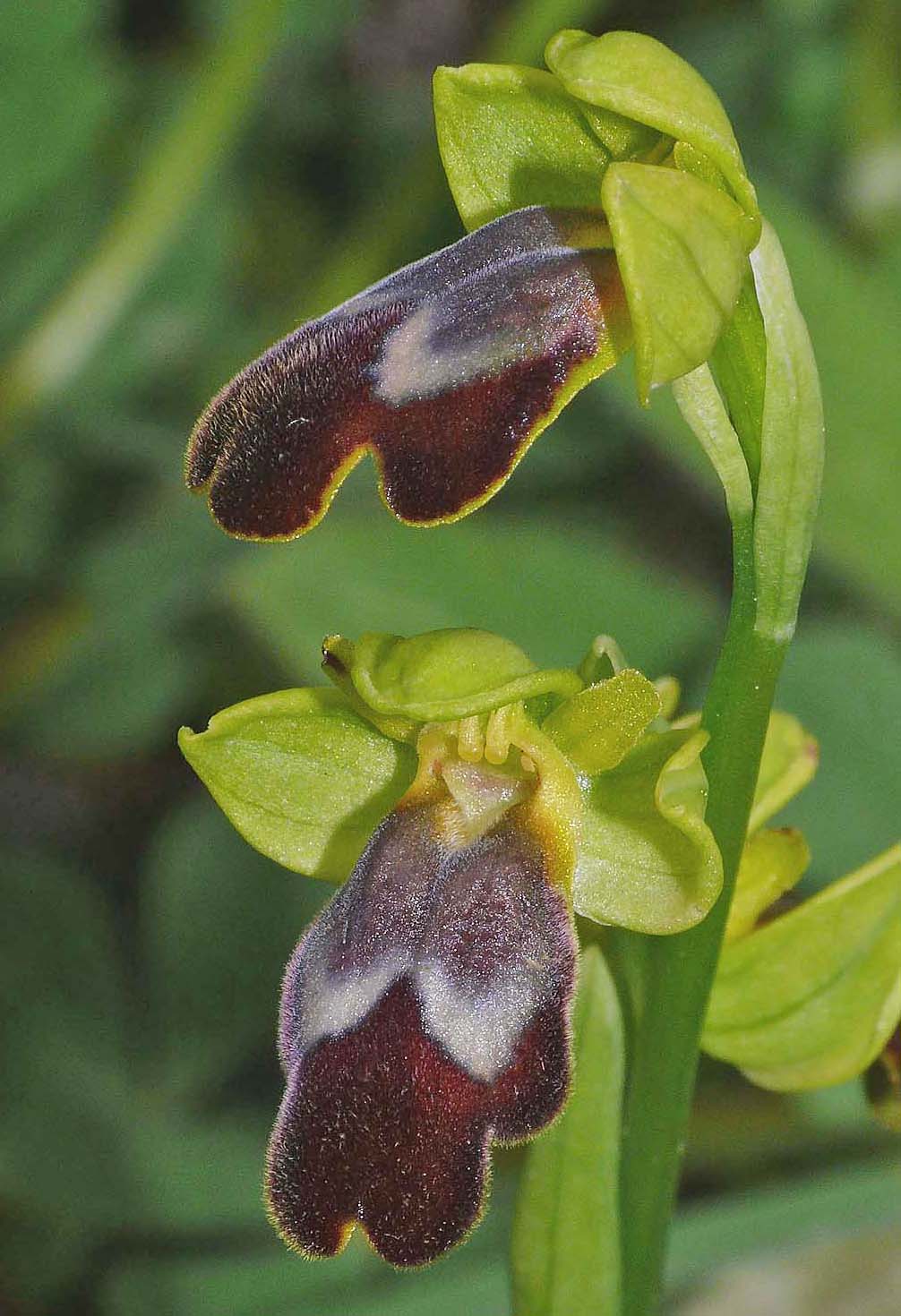
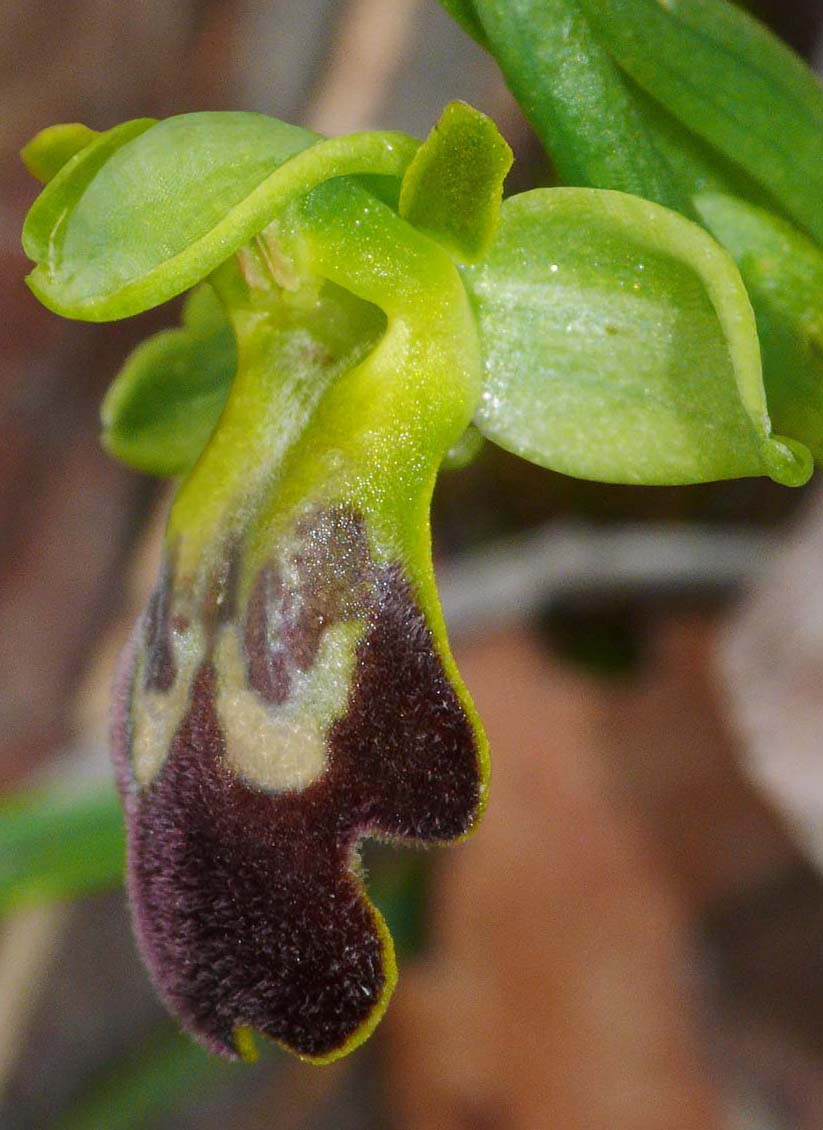
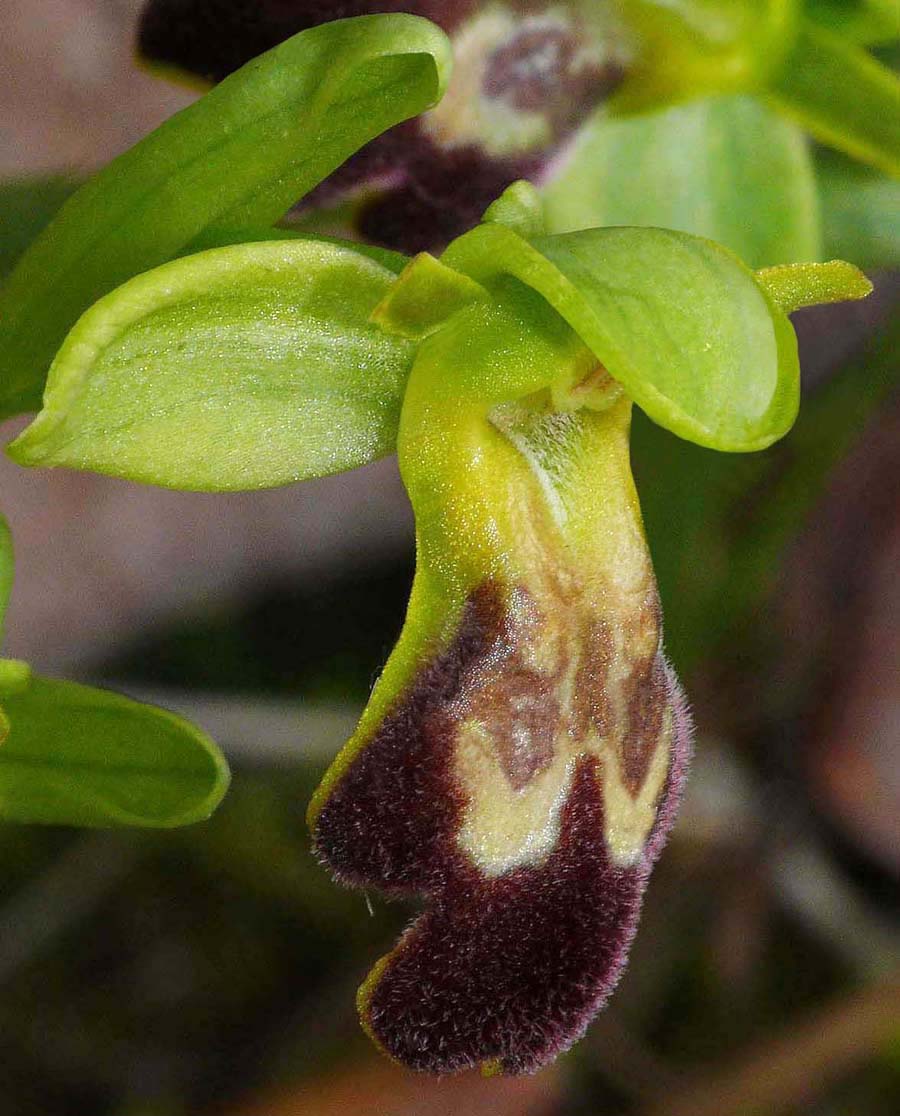
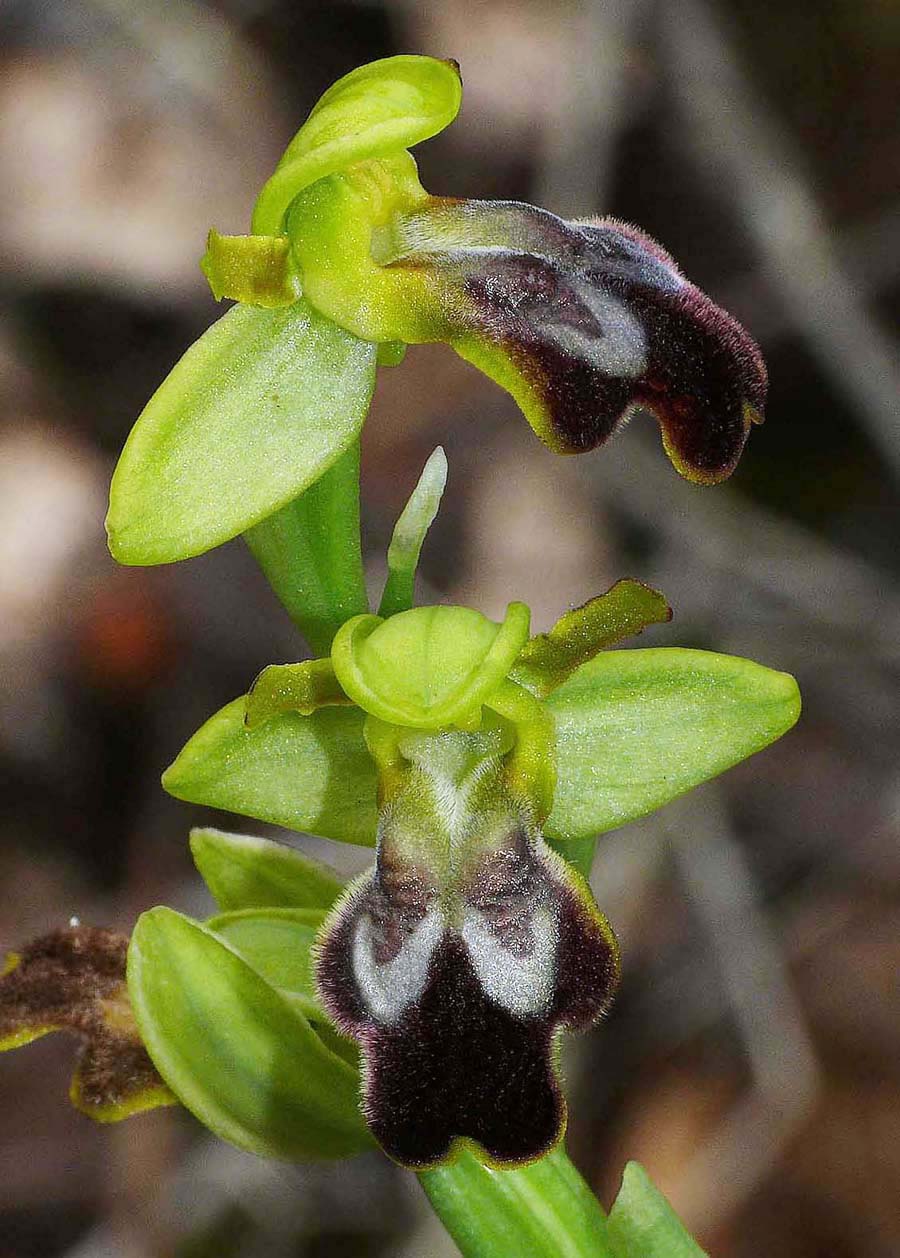
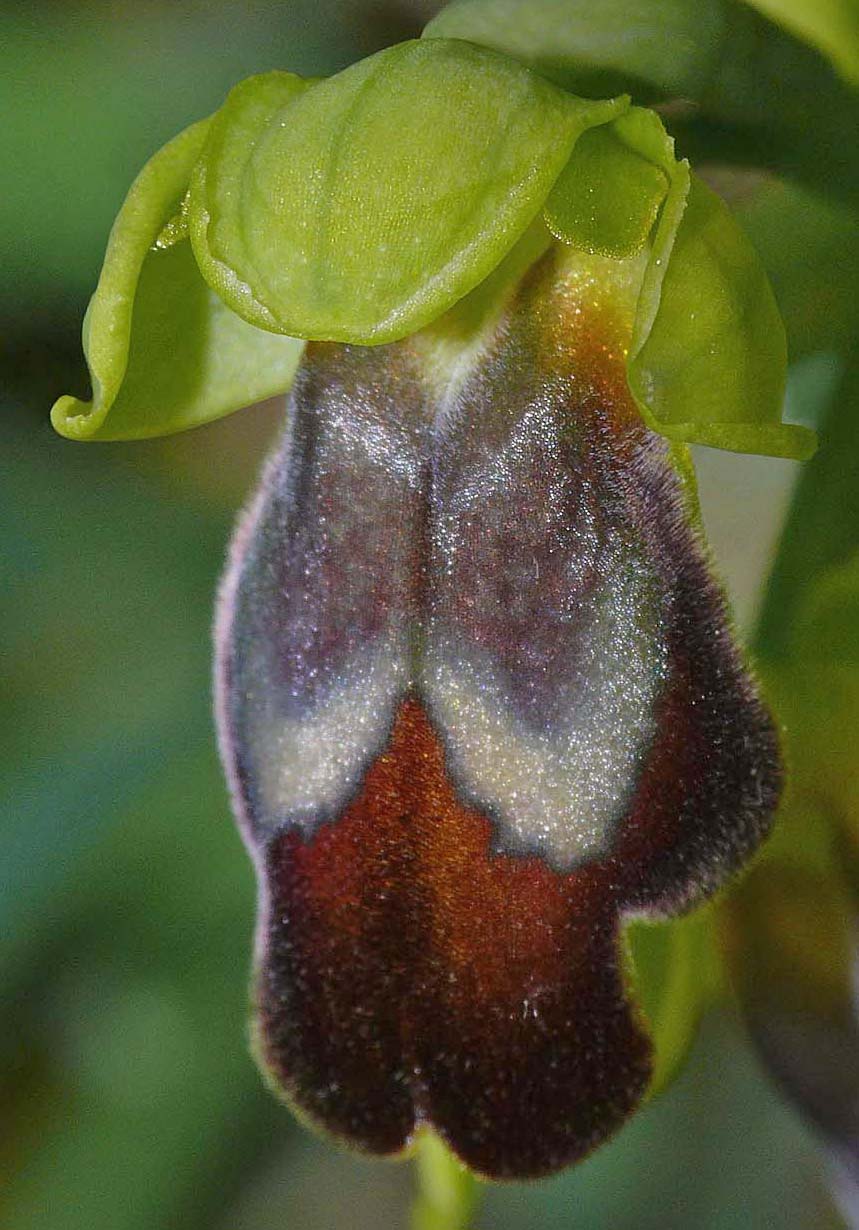
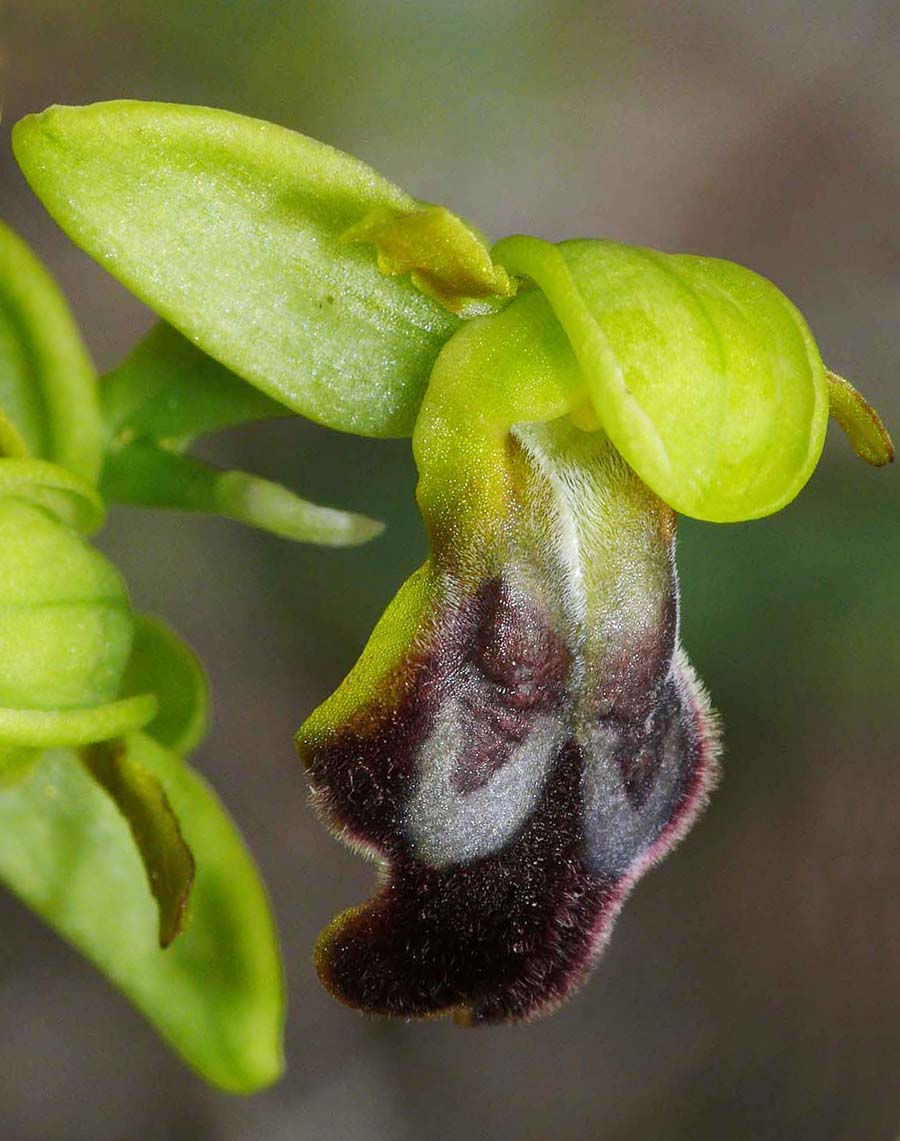
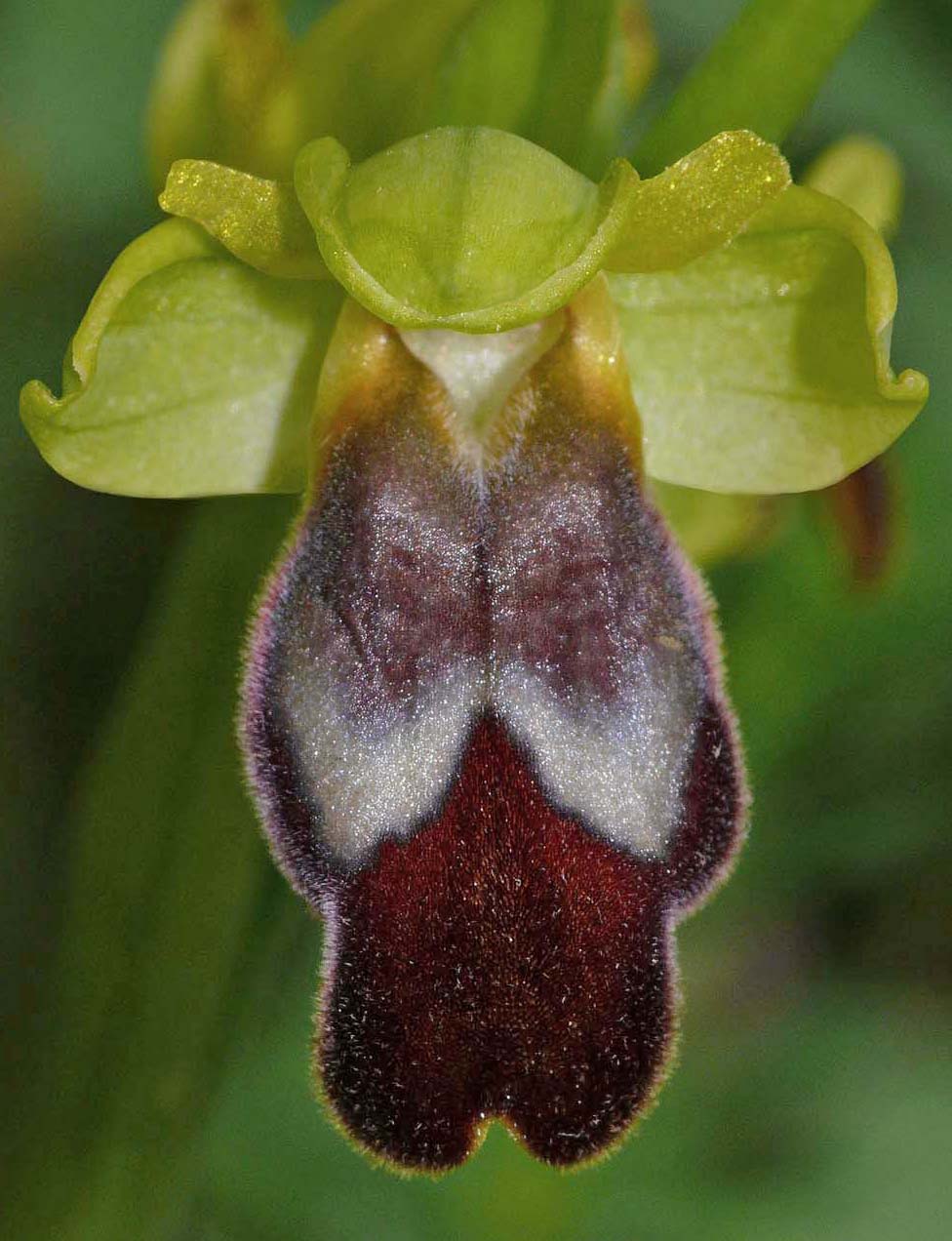
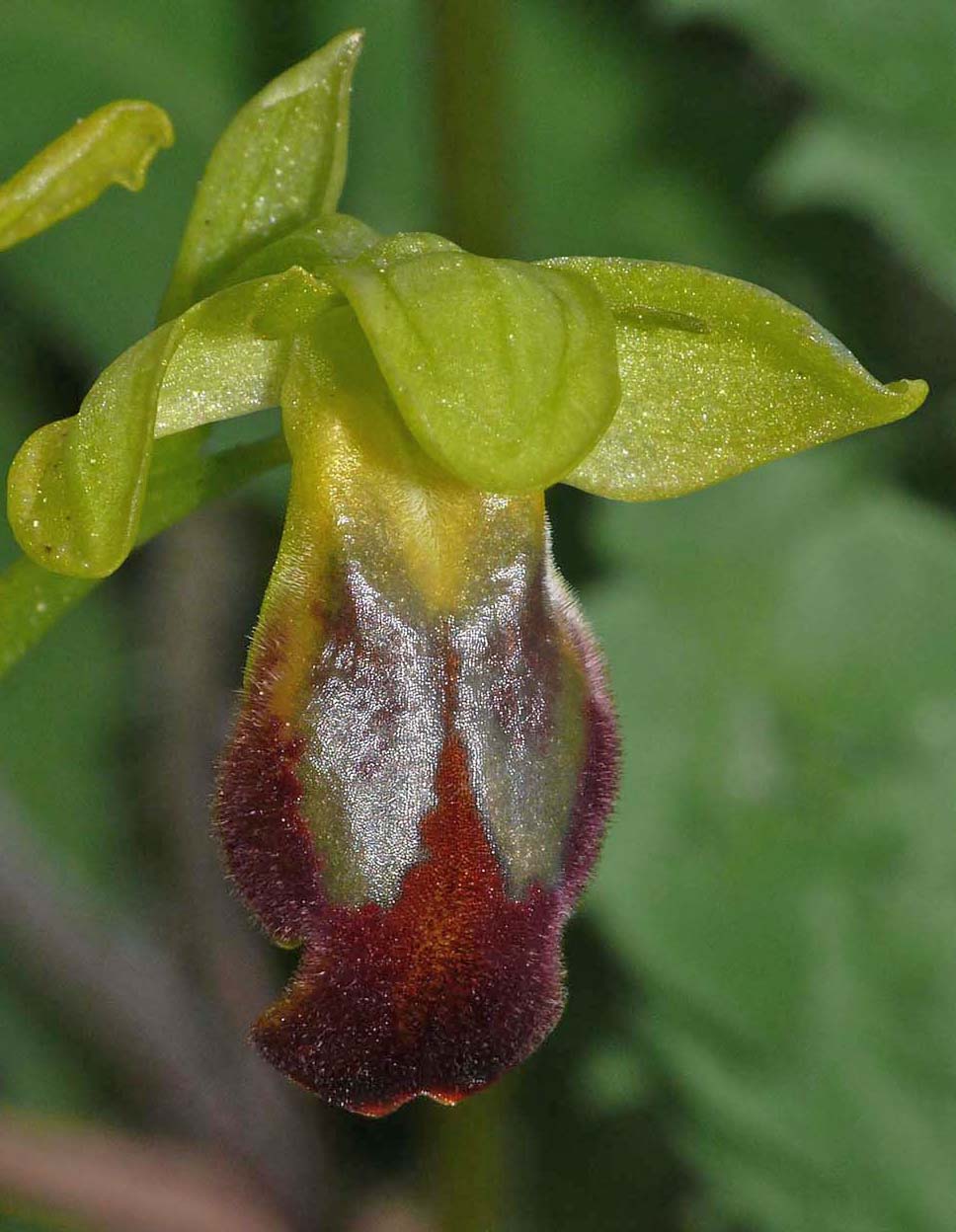
In Sicily, O. lupercalis can appear very much like the endemic O. sabulosa but although the two species can be found in similar habitats, the former orchid would be in poor condition by the time the latter comes into flower. There is a view amongst local botanists that O. lupercalis, O. sabulosa and O. gackiae are in fact seasonal morphs of the same species. In southern Spain it comes into contact with both O. malacitana and O. clarae, though only the former taxon flowers concurrently. O. lupercalis is a tall lant with up to ten large flowers, the lips of which exhibit significant longitudinal prominences, below which is a slight bend in the otherwise flat surface. The upper labellum is divided by a deep central groove .
The photos are from Sicily and southern Spain, dating from late March at which time they were declining.
In Sicily, O. lupercalis can appear very much like the endemic O. sabulosa but although the two species can be found in similar habitats, the former orchid would be in poor condition by the time the latter comes into flower. There is a view amongst local botanists that O. lupercalis, O. sabulosa and O. gackiae are in fact seasonal morphs of the same species. In southern Spain it comes into contact with both O. malacitana and O. clarae, though only the former taxon flowers concurrently. O. lupercalis is a tall lant with up to ten large flowers, the lips of which exhibit significant longitudinal prominences, below which is a slight bend in the otherwise flat surface. The upper labellum is divided by a deep central groove .
The photos are from Sicily and southern Spain, dating from late March at which time they were declining.