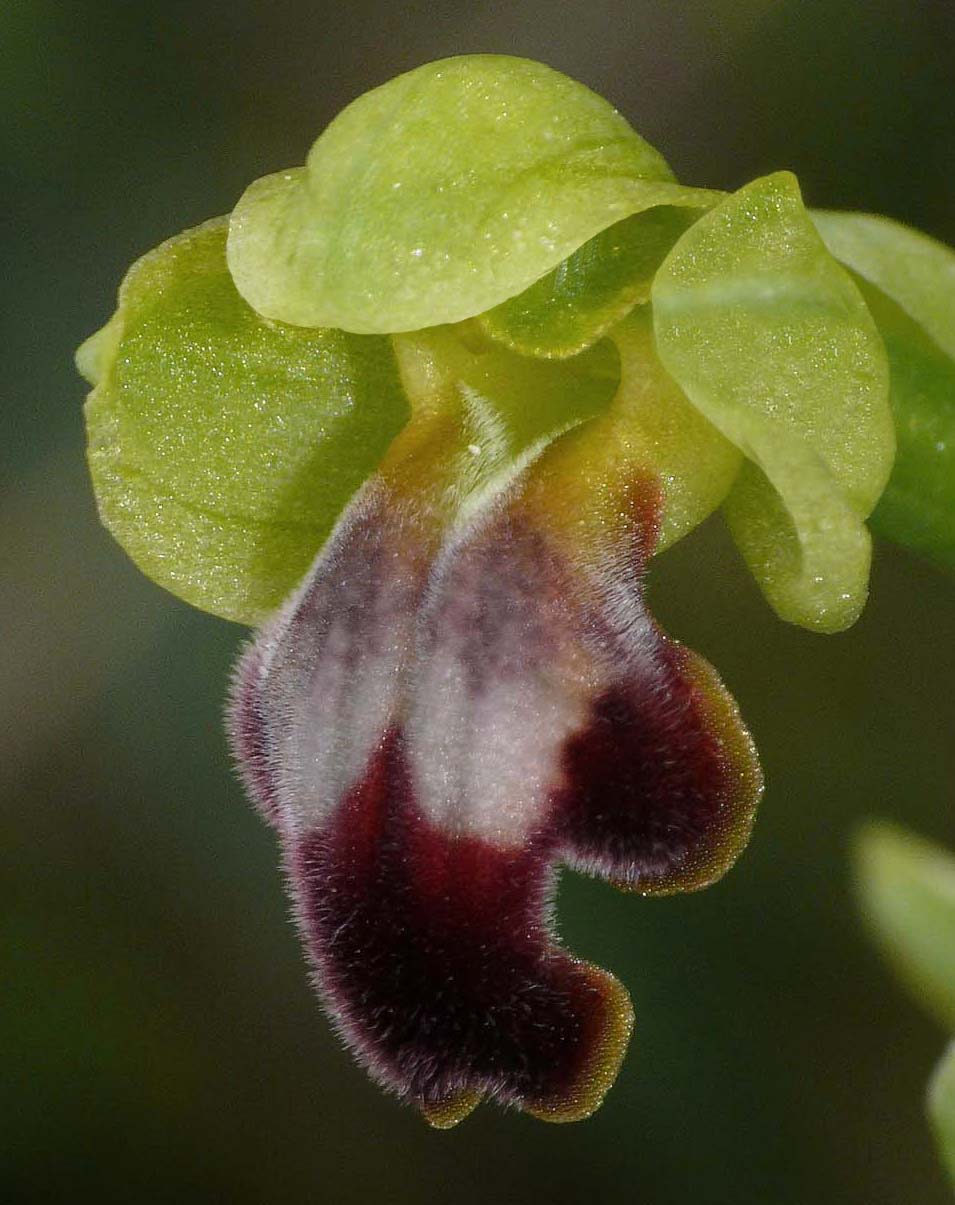
O. cinereophila
was first described by Paulus and Gack from Lassithi, Crete in 1998 and
its name is a reference to its pollinator, Andrena cinereophila.
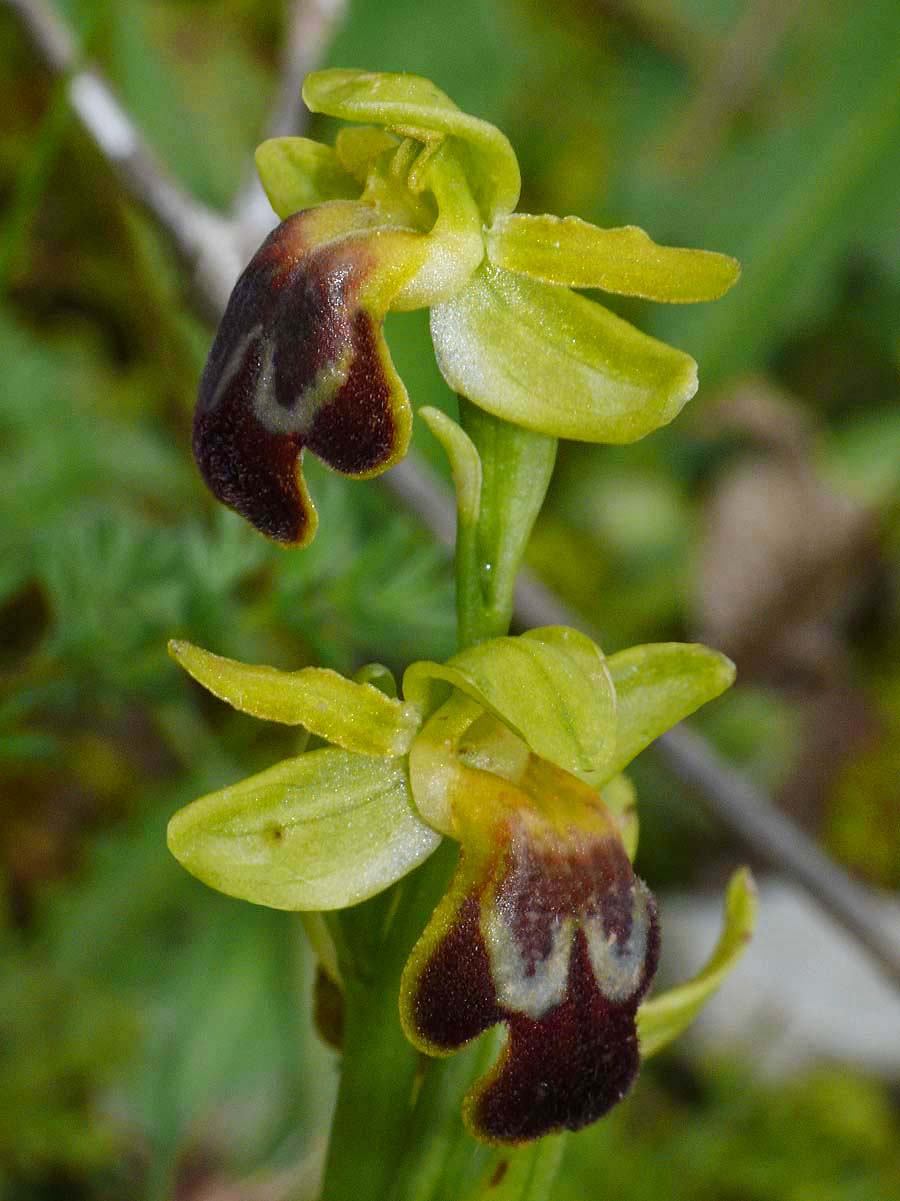
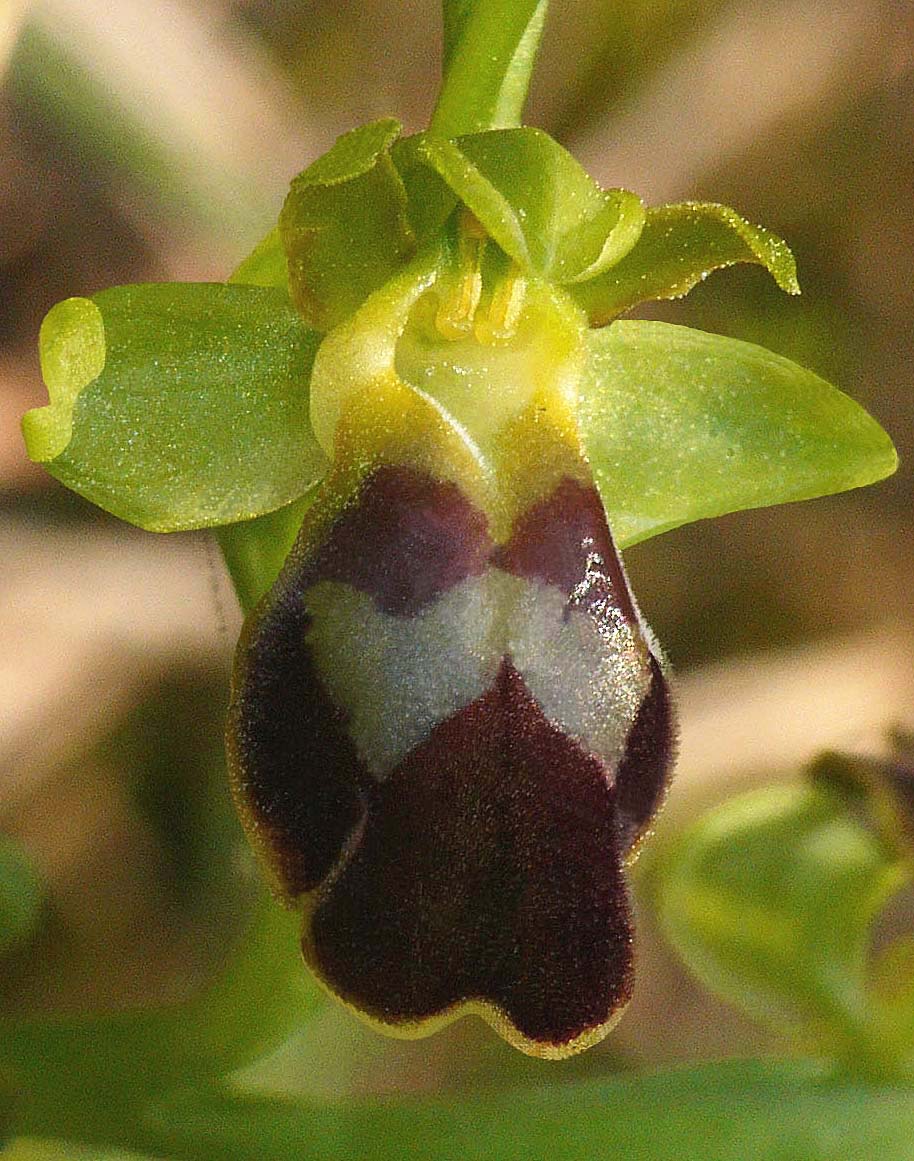
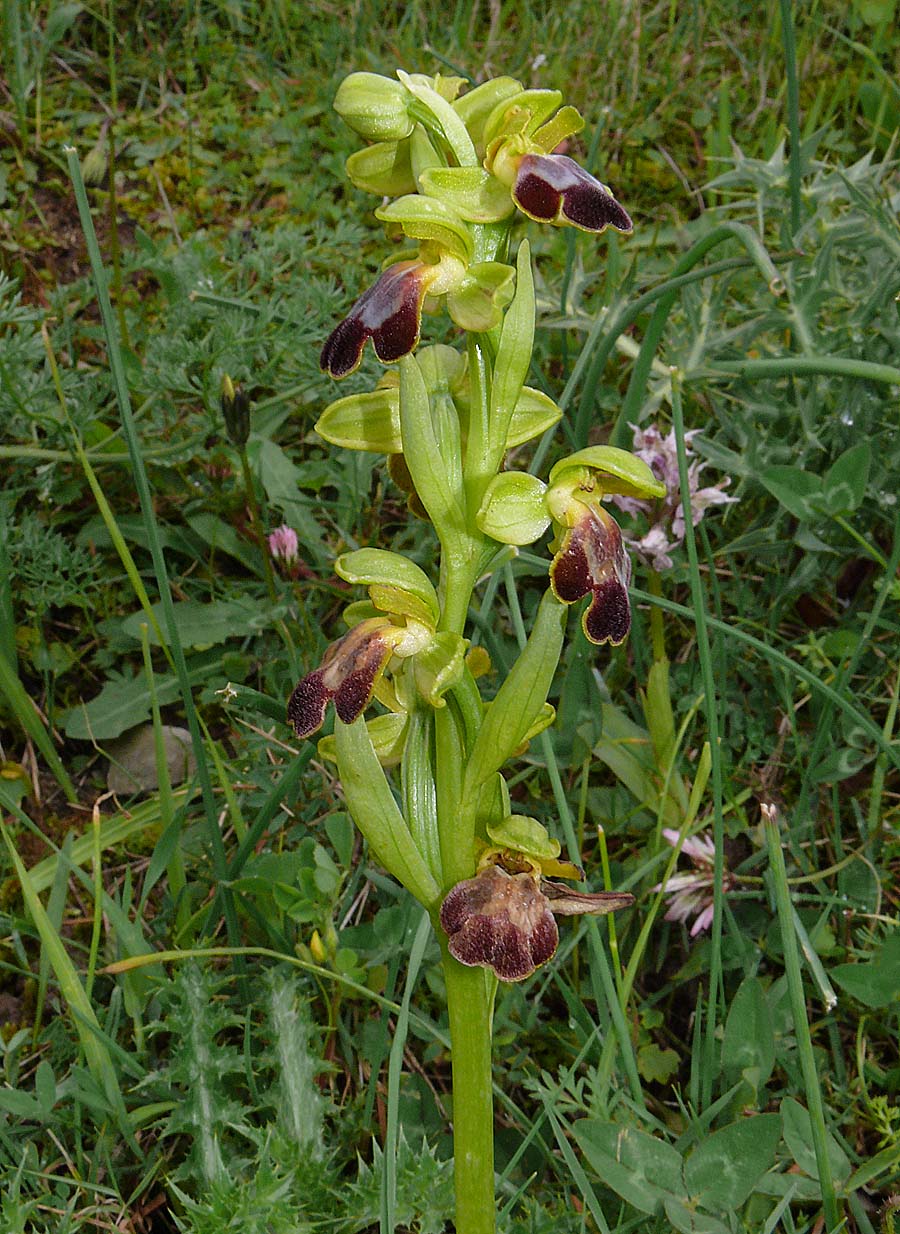
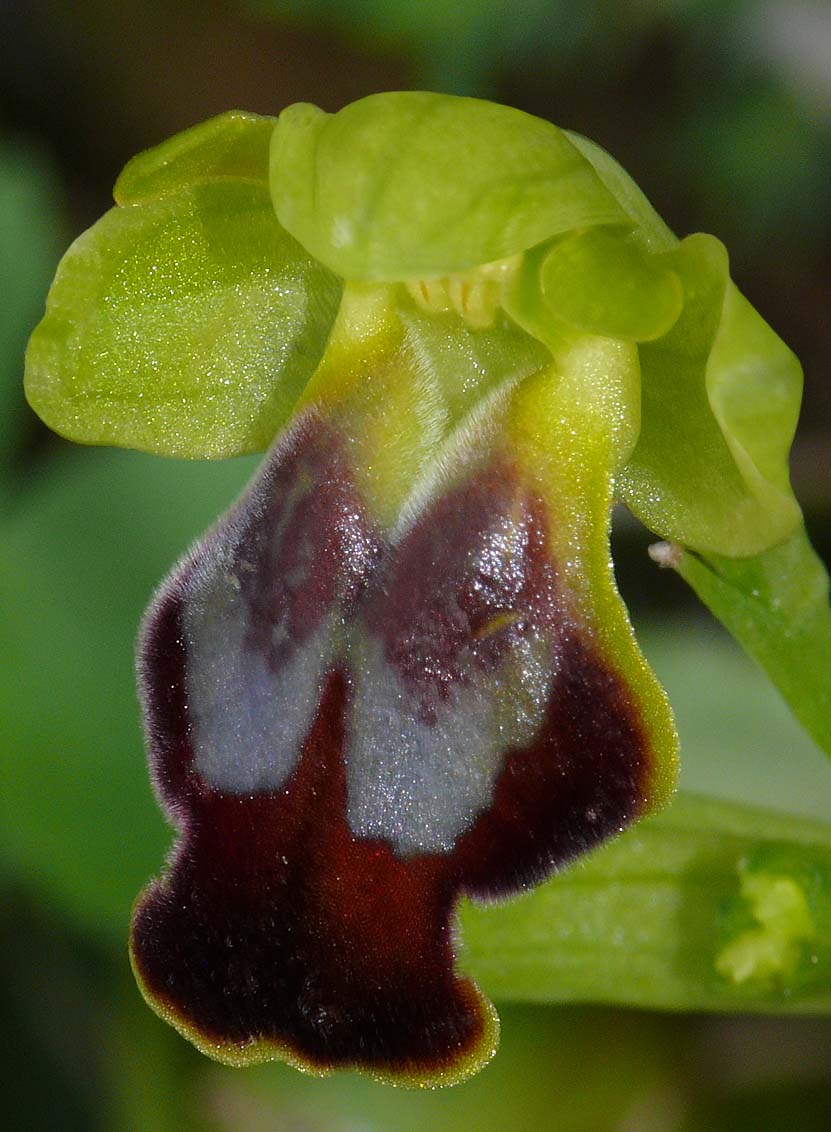
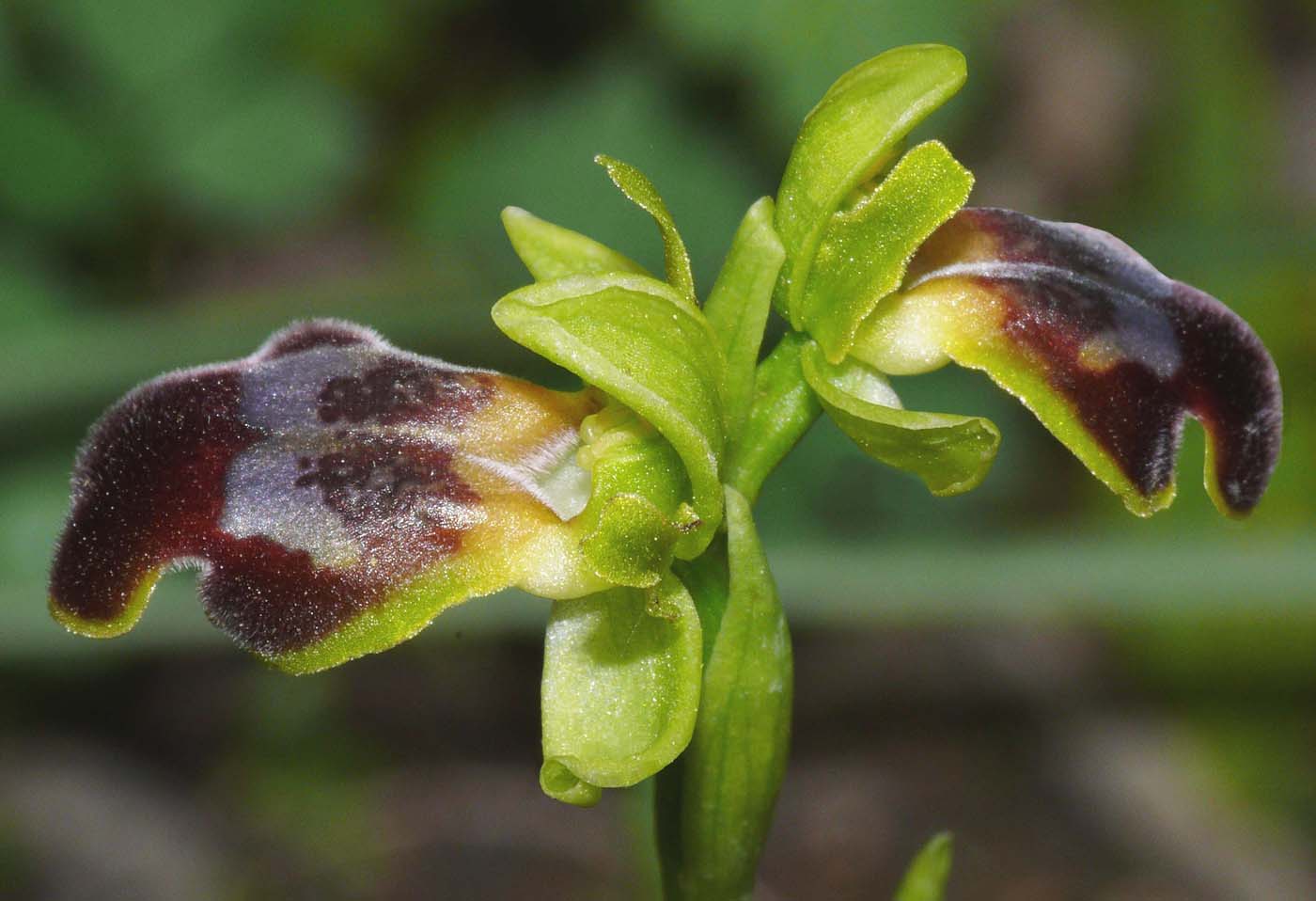
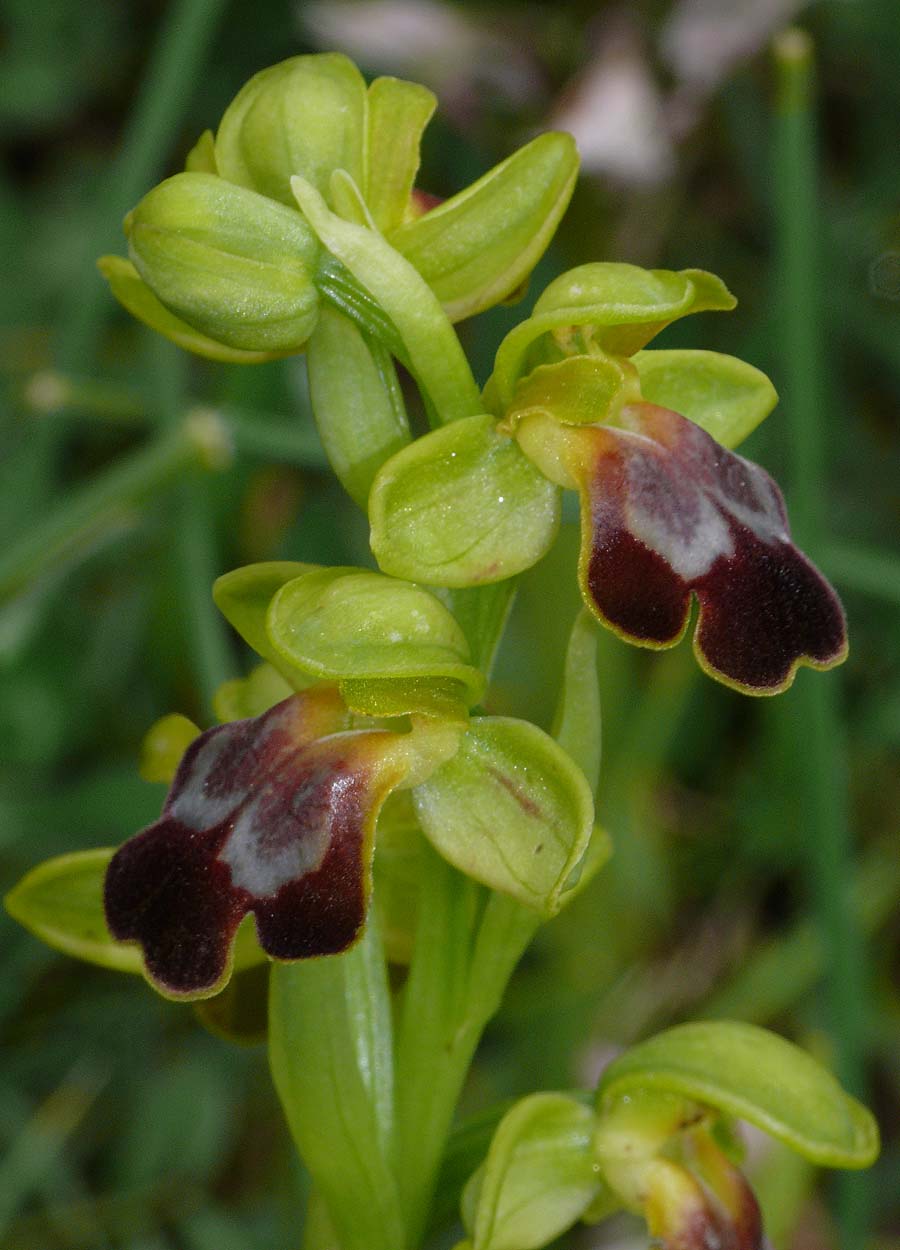
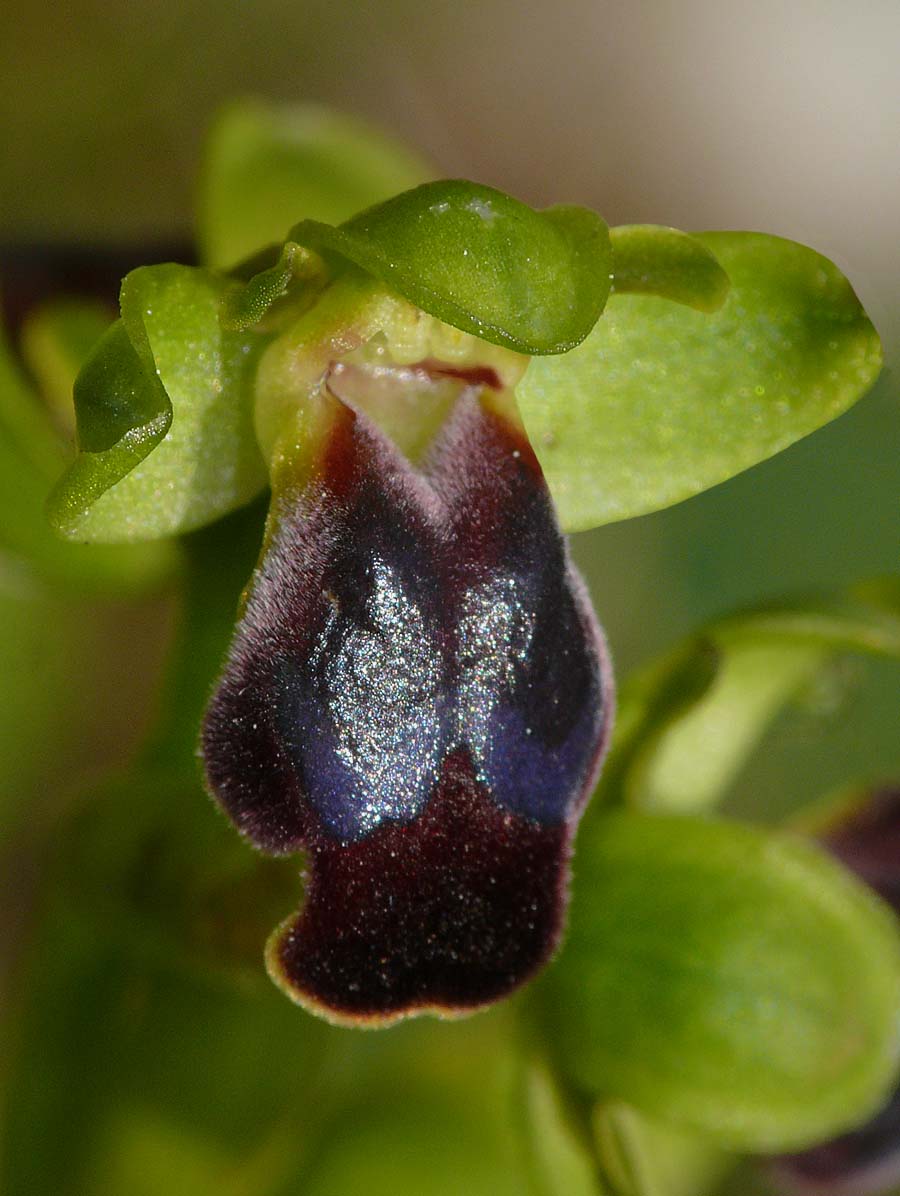
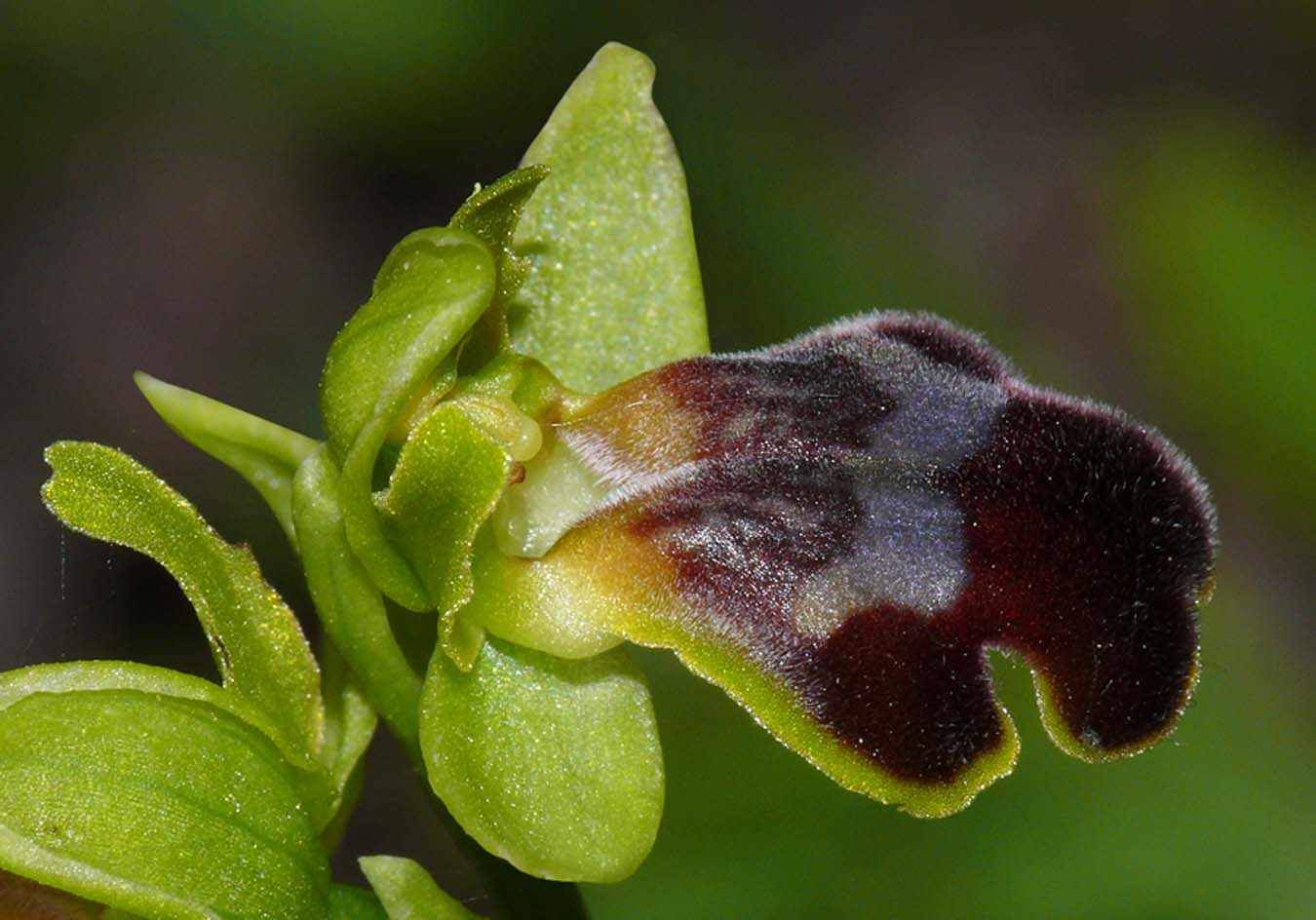
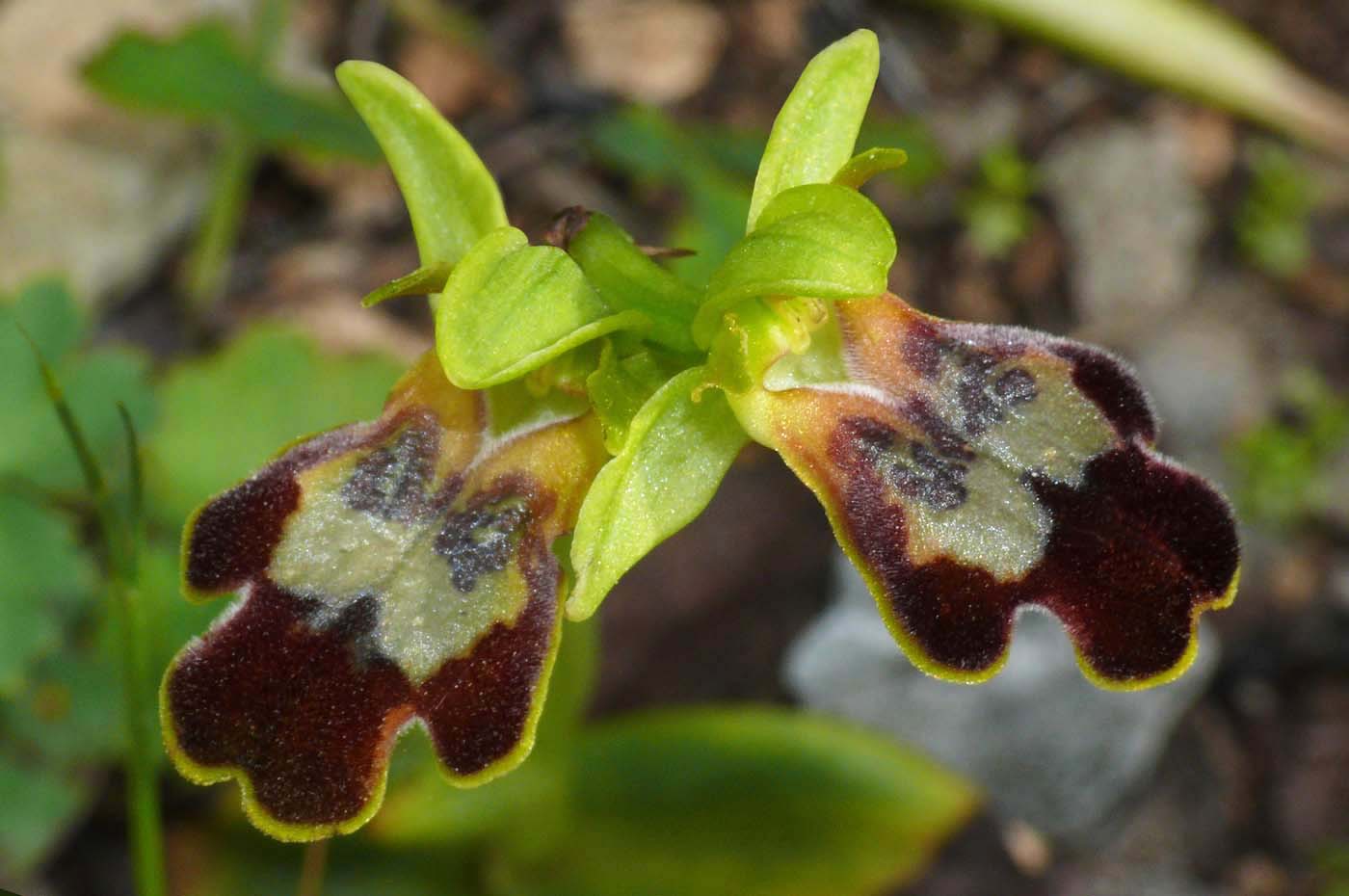
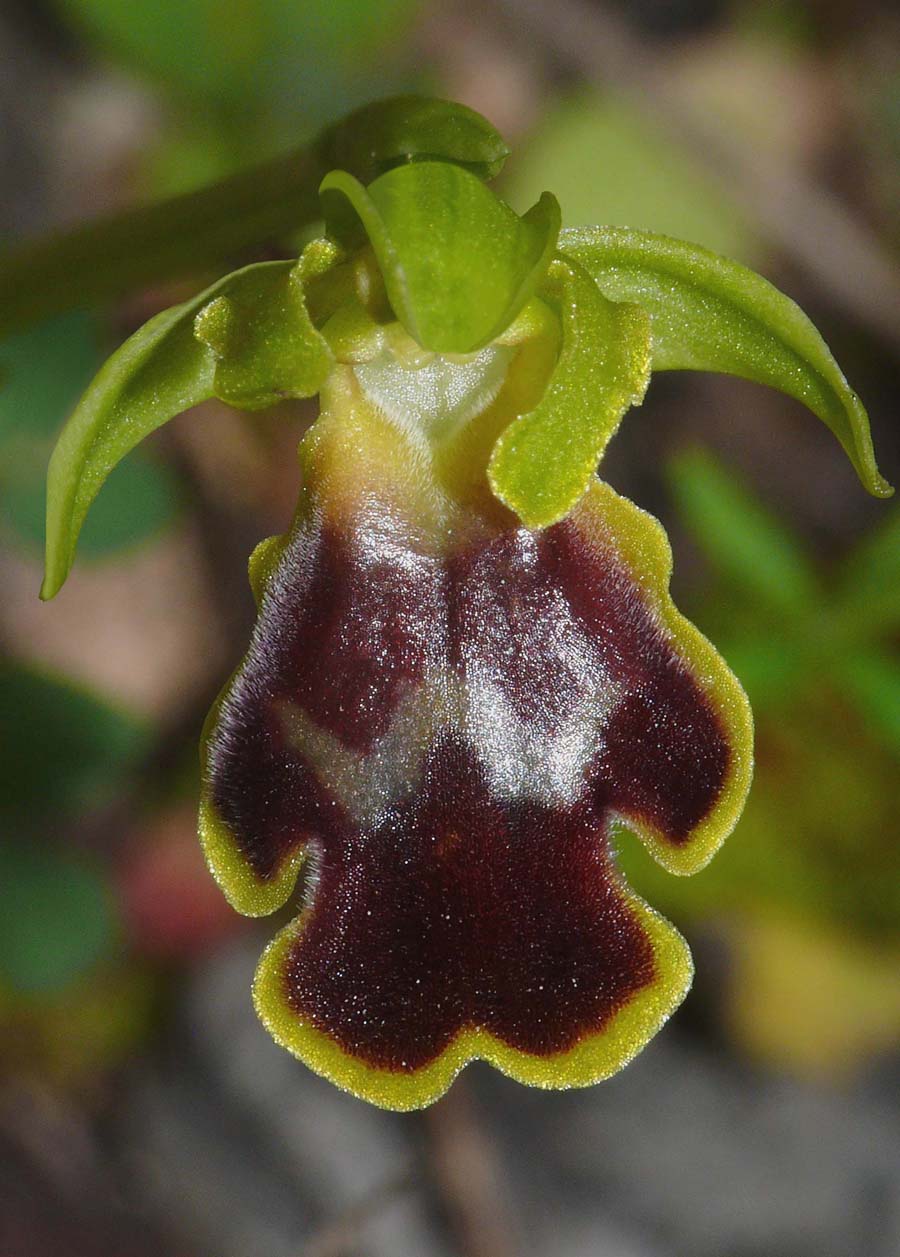
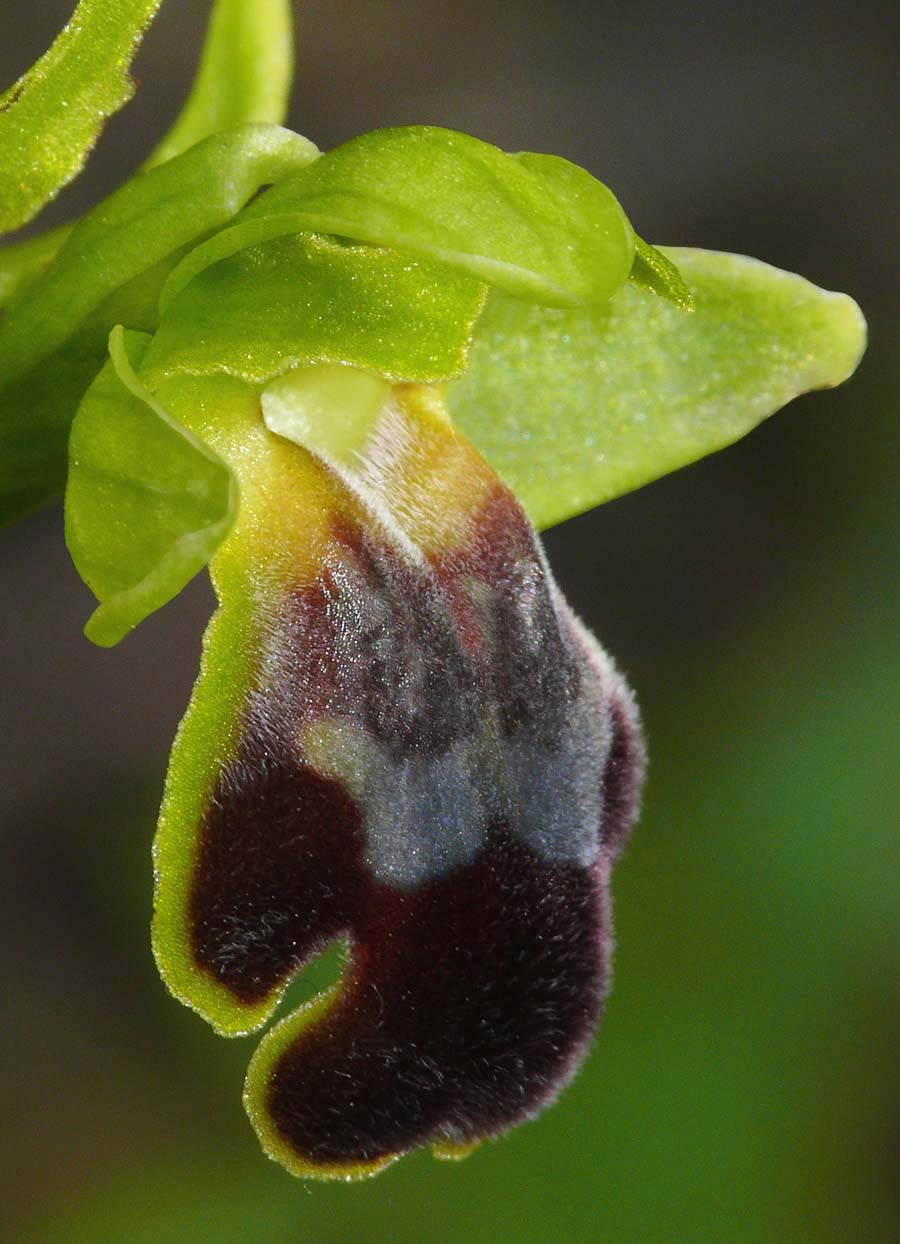
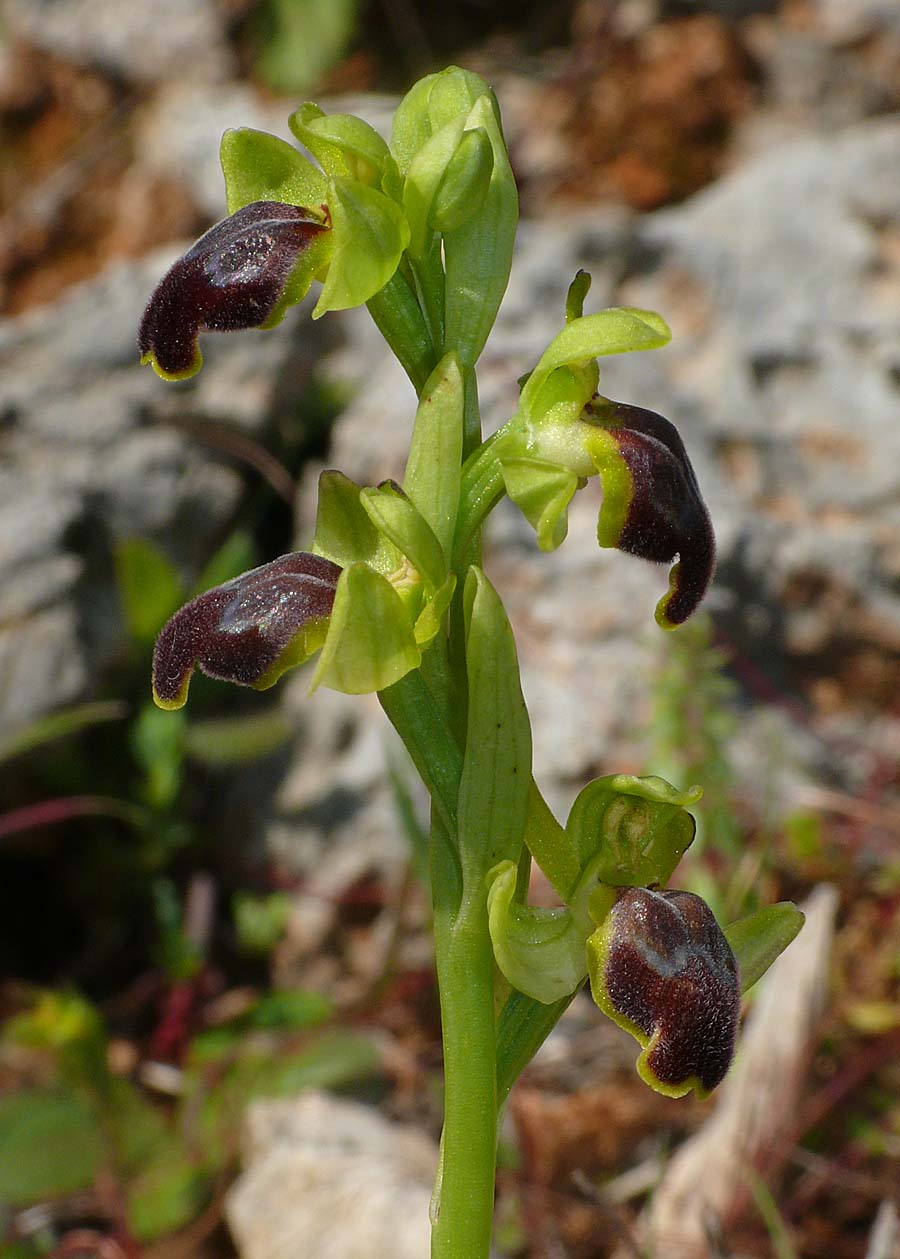
It is a small plant, rarely exceeding 20cms in height, with an inflorescence of up to ten diminutive flowers. O. cinereophila is not a hugely variable species though as may be seen from the photo's, specular patterns can differ quite markedly. The key and most consistent distinguishing feature of this species is the strong geniculation of the lip below the stigmatic cavity. This is then followed by a flat spot before the lip re-curves again, giving the flower a distinctive crescent shaped lateral profile. O. cinereophila is a plant of dry calcereous soils always in full sun, up to an altitude of 750 metres and which first appears in flower as early as February.
The photos come from Cyprus in early March and Crete, Kos and Lesbos in the first week of April.
This is a member of the O. subfusca group which are thought to form the link
between the O. lutea and O. fusca formations. Although this group
seems to be largely geographically centred on Sicily and North Africa,
O. cinereophila
is to be
found in a wider range that takes it from the Cyclades, across continental Greece, through the Aegean and Cyprus into the
Middle East. This more easterly range brings it into contact with
several members of the O. lutea group, though differentiating them is generally straightforward due to the obvious and distinctive characteristics of O. cinereophila.
It is a small plant, rarely exceeding 20cms in height, with an inflorescence of up to ten diminutive flowers. O. cinereophila is not a hugely variable species though as may be seen from the photo's, specular patterns can differ quite markedly. The key and most consistent distinguishing feature of this species is the strong geniculation of the lip below the stigmatic cavity. This is then followed by a flat spot before the lip re-curves again, giving the flower a distinctive crescent shaped lateral profile. O. cinereophila is a plant of dry calcereous soils always in full sun, up to an altitude of 750 metres and which first appears in flower as early as February.
The photos come from Cyprus in early March and Crete, Kos and Lesbos in the first week of April.