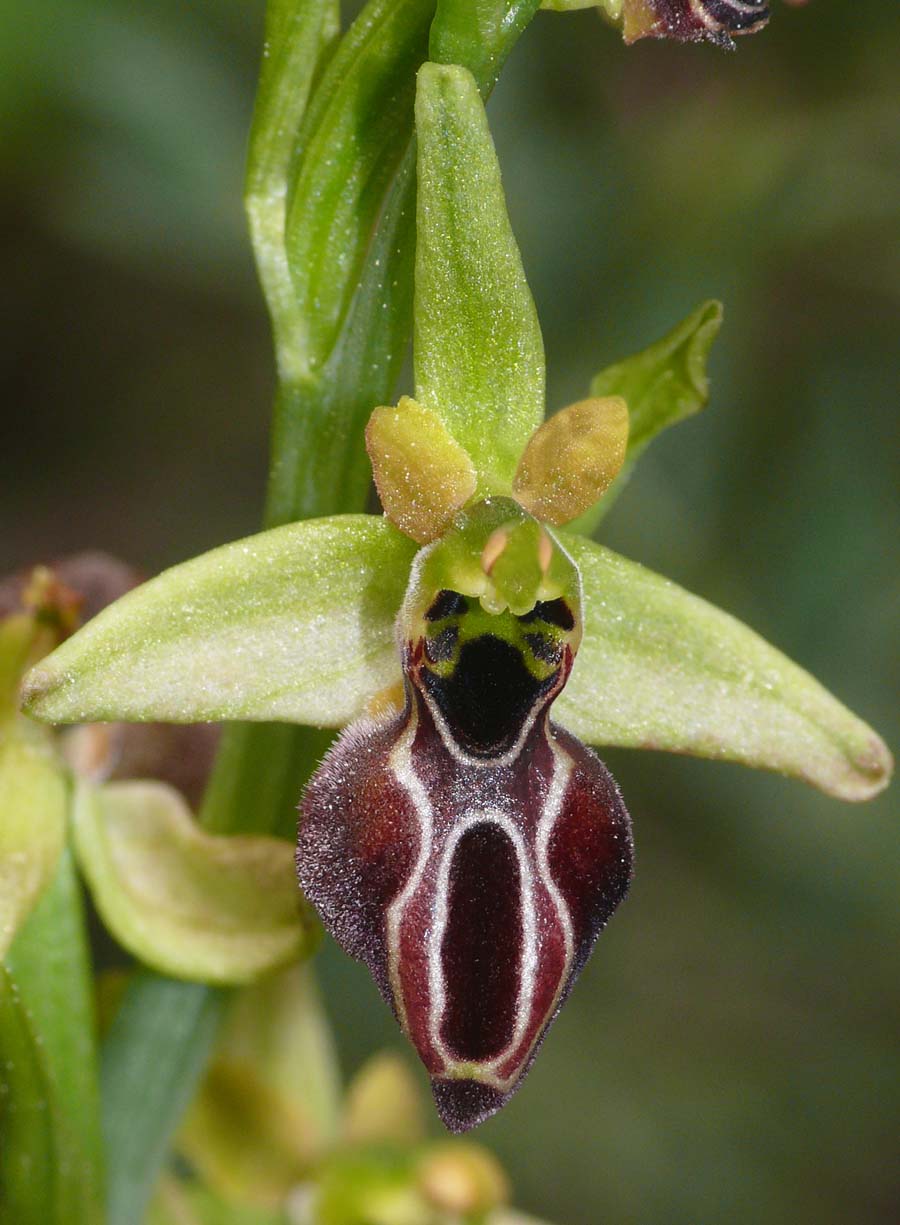
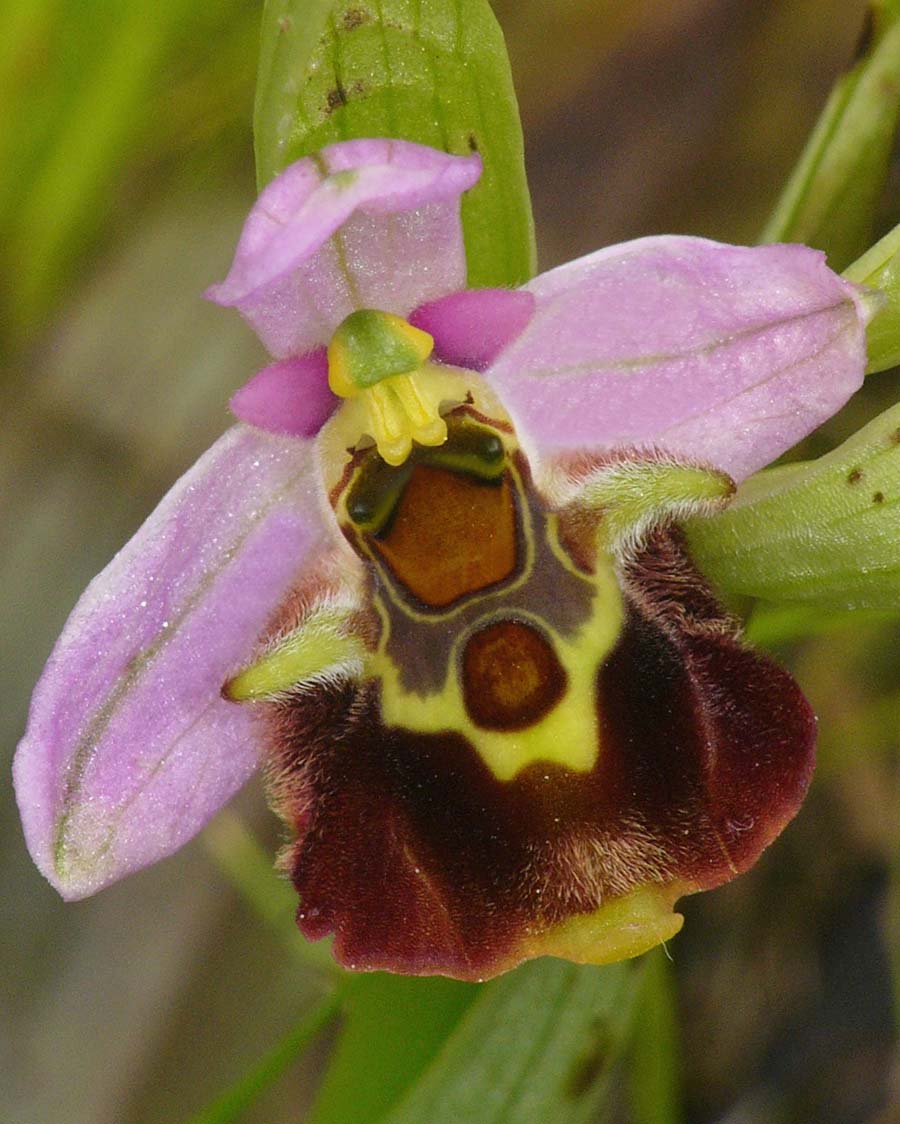
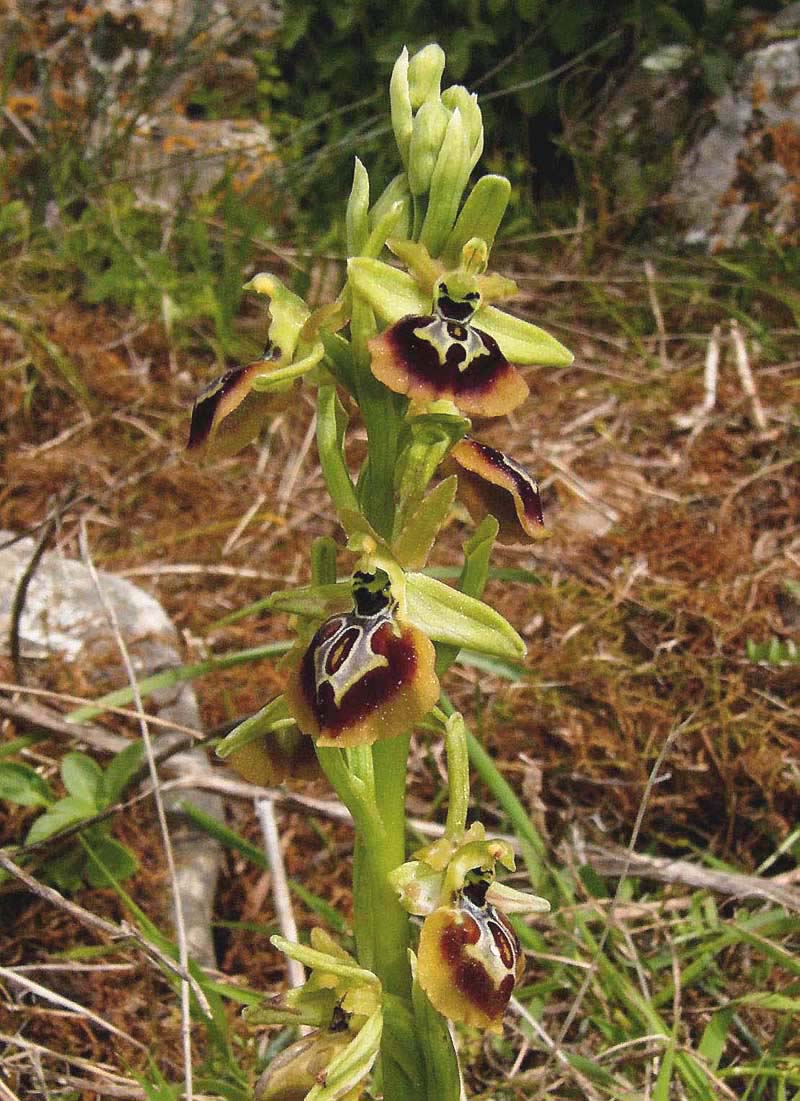
O. aesculapii was first described from Argolide, Greece by Rentz in 1928 and is a member of the large and growing O. mammosa group of Ophrys. It was named after the Greek god of medicine, Asclepius.
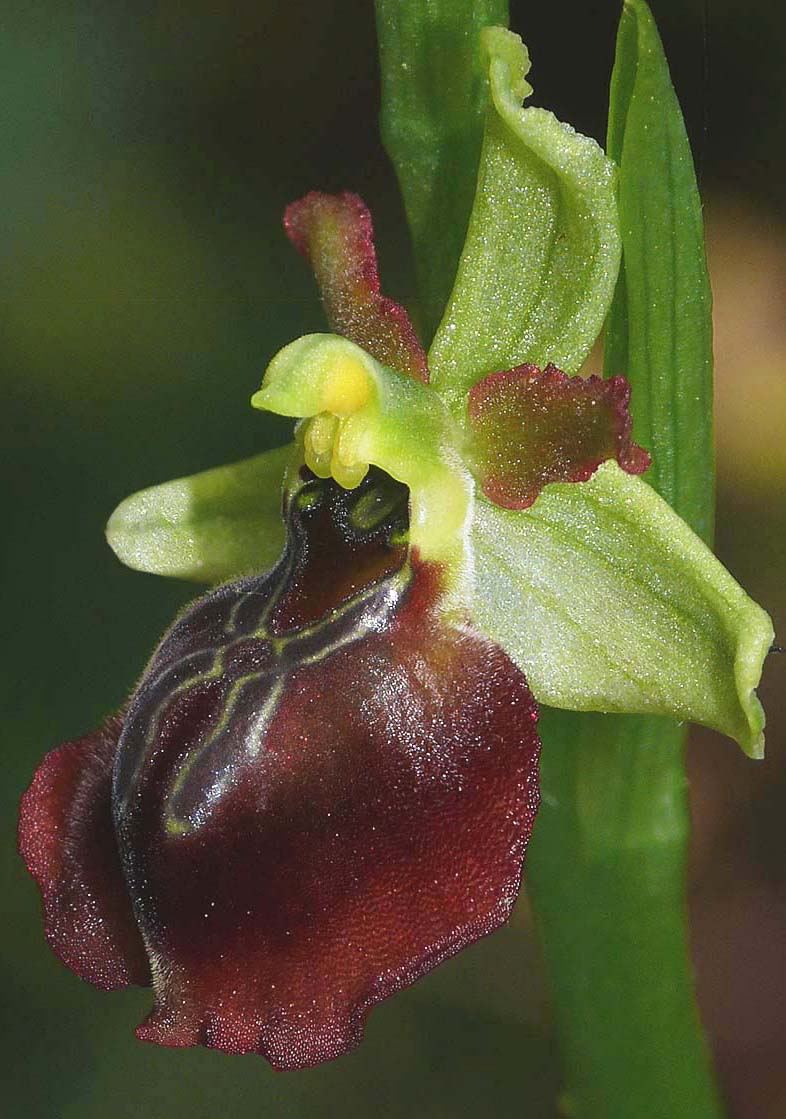
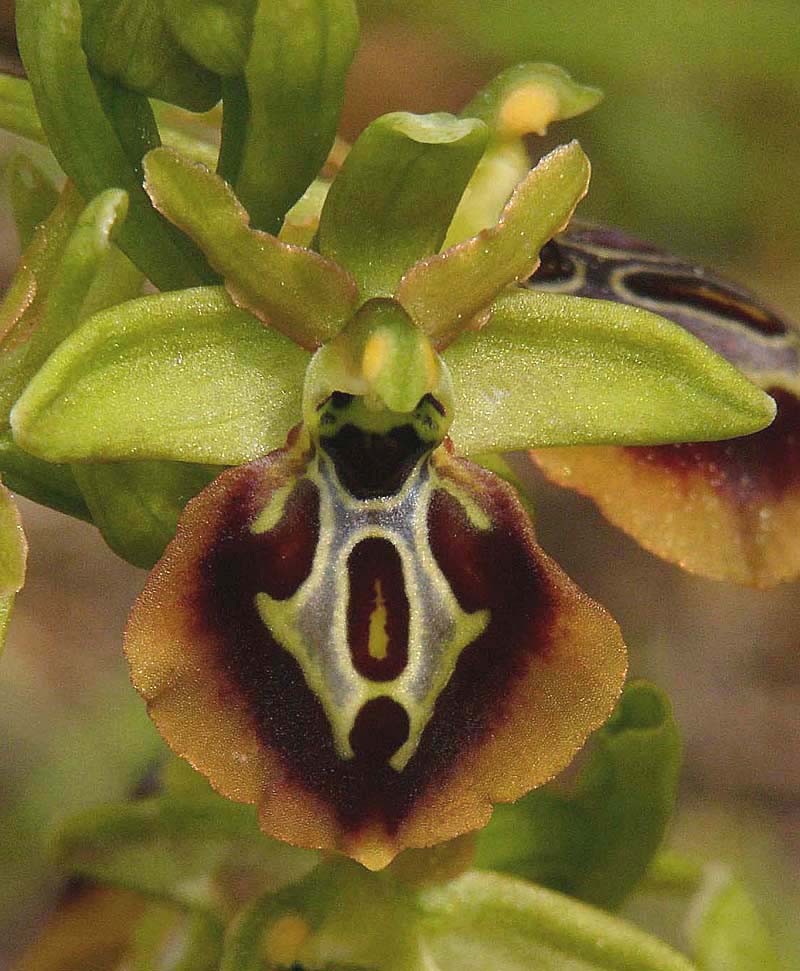
This is surely one of Greece's most handsome Ophrys, which although uncommon and very limited in range, can be numerous in it's favoured stations. Unusually amongst the Ophrys of Greece, O. aesculapii is quite distinctive and apart from colouration, not especially variable. The speculum may be simple or complex but is always prominent and well defined with the white edged blue lining contrasting strongly with the dark colouration of the lip. It can easily be confused with O. zeusii but although their is a small range overlap in northern Greece, the two species are not often found together.
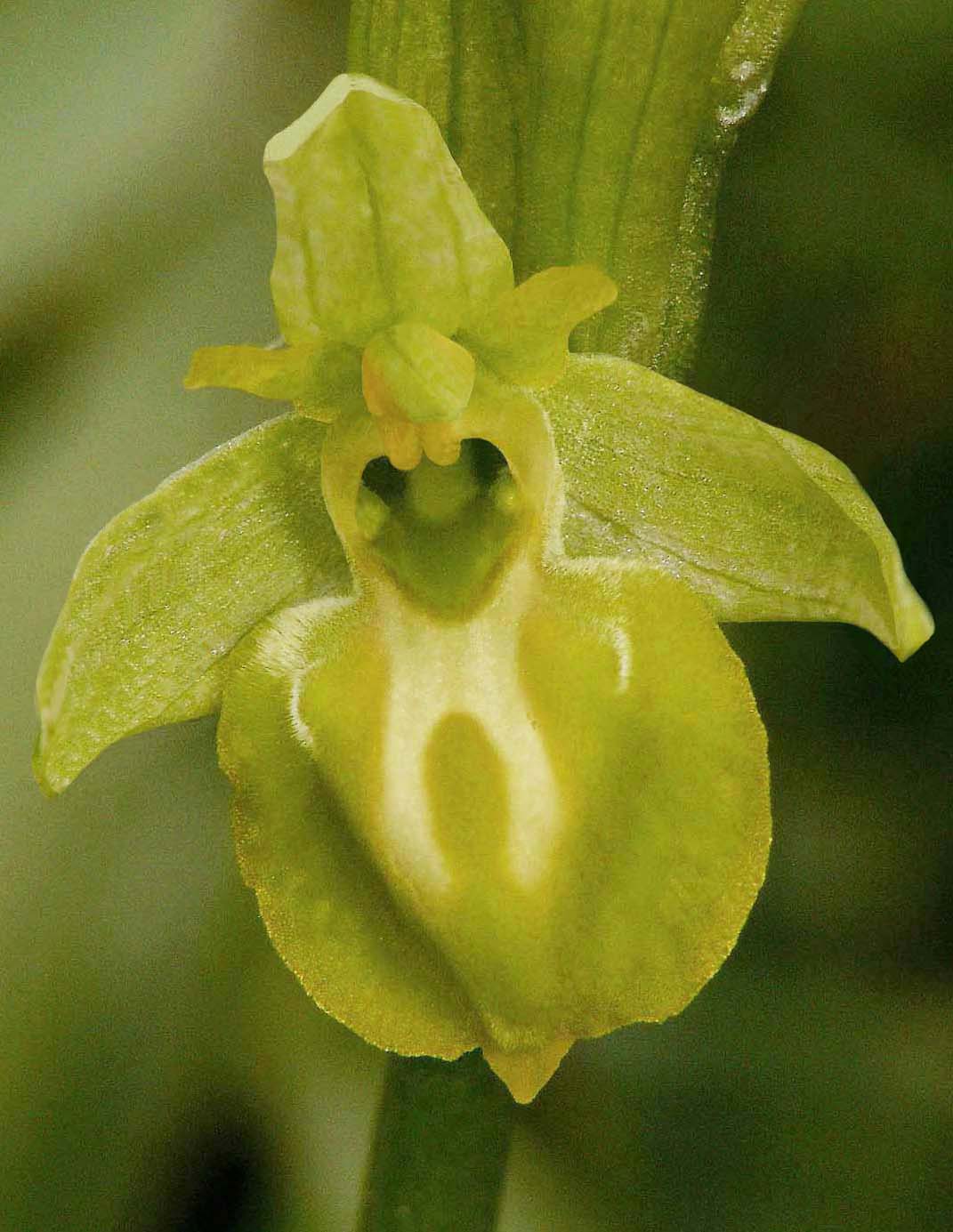
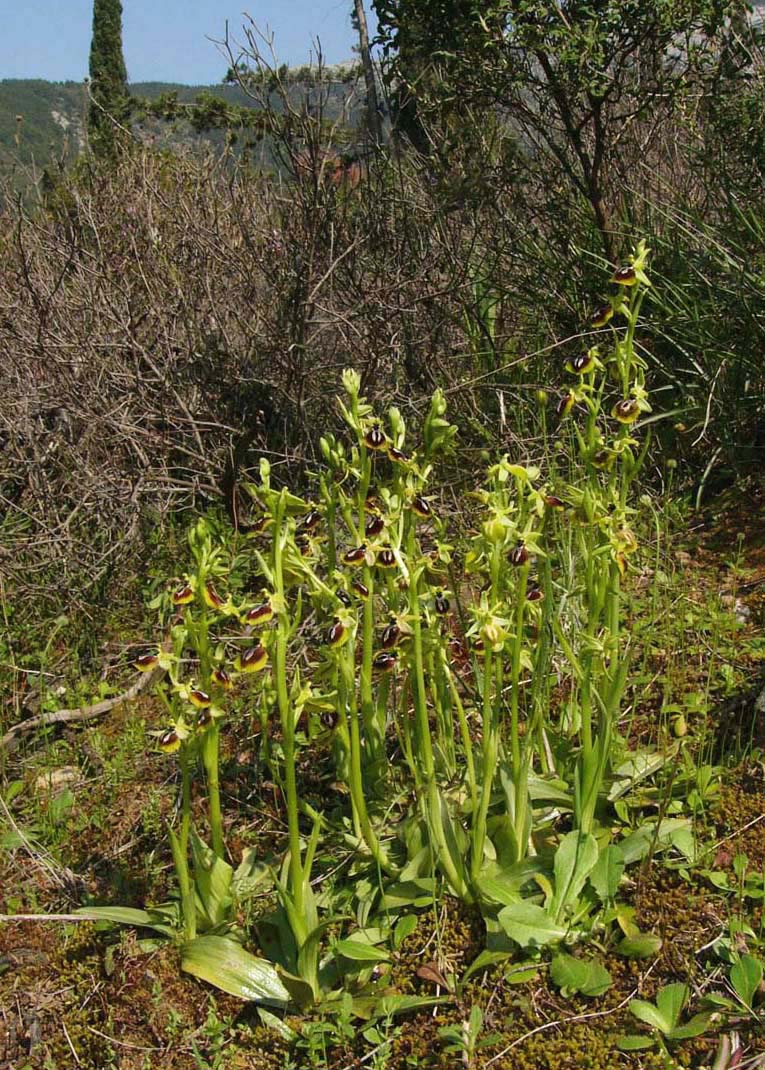
It's an endemic whose range is entirely within continental Greece, largely to the north of the Corinth canal but also sparingly in the Peloponnese and through Attica to Euobea. Habitat requirements seem to be undemanding and we have found it prospering in both full sun and comparatively heavy shade. Variety Pseudoaranifera is a fewer flowered form that occurs sporadically amongst nominate populations and exhibits a broader speculum with a less noticeable or absent yellow margin. This variety is depicted in photos 4 and 10 from northern Greece.
The photos are from Mt Hymettus, Attica and the Larissa region of north east Greece, dating from the last week of March (Attica) and the third week of April (Larissa).
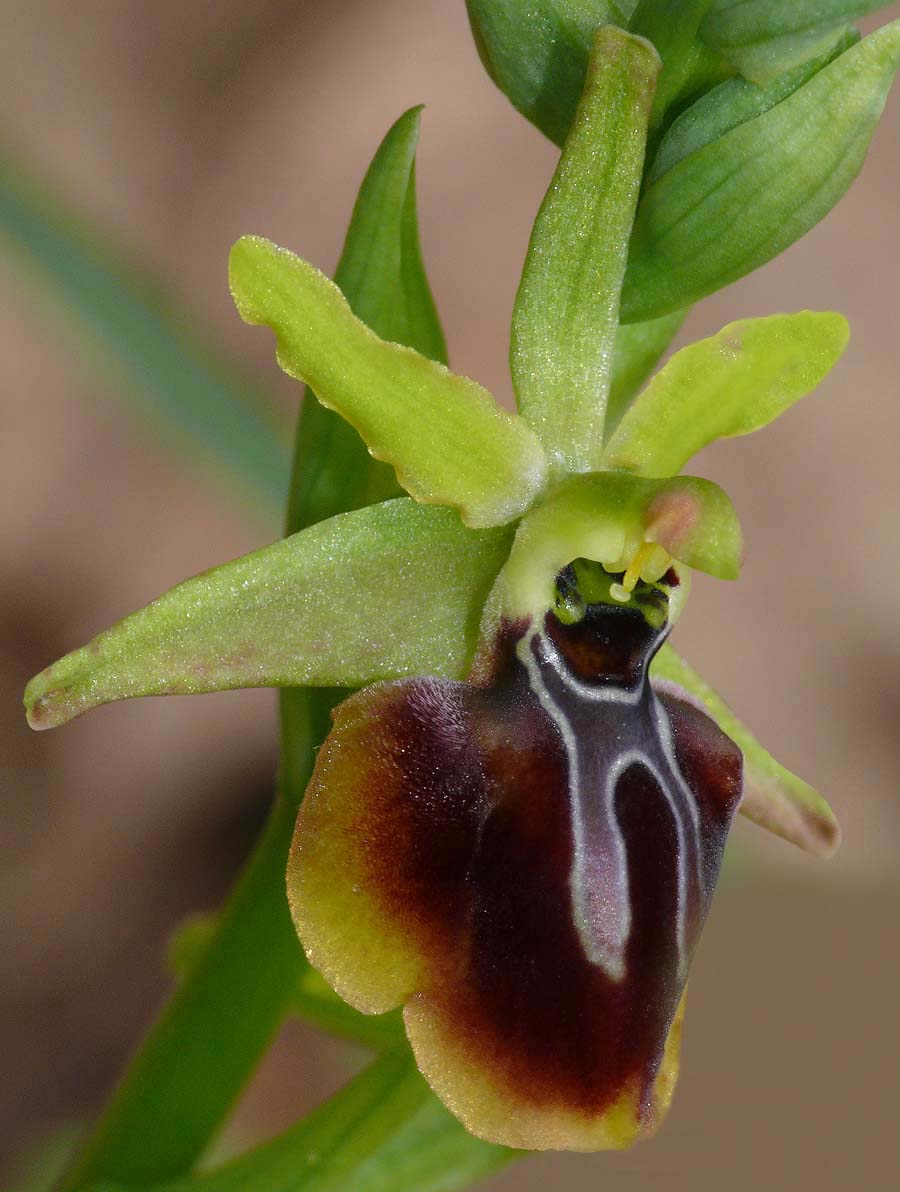
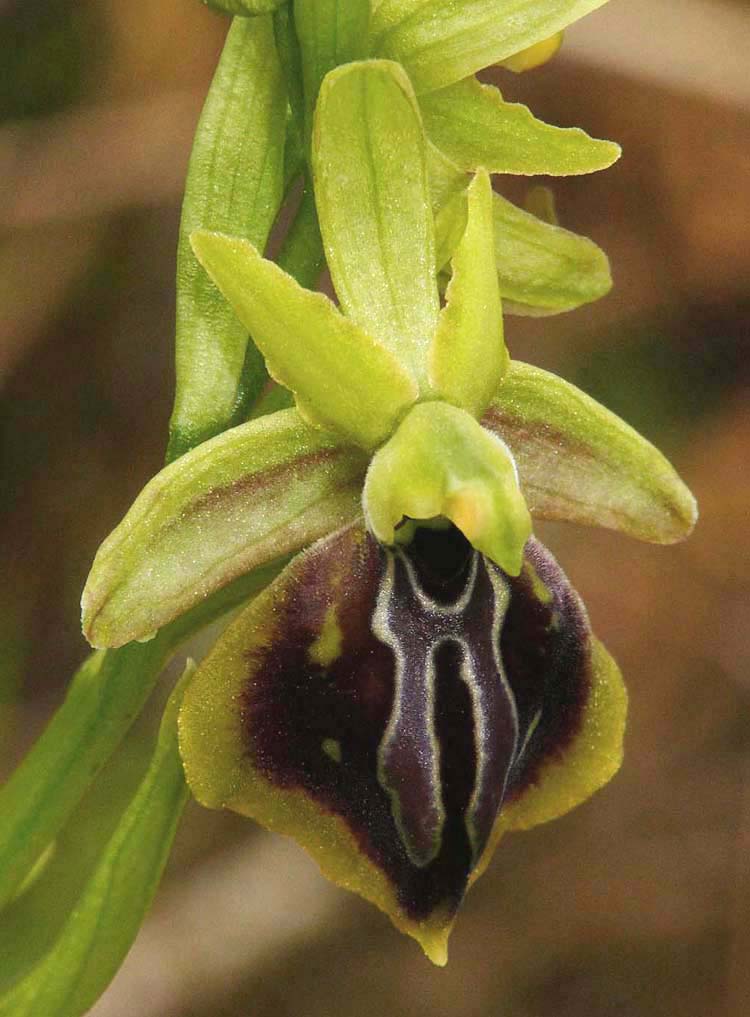
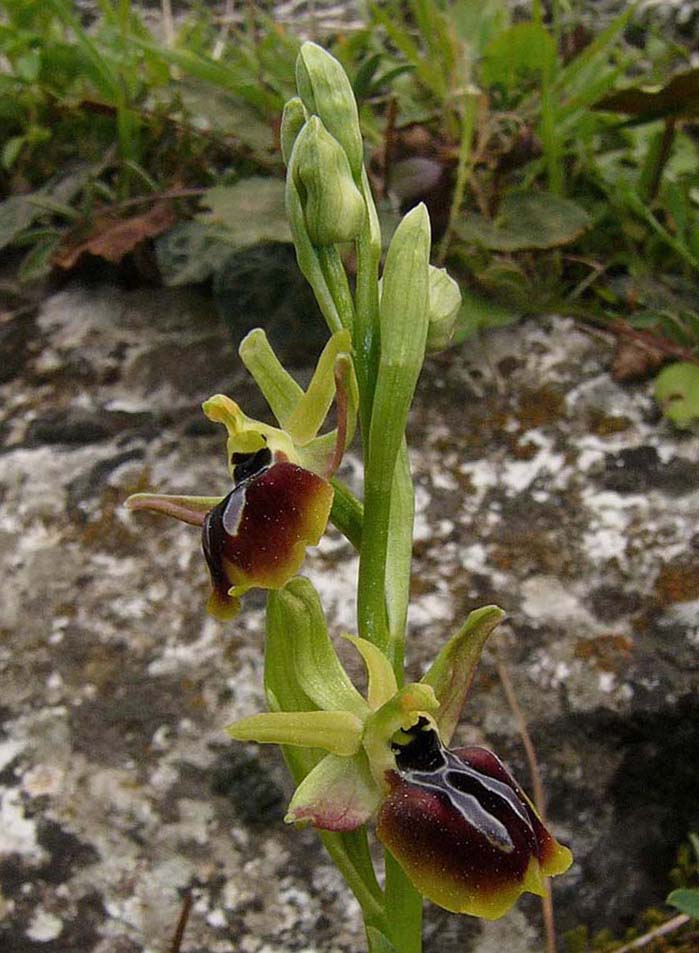
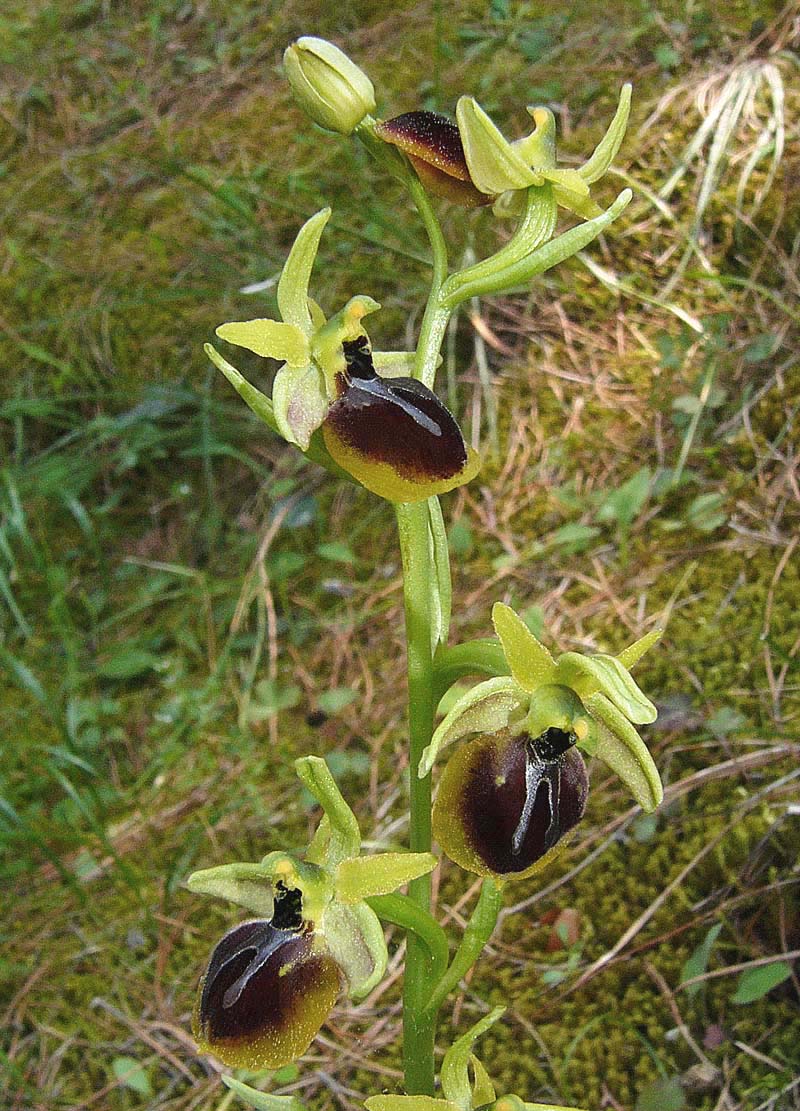
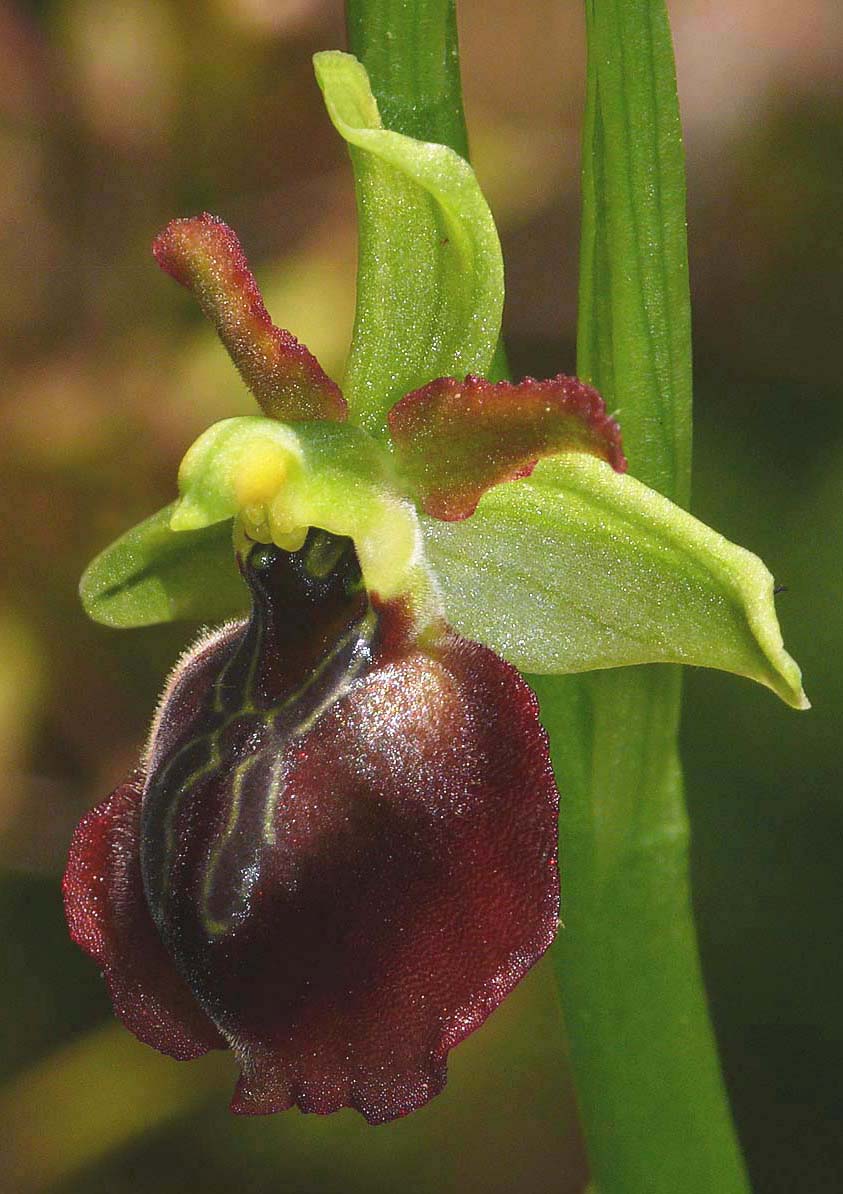
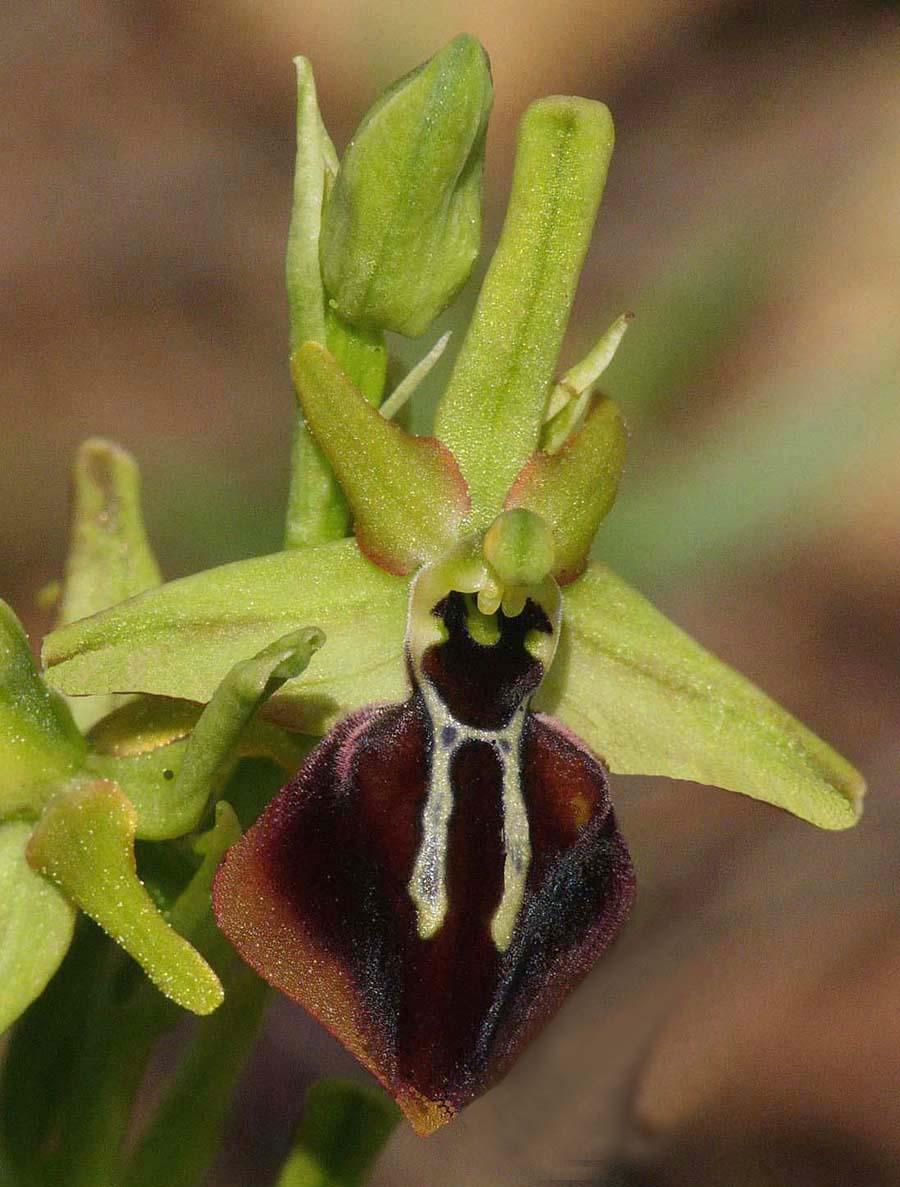

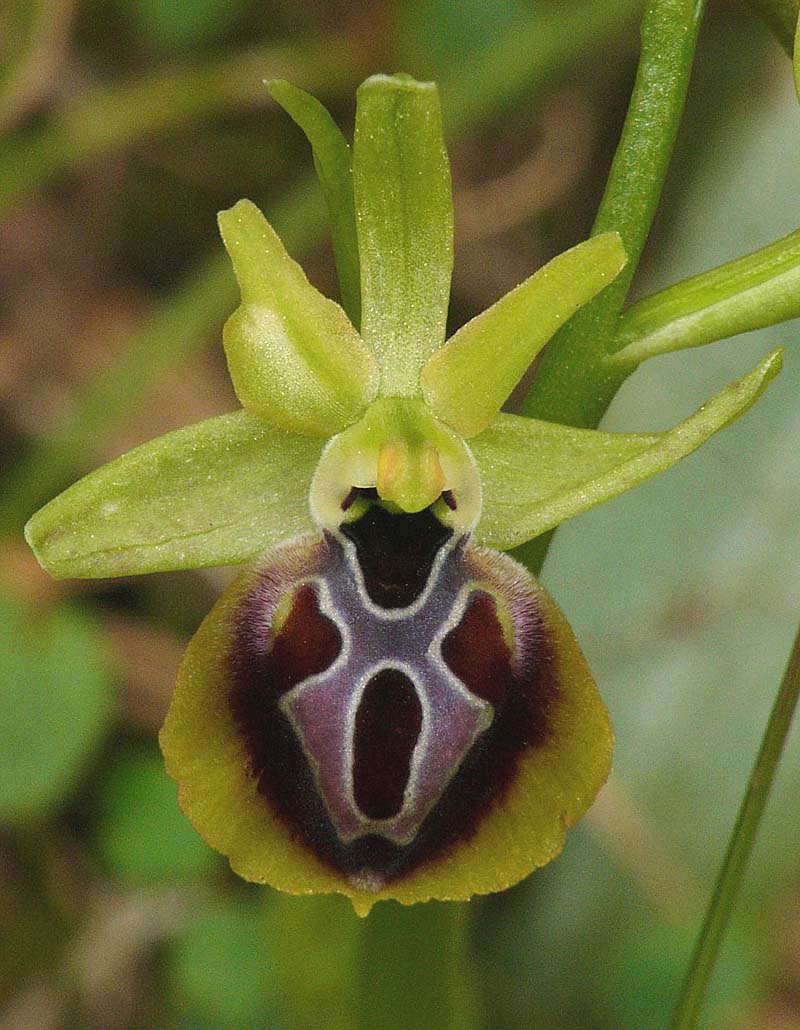
The following photos depict two examples of hybrids from Mt Hymettus. In neither case was it immediately obvious which species was the other parent but the striking green psuedo-eyes were clearly inherited from O. aesculapii, which is a relatively common orchid in this part of eastern Greece.