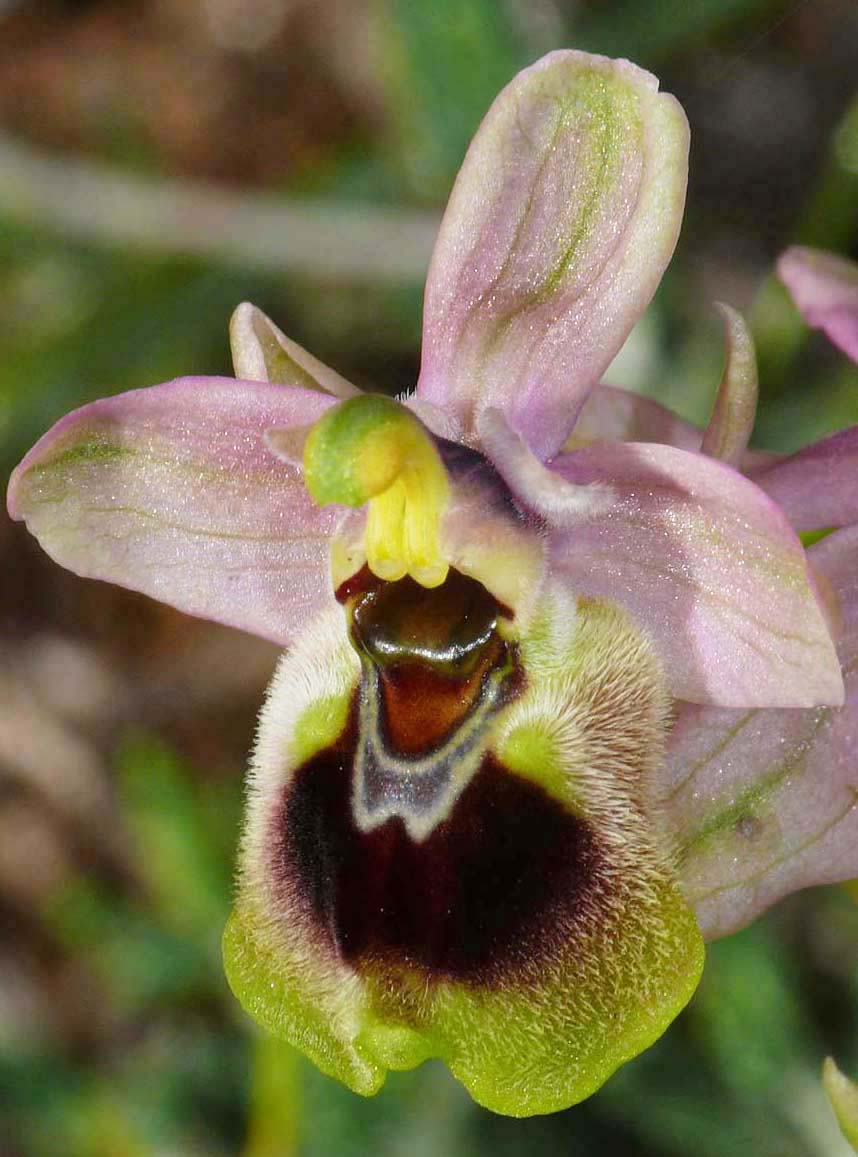
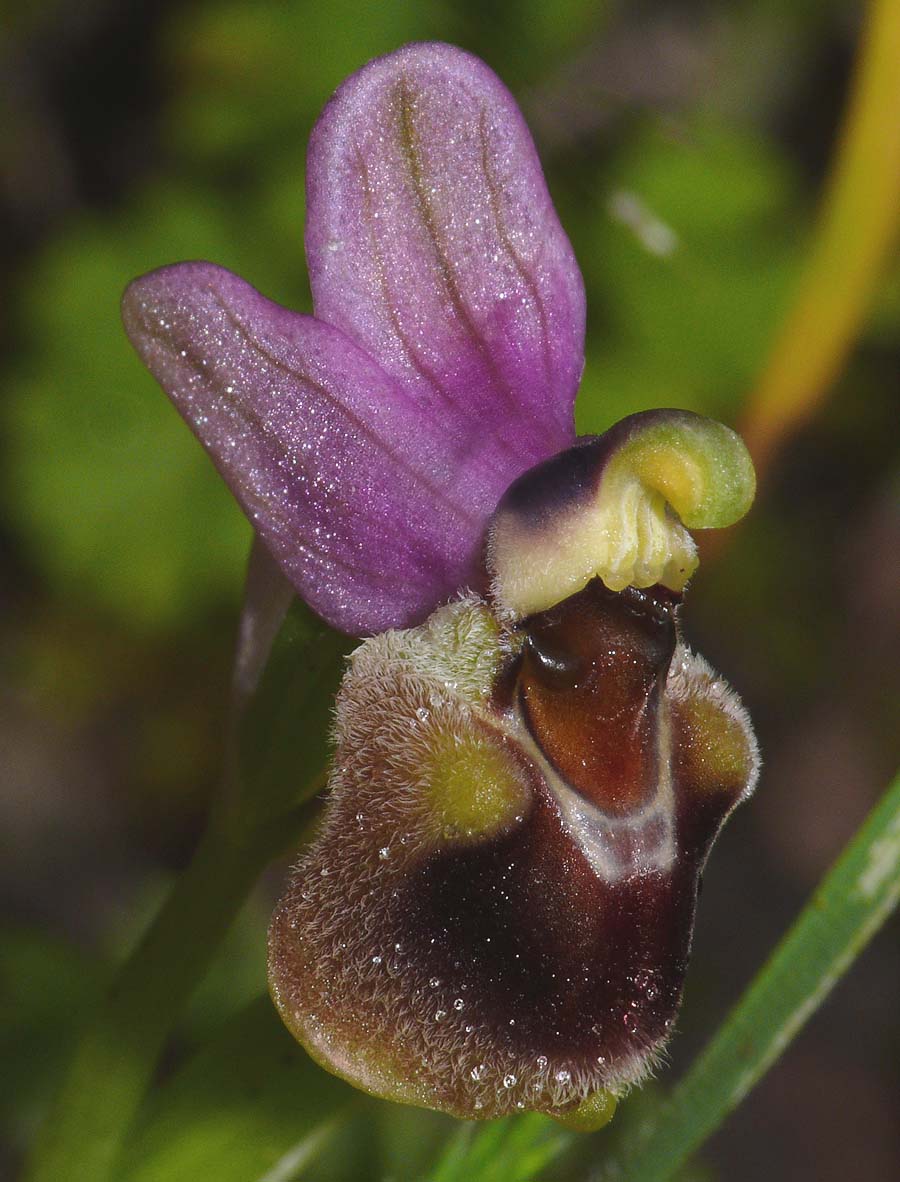
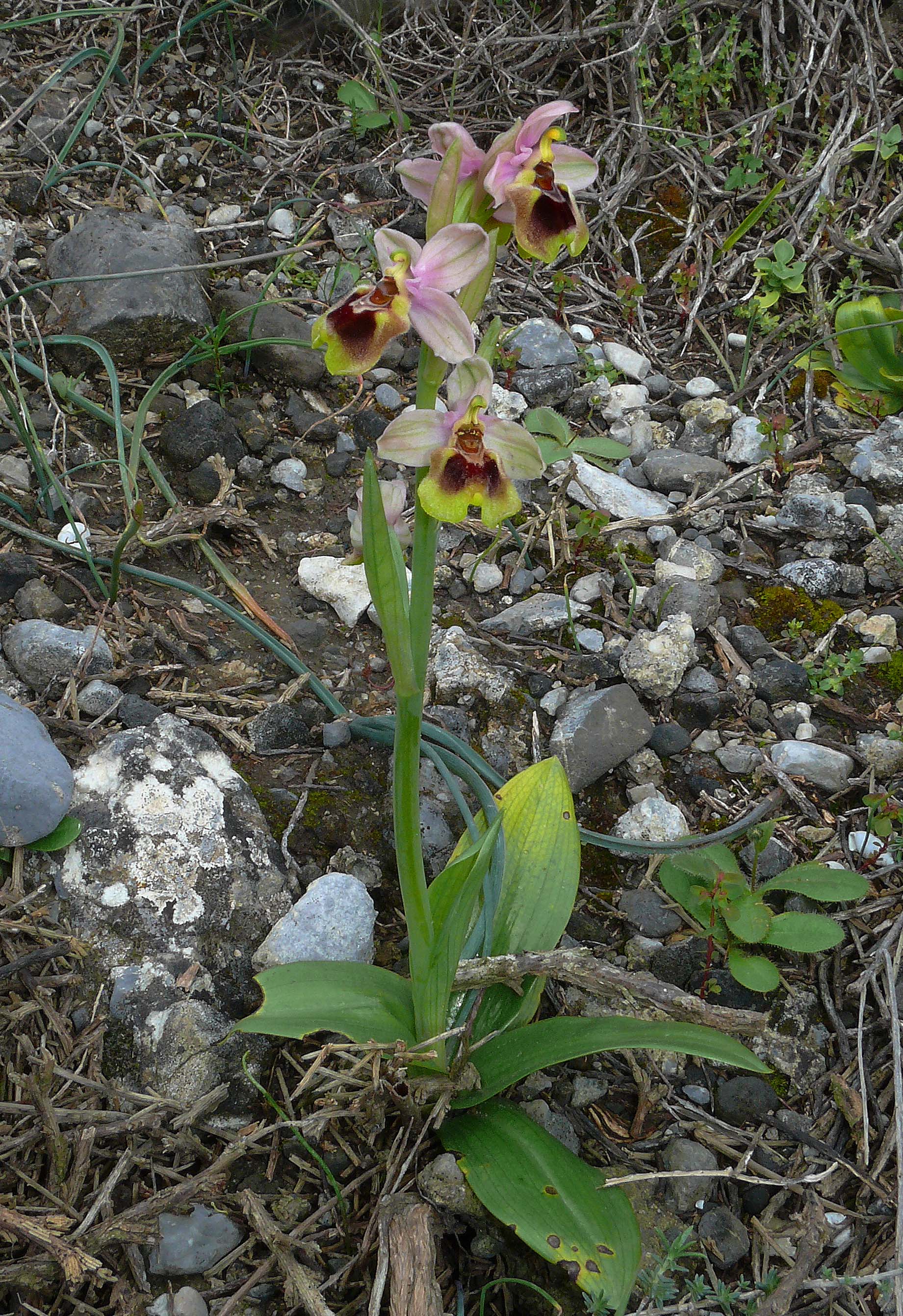
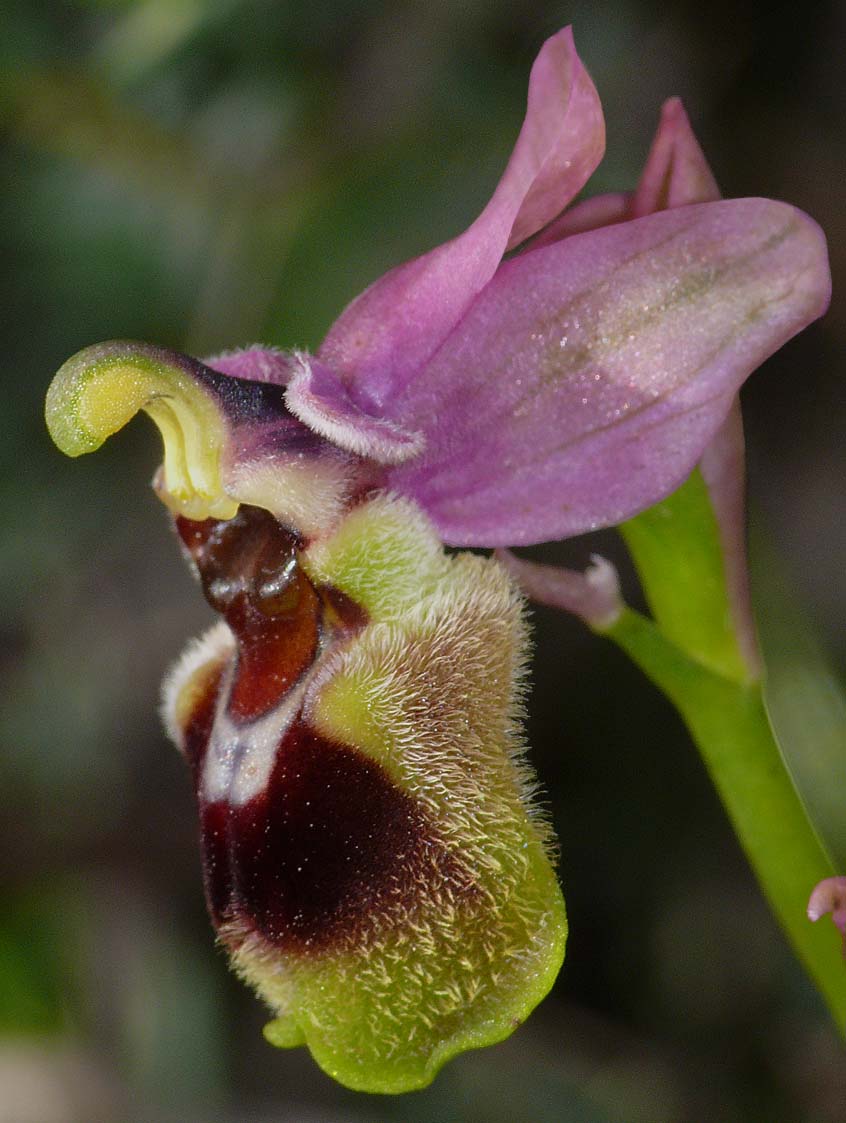
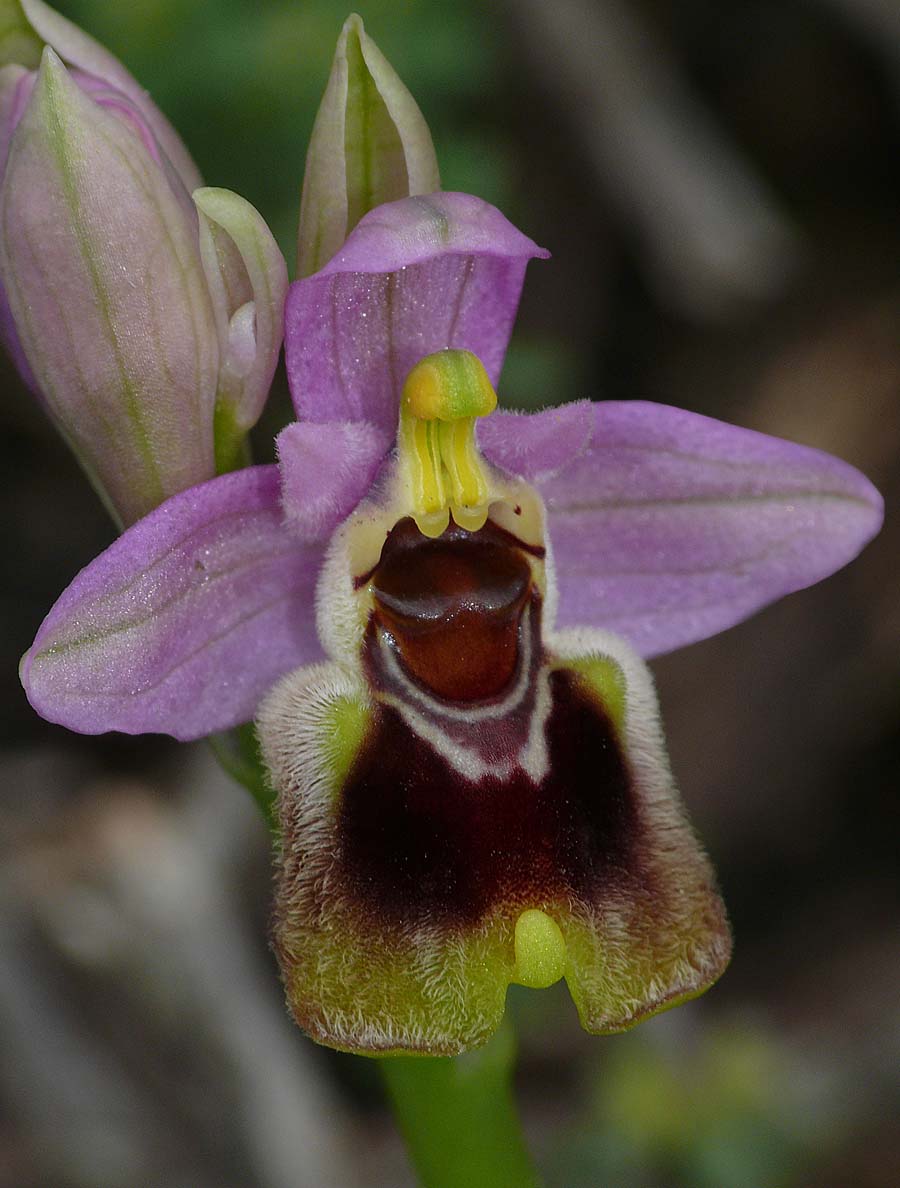
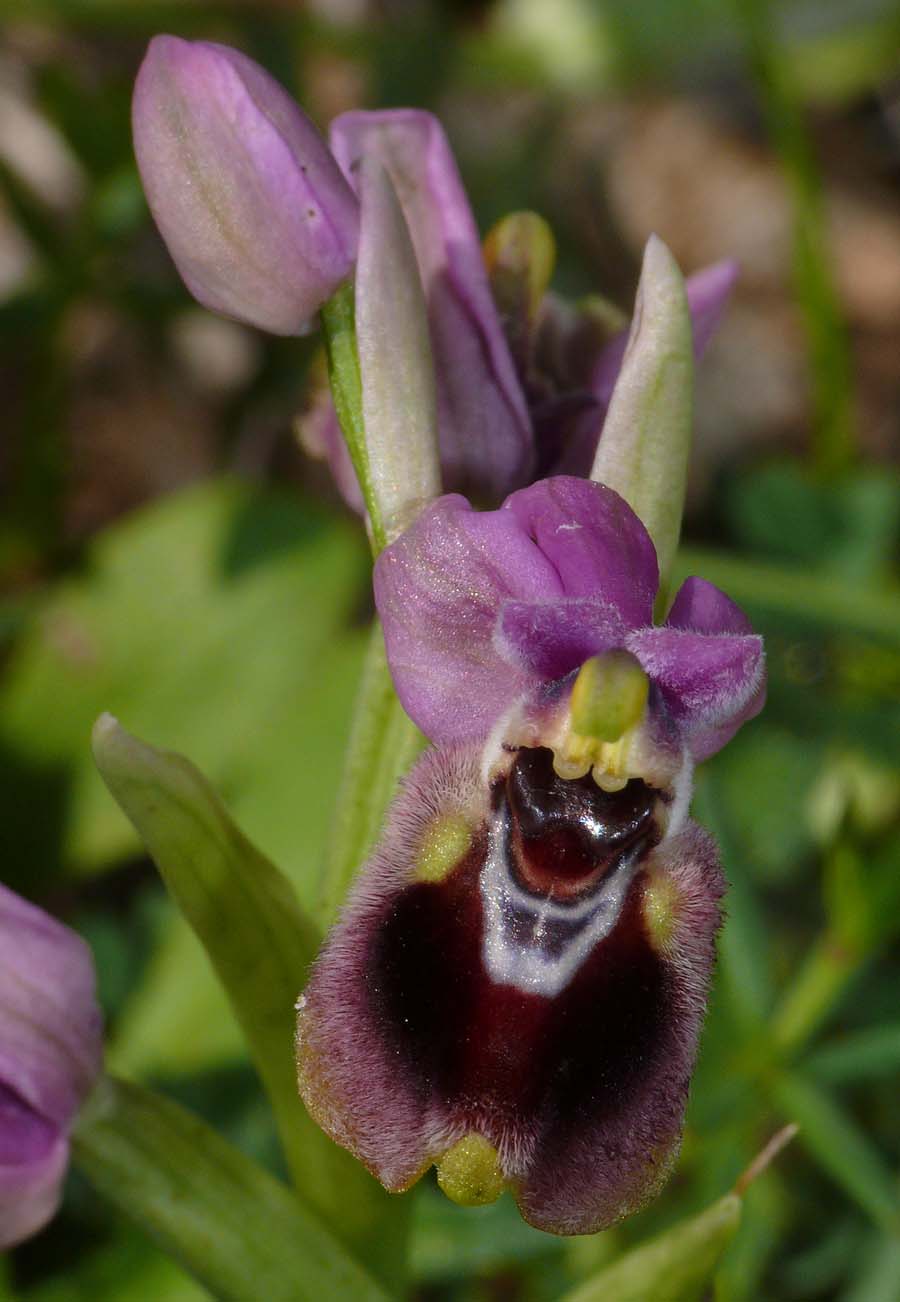
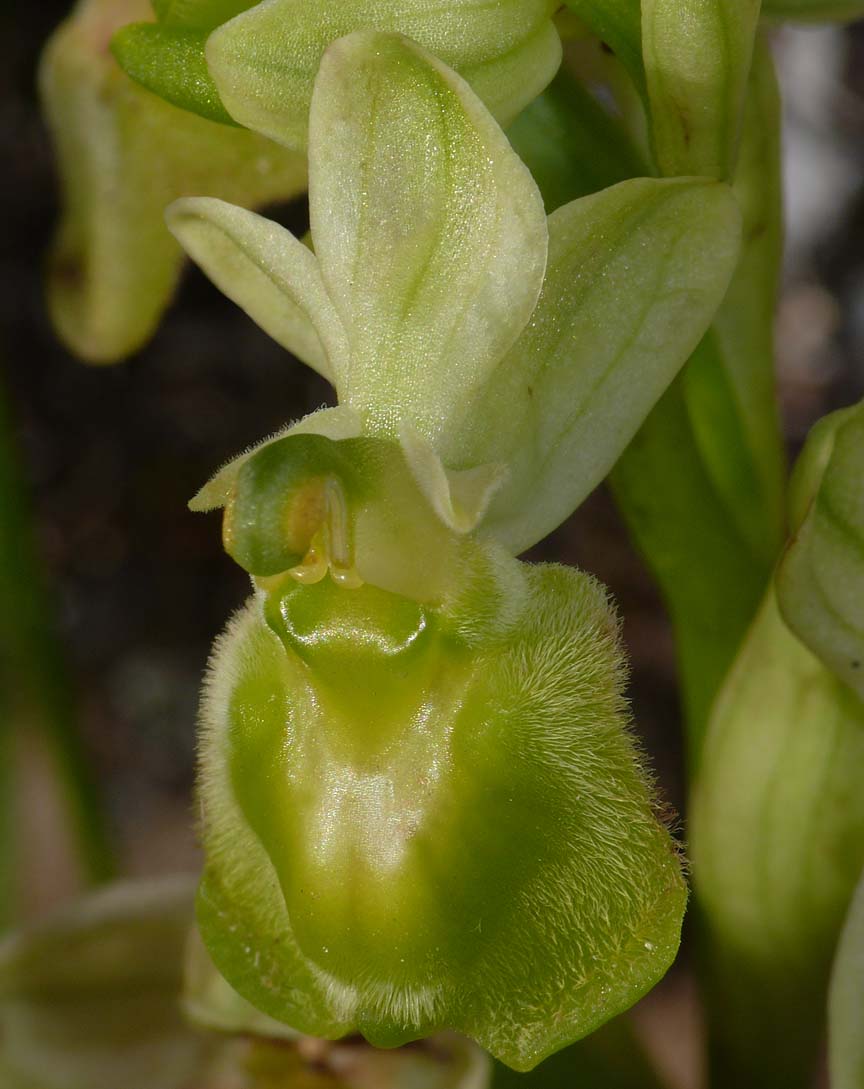
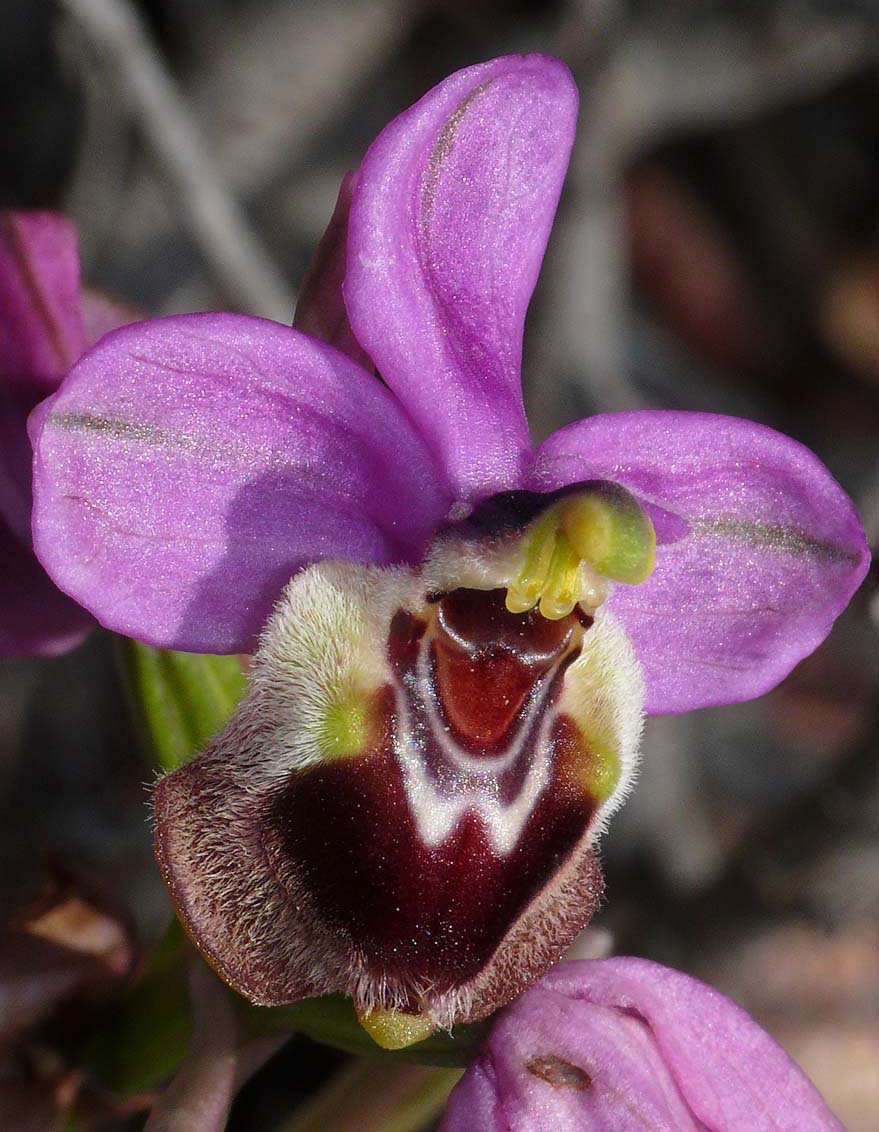
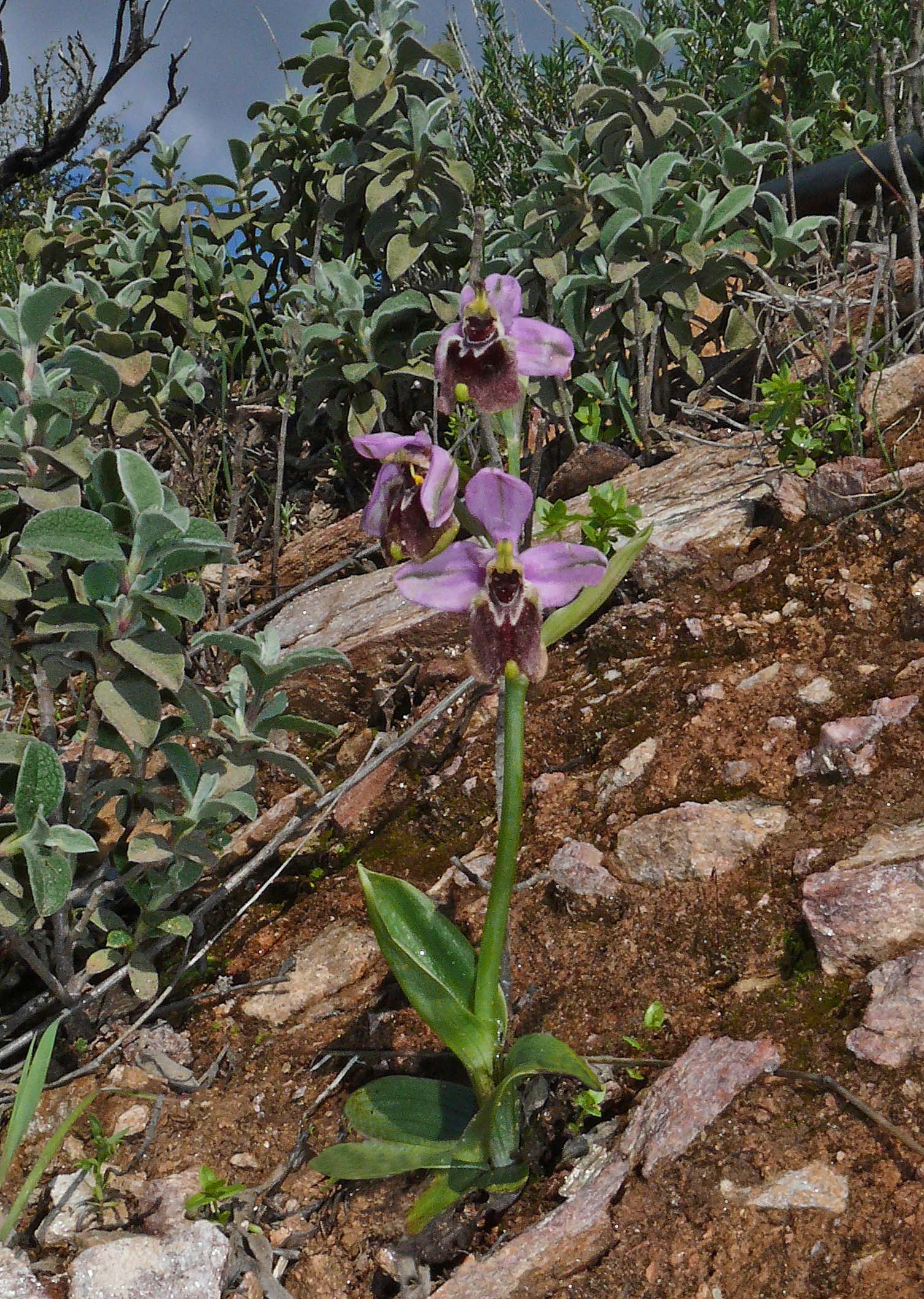
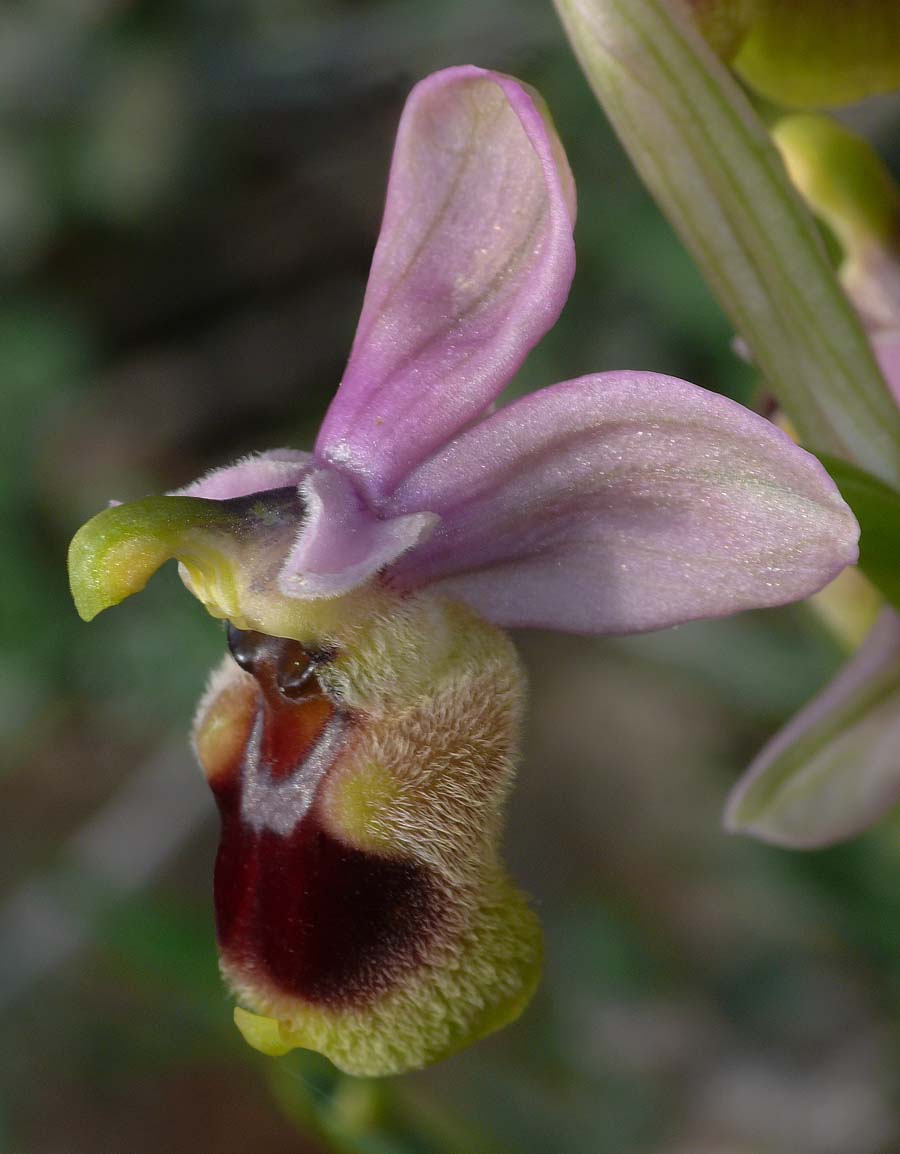
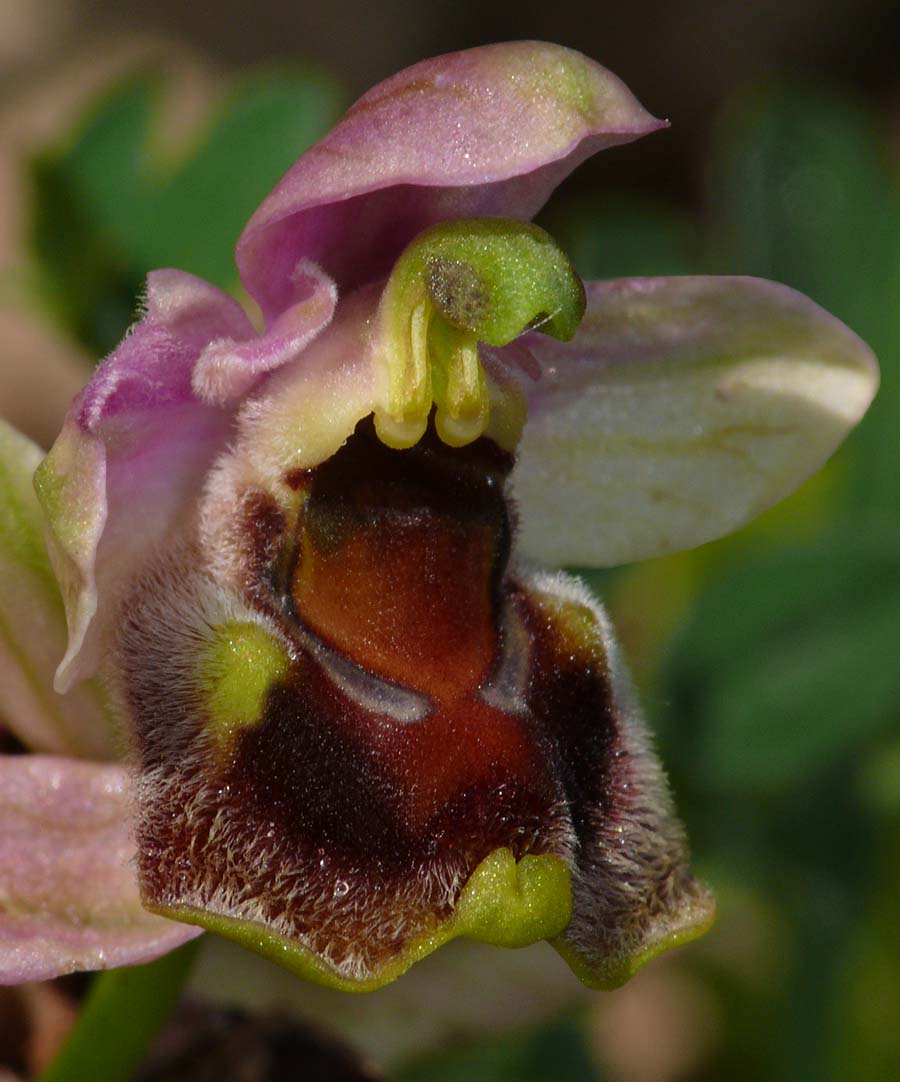
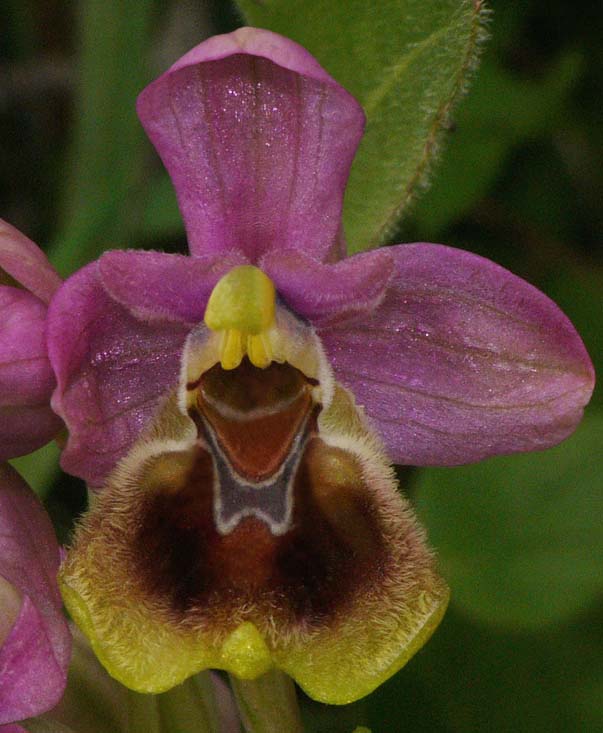
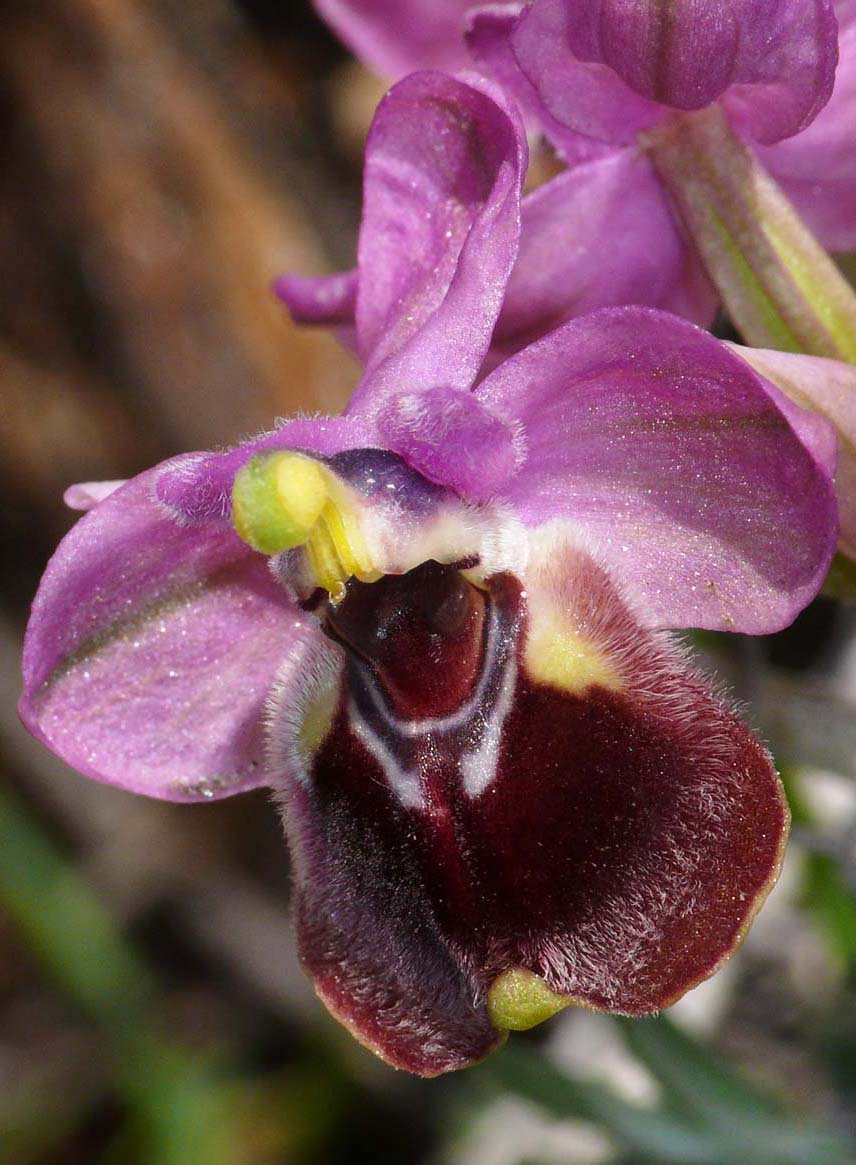
O. villosa is an eastern Mediterranean representative of the O. tenthredenifera group whose name is a reference to its hairy lip, literally meaning shaggy. Until recently this taxon was considered to be
a species with a considerable natural range but latest
studies including work carried out in Crete by
Delforge (2005) has now determined that O. villosa is not a single species but a polytipic taxon which has been split to include five additional new species. (O. dictynnae, O. dimidiata, O. ulyssea, O. korae and O. leochroma)
Of these species, O. villosa
is the latest to bloom in mid March but it has much the shortest season,
being largely finished by early April, at which time the longer lasting O. leochroma, which first appeared at much the same time, will still be in full flower. As a result of the reclassifications, O. leochroma is the most widely distributed, being found in continental Greece, the Aegean and Turkey. The biggest overlap in range of the new species is between O. villosa and O. leochroma, and in Crete particularly, differentiating the two in the field is far from straightforward, as
although there are some formally described morphological differences,
these do not seem to be unique and can be inconclusive
in many cases.
Typically O. leochroma exhibits a longer lip when measured from stigmatic cavity to appendage,
more intensely coloured perianth and a hairier border. It is
further said to be a larger and often darker flower but although O. villosa may indeed be sometimes, both species produce darker and lighter morphs. O. leochroma
is reported to be a more robust plant with a larger number of flowers
per stem but again, whilst this may be a reasonable generalization, it
is not
diagnostic. In reality, the only sure way to separate the species
is in the field by study of their flowering period and where
possible by identification of the pollinator.
The pictures are from Crete and the Aegean dating from the first week of April.
The pictures are from Crete and the Aegean dating from the first week of April.