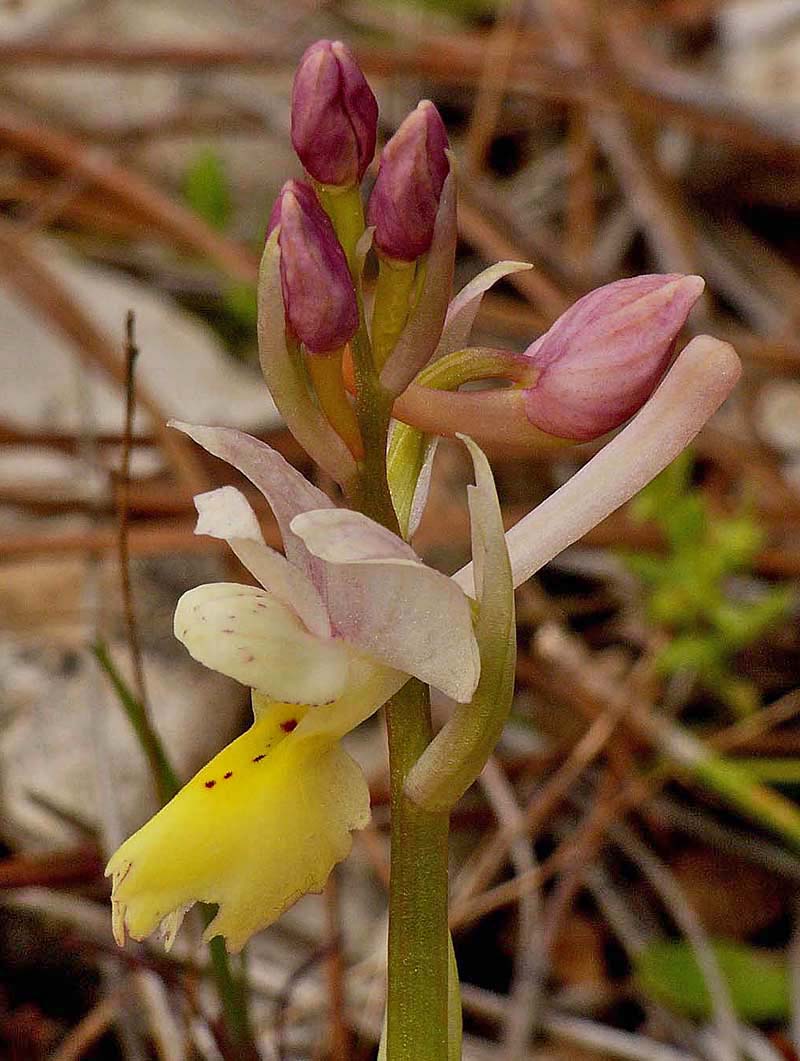
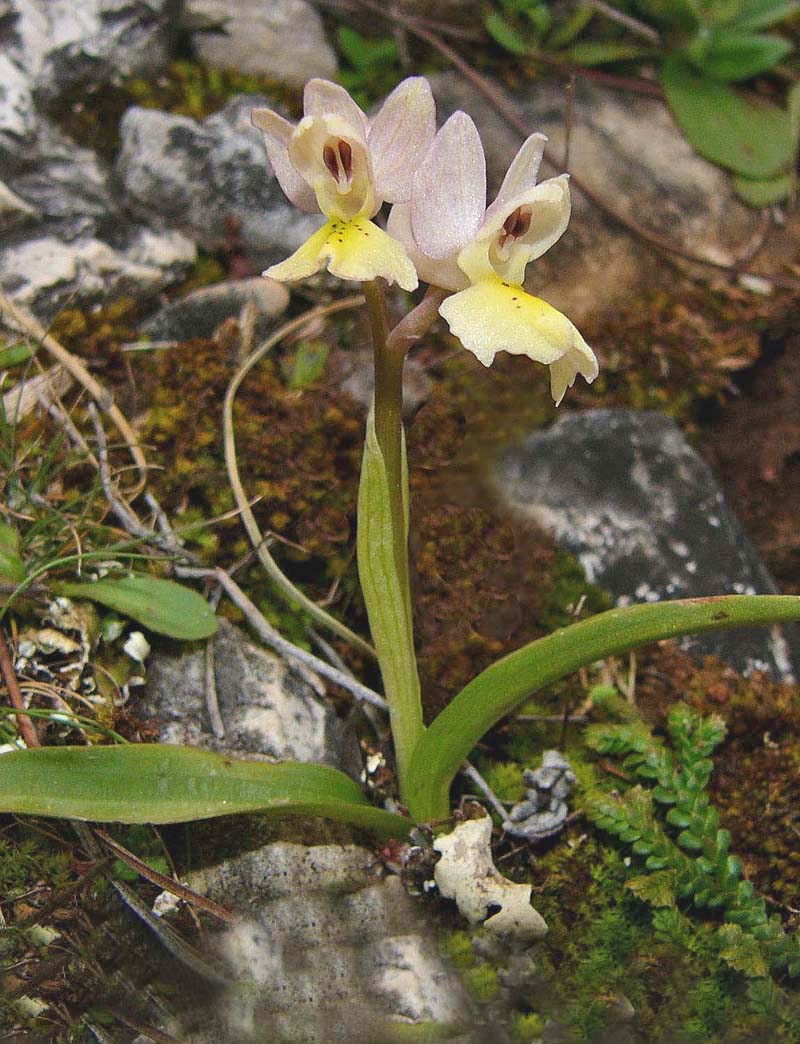
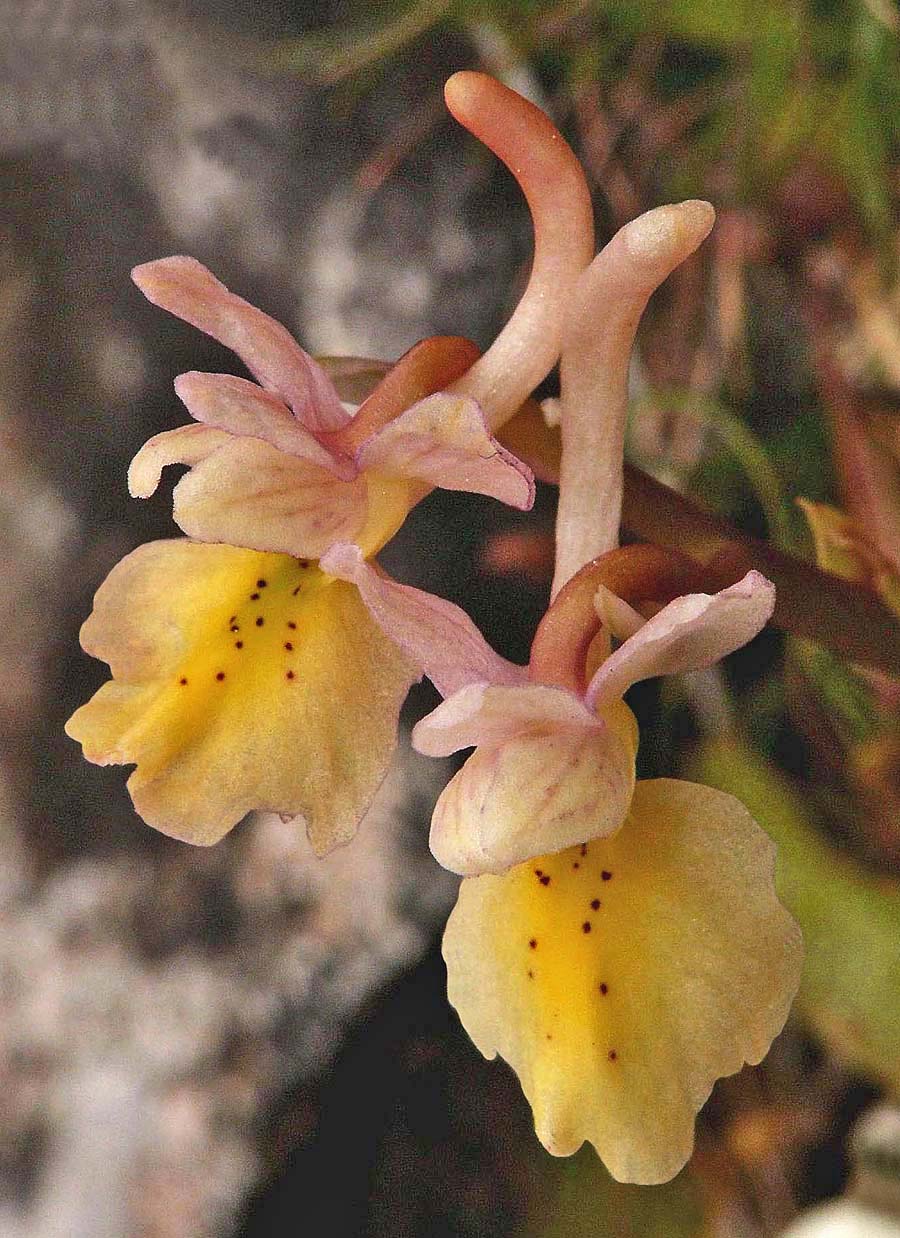
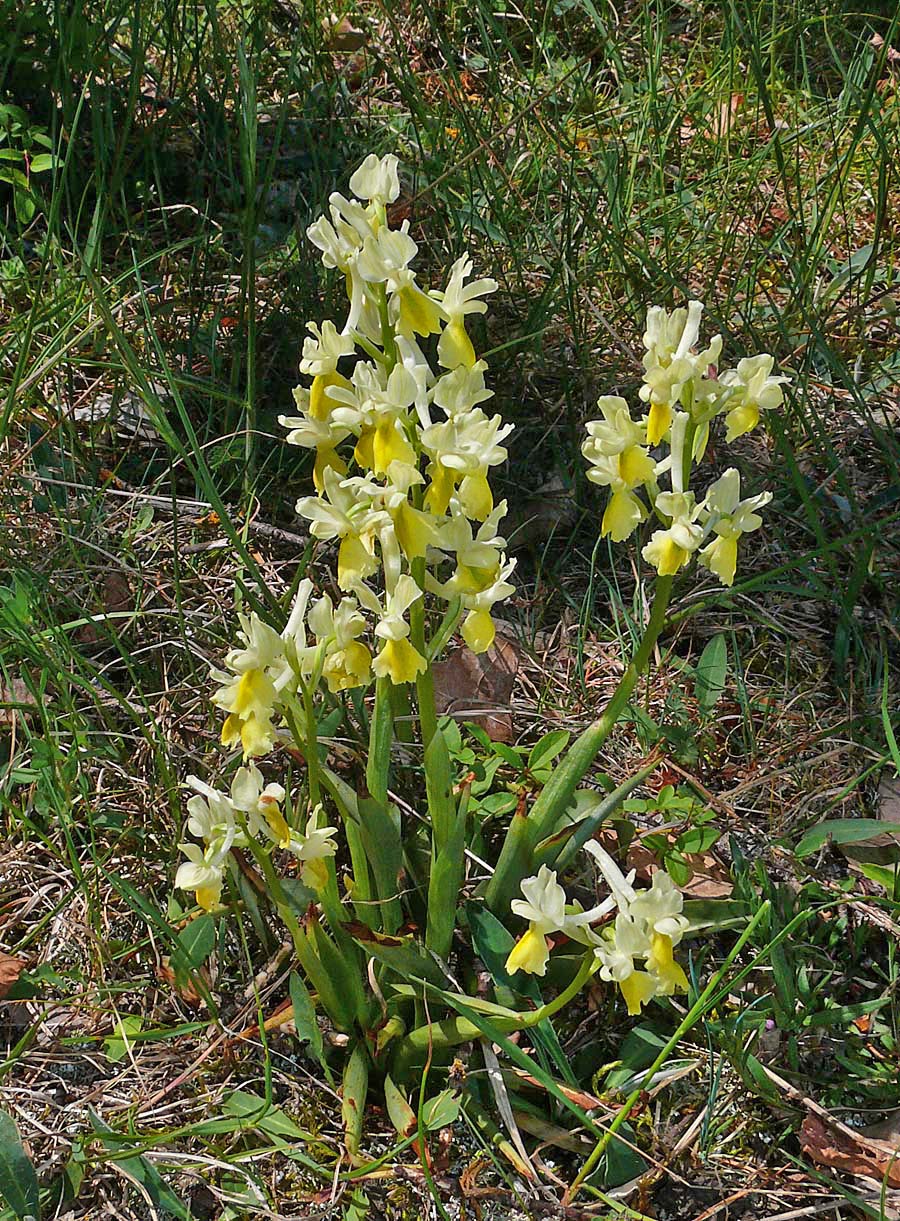
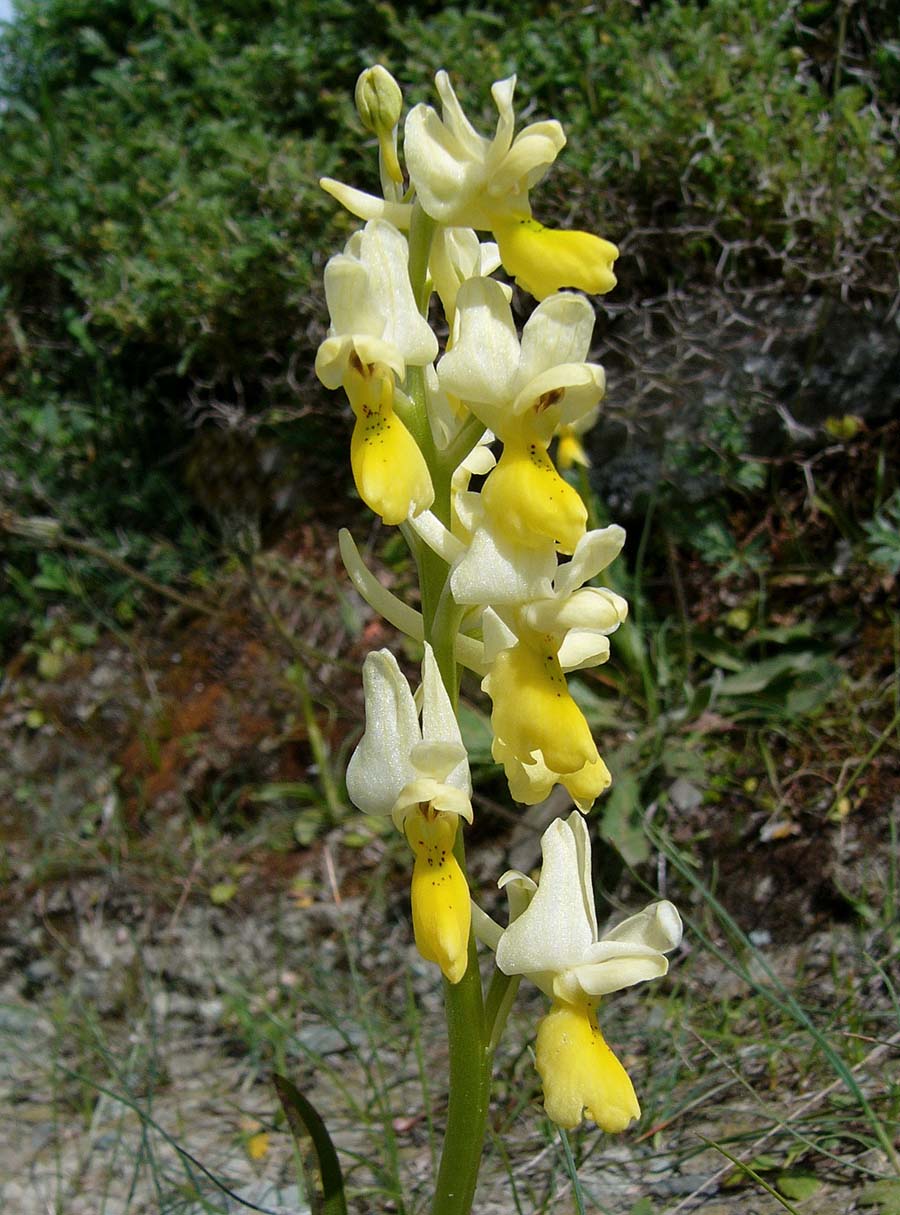
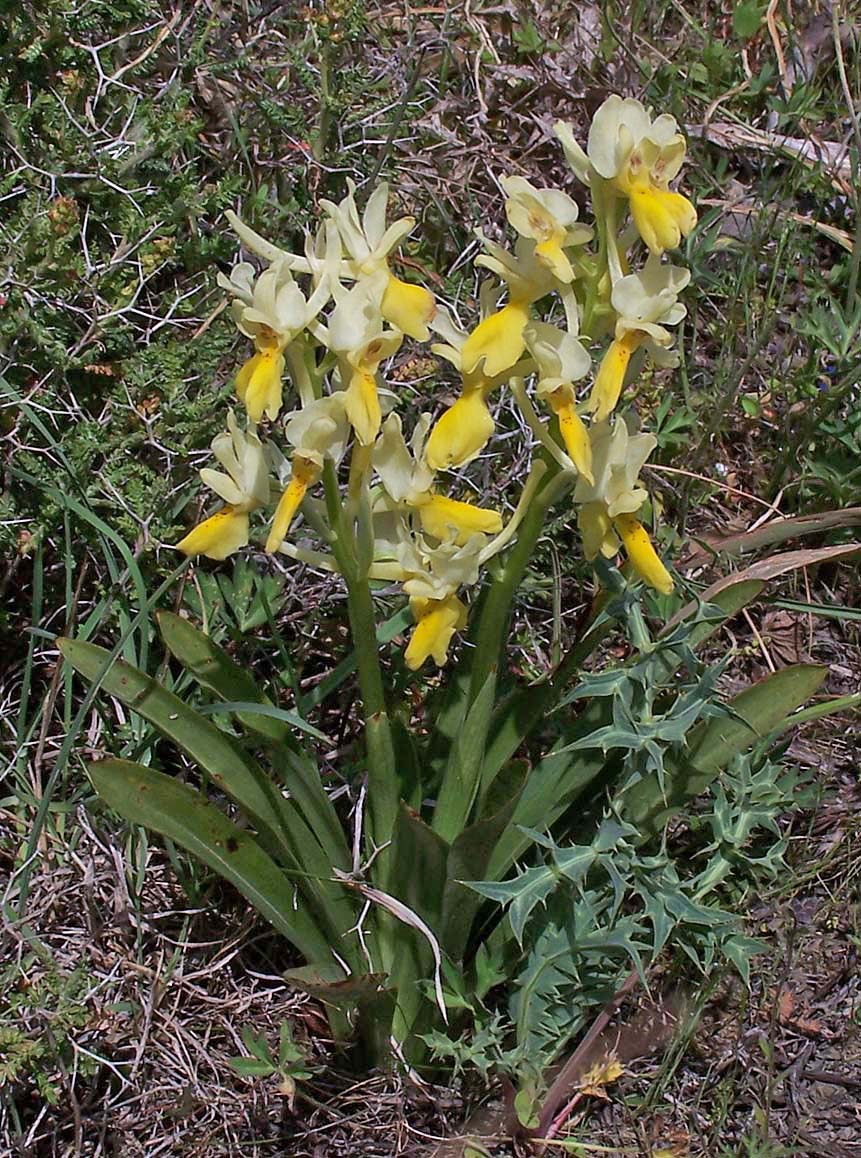
Orchis pauciflora was first described by Tenore from Naples in 1811 and its name refers to the small number of flowers carried by individual plants. This feature is responsible for the species common name, the Sparse Flowered Orchid.
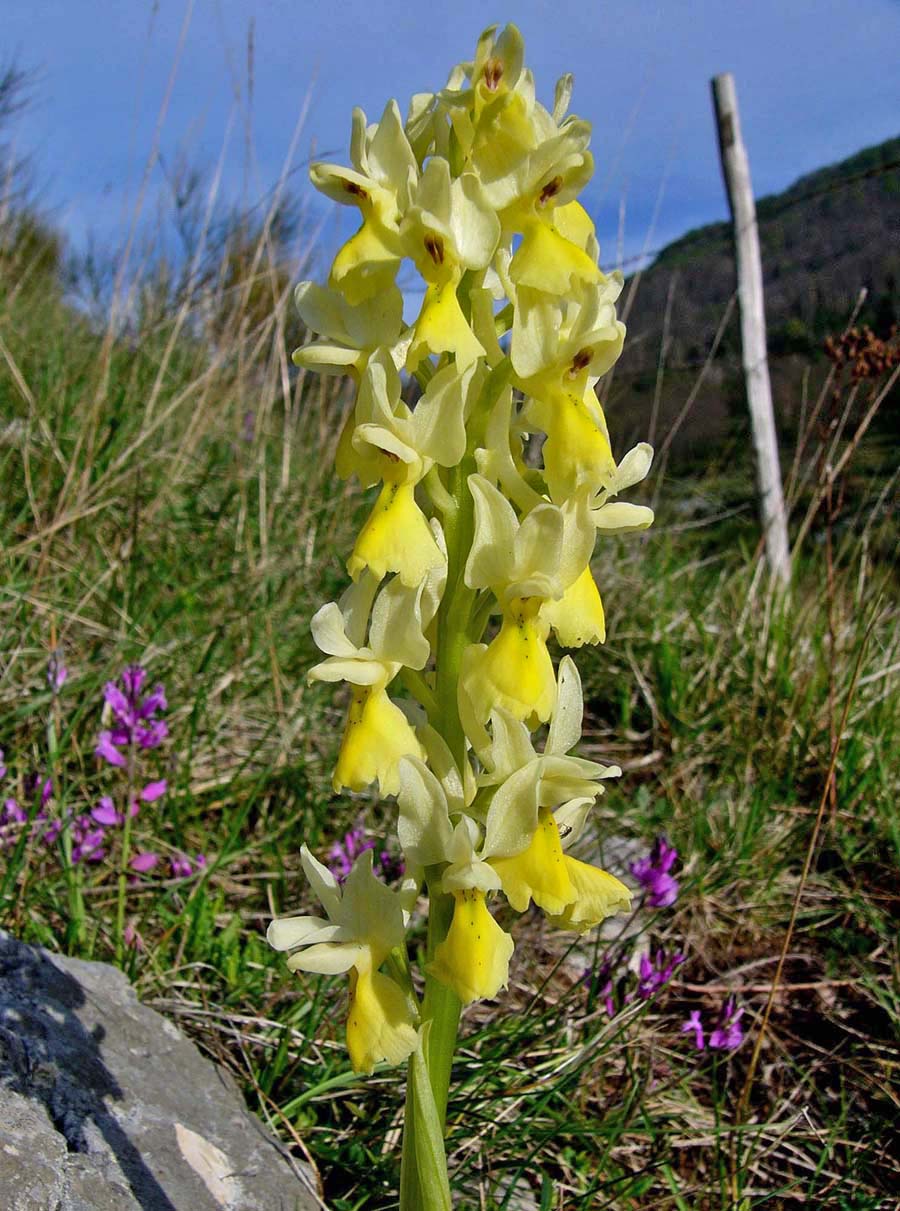
Whilst this description is generally valid, O. pauciflora can on occasion exhibit a long and denser than normal inflorescence as may be seen in photo 10. Where the plant grows in its preferred habitat of hilly/mountainous ground in light woodland or scrub. it tends to be short and few flowered whilst at lower elevations it grows more vigorously and can frequently reach as much as 30cms.
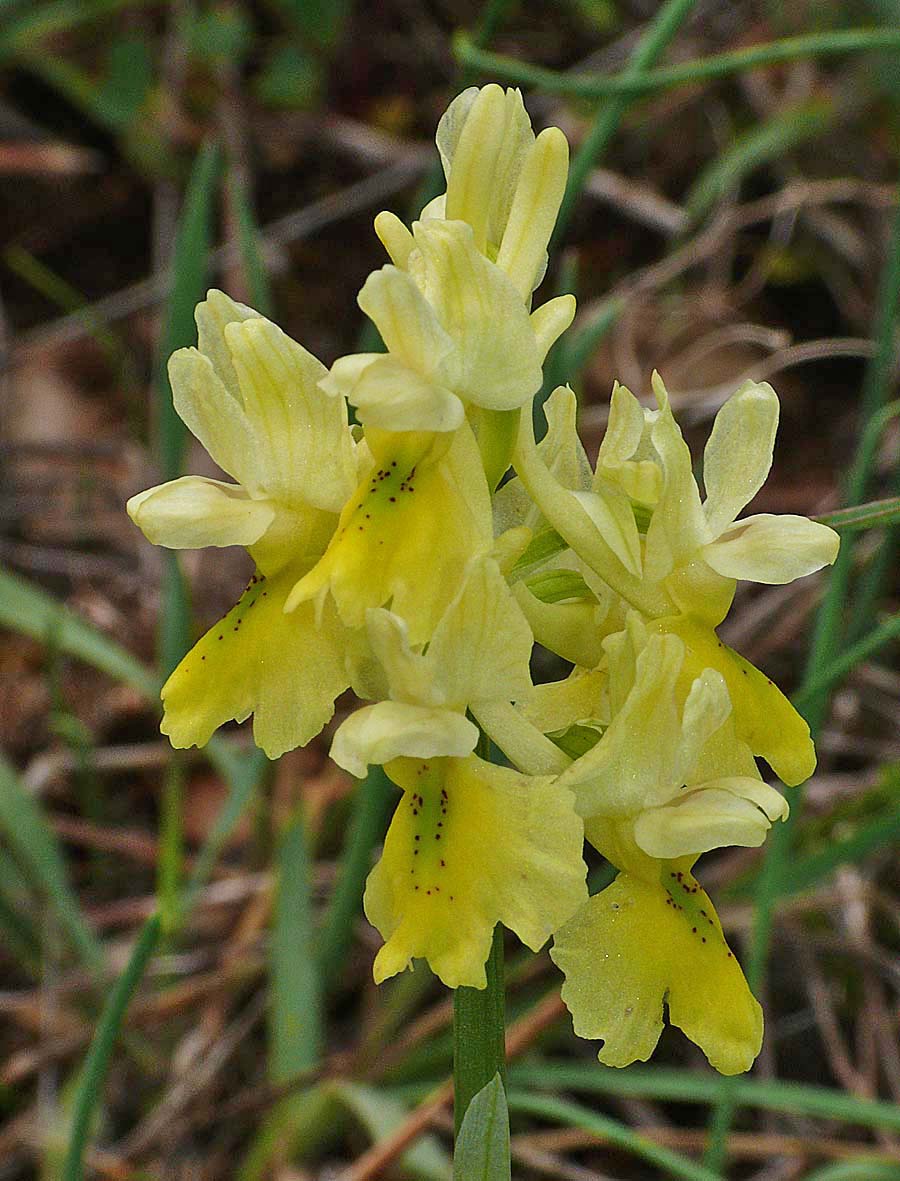
O. pauciflora is a distinctive plant but one which can easily be confused with several other species such as O. provincialis and the yellow flowered form of D. sambucina, both of which share the preference for upland habitat. The former species is usually a leggier plant with off white flowers which although occasionally of a more yellow hue, are a far less sulphurous shade. O. provincialis is also distinguished by its heavily spotted leaves. D. sambucina is also less intensely yellow but more importantly has the typical Dactylorhiza bract formation appearing through the inflorescence. O. pallens is another similar species that has an overlapping range but is a far rarer orchid with very robust, rounded leaves forming a basal rosette. The most significant differentiating feature however is the flower of this species which completely lacks any lip markings.
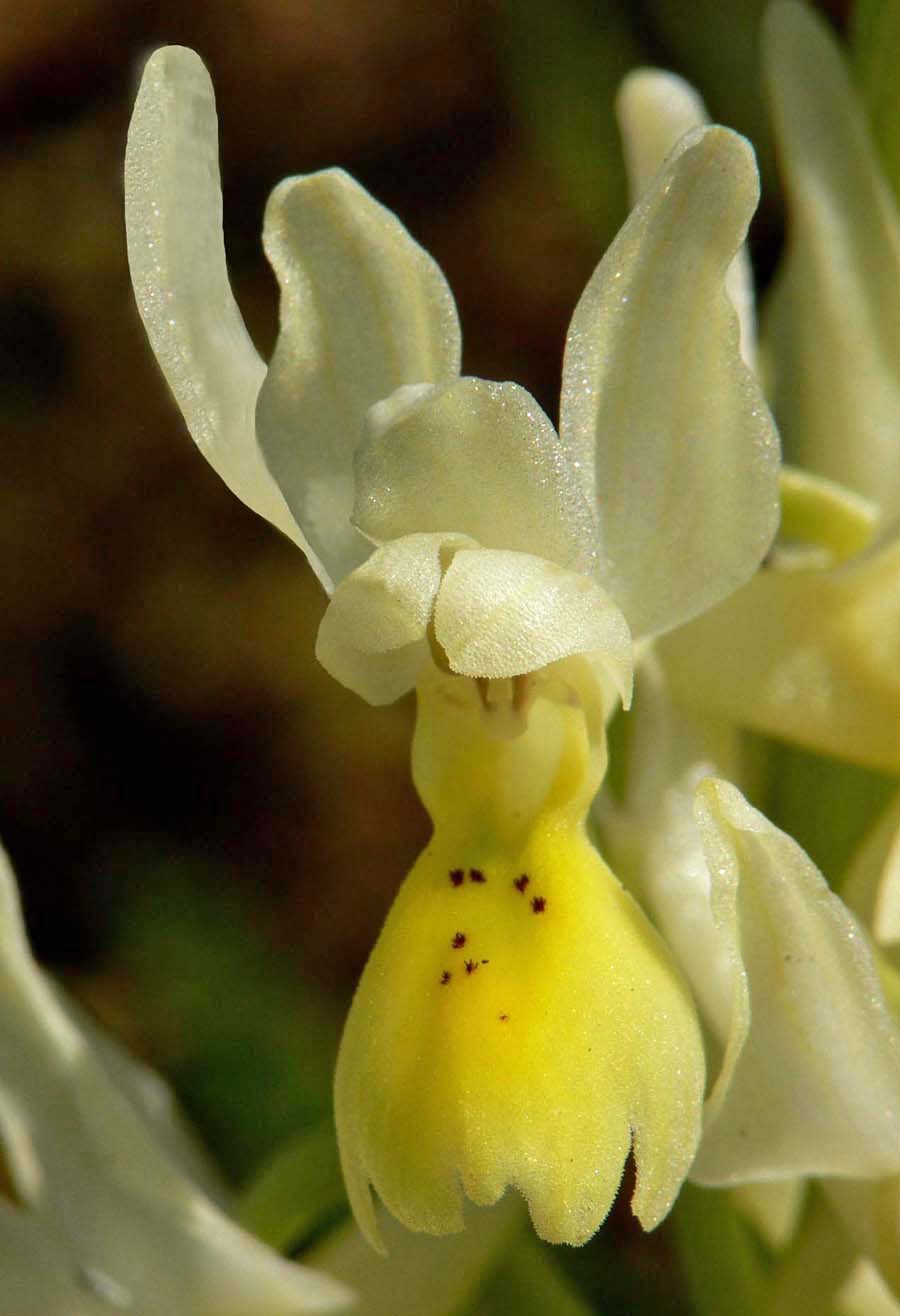
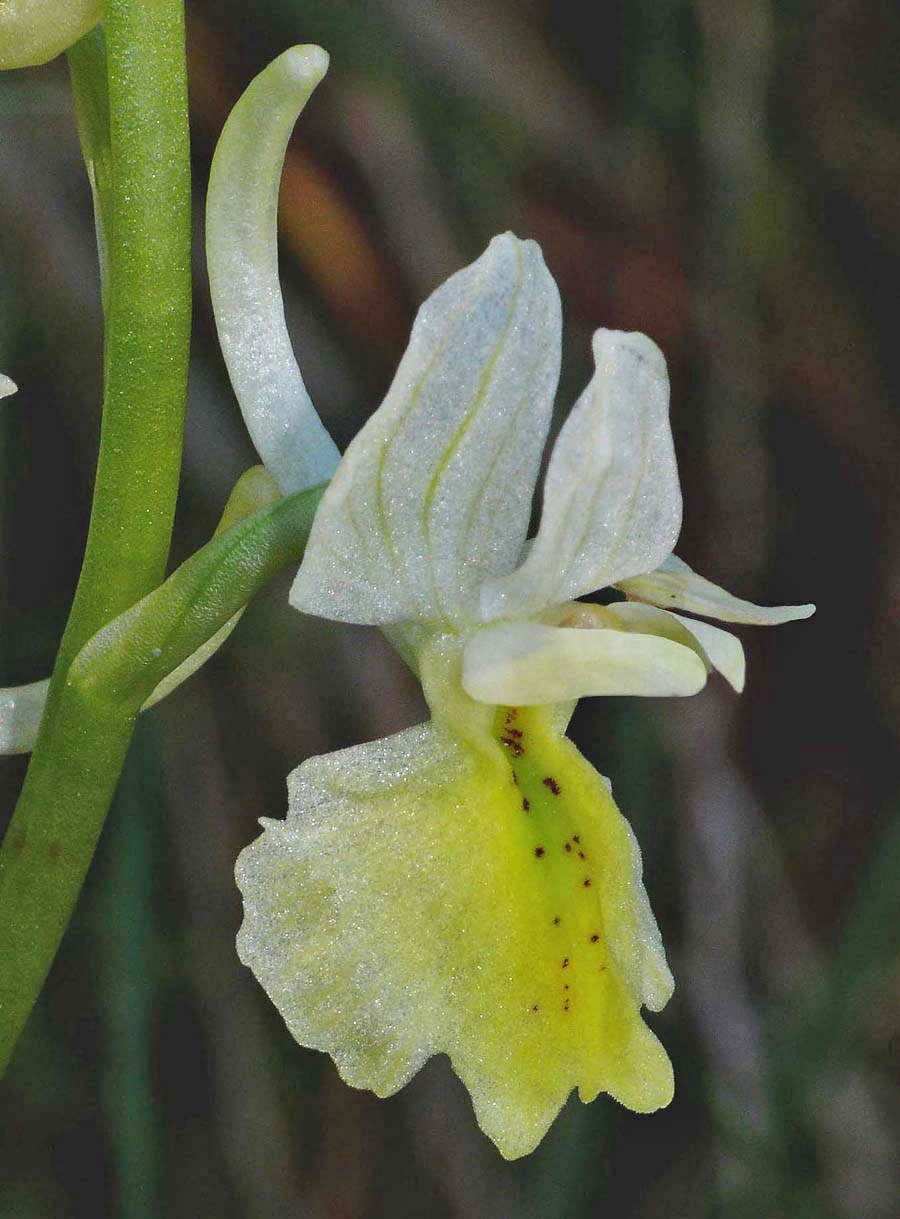
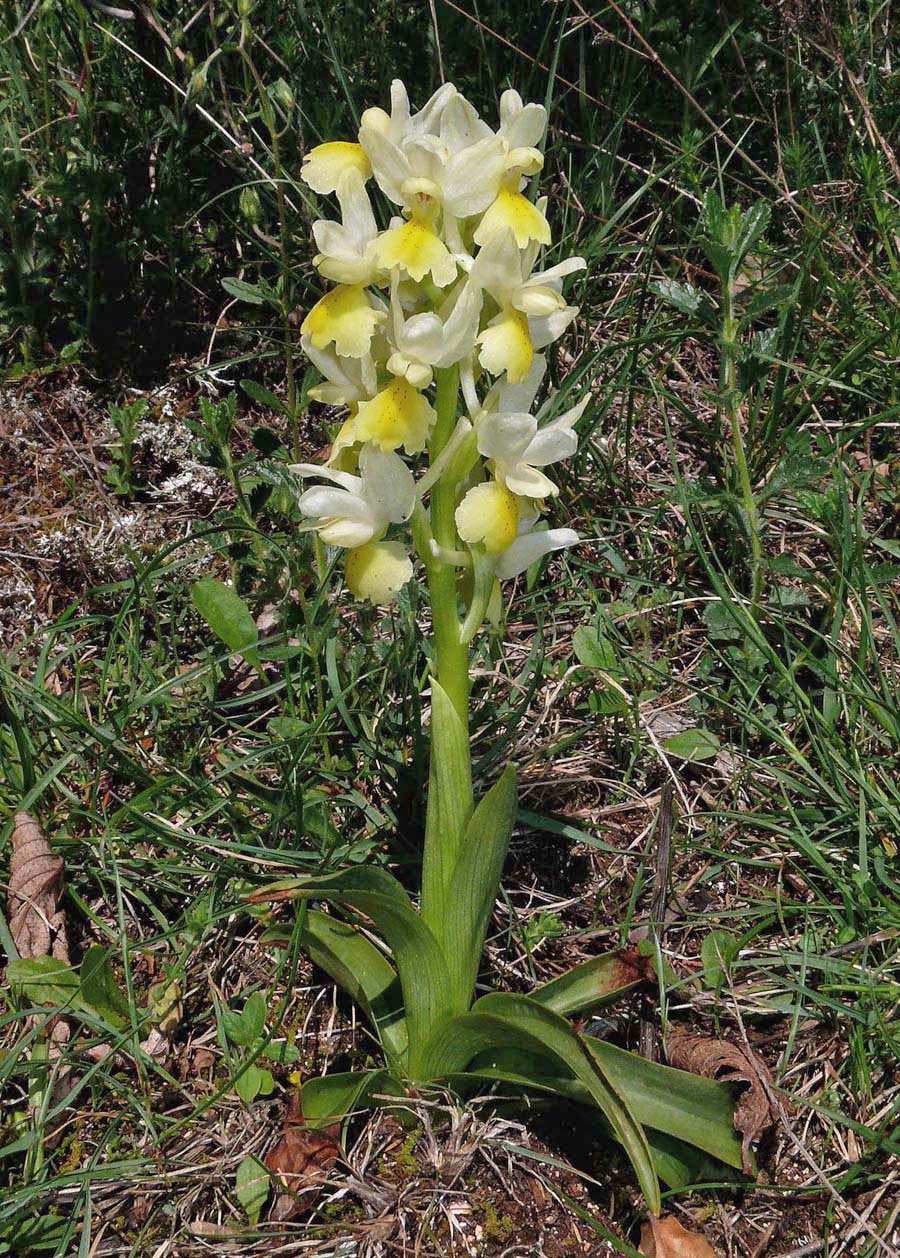
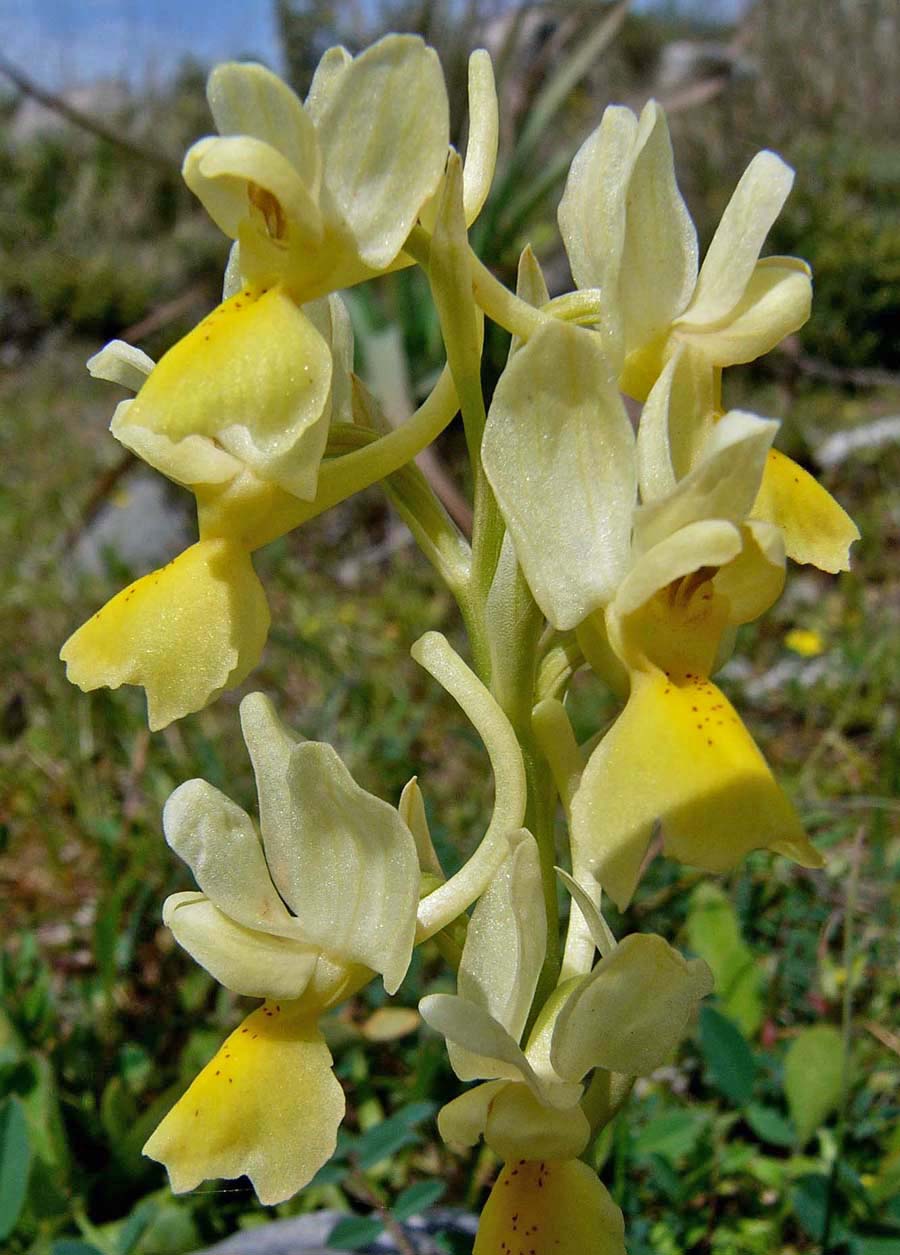
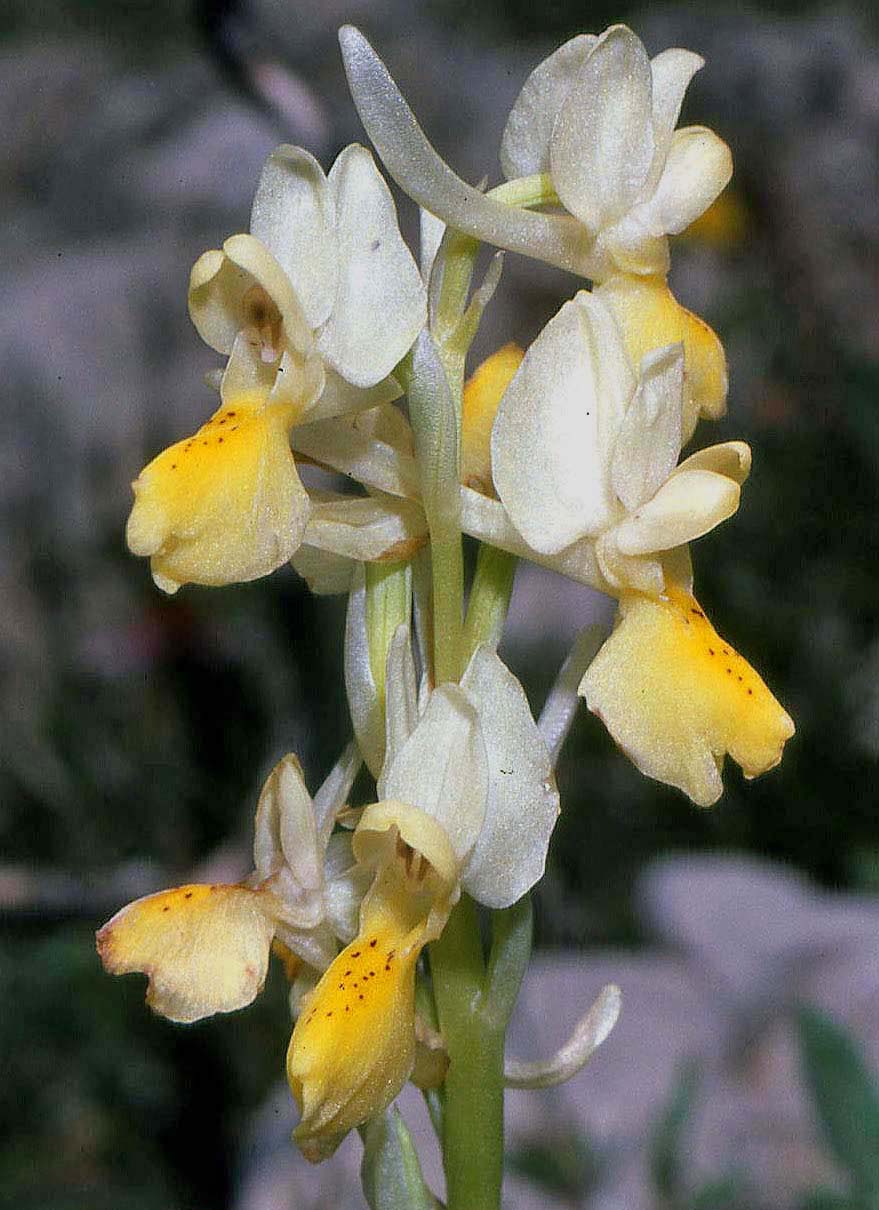
As has already been mentioned above, O. pauciflora will readily hybridize and it's therefore no surprise that a species with which it frequently occurs,
O. quadripunctata is also one of the most commonly experienced crosses (another being with O. mascula forming O. x colemanii). The following three
photos are all from high up on Mount Hymettus near Athens. In this particular area there was a high incidence of hybridisation but despite considerable
study, all plants so affected, were noted to have retained far more O. pauciflora characteristics than of O. quadripunctata. It is entirely possible that
this population was in fact a rare occurence of Orchis hybridogeny similar to that more frequently seen with Serapius and Dactylorhiza.