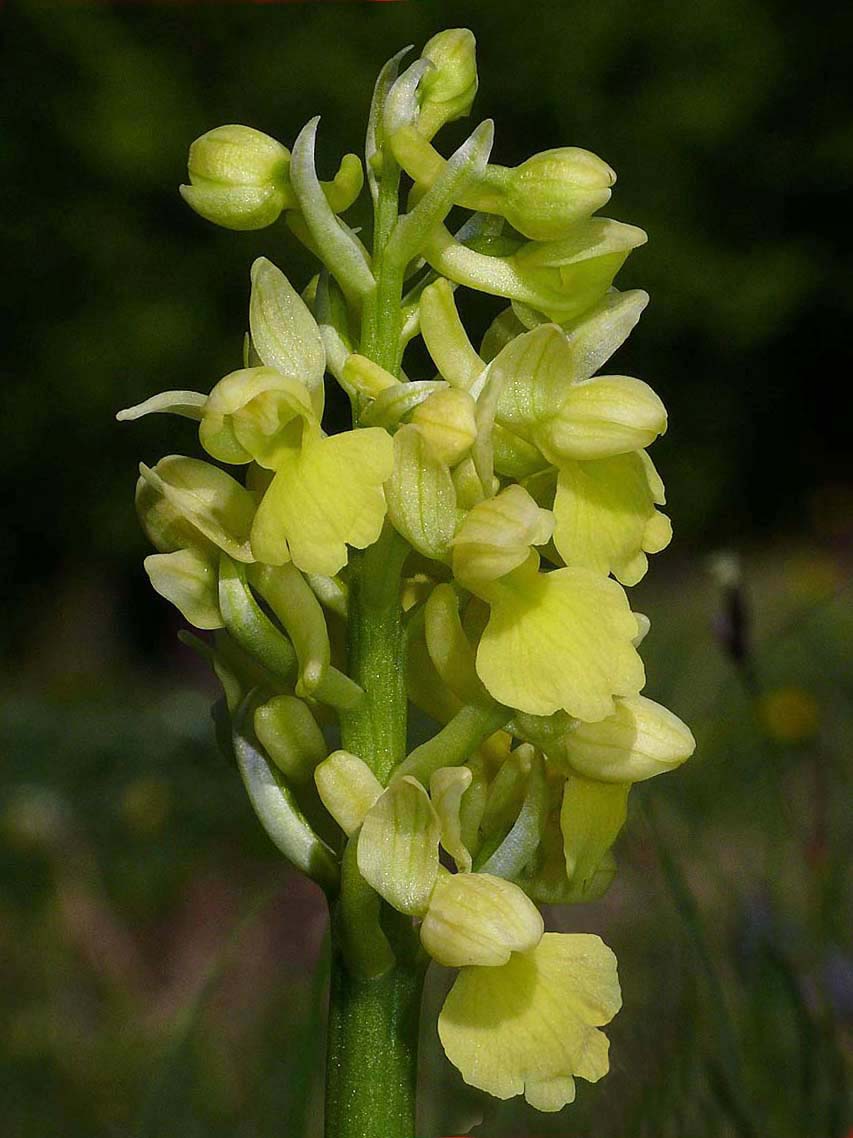
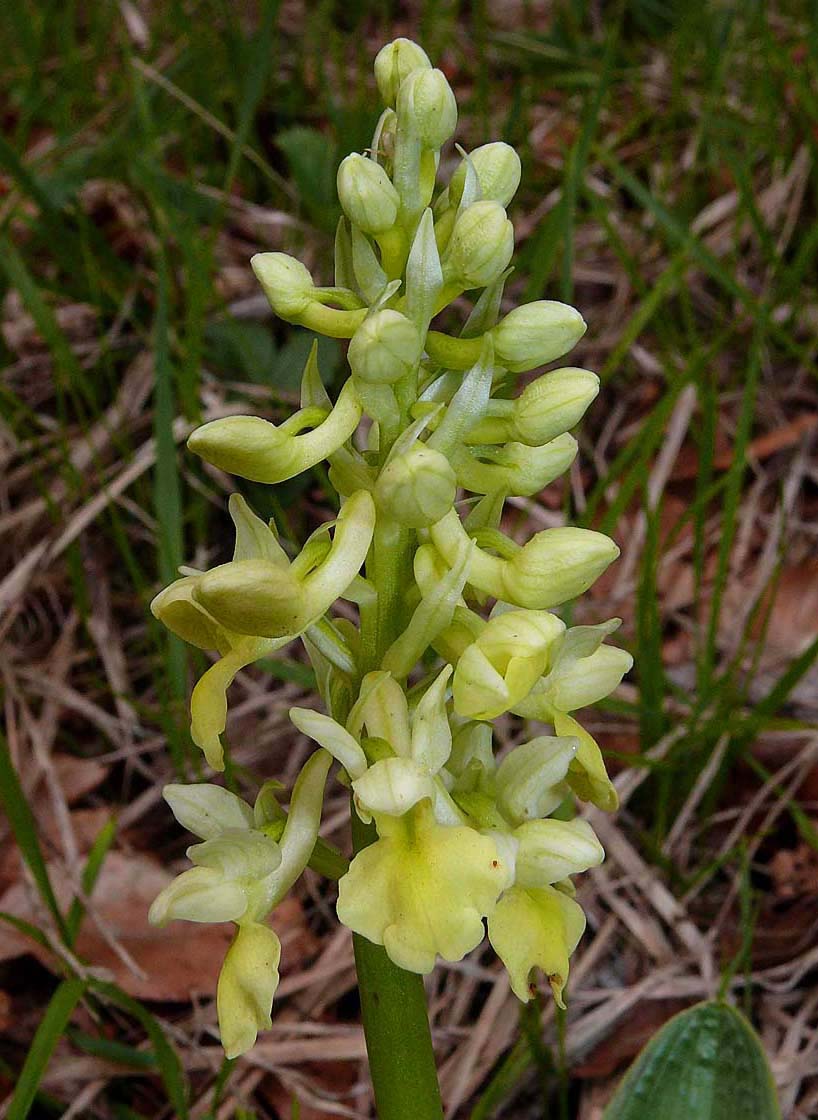
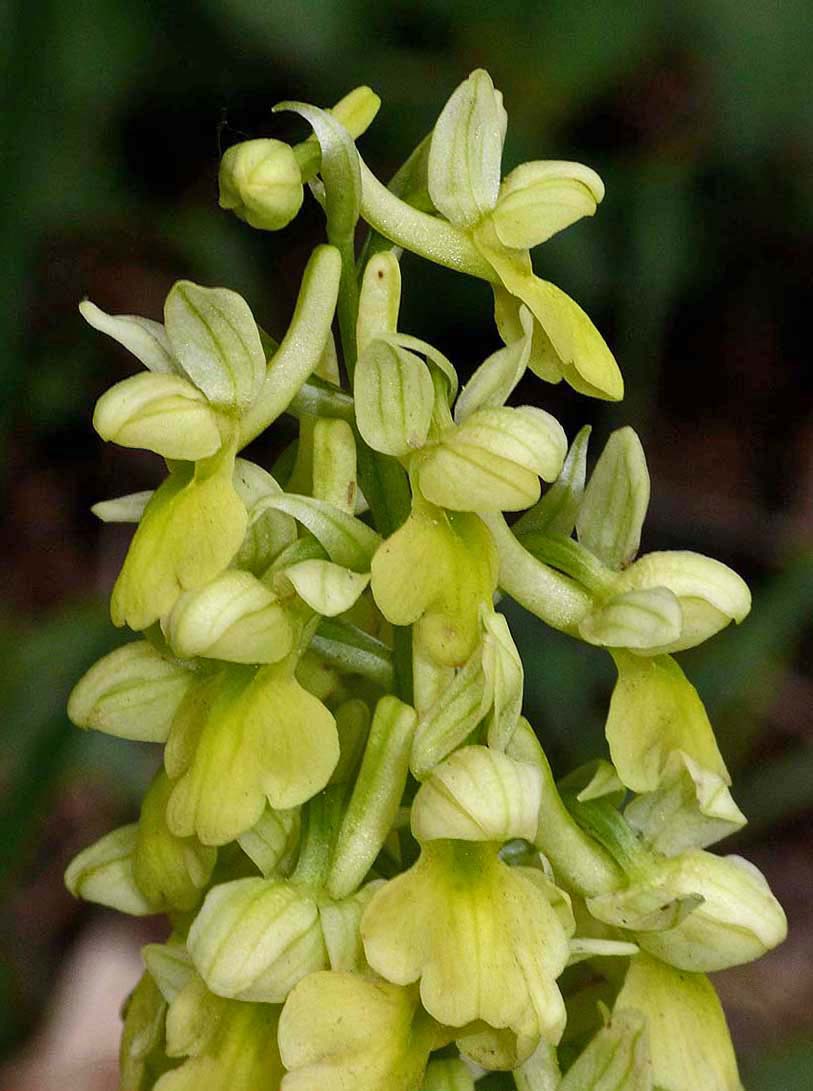
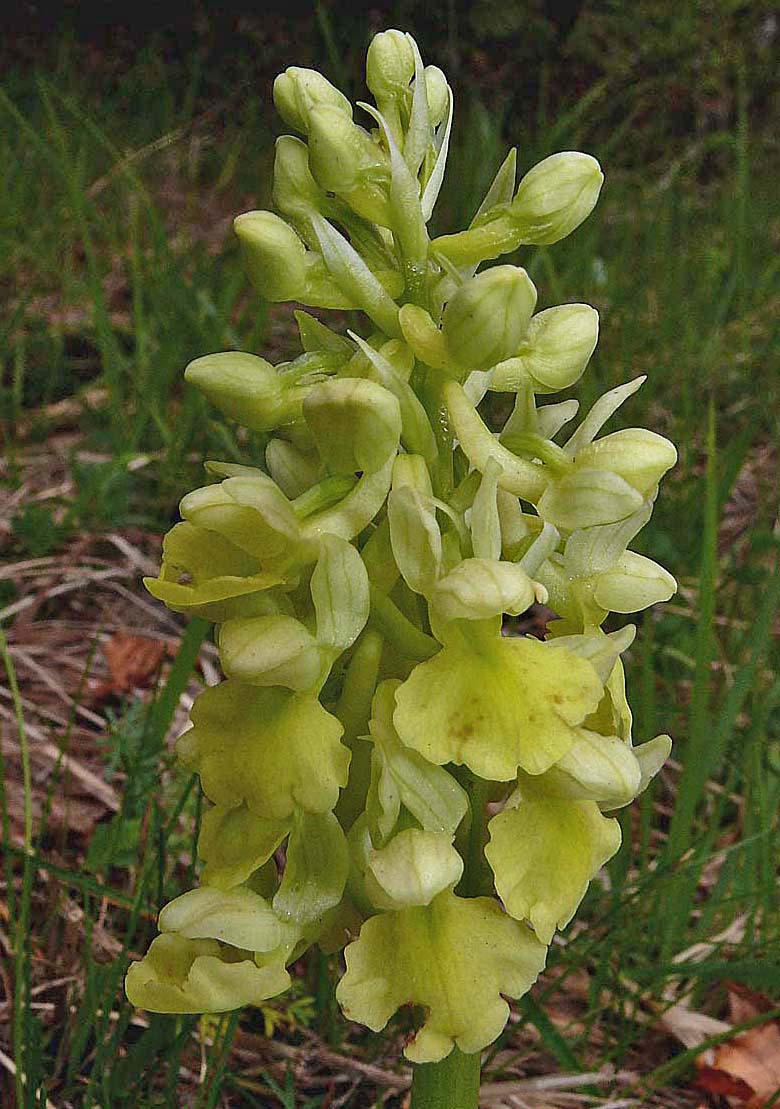
O. pallens is a member of the 23 strong O. mascula group and was first described from Switzerland in 1771. This orchid was for many years known as O. sulphurea, this being an entirely appropriate name, given the distinctive colouration of the species. The name "pallens" simply means pale or pallid but this description somewhat understates the overall attractiveness of a highly distinctive plant.
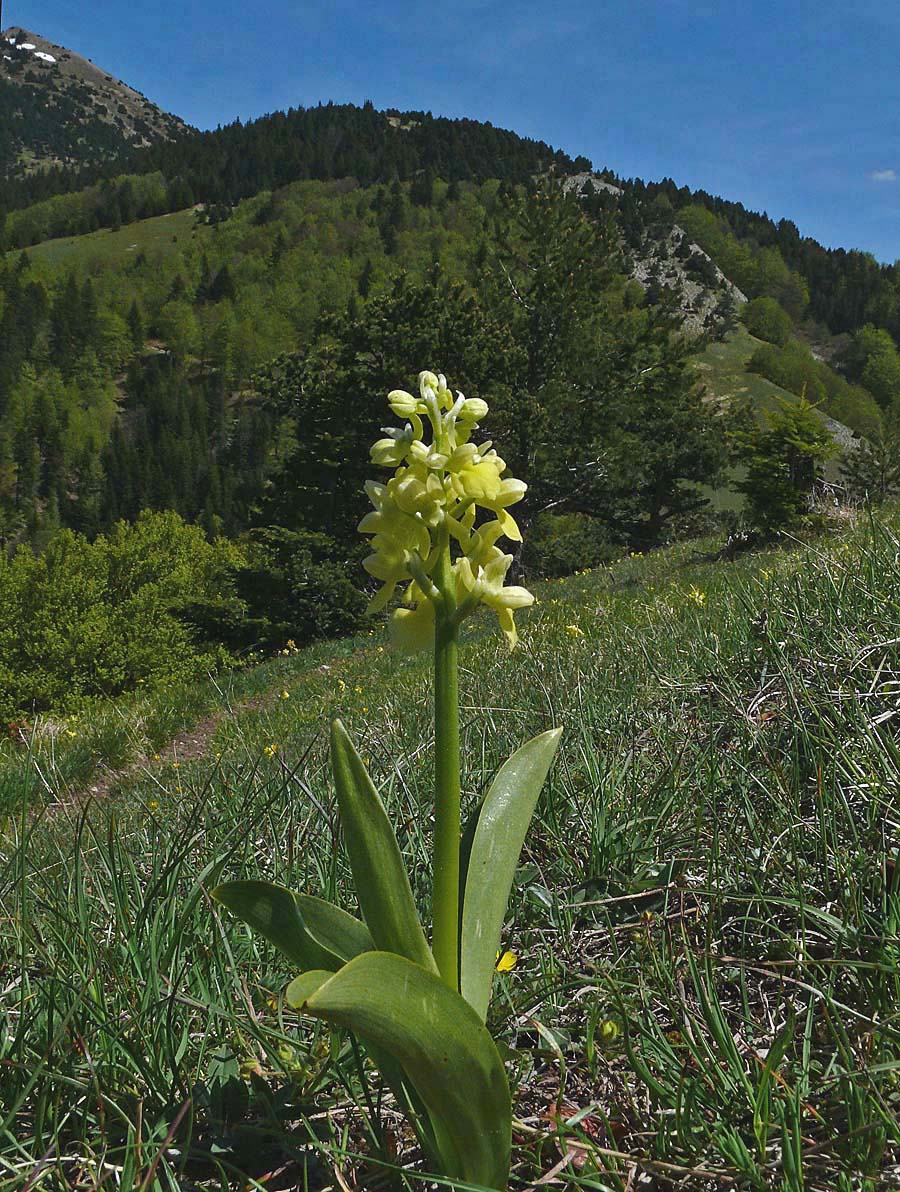
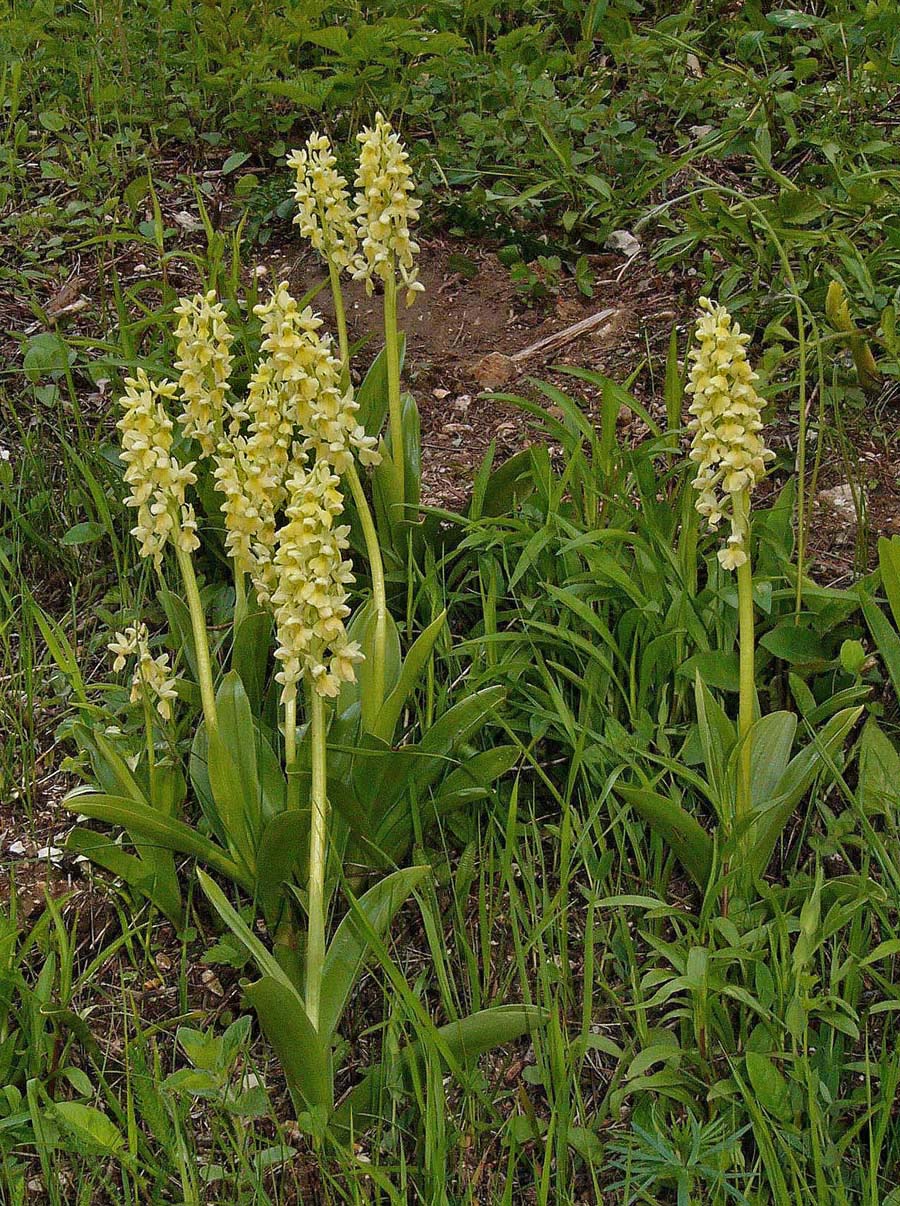
O. pallens is largely, though not quite exclusively, a montane species and may be found growing up to around 2500m on predominantly calcareous soils and more often than not, in the light shade of woodland edges, either deciduous or coniferous. It is an Orchis that does not produce nectar but is pollinated by bees who confuse it with their preferred nectar provider, the pea Lathyrus vernus.
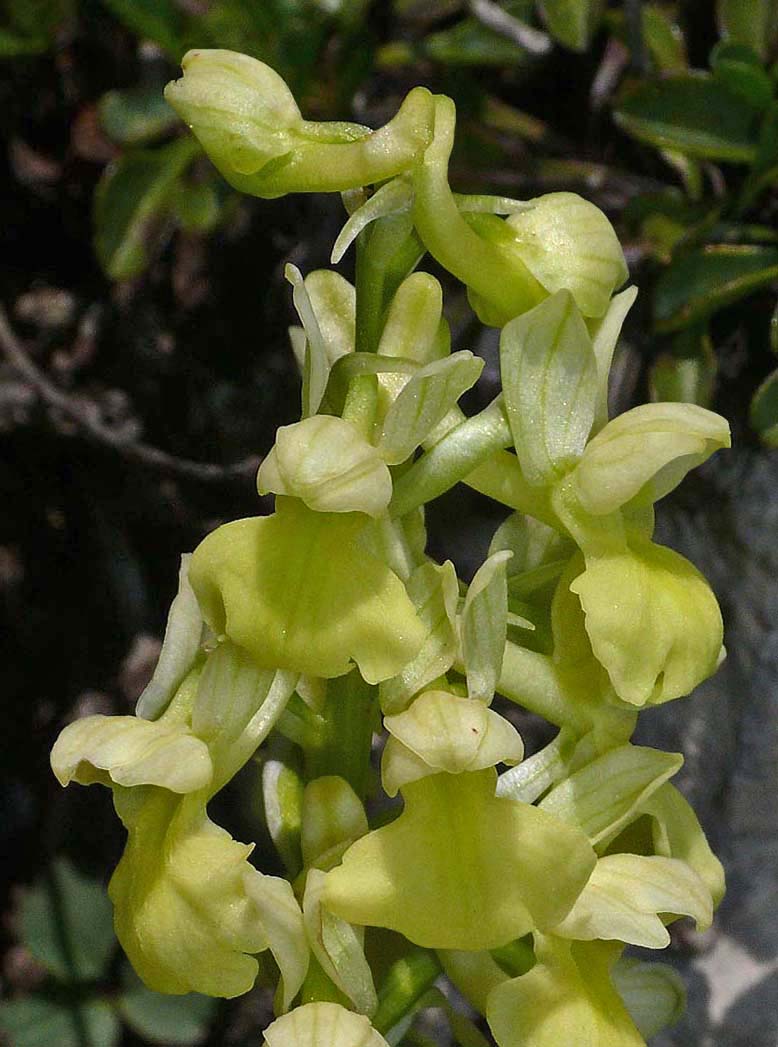
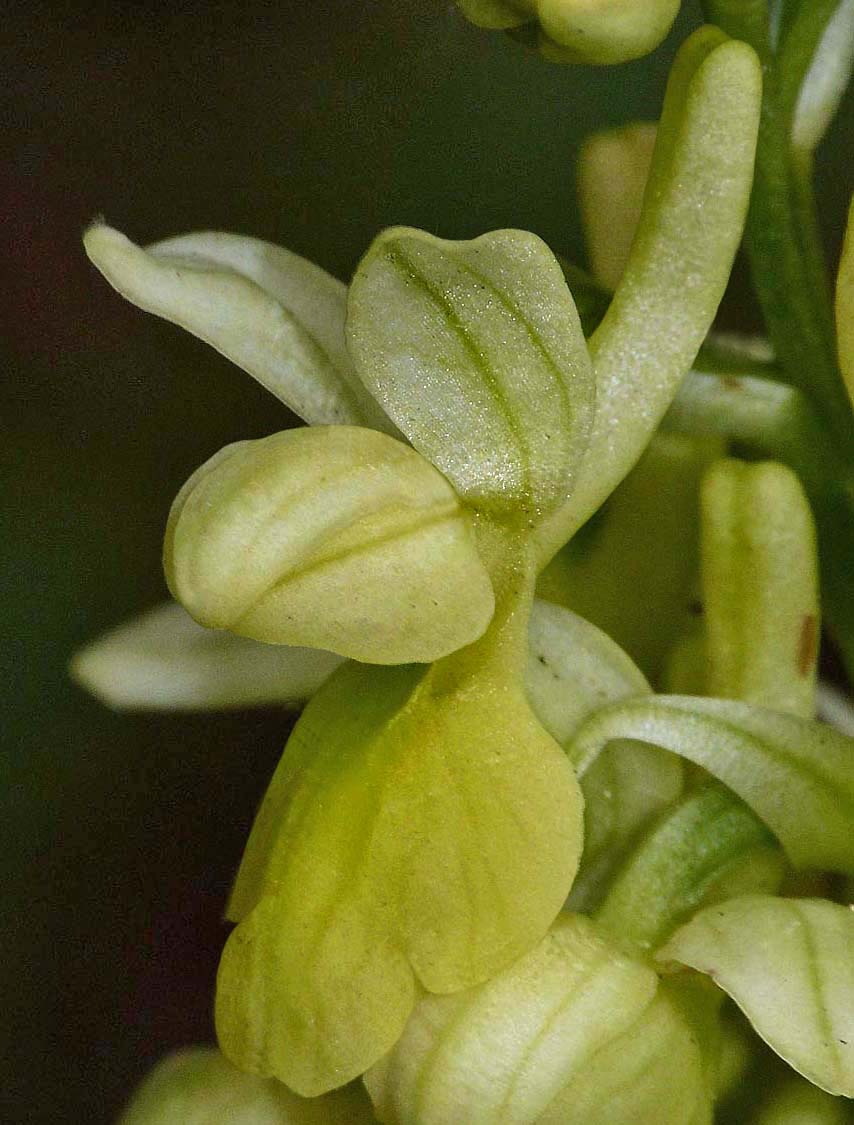
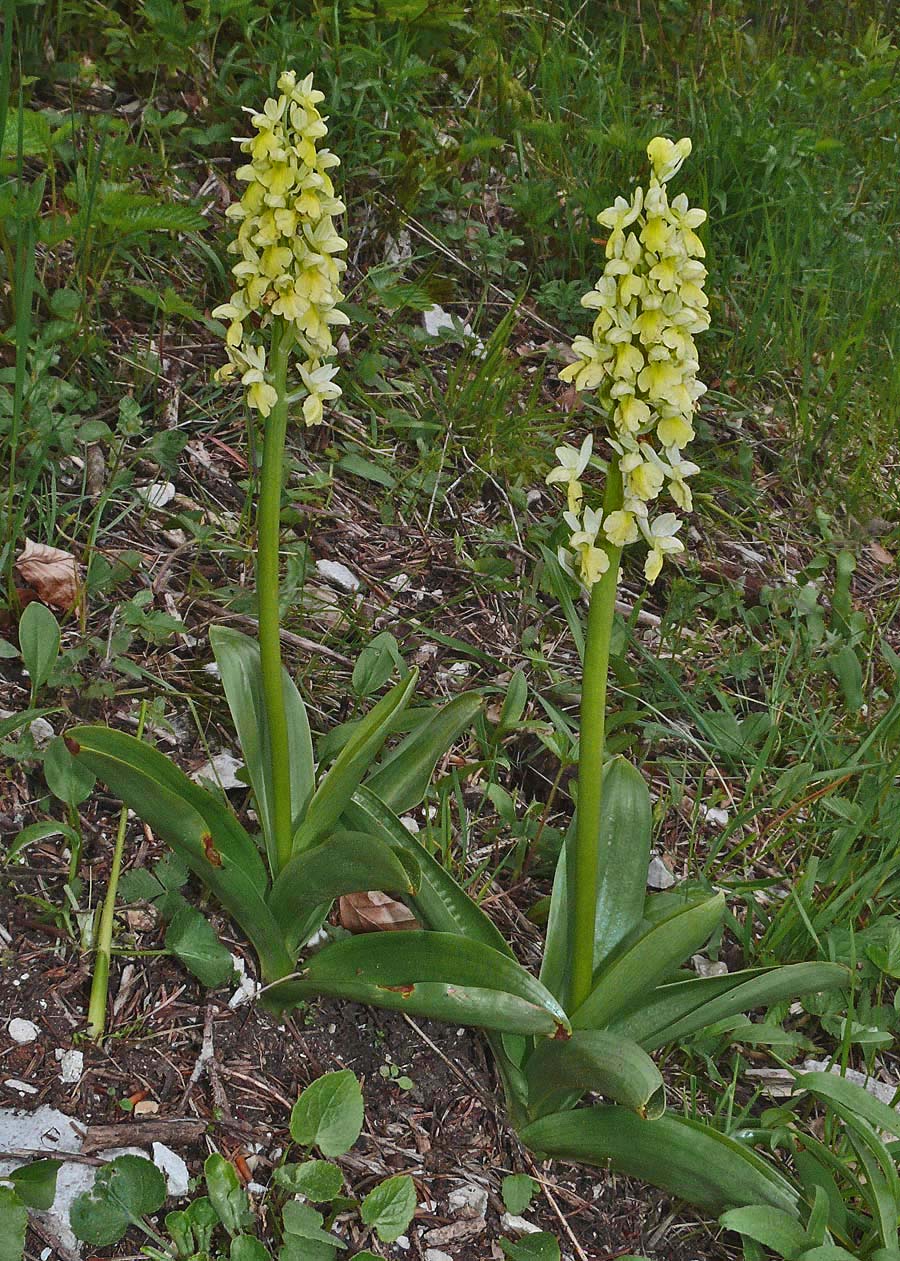
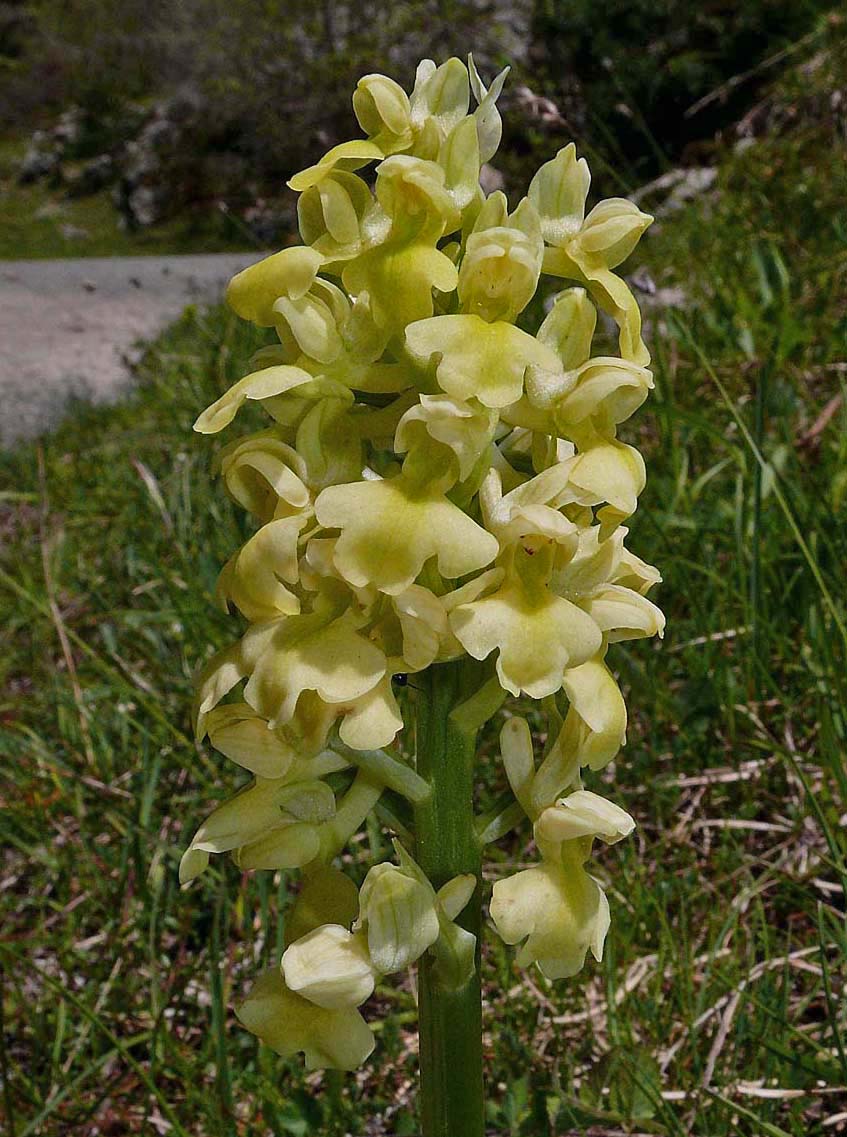
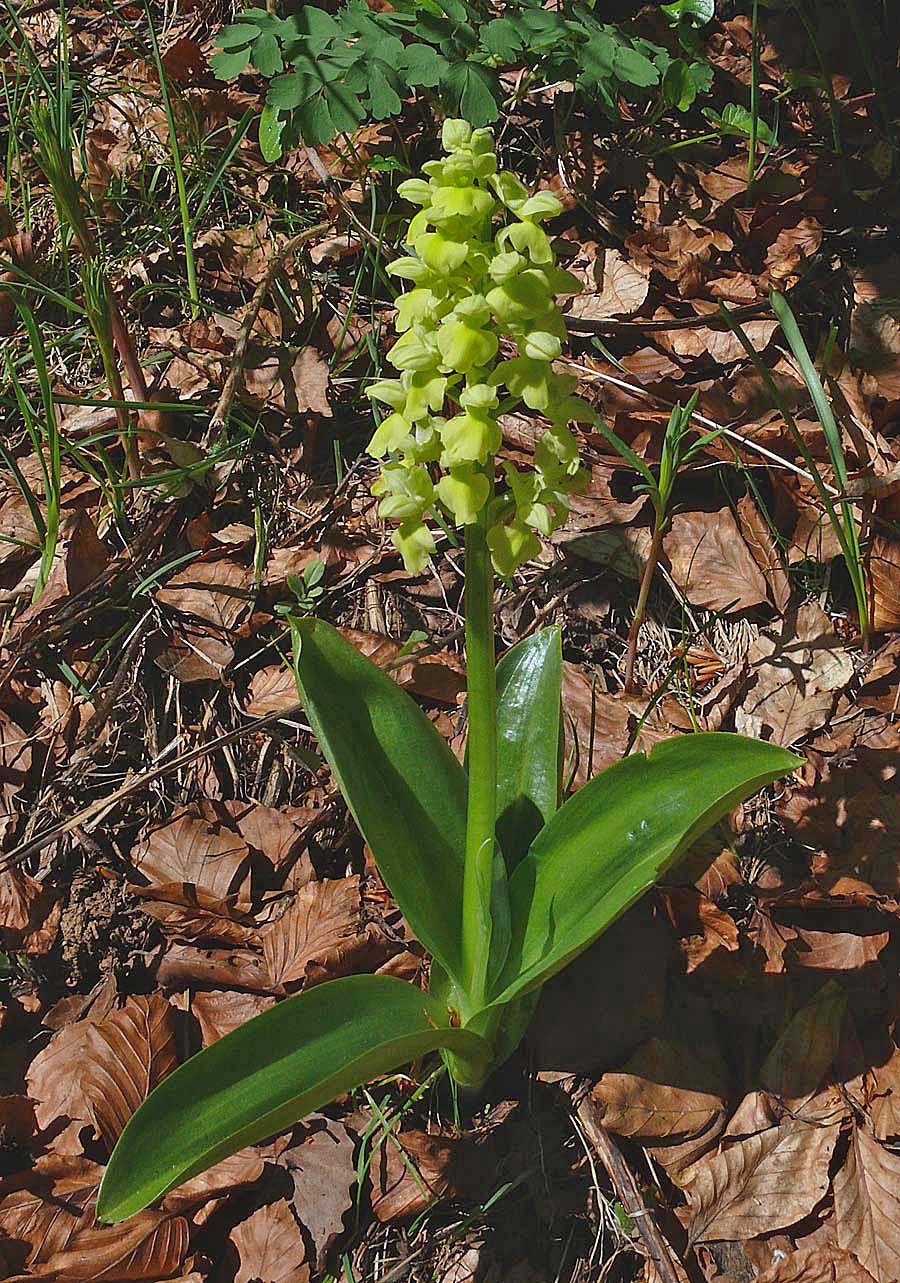
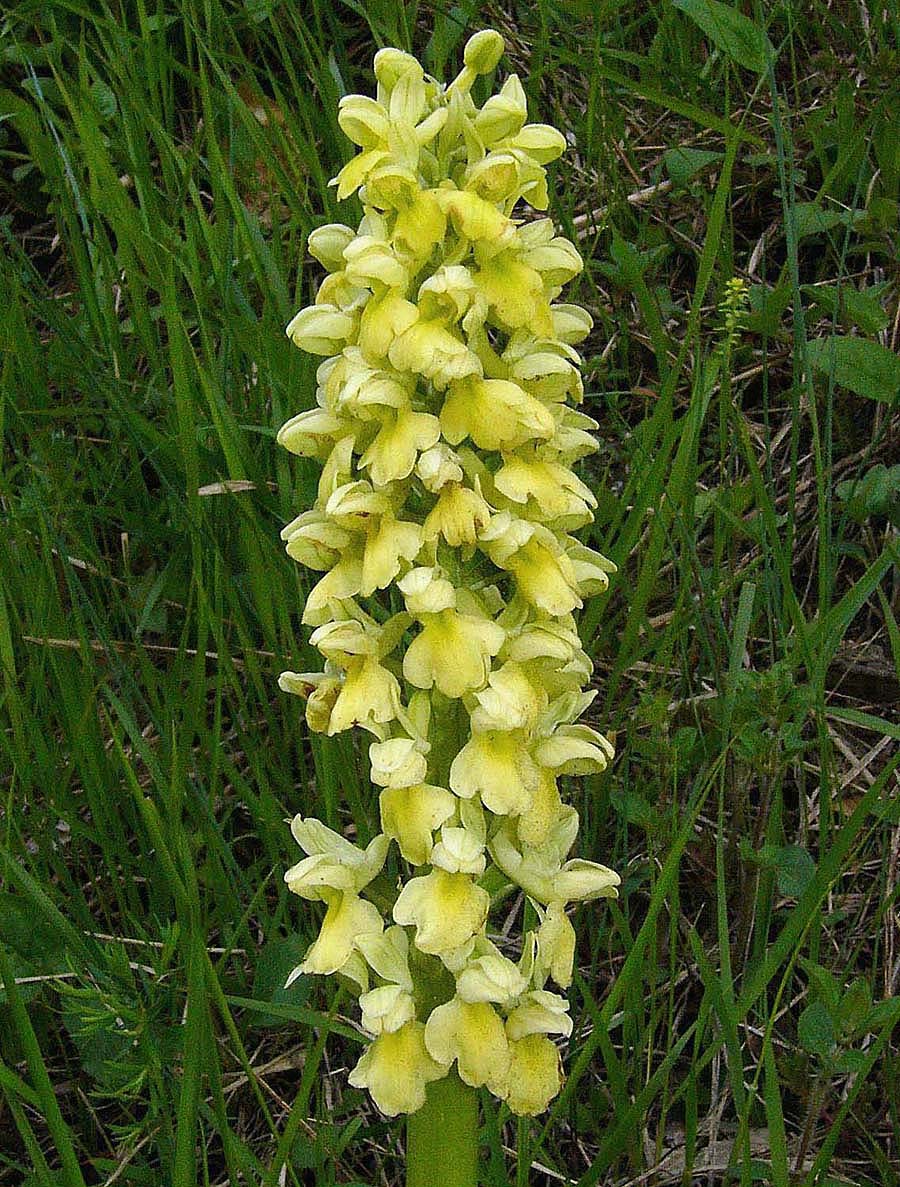
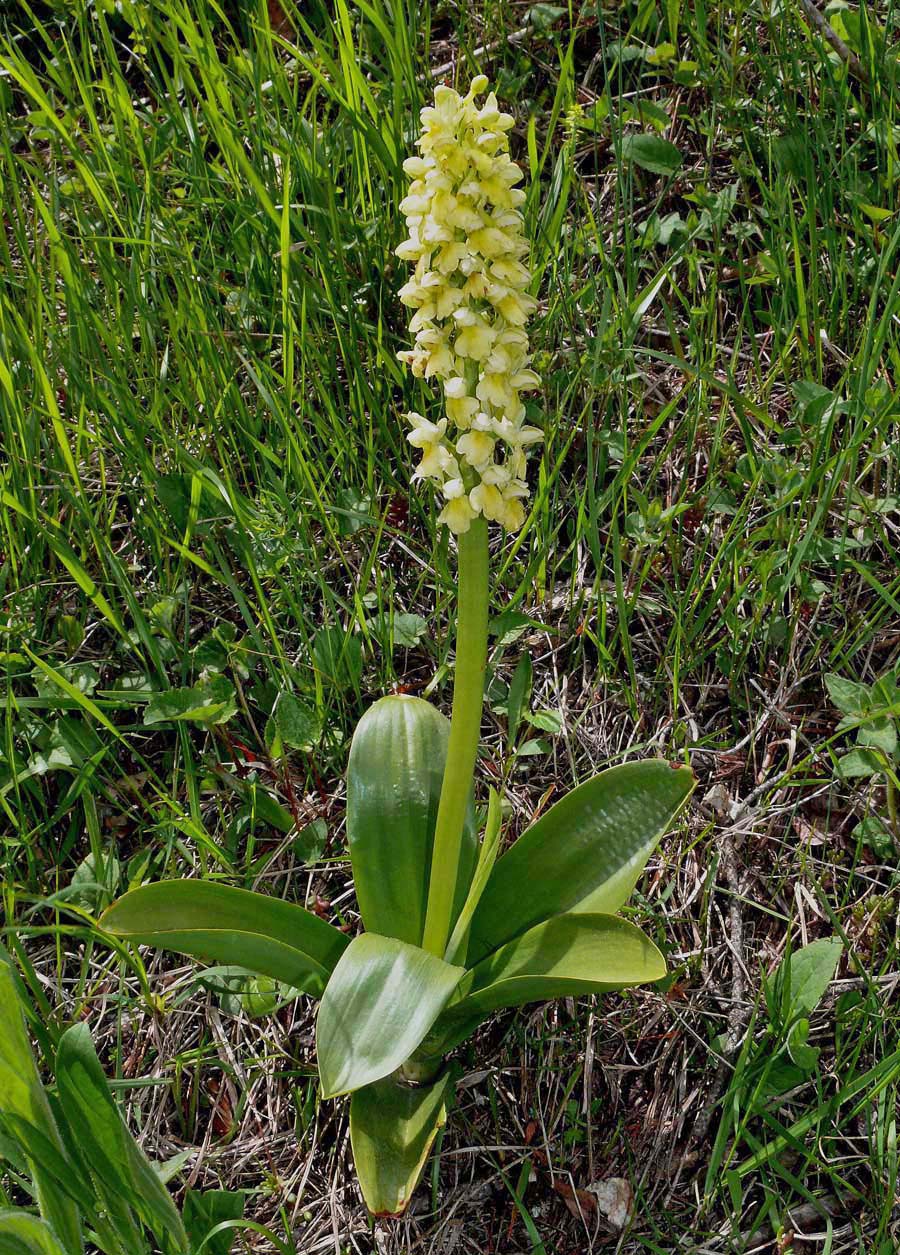
O. pallens can be readily distinguished from the similarly coloured O. pauciflora and O. provincialis by virtue of the total lack of lip markings. A further key characteristic is the unspotted leaves, which are large, shiny and form a low-spreading rosette. Another orchid which often grows alongside O. pallens and bears a close resemblance is the yellow flowered form of Dactylorhiza sambucina though this can be readily differentiated by the presence of bracts which protrude through the inflorescence. Studies aiming to establish the relationship between the two species, do not suggest there is any scientific link despite the obvious morphological similarities.
The range of O. pallens is sizable and encompasses most significant mountain ranges in Europe, being nowhere common and in most areas extremely rare. The photos are from the Vercors of southern France and the mountains of northern Greece, dating from the middle of May.
.

