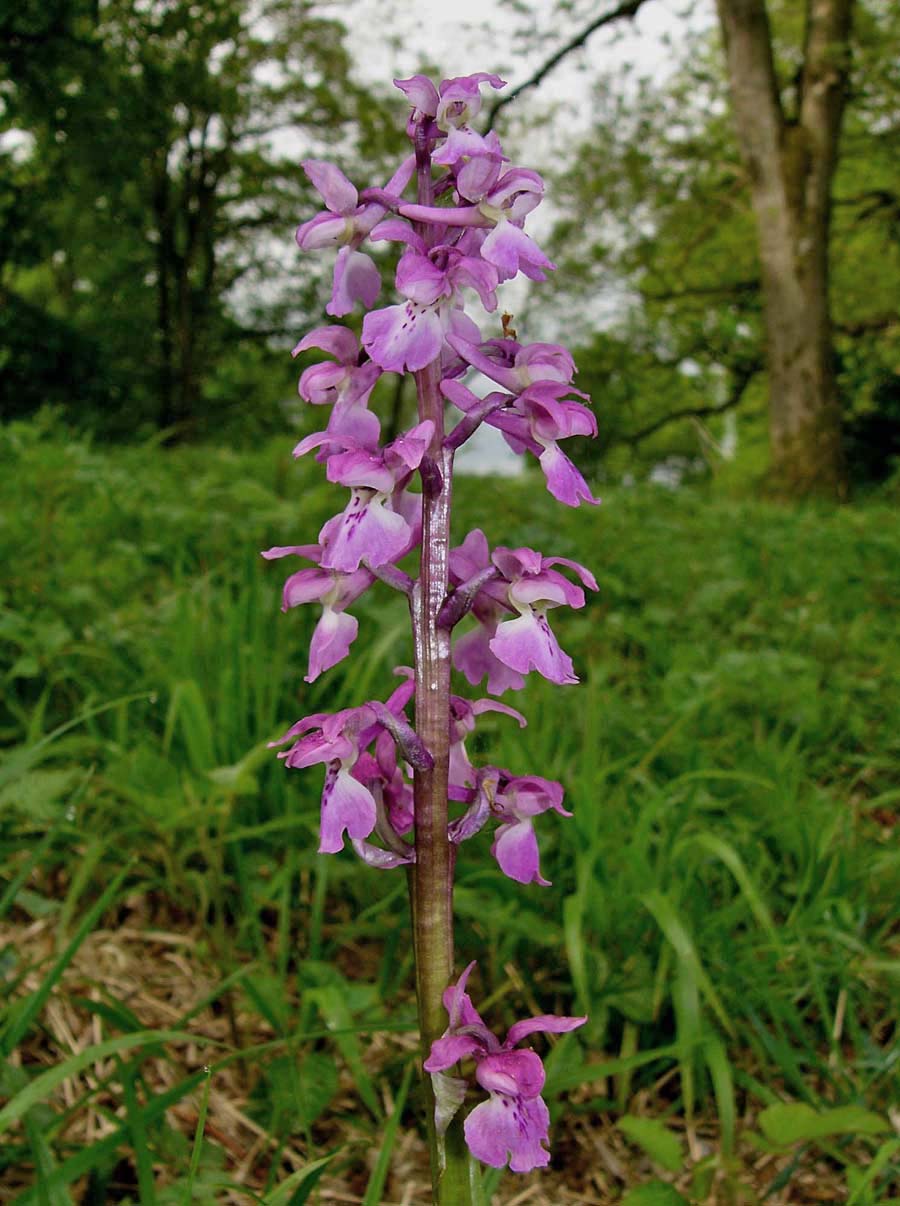
This is one of western Europe's most widespread Orchis and can be found in a variety of habitats over a huge range that takes it as far west as the Canary Islands and from North Africa in the south right up to the Arctic Circle. O. mascula reaches Italy and Greece in the east but beyond this becomes increasingly localized and replaced by both O. pinetorum and O. ovalis.
It was first described from Sweden in 1755 and its name refers to the "masculine" appearance of the underground tubers. This is a familiar orchid in Britain, where its common name is the Early Purple Orchid, this being an appropriate name for the earliest flowering of the UK's native Orchis species.
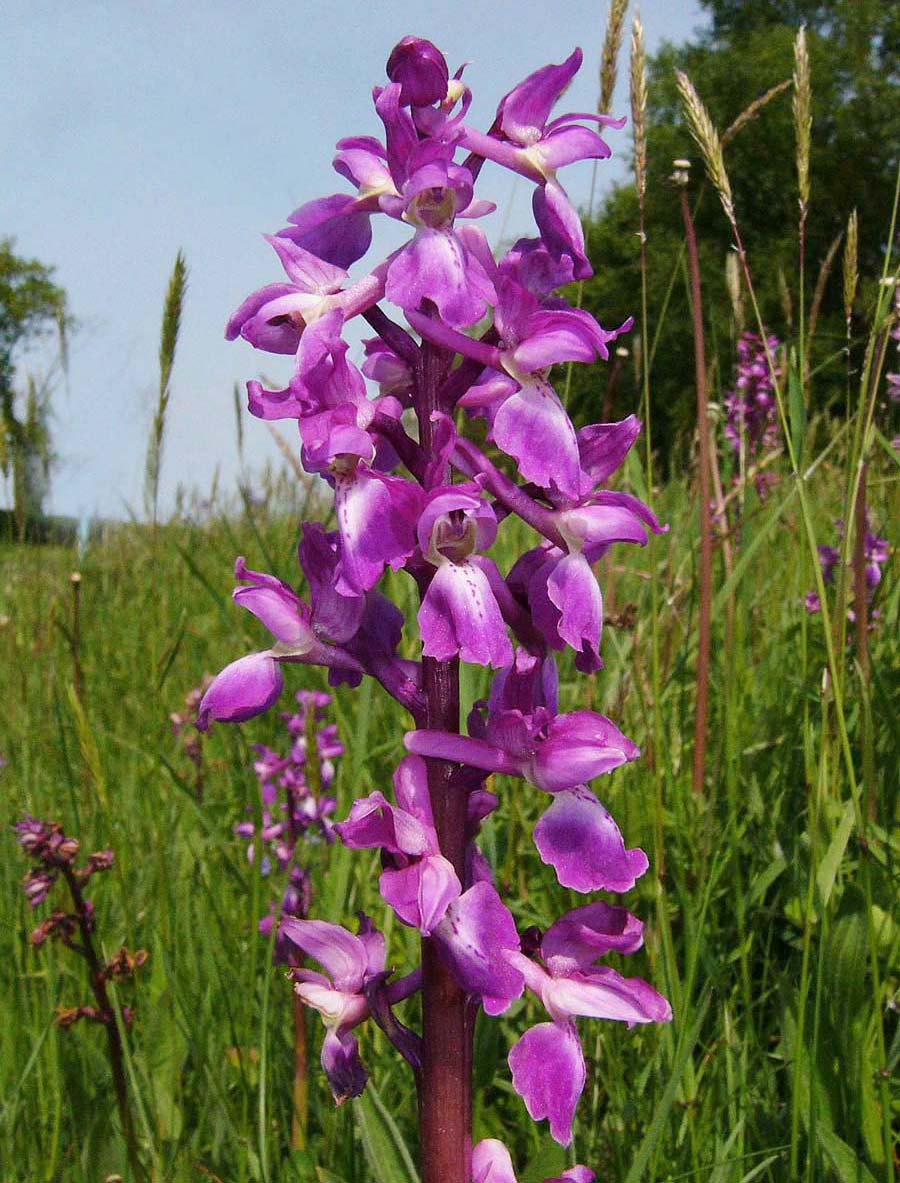
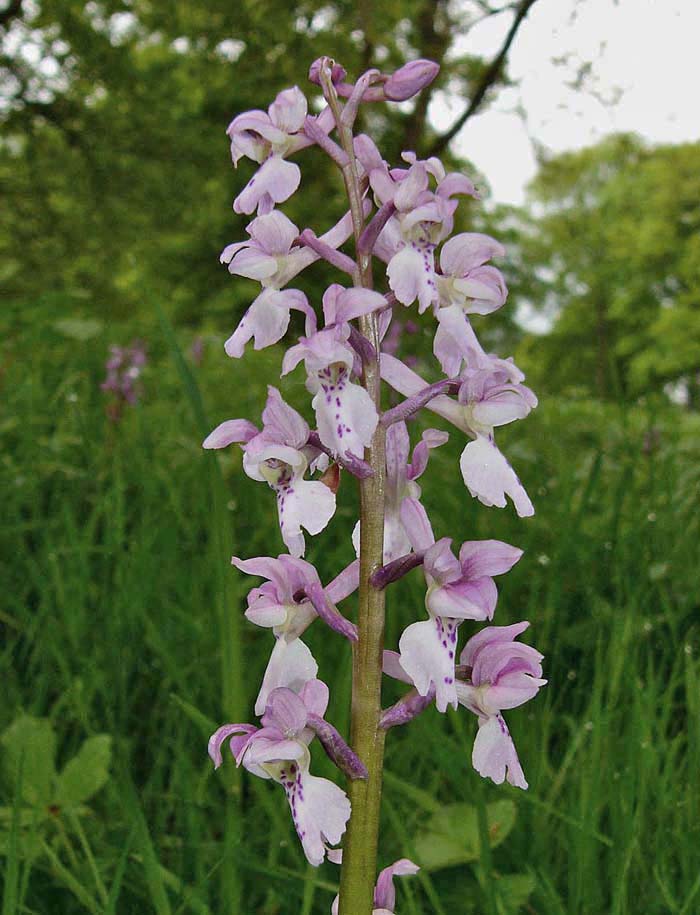
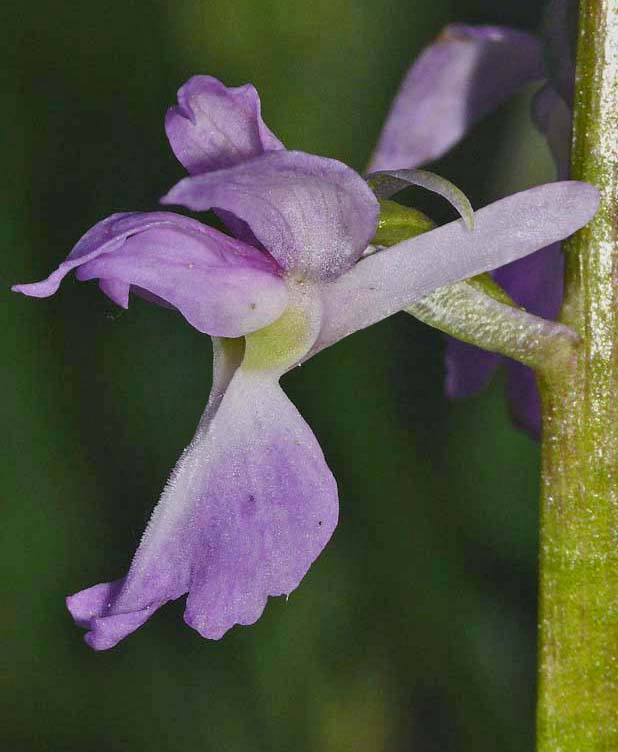
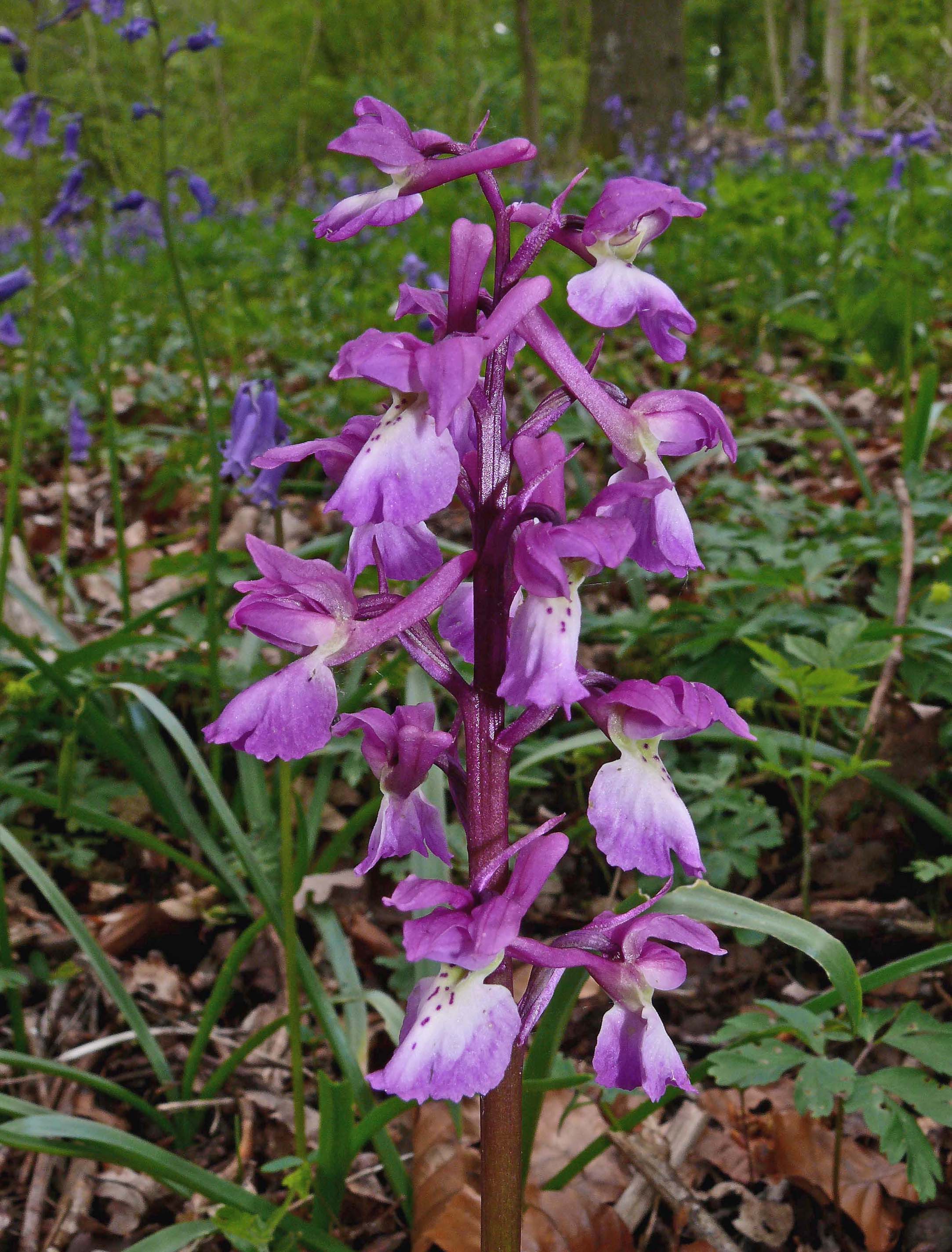
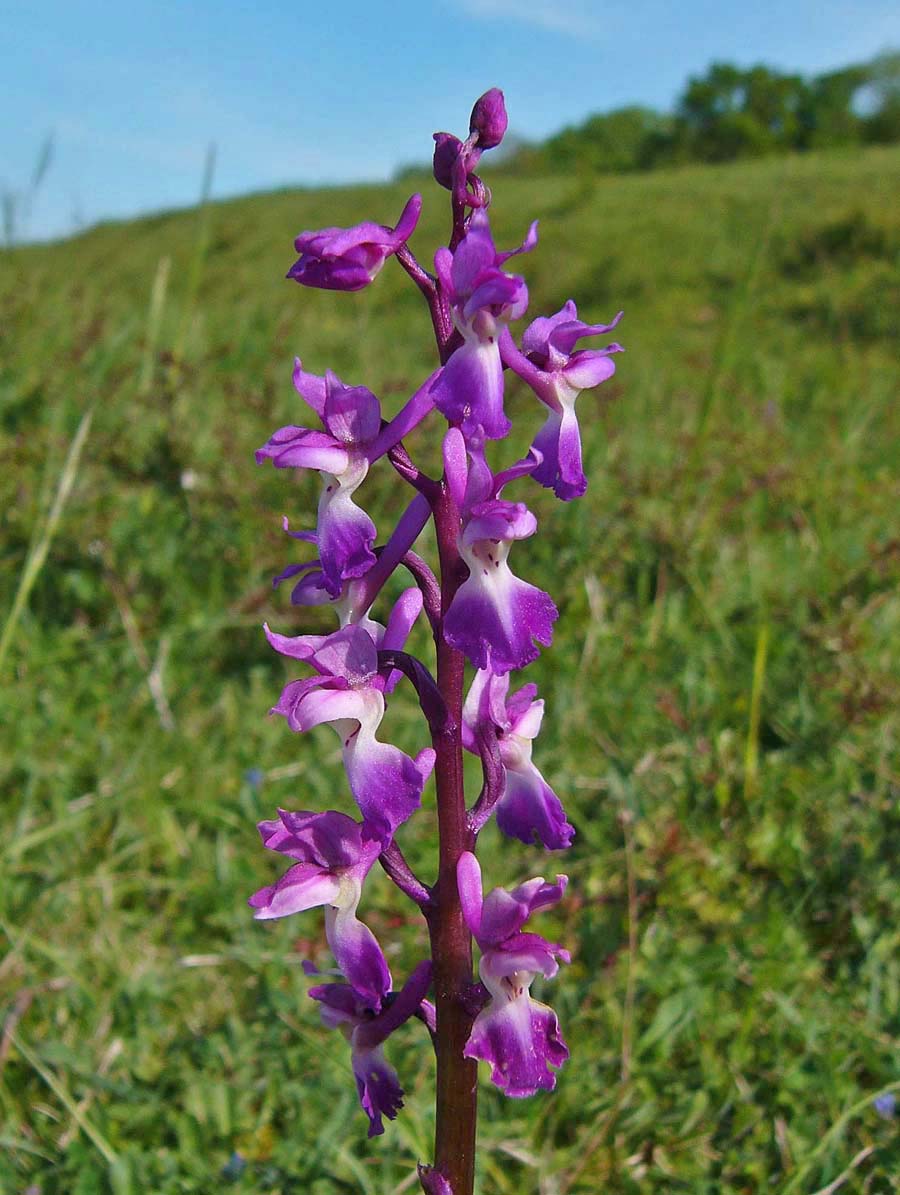
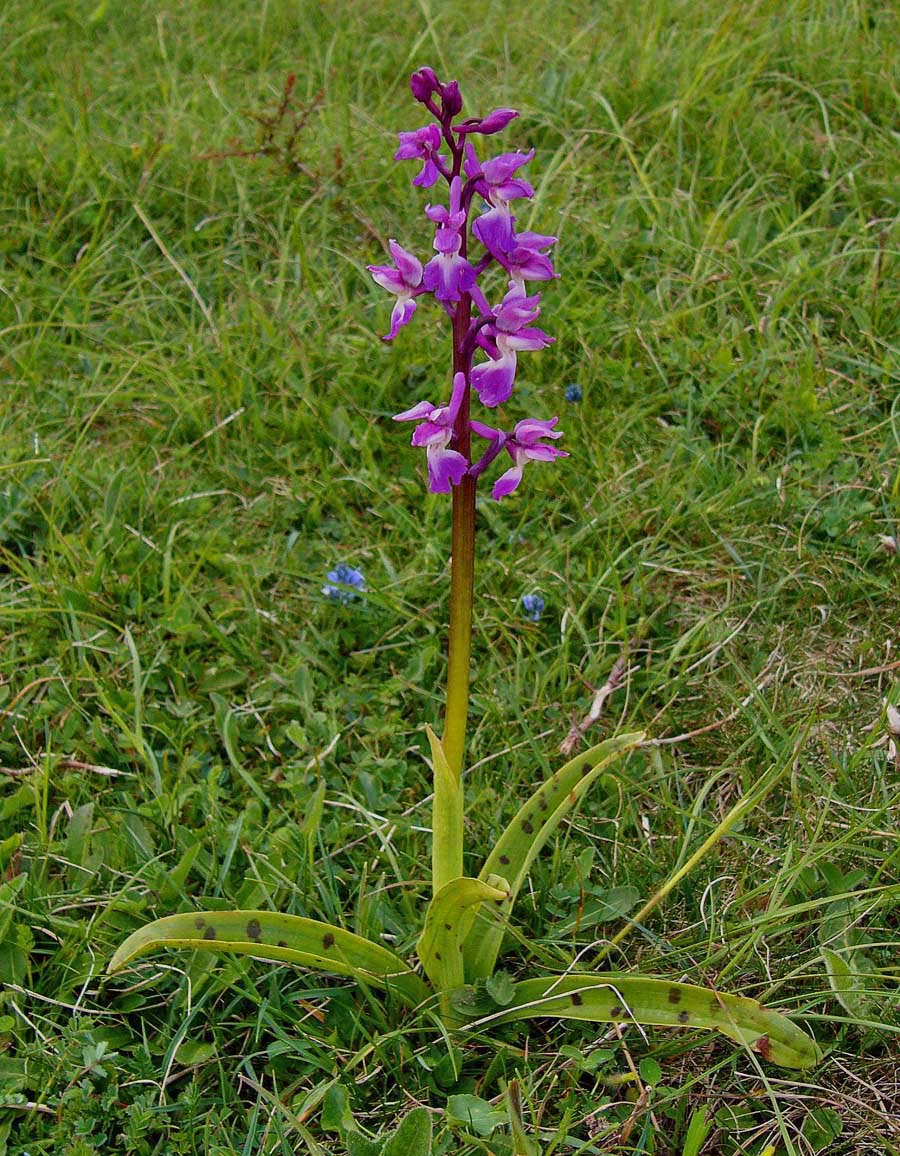
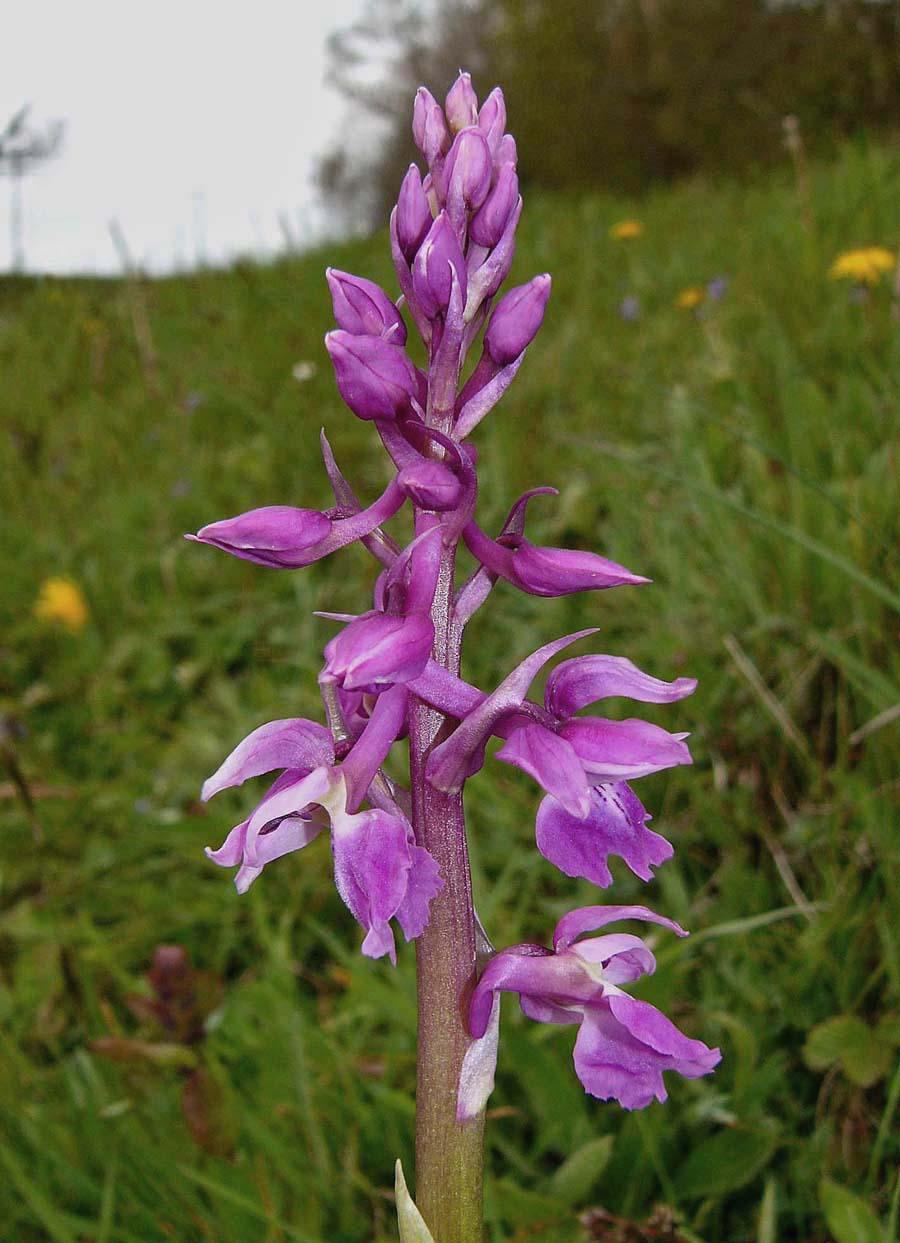
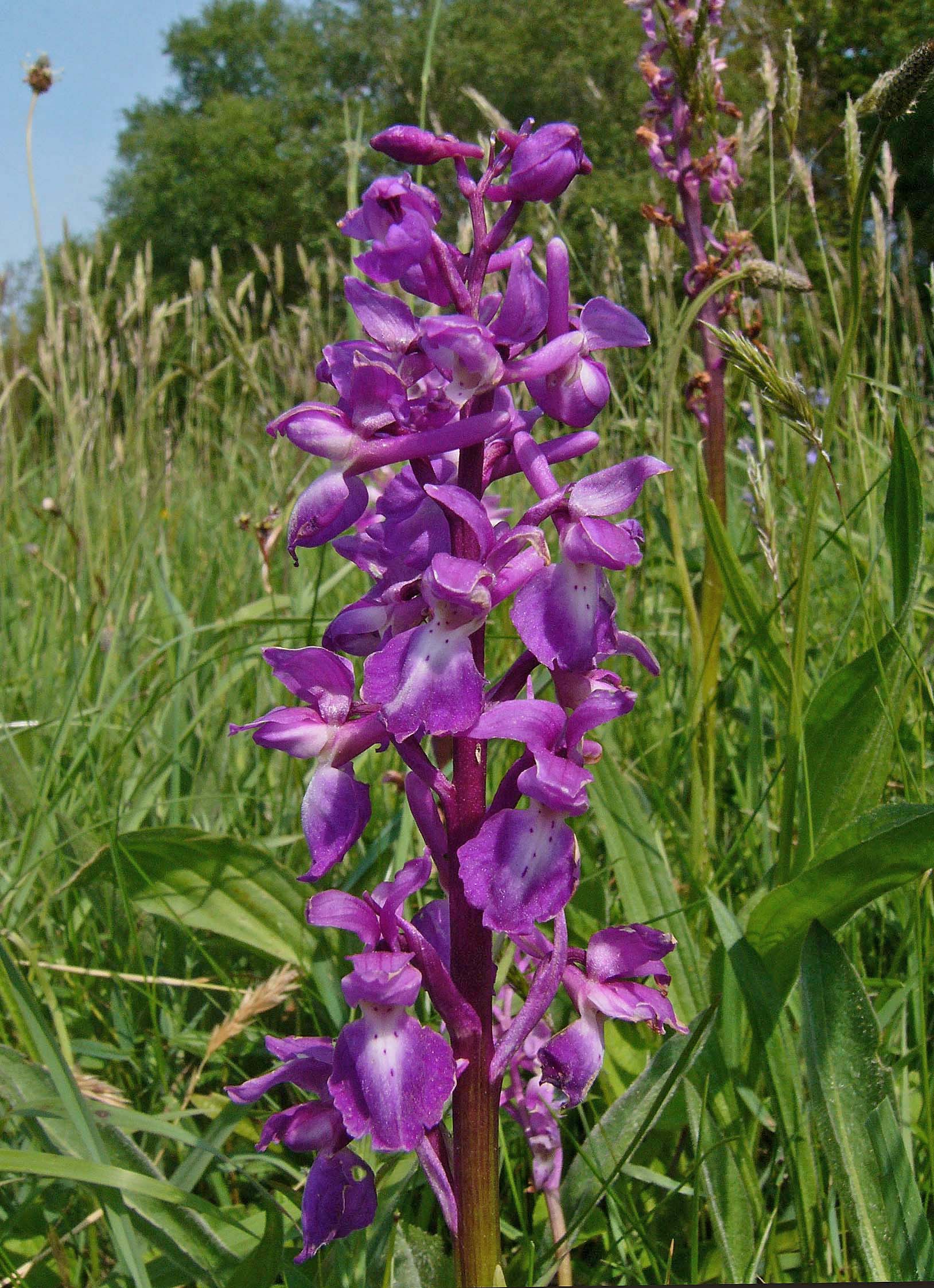
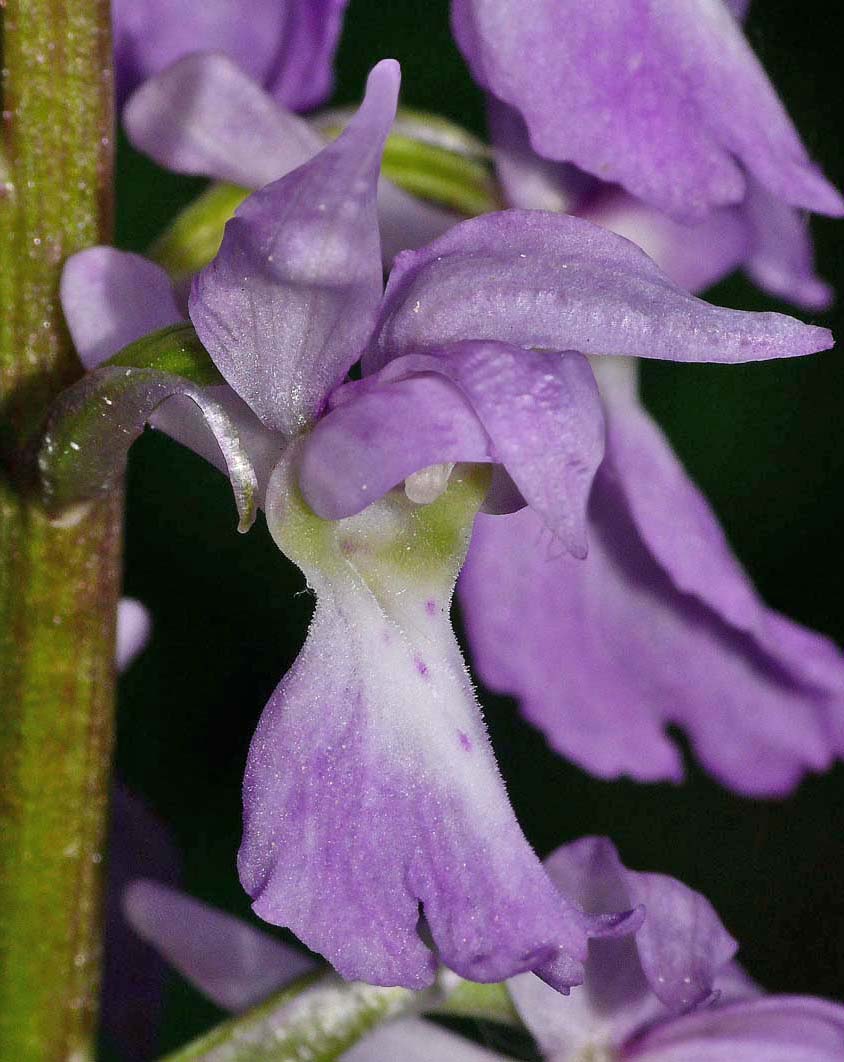
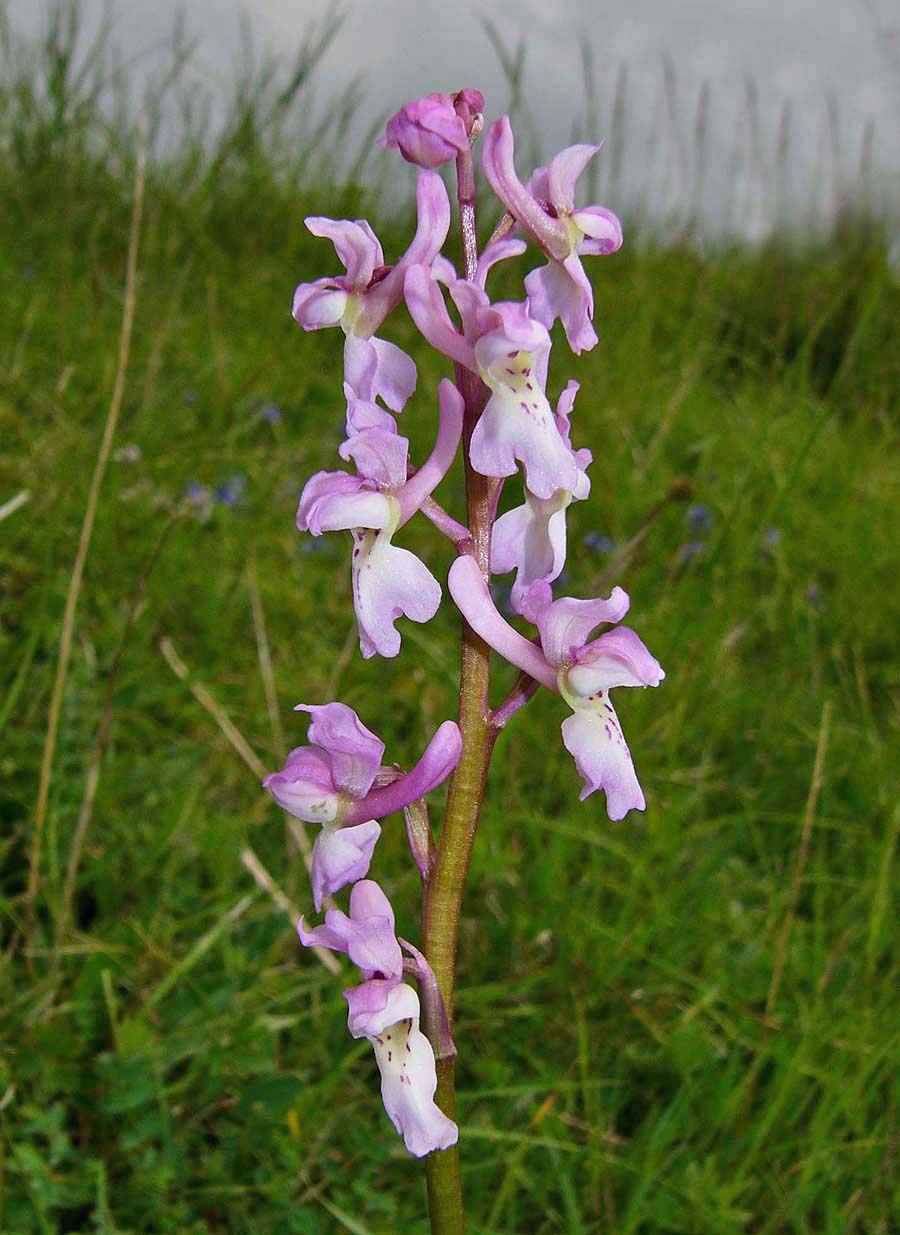
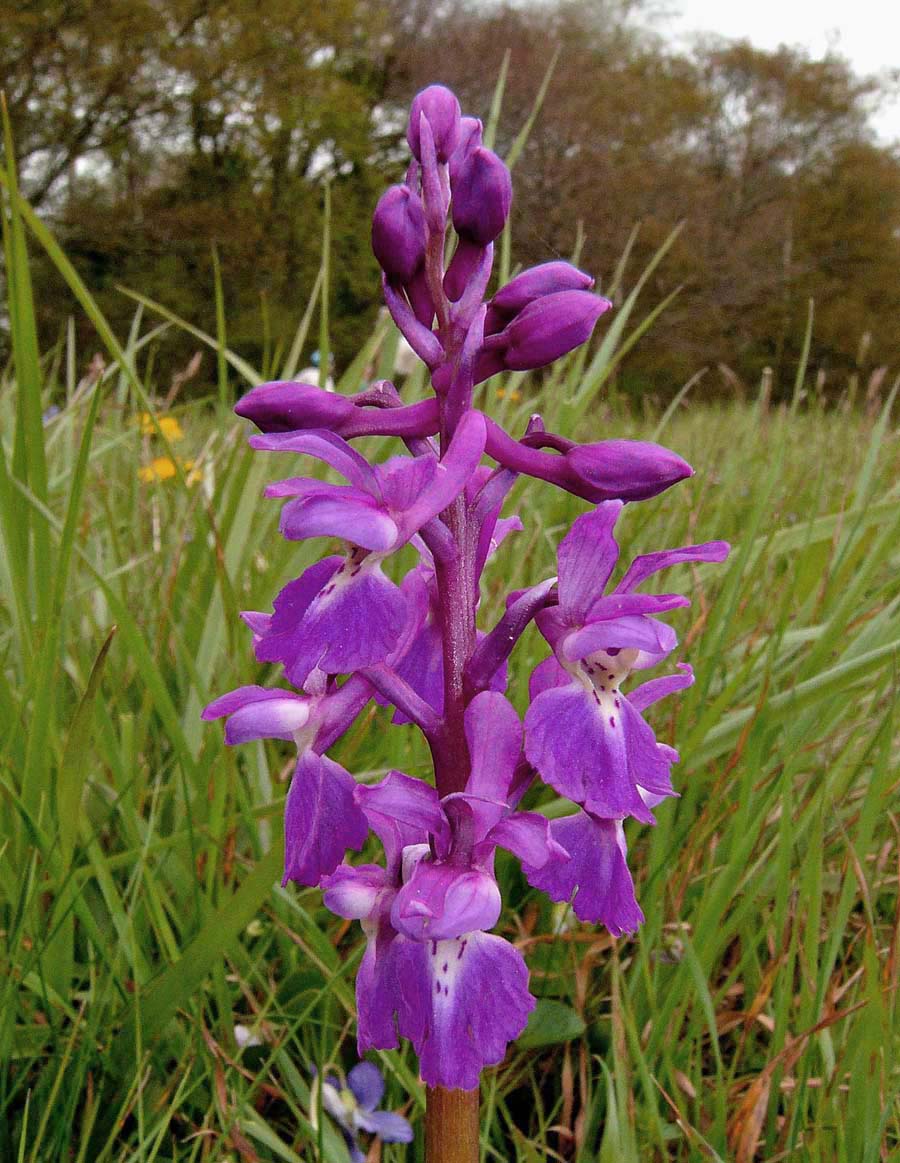
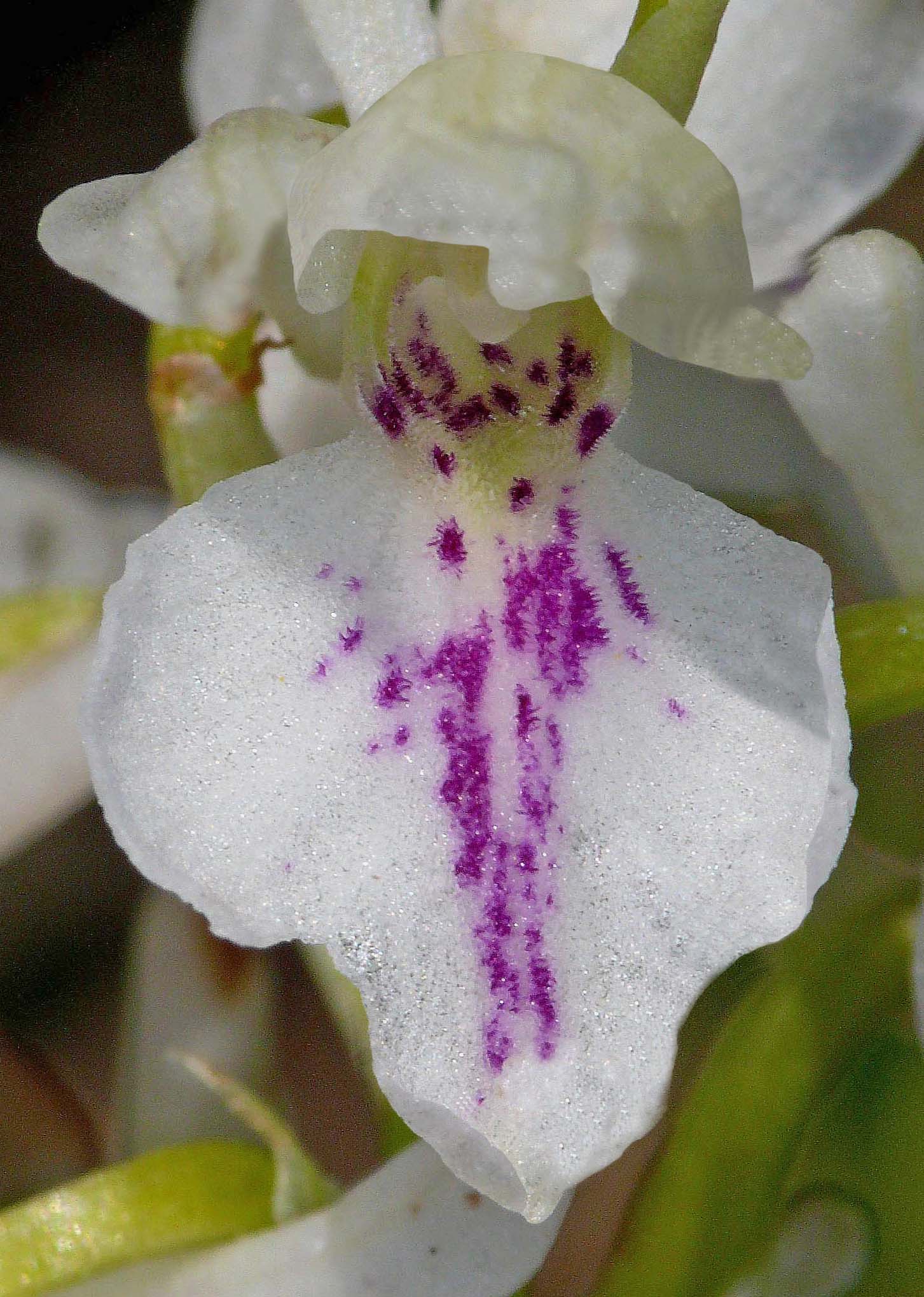
The appearance of the orchid is variable with much depending upon the type of habitat in which it grows. On calcareous soils it tends to be a smaller plant with a dense inflorescence and large individual flowers whereas on clay and particularly in woodland, it can become a tall plant of to 60cms with a loose flower head of up to 50 flowers. Although O. mascula usually exhibits heavily dark spotted leaves, this is by no means a consistent feature and it would seem that this marking becomes less common the further south one travels. As can be seen from the photos, flower colouration may vary from pale lilac to deep purple, with pure white not uncommon. Picture 12 is a complete mystery, possibly a hybrid although the only other plants in the near vicinity were other O. mascula.
O. mascula is not easily confused with other Orchis, except possibly in the east of its range where it comes into contact with O. pinetorum and O. ovalis, where there is undoubtedly some inter-gradation. The photos are from southern France and southern England, dating from late April.