This is a species which has been
known for very nearly as long as its close cousin O. mascula, having
first been described as a variety of that species in 1791. Despite the
length of time it has been known
to the orchid world, its true status and range are still not fully understood
and all the years of study of the taxon have really only served to confer on
it several additional synonyms. These include O. mascula ssp speciosa (Mutel) Hegi 1909, O. mascula ssp signifera (Vest) Soo 1927 and O. mascula ssp acutiflora (Koch) Quentin 1993.
O. ovalis is a member of the 23-strong O. mascula group
and its main range is
central and eastern Europe. It does however have several disjunct
outstations including the Vercors of southern France, the central
Apennines of Italy and various regions of the Balkans. Interestingly at
the periphery of
its range it seems to acquire characteristics that genetically liken it
in some
respects to the O. mascula group member with which it most frequently
comes into contact. Consequently in the Vercors, O. ovalis exhibits a
genetic shift towards O. mascula
itself, whereas in the Balkans it tends towards O. pinetorum.
These shifts do not seem to be the result of hybridization and may therefore be a form
of climatic integration. As has already been mentioned, this species
(if indeed it is just one) presents problems as different
populations can reveal not just varying genetic content but also differing
morphological characteristics, suggesting closer study is required.
For this reason, the illustrations and text for this species have been split into sections and depict plants which generally conform to the species description but which exhibit some clearly differing characteristics. The first section features plants from eastern Tuscany, which as with all populations, are fairly easy to recognize, presenting as they do a very tattered appearance, due to the long, forward pointing sepals and frayed lip. In this population and indeed in most others, the central leaf rosette and lower stem are thickly speckled with fine red spots and the central lip is pure white with red dots and dashes.
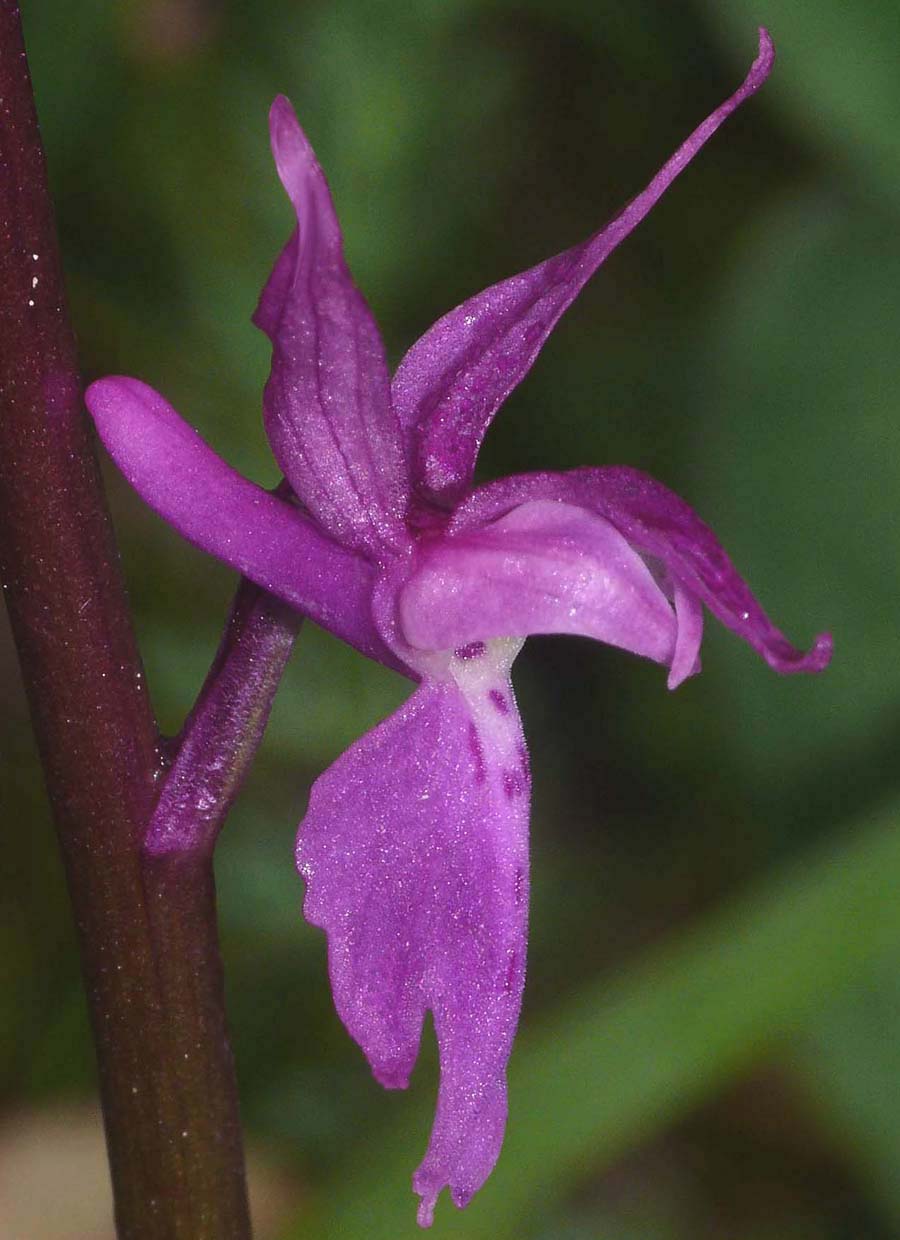
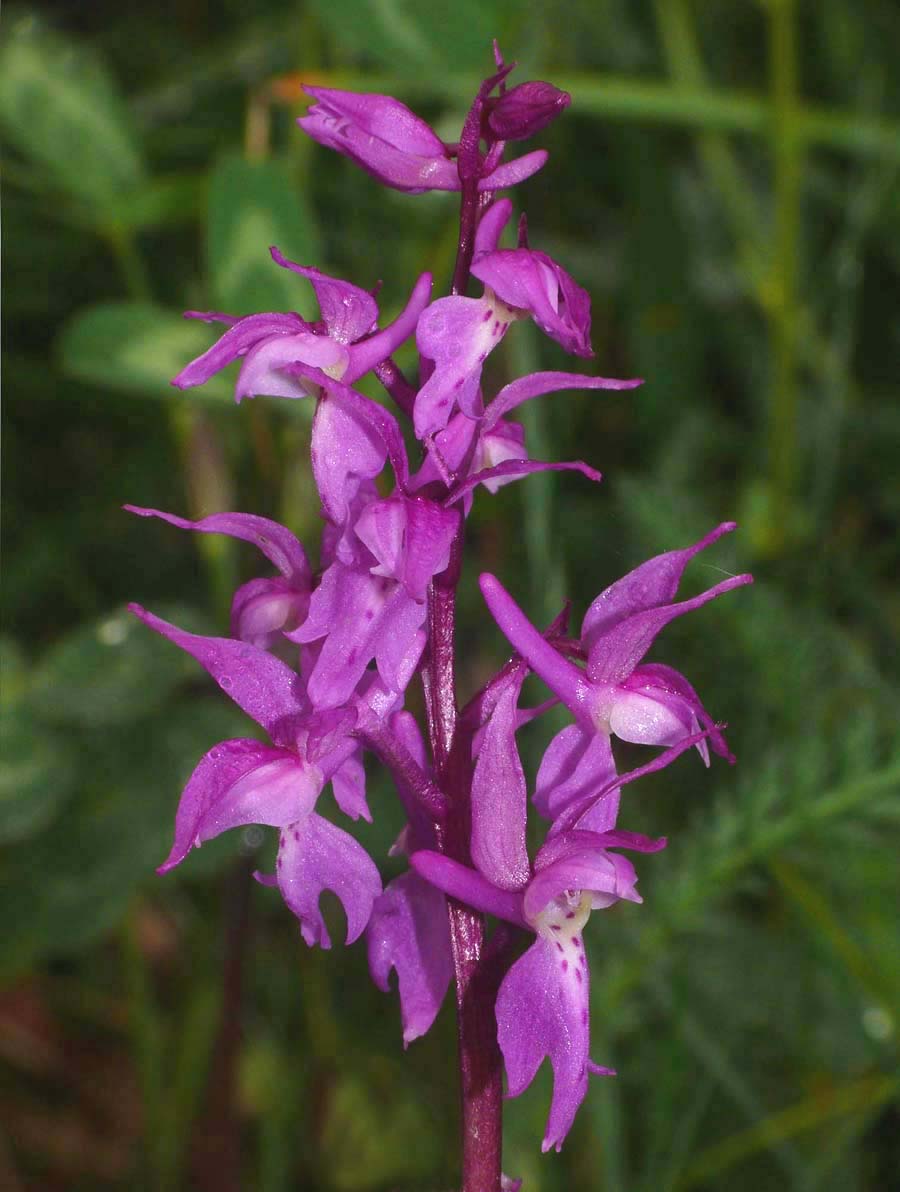
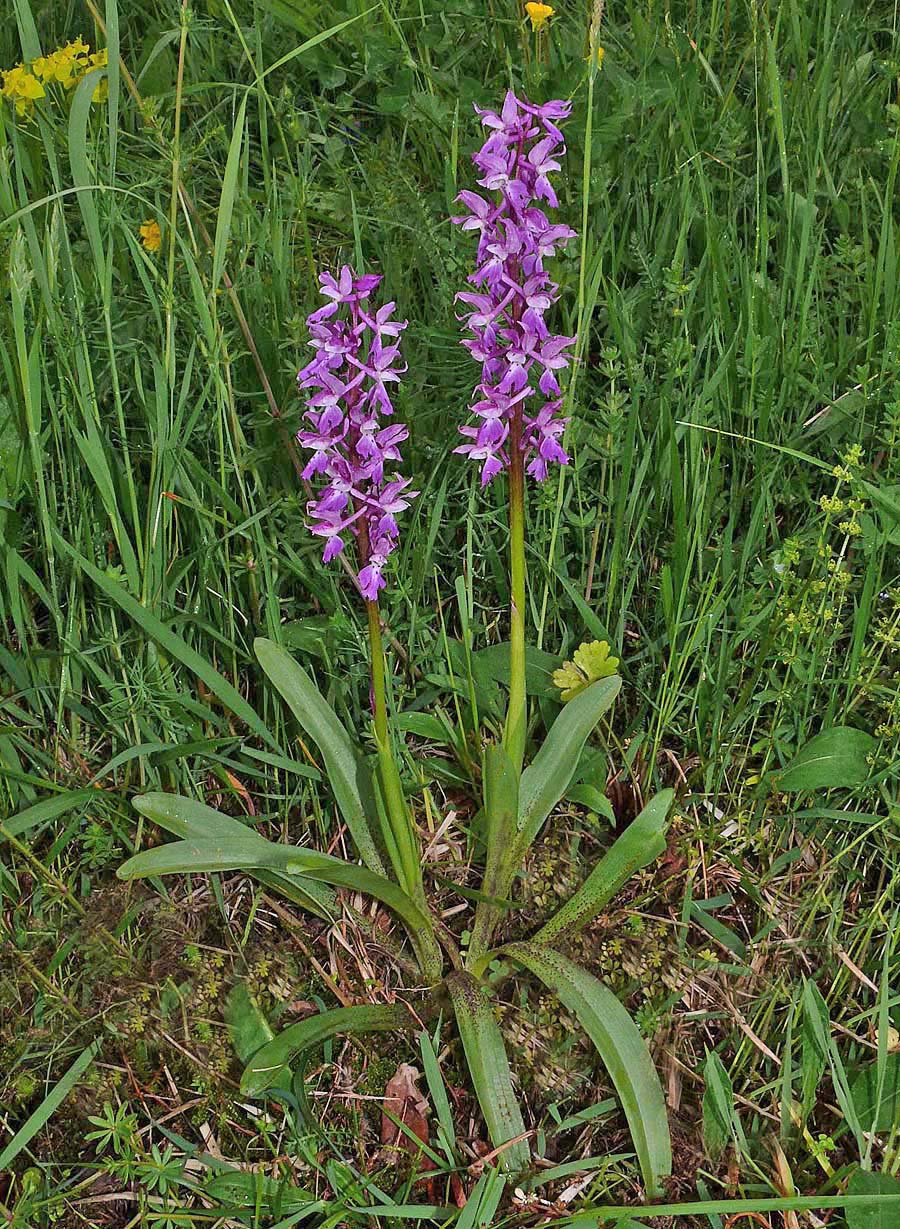
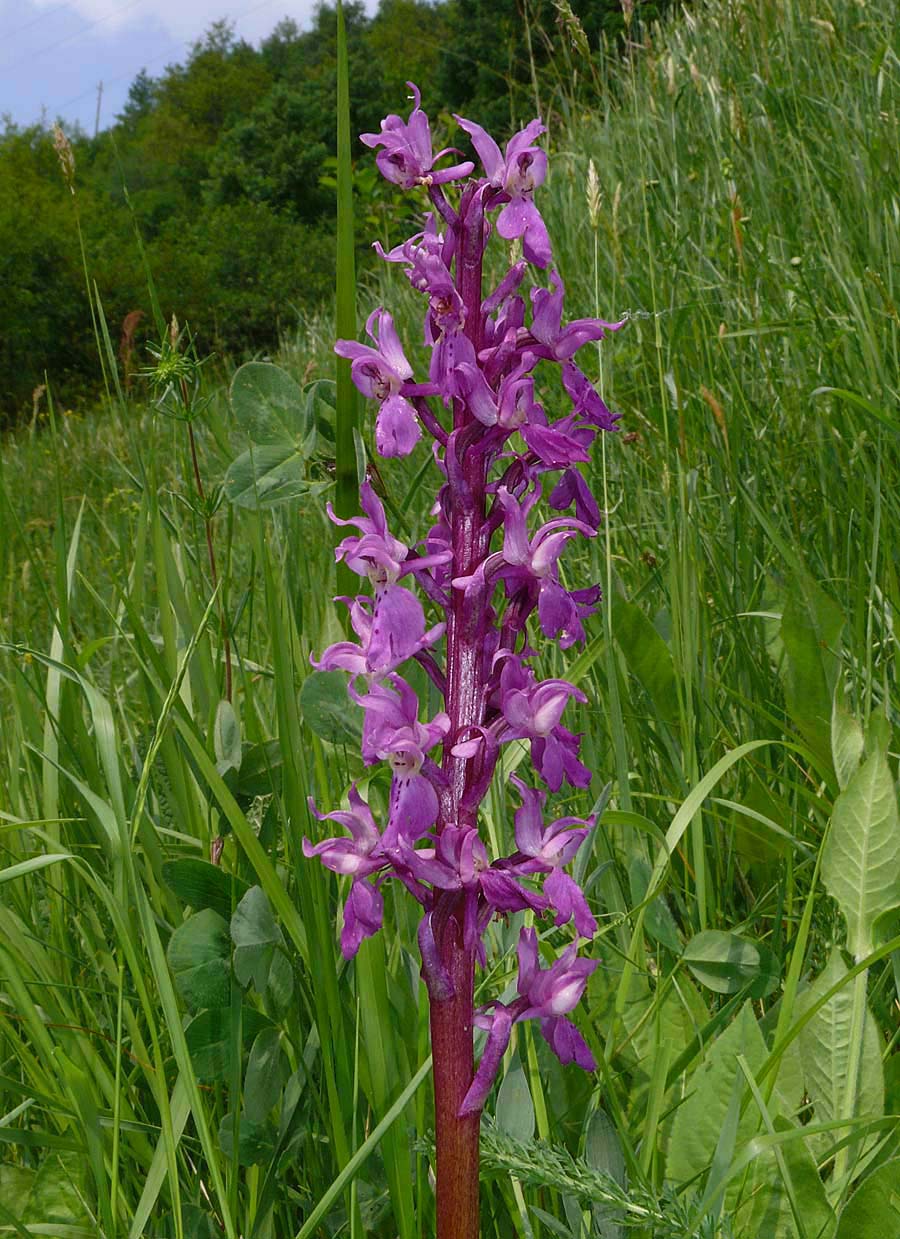
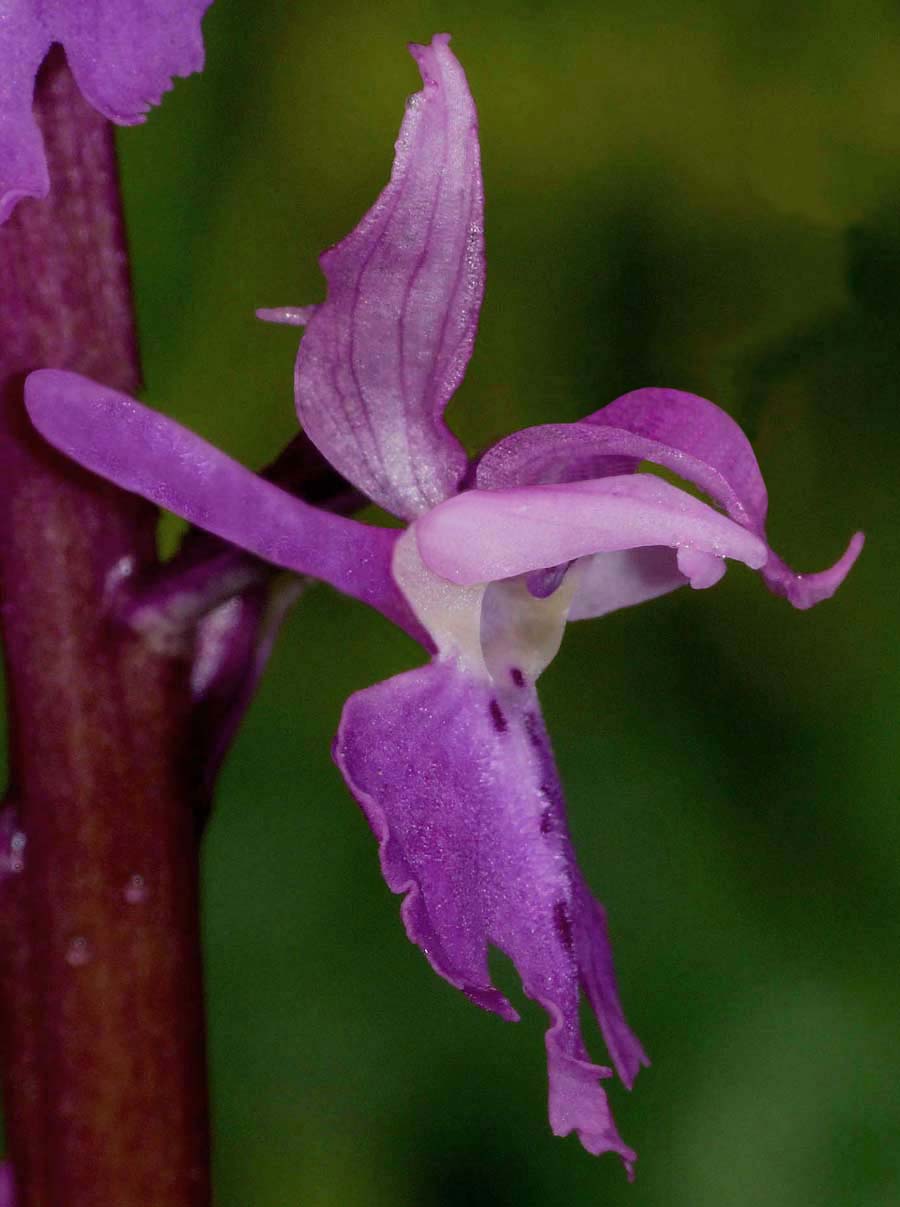
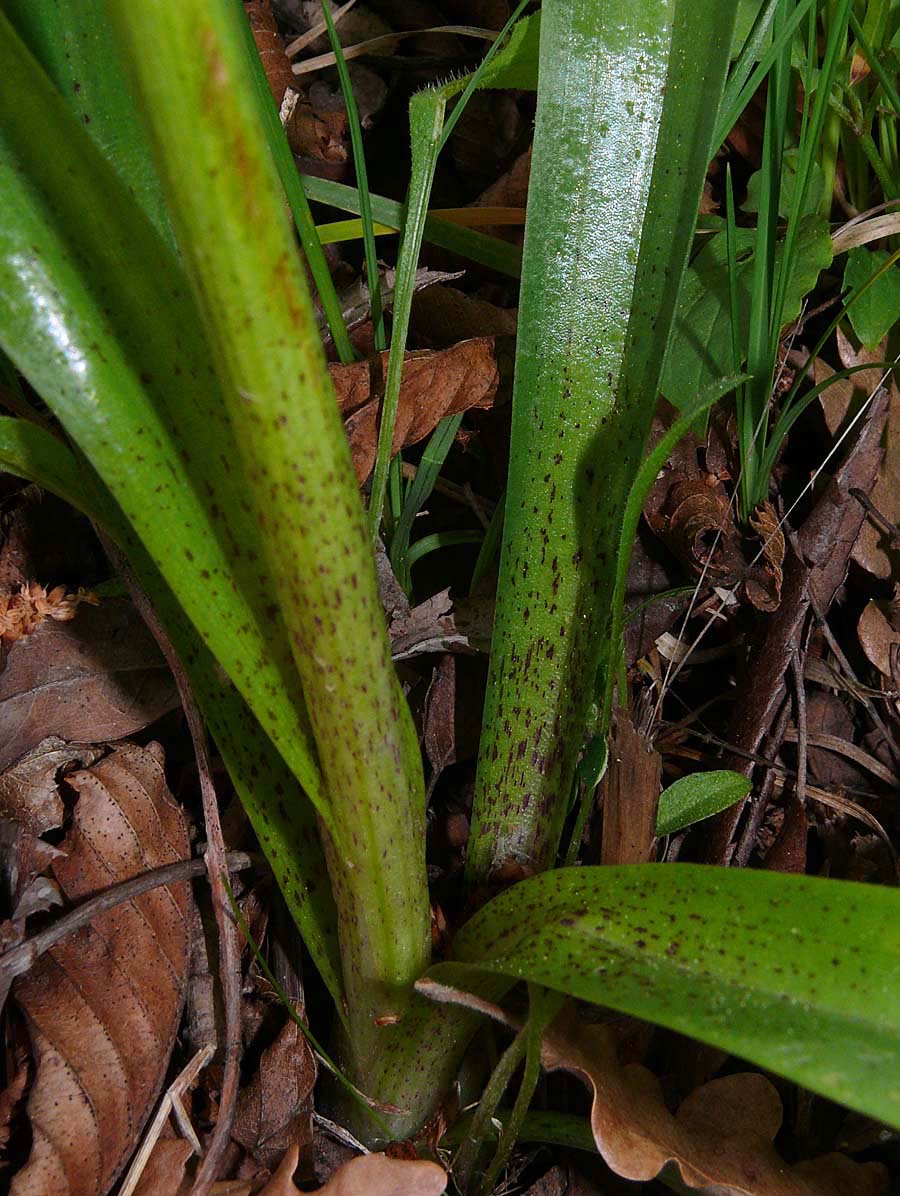
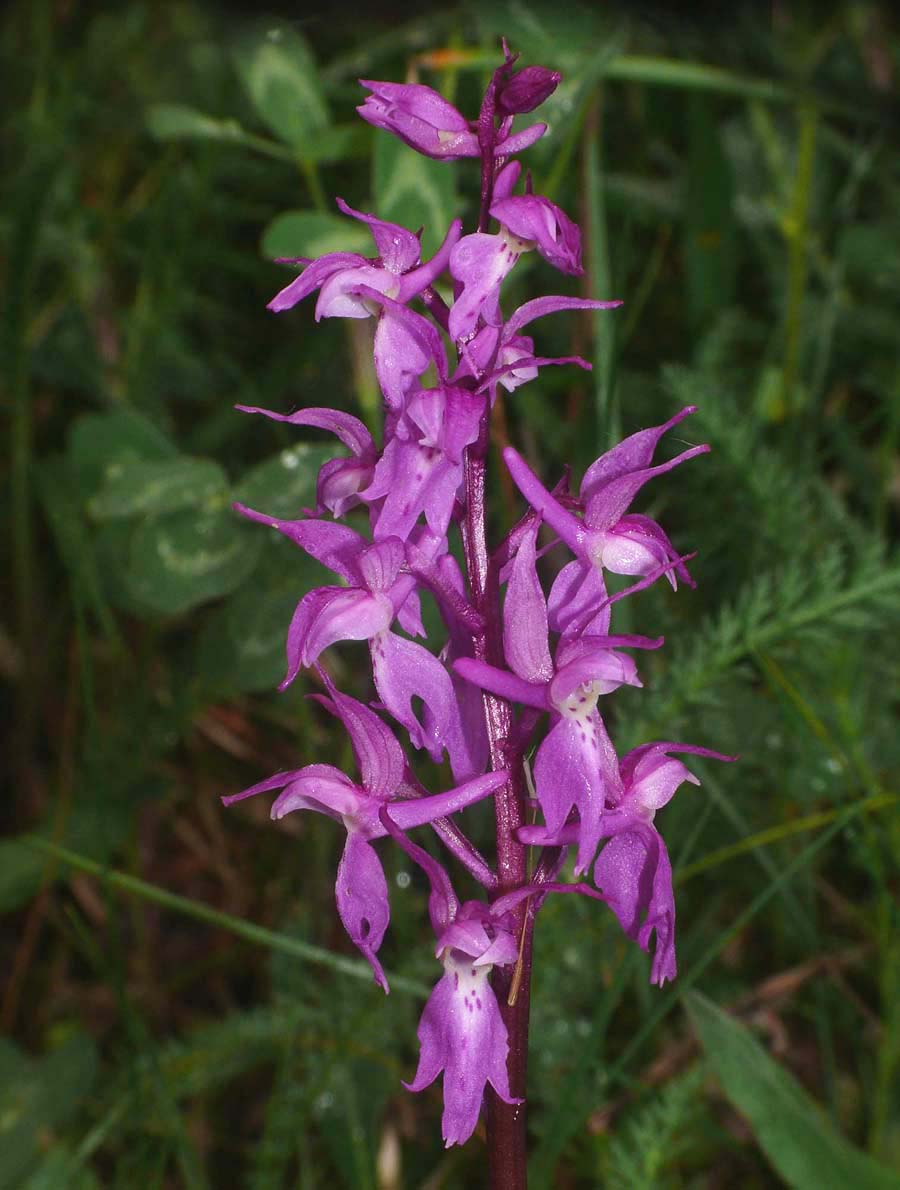
The following selection of photographs represent plants from the Vercors and Var, France which exhibit the typical O. ovalis flower but completely lack any red markings at the base of the stem. It will also be noticed that the rosette and the leaves themselves are both more sturdy and a paler shade of green.
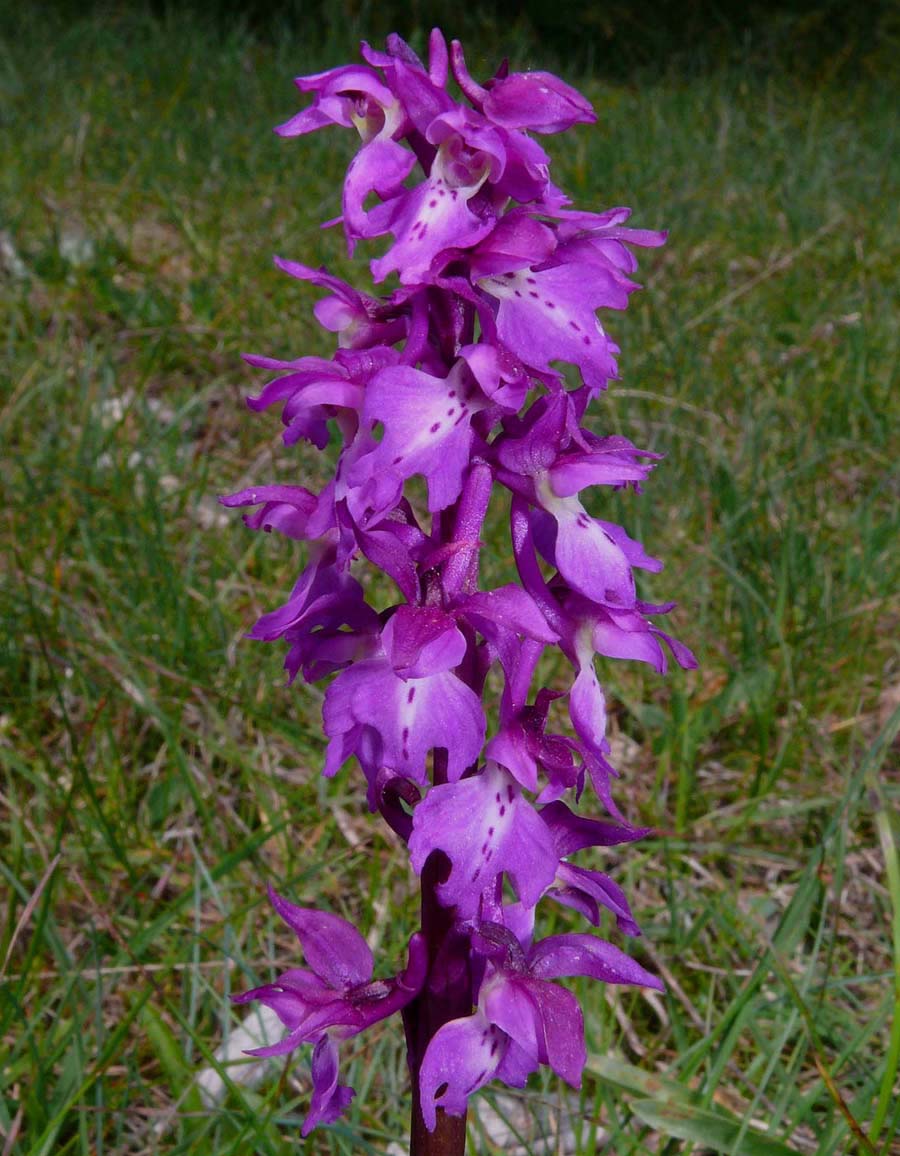
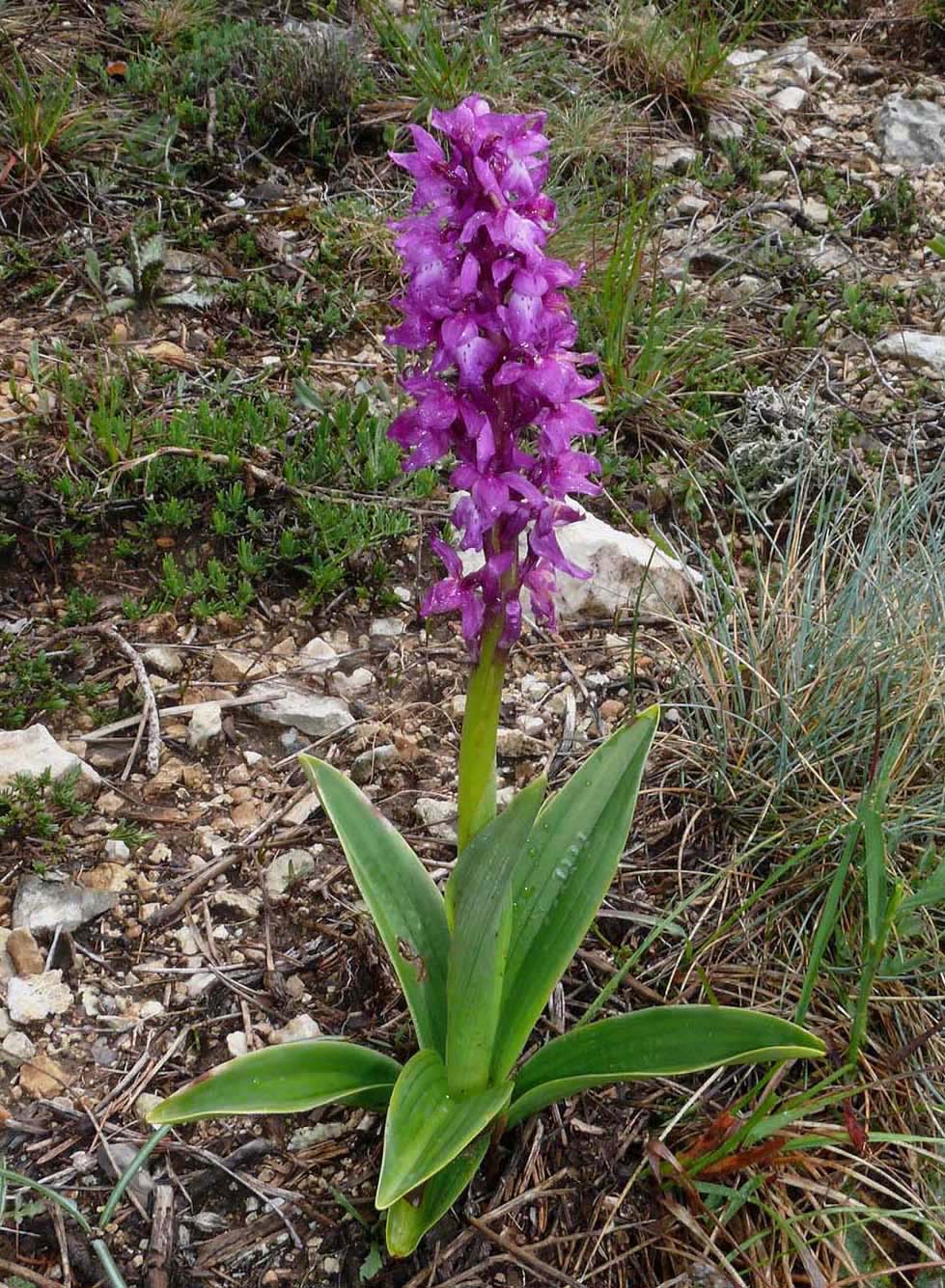
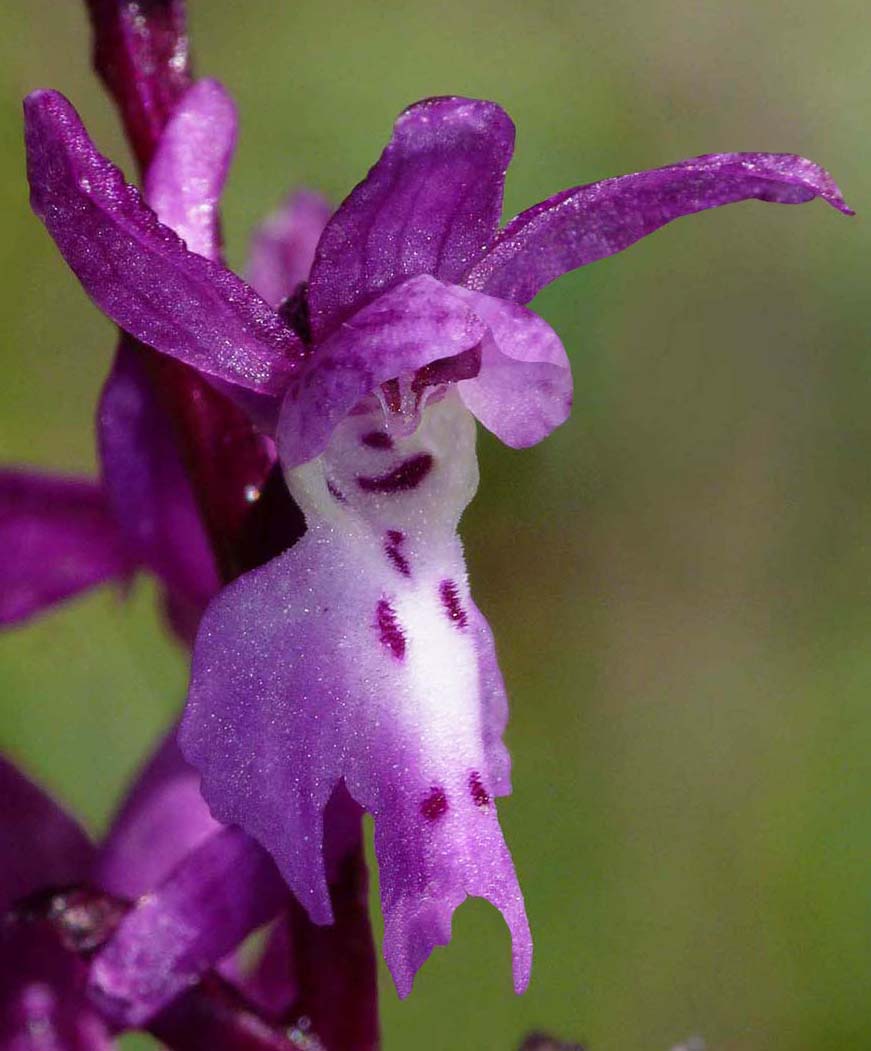
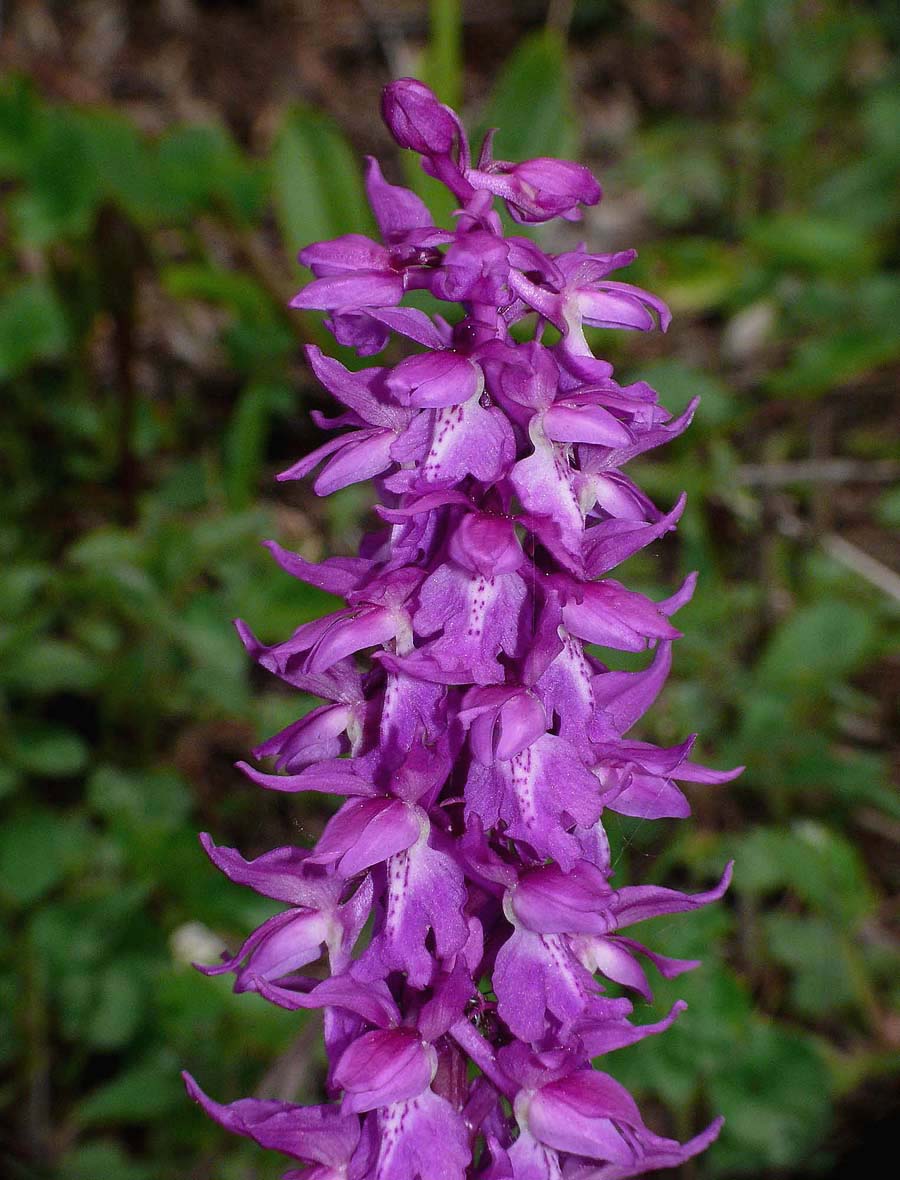
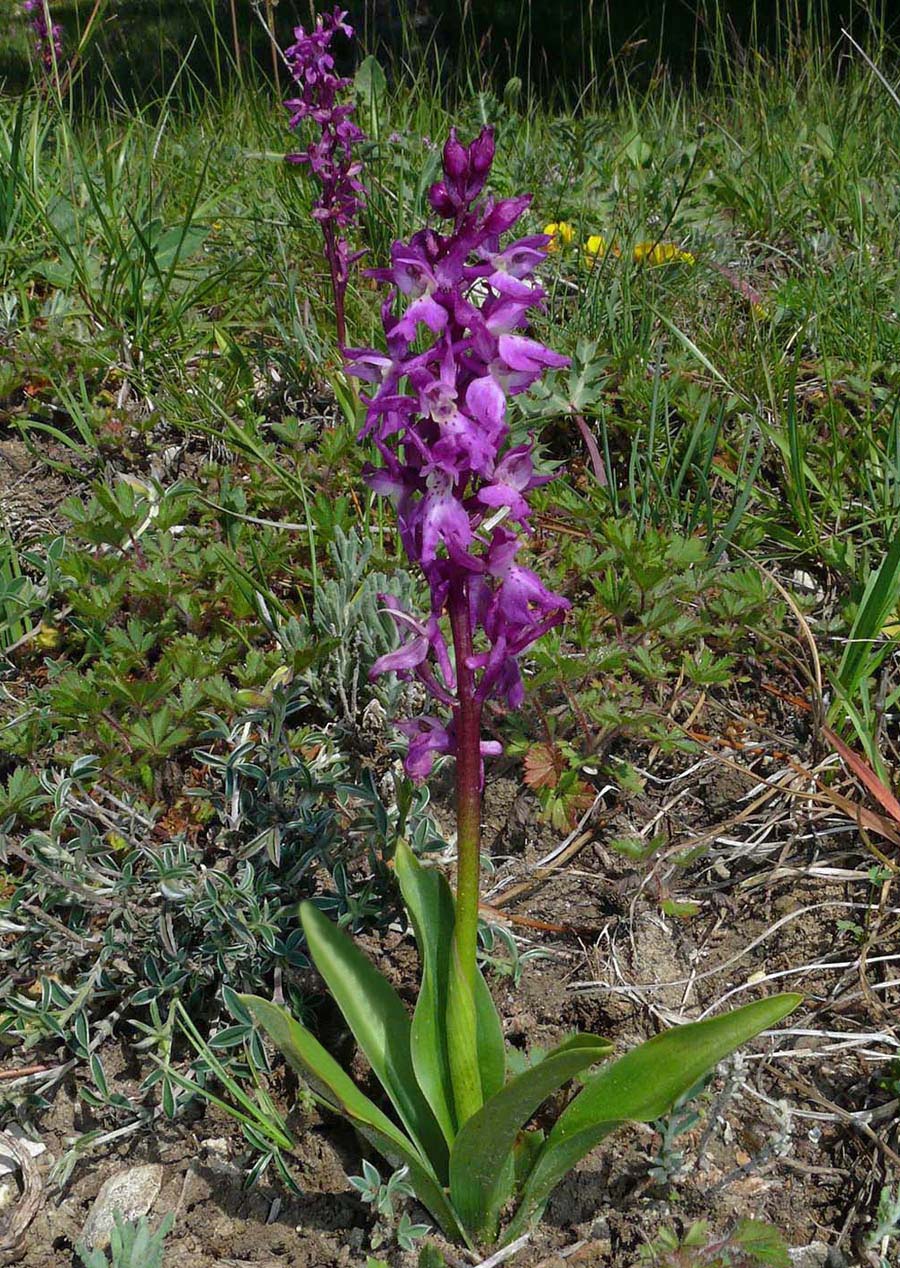
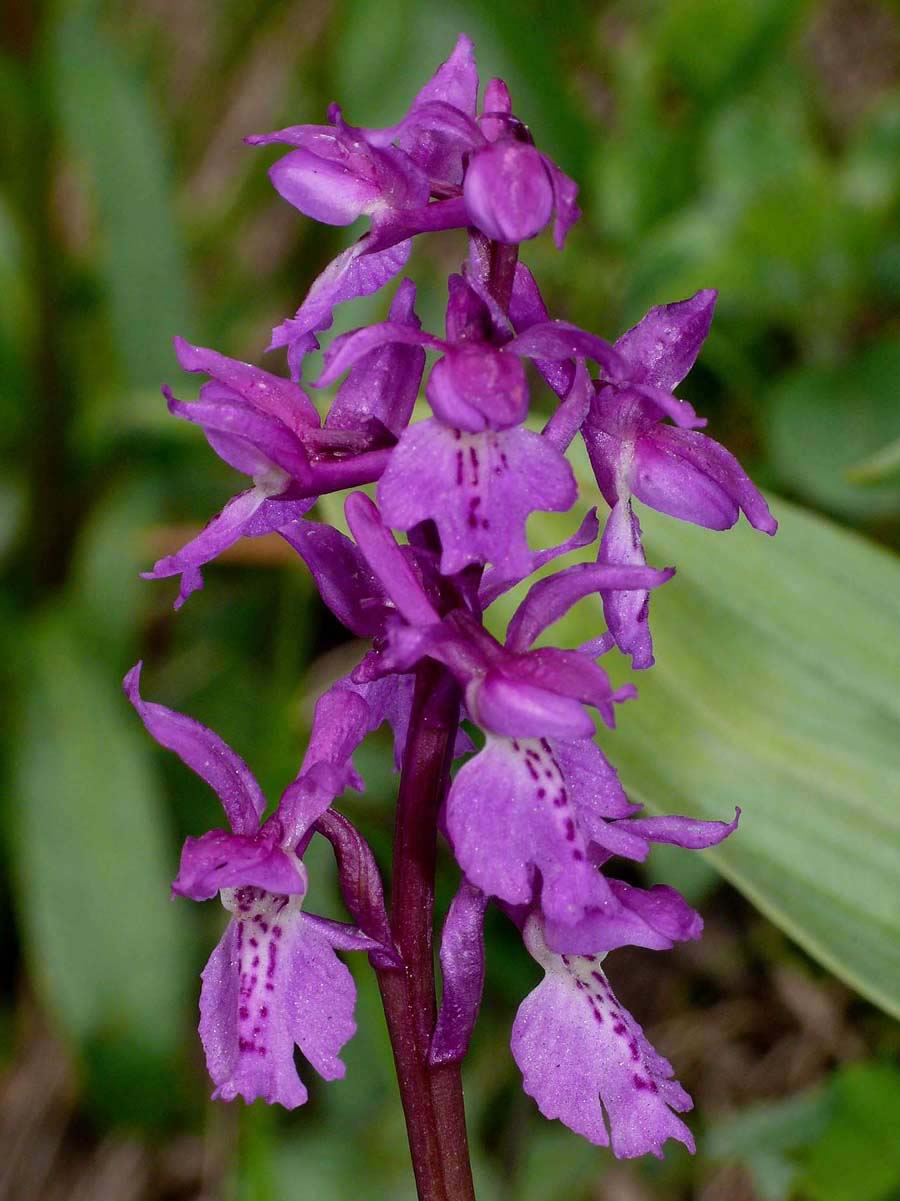
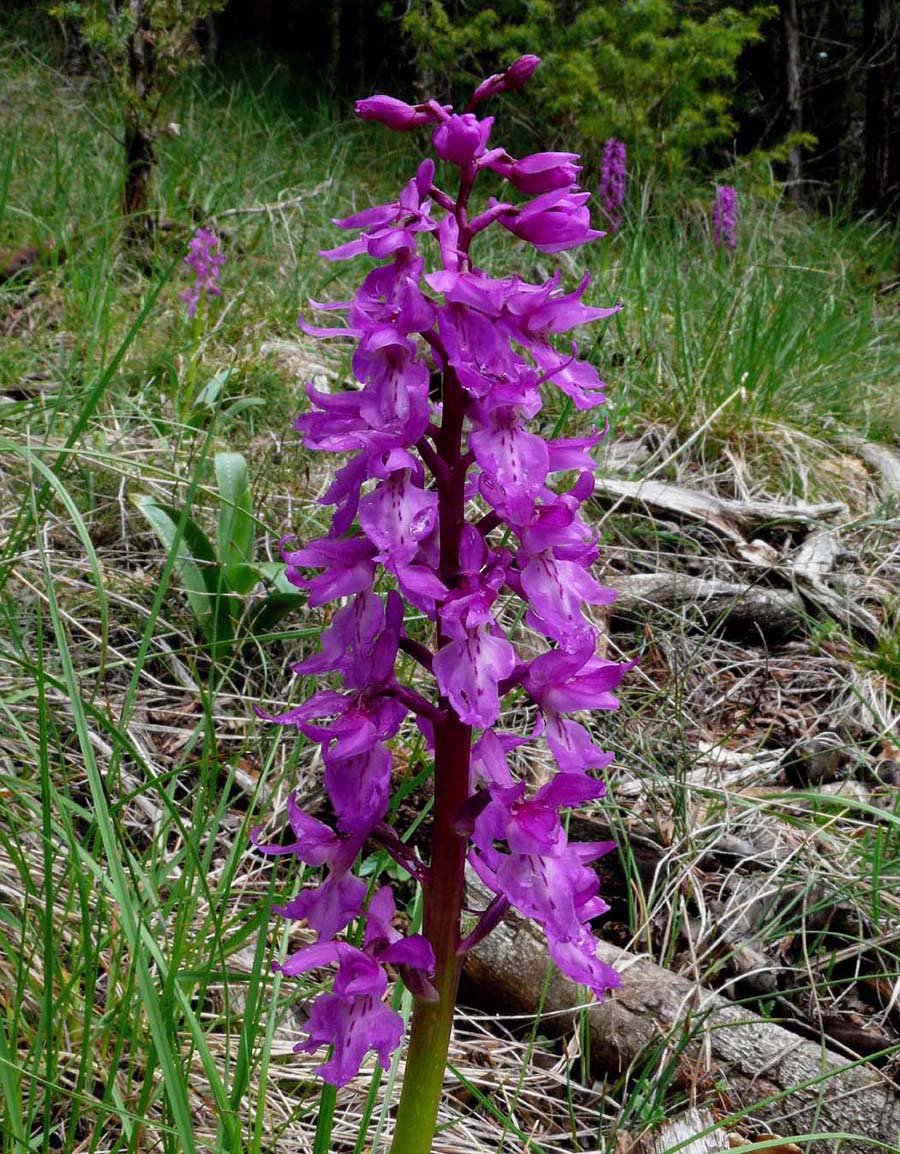
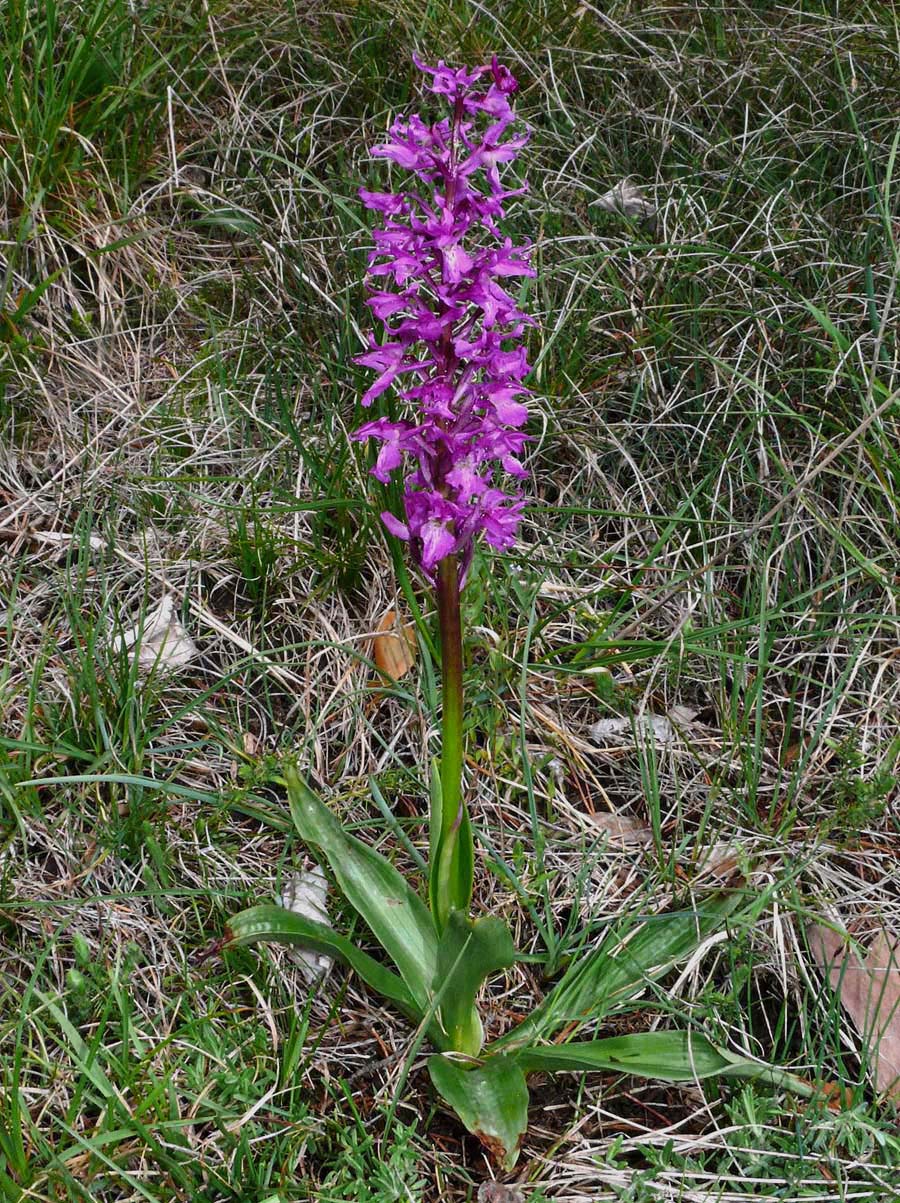
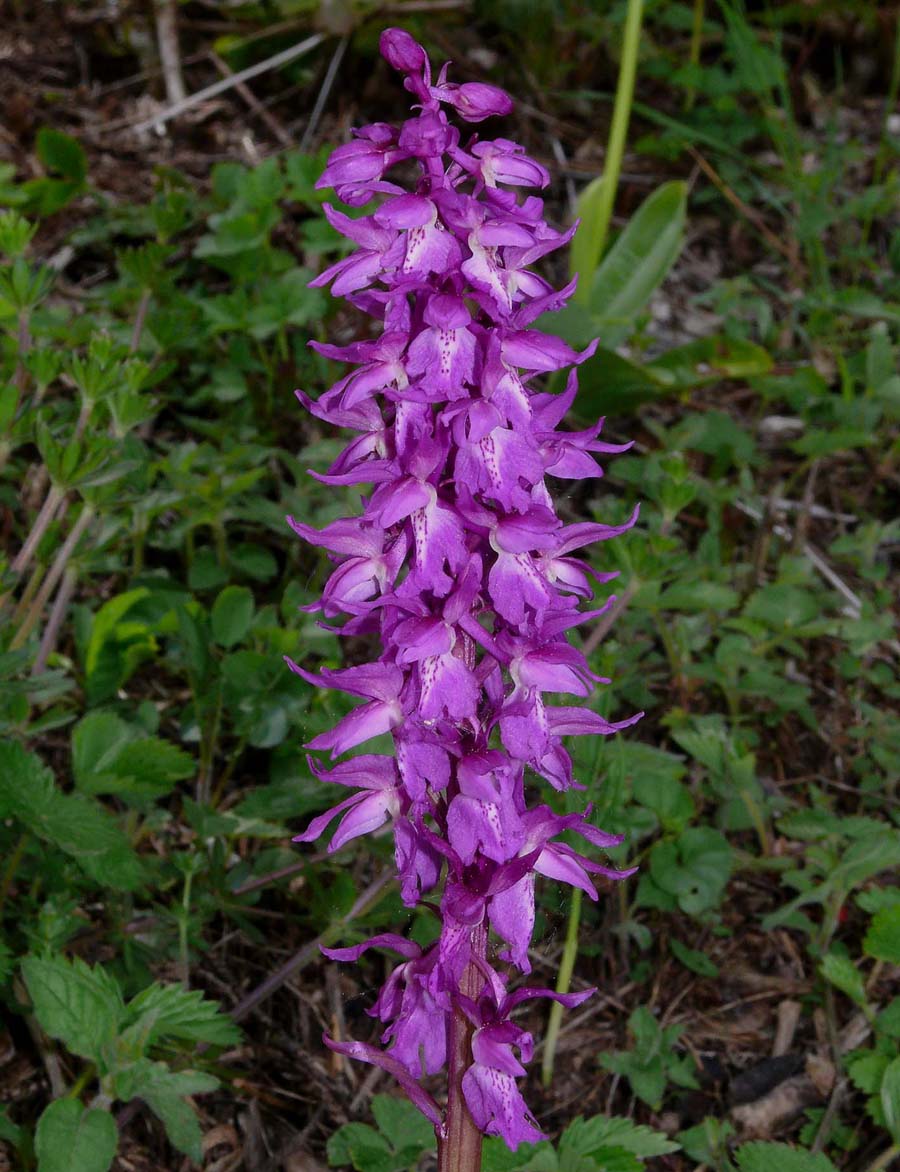
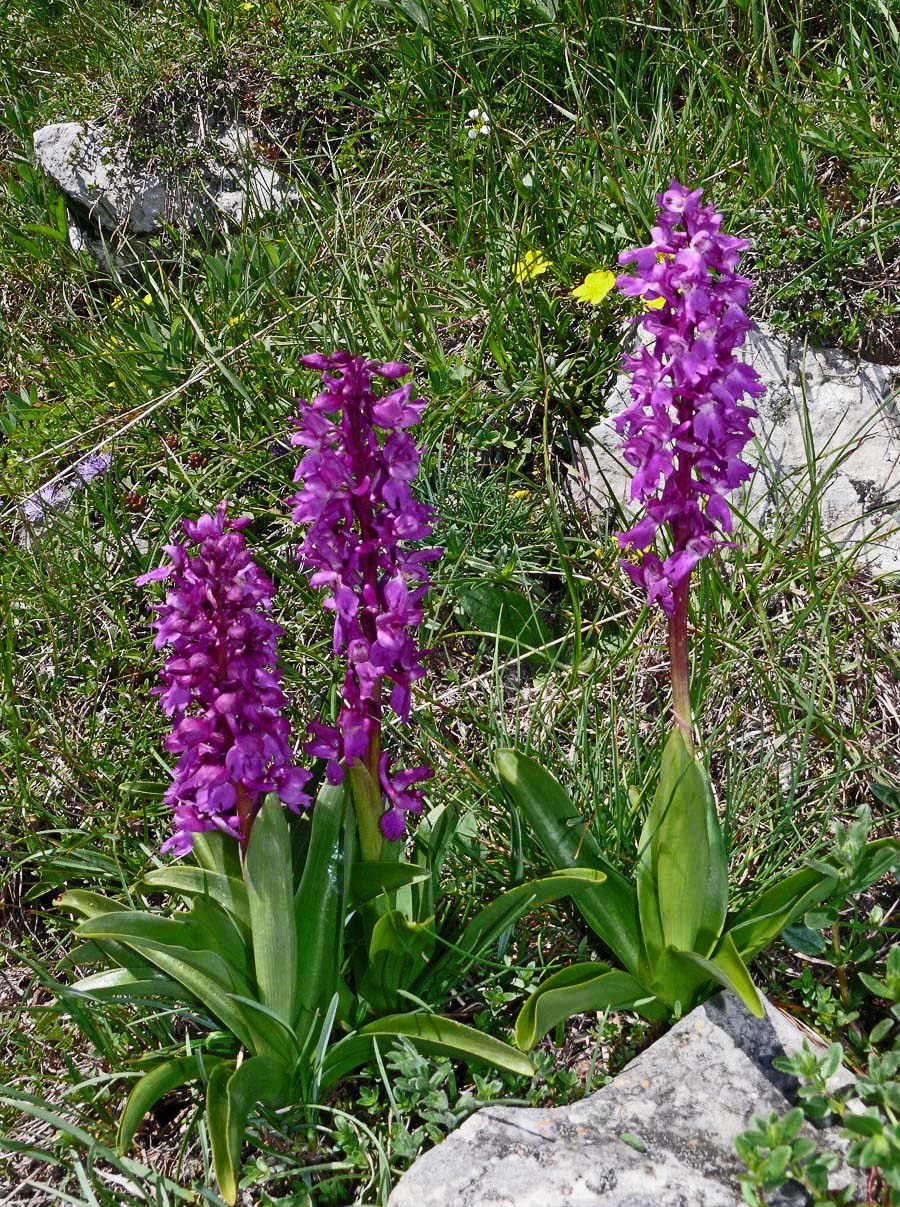
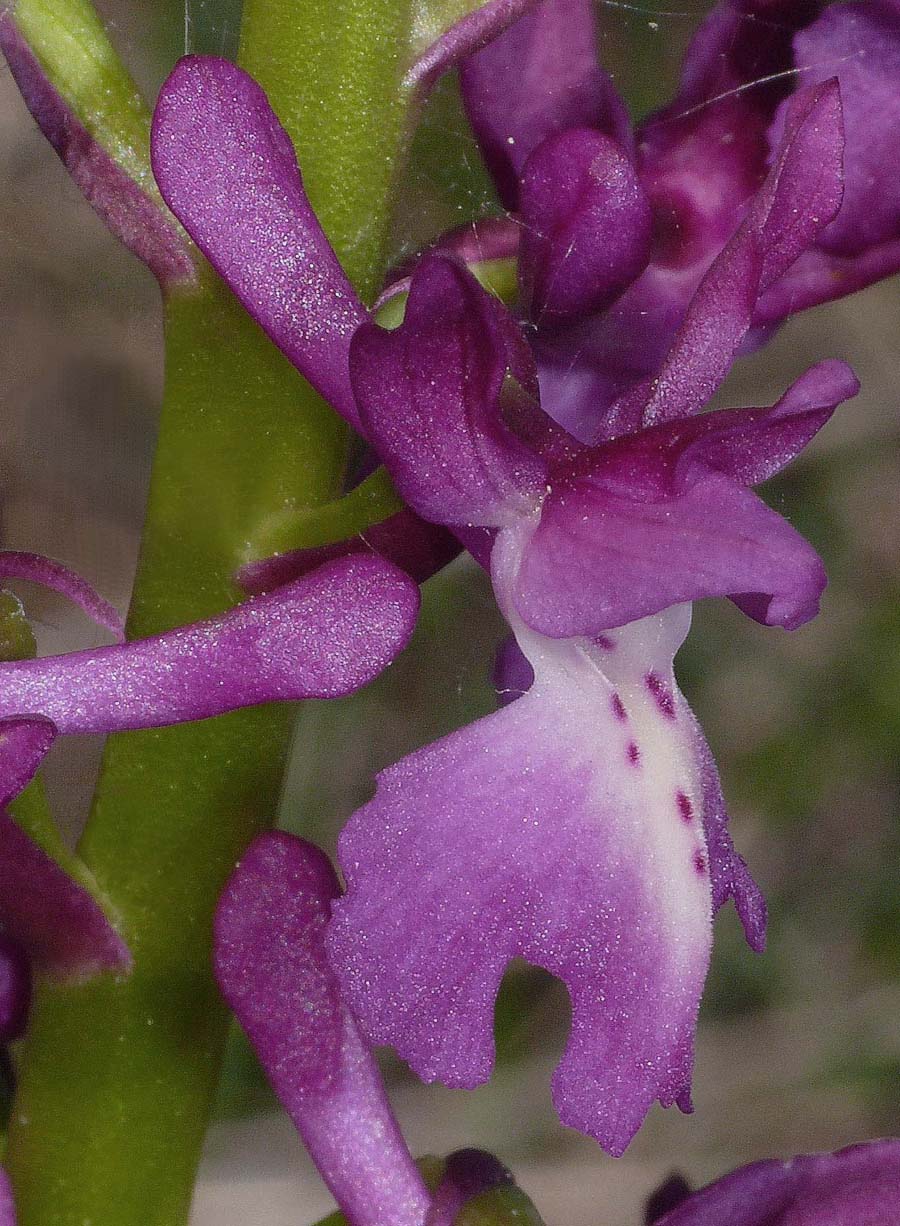
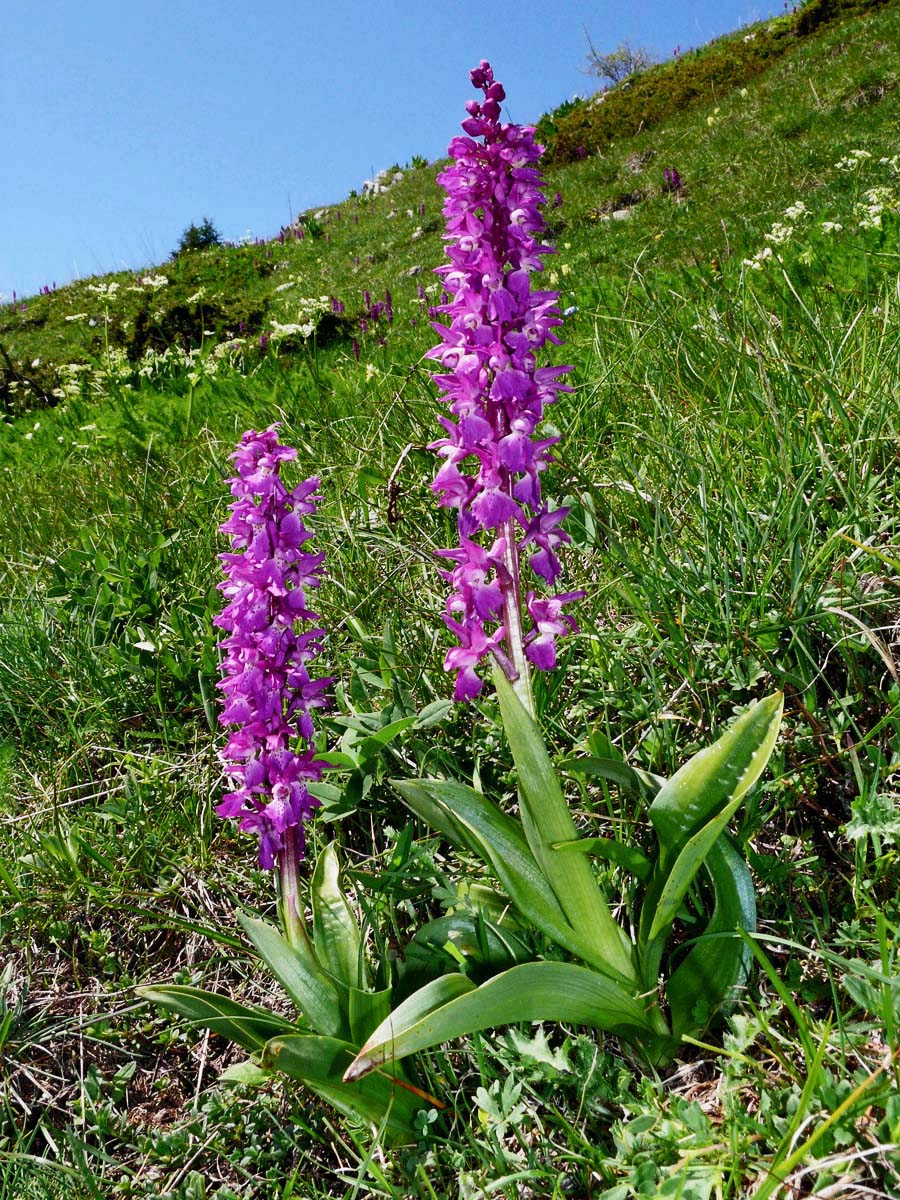
This section comprises photos from the Abruzzo region of central peninsula Italy, which as with the previous group, depict plants completely lacking any red speckling at the stem base and with more robust, paler leaves. The flowers however are particularly distinctive, with broad lateral lobes and marked yellow colouration around the stigmatic cavity. It seems probable that the plants depicted in these last two sections are examples of the inter gradation between O. ovalis and O. mascula known to occur in the west of its range, as described in the main text. These are the plants that some authorities prefer to regard as O. mascula ssp acutiflora rather than O. ovalis proper.
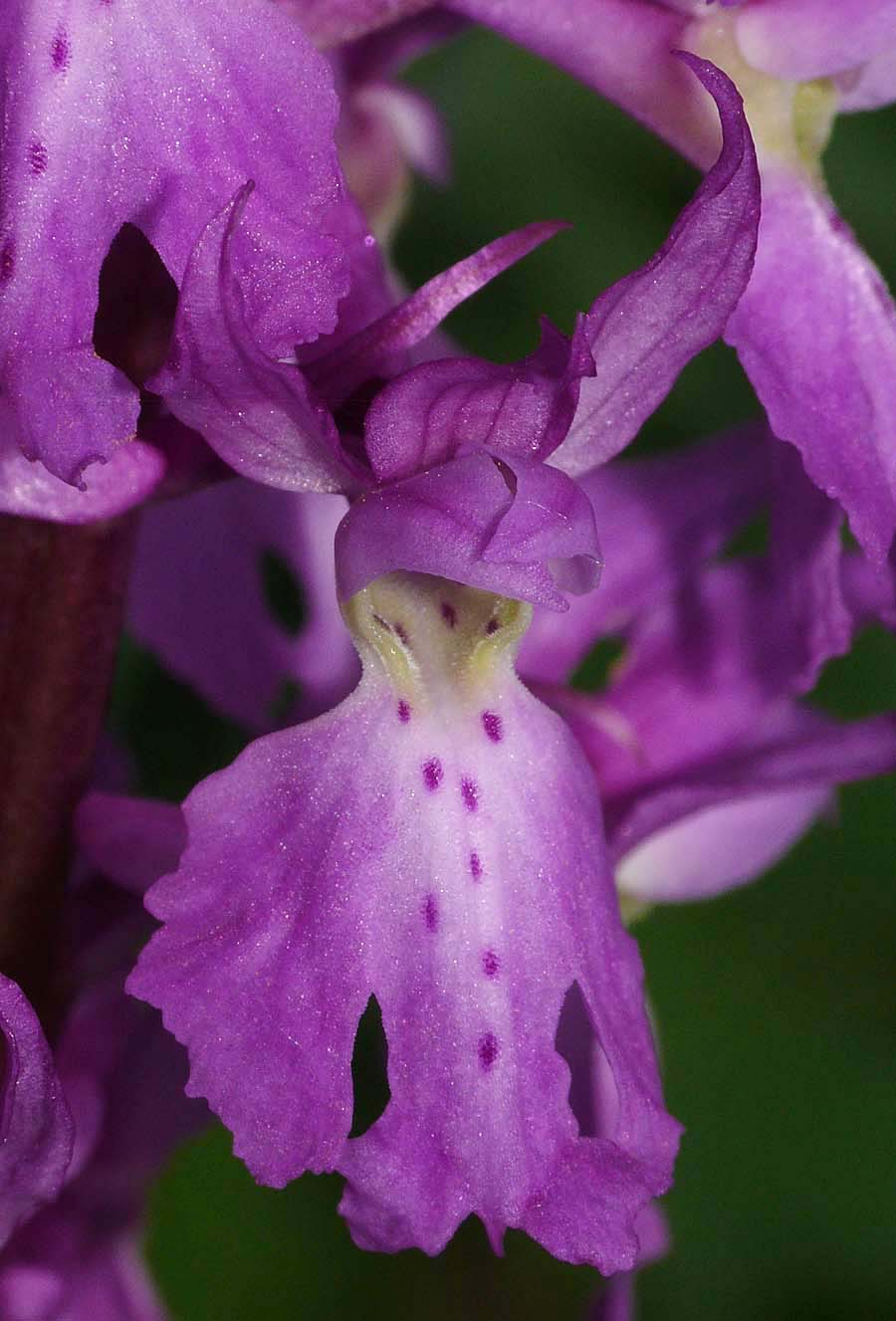
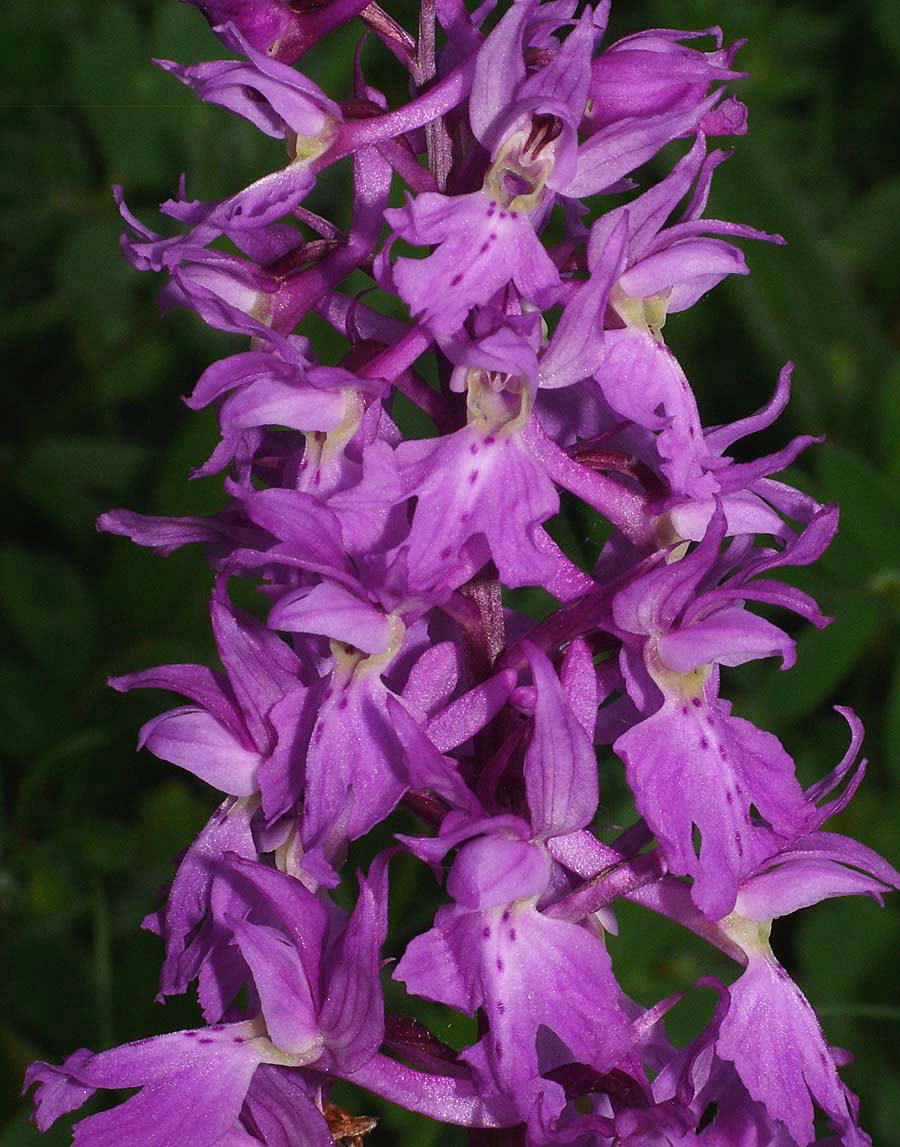
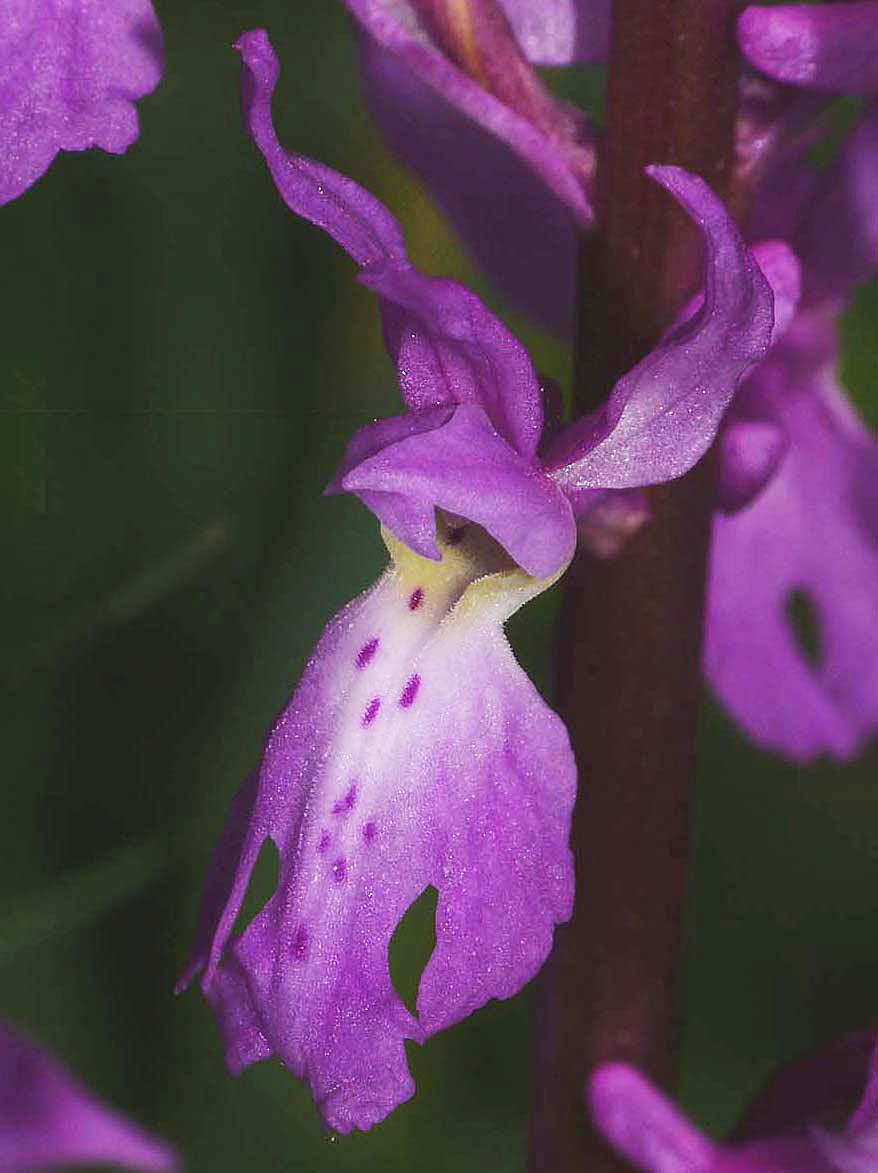
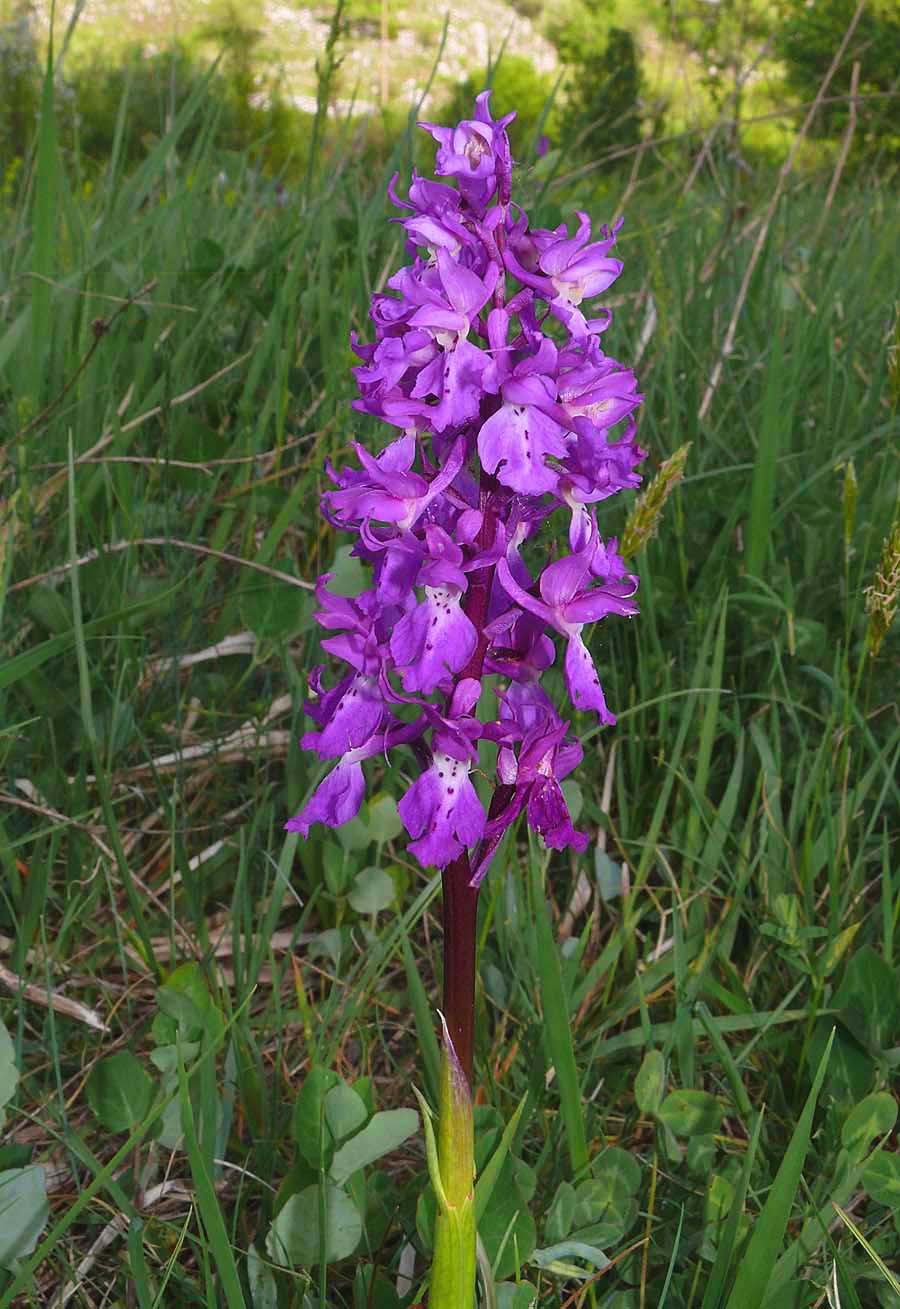
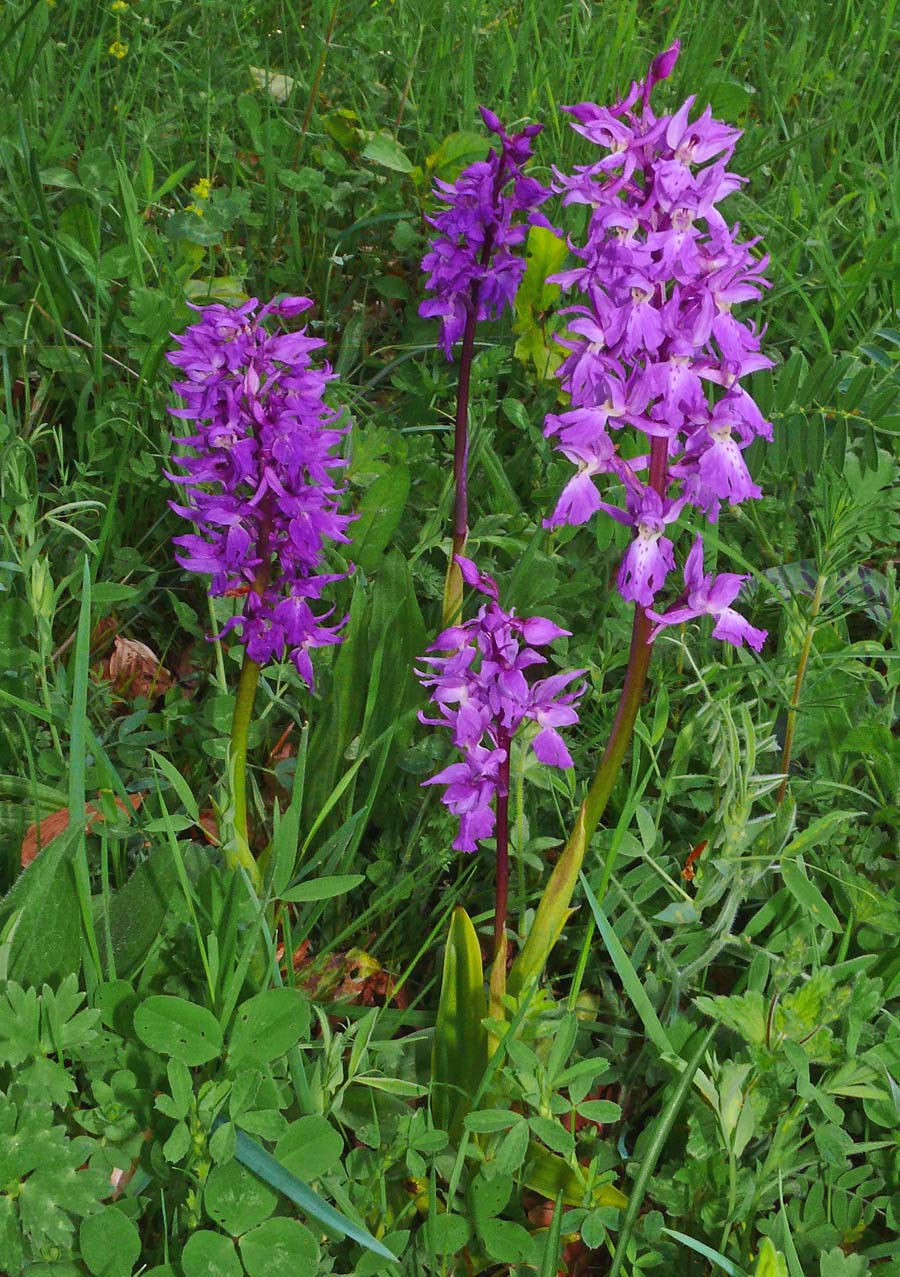
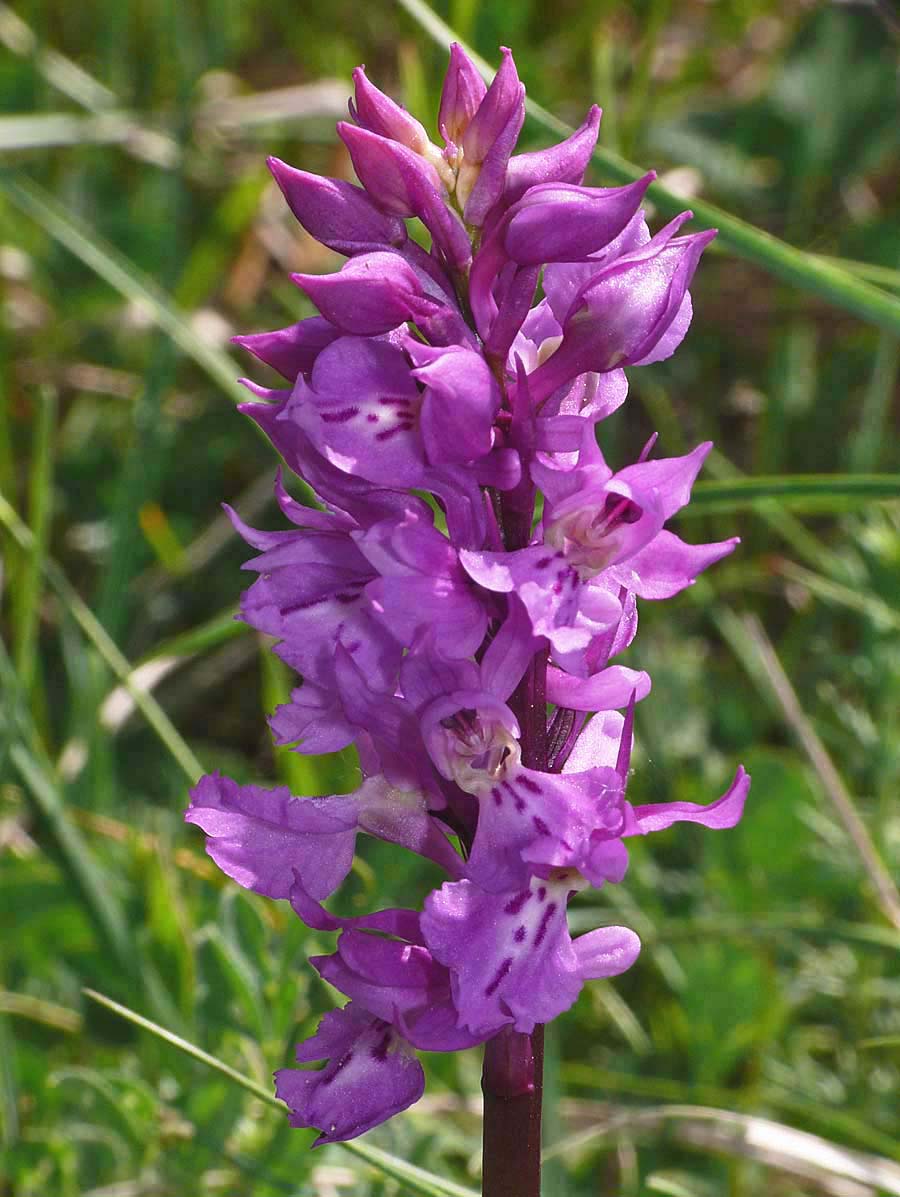
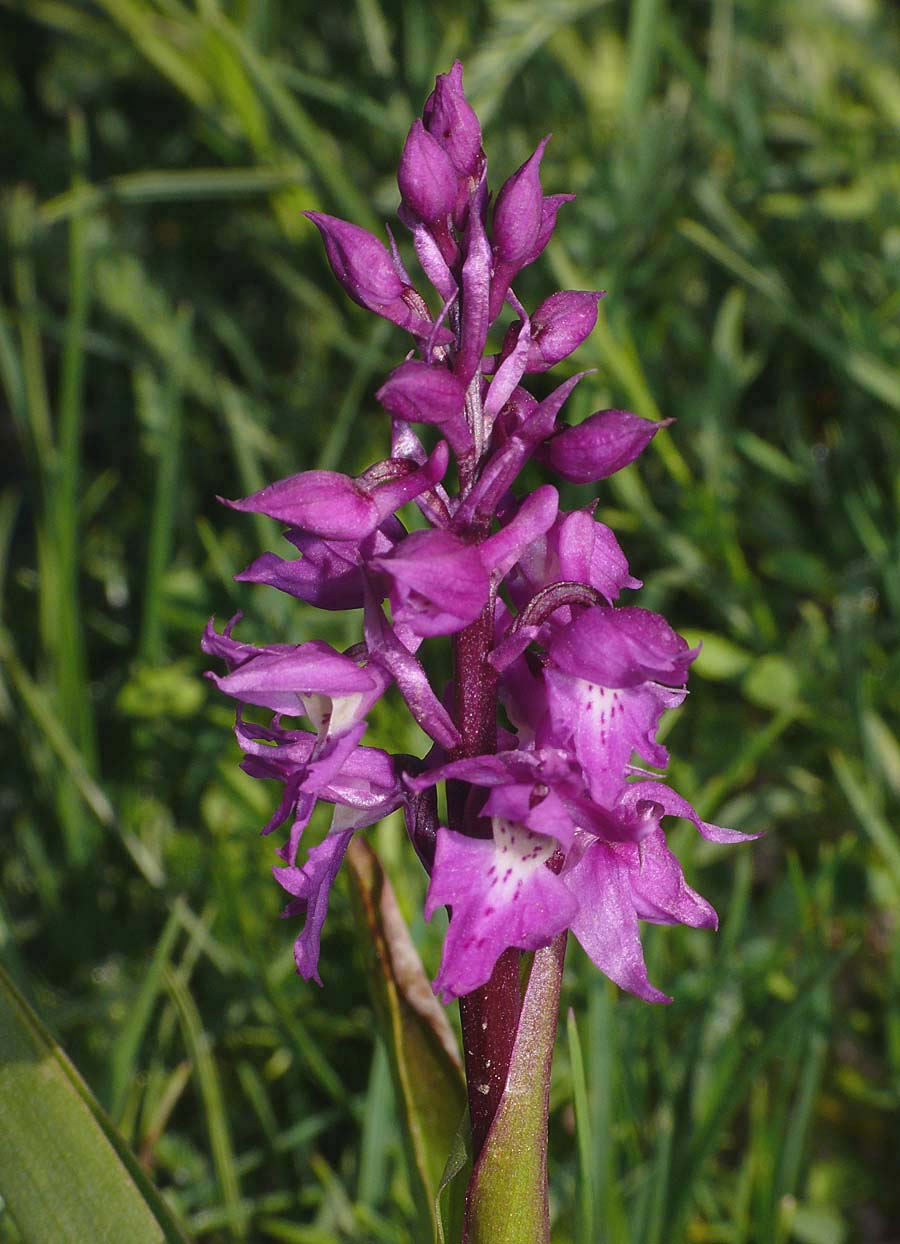
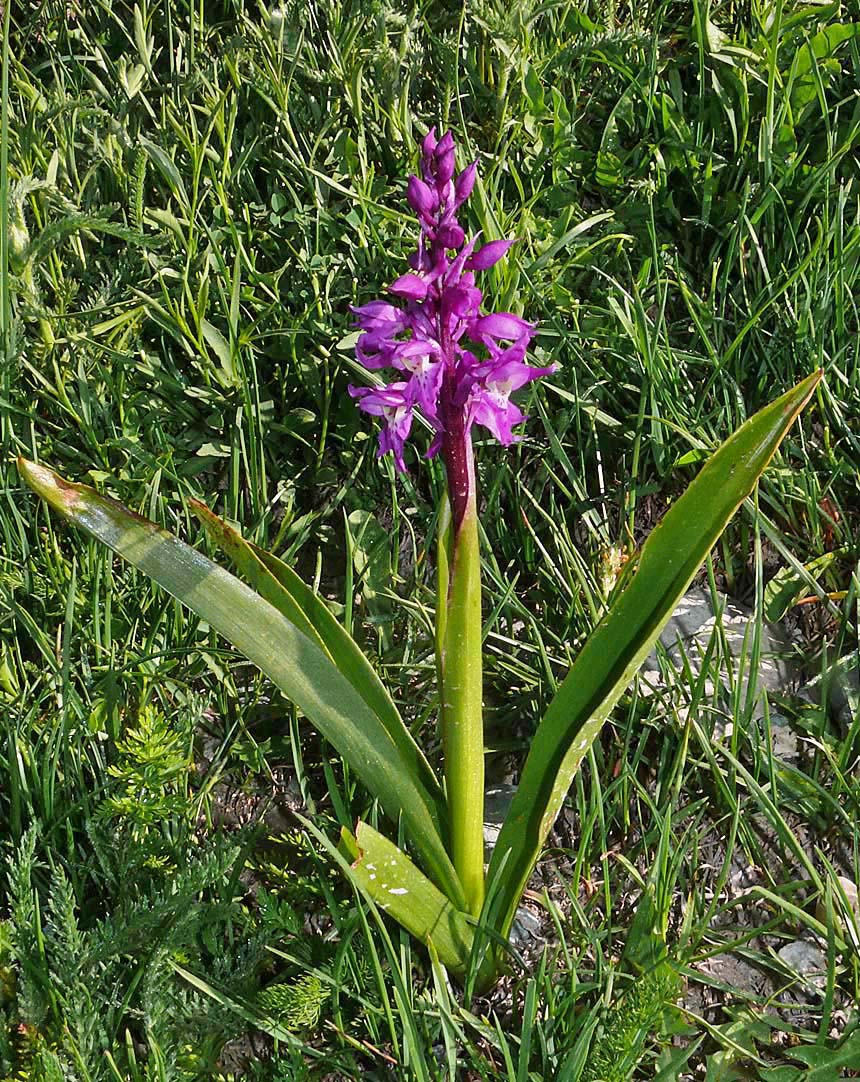
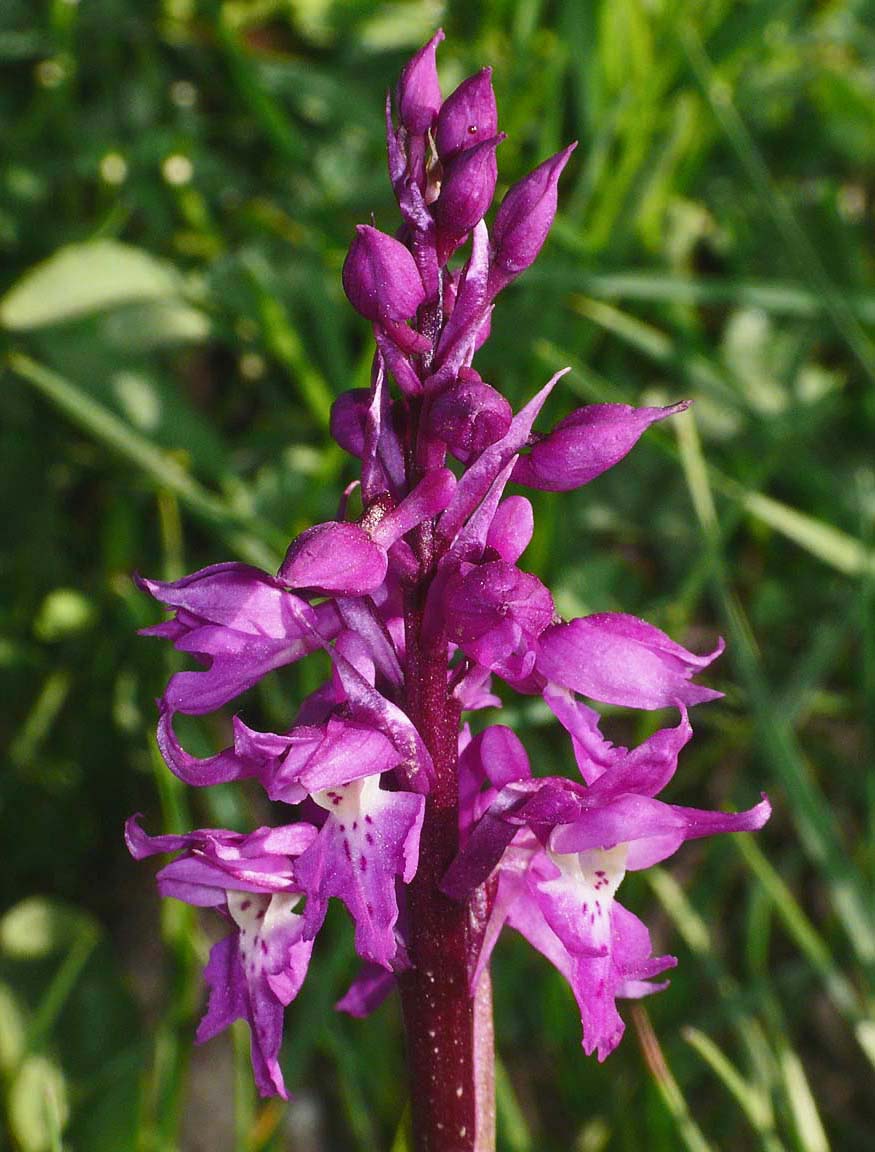
This final group of photographs record plants from a 2000 metre mountain col in eastern France, which generally resemble O. ovalis but lack any red stem speckling.
.