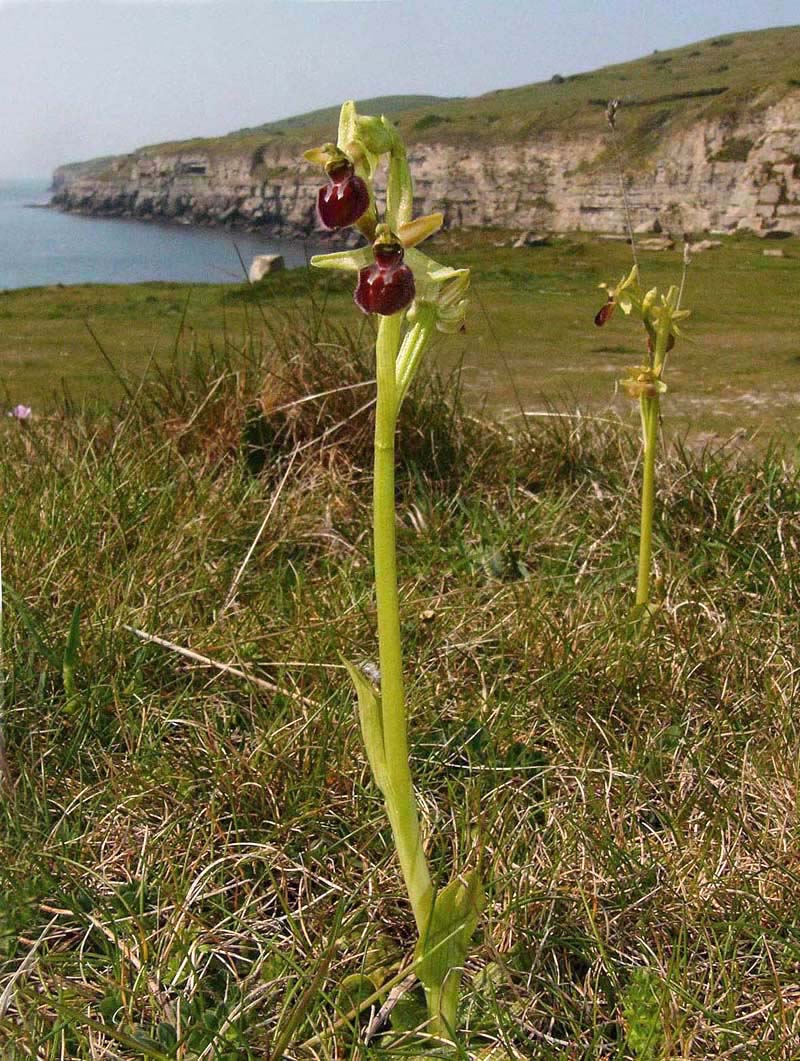
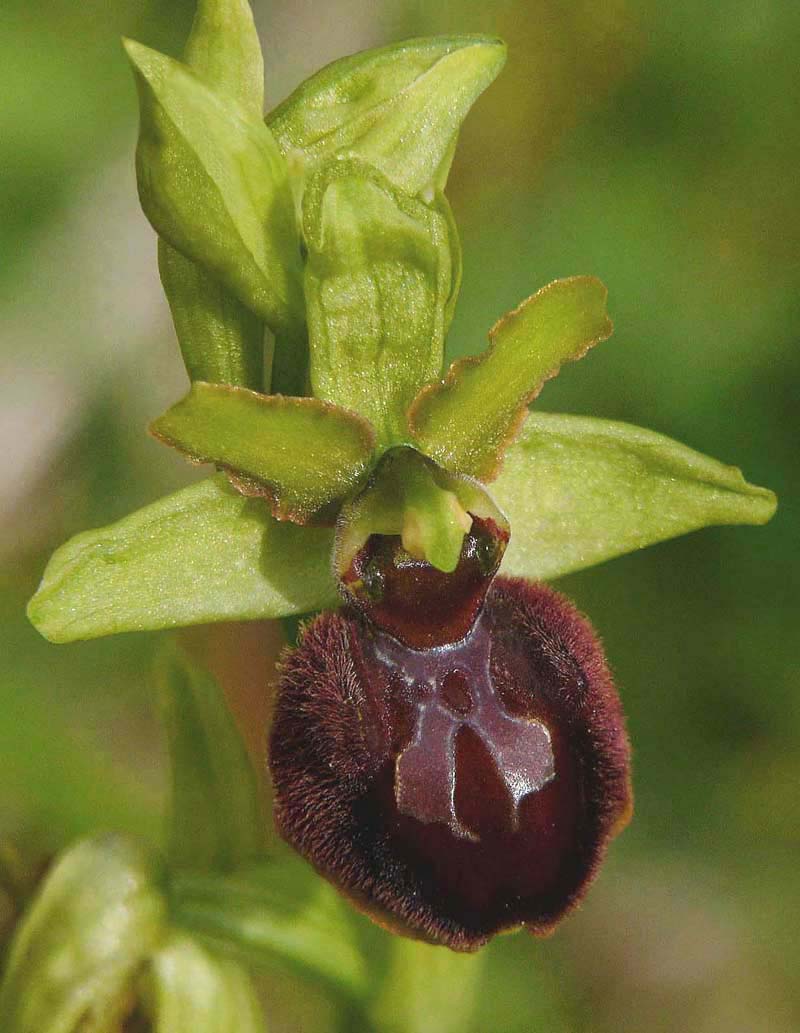
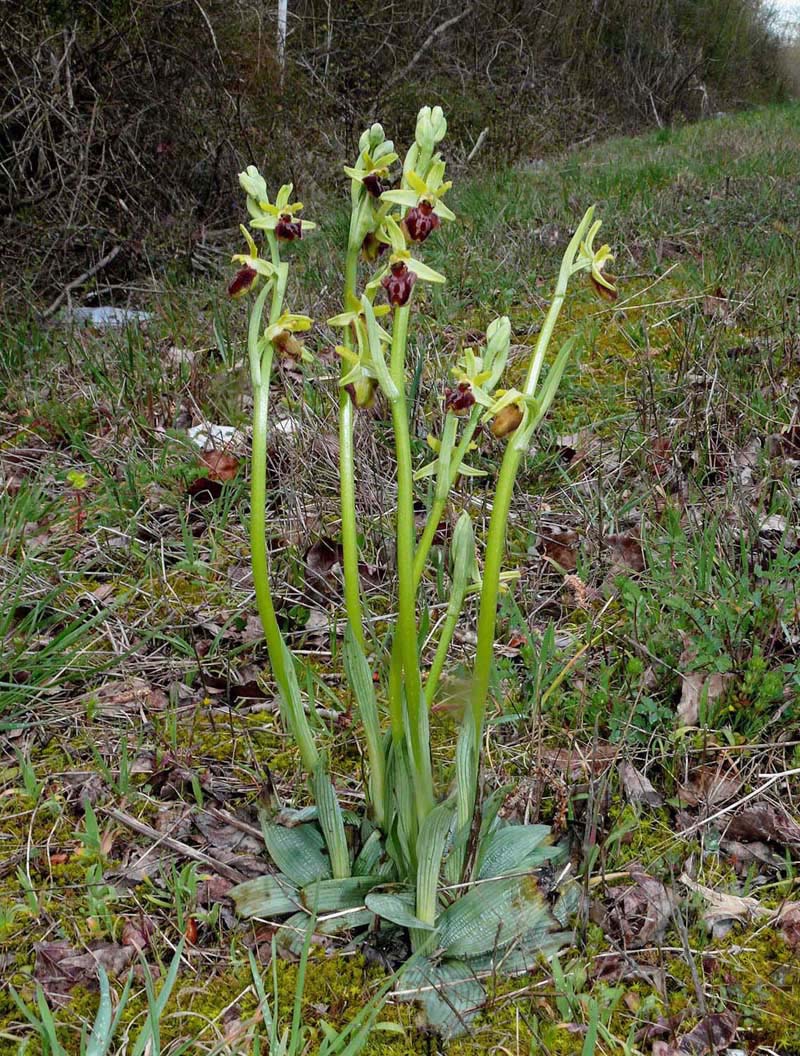
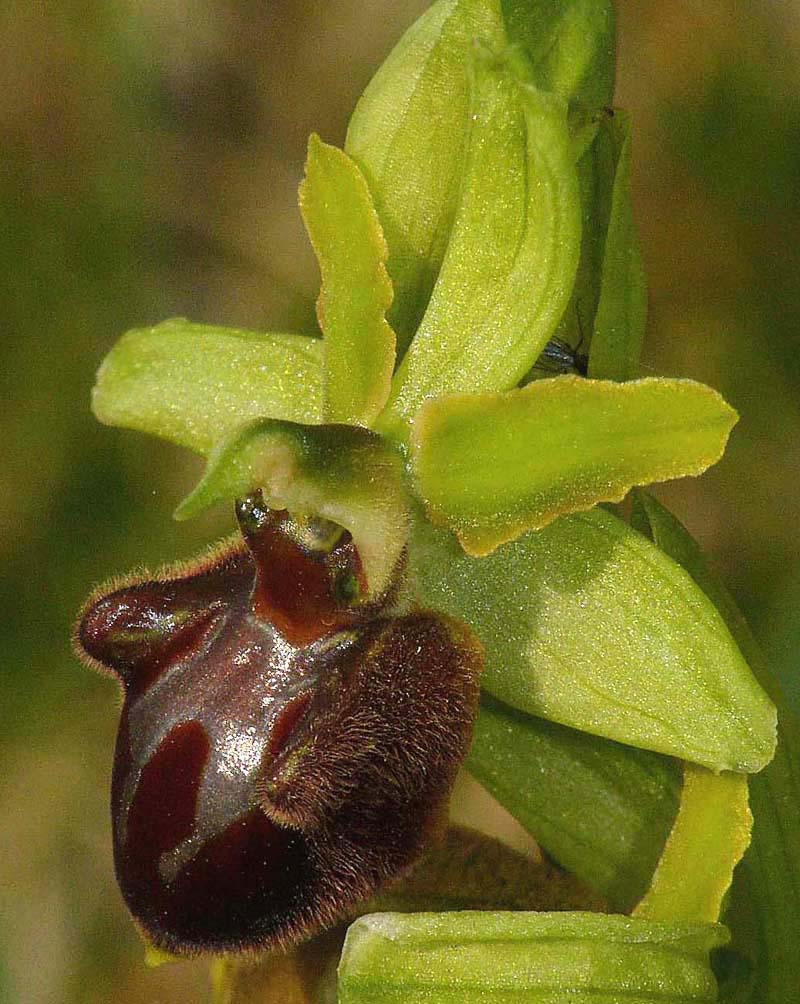
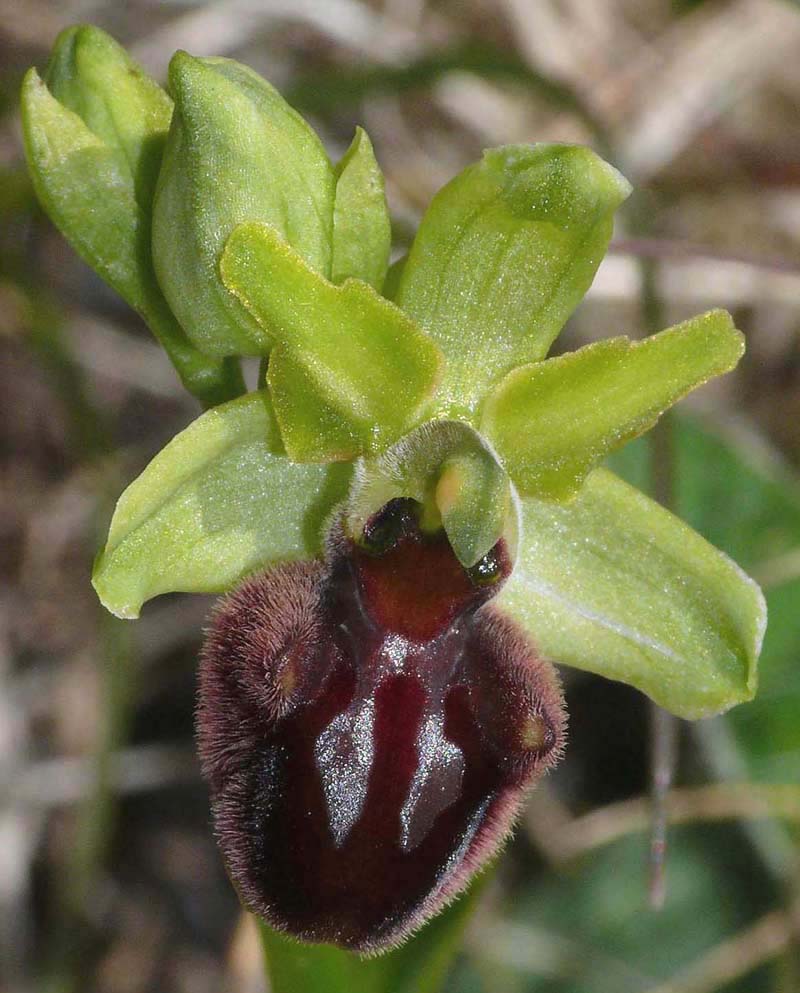
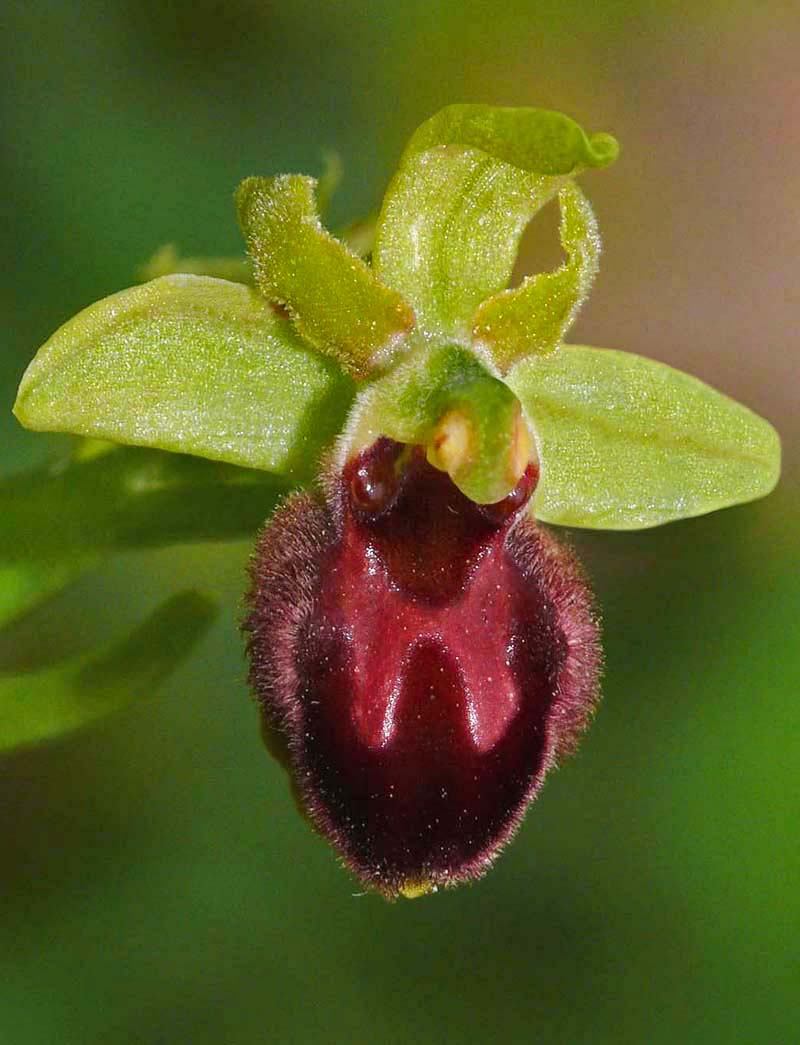
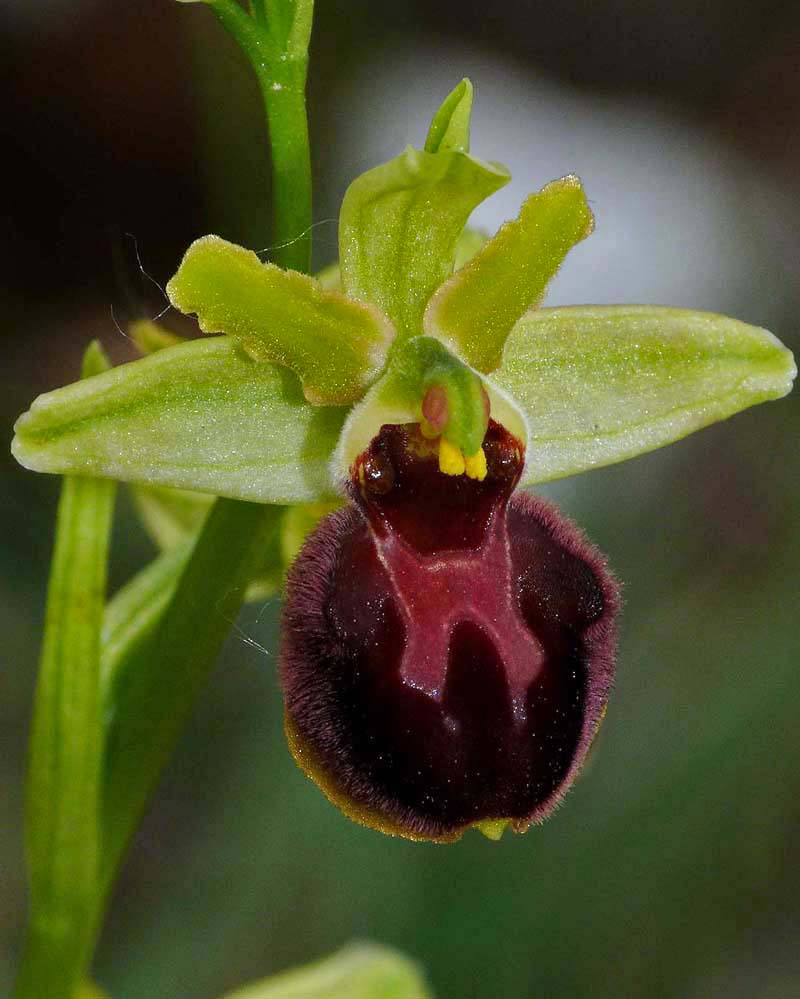
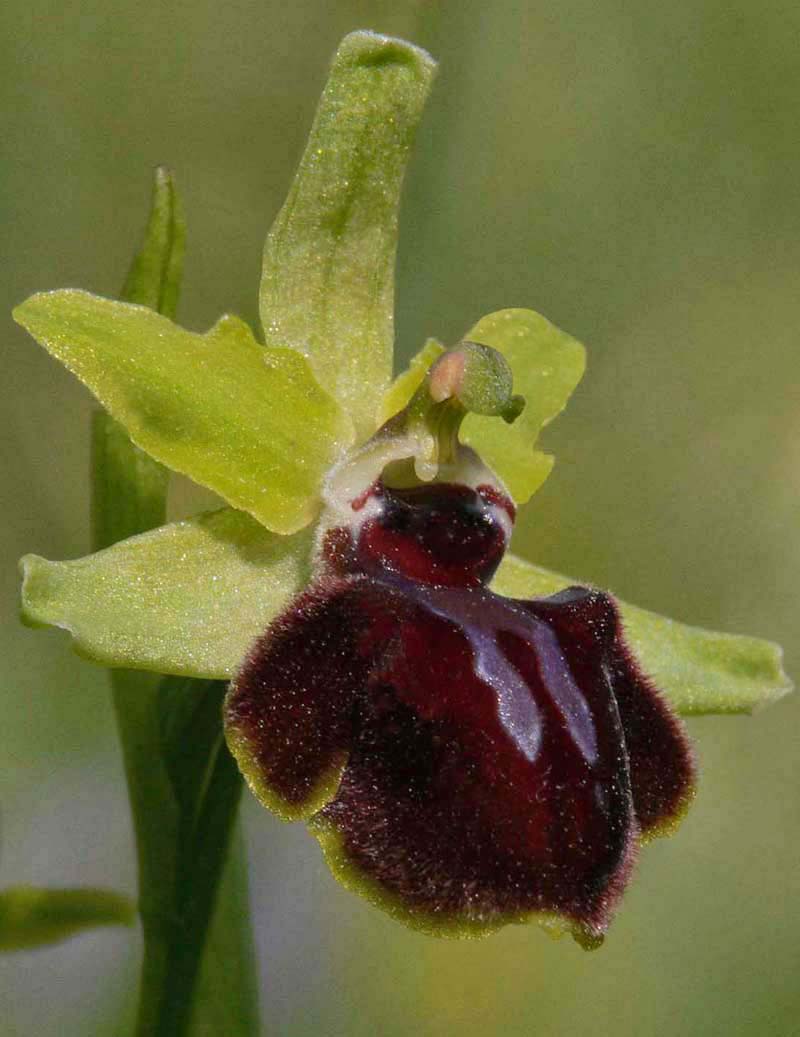
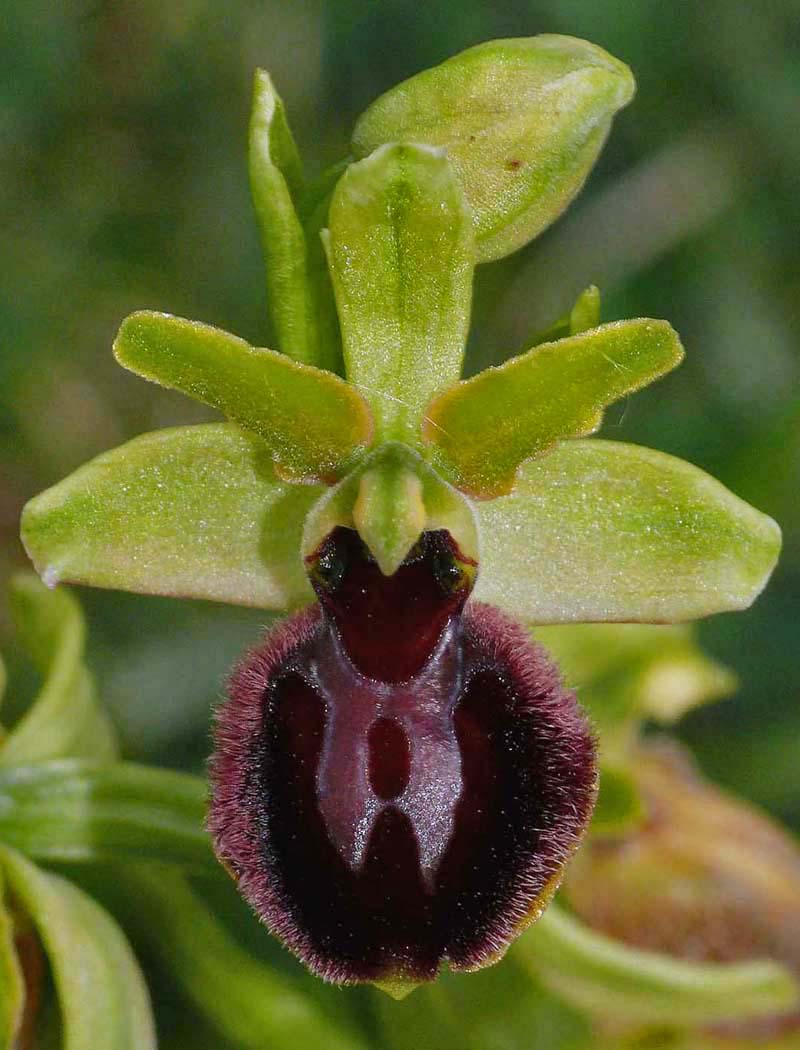
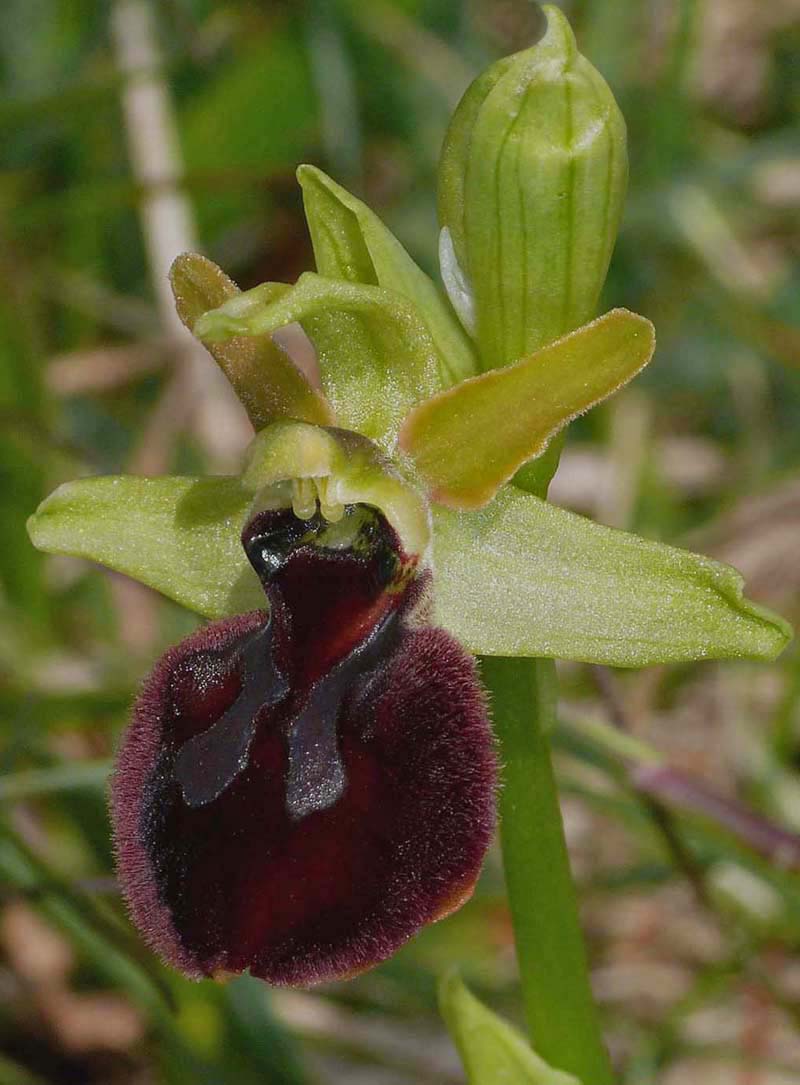
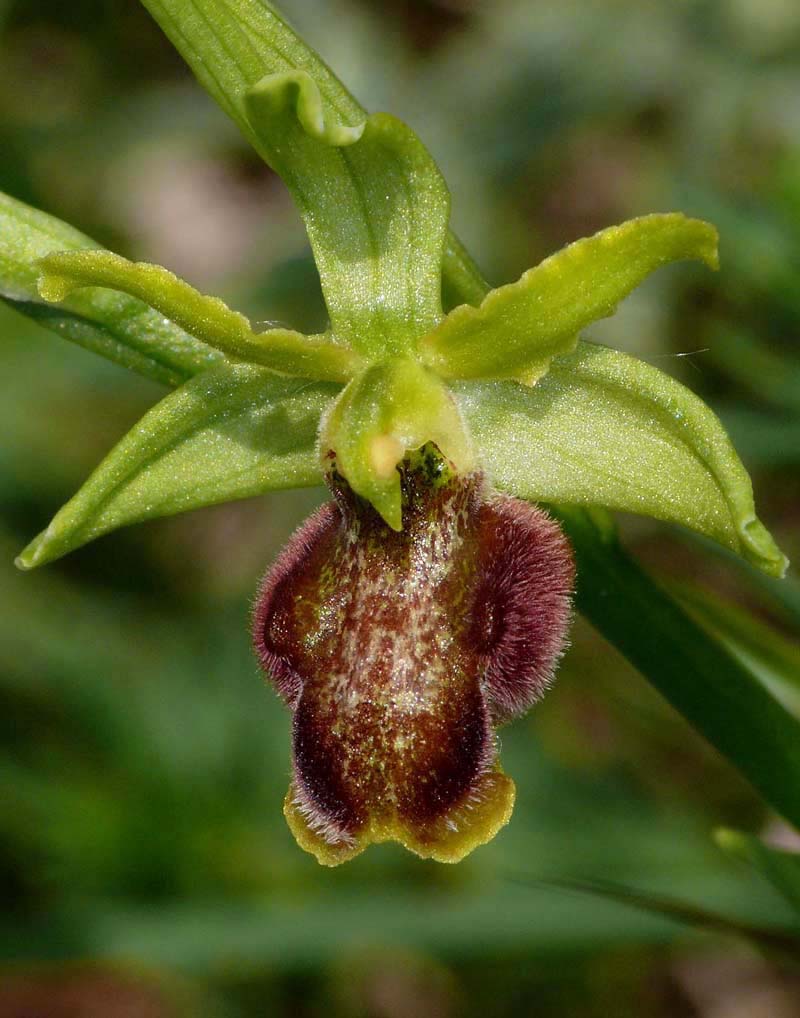
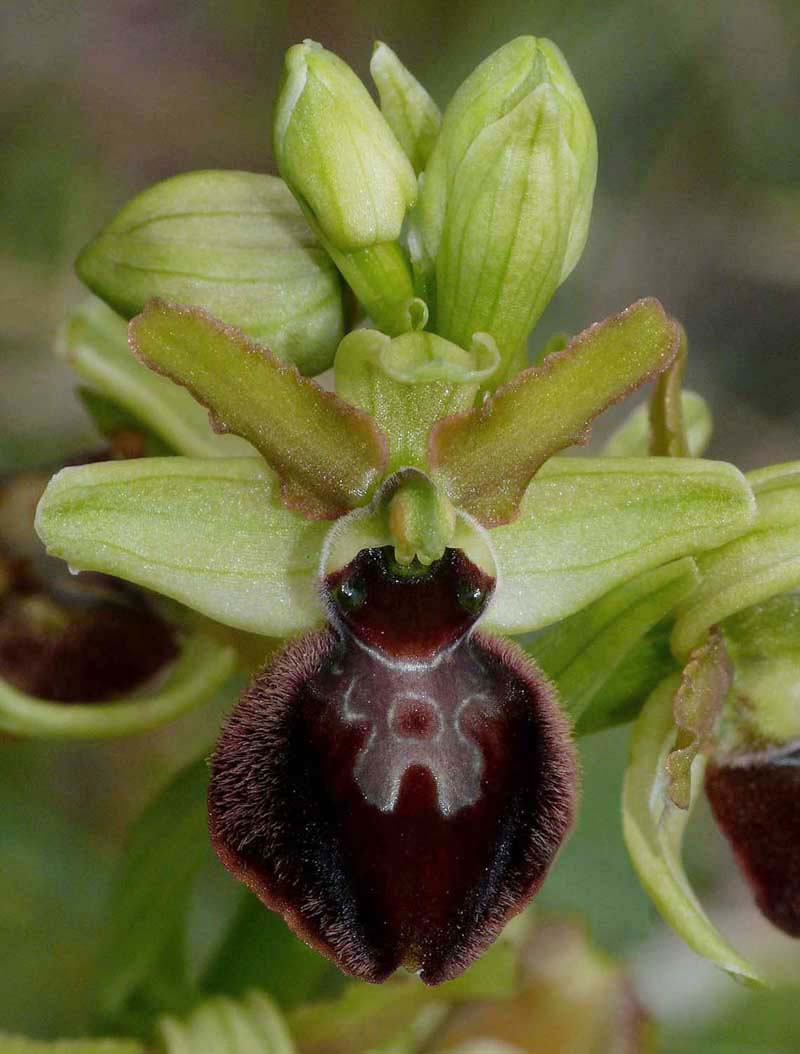
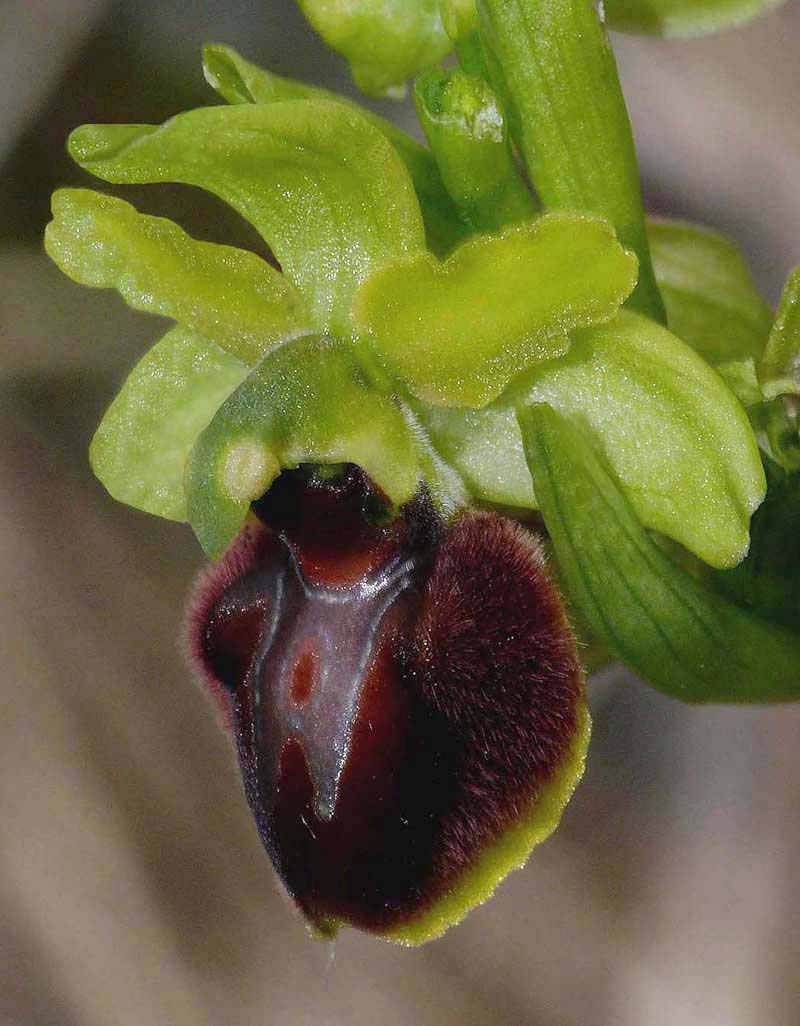
O. sphegodes was first described by Miller from England in 1768 and despite it's familiar common name, the Early Spider Orchid's latin name refers to it's resemblance to a wasp.
This species has a wide distribution, though due to a legion of sub-species, varieties and similar Ophrys, its precise range is difficult to delineate with any certainty. Its northerly range is however relatively well known due to the absence of any similar Ophrys with which to confuse it. Belgium, southern England and Central Germany form the northernmost outposts, where, although highly localised can be quite frequent.
To the south it is thought to reach southern Spain and in the east it's known to occur, albeit very uncommonly in Corfu. Its choice of habitat is wide but never strays from alkaline substrates and avoids competitive, rank vegetation. In England O. sphegodes is exclusively confined to the kinder climatic conditions found in the coastal environments of the south of the country. The species maintains significant populations in the Purbeck Hills of Dorset and notably on the Channel Tunnel chalk spoil of Samphire Hoe in Kent.
In the north of its range it vies with Orchis mascula to be the first orchid of Spring and on the continent can appear as early as mid March, thus justifying it's common name. One of the key distinguishing features of O. sphegodes is the restricted basal field and the constricted base to the stigmatic cavity. In the south of its range both natural variation and gene ingression can cause great difficulties with identification. All the pictures are from the two previously mentioned UK locations, with the exception of photos 6 and 7 which are red phase examples from Tuscany and 11 which is an aberrant plant from Umbria.