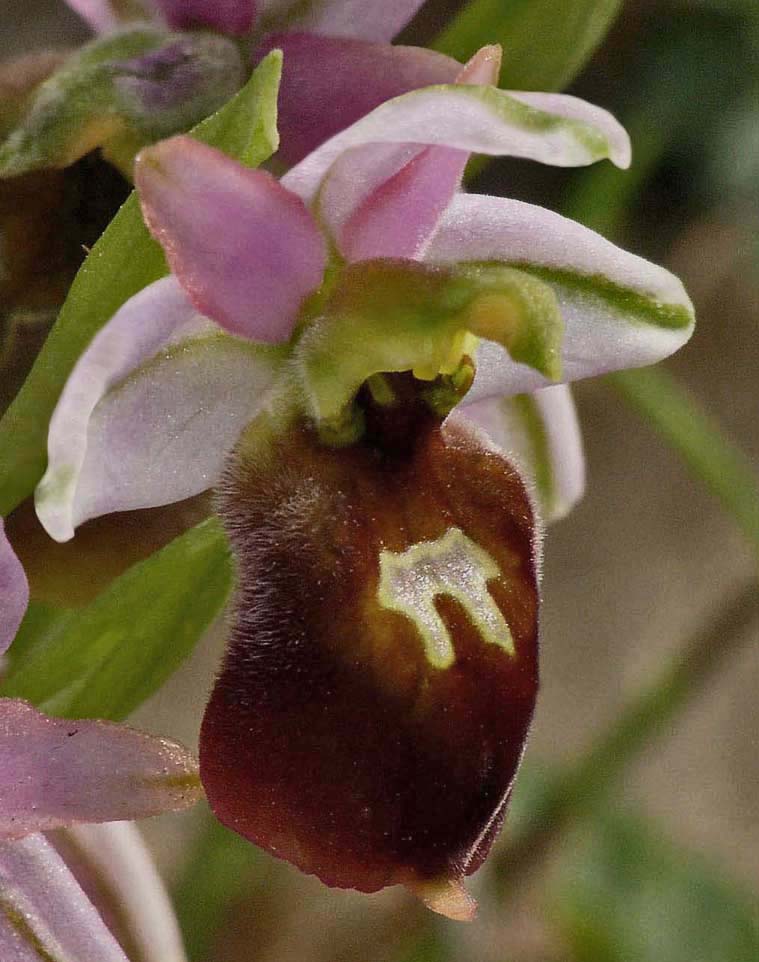
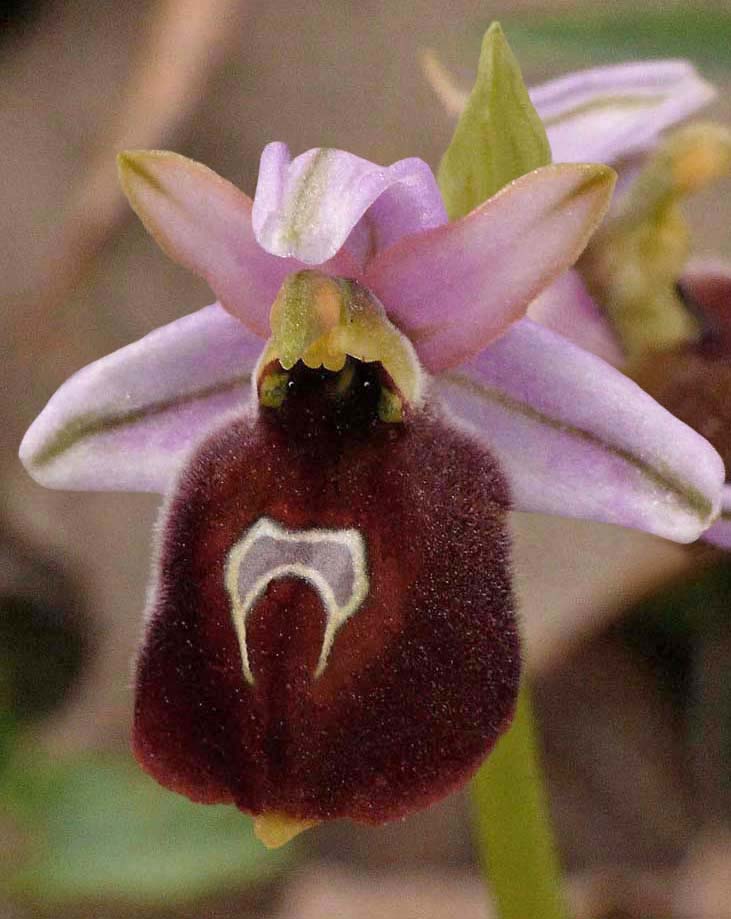
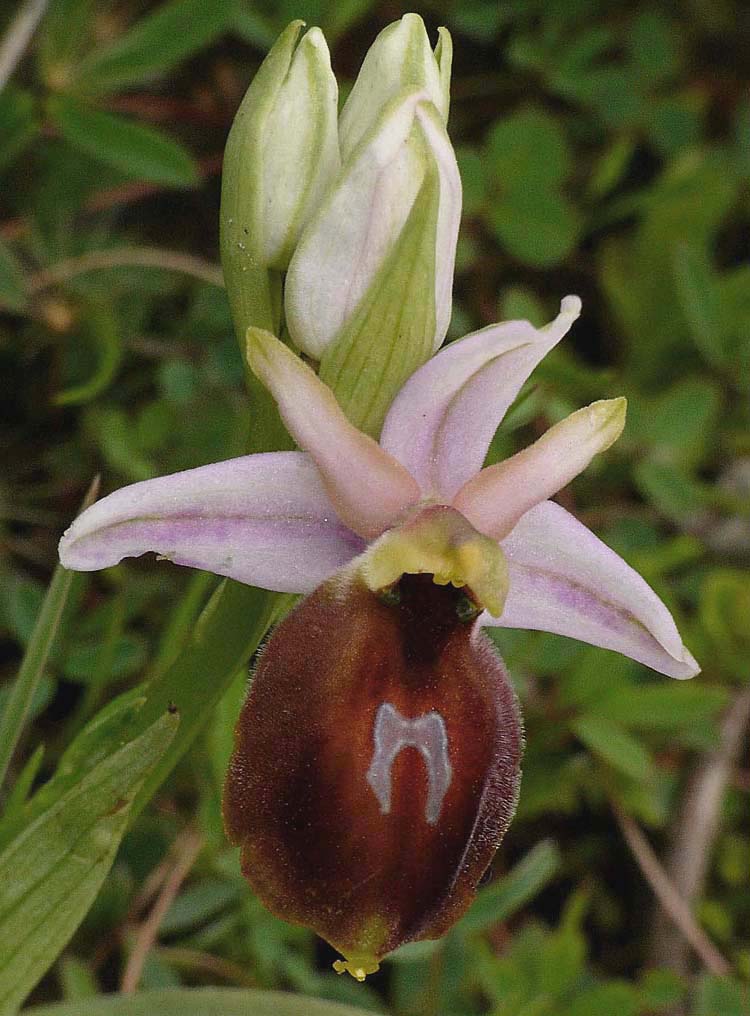
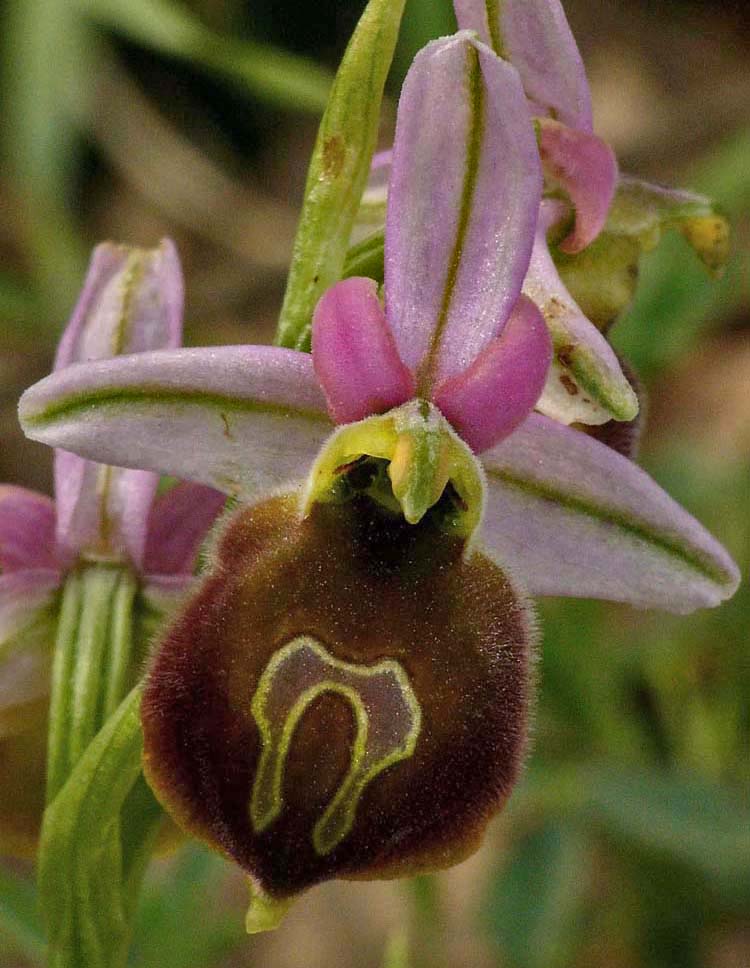
O. lesbis was first described by Golz and Reinhard in 1989 having previously been regarded as merely a variety of O. argolica. Despite
its name, O. lesbis
is not endemic to Lesbos and may
be found, albeit uncommonly, on neighbouring Aegean islands as well as the Bodrum peninsula in southwest Anatolia.
It is
however a true rarity in all its stations and is perhaps at its most
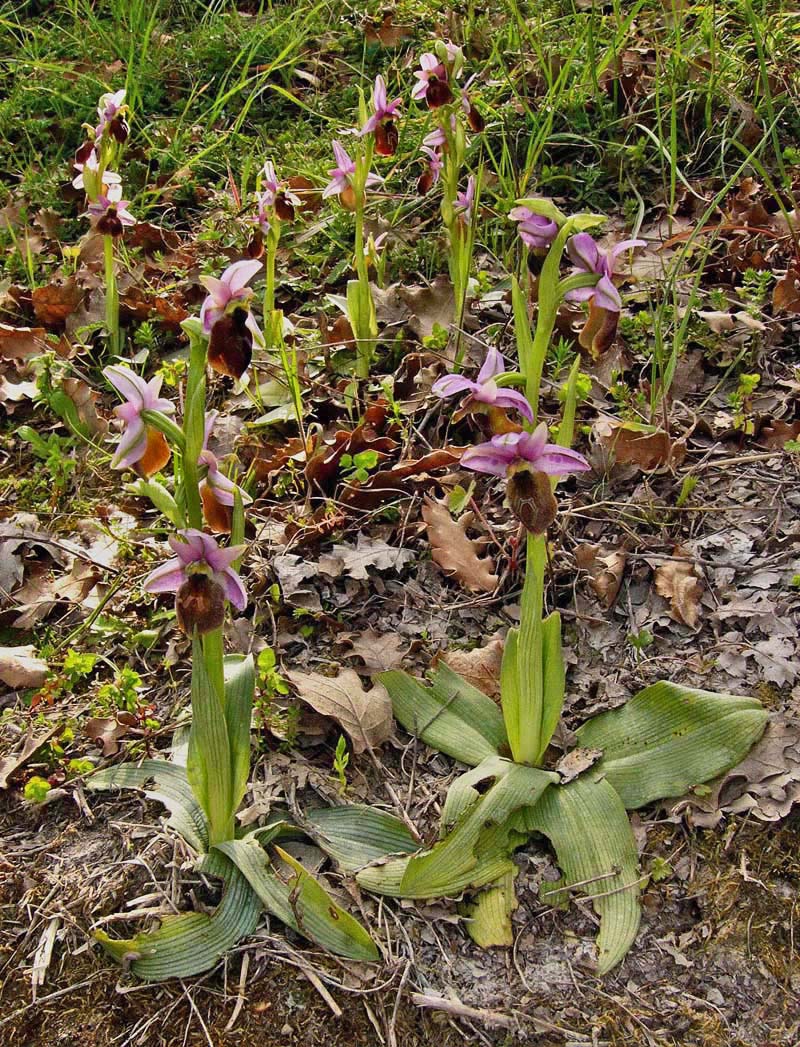
frequent in the Andissa region of northwest Lesbos, where all these photos were taken.
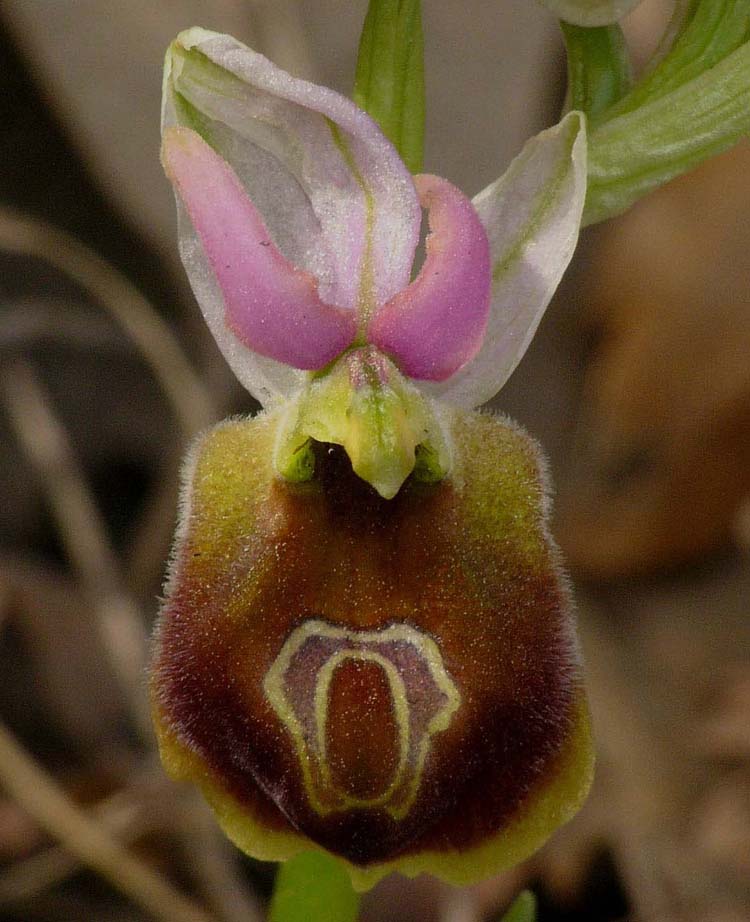
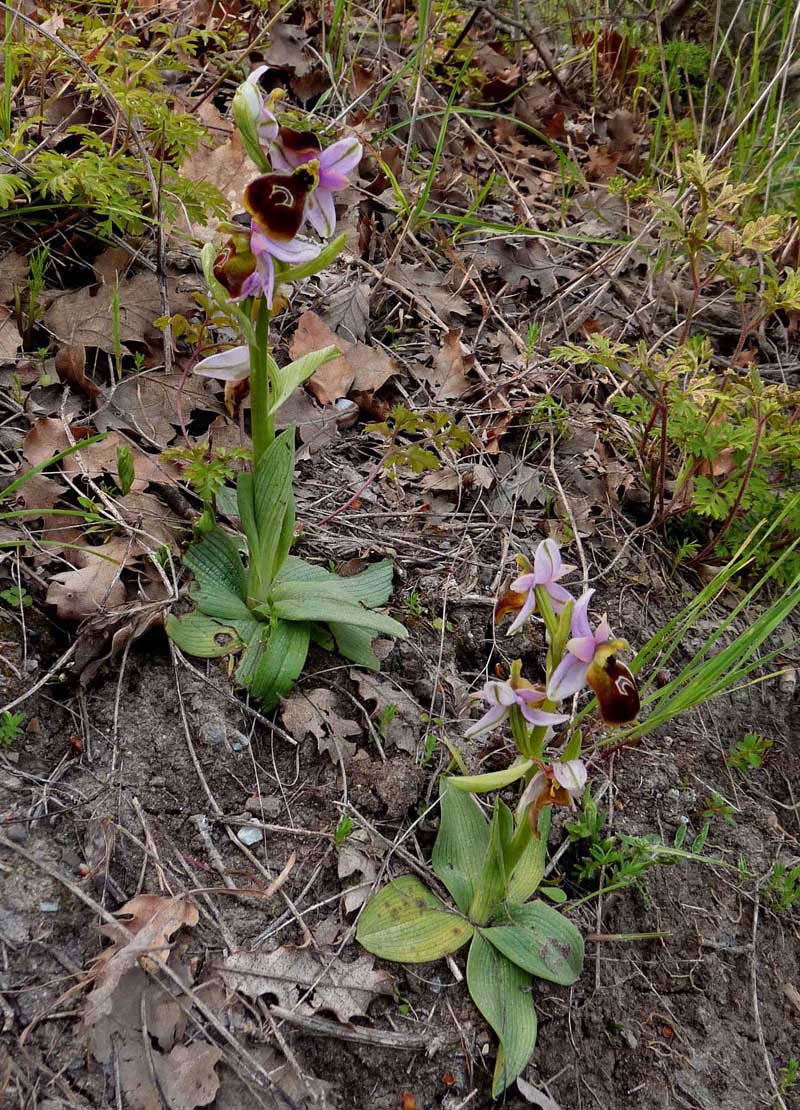
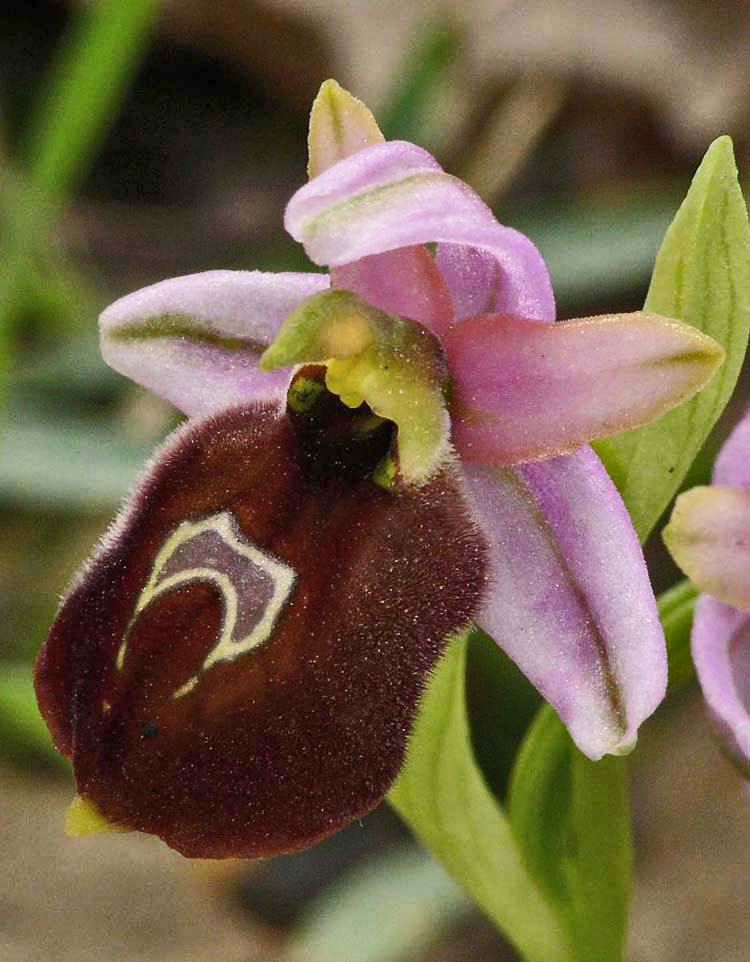
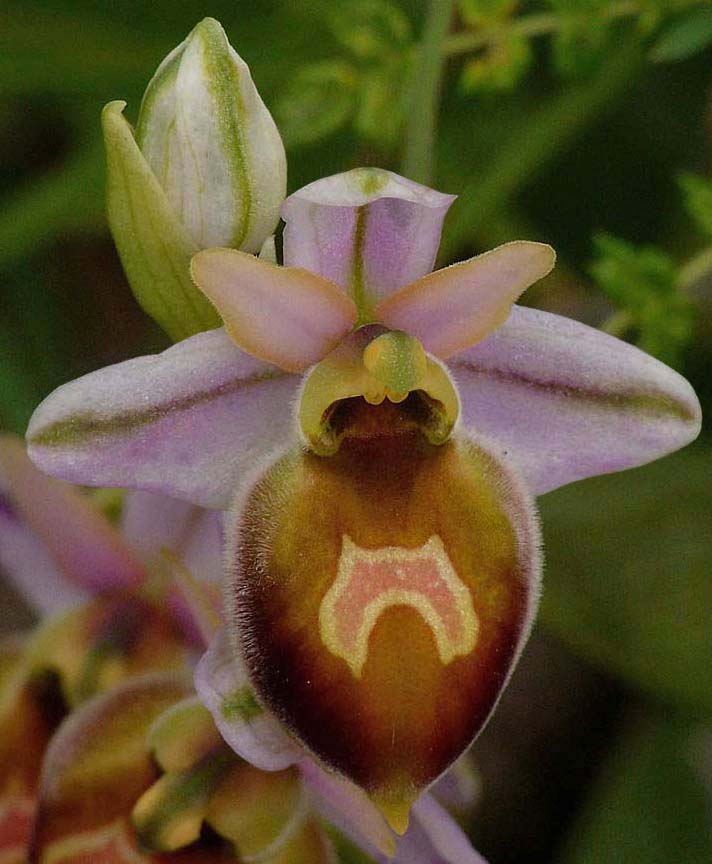
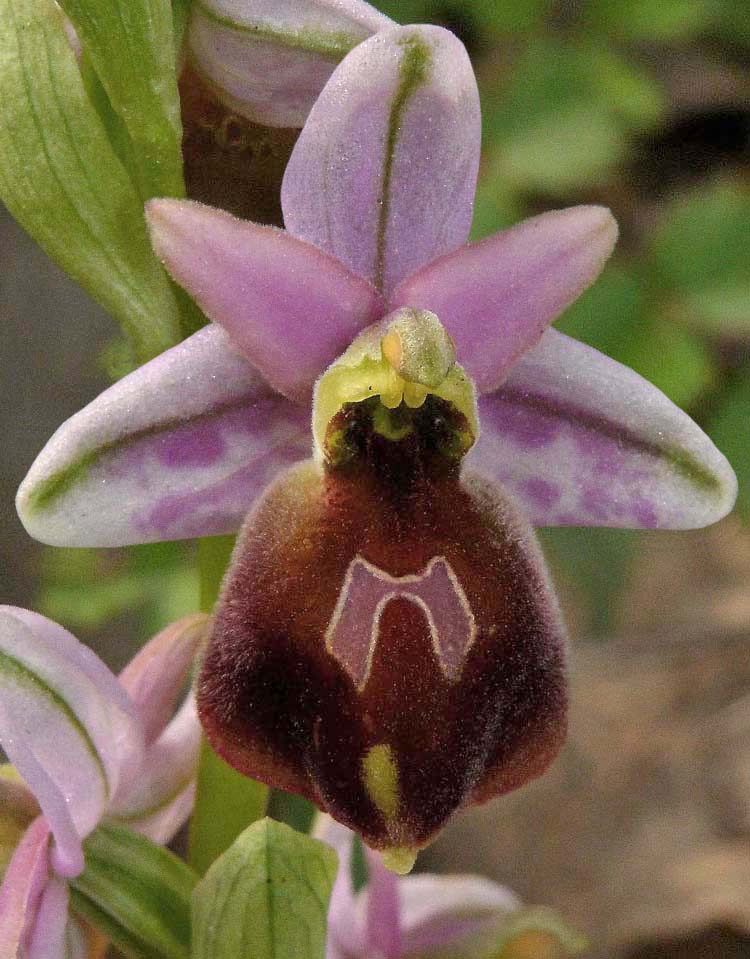
This species generally grows in small colonies and is only found in significant numbers where conditions are optimal. It prefers alkaline soils in either full sun or mid shade but seems to show a particular liking for moister substrates with light tree covering or other shade. This may be open oak woodland or as with the illustrations here, mixed pine. On the Aegean islands, O. lesbis is unlikely to be confused with other species, although there exists a small overlap of range with the similar O. lucis in both Rhodes and Anatolia. This species is a member of the O. argolica group, which although growing to a maximum of 30cms and producing up to ten flowers, is more normally a fairly low, sturdy plant with fewer than five. It can be variable in appearance and as was the case with the population illustrated here, will readily hybridize with other Ophrys. A single seemingly pure plant of O. villosa was growing amongst the colony and many of the nearby O. lesbis showed the unmistakable characteristics of the interloper, the second photograph depicts one of the more obvious examples of this hybridization.
The pictures date from the first week of April.
This species generally grows in small colonies and is only found in significant numbers where conditions are optimal. It prefers alkaline soils in either full sun or mid shade but seems to show a particular liking for moister substrates with light tree covering or other shade. This may be open oak woodland or as with the illustrations here, mixed pine. On the Aegean islands, O. lesbis is unlikely to be confused with other species, although there exists a small overlap of range with the similar O. lucis in both Rhodes and Anatolia. This species is a member of the O. argolica group, which although growing to a maximum of 30cms and producing up to ten flowers, is more normally a fairly low, sturdy plant with fewer than five. It can be variable in appearance and as was the case with the population illustrated here, will readily hybridize with other Ophrys. A single seemingly pure plant of O. villosa was growing amongst the colony and many of the nearby O. lesbis showed the unmistakable characteristics of the interloper, the second photograph depicts one of the more obvious examples of this hybridization.
The pictures date from the first week of April.
.