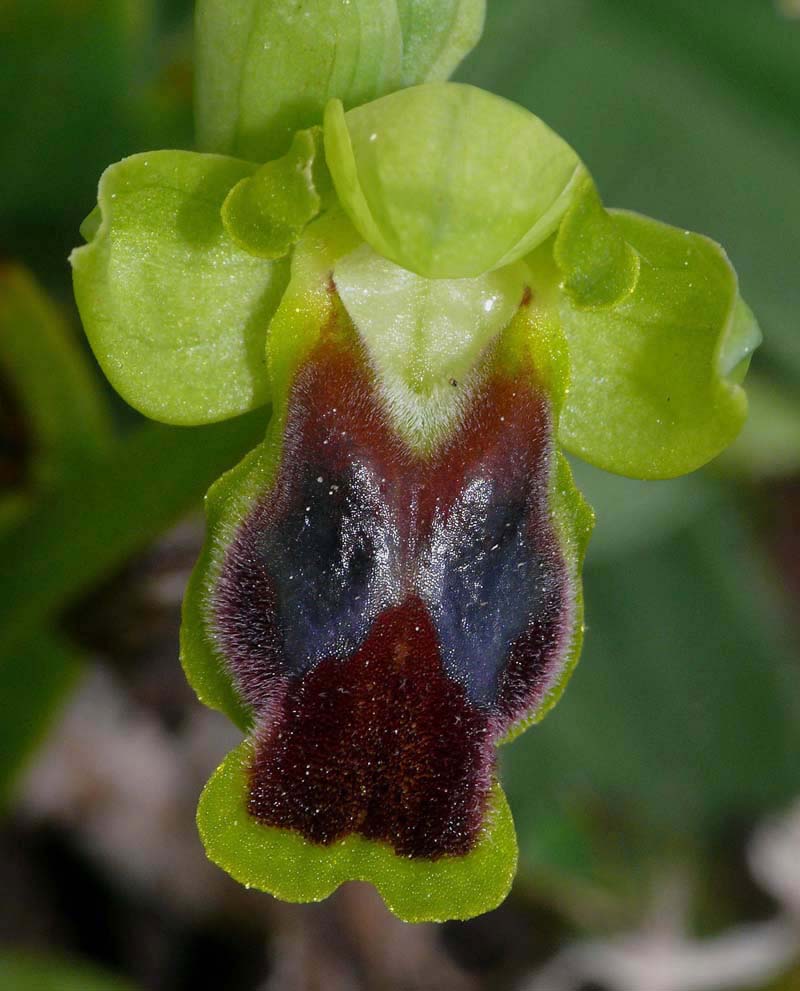
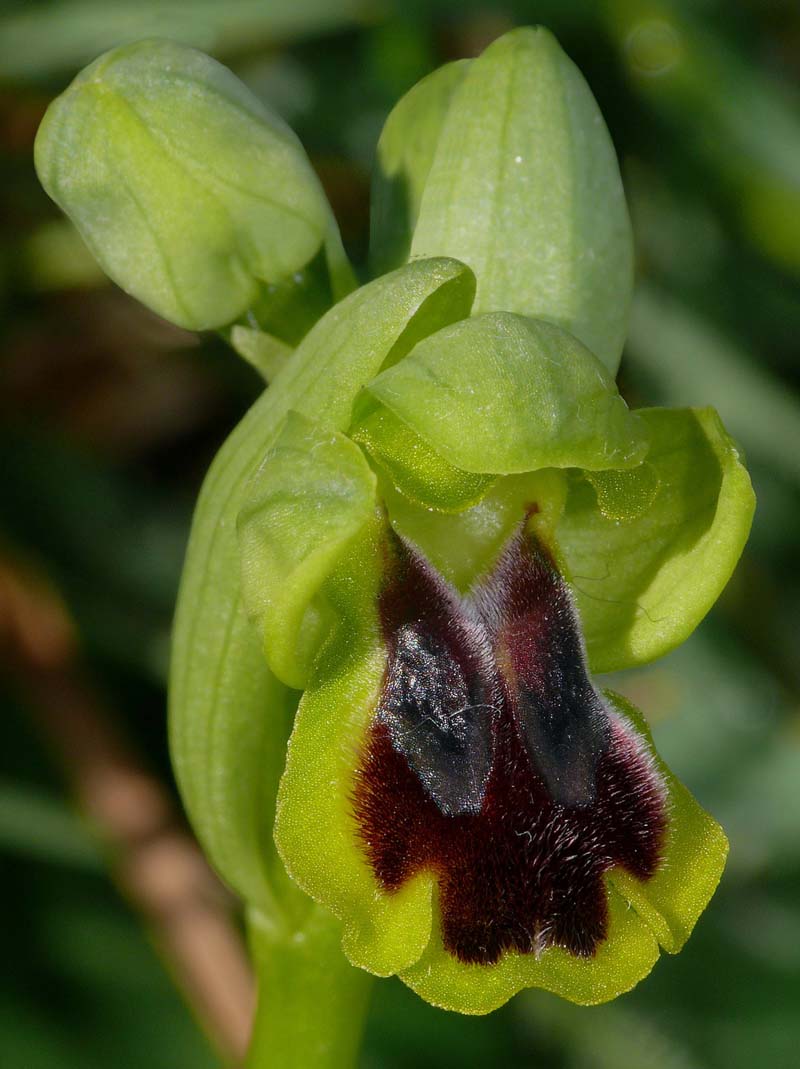
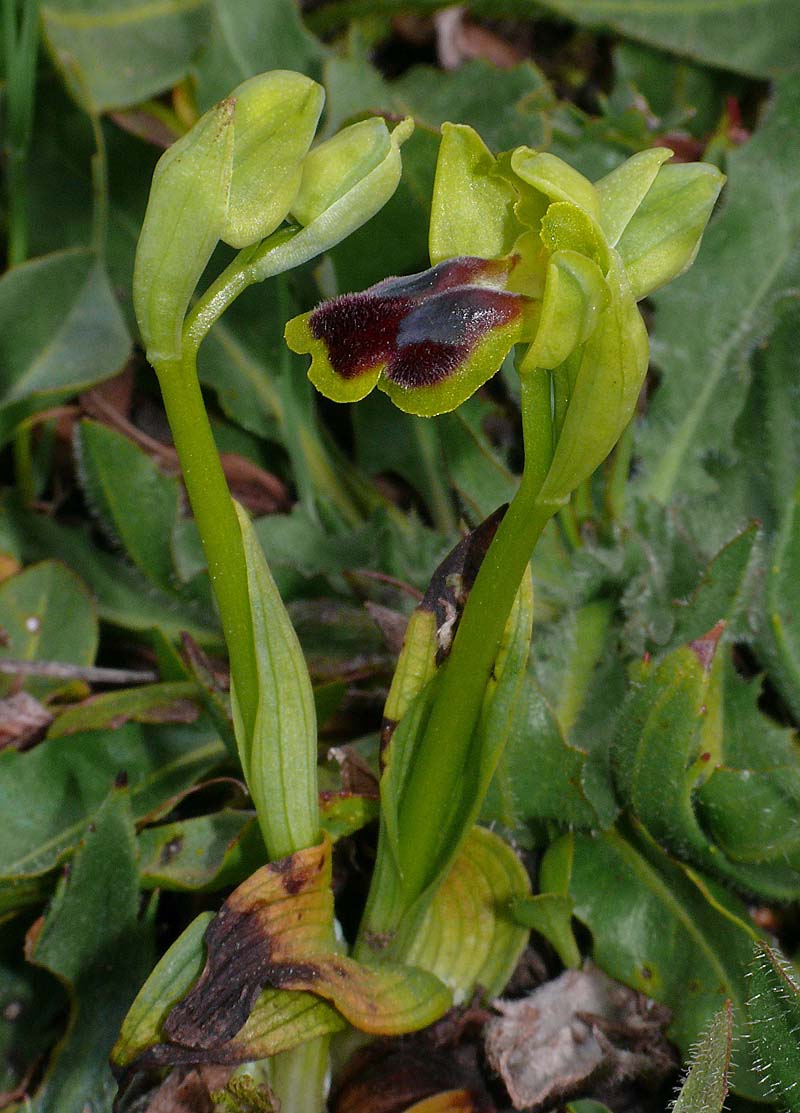
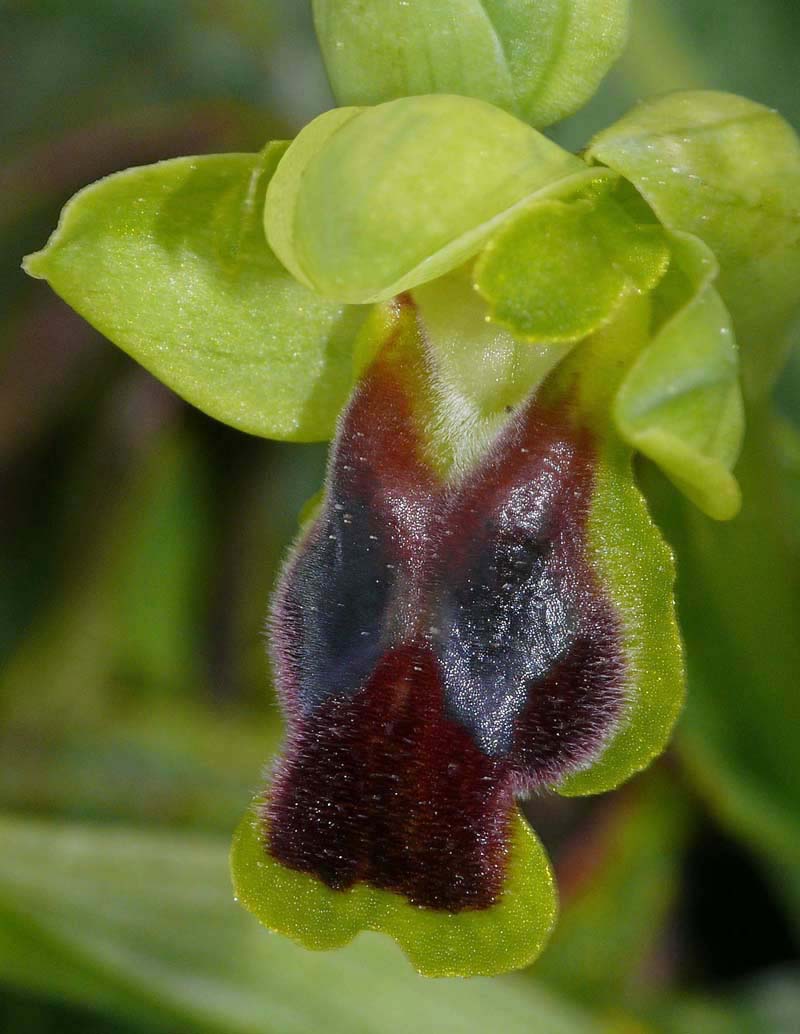
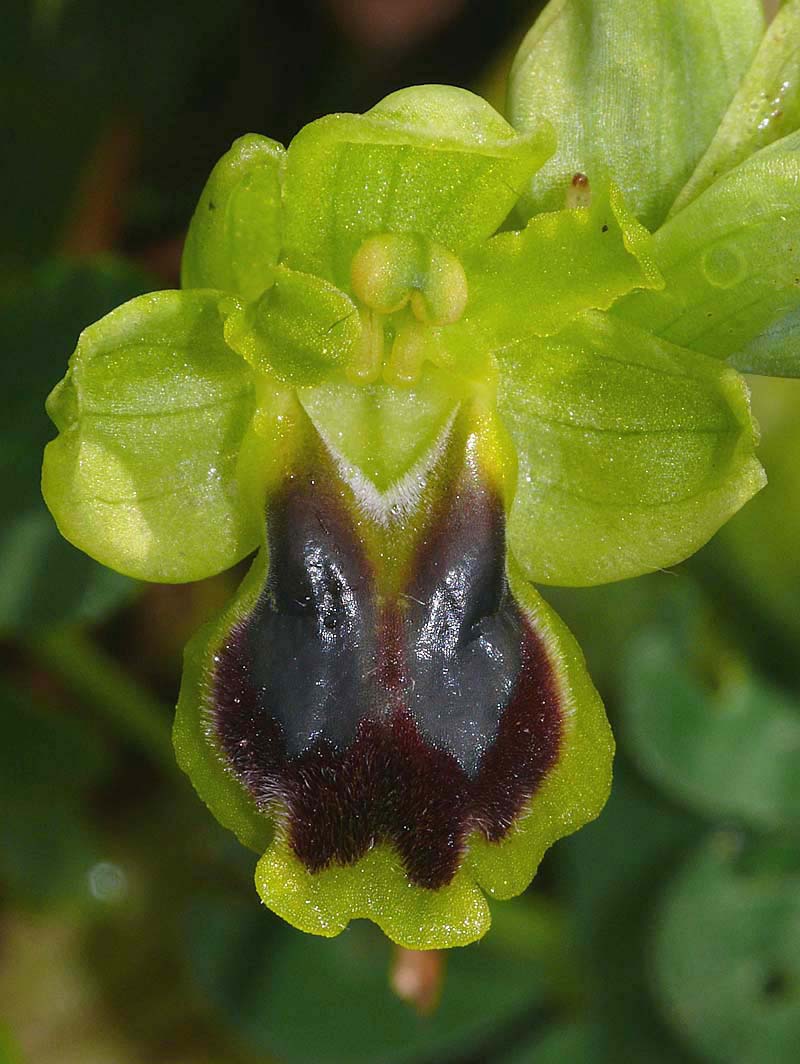
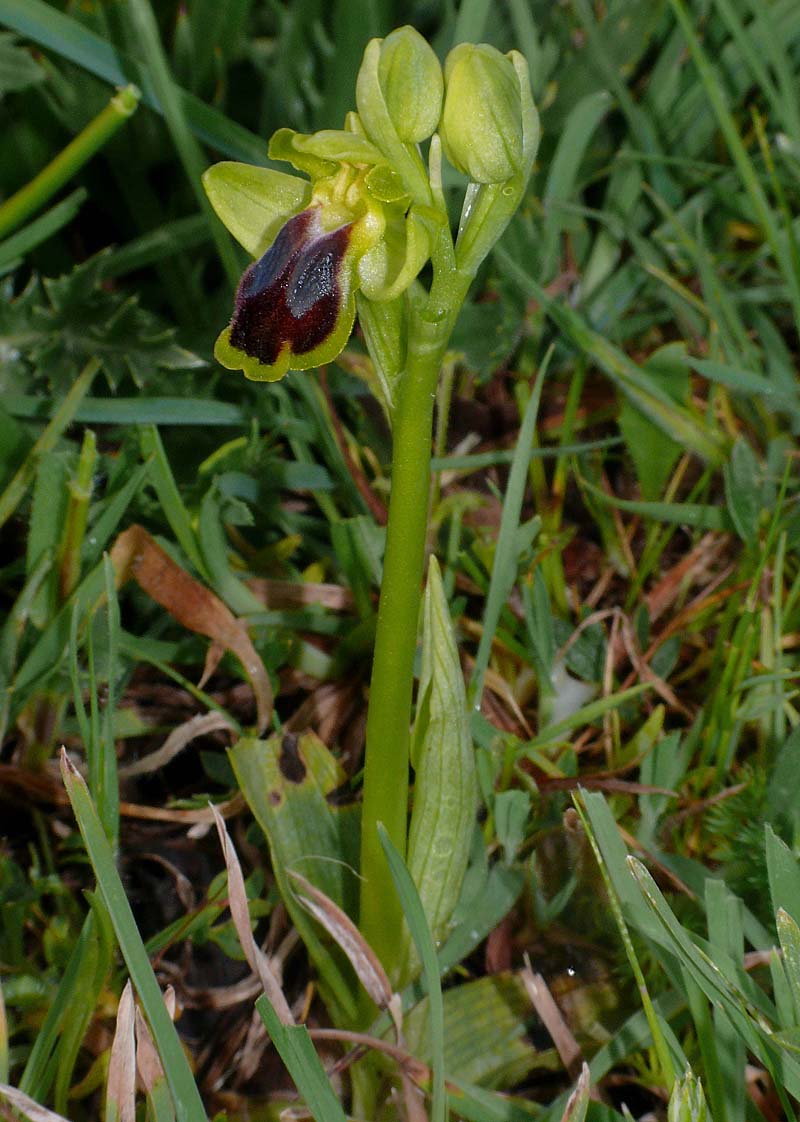
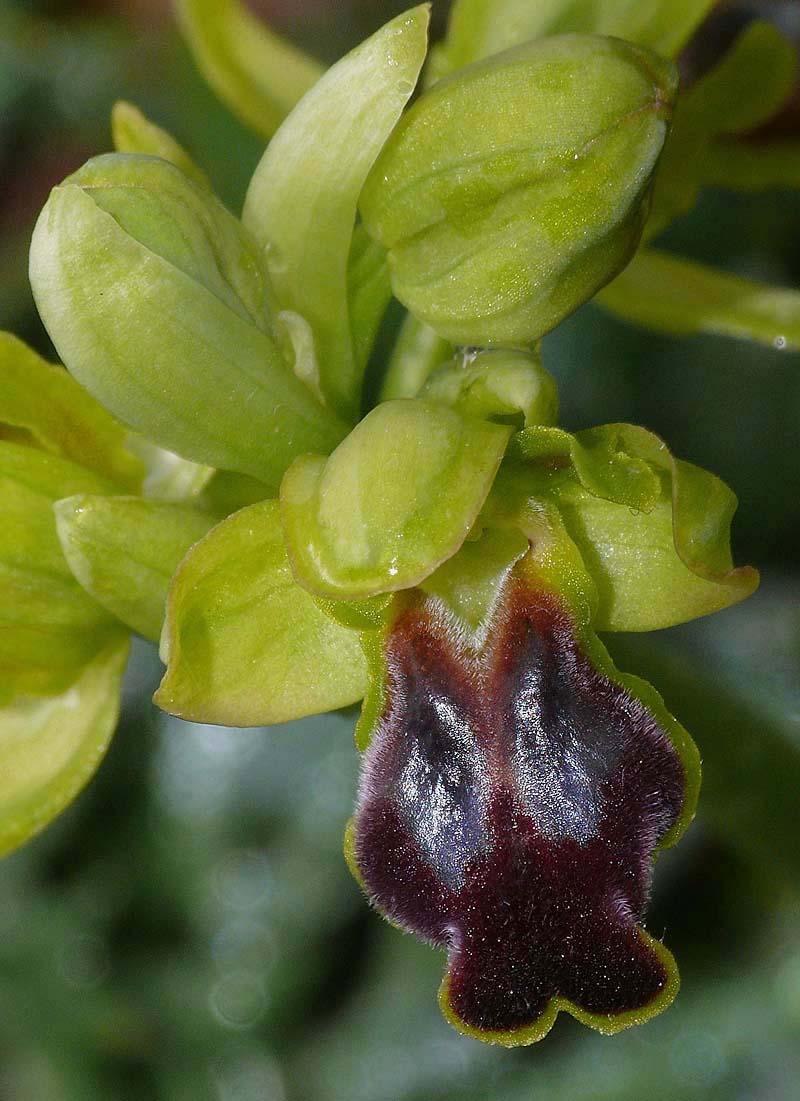
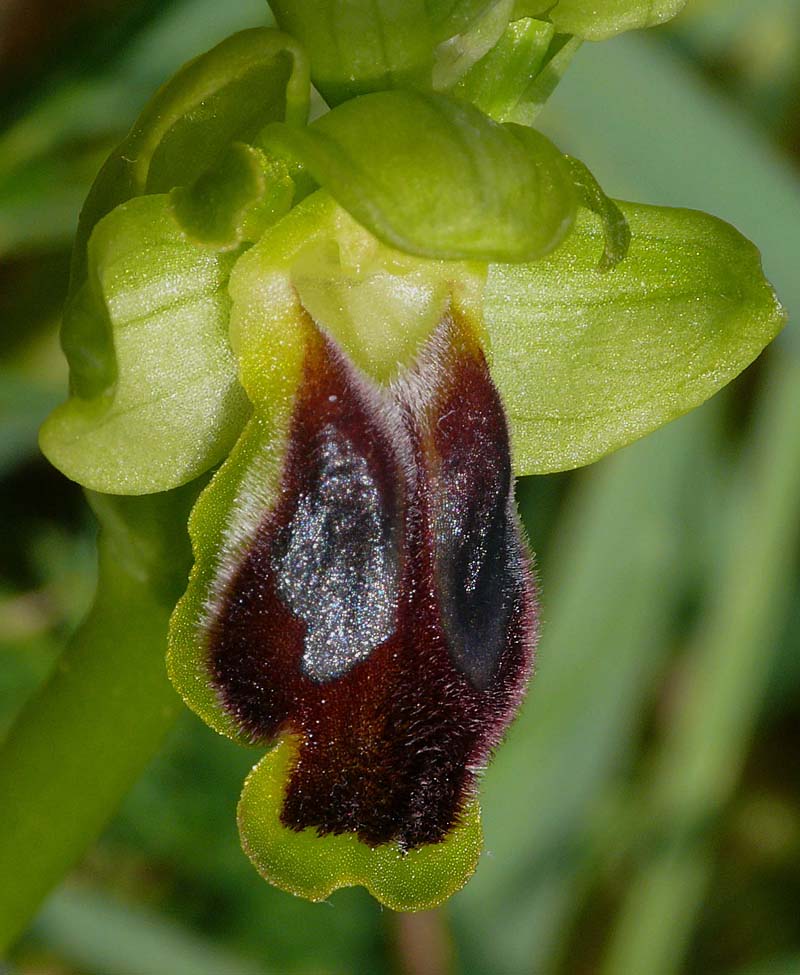
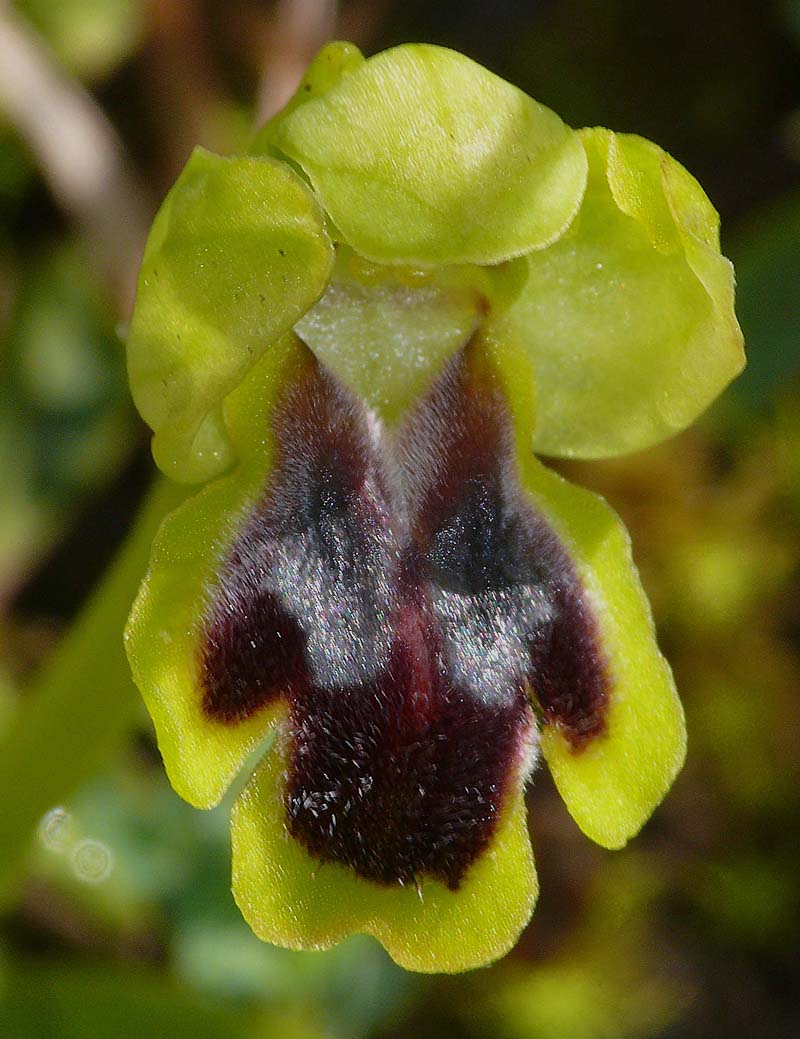
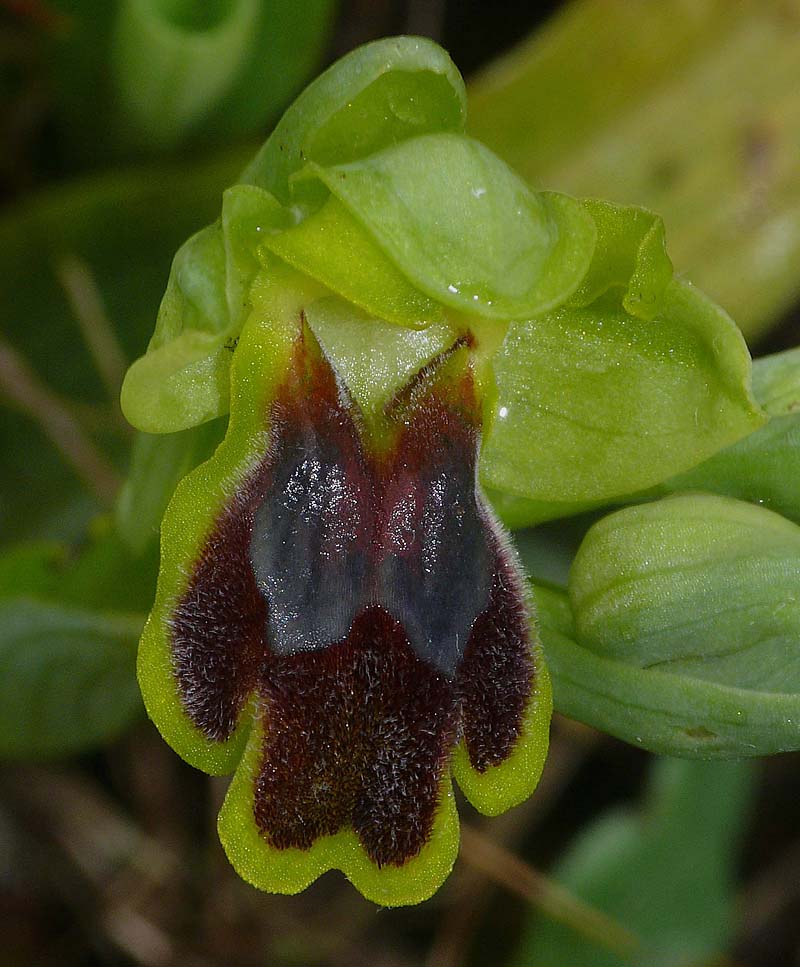
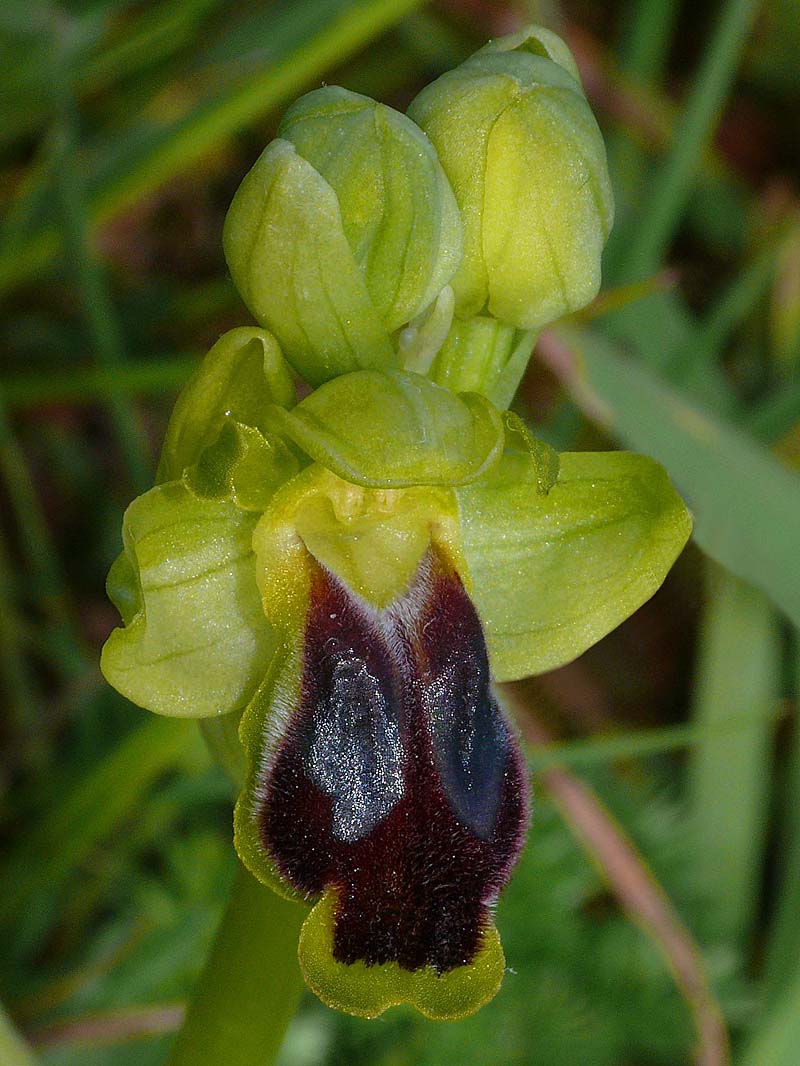
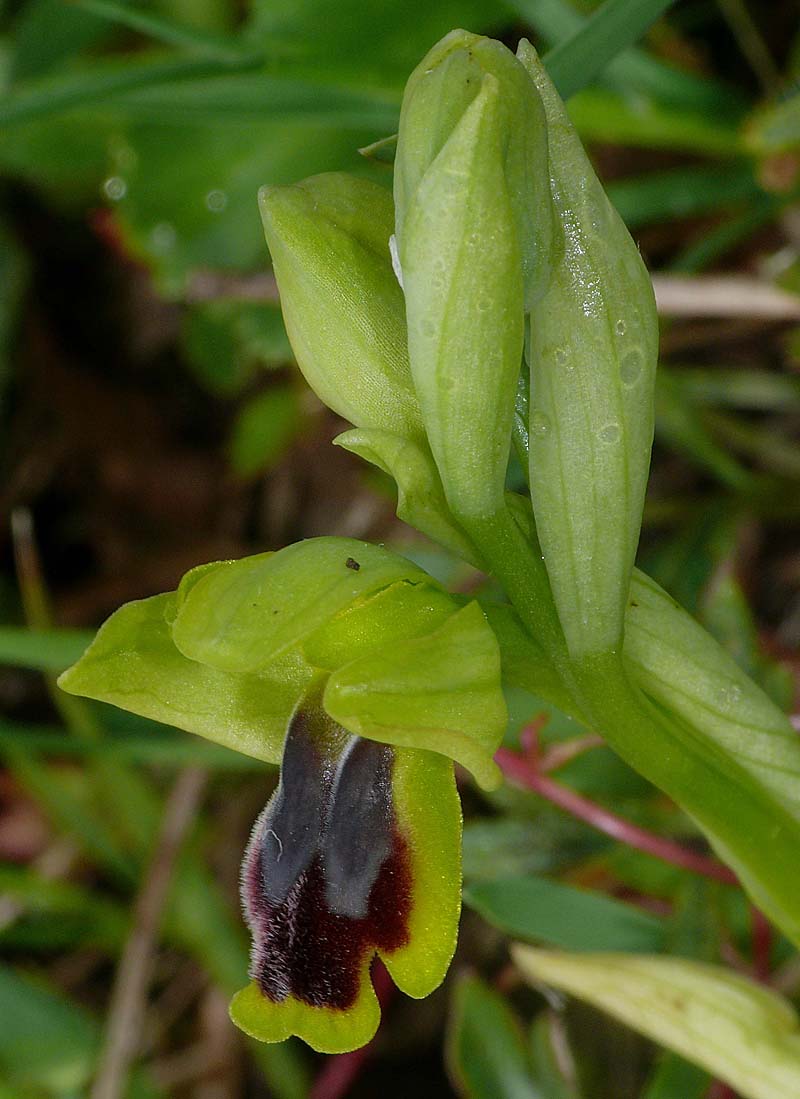
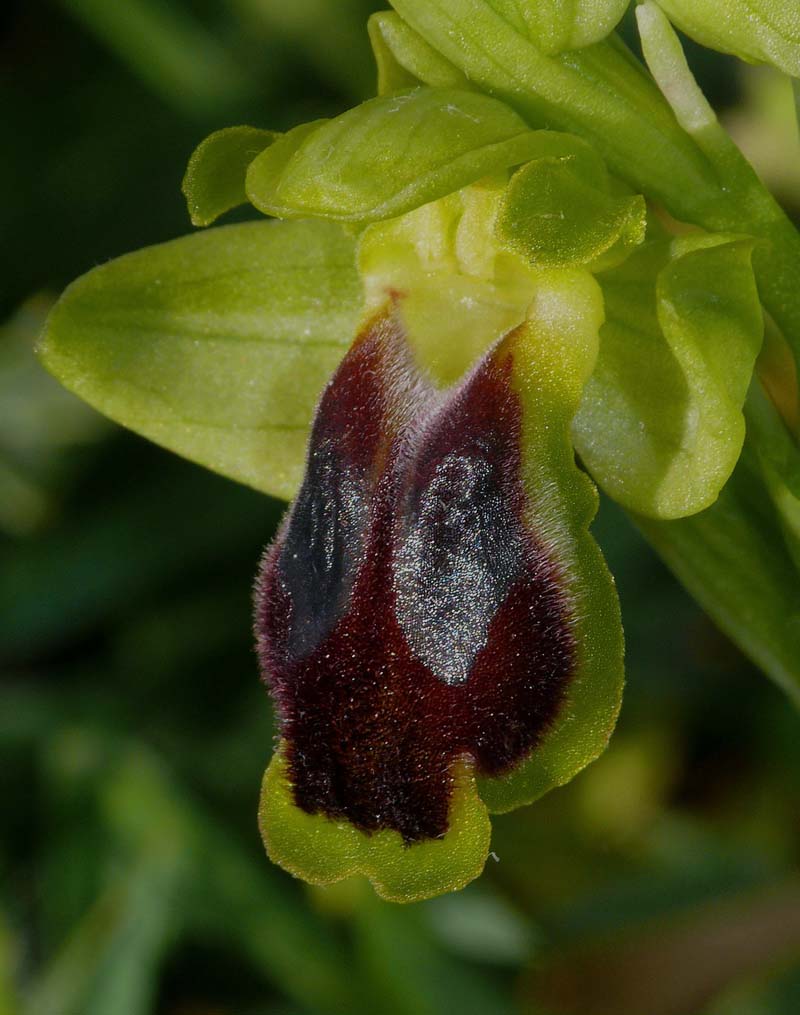
This is a member of the nine strong O. subfusca group and was first described by Geniez and Melki in 1992. It's a Sicilian endemic and was for many years thought to be confined to the upper slopes of Mount Lauro (from which it gets its name), but it is now known to grow in a limited number of small colonies away from its main population centre.
Despite the discovery of this wider range it is still a very rare orchid and is highly localised even around Monte Lauro where perhaps due to altitude, it is a relatively late flowerer. Its habitat is dry stoney ground on basaltic rock where it grows (sometimes in large numbers) in association with several other species of orchid but very few Pseudophrys and this consequently assists accurate identification. O. sicula and O. archimedea have both been found growing in small numbers with O. laurensis but with little evidence of significant hybridization. The example depicted in photo 5 however, is not typical and exhibits characteristics that suggest genetic input from another taxon of the O. subfusca group.
This species is not particularly varied in appearance and there are three very consistent features which help distinguish it 1. The large stigmatic cavity and prominent, shiny longitudinal swellings. 2. The blackish blue speculum. 3. The broad, vivid yellow lip margin.
All the photographs come from Monte Lauro and date from the 17th of April at which time the flowers were just appearing, the first being noted on the 14th of that month..