The distribution of this Ophrys
is somewhat curious, as despite being essentially an Aegean orchid it
also occurs sparingly in the Puglia and Basilicata regions of south
west Italy. The
centre of its distribution seems however to be the islands of Rhodes
and Samos together with the adjacent region of south western Turkey and
Crete.
O. candica was first described from Crete by Greuter, Mathias and Risse in 1985. Its name refers to Candia which was the ancient name of present day Iraklion, the main city and port of Crete.
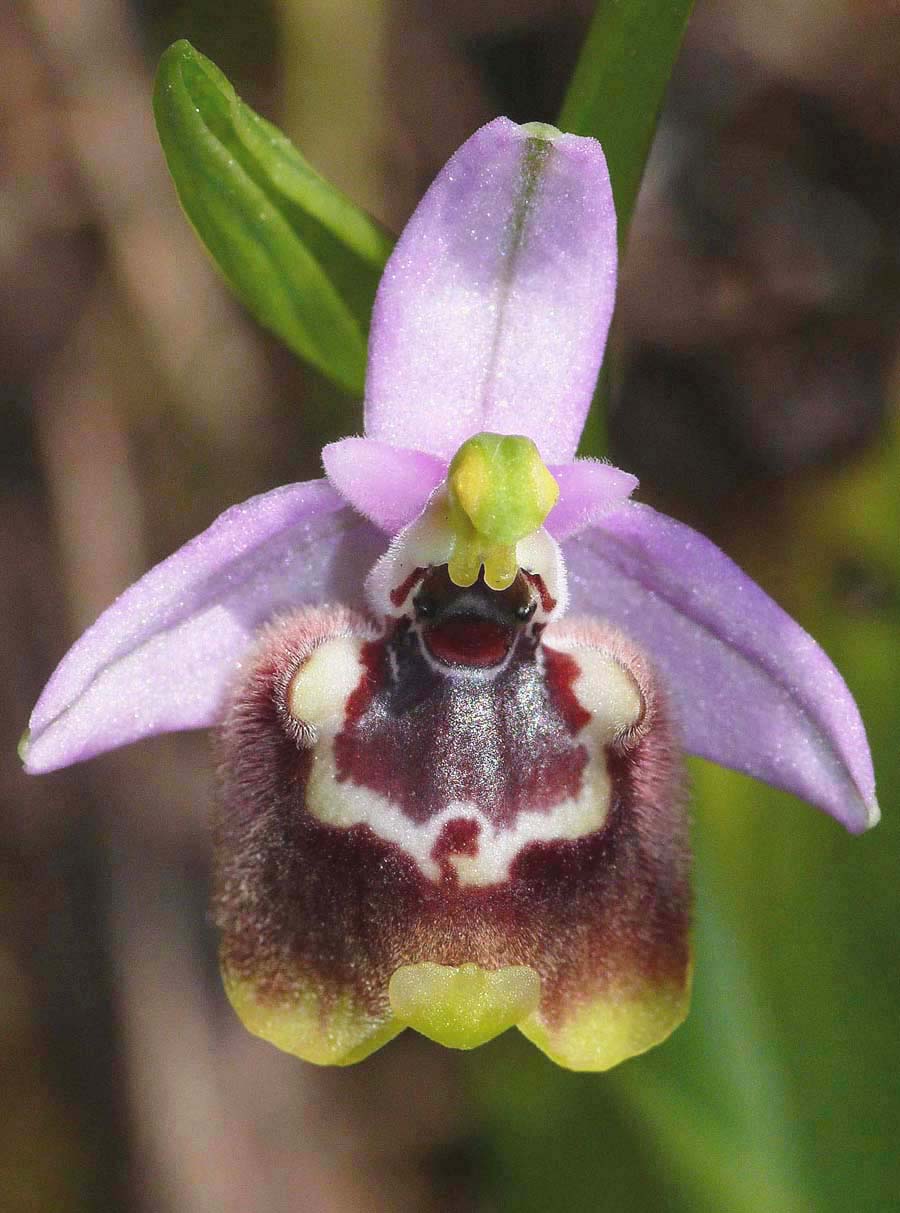
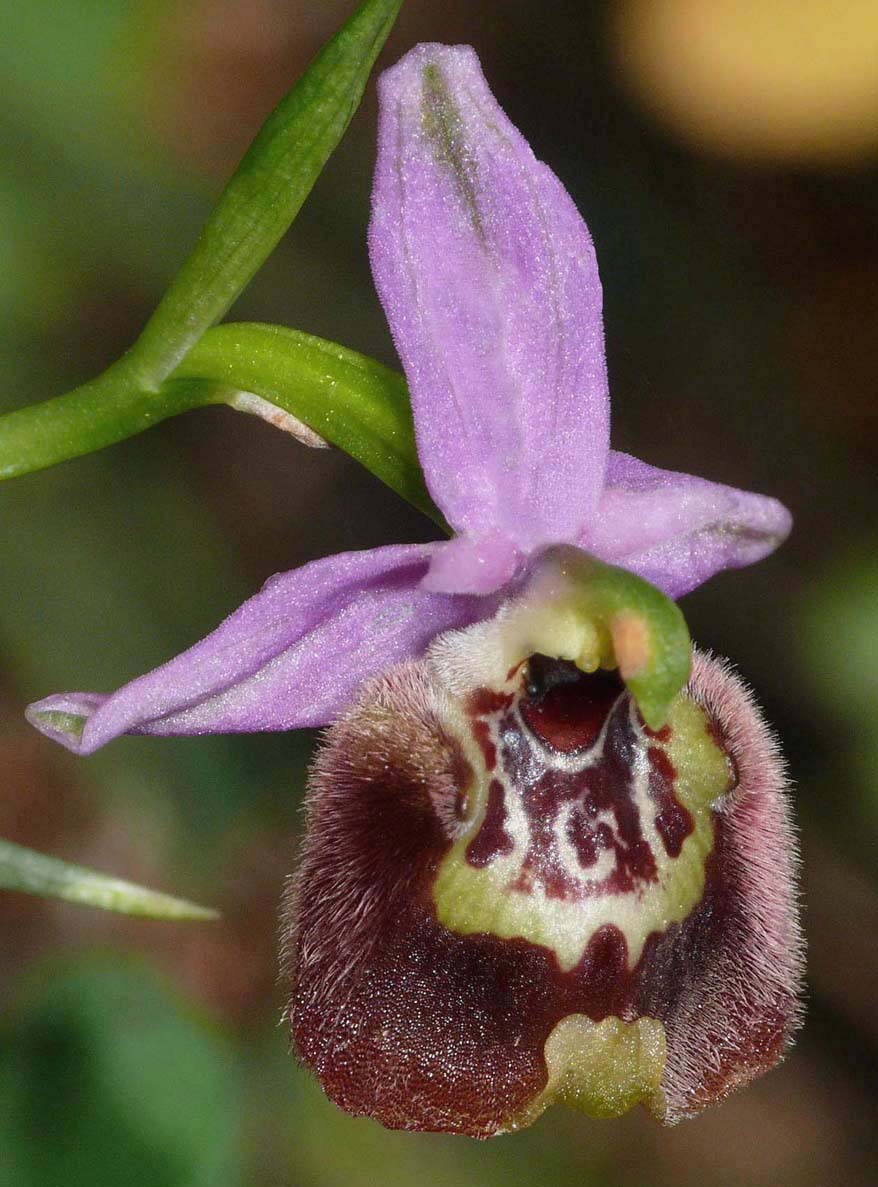
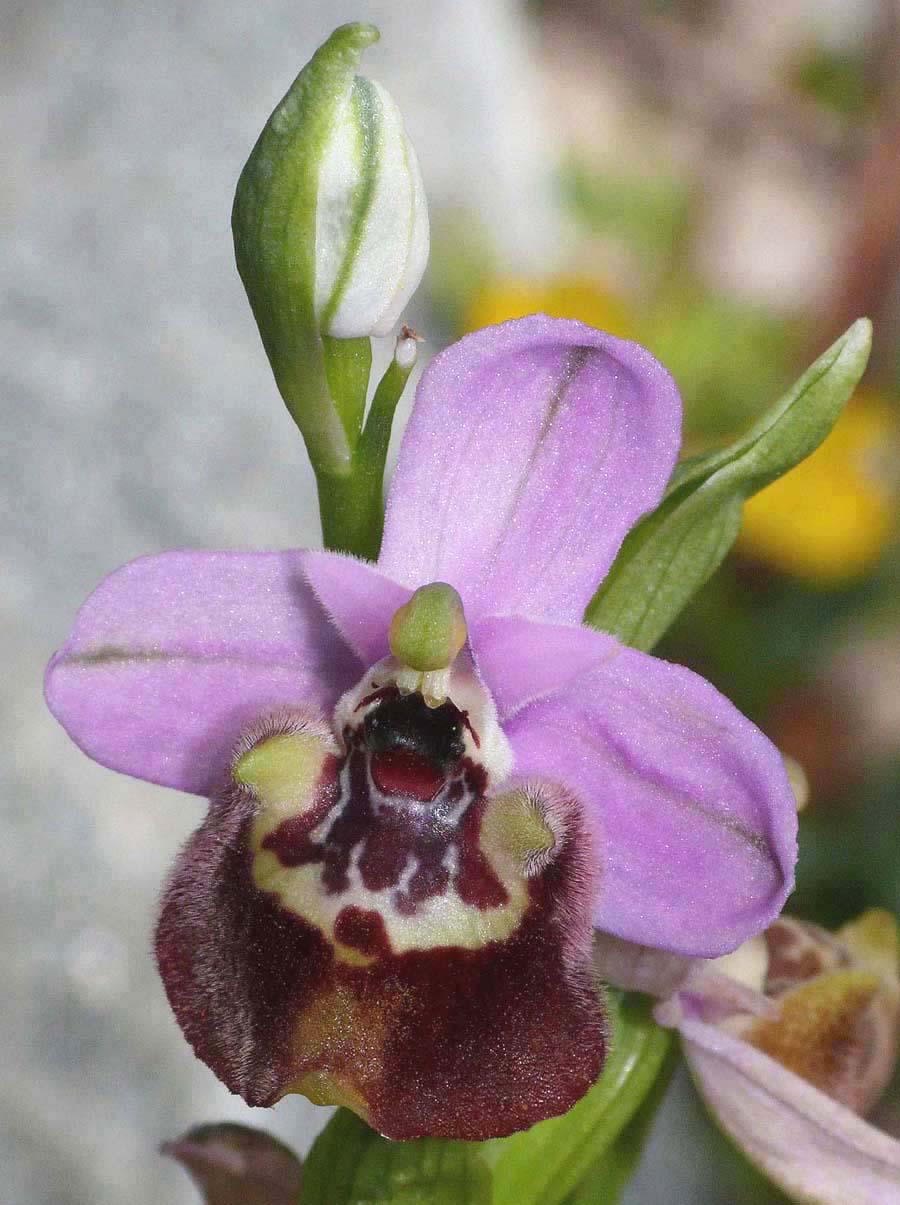
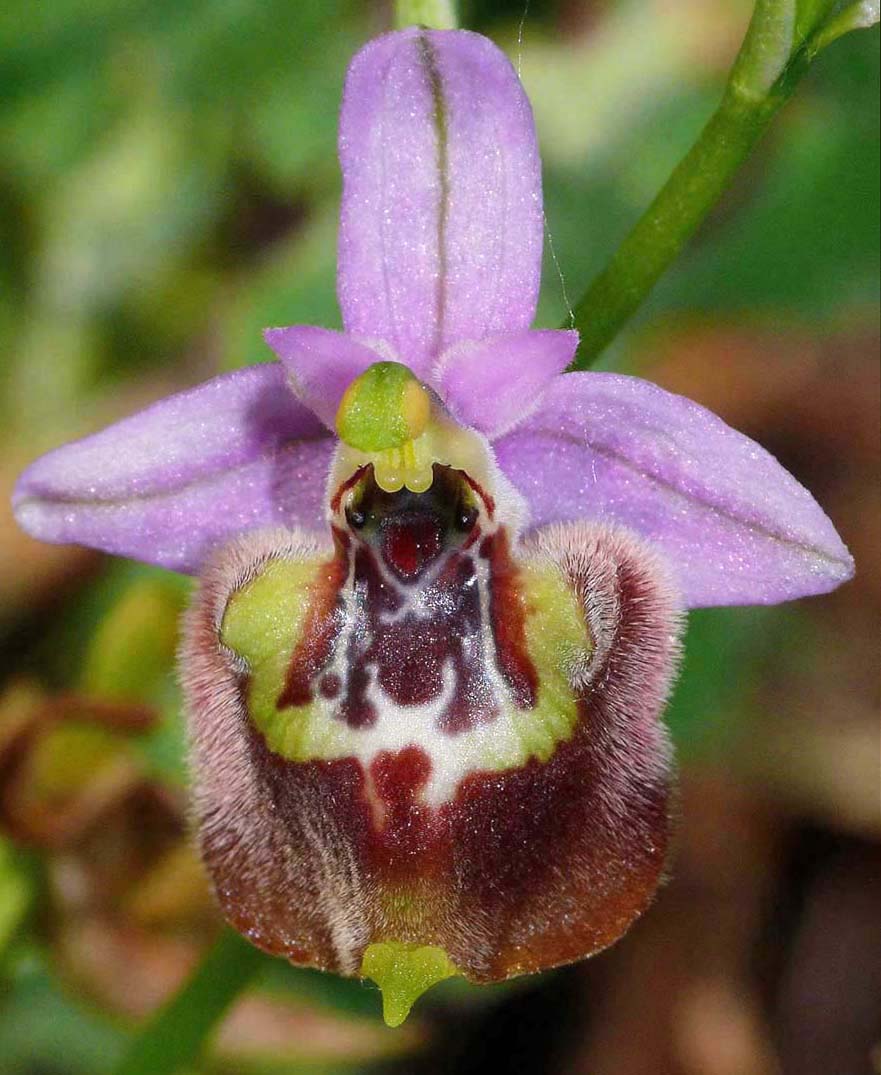
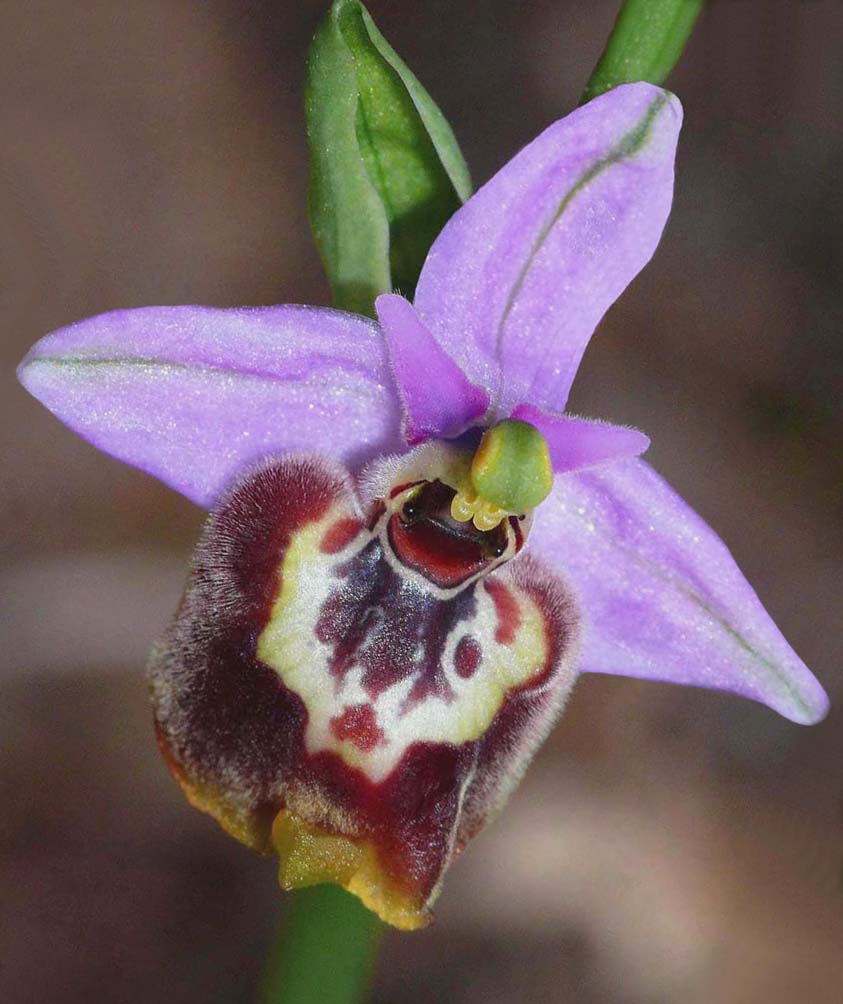
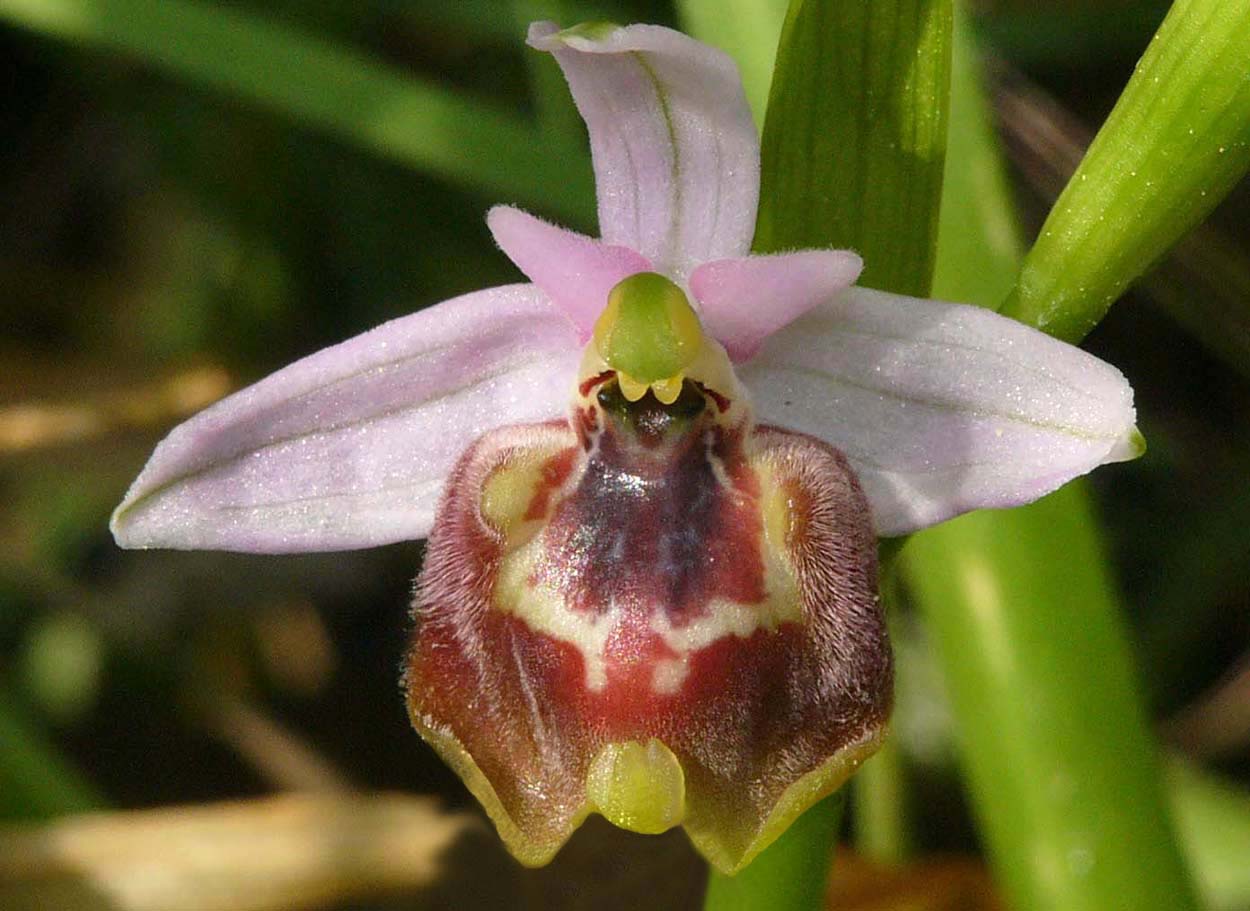
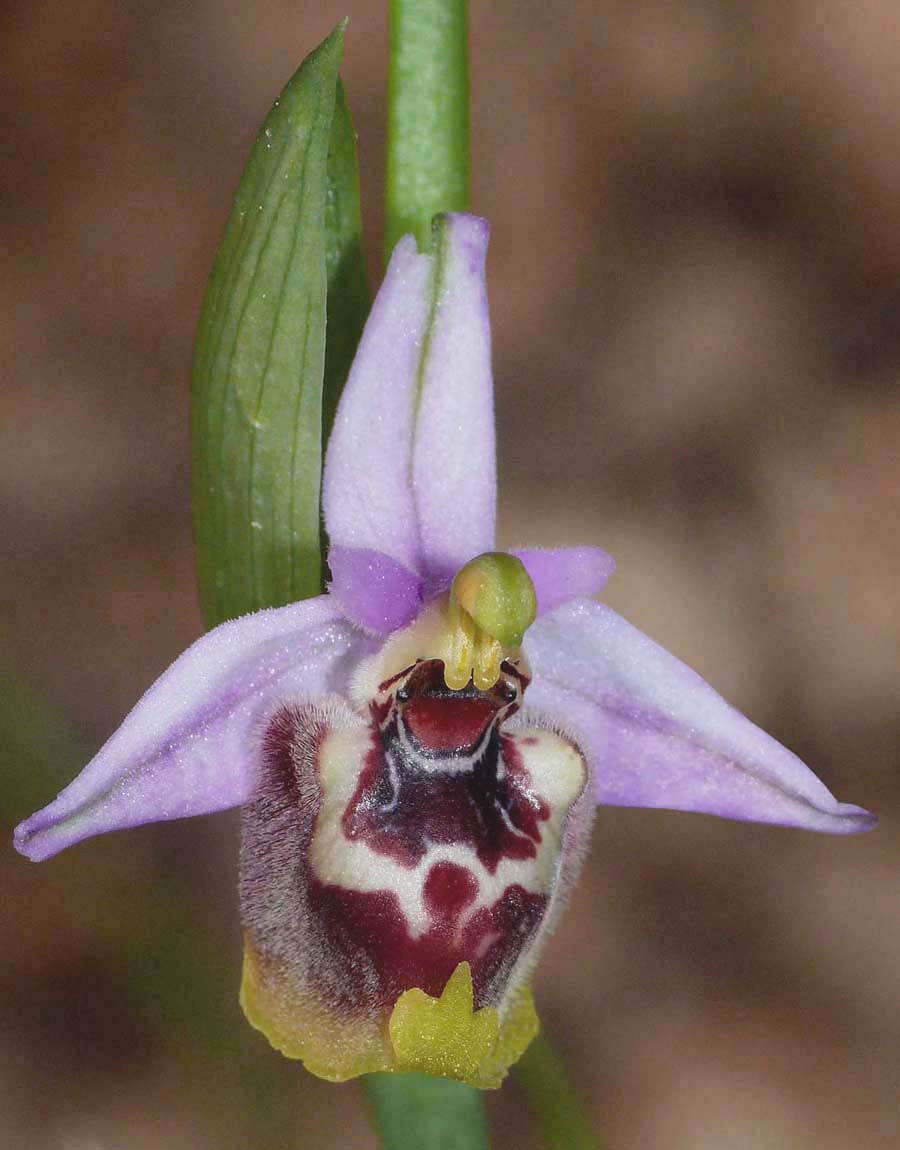
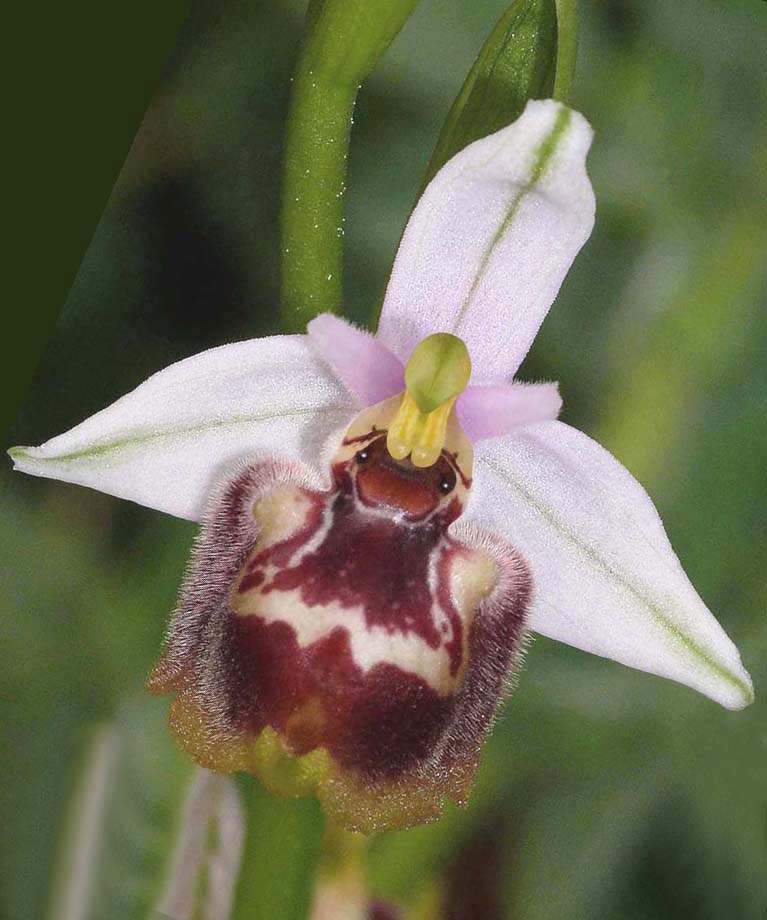
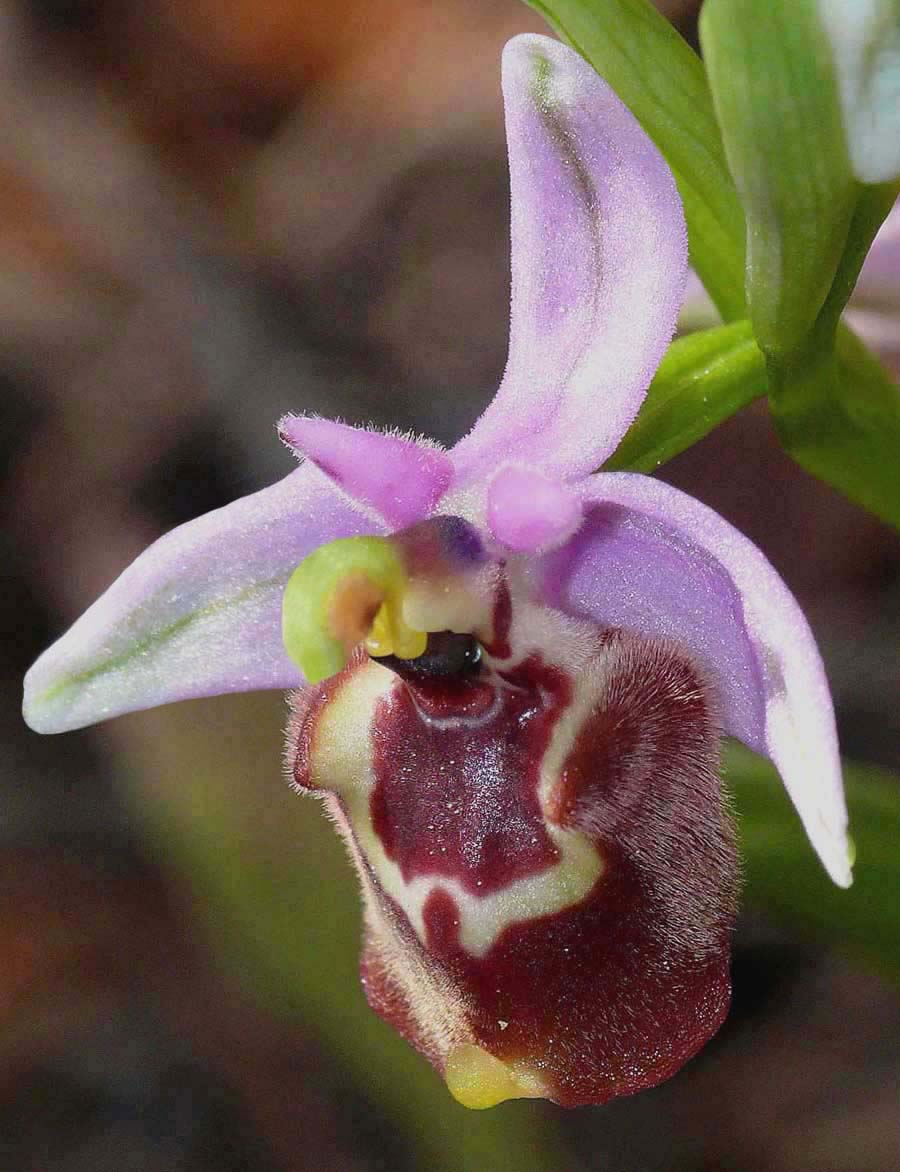
As can be seen from the photos, the species can easily be confused with O. minoa, differing only in its slightly bigger size and protuberences that are either absent or poorly developed. The lip shape of the species is usually rectangular or vaguely trapezoidal with flared margins and a variable but distinctive specular pattern. The basic speculum colouration is typically violet to blue, often with deep red overtones running through it. The pattern is invariably edged with a heavy white to pale yellow border. This strong lining is a feature common to several other Ophrys species and referred to as candicoid. It reaches its zenith in O. cytherea which in extreme cases appears to have a completely white speculum. O. candica is a member of the O. bornmuelleri group and as is typical of this family, exhibits a complete, broad, hairy band around the margins of the lip.
O. candica and O. minoa share the same pollinator (Eucera furfurea) and some authorities regard the two species as synonumous. All the photographs are from Rhodes, dating from the first two weeks of April, at which time they were just appearing.
O. candica was first described from Crete by Greuter, Mathias and Risse in 1985. Its name refers to Candia which was the ancient name of present day Iraklion, the main city and port of Crete.
As can be seen from the photos, the species can easily be confused with O. minoa, differing only in its slightly bigger size and protuberences that are either absent or poorly developed. The lip shape of the species is usually rectangular or vaguely trapezoidal with flared margins and a variable but distinctive specular pattern. The basic speculum colouration is typically violet to blue, often with deep red overtones running through it. The pattern is invariably edged with a heavy white to pale yellow border. This strong lining is a feature common to several other Ophrys species and referred to as candicoid. It reaches its zenith in O. cytherea which in extreme cases appears to have a completely white speculum. O. candica is a member of the O. bornmuelleri group and as is typical of this family, exhibits a complete, broad, hairy band around the margins of the lip.
O. candica and O. minoa share the same pollinator (Eucera furfurea) and some authorities regard the two species as synonumous. All the photographs are from Rhodes, dating from the first two weeks of April, at which time they were just appearing.