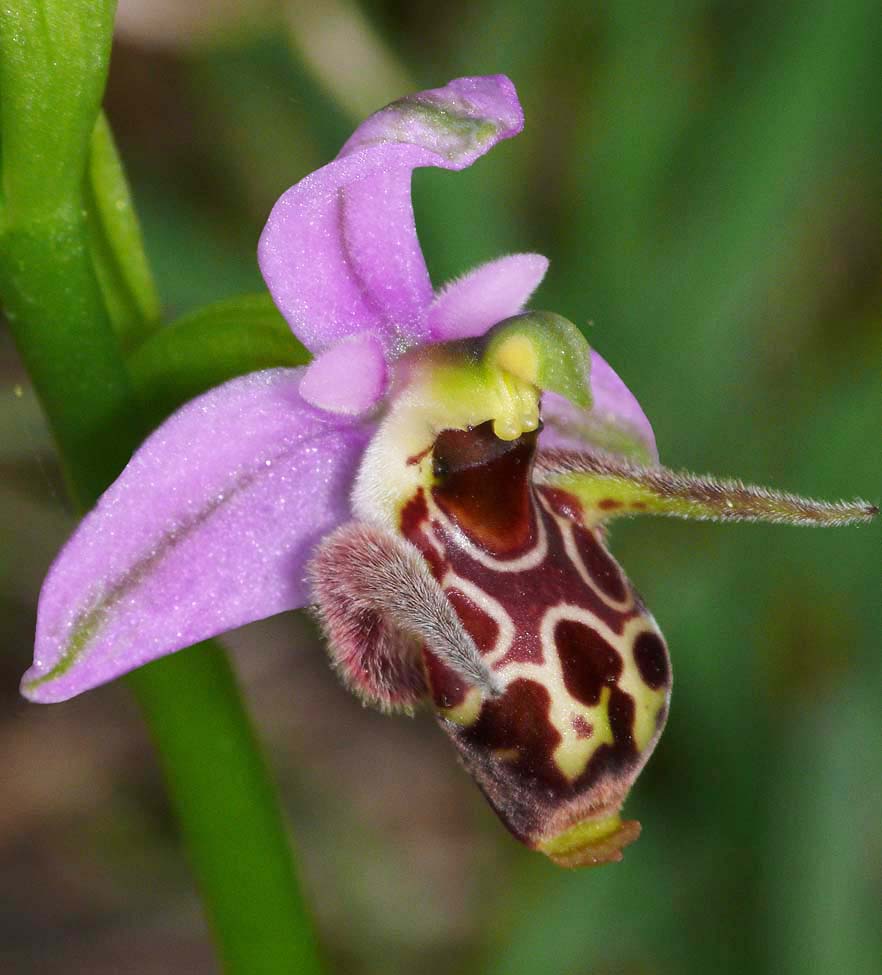
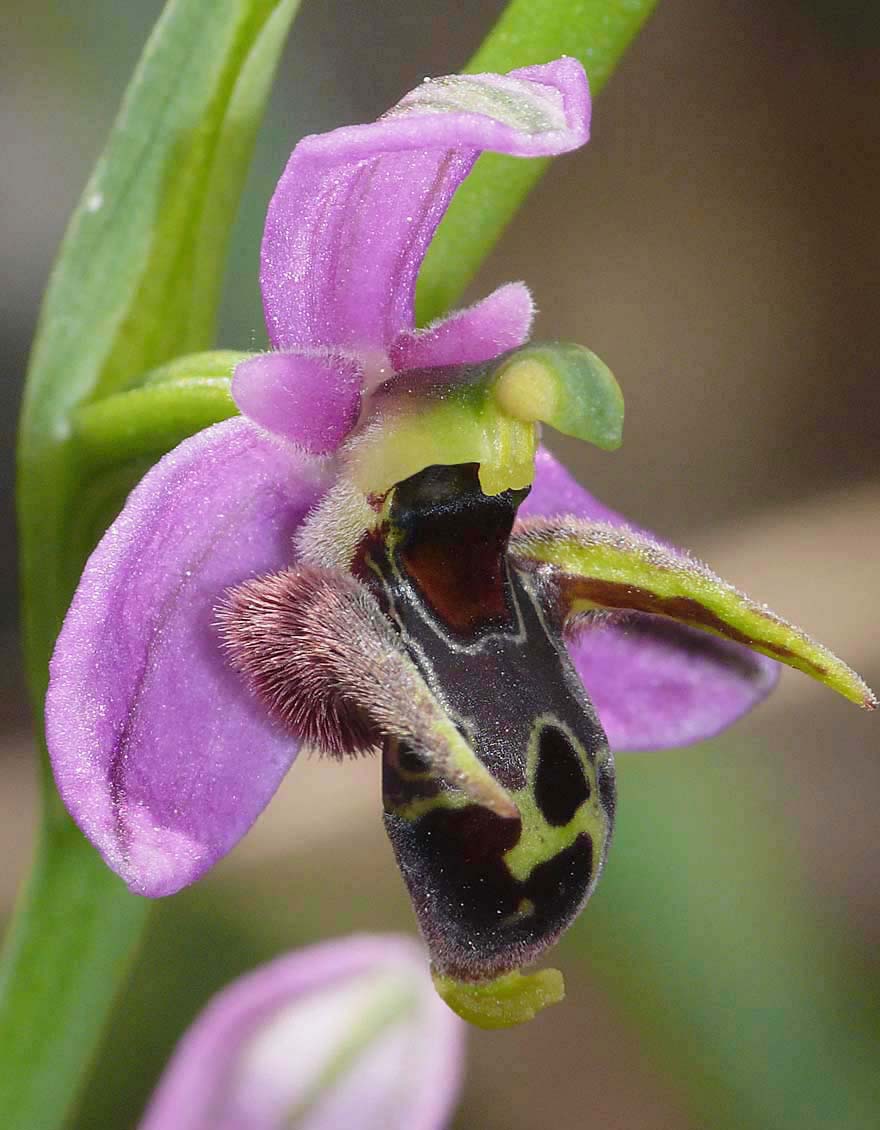
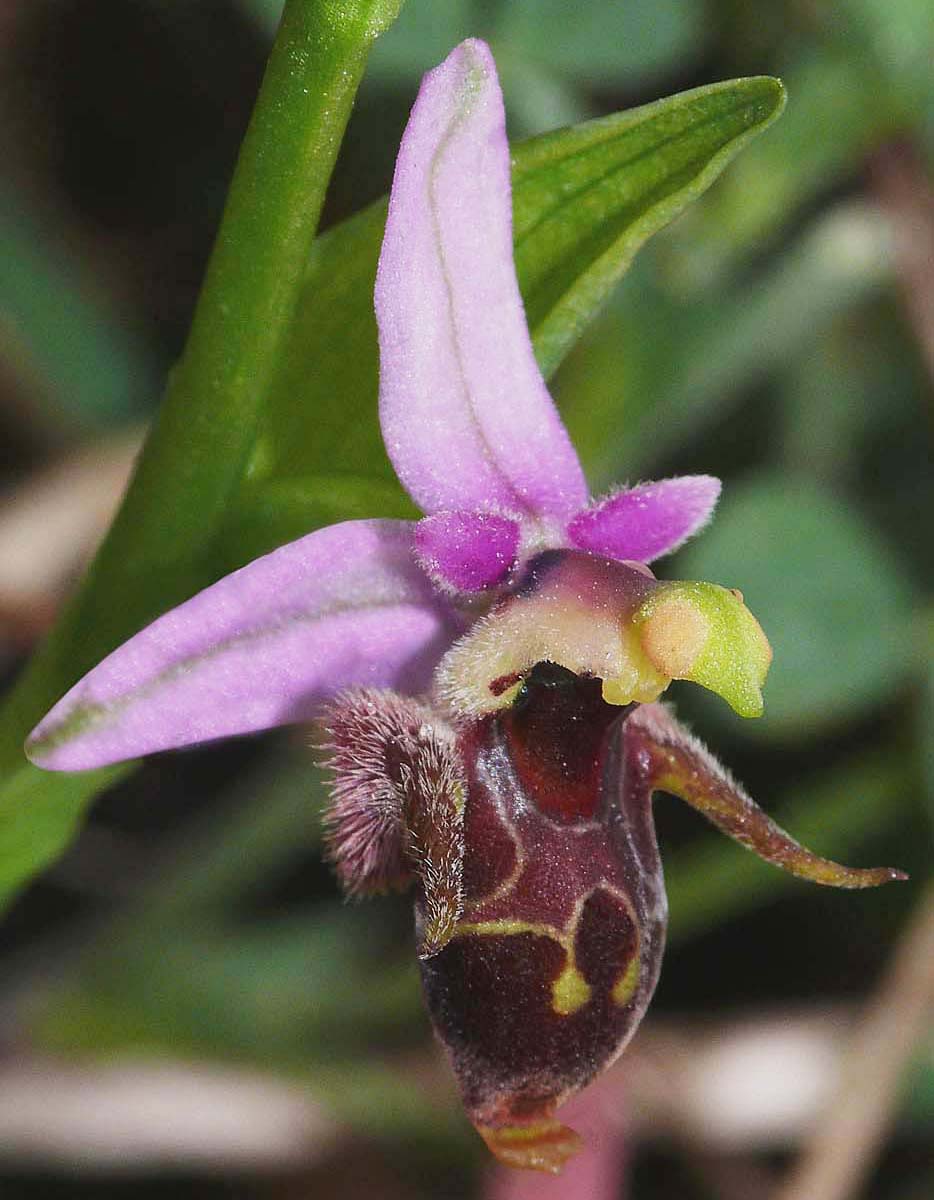
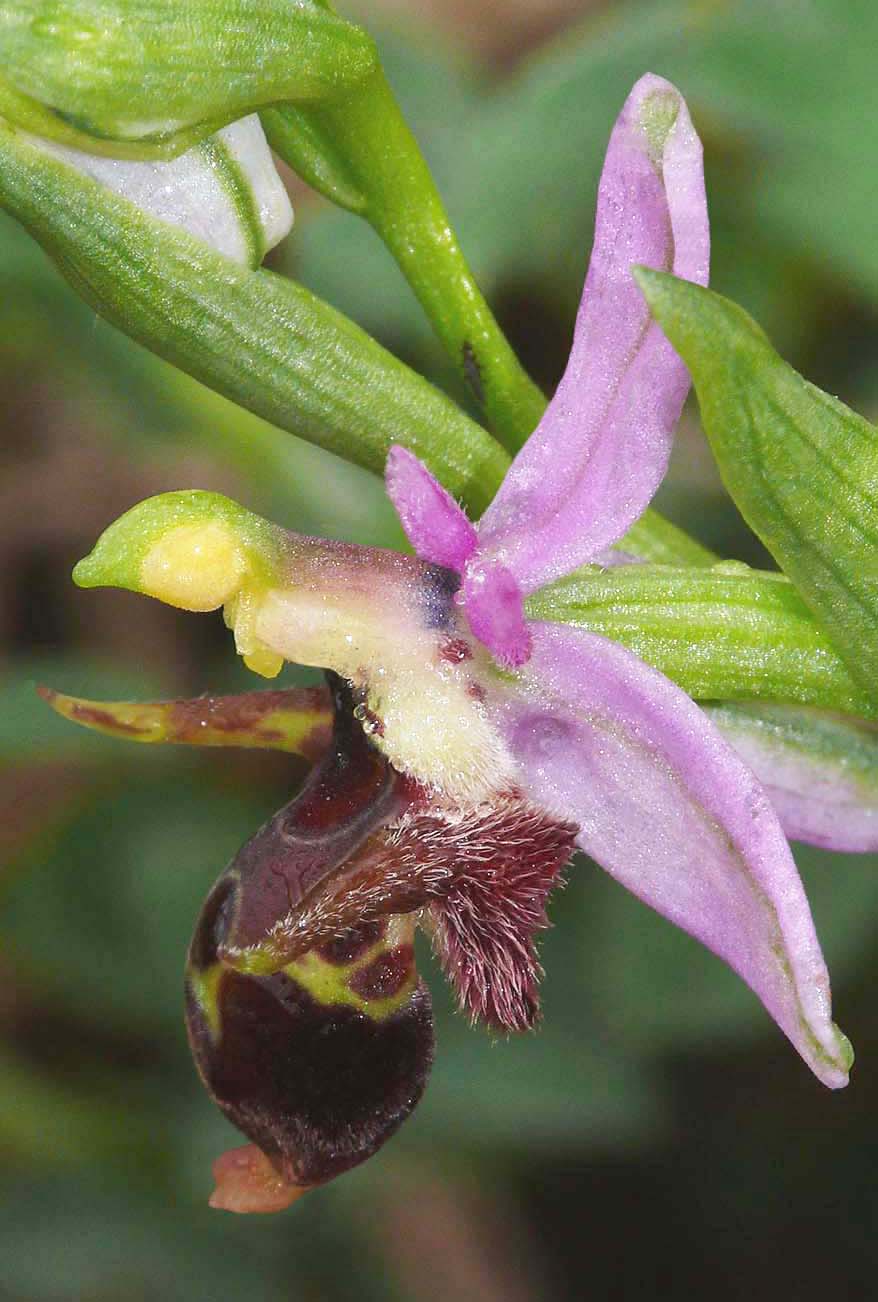
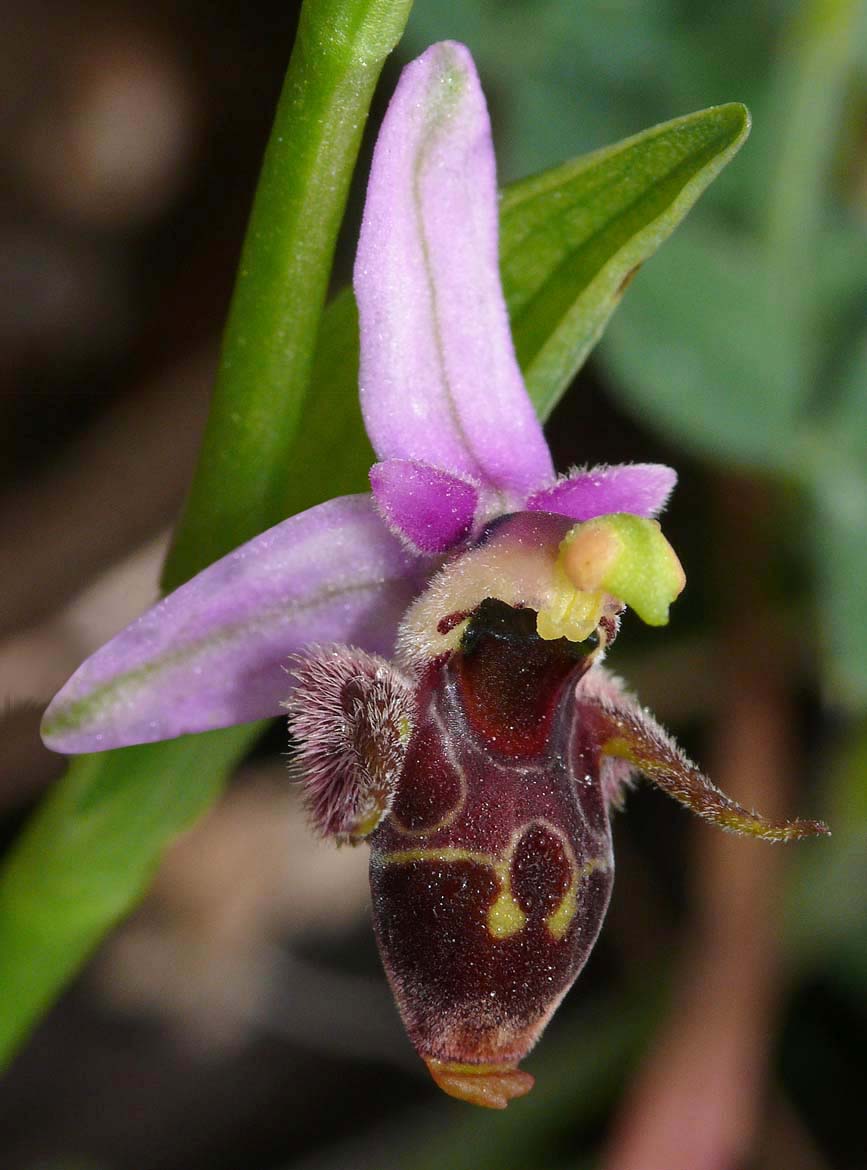
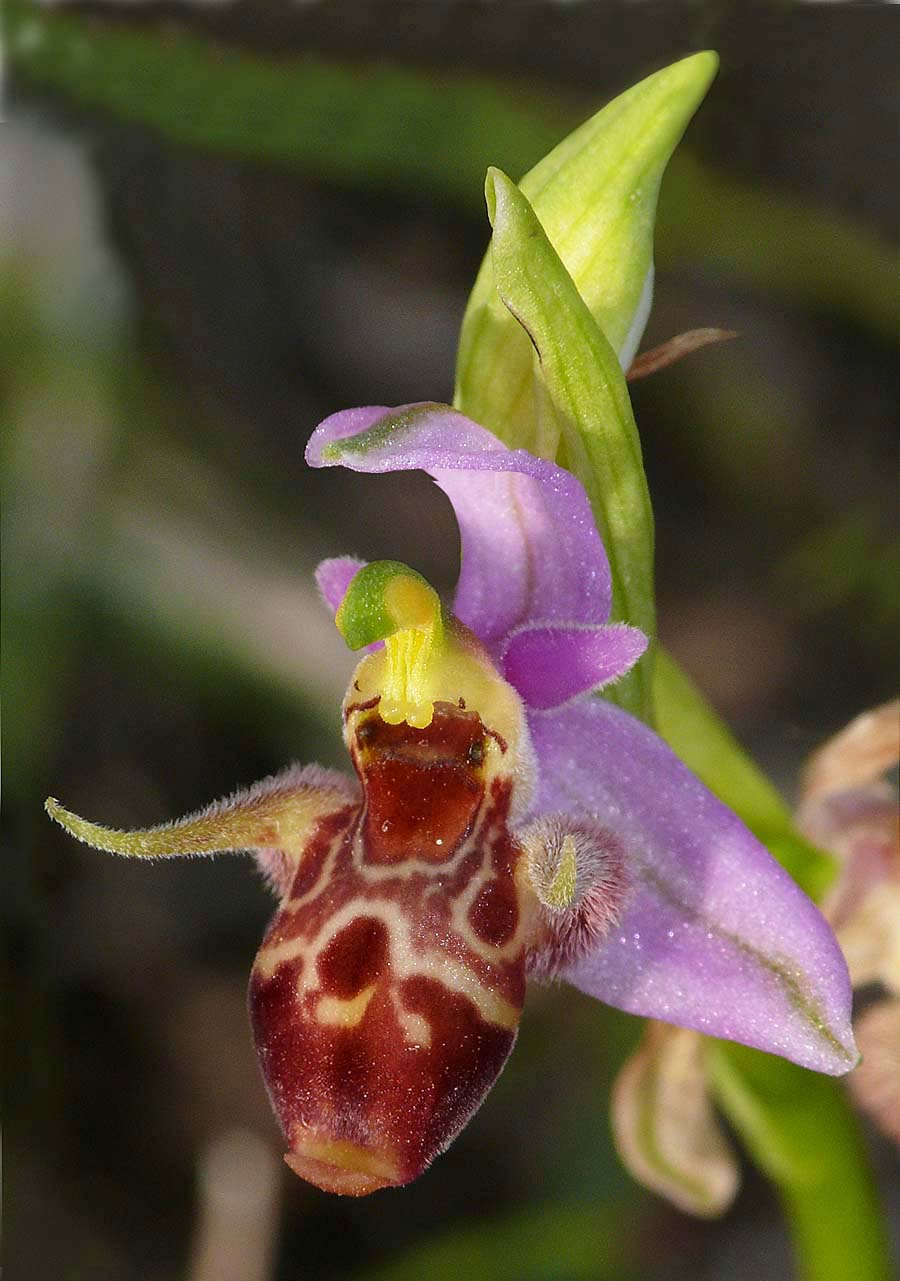
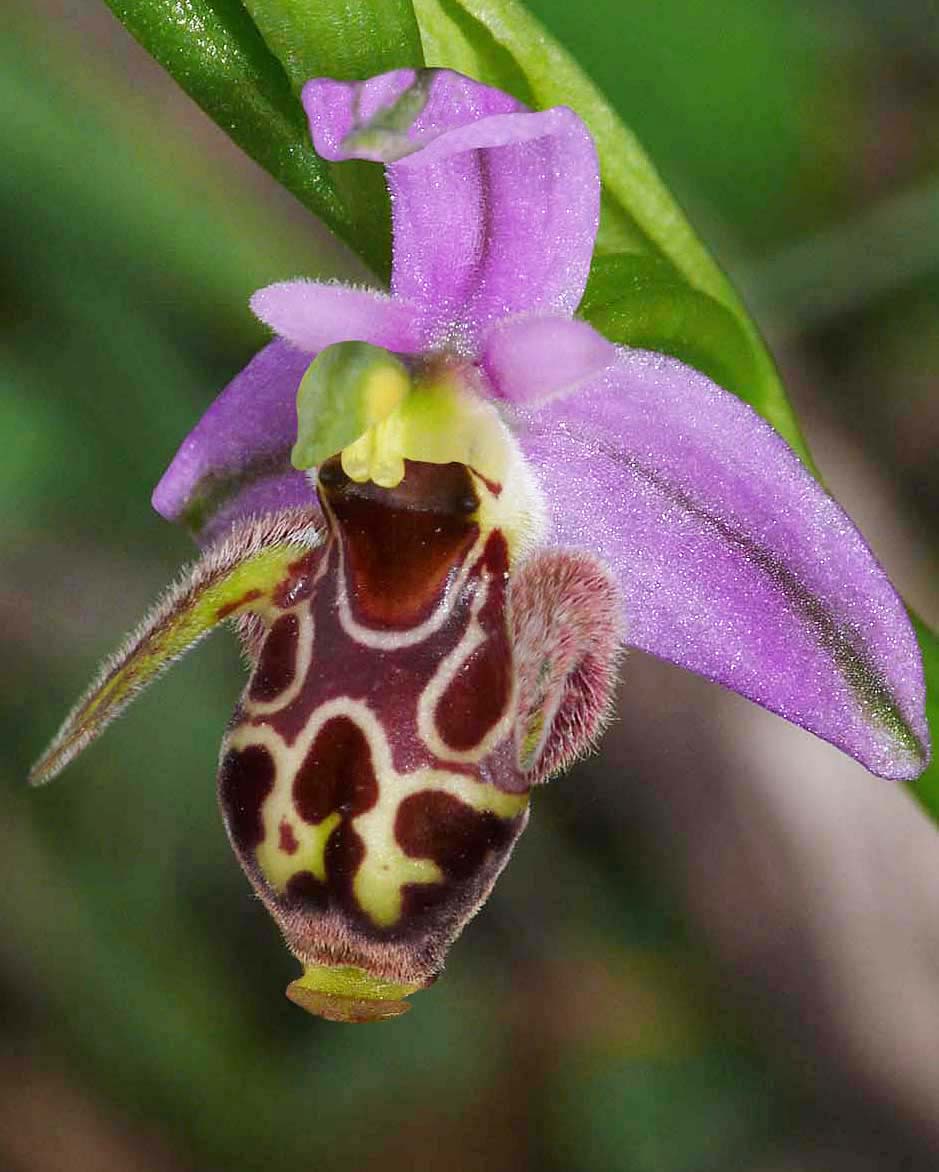
The exact status of this Ophrys is the subject of some disagreement. Greek botanists generally regard it as a full species whereas outside of that country and in some reference books it is accorded only varietal status. Delforge describes it as the latter whilst acknowledging the possibility of its potential for promotion. Kruetz recently included it in his 2024 work as a full species.
O. bicornis is a member of the large and often difficult to differentiate O. oestrifera group and has a range which takes it from Hungary down to the northern Balkans and as far as the more northerly Aegean islands. Its distribution overlaps with that of several other similar group members and natural variation together with probable hybridization makes identification a far from straightforward process.
O. bicornis is a late flowerer which in the more northerly parts of its range can still be found in July whereas further south it first appears in May. In genetically pure populations the key morphological characteristic is the wide stigmatic cavity which can be up 60% of the width of the body. There is usually a pronounced ledge running horizontally between the two noticeable black pseudo-eyes. O. bicornis is very similar and closely related to O. leptomera but sepal colouration in the latter is usually green or green washed purple. Another similar species with which it can be confused is O. sepoides but this is a larger more rotund flower. The name of this latter species has recently been deemed invalid and is replaced by O. pseudoheldriechii.
The photos are from Litochoro to the east of Mt Olympus, northern Greece, dating from early May.