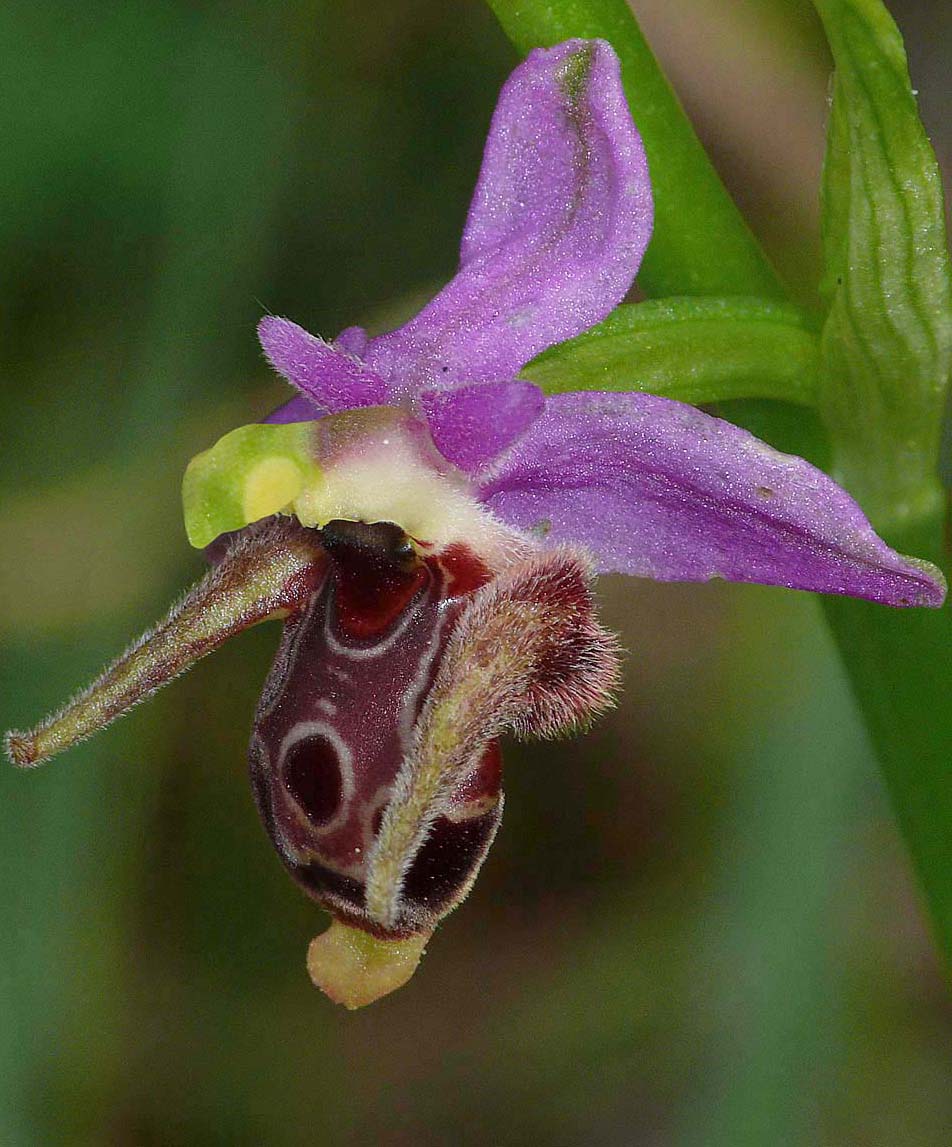
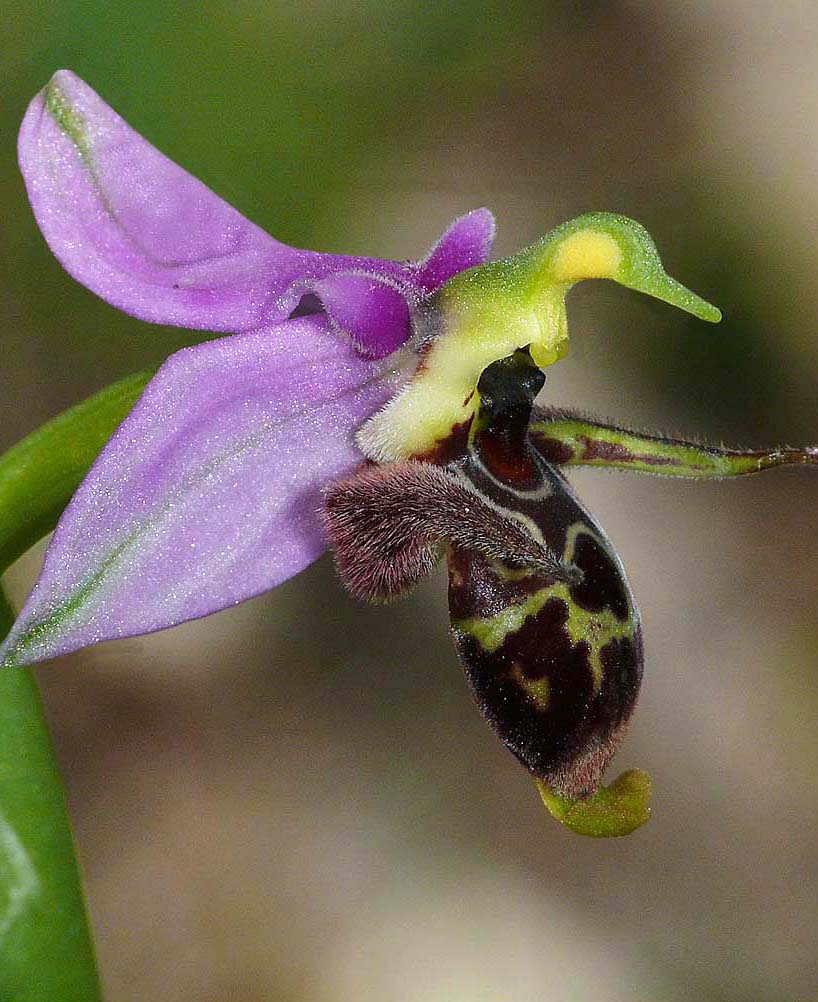
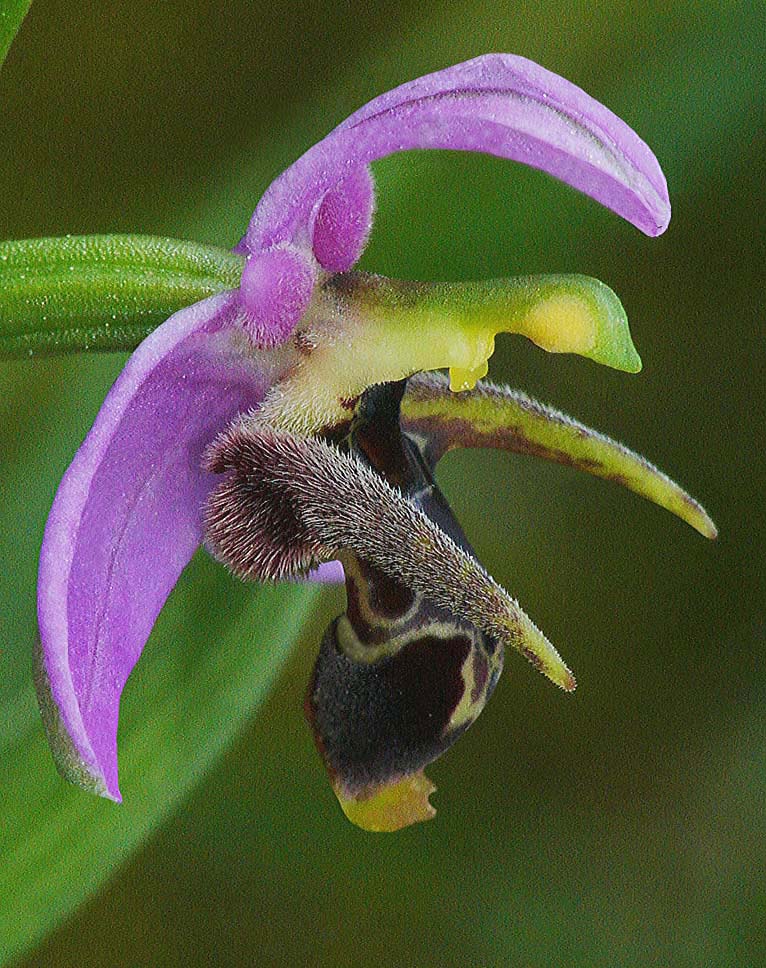
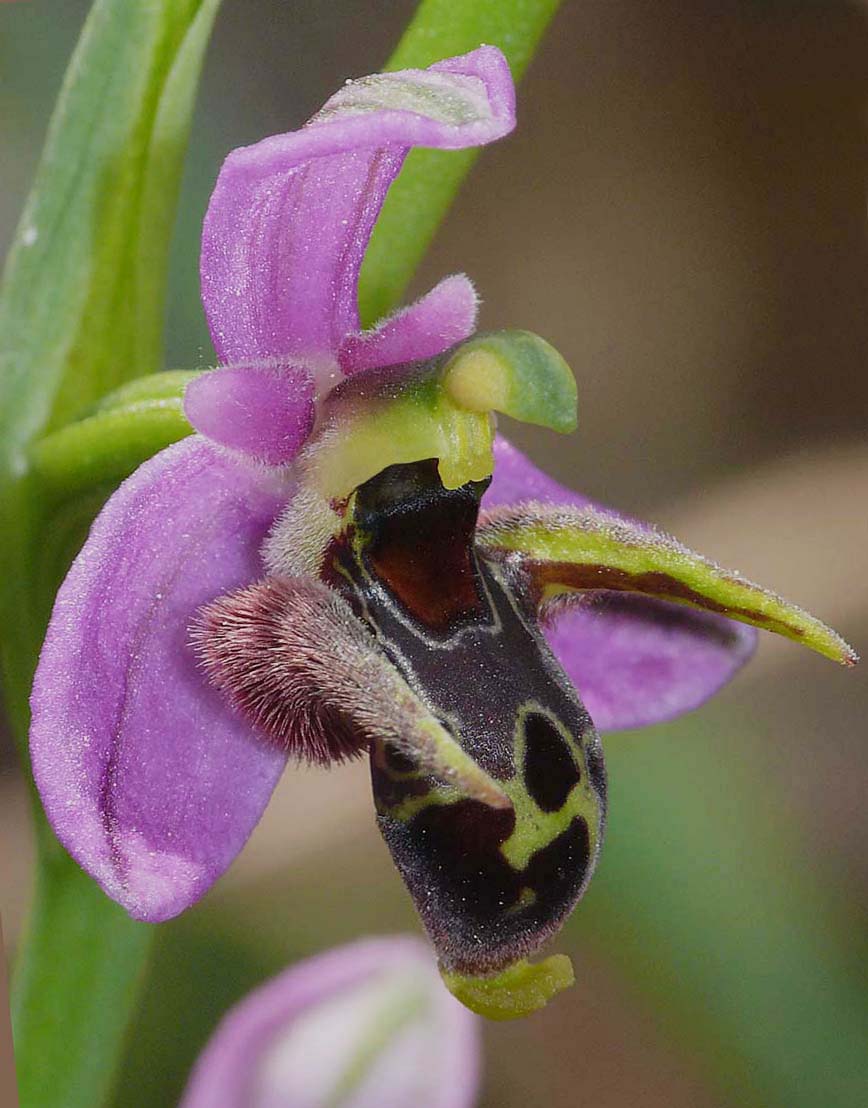
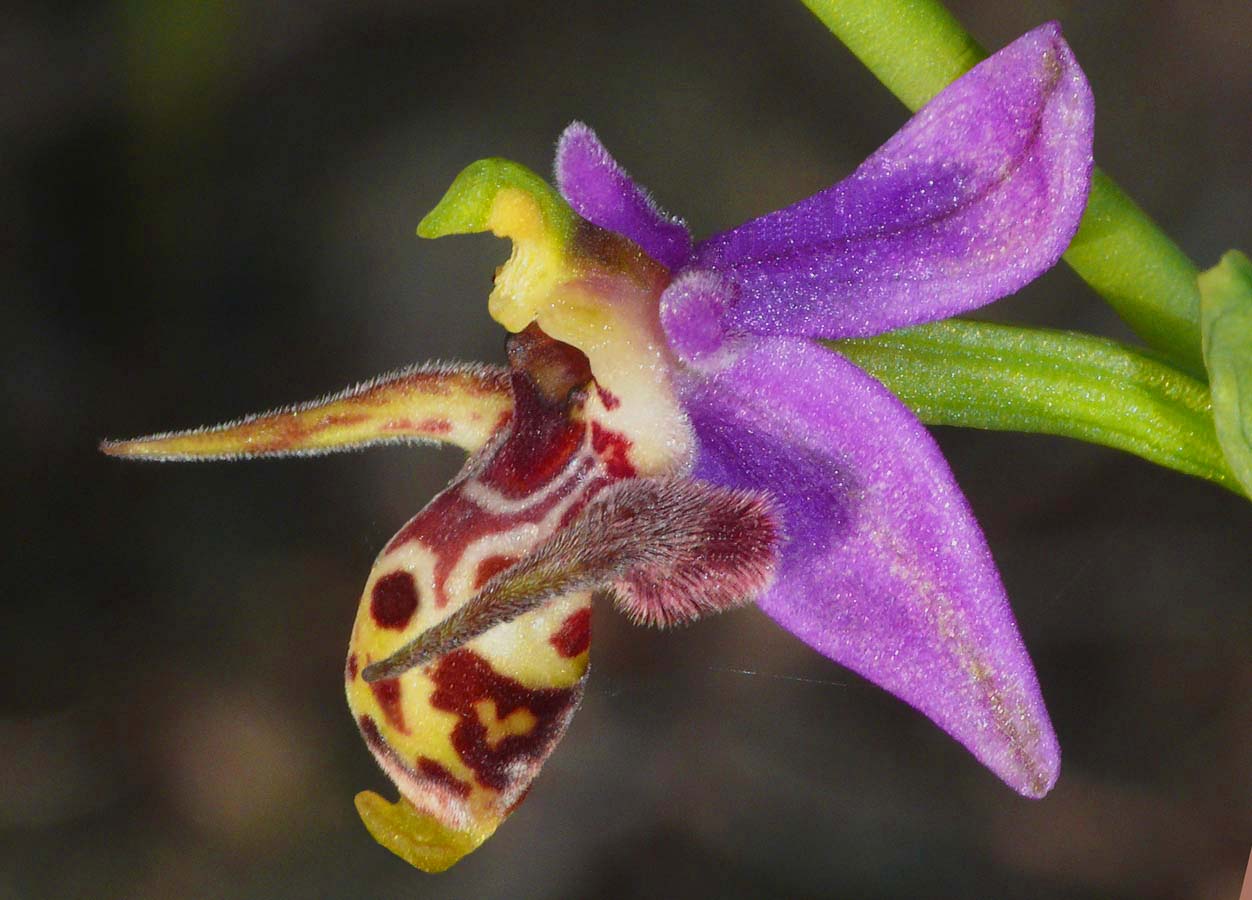
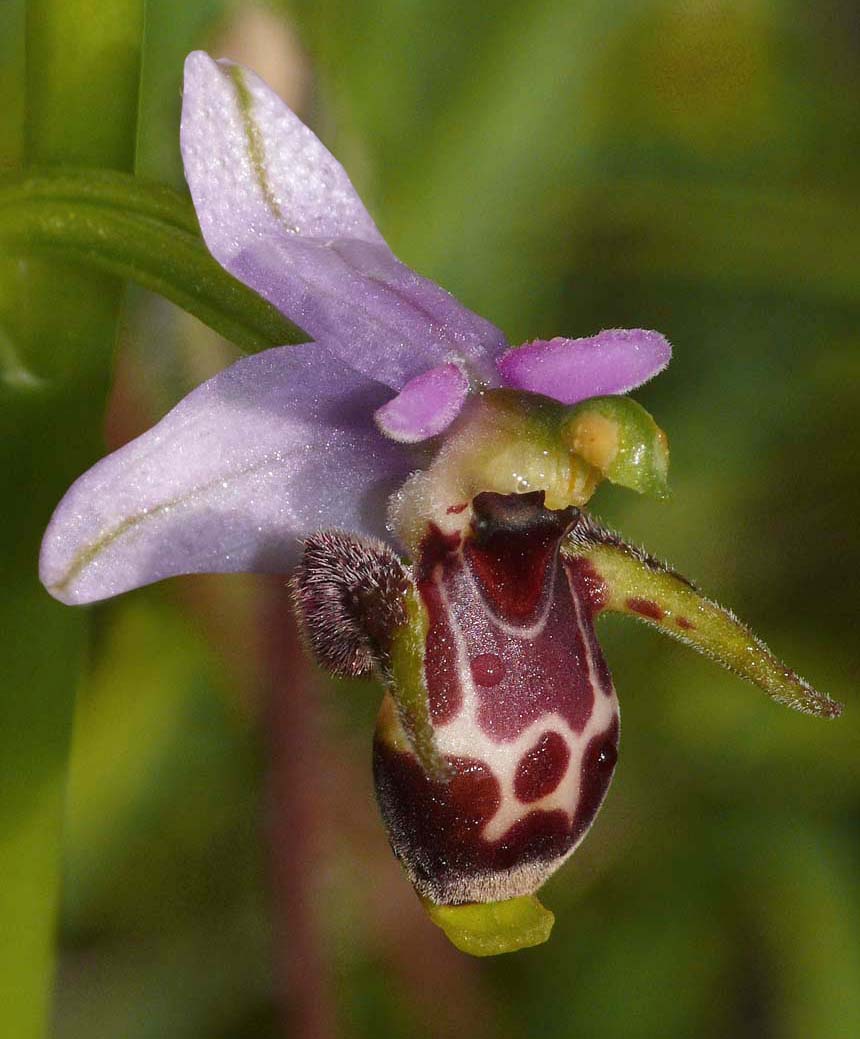
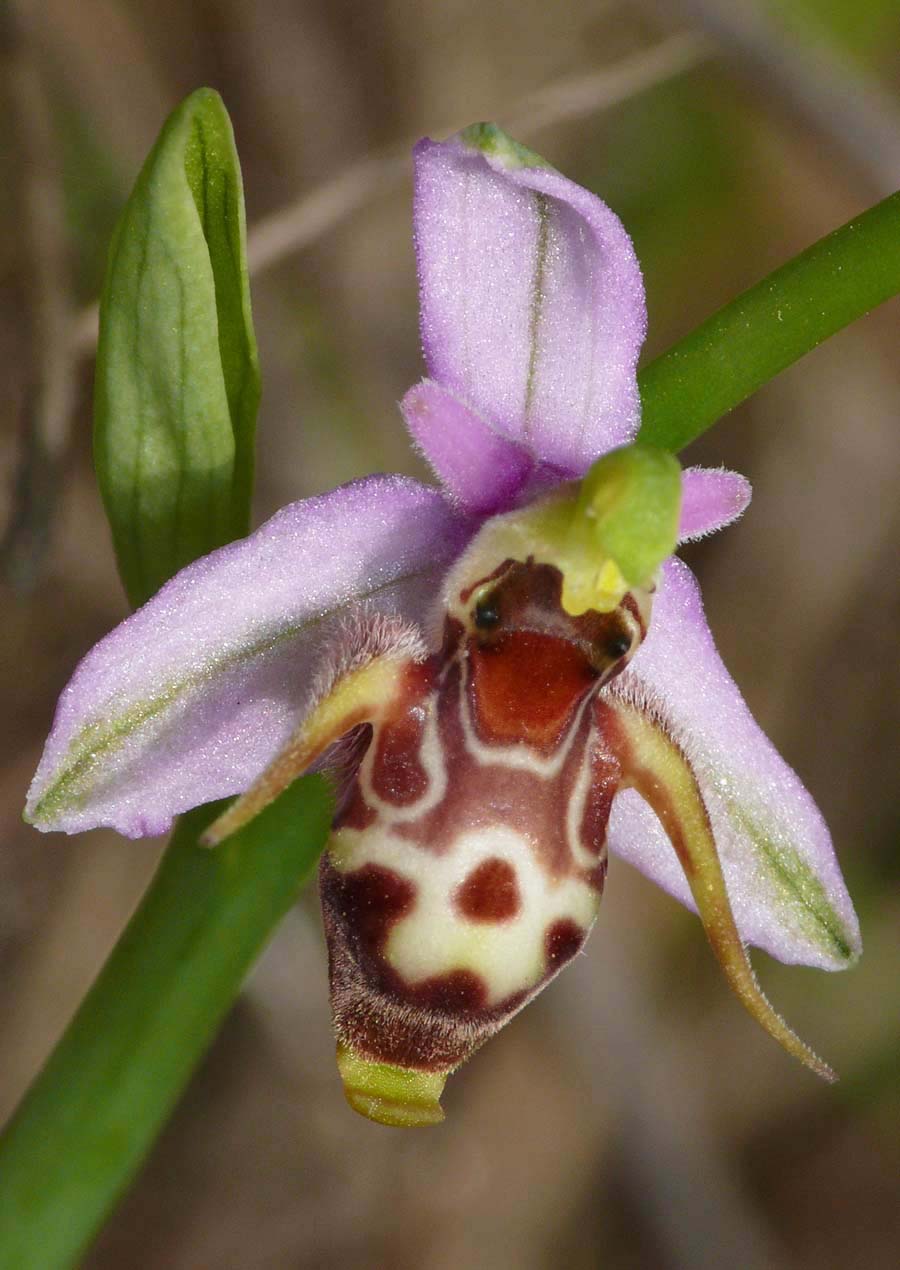
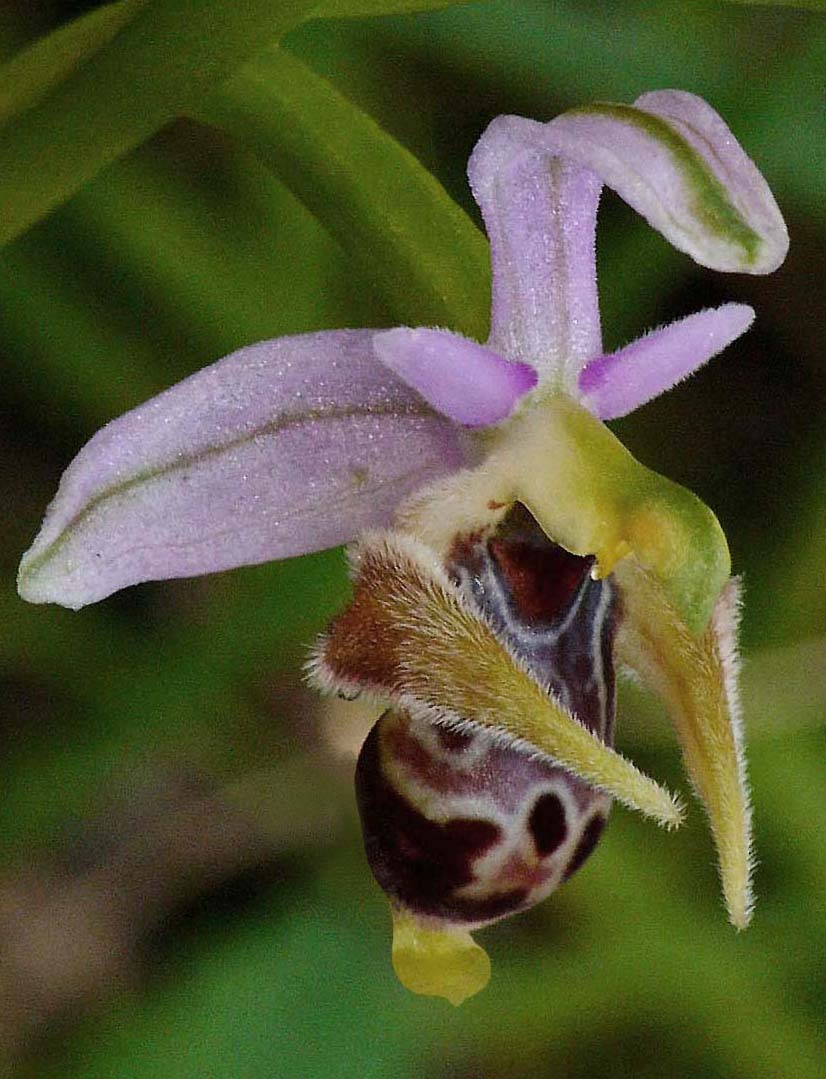
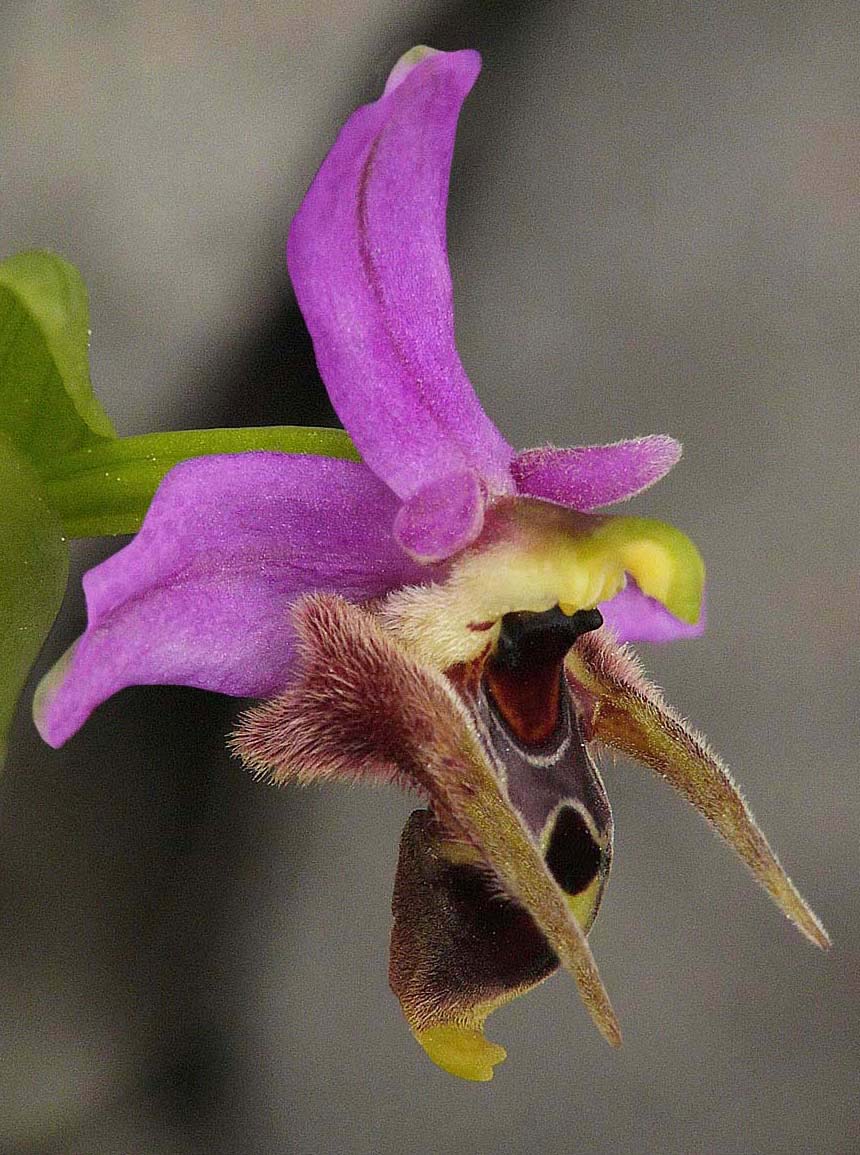
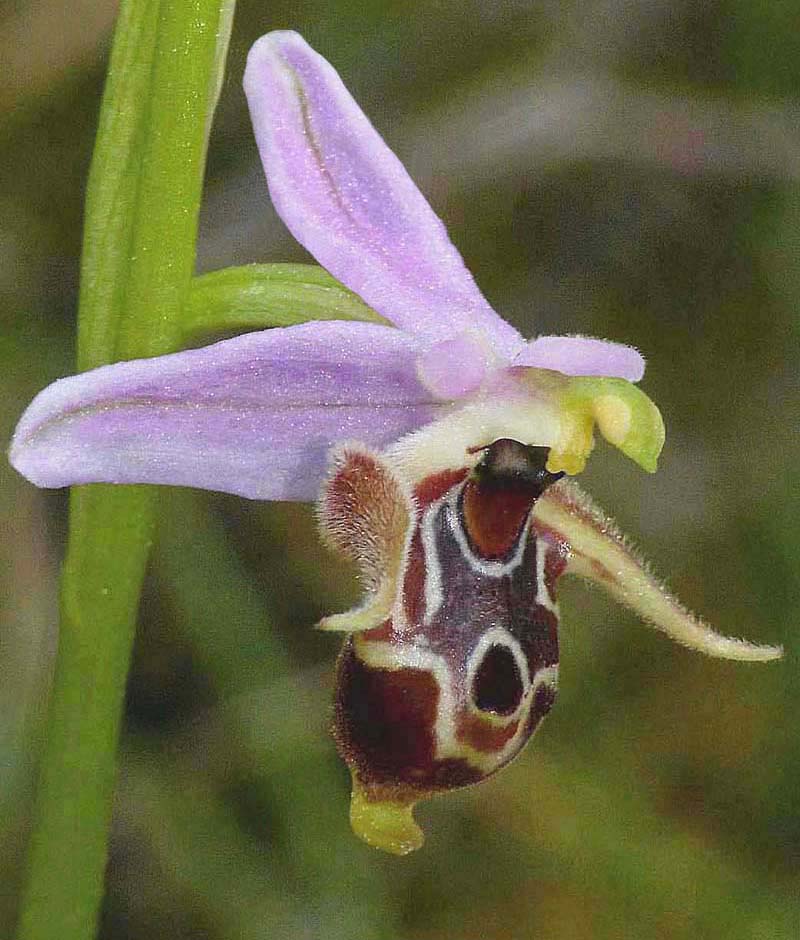
O. cerastes was first described from Ioannina (Greece) by Devillers and Devillers-Terschuren in 2004 and its name is taken from the Greek word "ceras" meaning "with horns", a reference to what is probably its most significant feature, the extremely long protuberences.
It's a member of the large O. oestrifera group which has been the recipient of much study and attention over the last two decades but none of which has satisfactorily clarified significant taxonomic questions, particularly as they relate to the group in the eastern Mediterranean. The distribution and true status of O. cerastes and its cousins has been called into question over recent years. The description that follows reflects the view that it is a valid and common species with a range encompassing much of mainland Greece, Peloponnese, the Aegean islands and adjacent areas of Turkey.
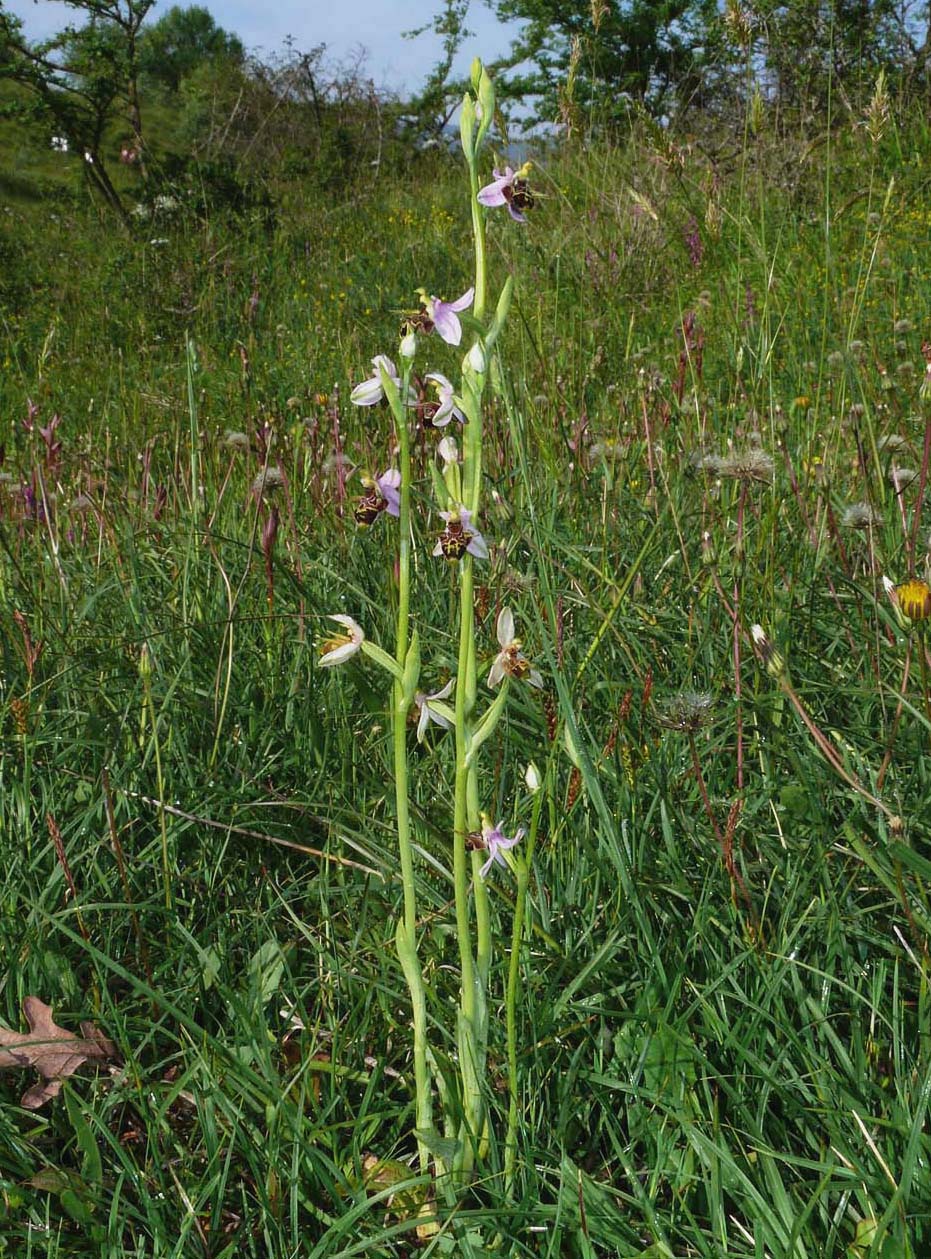
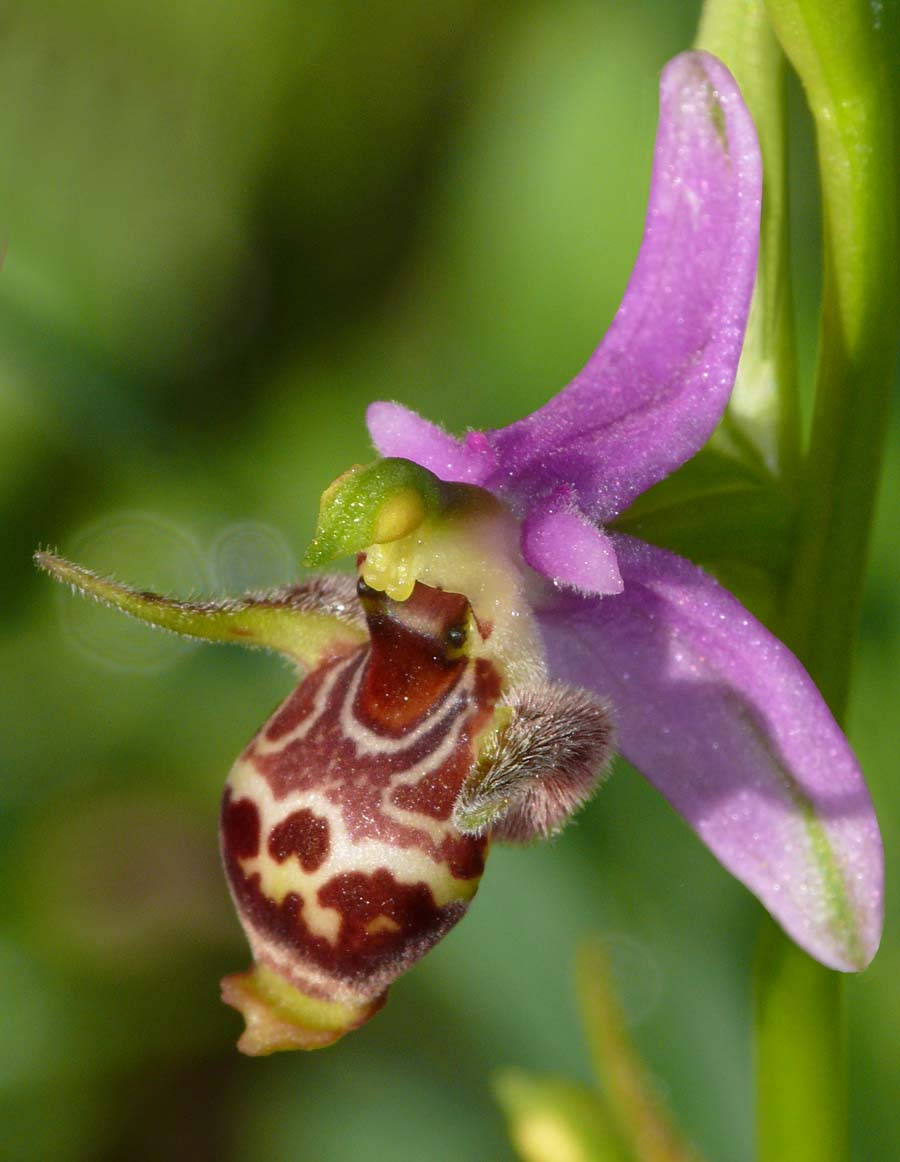
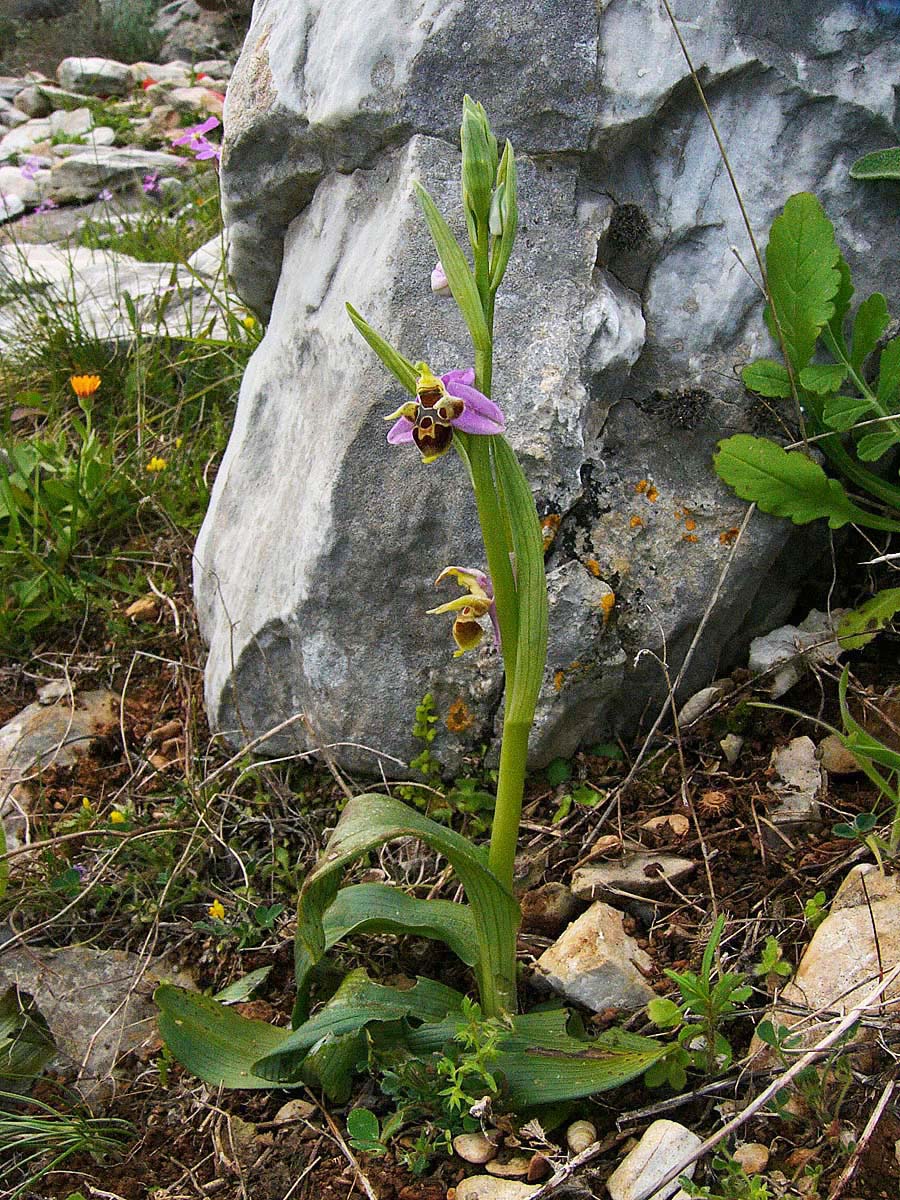
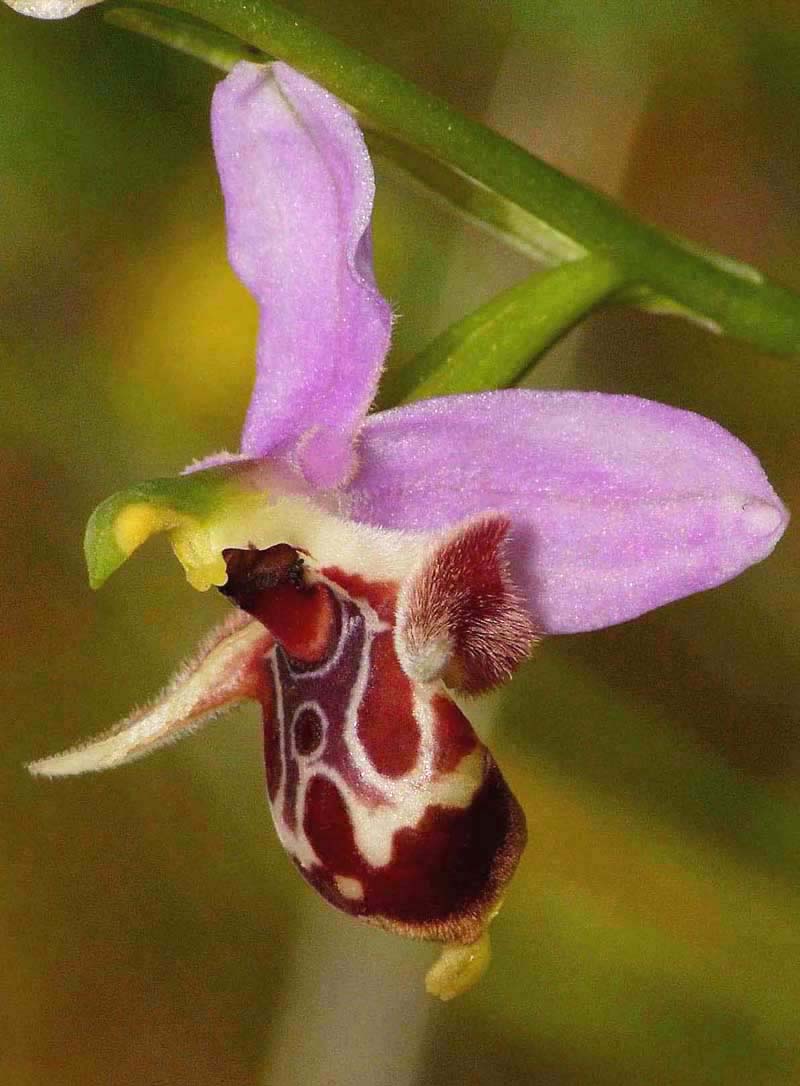
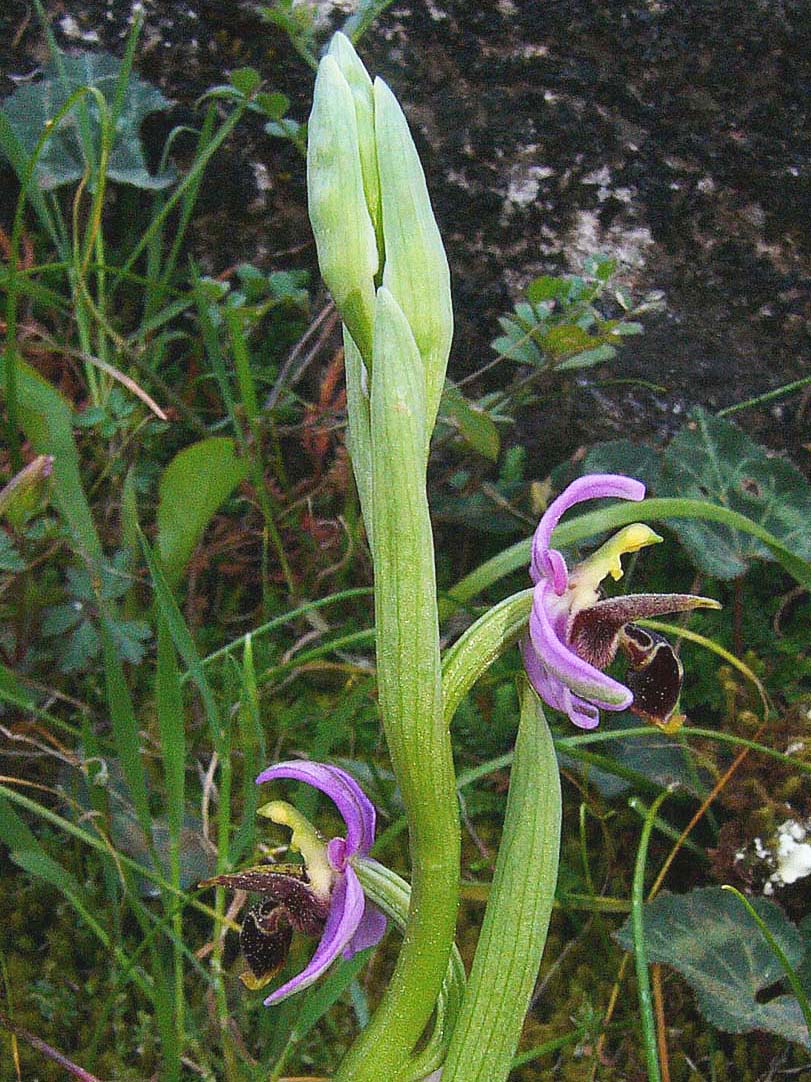
Distinguishing this species from O. crassicornis is a job for the experts and in the absence of pollinator identification the plants depicted here have been selected with reference to the parameters of their known distribution. The photographs all come from the Aegean islands of Lesbos and Samos, Peleponnese, Attica and Epirus. O. cerastes is variable and not easy to separate from its cousins but characteristic features include :- 1. Sepals that strongly recurve with age. 2. A broad stigmatic cavity. 3. The speculum which normally covers most of the labellum and is often elaborate. 4. As already mentioned, the protuberences are horn like and usually exceptionally long. 5. The plant is robust, growing up to 50cms and usually few flowered.
The pictures date from the second week of April in the Aegean and the last week in northern Greece.
.