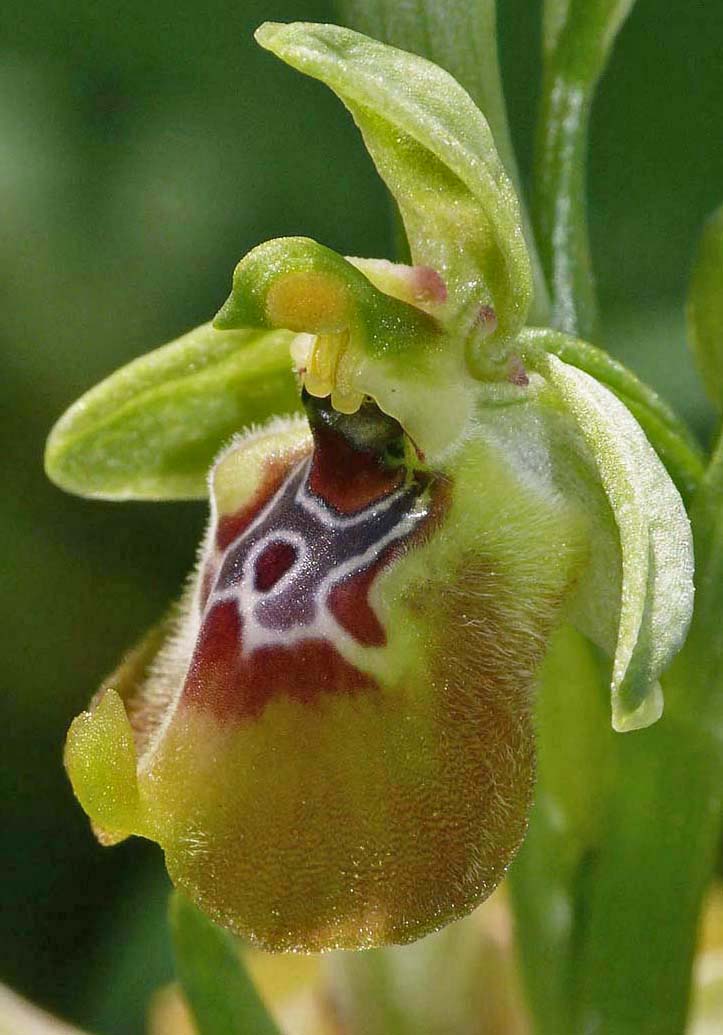
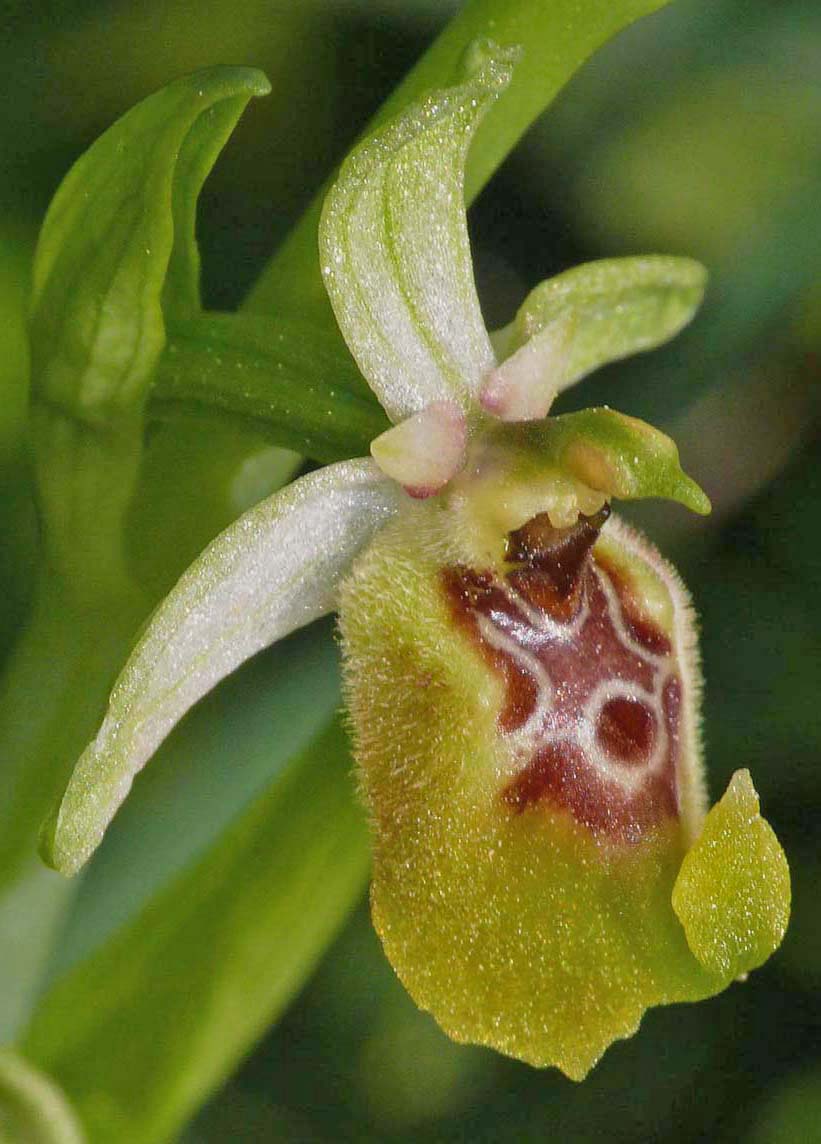
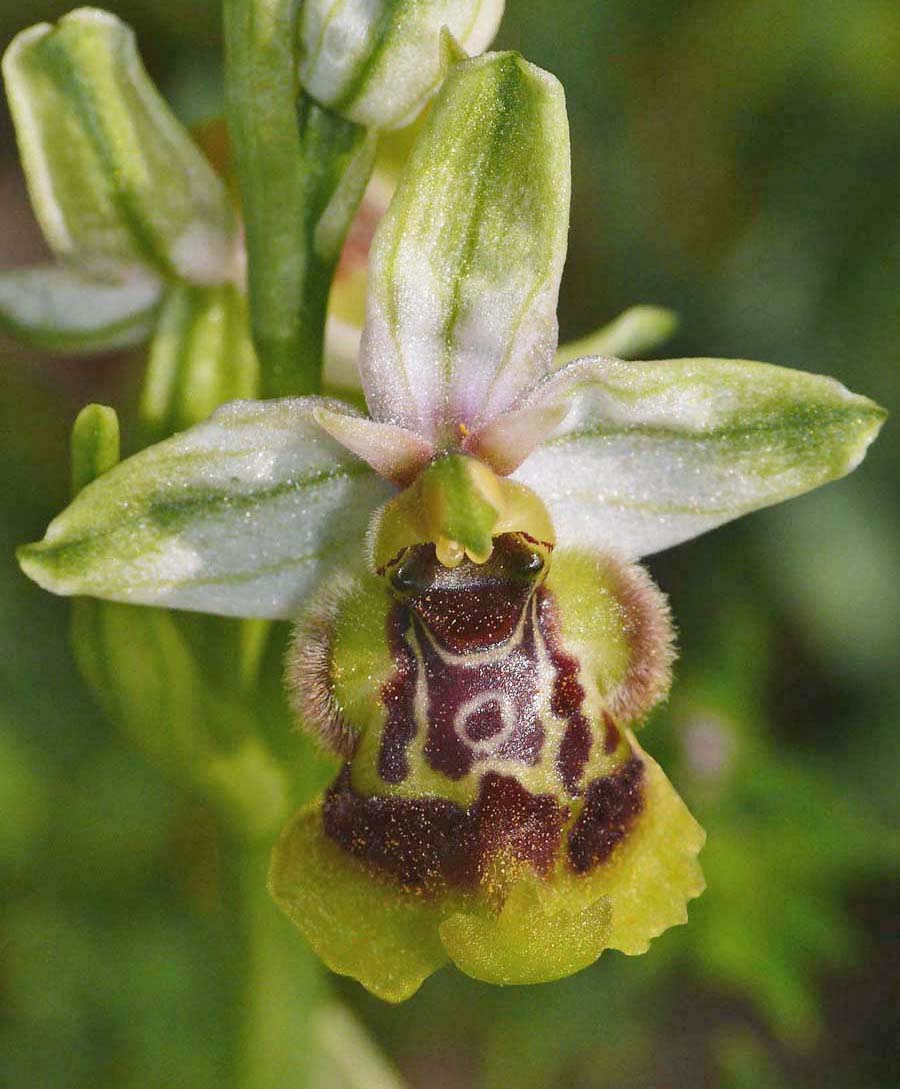
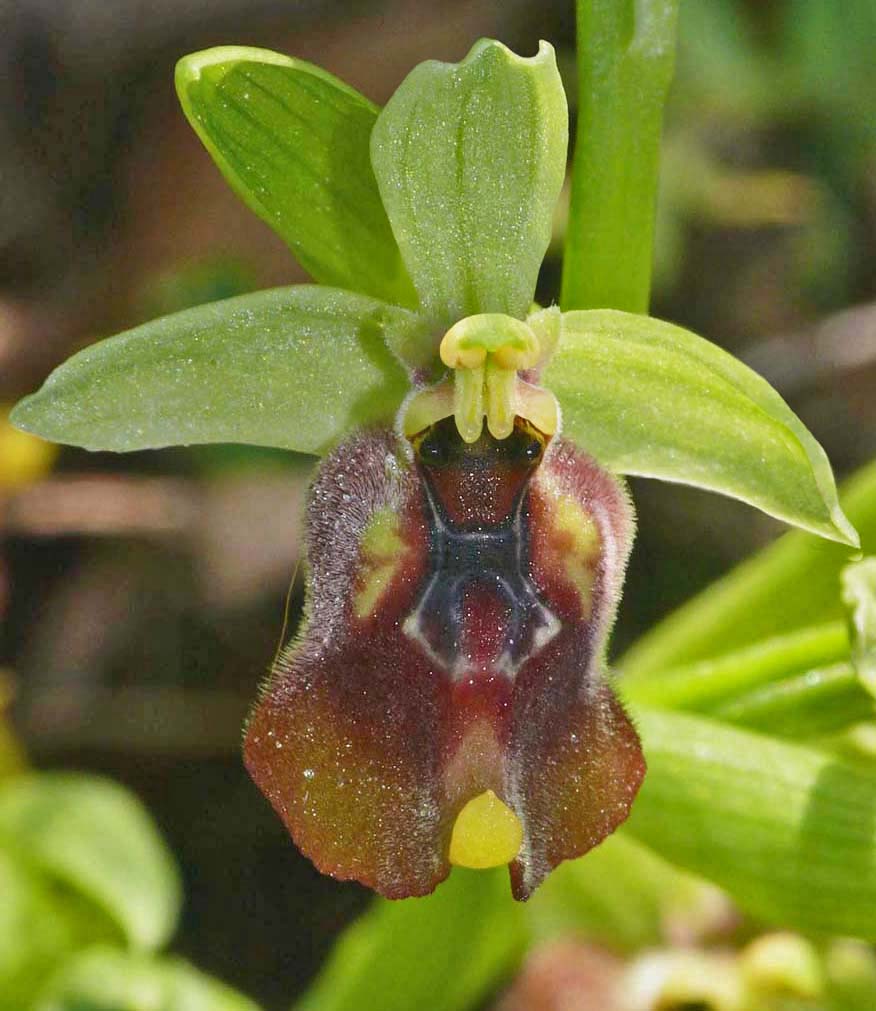
This is one of the seventeen member O. bornmuelleri group that range across the eastern and central Mediterranean. O. biancae
itself is endemic to the island of Sicily from where
it was first described in 1842 and named after the Italian
botanist Signor G. Bianca.
Even in a genetically pure form it is a highly variable orchid capable of impersonating other of the Sicilian fuciflorids with which it often grows. It is also somewhat promiscuous and regular hybridisation serves only to produce offspring that makes identification all the more difficult.
Initial identification can be made relatively easily by virtue of its significantly smaller size, up to a third smaller than the species with which it commonly mixes, i.e.: O. oxyrrhynchos, O. calliantha and O. lacaitae. Another significant differentiator is its early flowering, being in advance of O. oxyrrhynchos by at least a month and 6 weeks before the two latter species. As with others of the bornmuelleri group, O. biancae has a significant marginal ring of hair around the lip, a feature which sets it apart from the more clean shaven appearance of the others. These marginal hairs are however seldom complete, as would be found with O. bornmuelleri itself.
O. biancae is thought to be an ancient species with origins that go back to the eastern Mediterranean and probably to O. tenthredinifera. This would certainly explain the plants ability to sometimes imitate O. grandiflora and also the facility with which it will hybridize with that species.
The pictures date from the second and third weeks of April and all come from locations in the south east of Sicily, notably to the east of Ferla where its a relatively common species.
Even in a genetically pure form it is a highly variable orchid capable of impersonating other of the Sicilian fuciflorids with which it often grows. It is also somewhat promiscuous and regular hybridisation serves only to produce offspring that makes identification all the more difficult.
Initial identification can be made relatively easily by virtue of its significantly smaller size, up to a third smaller than the species with which it commonly mixes, i.e.: O. oxyrrhynchos, O. calliantha and O. lacaitae. Another significant differentiator is its early flowering, being in advance of O. oxyrrhynchos by at least a month and 6 weeks before the two latter species. As with others of the bornmuelleri group, O. biancae has a significant marginal ring of hair around the lip, a feature which sets it apart from the more clean shaven appearance of the others. These marginal hairs are however seldom complete, as would be found with O. bornmuelleri itself.
O. biancae is thought to be an ancient species with origins that go back to the eastern Mediterranean and probably to O. tenthredinifera. This would certainly explain the plants ability to sometimes imitate O. grandiflora and also the facility with which it will hybridize with that species.
The pictures date from the second and third weeks of April and all come from locations in the south east of Sicily, notably to the east of Ferla where its a relatively common species.
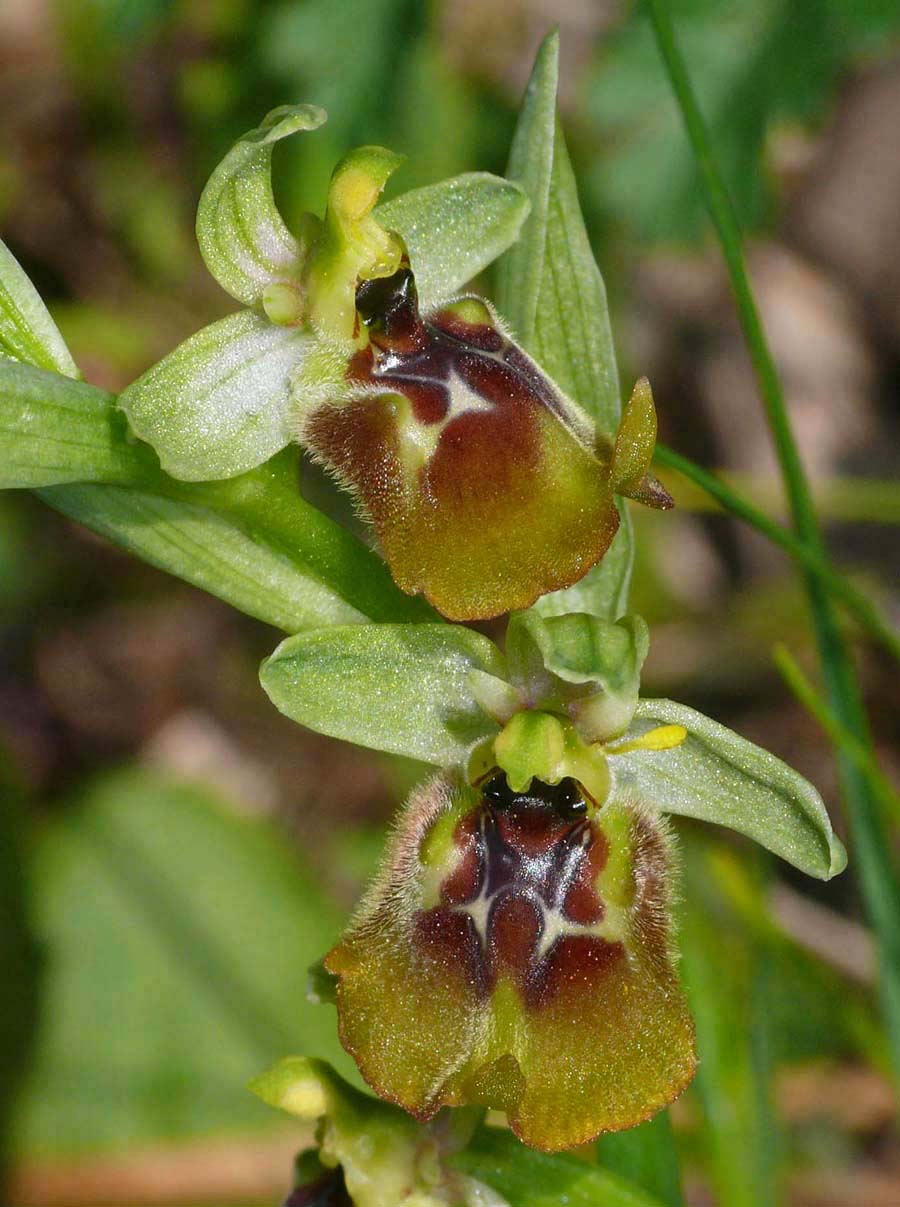
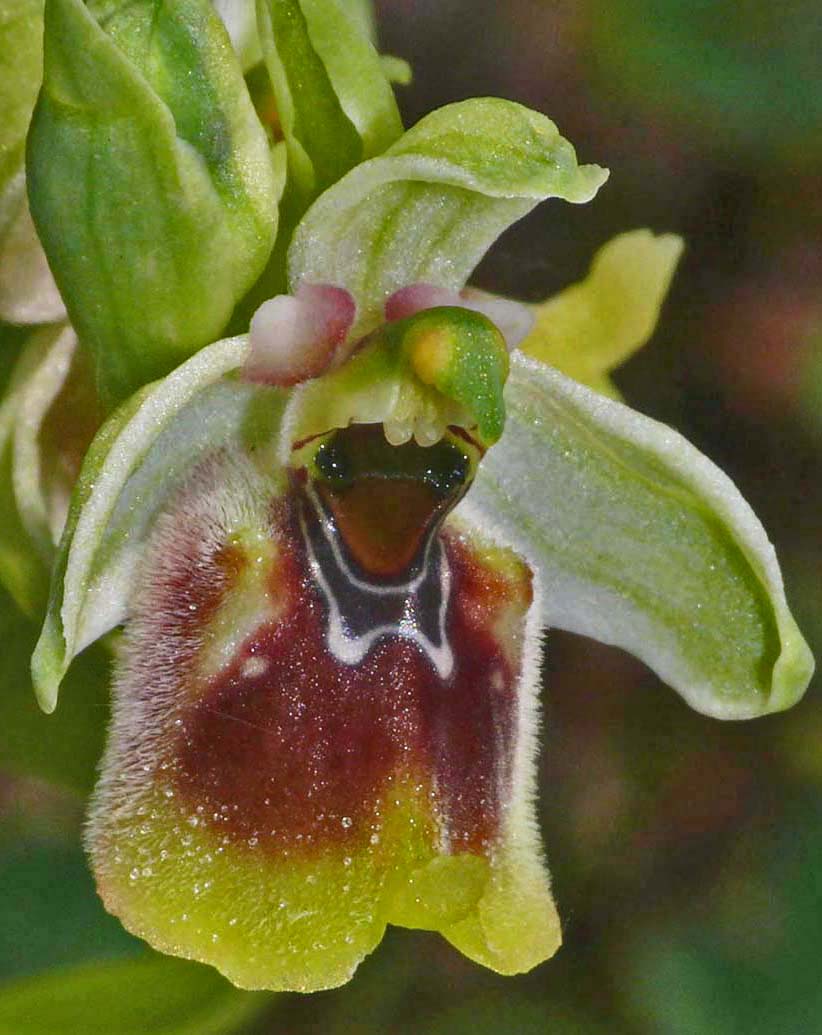
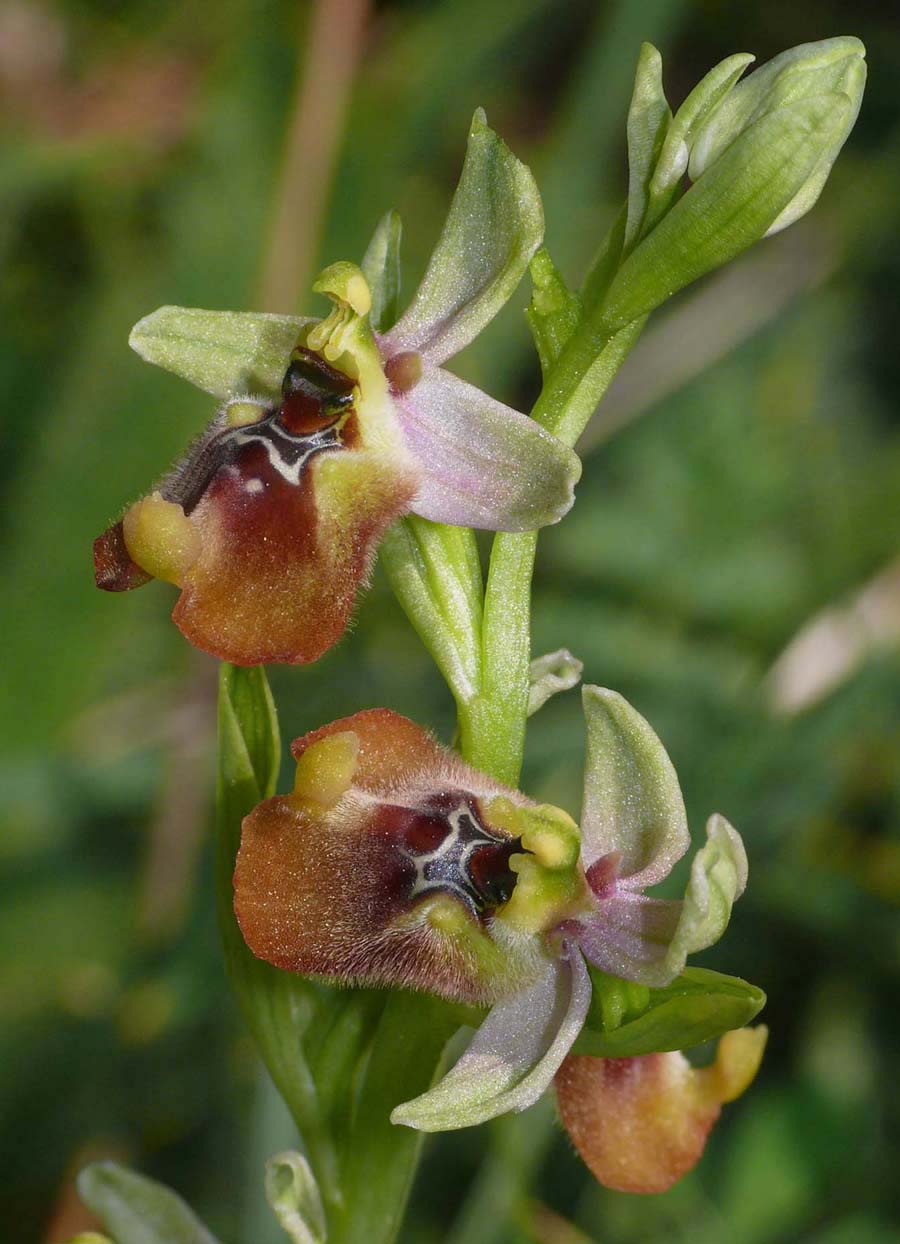
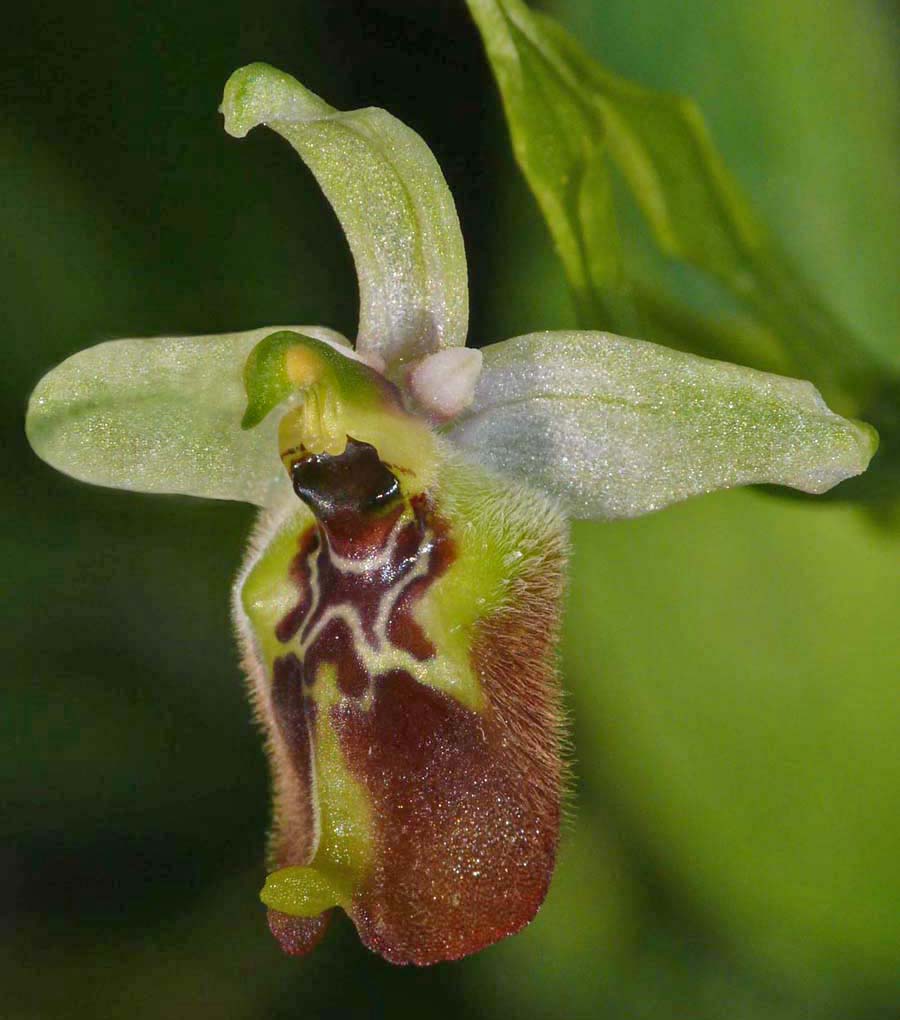
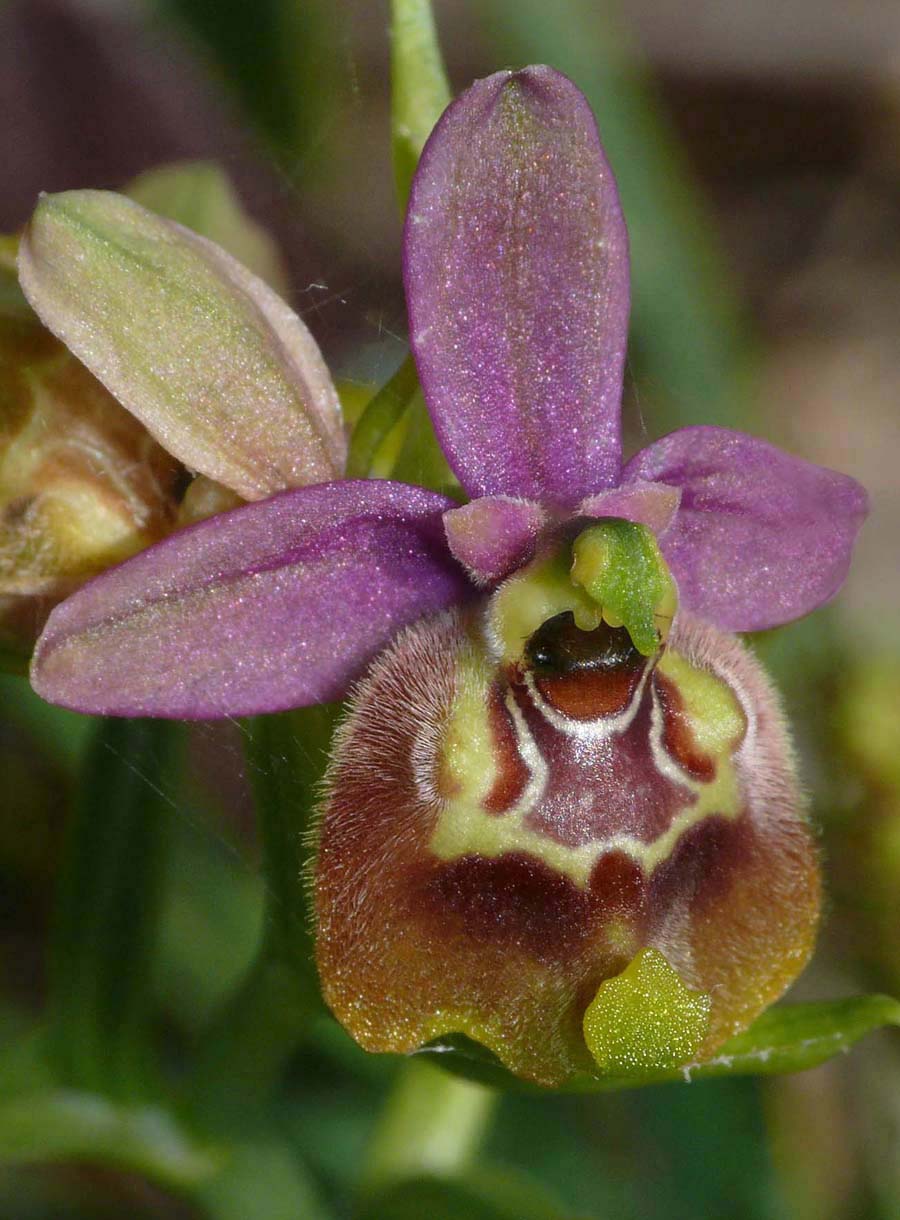
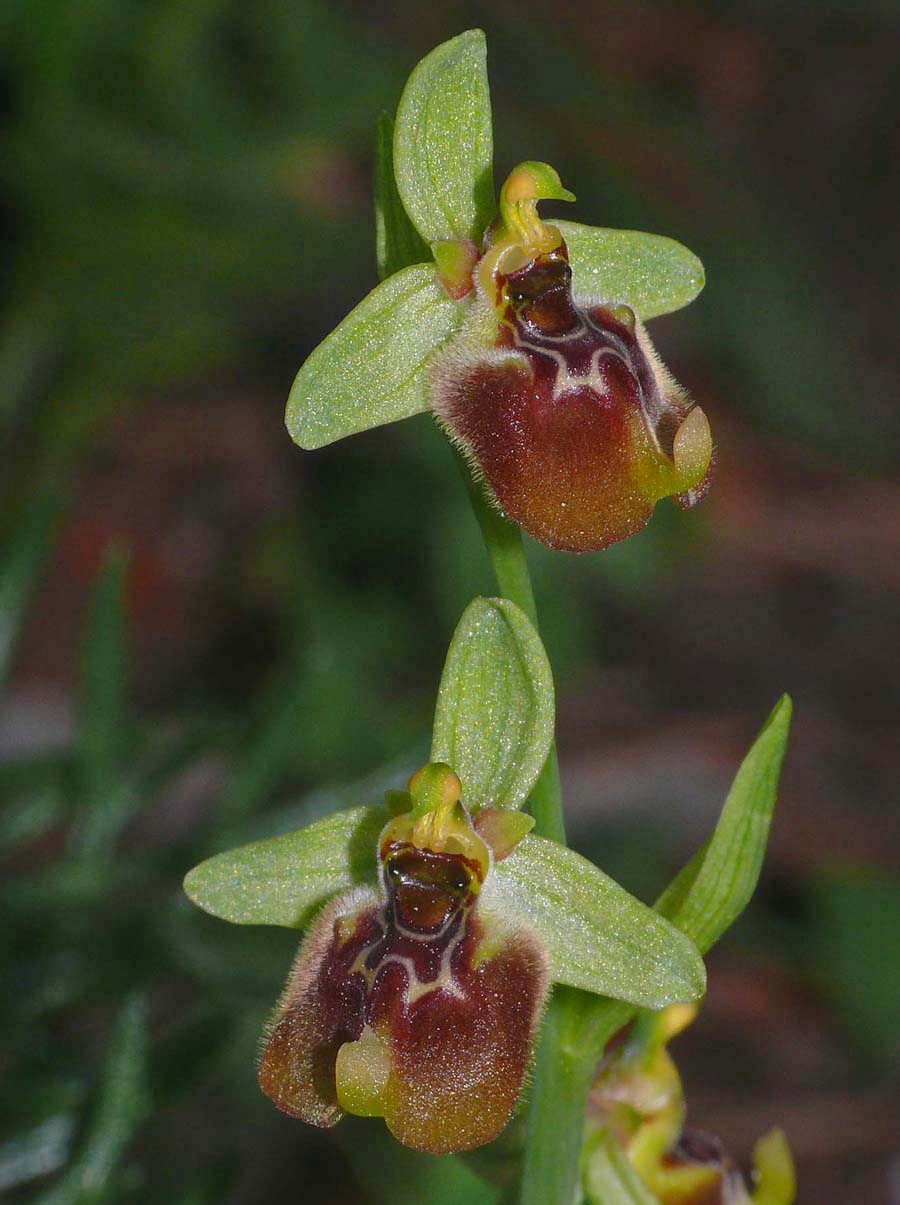
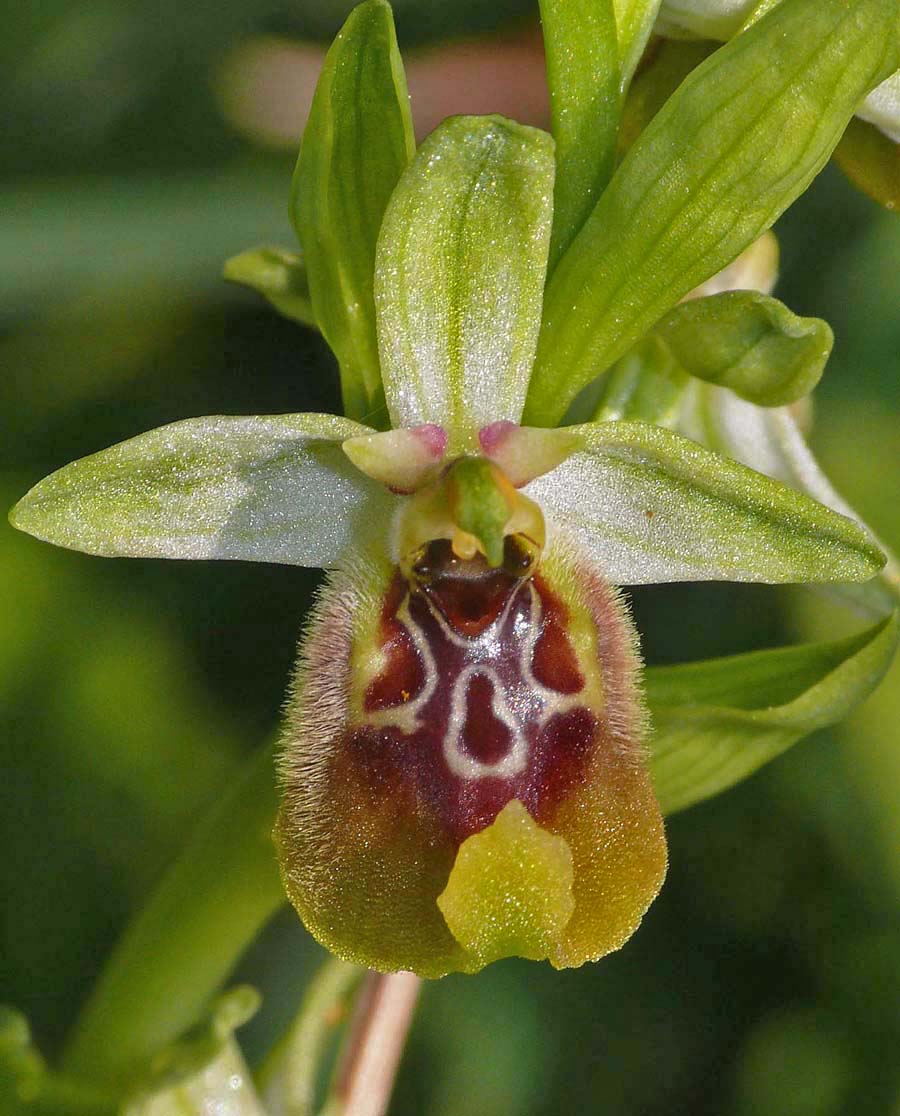
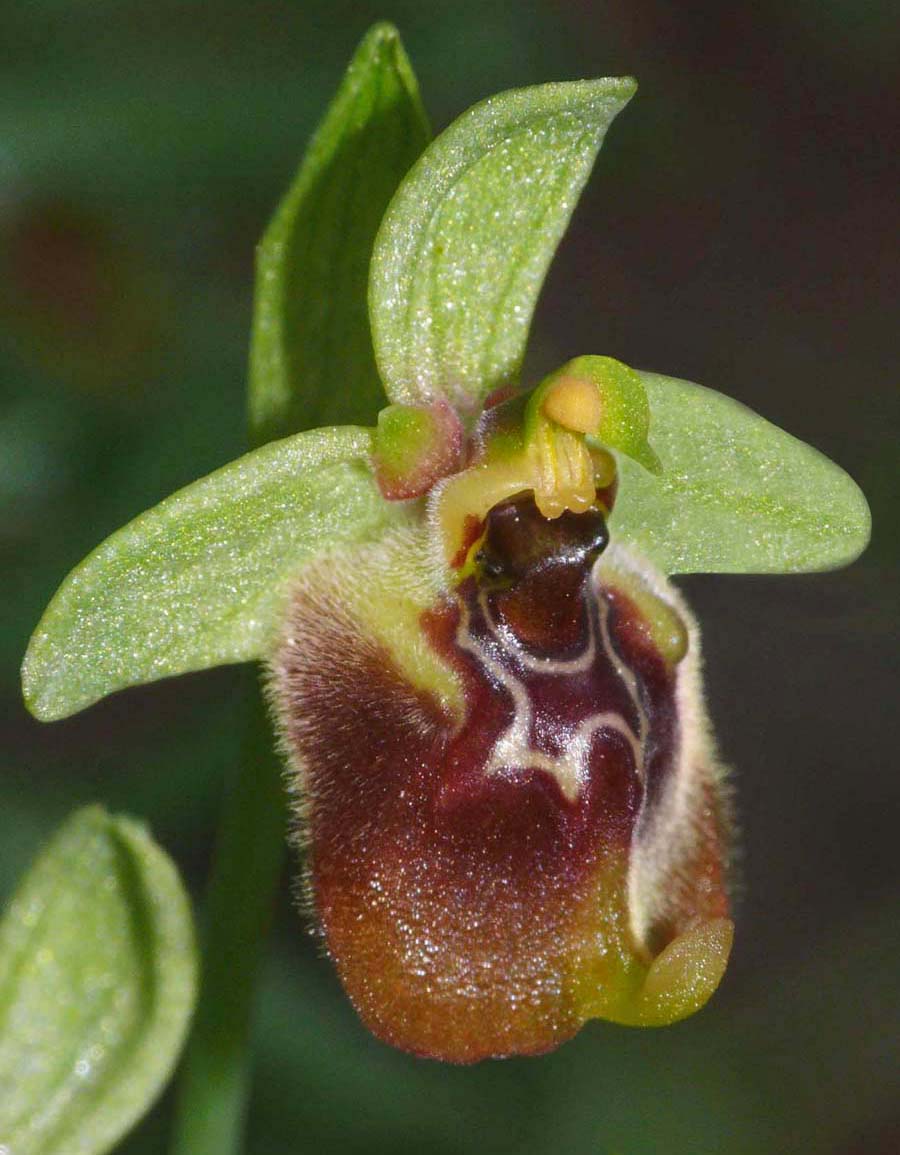
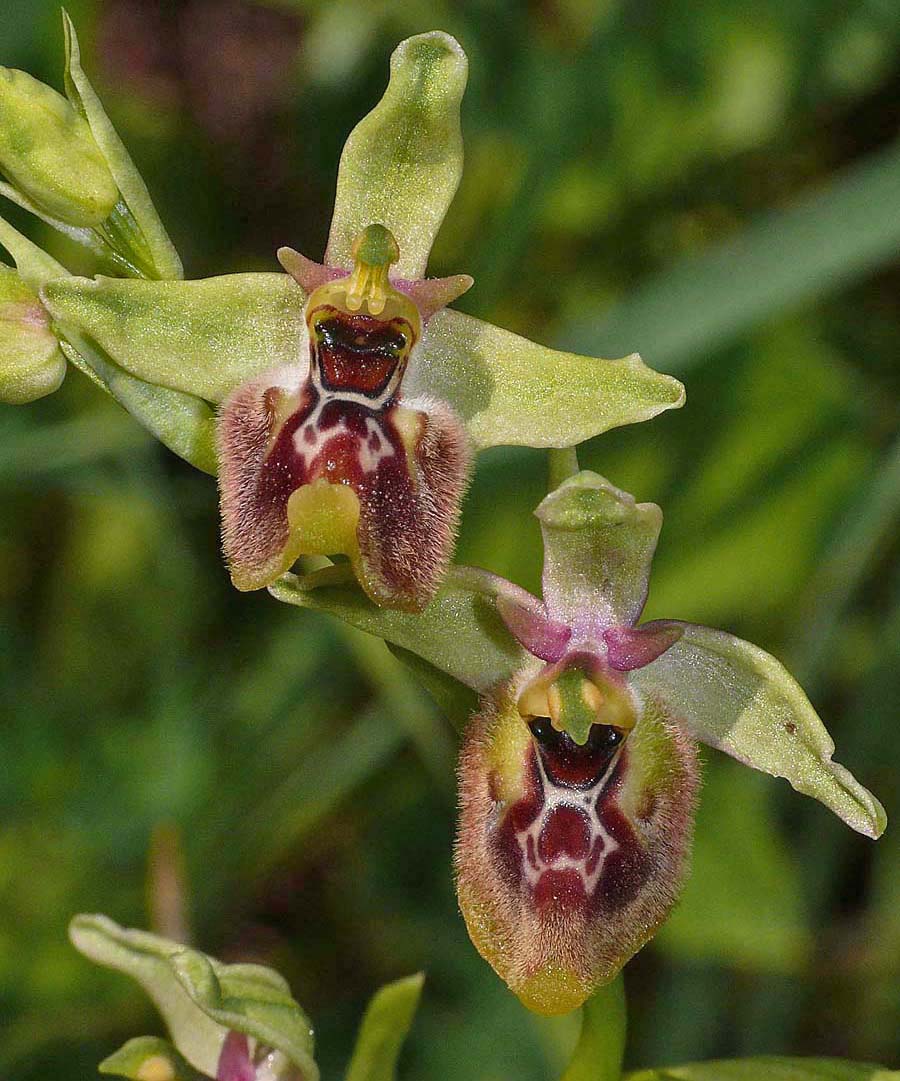
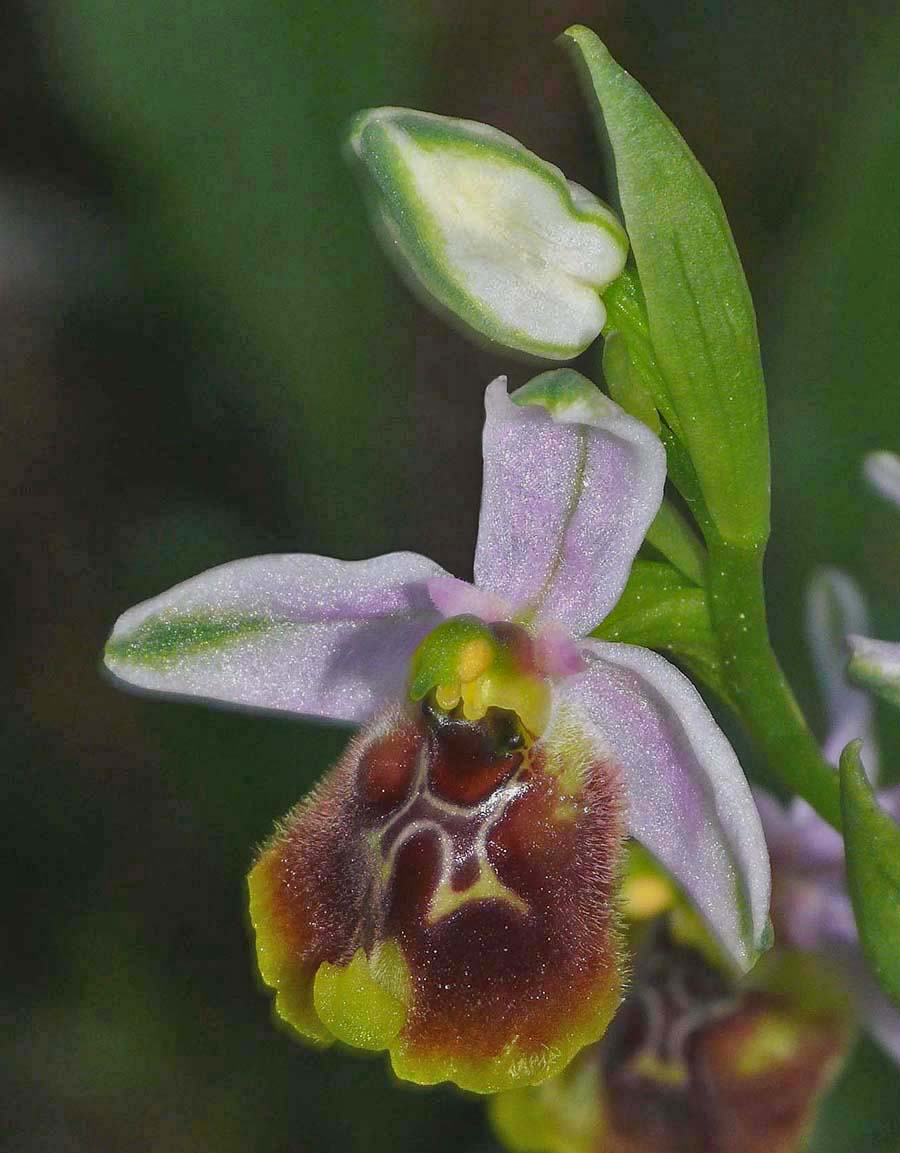

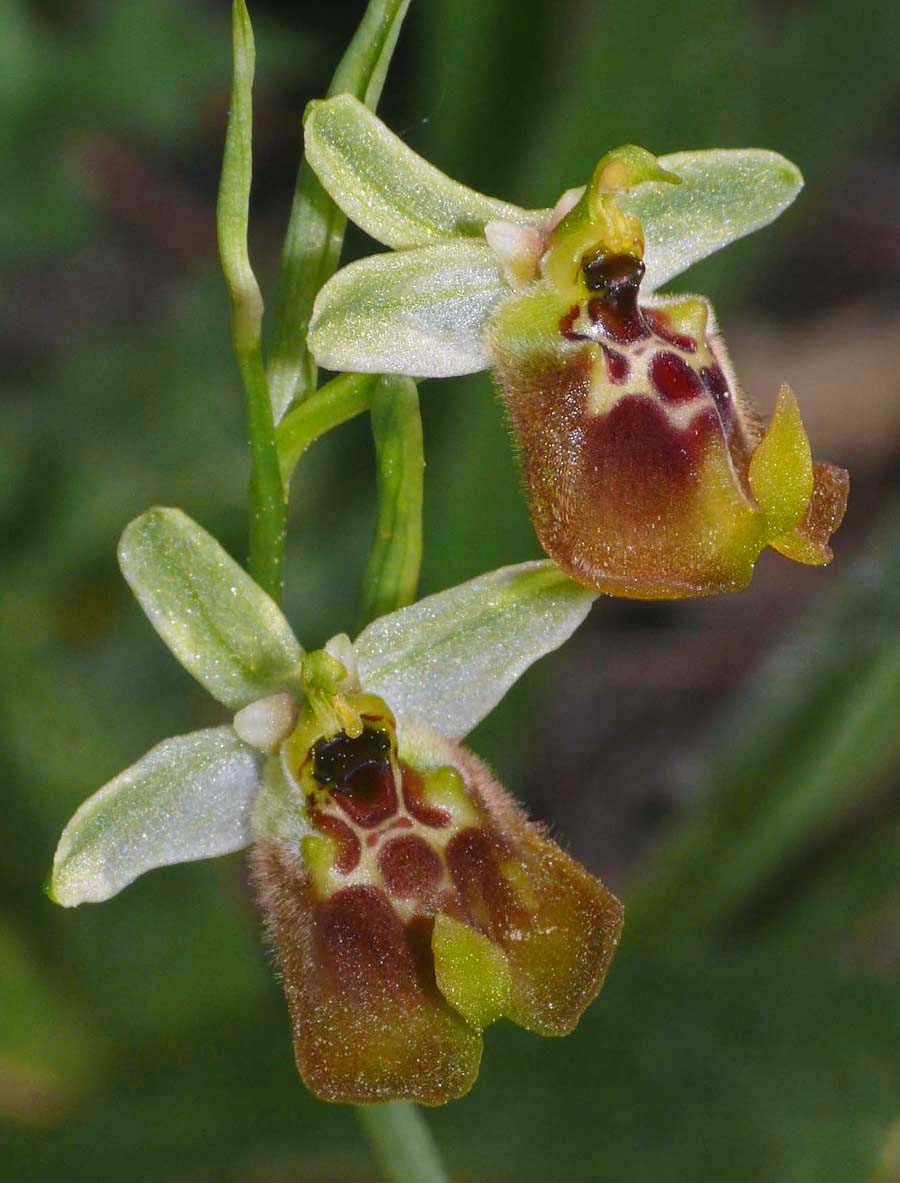
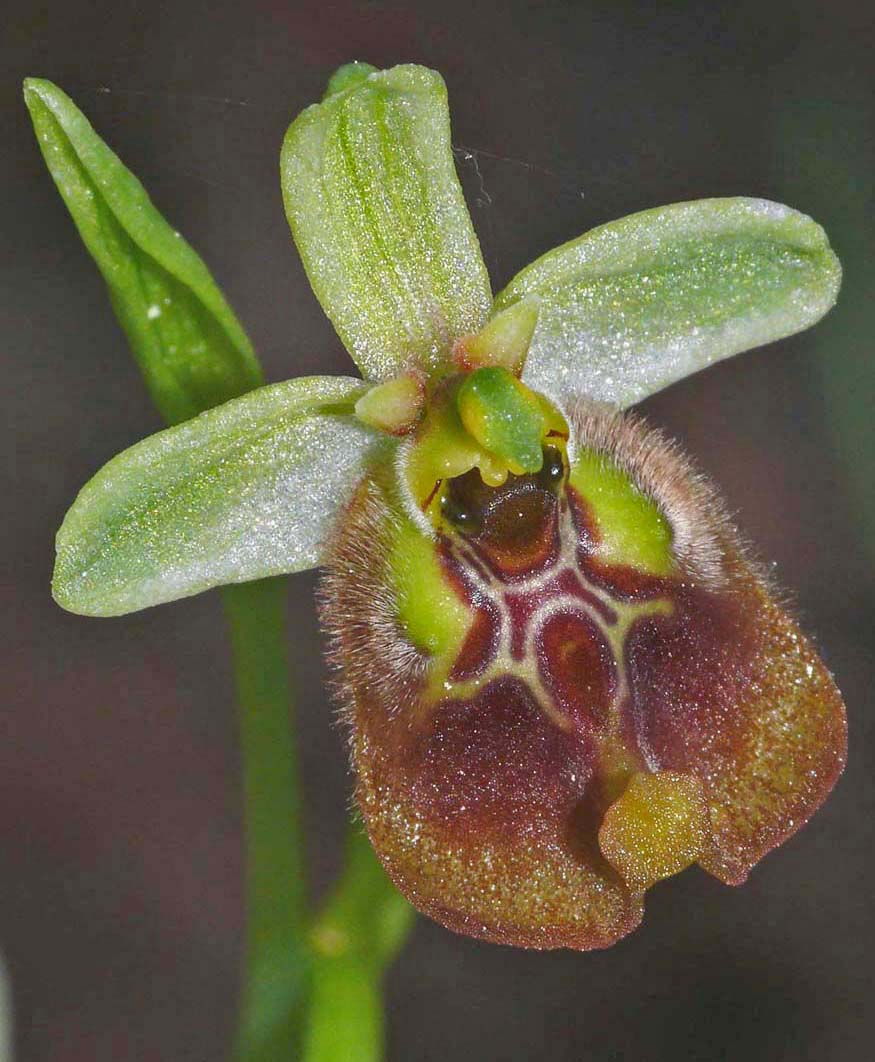
The following photographs depict some examples of O. biancae hybrids, which as mentioned in the text are commonly to be found where it grows in association with other fuciflorid species. Photos 1 and 2 = O. biancae x grandiflora, 3 and 4 = O. biancae x lacaitae and 5 and 6 = O. biancae x oxyrrhnchos.