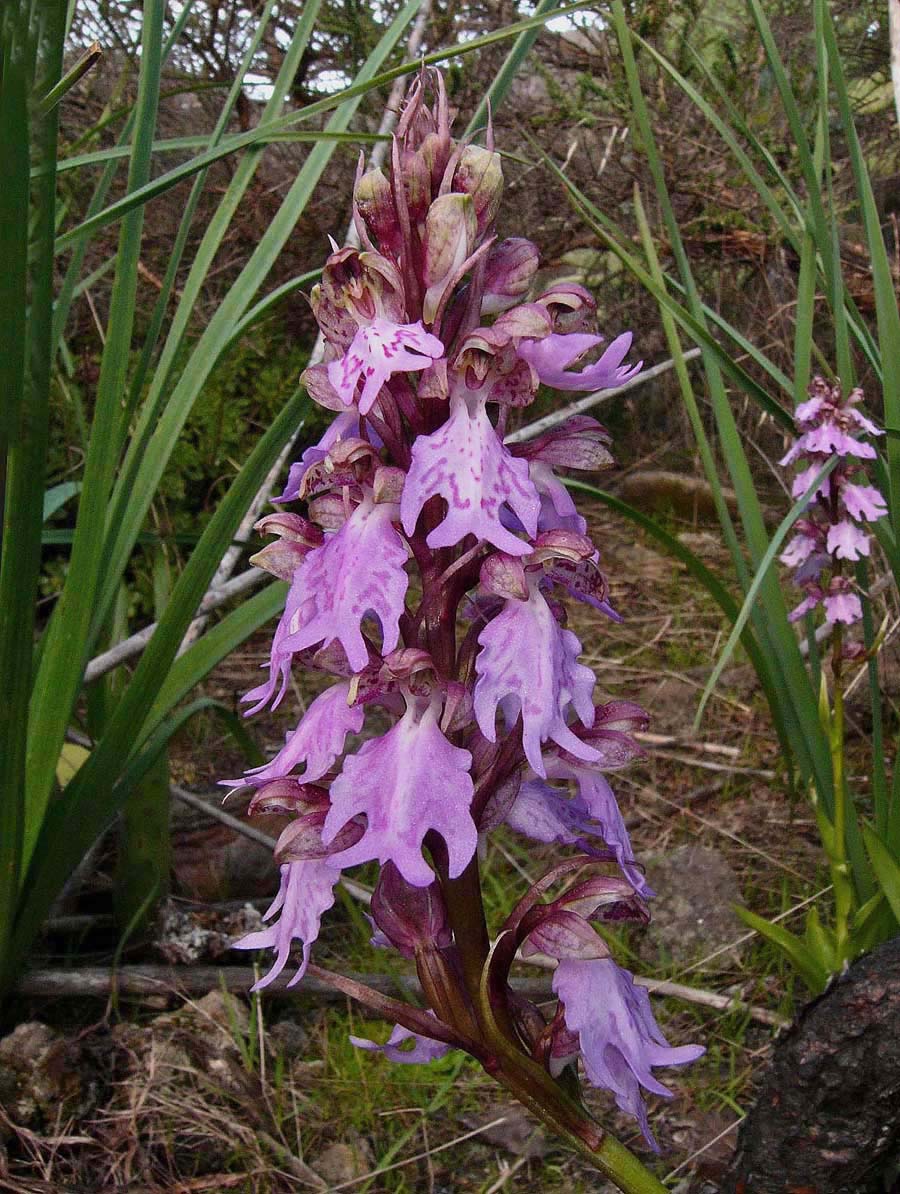
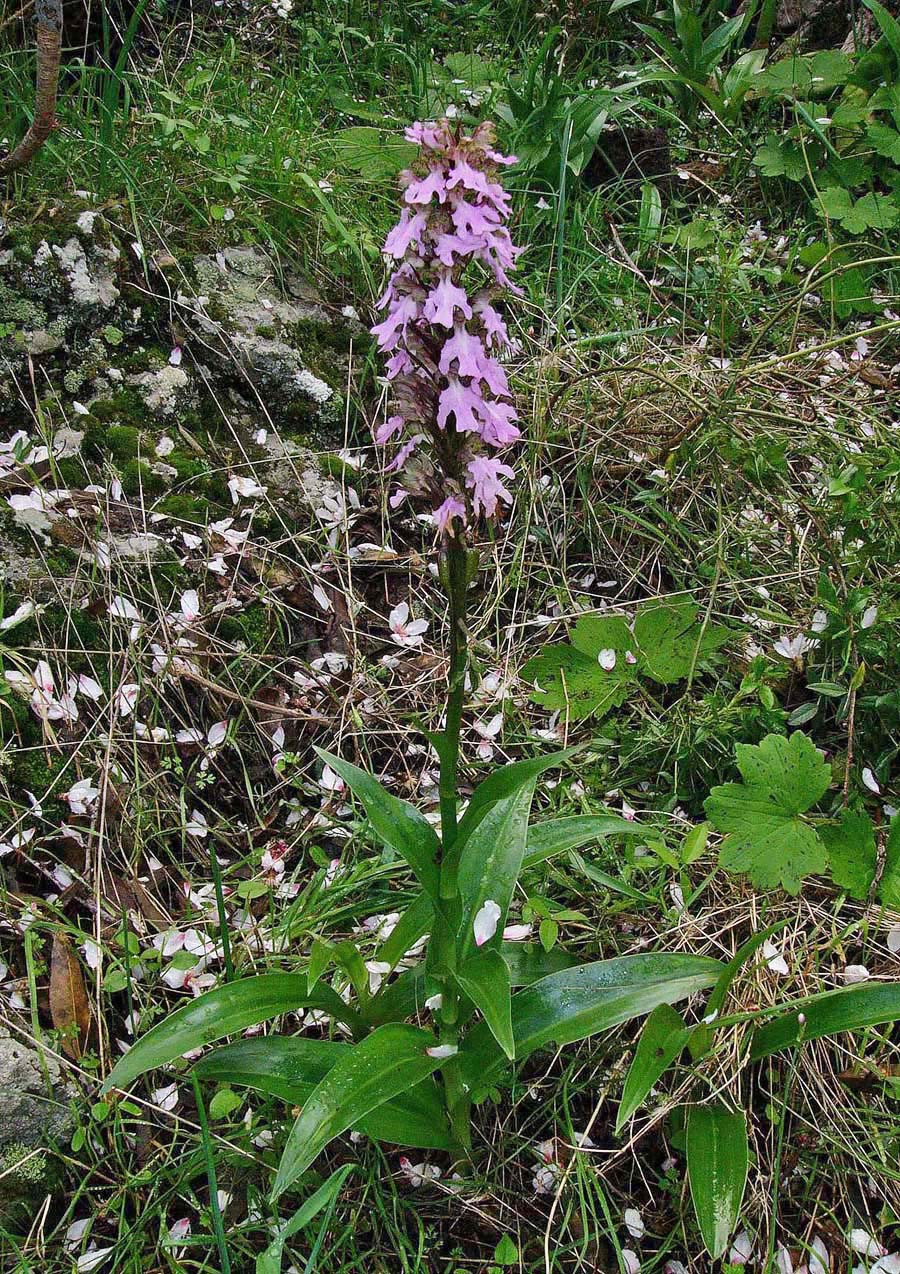
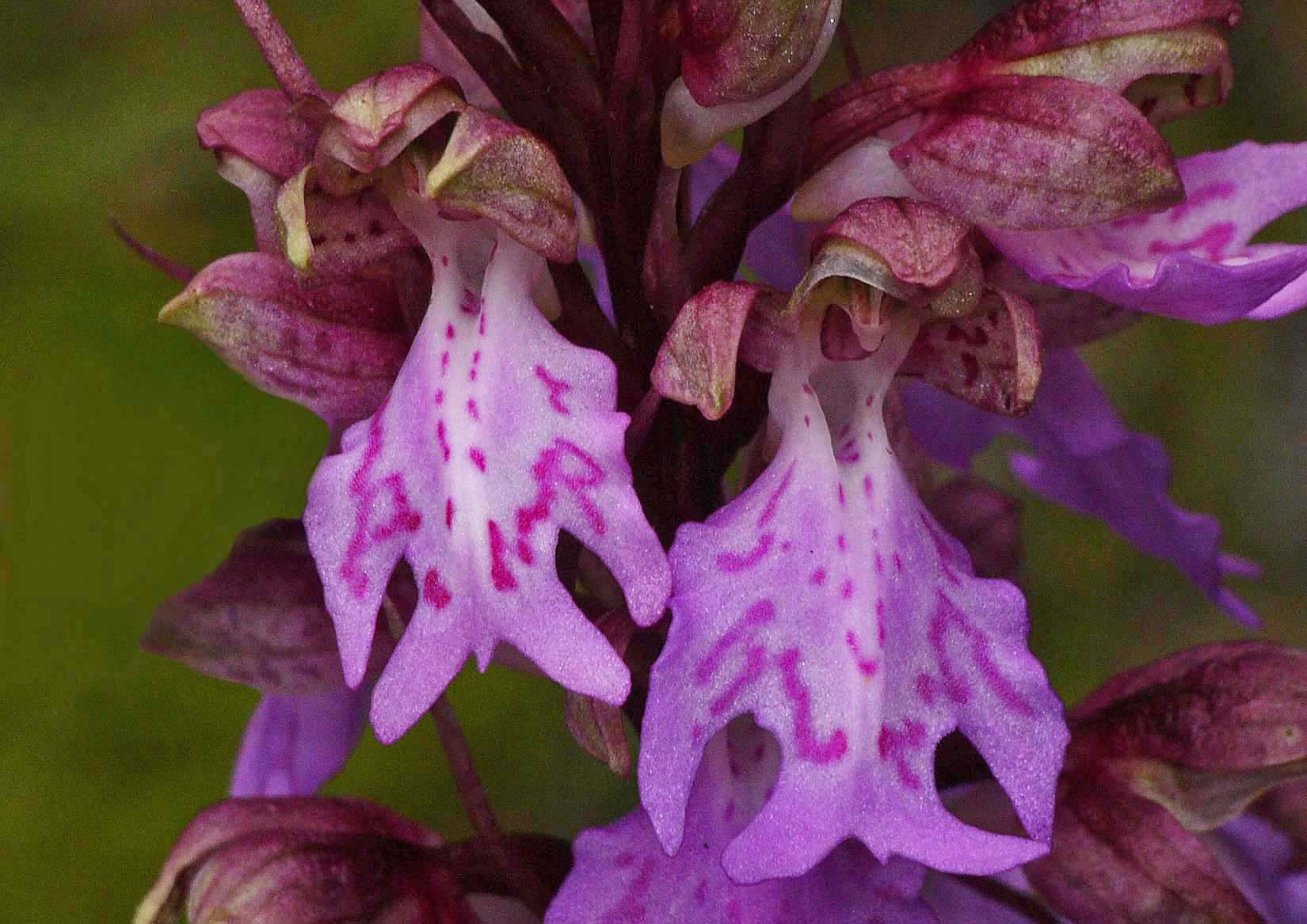
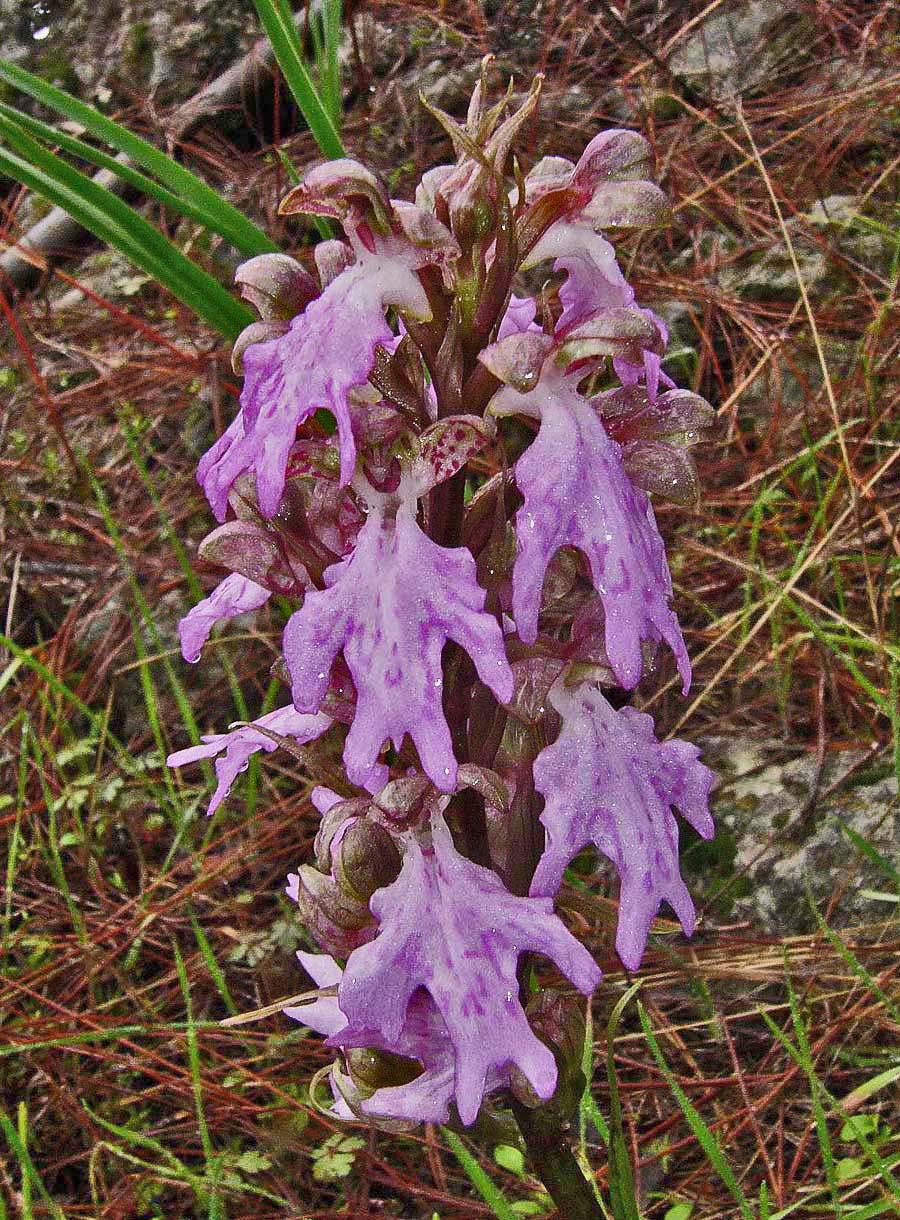
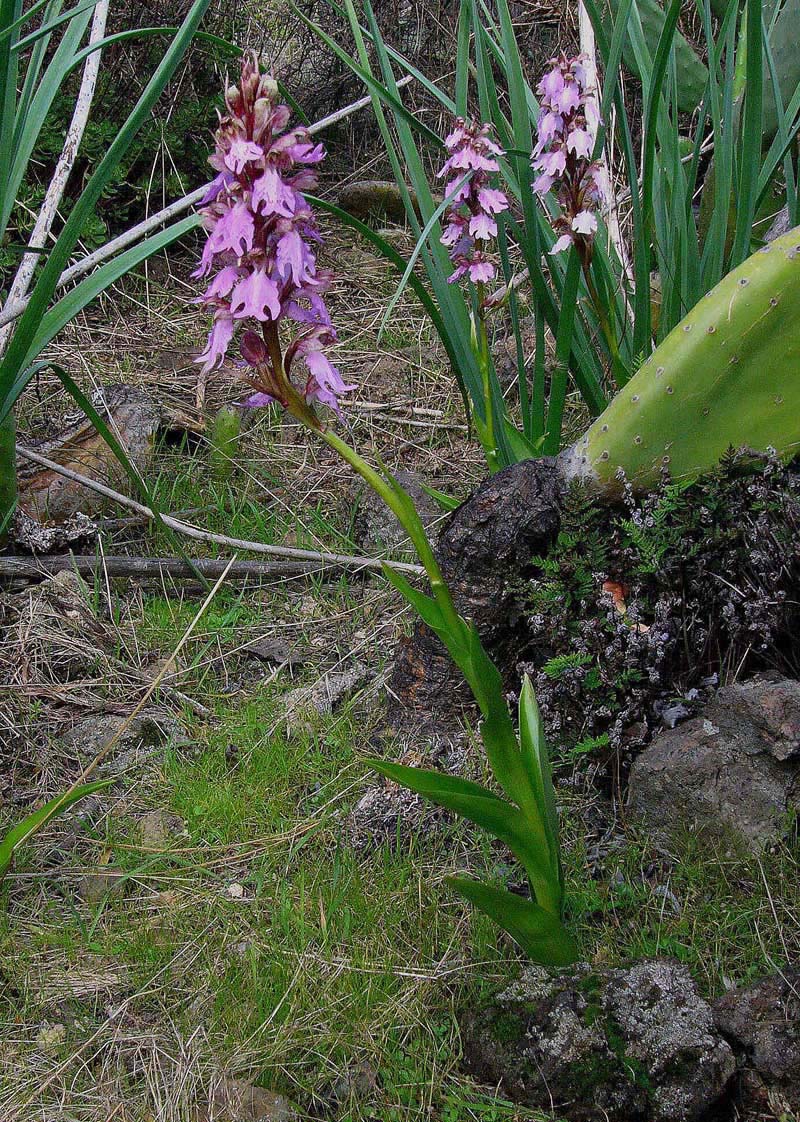
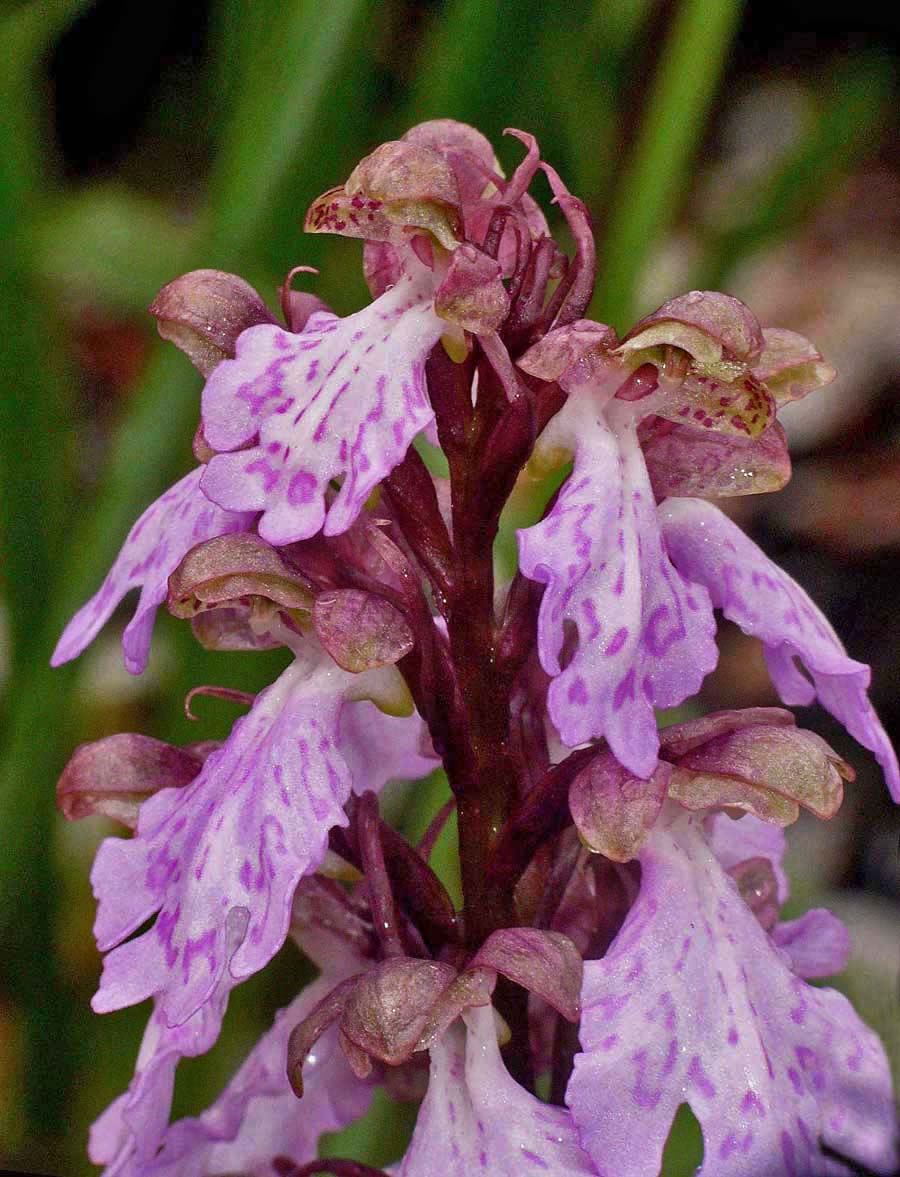
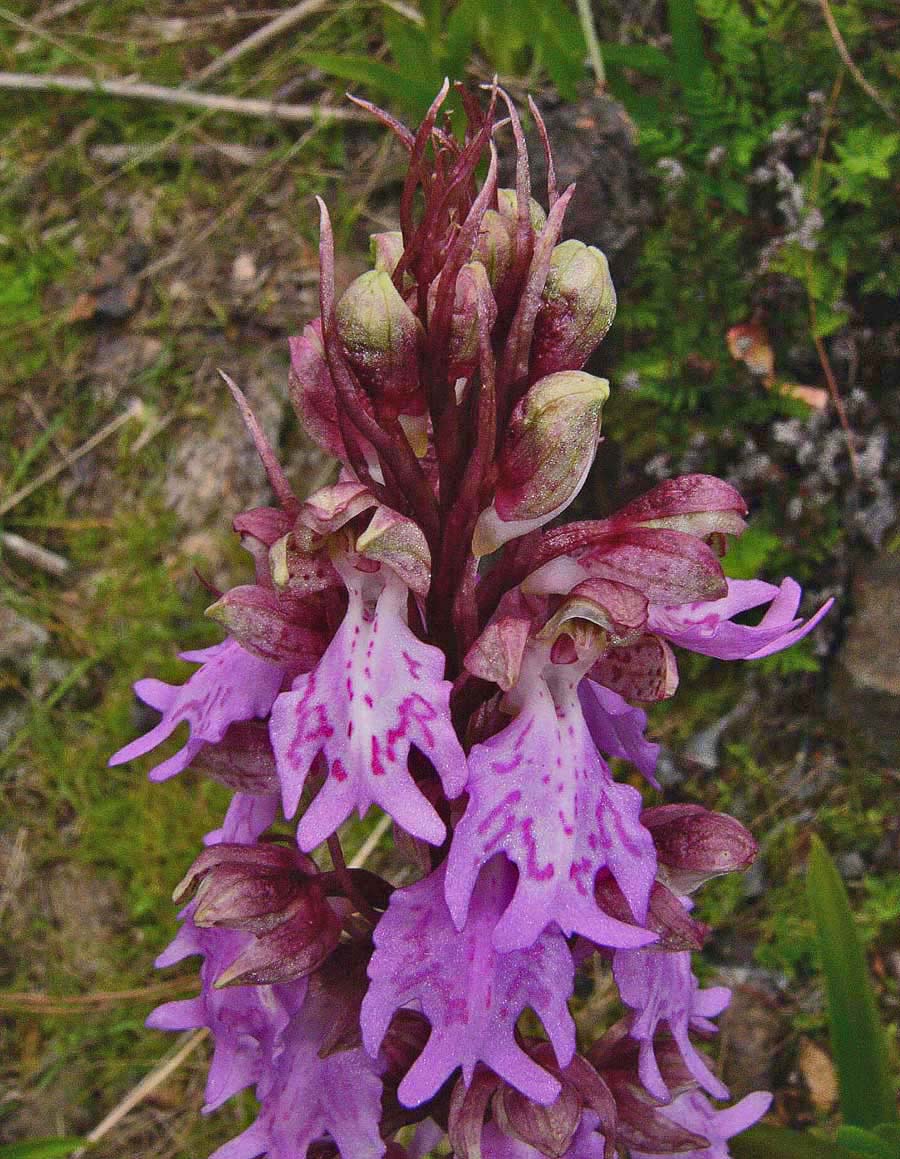
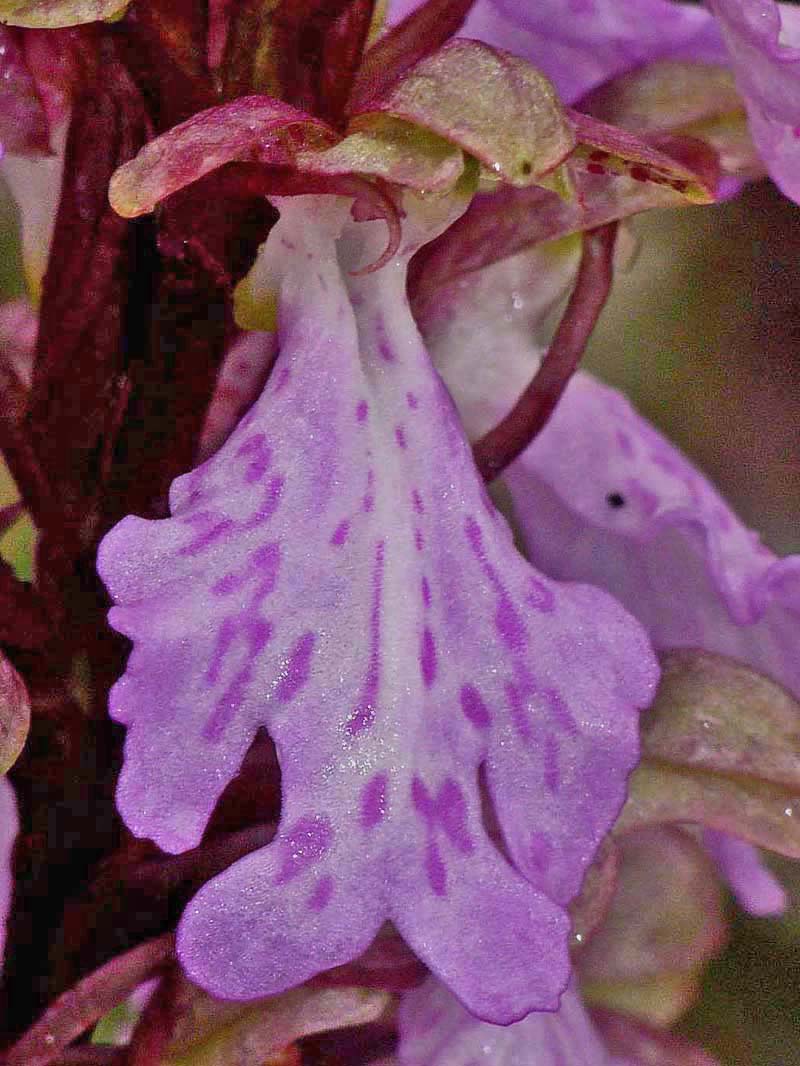
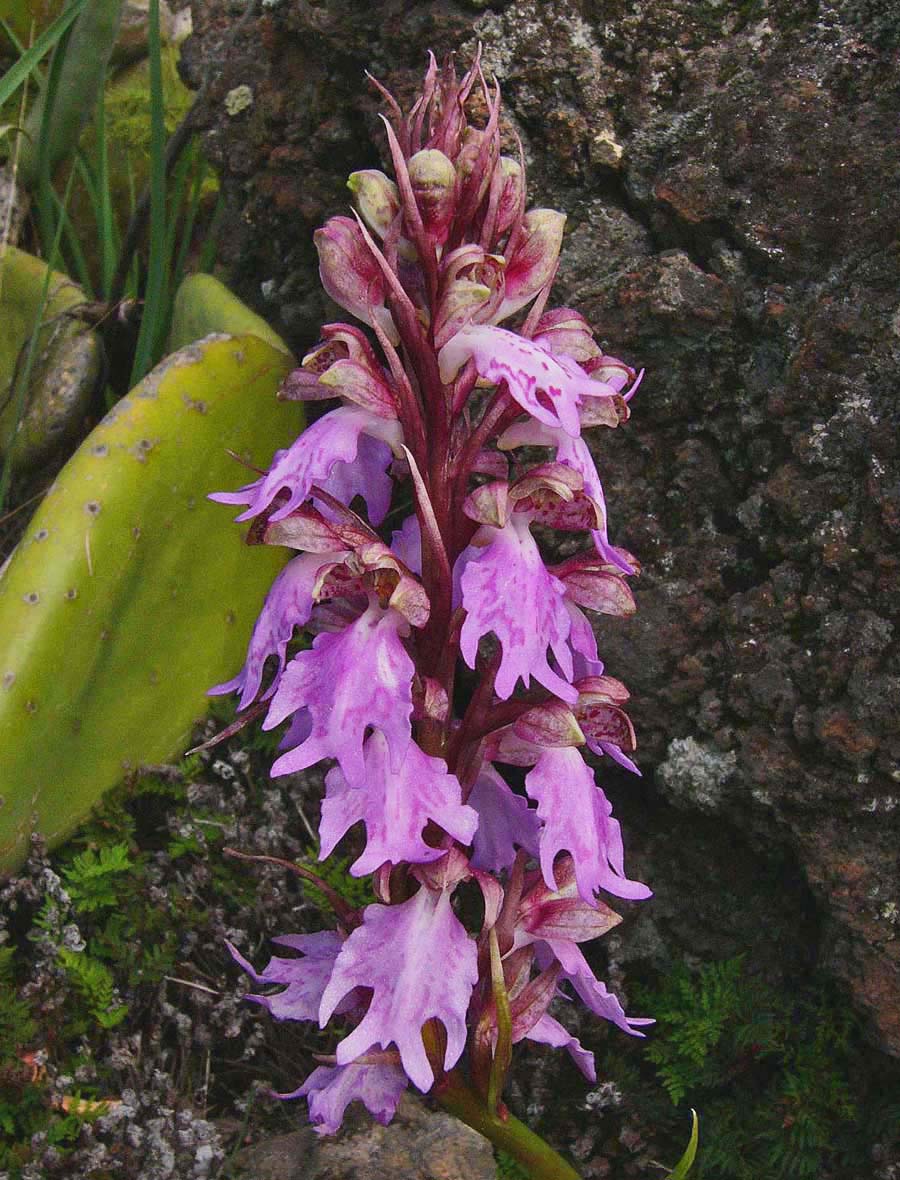
H. metlesicsianum
was first described by Teschner from Tenerife in 1982 being named in
honour of the contemporary Austrian botanist Herr H. Metlesics. This
species is entirely confined to the Atlantic island of Tenerife in the
Canary Isles.
This archipelago, although not rich in orchid varieties has fostered isolated development of plants which although originally with a wider distribution, have subsequently been recognized as species in their own right. There are two orchids in particular which have evolved in this way, the Canary Islands Orchid, O. canariensis which can be found on several of the islands and the Tenerife Giant orchid, H. metlesicsianum which exists on Tenerife only.
Tenerife is a volcanic island and is a harsh environment for even the toughest of plants, yet this species chooses to grow on the lower flanks of Mount Tiede amongst the lava channels and rubble. It is at its most plentiful in the vicinity of Santiago del Teide and chooses sites where the lava has eroded to a point where a thin layer of mildly acidic soil has formed in sufficient quantity to support vegetation. It is a point of note that H. metlesicsianum seems invariably to grow in gulleys at a lower level than the surrounding igneous rock. This presumably not only provides a habitat where more soil has accumulated but also one that offers some protection from harsh weather conditions.
H. metlesicsianum is a very rare plant living in a curious environment and as such is impossible to confuse with any other orchid. It bears a strong morphological resemblance to H. robertianum and indeed shares a similar chromosome count.
This archipelago, although not rich in orchid varieties has fostered isolated development of plants which although originally with a wider distribution, have subsequently been recognized as species in their own right. There are two orchids in particular which have evolved in this way, the Canary Islands Orchid, O. canariensis which can be found on several of the islands and the Tenerife Giant orchid, H. metlesicsianum which exists on Tenerife only.
Tenerife is a volcanic island and is a harsh environment for even the toughest of plants, yet this species chooses to grow on the lower flanks of Mount Tiede amongst the lava channels and rubble. It is at its most plentiful in the vicinity of Santiago del Teide and chooses sites where the lava has eroded to a point where a thin layer of mildly acidic soil has formed in sufficient quantity to support vegetation. It is a point of note that H. metlesicsianum seems invariably to grow in gulleys at a lower level than the surrounding igneous rock. This presumably not only provides a habitat where more soil has accumulated but also one that offers some protection from harsh weather conditions.
H. metlesicsianum is a very rare plant living in a curious environment and as such is impossible to confuse with any other orchid. It bears a strong morphological resemblance to H. robertianum and indeed shares a similar chromosome count.