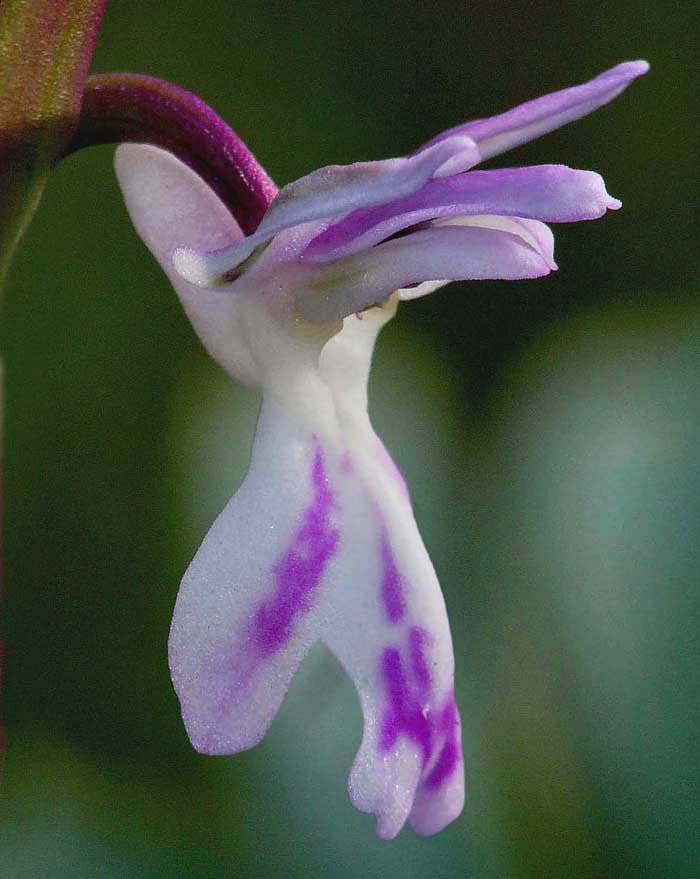
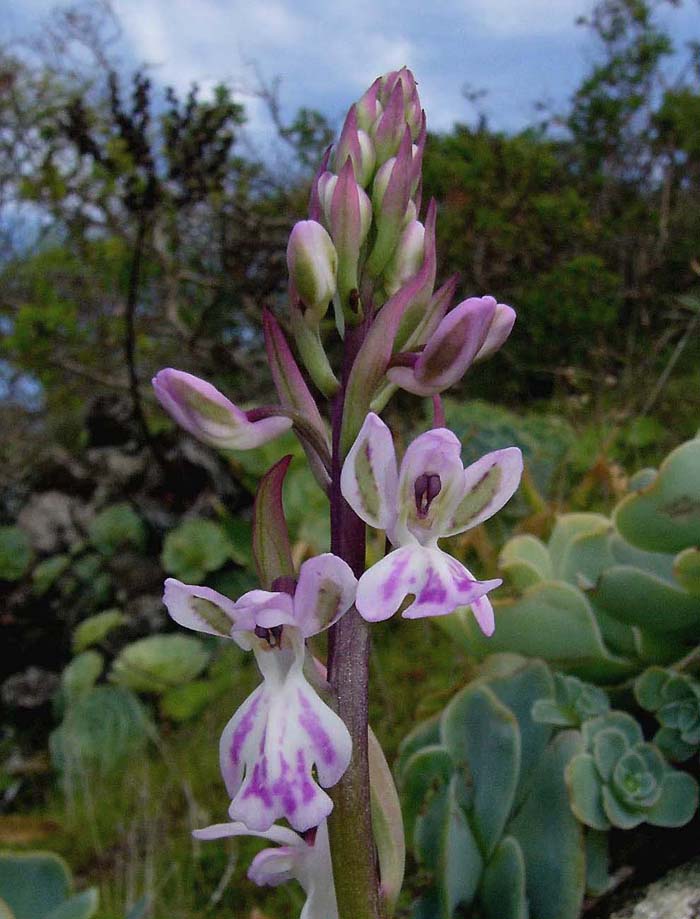
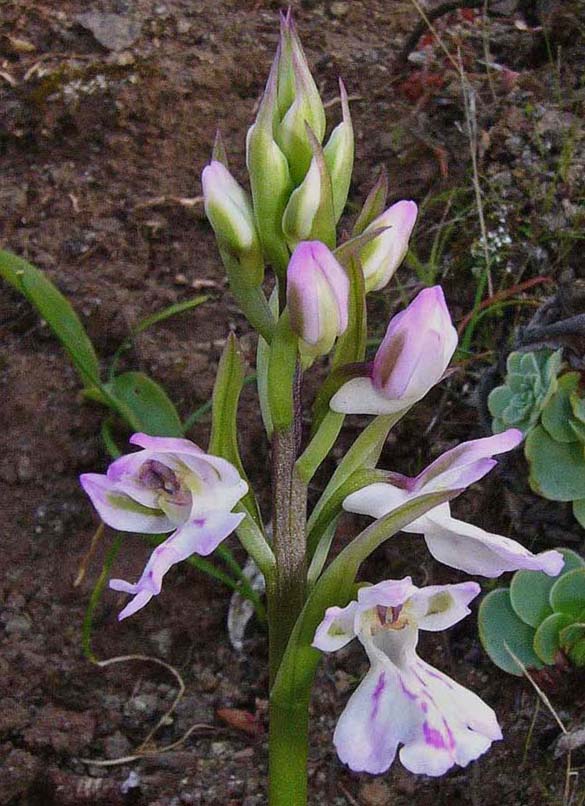
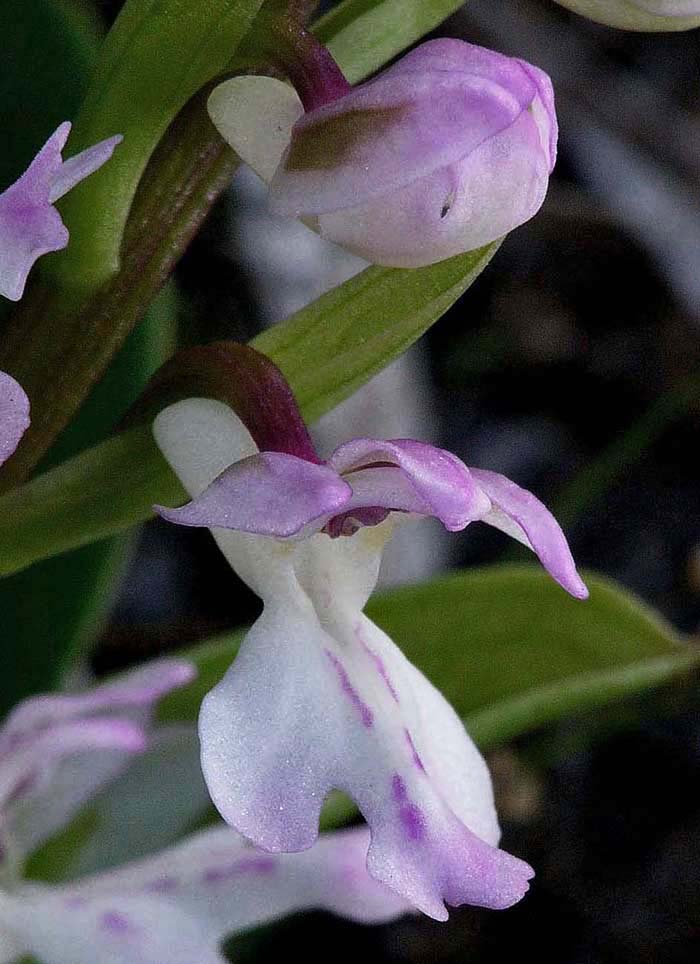
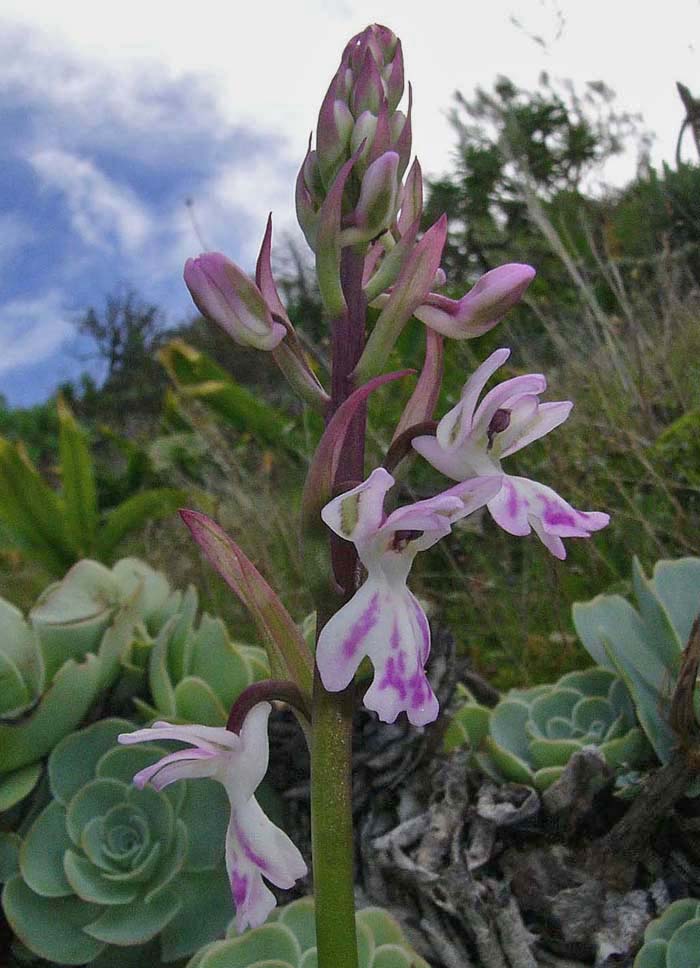
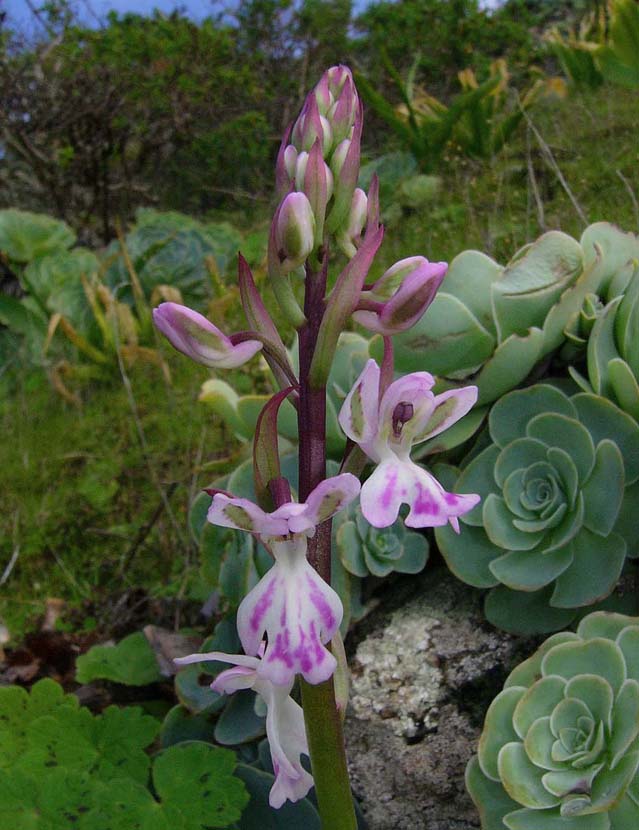
O. canariensis was first described by Lindley from Tenerife in 1835 and its name reflects its association with the Canary Islands, it is in fact endemic to this archipelago although absent from both Lanzarote and Fuertaventura. A synonym for this species is O. patens ssp canariensis and the two species are indeed very similar.
The Canaries although not rich in orchid varieties have fostered the development of plants which although originally with a wider distribution, have subsequently evolved in isolation and been recognized as species in their own right. There are two orchids in particular which have developed in this way, the Tenerife Giant orchid, H. metlesicsianum, which exists only on Tenerife and O. canariensis, commonly known as the Canary Island Orchid which can be found rather more widely.
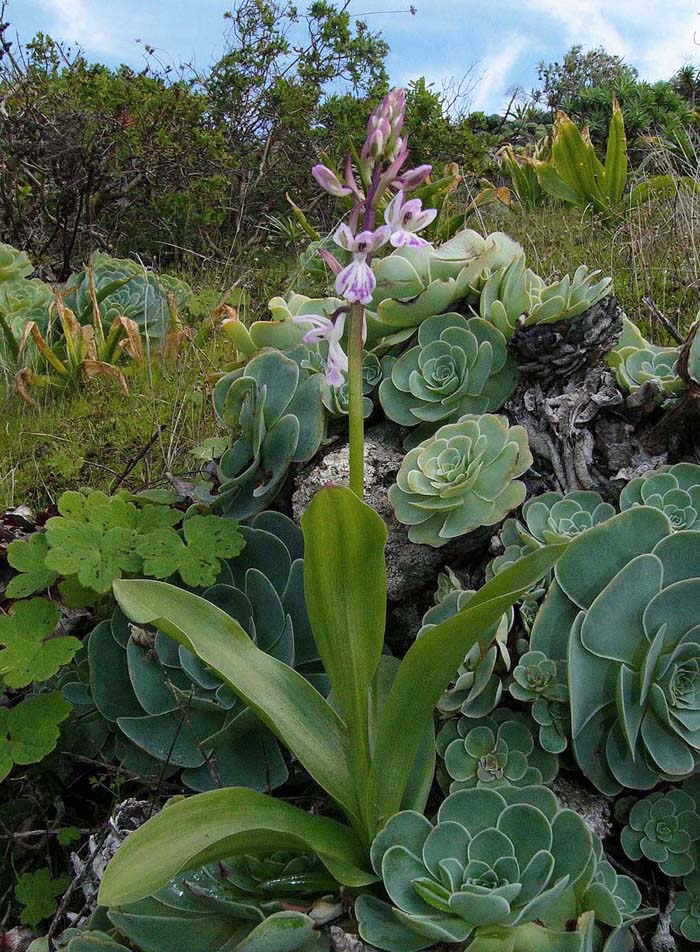
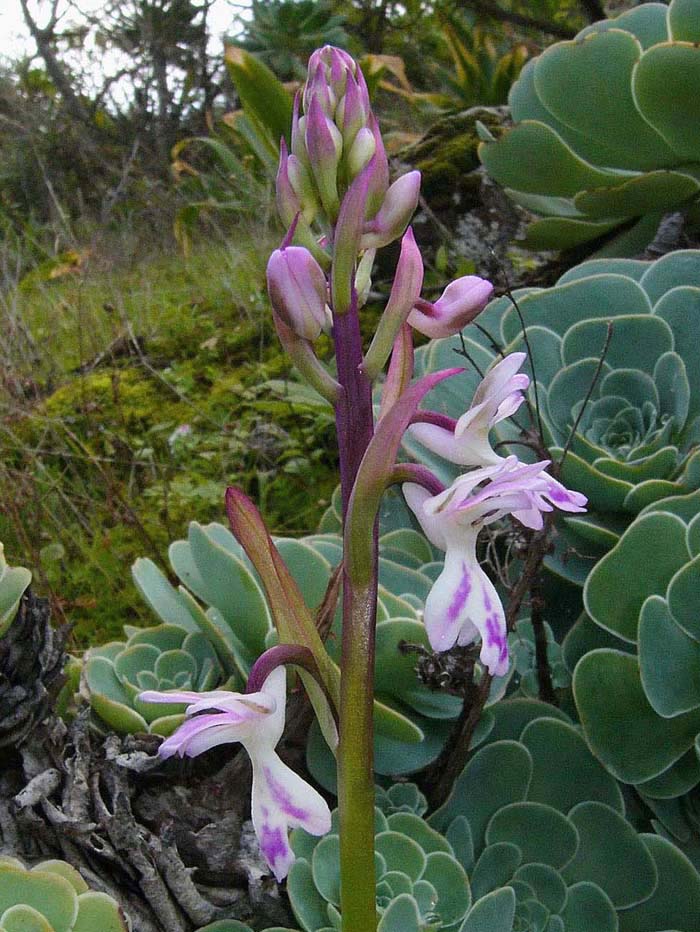
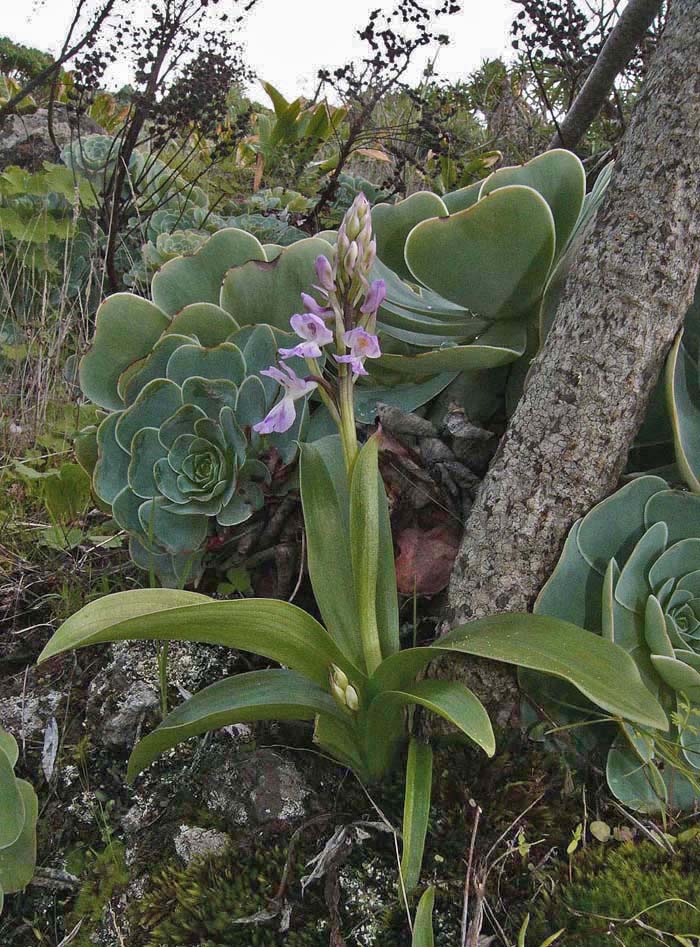
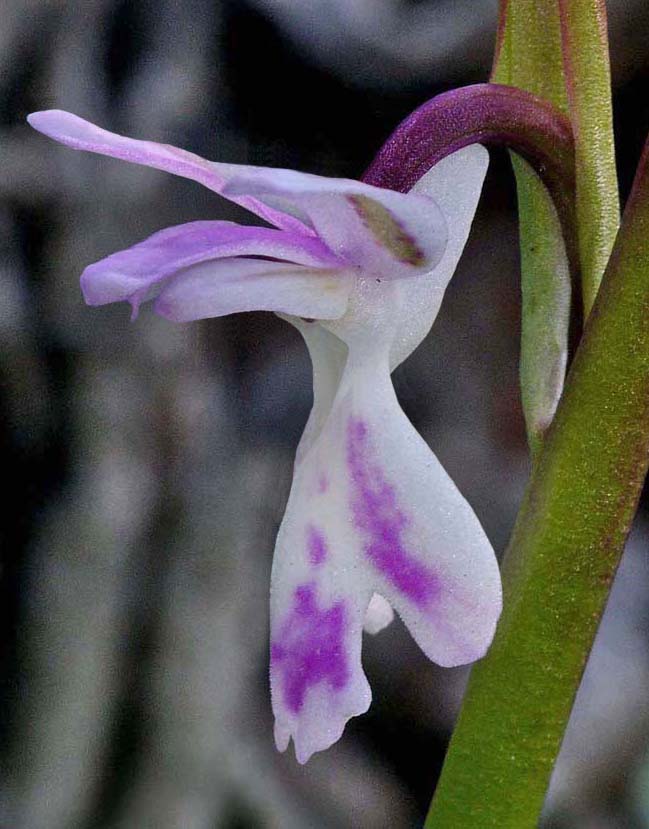
These islands (and Tenerife in particular) are a harsh environment for even the toughest of plants to make a home and yet, O. canariensis has prospered on the more stabilized, acidic lava rubble on the lower flanks of Mount Tiede and in similar environments on other islands. It occurs at altitudes up to approx 1500 metres rarely descends to levels below 750 metres and is not common anywhere within its range. O. canariensis has a distinctive appearance which together with the lack of any similar species in the islands, makes identification straightforward. As can be seen from the photographs, O. canariensis grows in association with several species of succulent, produceing a strangely incongruous picture.
The illustrations come from the Masca region of Tenerife dating from the last week of January at a time when Habenaria tridactylites growing close by, was well past its best.