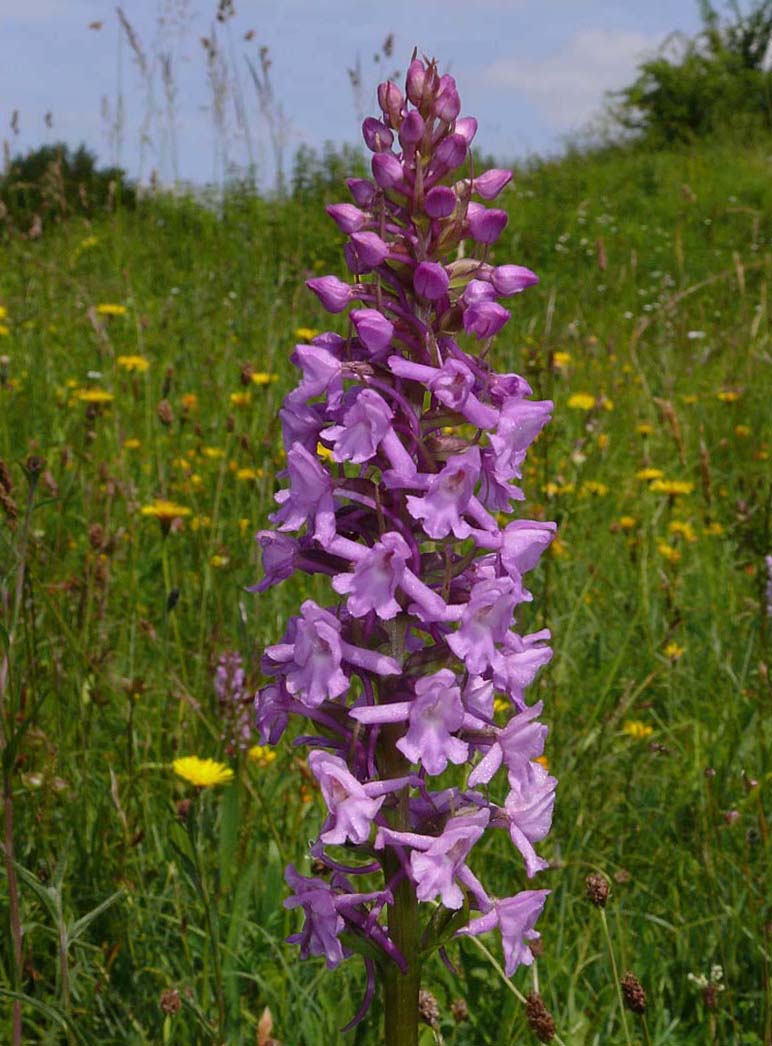
This species was first described by Brown from Baden-Wurttemberg, Germany in 1753 and its name means
"with the appearance of a fly". G. conopsea has for many years been familiar to botanists as the Fragrant Orchid, a name that refers to its scent, which has variously been described as reminiscent of cloves, carnations and many others. It appears that different populations of this species can produce scents of differing fragrances.
G. conopsea is a widespread and sometimes abundant orchid with a huge distribution that covers boreal and
temperate Eurasia, right through to China. In the south of its range (France and Spain) it becomes a montane species and is quite at home at 2500 metres in the European Alps, growing alongside the hardiest Vanilla Orchids. G. conopsea is one of five European members of the G. conopsea group and although they all share a family resemblance, there is a particular similarity to G. densiflora and G. borealis. A recent study has however determined that there is little evidence of gene crossover and that even in the limited number of areas where there is a species overlap, hybridization is rare. This is not though the case when the species comes into contact with some Dachtylorhiza taxons and inter-genetic hybridization with D. praetermissa, D. purpurella and D. fucshii are regularly recorded. G. conopsea is also commonly reported hybridizing with several species of the Vanilla Orchid group, notably G. rhellicani.
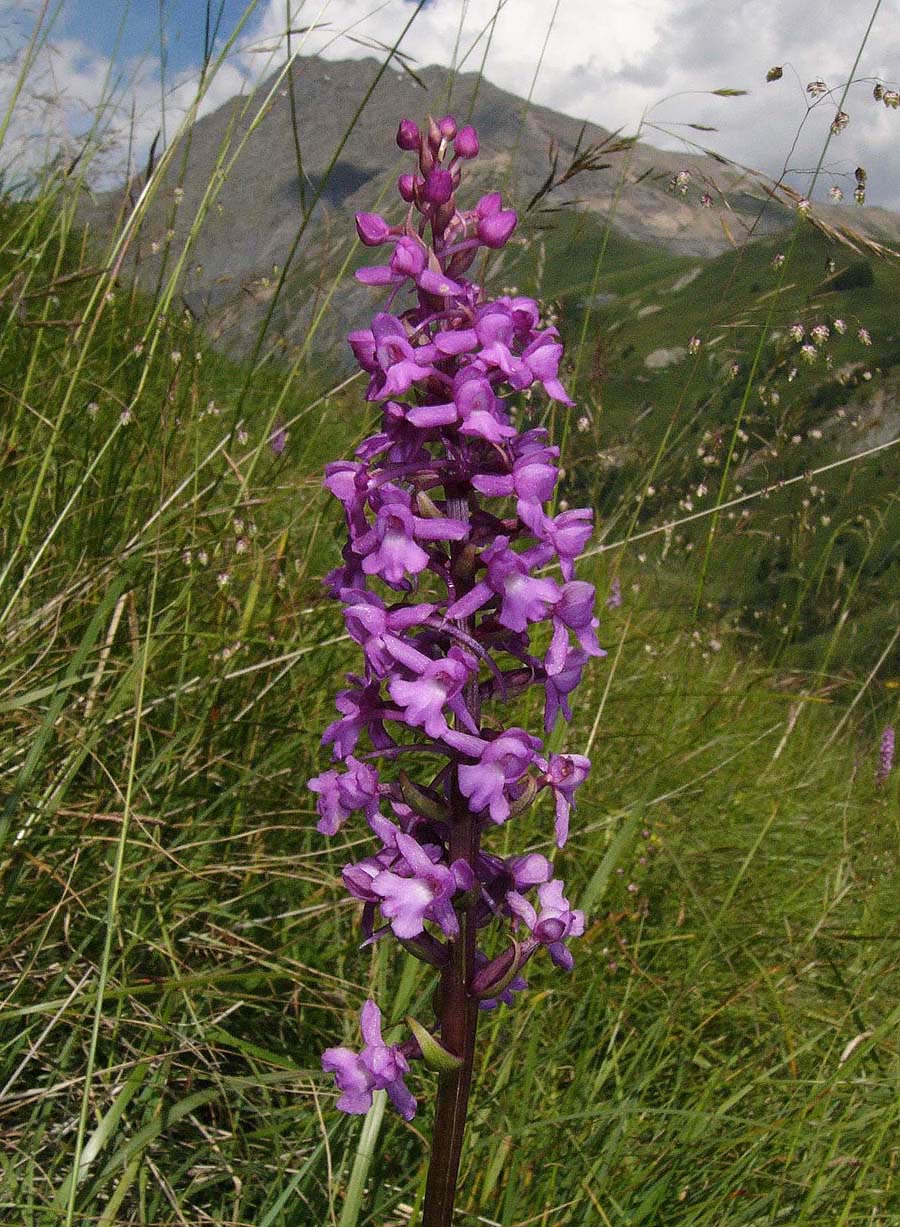
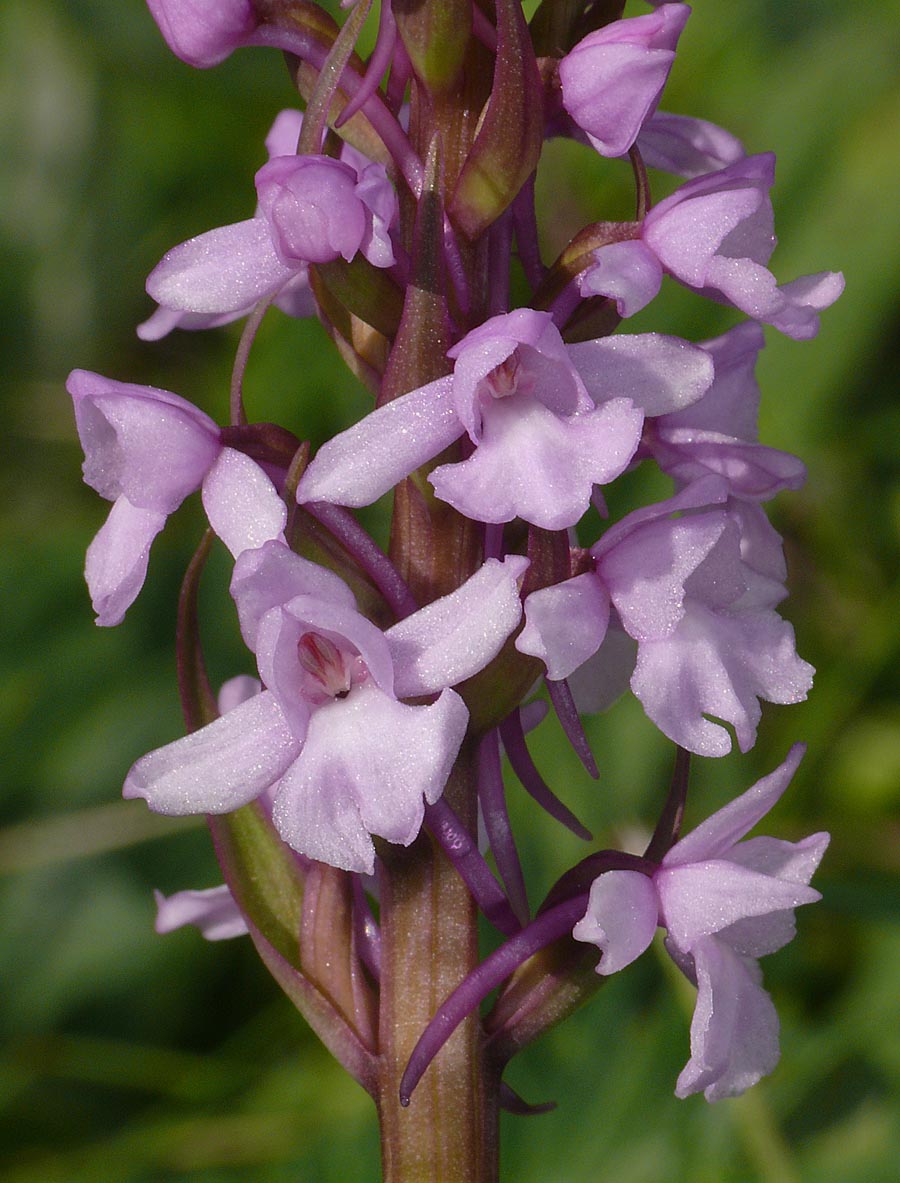
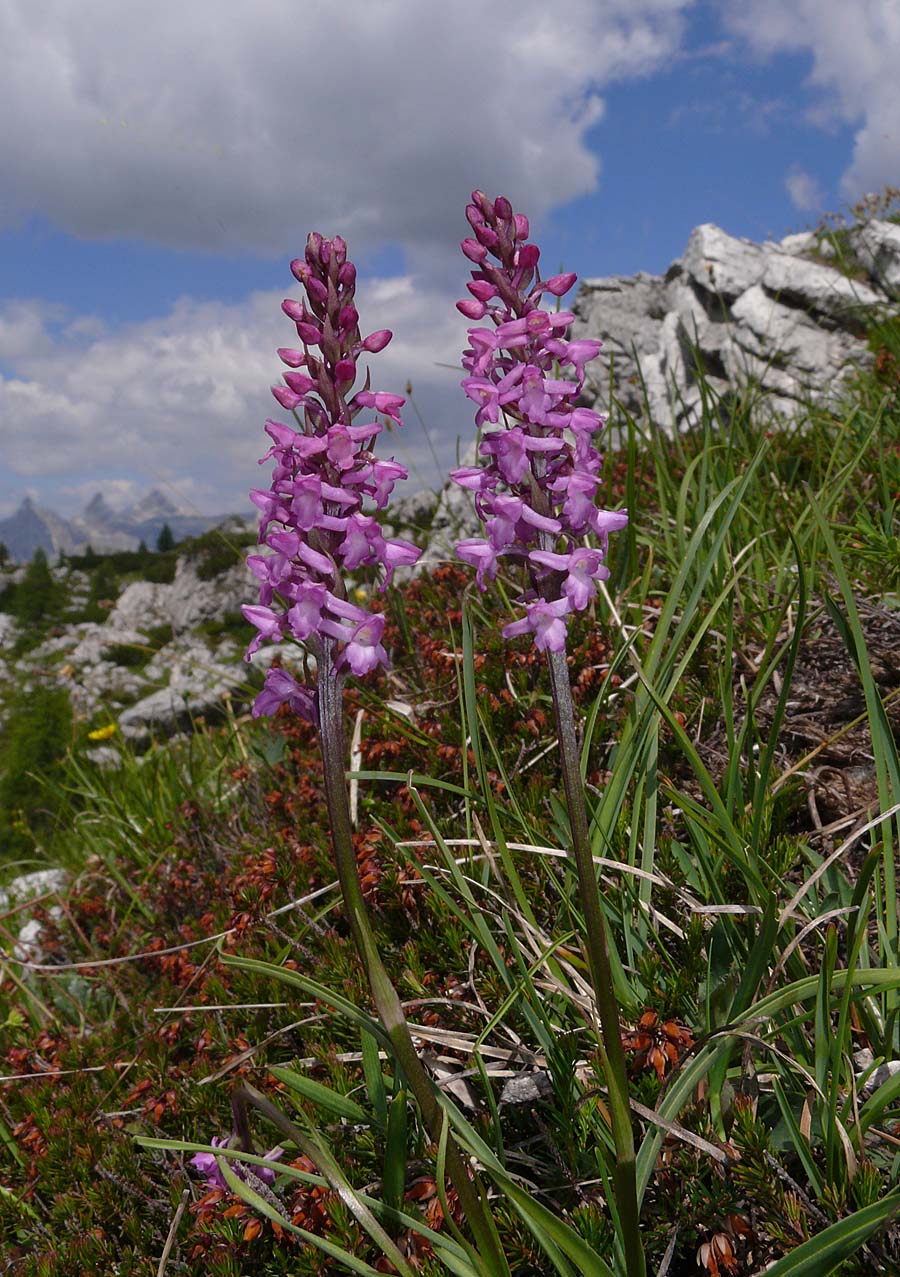
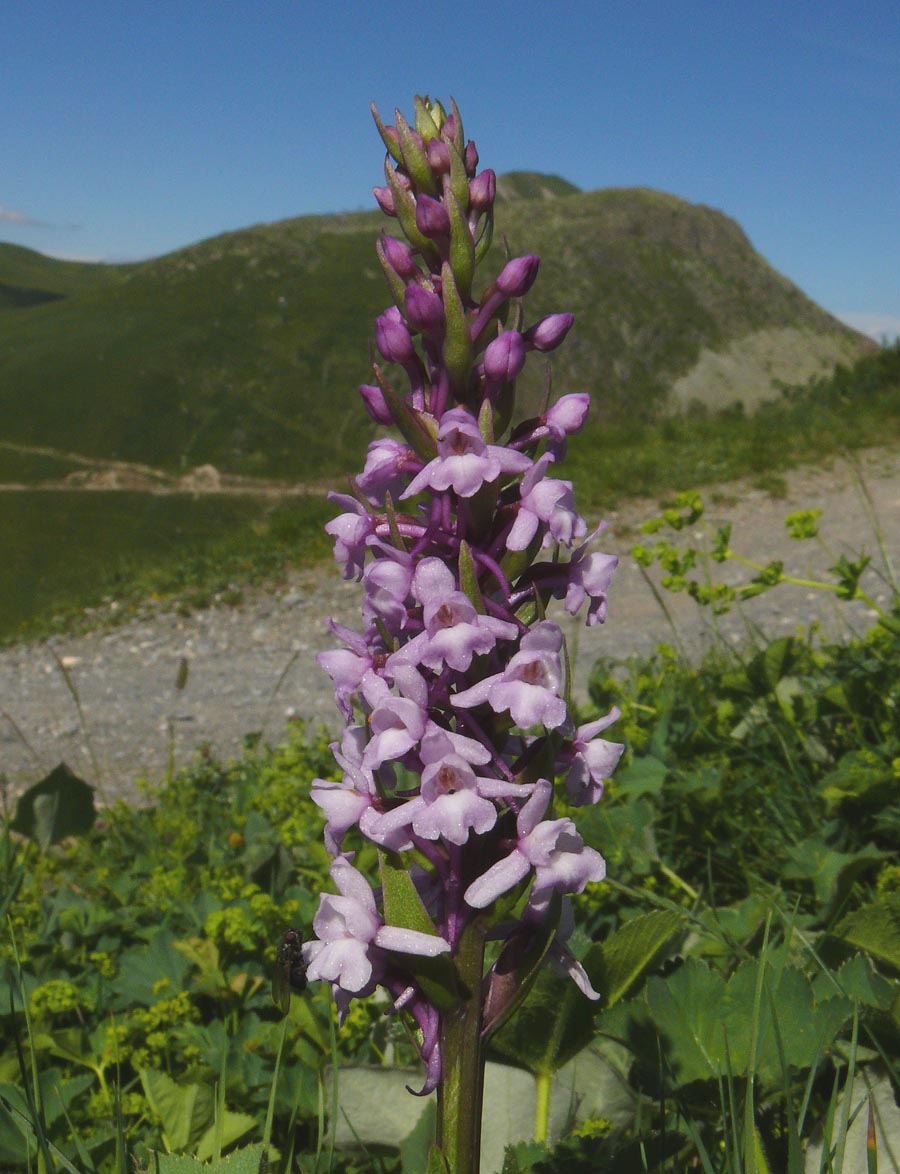
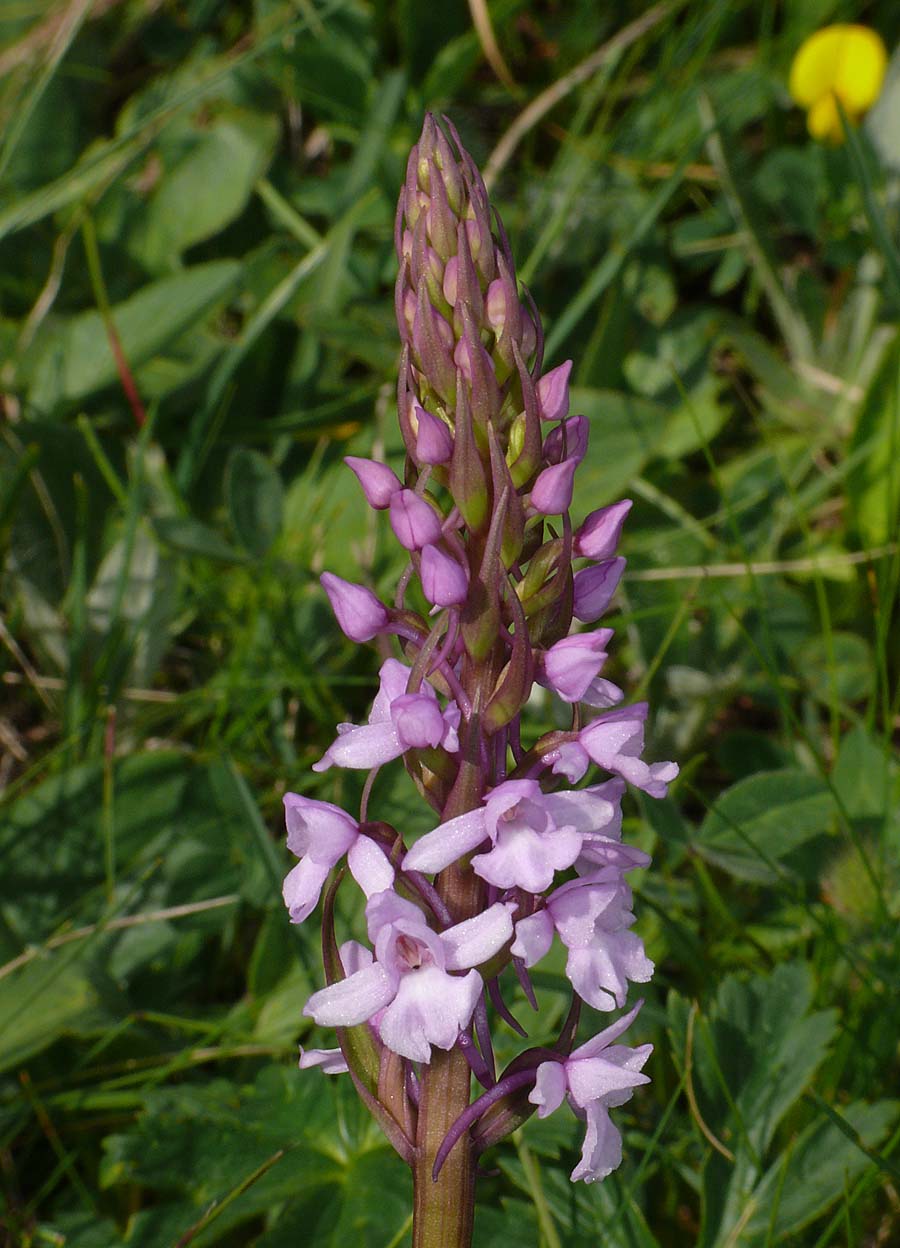
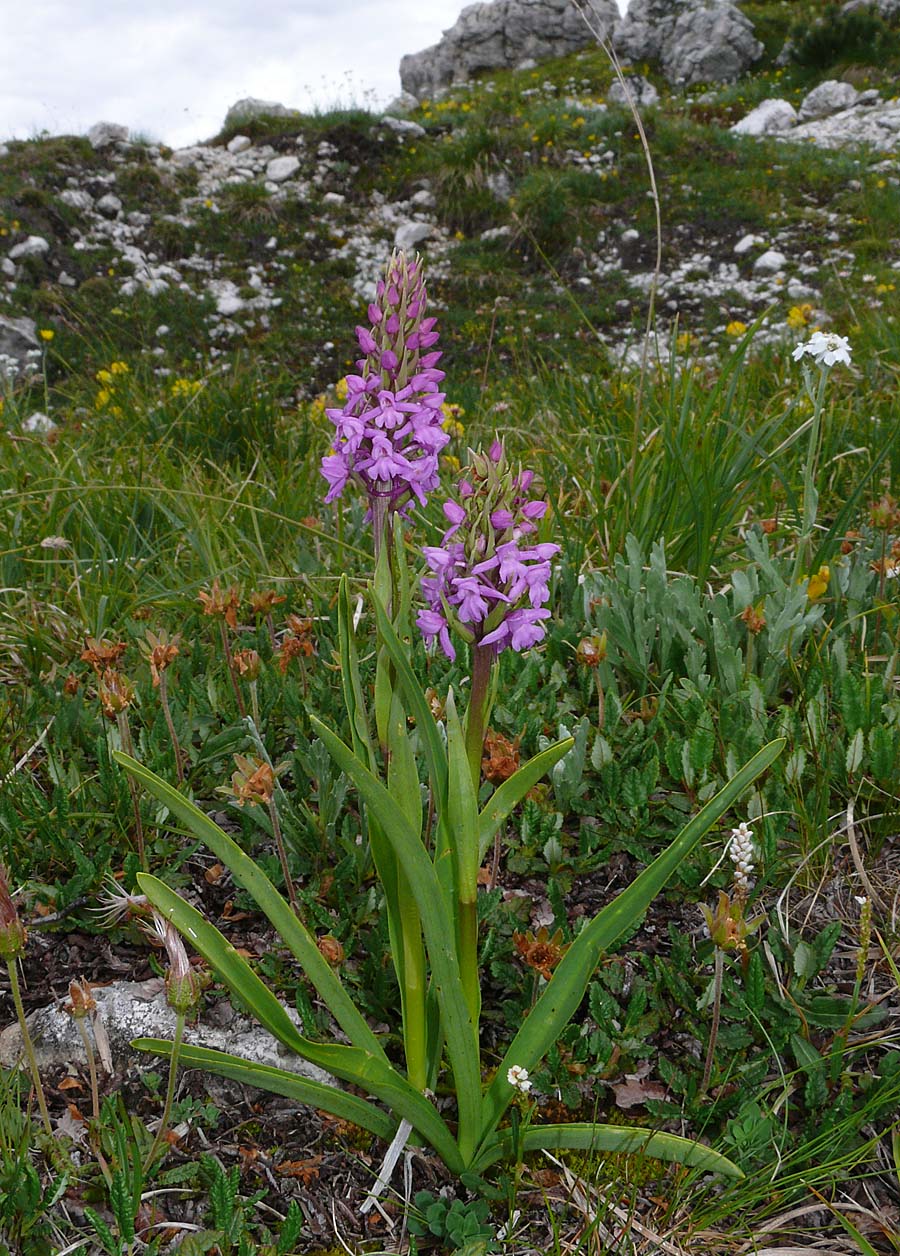
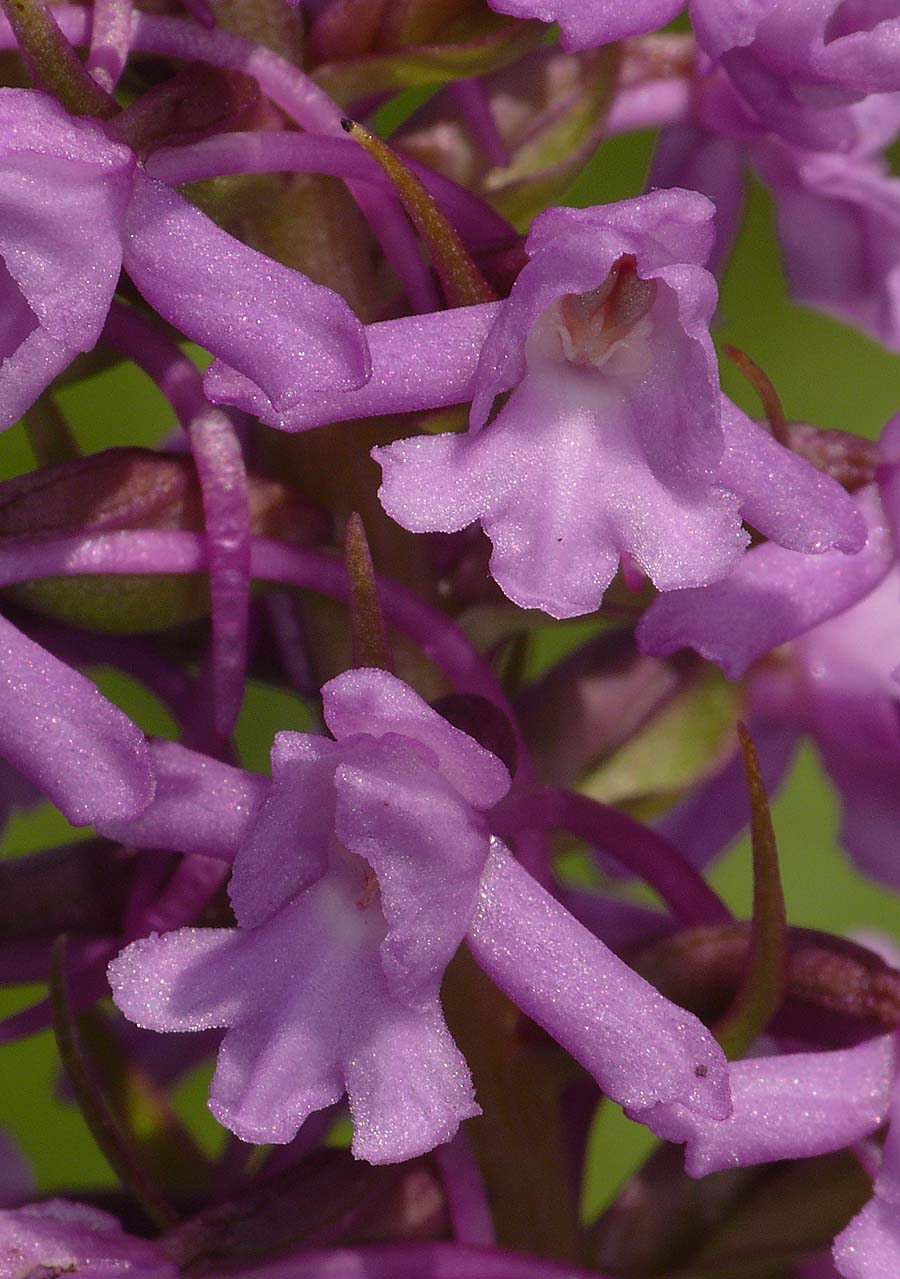
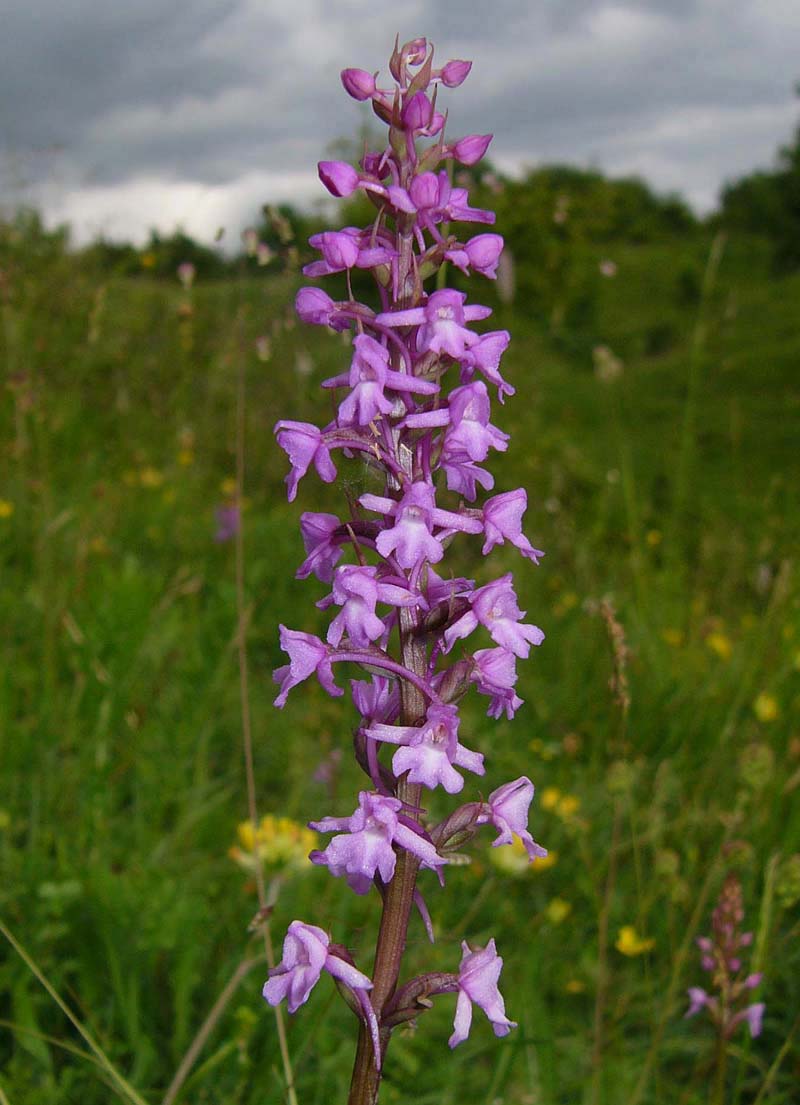
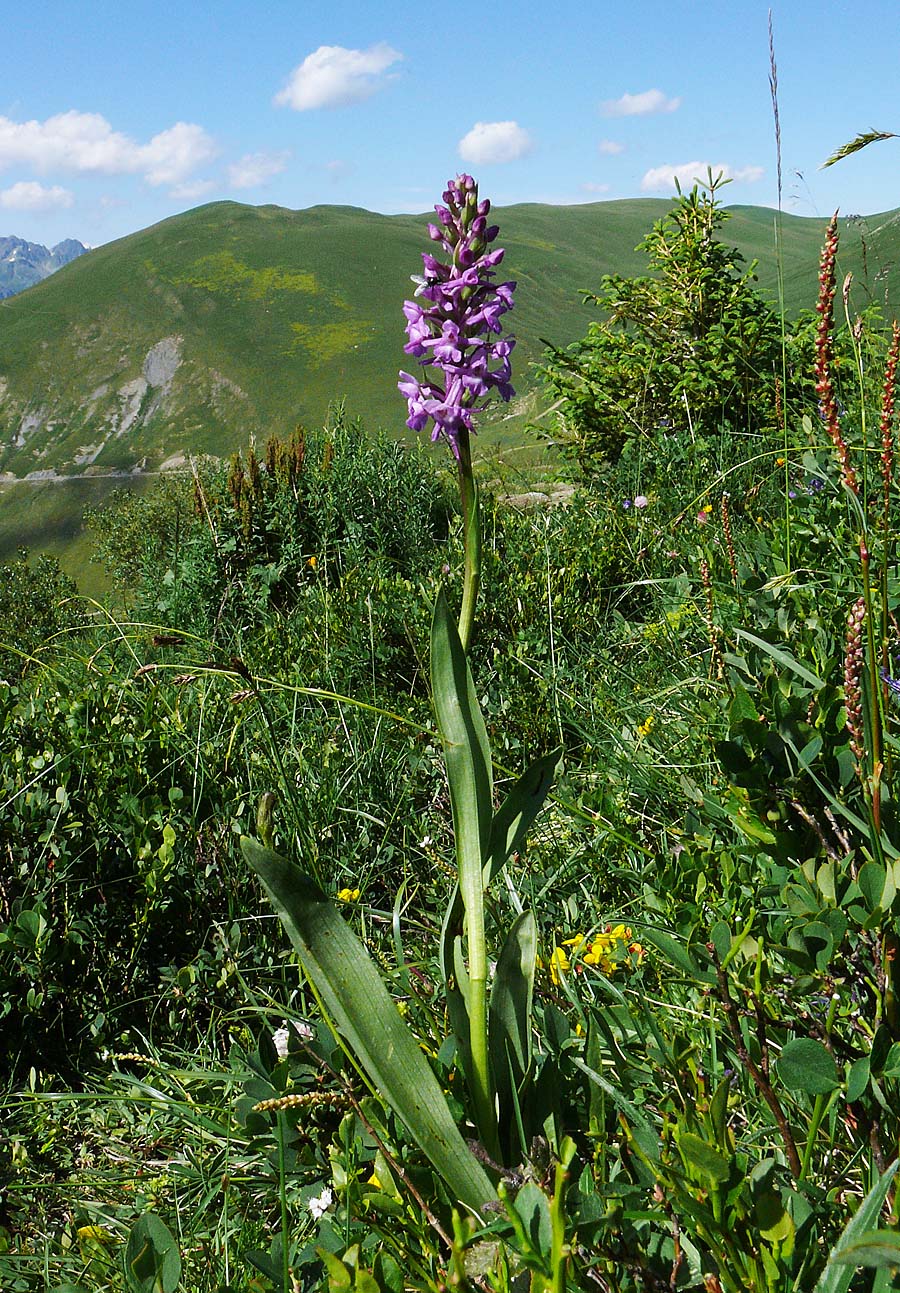
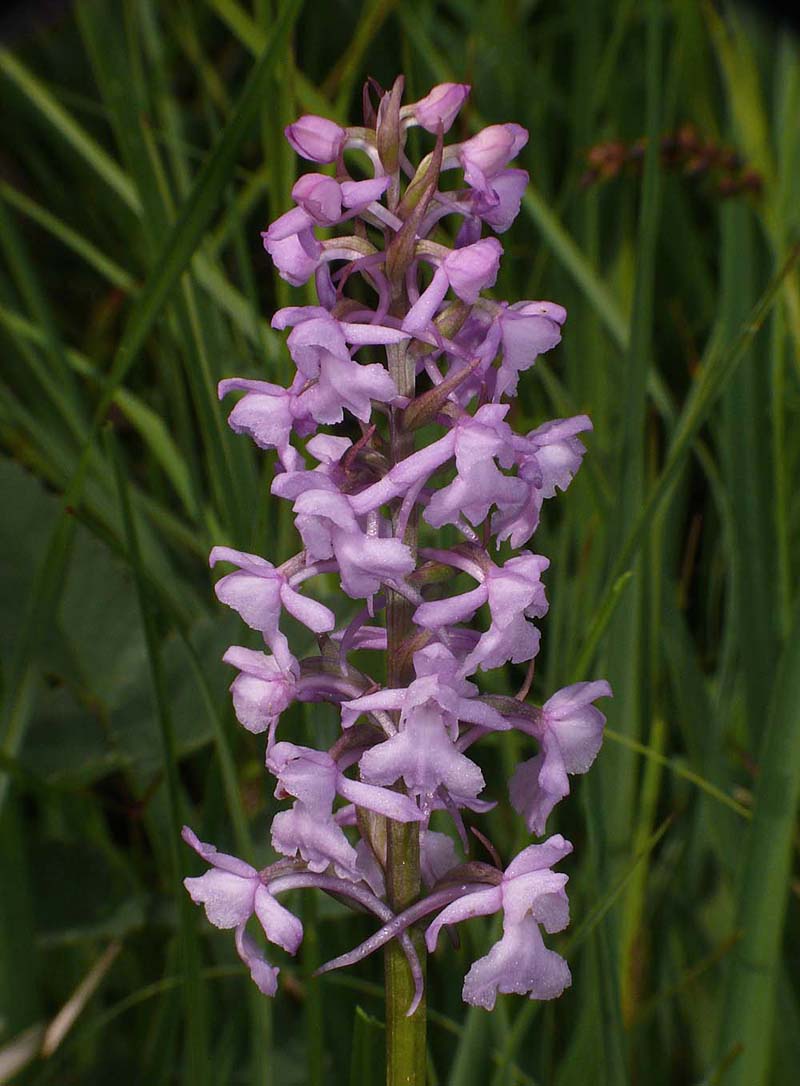
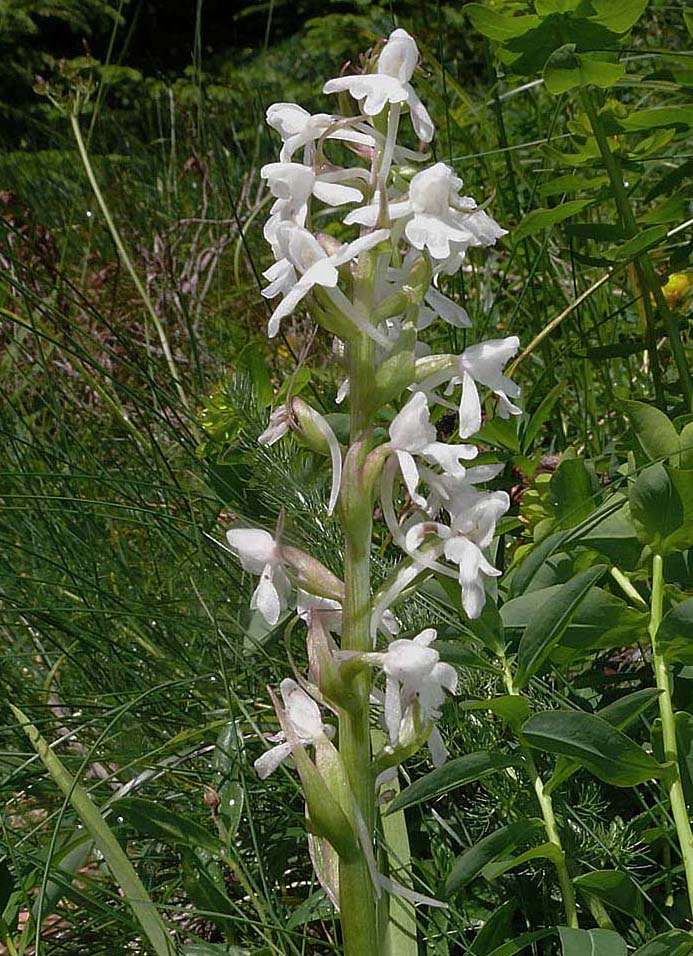
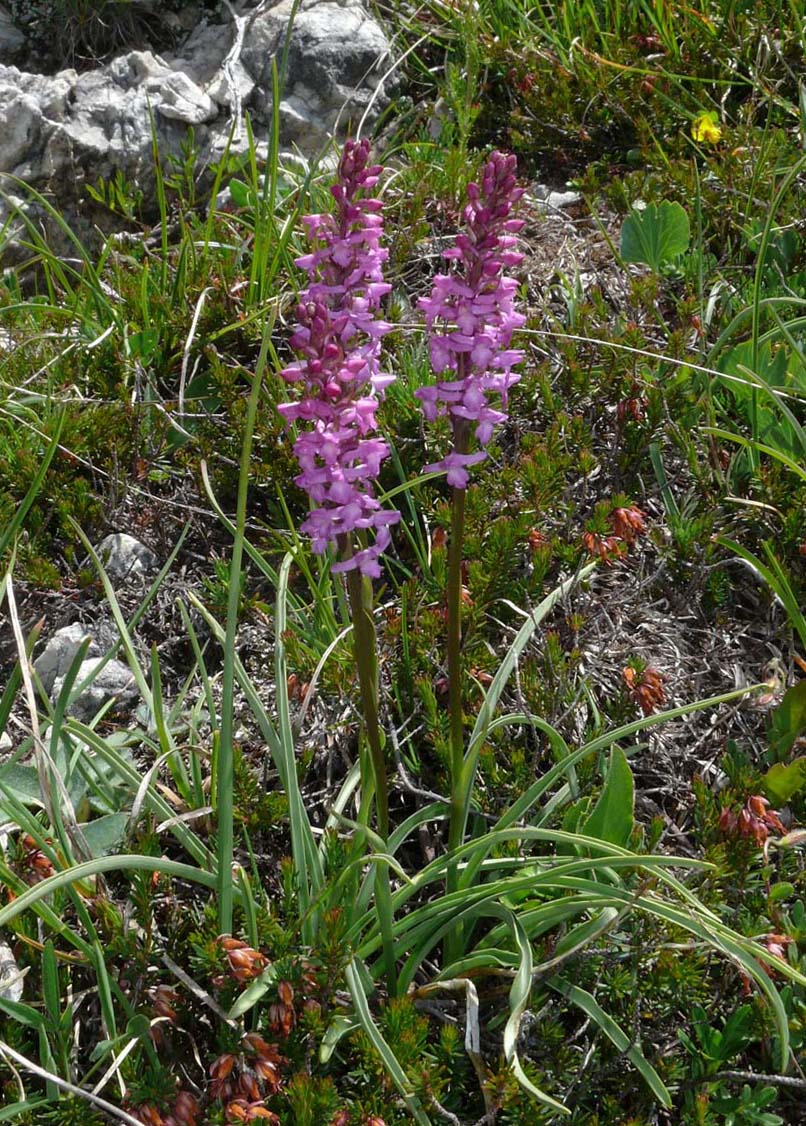
G. conopsea is most familiar as a dry grassland plant on alkaline substrates whereas G. borealis is an acid lover and G. densiflora, although similarly a calcicole, prefers damp, wet or marshy conditions. The pictures are from lowland locations in Britain and various mountains in the European Alps, all dating from the month of July.
"with the appearance of a fly". G. conopsea has for many years been familiar to botanists as the Fragrant Orchid, a name that refers to its scent, which has variously been described as reminiscent of cloves, carnations and many others. It appears that different populations of this species can produce scents of differing fragrances.
G. conopsea is a widespread and sometimes abundant orchid with a huge distribution that covers boreal and
temperate Eurasia, right through to China. In the south of its range (France and Spain) it becomes a montane species and is quite at home at 2500 metres in the European Alps, growing alongside the hardiest Vanilla Orchids. G. conopsea is one of five European members of the G. conopsea group and although they all share a family resemblance, there is a particular similarity to G. densiflora and G. borealis. A recent study has however determined that there is little evidence of gene crossover and that even in the limited number of areas where there is a species overlap, hybridization is rare. This is not though the case when the species comes into contact with some Dachtylorhiza taxons and inter-genetic hybridization with D. praetermissa, D. purpurella and D. fucshii are regularly recorded. G. conopsea is also commonly reported hybridizing with several species of the Vanilla Orchid group, notably G. rhellicani.
G. conopsea is most familiar as a dry grassland plant on alkaline substrates whereas G. borealis is an acid lover and G. densiflora, although similarly a calcicole, prefers damp, wet or marshy conditions. The pictures are from lowland locations in Britain and various mountains in the European Alps, all dating from the month of July.