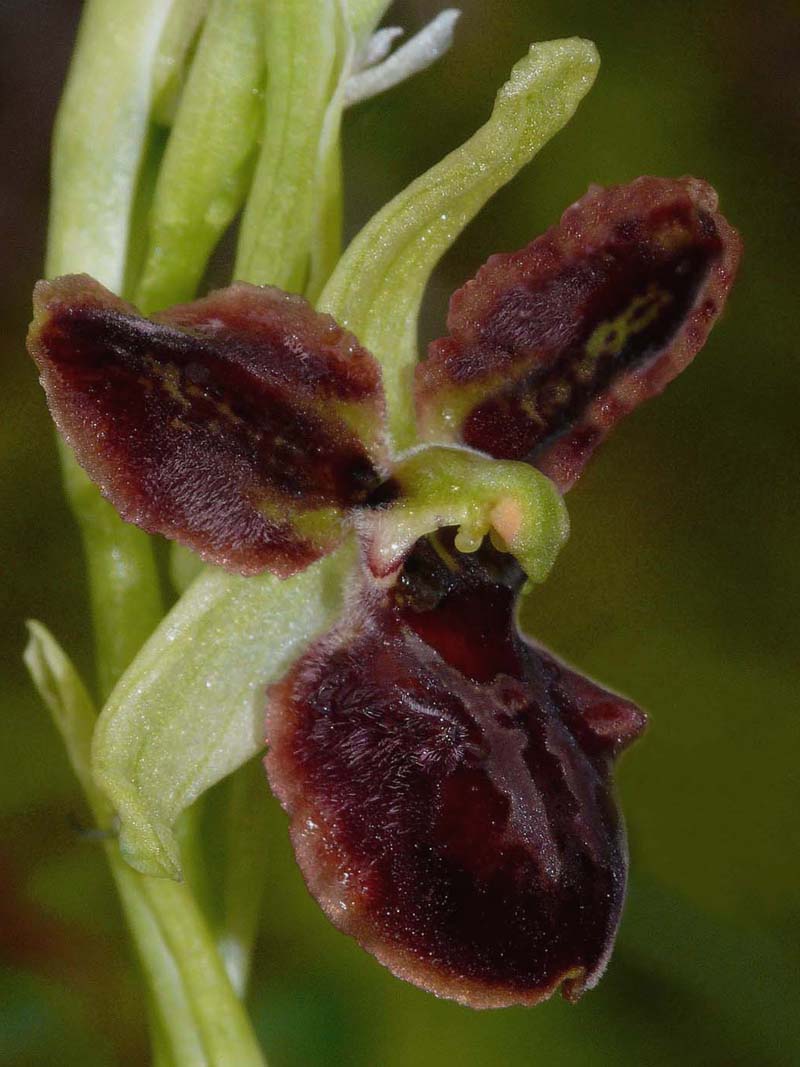
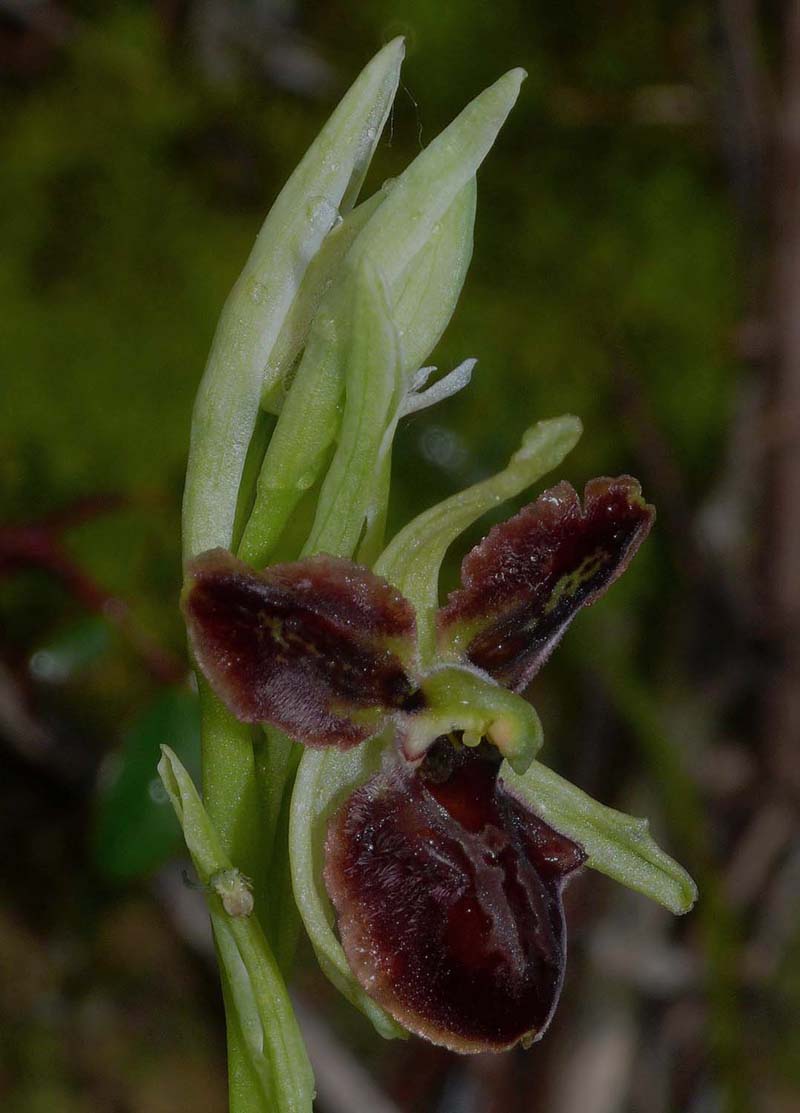
O. tarquinia was first described by Delforge from Livorno, Tuscany in 2000. Its a member of the twelve strong O. exaltata group whose name refers to the Tarquins - Etruscan Kings of Rome between 759 and 503 BC (the first being Romulus).
This Ophrys is an Italian endemic with a range which is virtually limited toTuscany. O. tarquinia is at its most frequent away from the coast in the Firenze region but can still be relatively frequent as far south as Grosetto and its in this area in particular that its range overlaps with several other closely related species that can cause a great deal of confusion with identification.
There are in fact three other species which may be found in flower concurrently with O. tarquinia between March and early May, namely O. argentaria, O. classica and the ubiquitous O. sphegodes. All these species have individual distinguishing features but years of gene ingression has made identification in the field a potentialy painstaking business where for the amateur, the "balance of probabilities" is often the only and last resort.
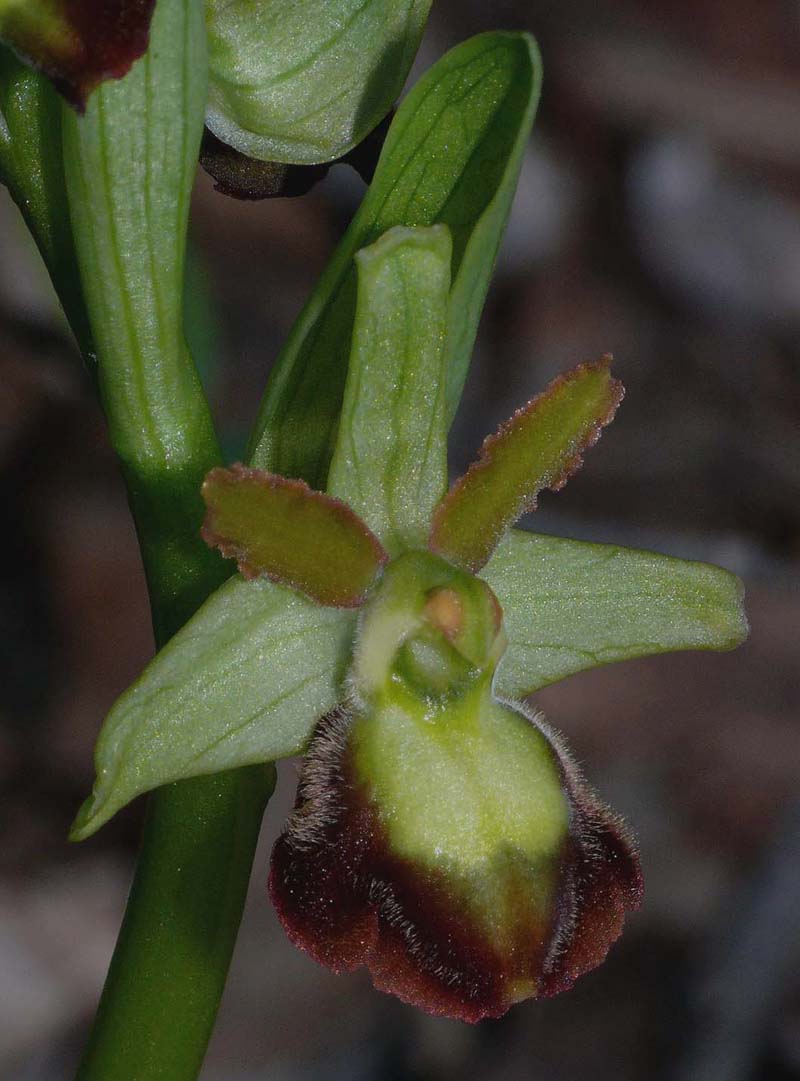
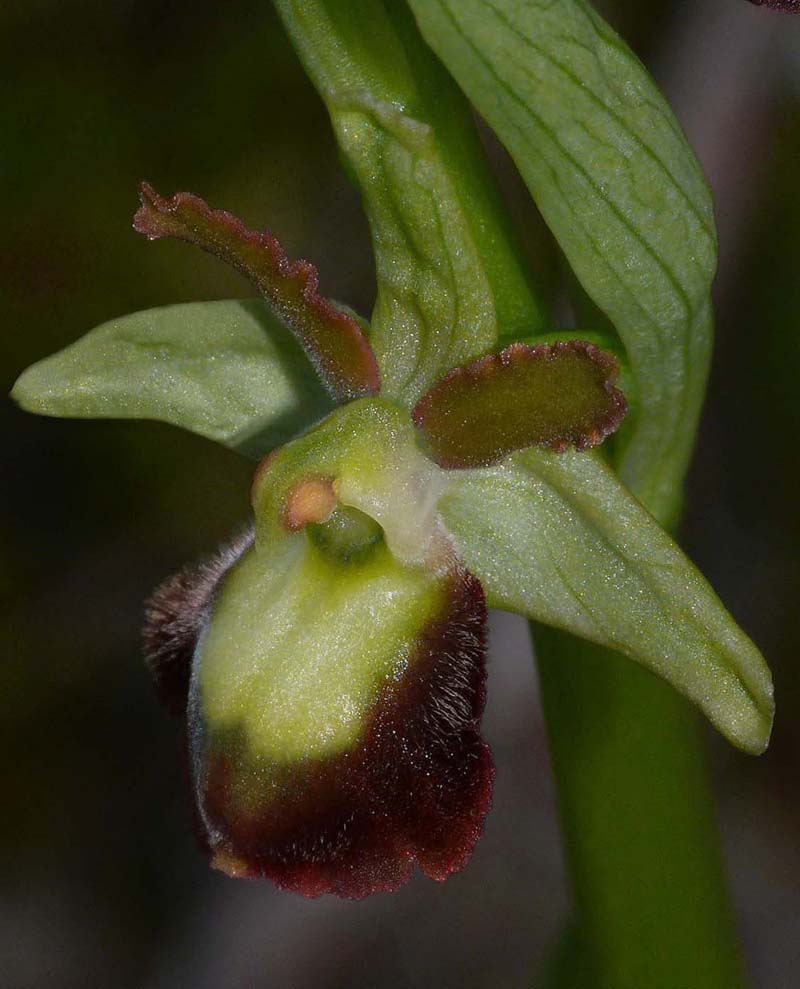
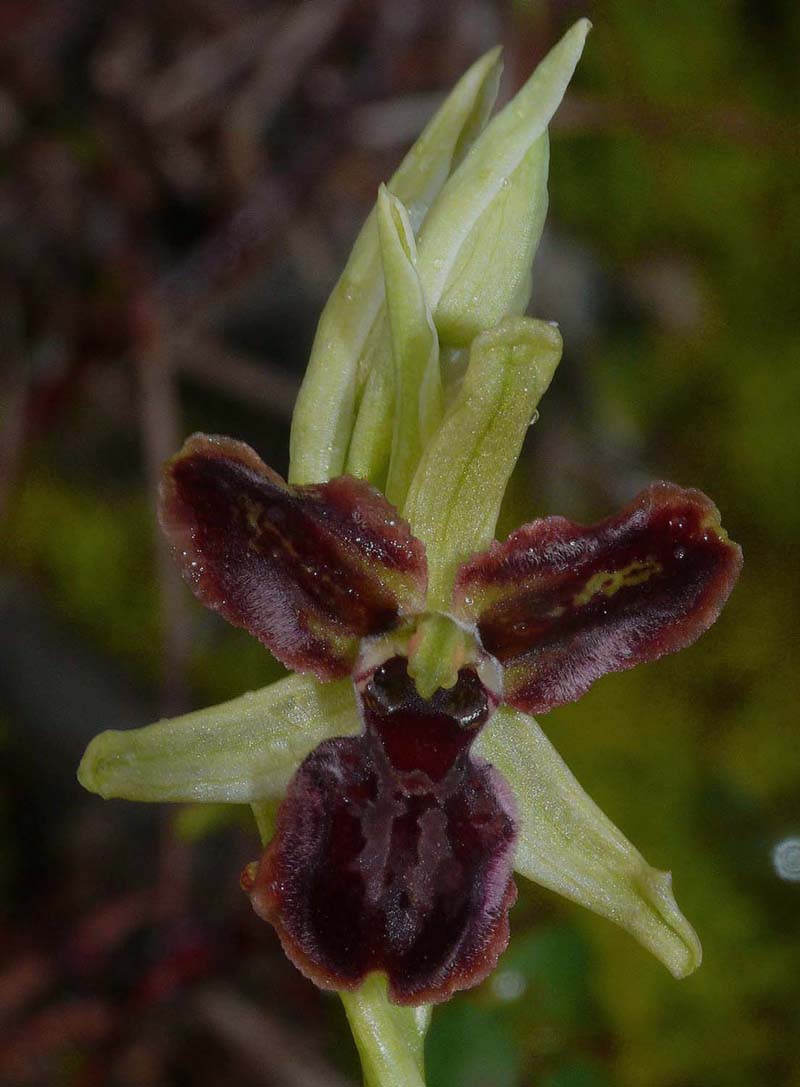
The following characteristics are typical of O. tarquinia but as can be seen from the photograph's - they are by no means infallible. 1 :- Speculum pattern is usually a complicated H. 2 :- Basal swellings are normally small or absent. 3 :- The sepals are long, strongly undulate and often extravagent.
4 :- This species shows a preference for non coastal habitat.
The pictures all come from sites in southern Tuscany between Siena and Grosetto.
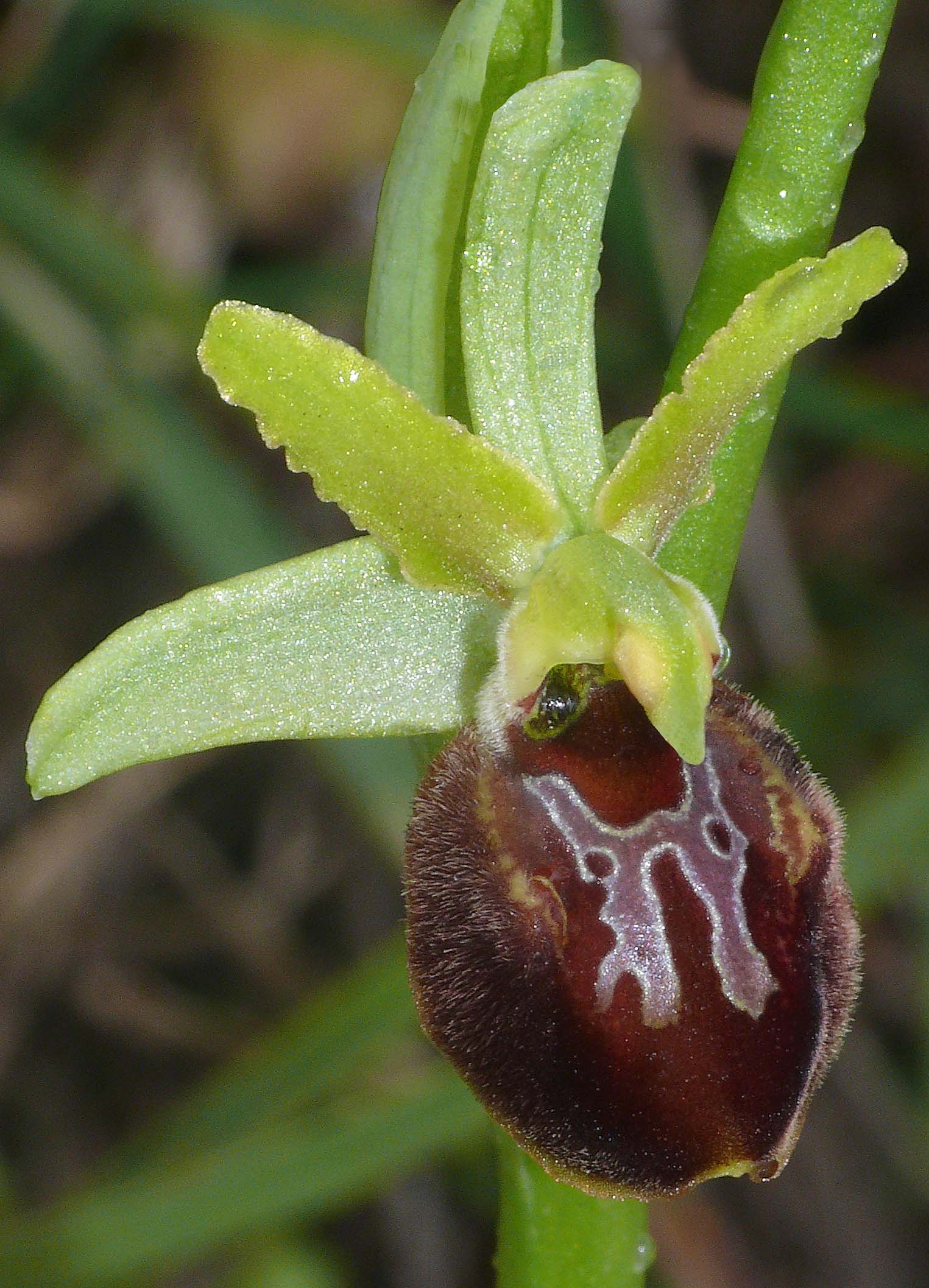
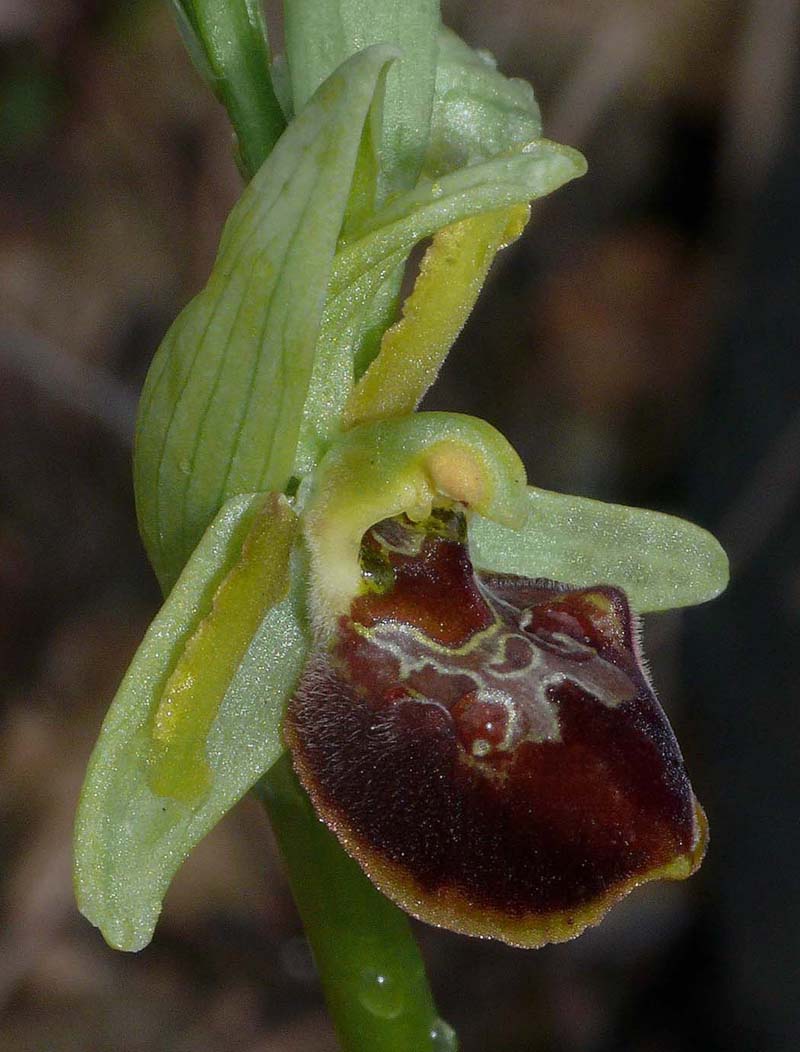

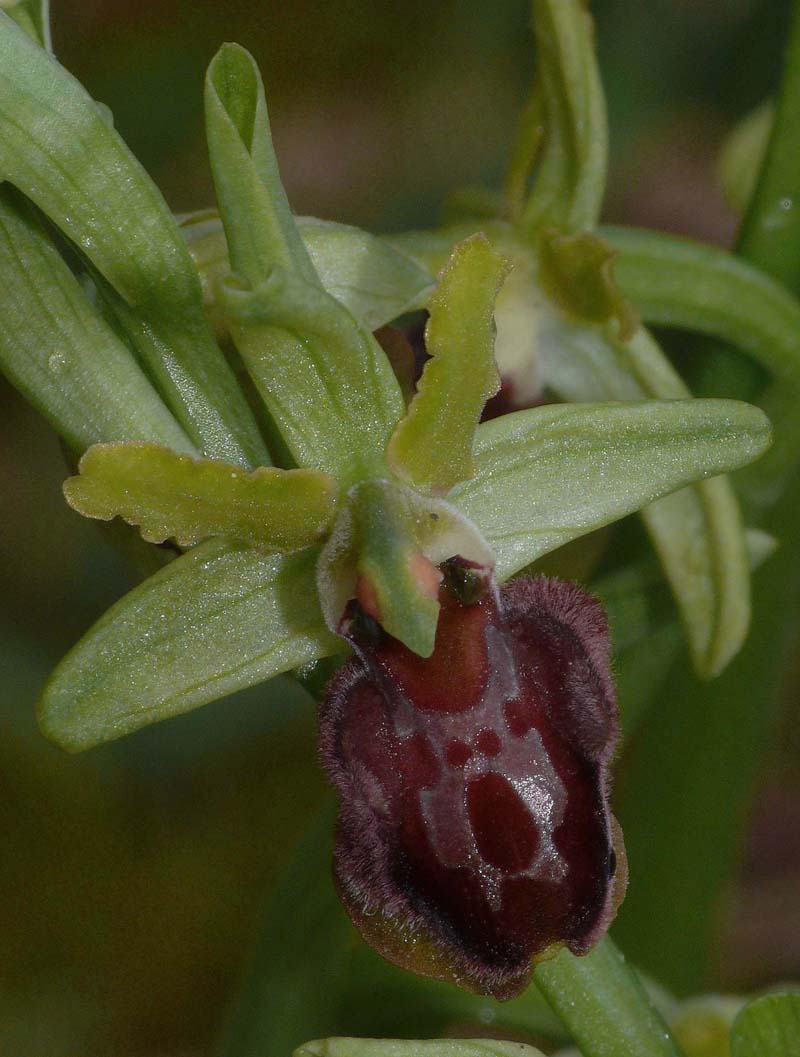


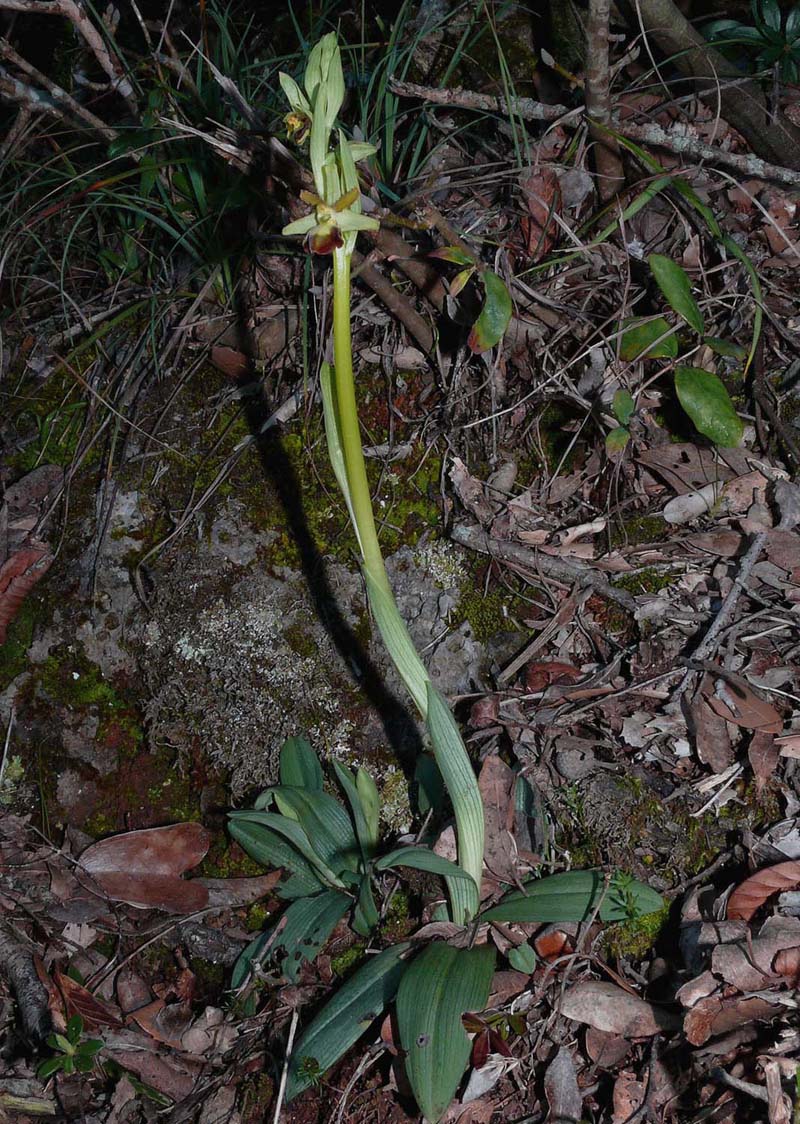
The following six photographs are some abnormal examples of O. tarquinia. The first three pictures are from Monte Argentaria (where this species is not at
all common) and in this instance is a semi-hypochromatic specimen. Amongst the features that indicate the identity of this plant is the blue-grey basal rosette,
the thick stem, overall robust appearance, large flowers and lack of basal swellings.
The final three pictures are from the Siena region of Tuscany and something of a mystery. They were growing amongst a mixed colony of O. tarquinia and
O. sphegodes.