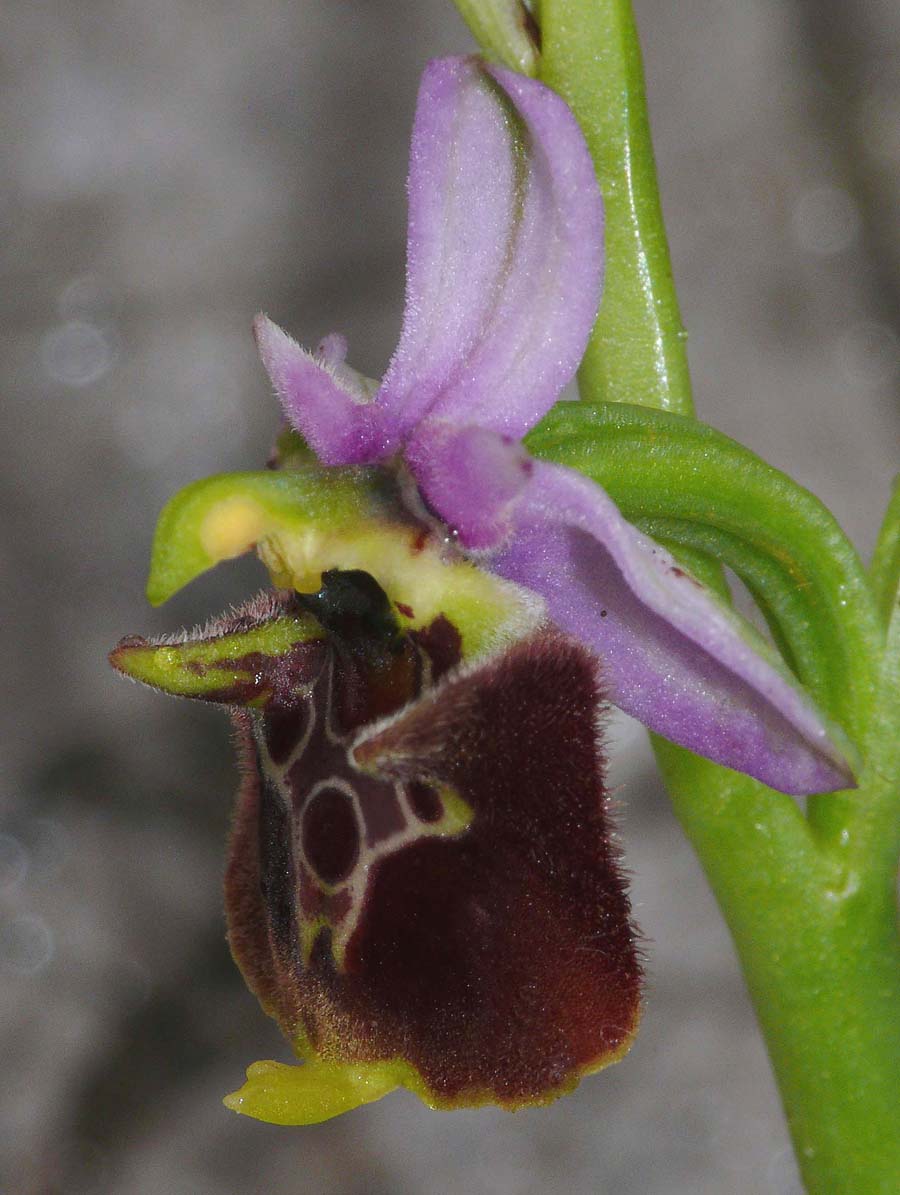
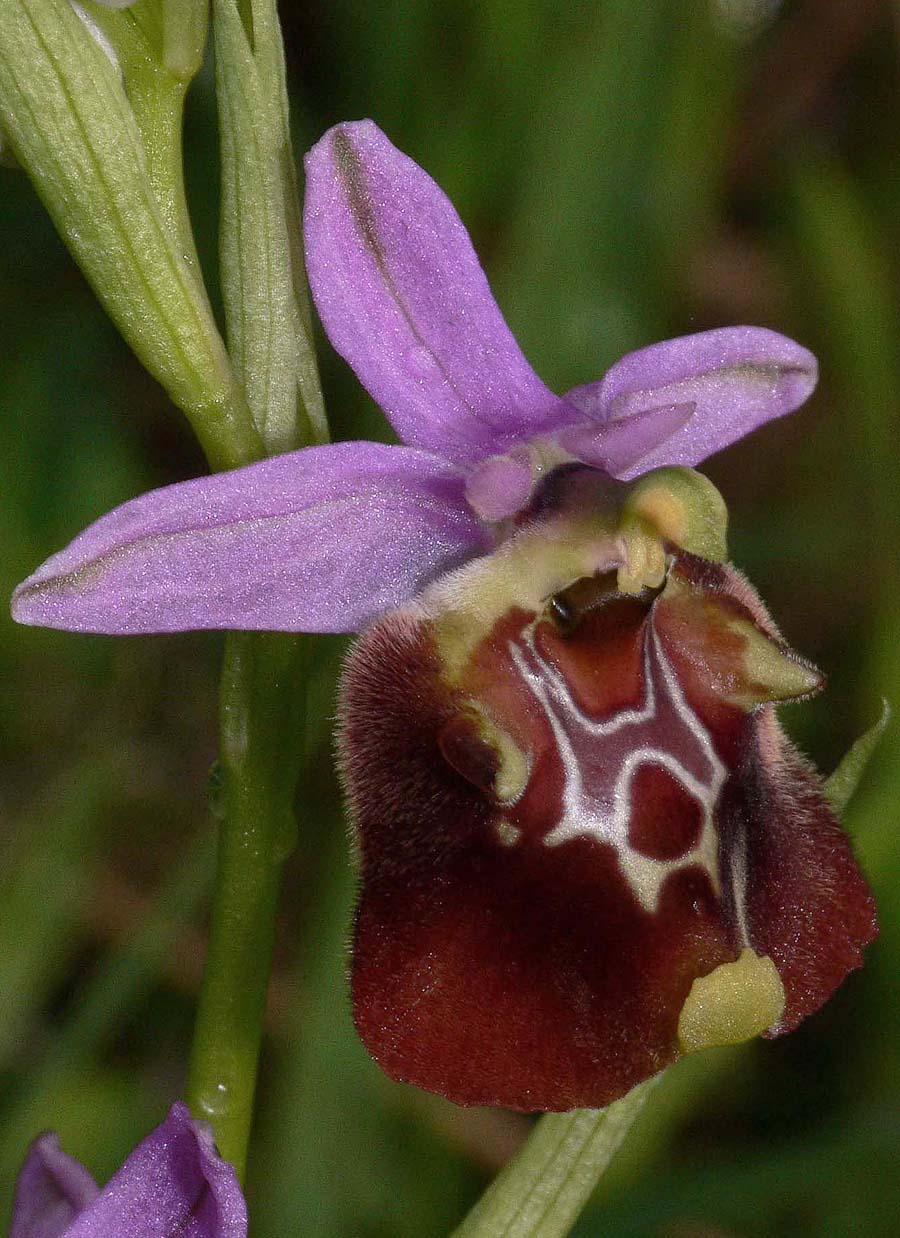
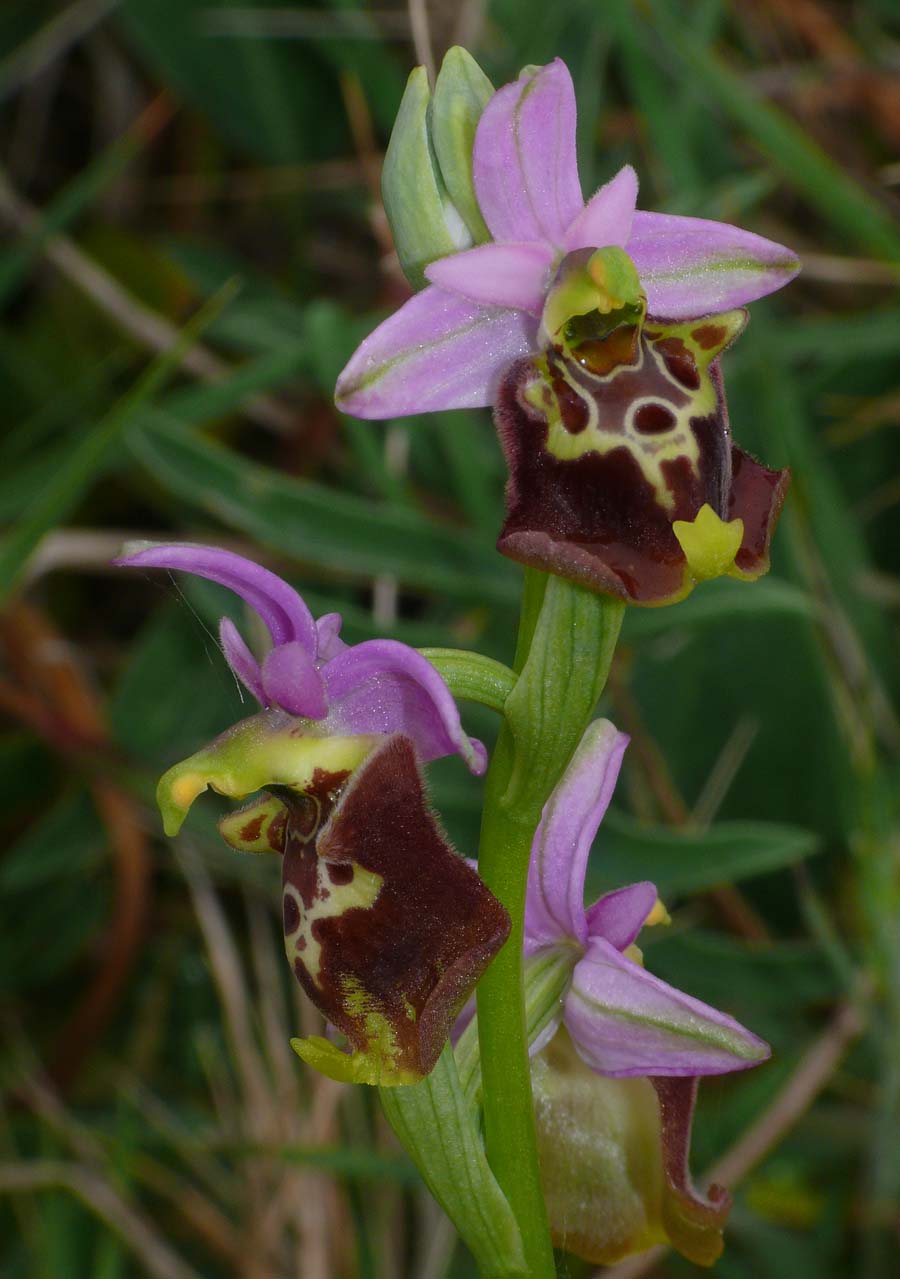
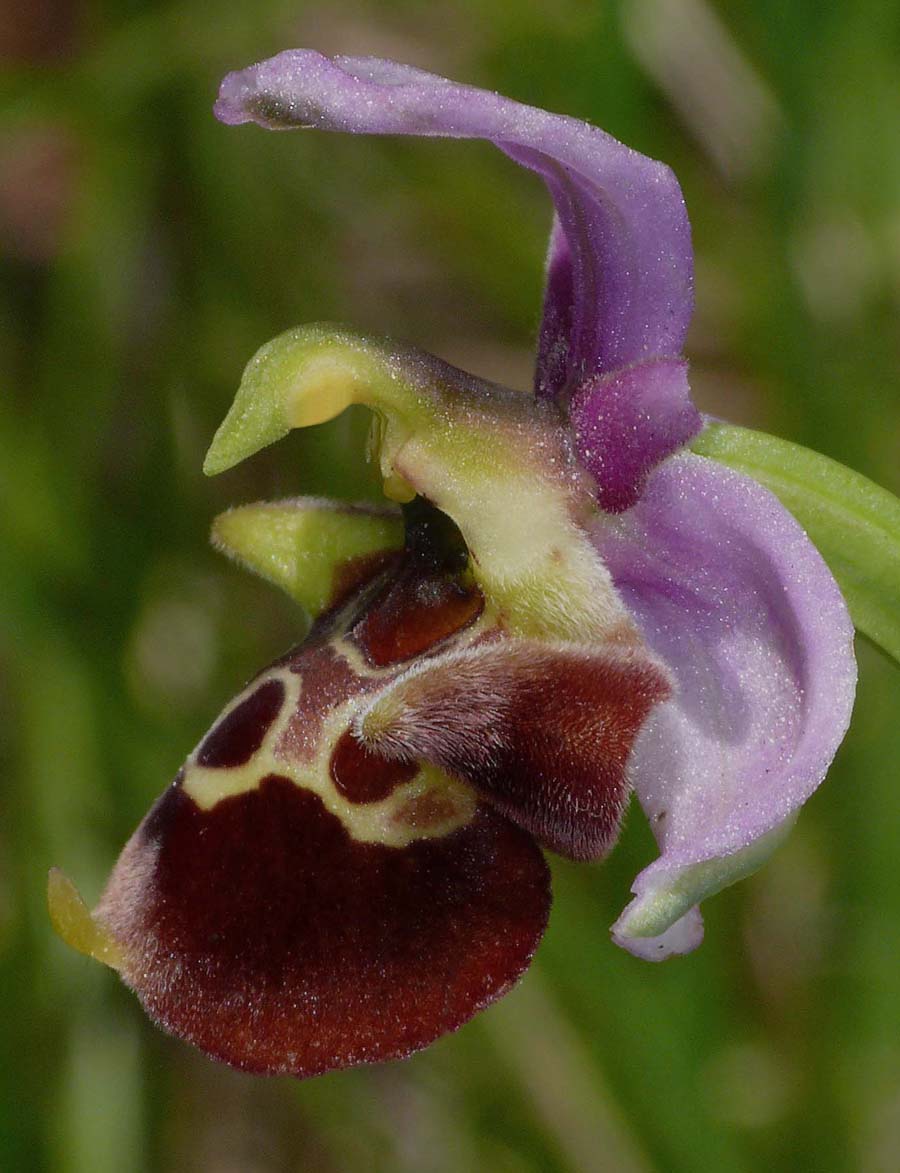
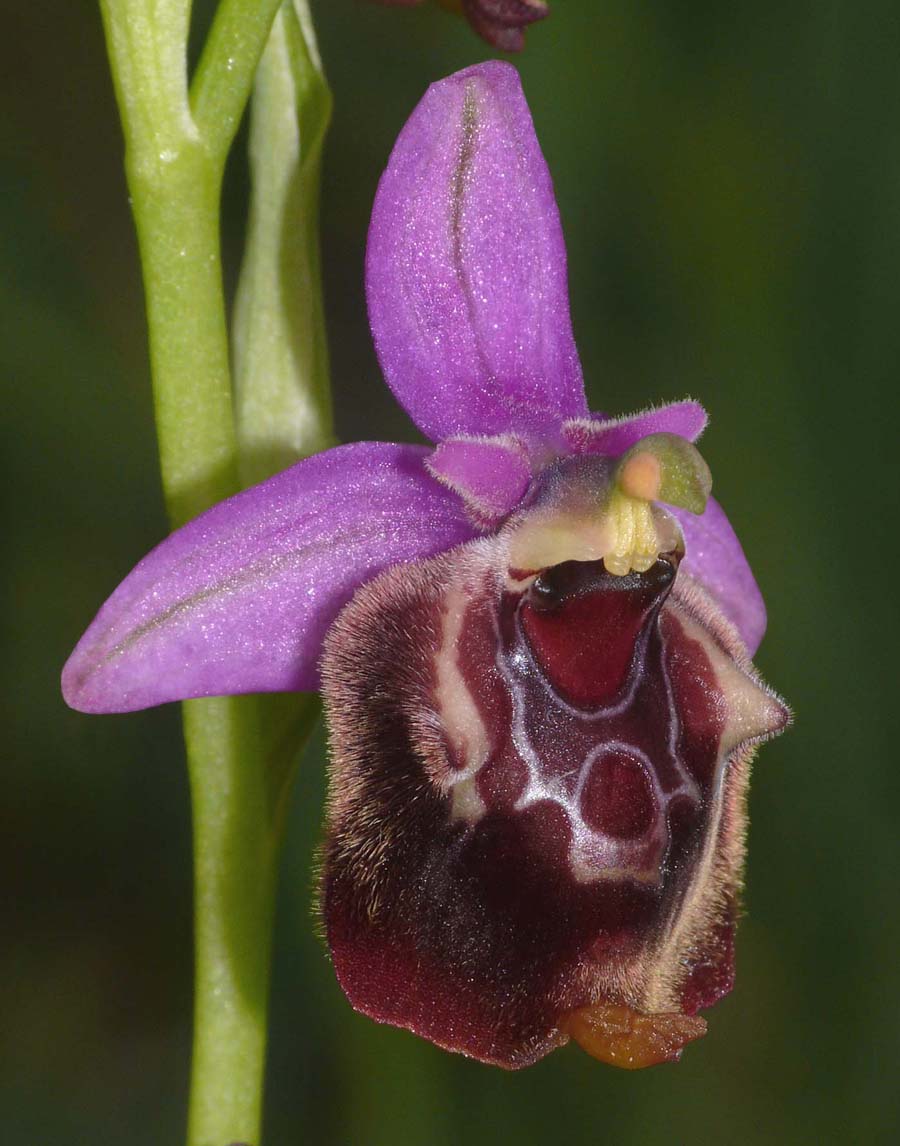
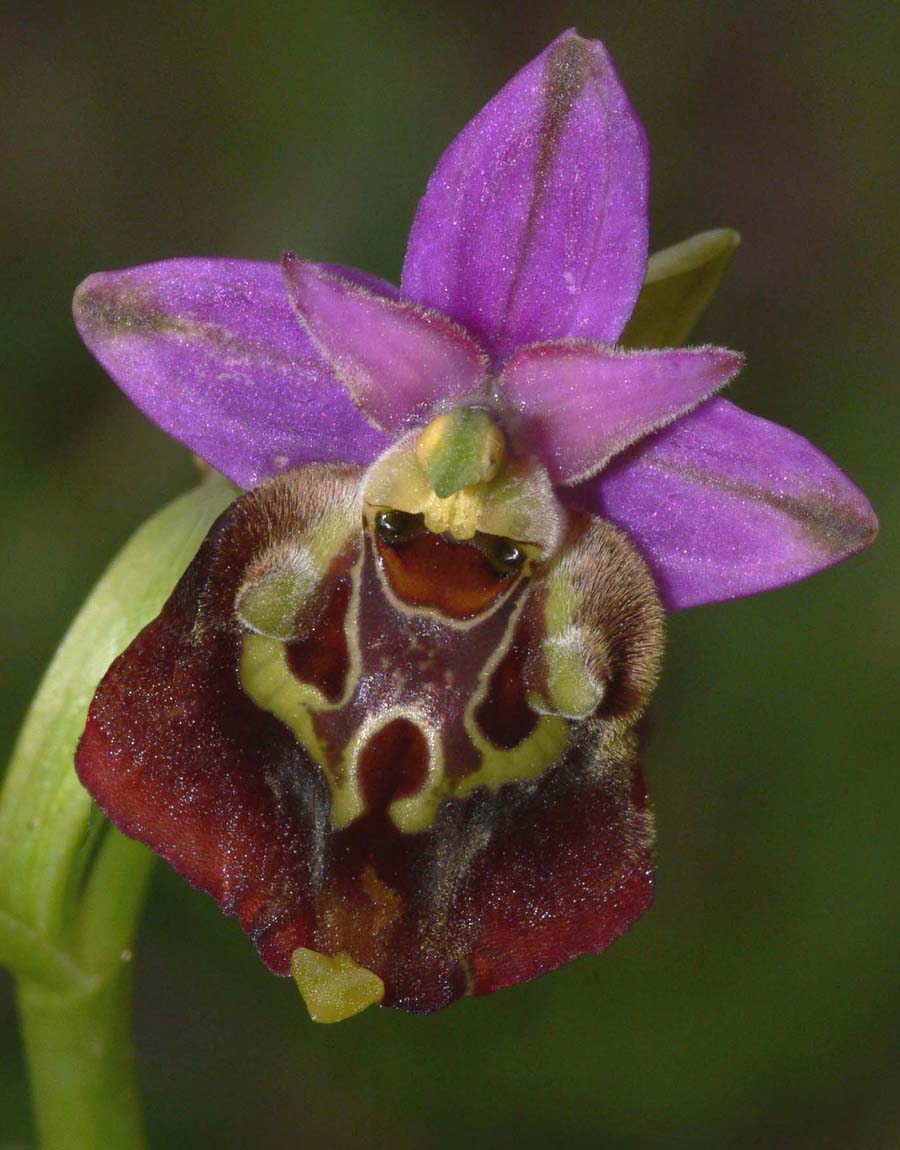
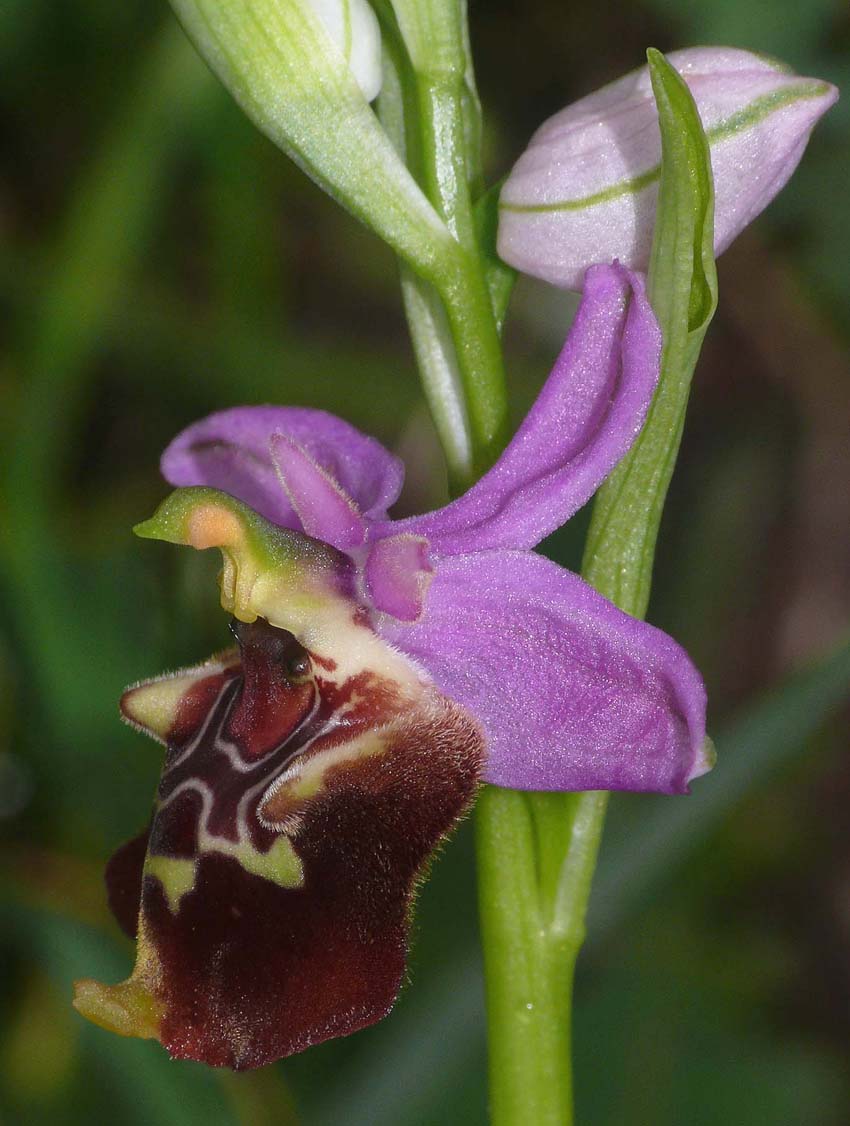
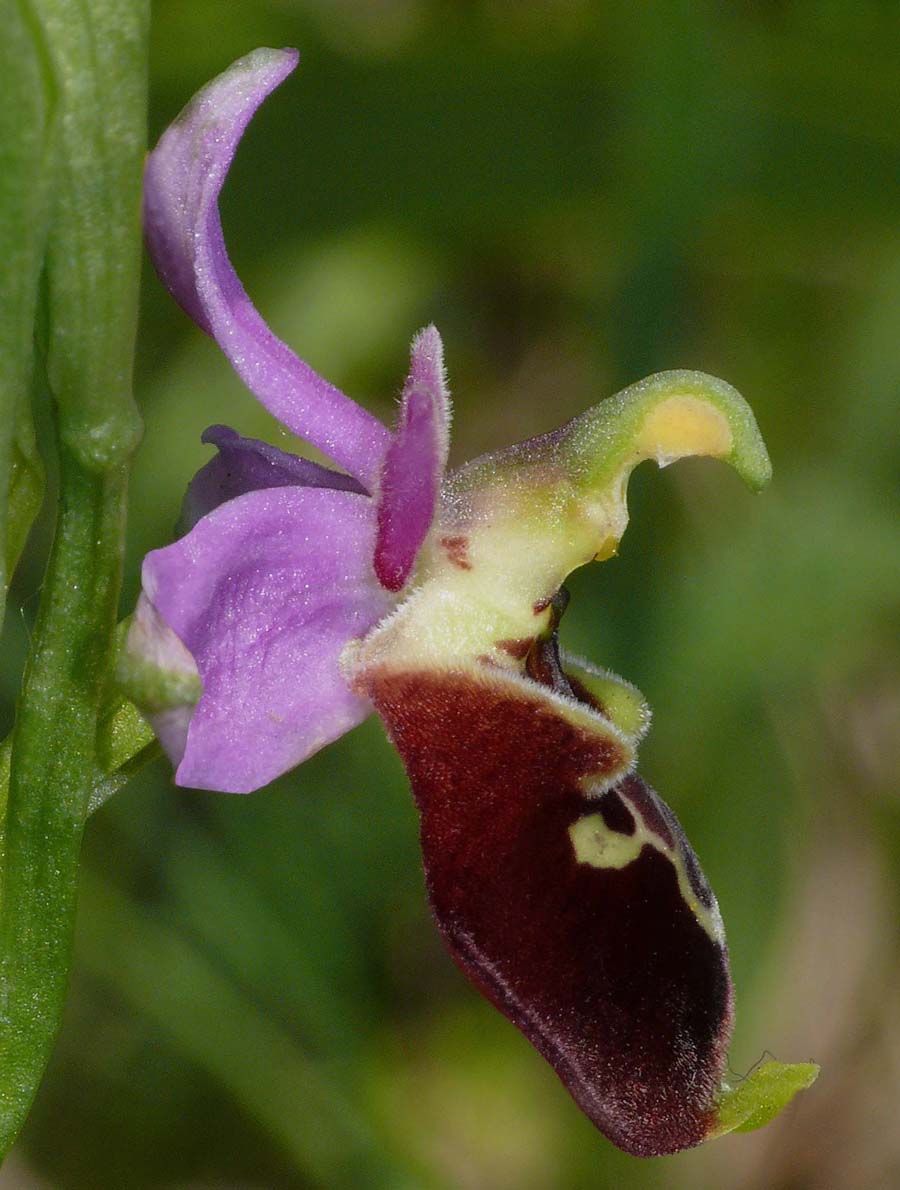
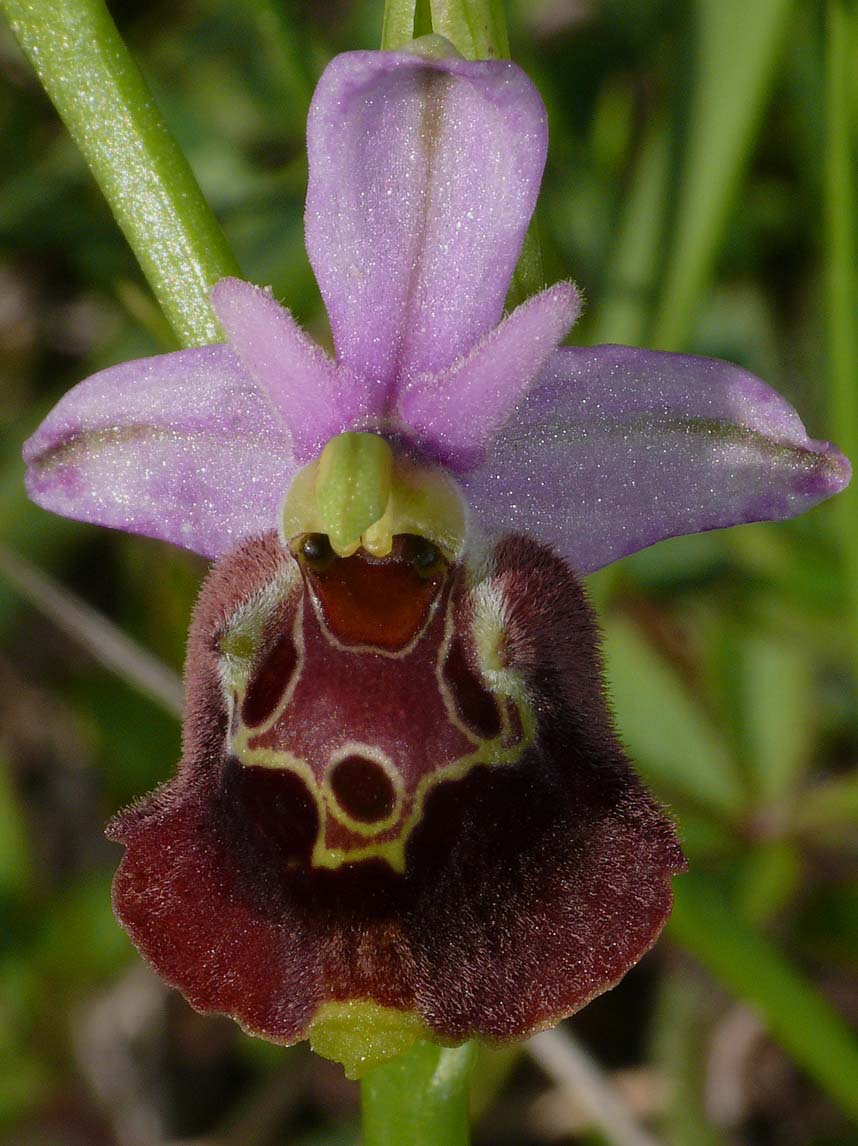
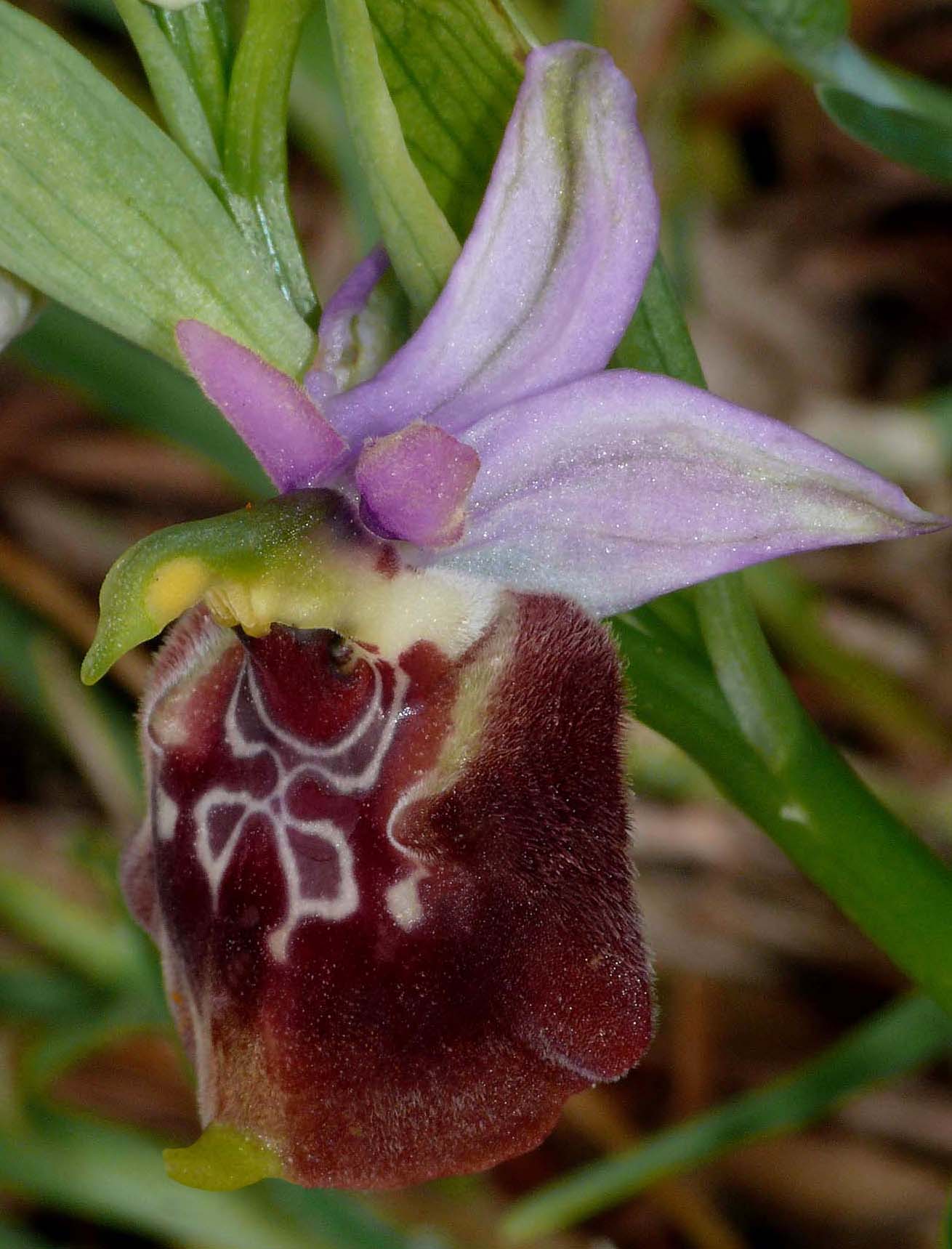
O. fuciflora was first described by Schmidt from Switzerland in 1770 and its common name is the Late Spider Orchid, despite the fact that its name literally means a flower shaped like a bee. In several European countries this ubiquitous taxon is preferentially referred to by the synonym, Ophrys holoserica.
This species is a familiar one to those who travel to western Europe in search of orchids but it is however an Ophrys that can be extremely difficult to identify with certainty due to the large number of new and similar species that have been (and continue to be) recognized. The O. fuciflora and O. tetraloniae groups in particular contain numerous members that may easily be confused with this Ophrys and the situation is often further complicated by hybridization and introgression which frequently creates populations mimicking pure species of unrelated fuciflorids, often very convincingly.
A certain way to ensure an identification is by seeking out the orchid in southern England where there are no similar species with which to confuse it ! O. fuciflora is however extremely rare in the UK and can be found in just a handful of sites in the south east of the country. A similar situation also existed in Holland until recently but O. fuciflora is now almost certainly extinct there.
O. fuciflora has a distinctive and elegant appearance with a lower labellum that normally flares out like a flamenco dancers skirt, a feature which is nicely depicted in several of the photos. This species is never three-lobed and importantly the sub marginal hairs are rarely complete, being at their heaviest around the shoulders. The pictures come from various western European countries and date from mid May to late June.