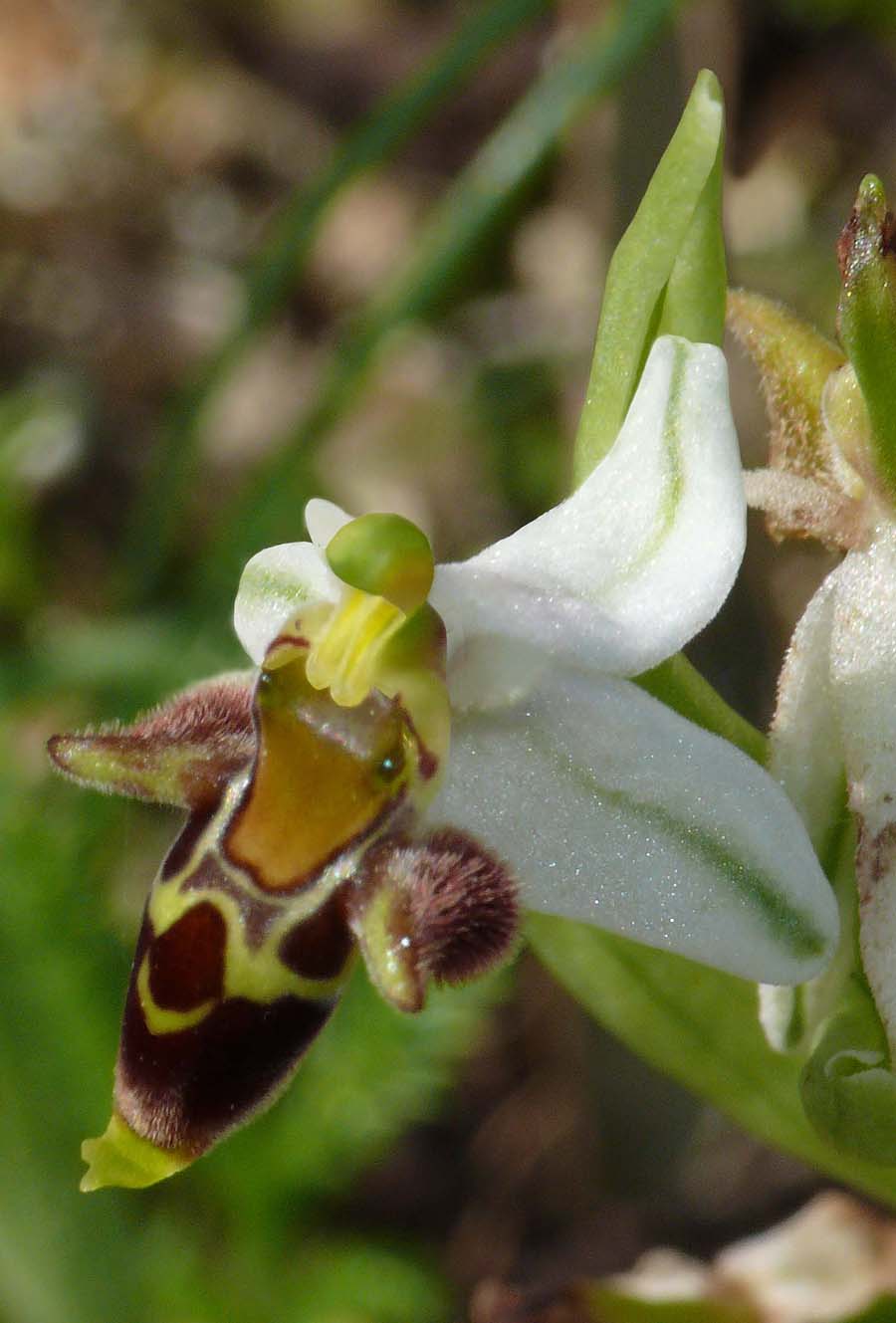
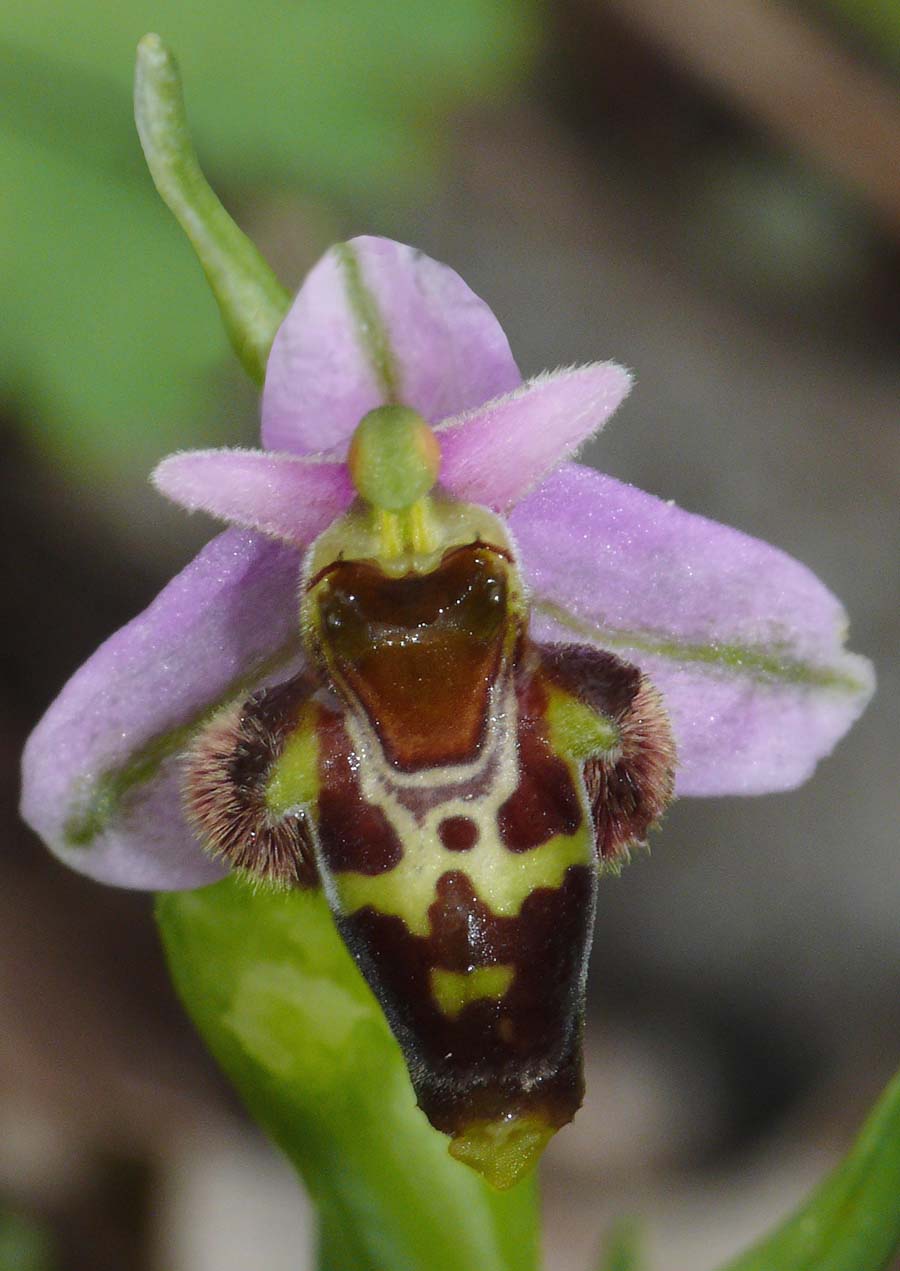
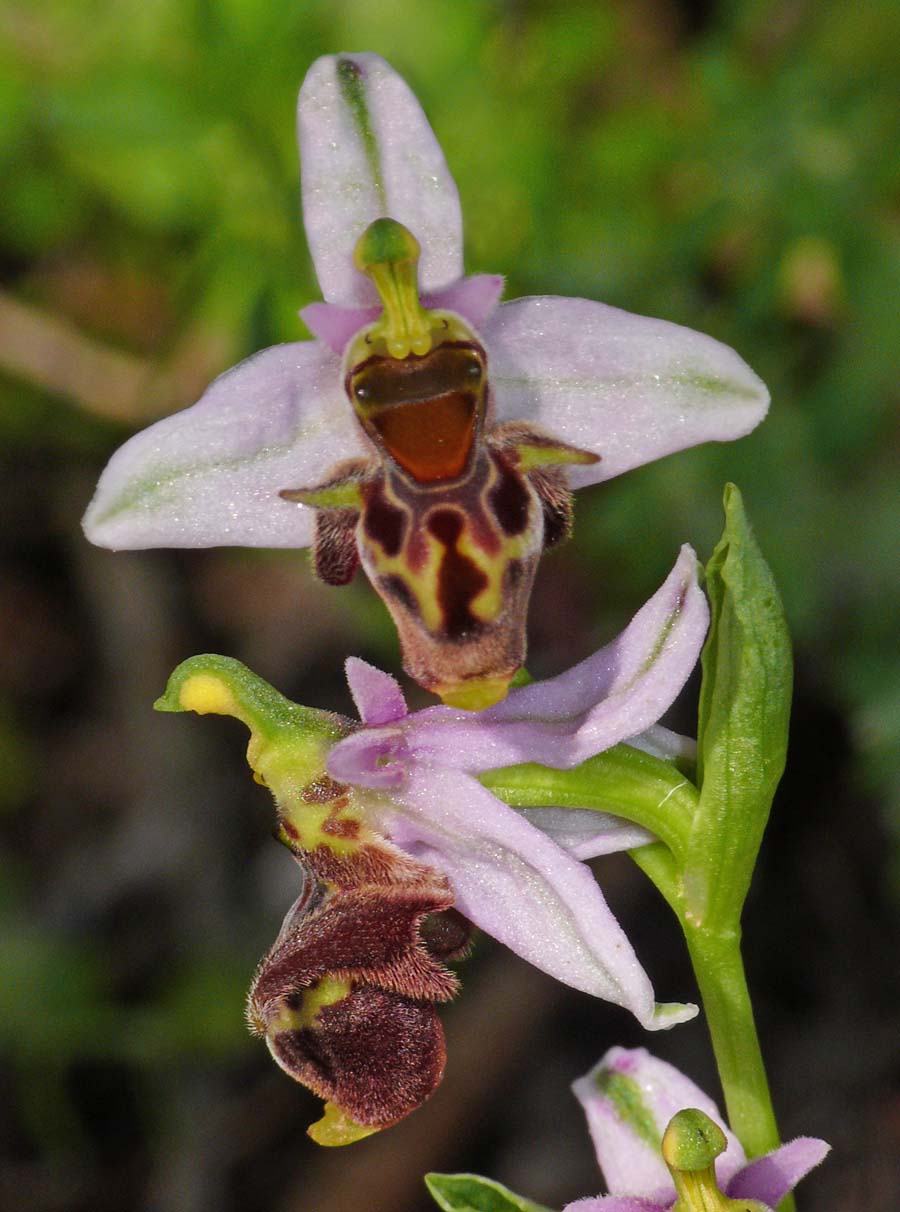
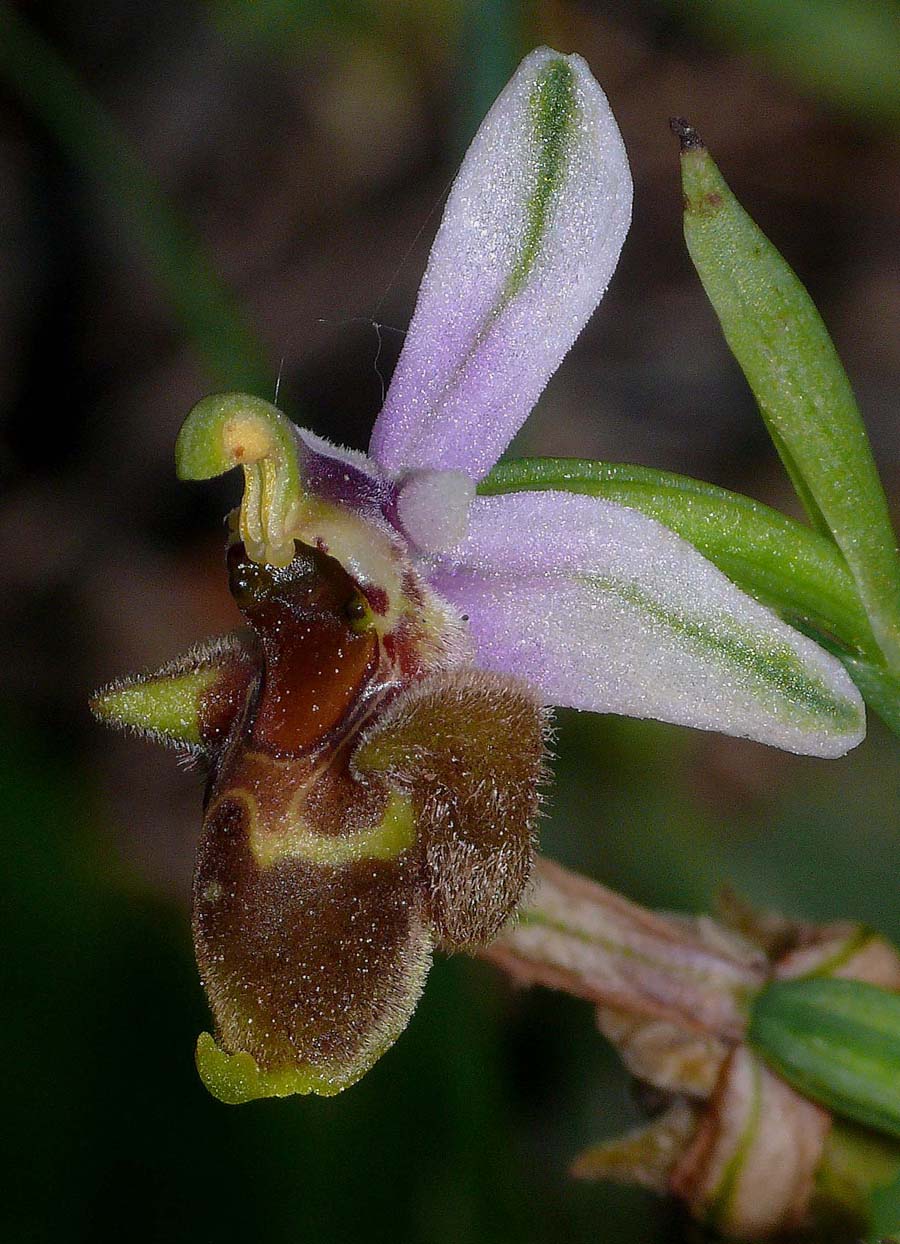
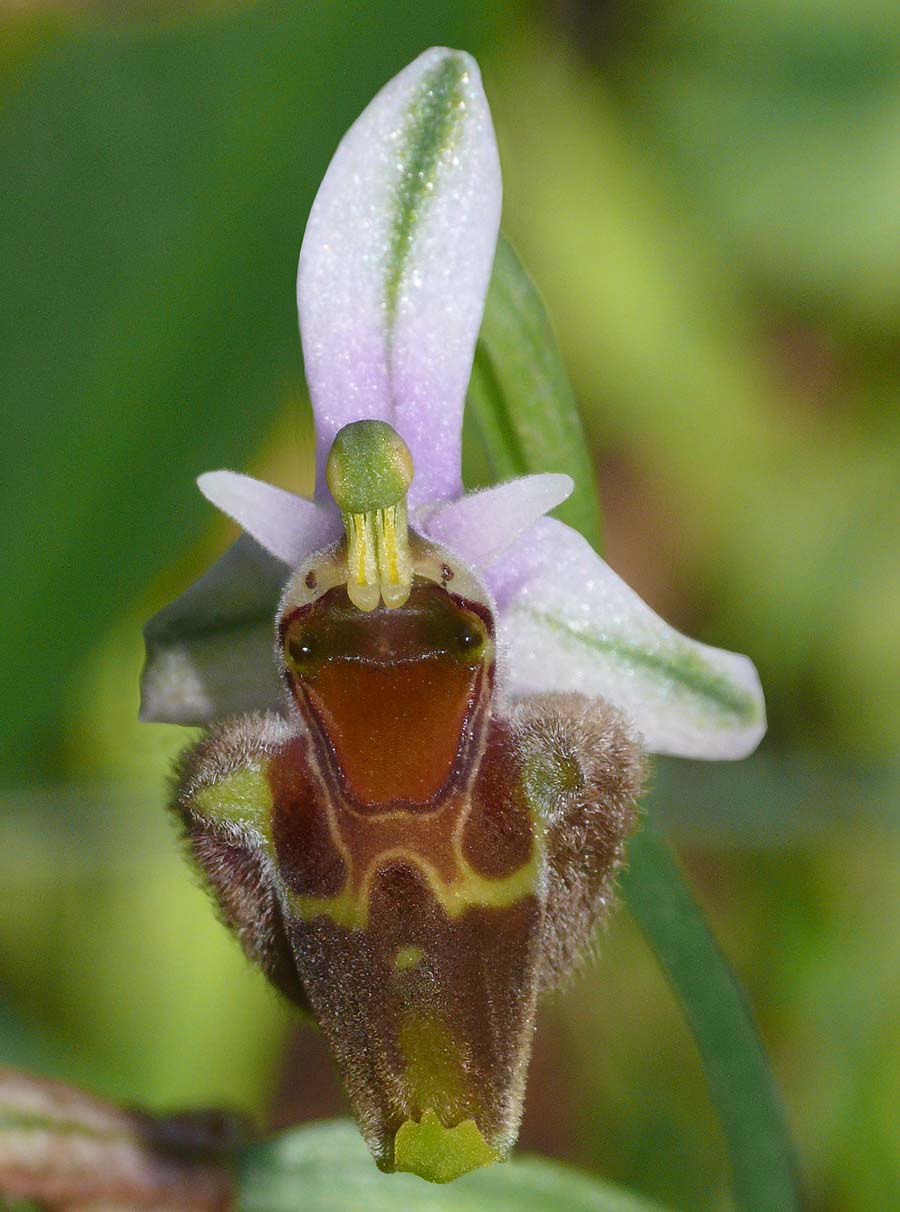
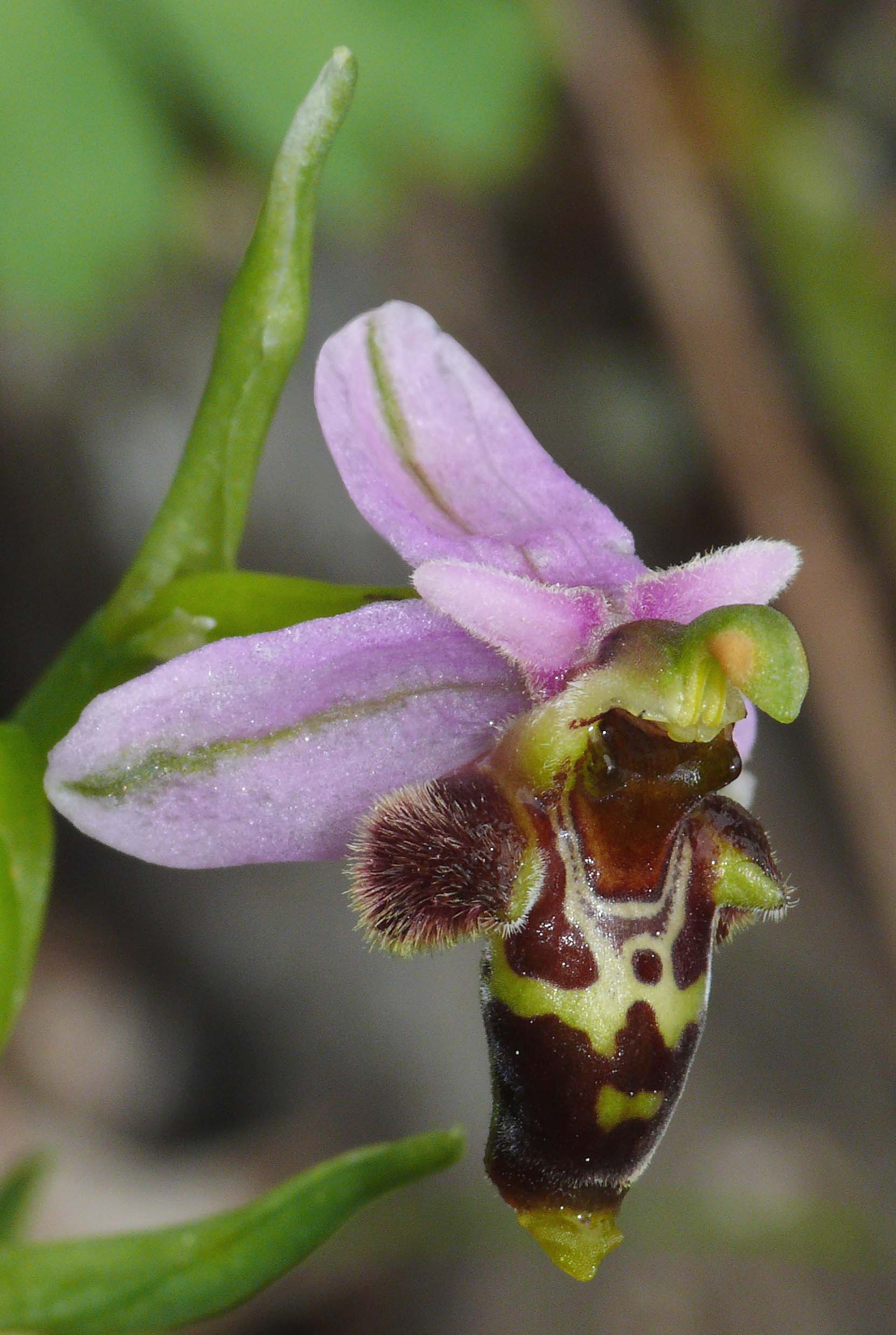
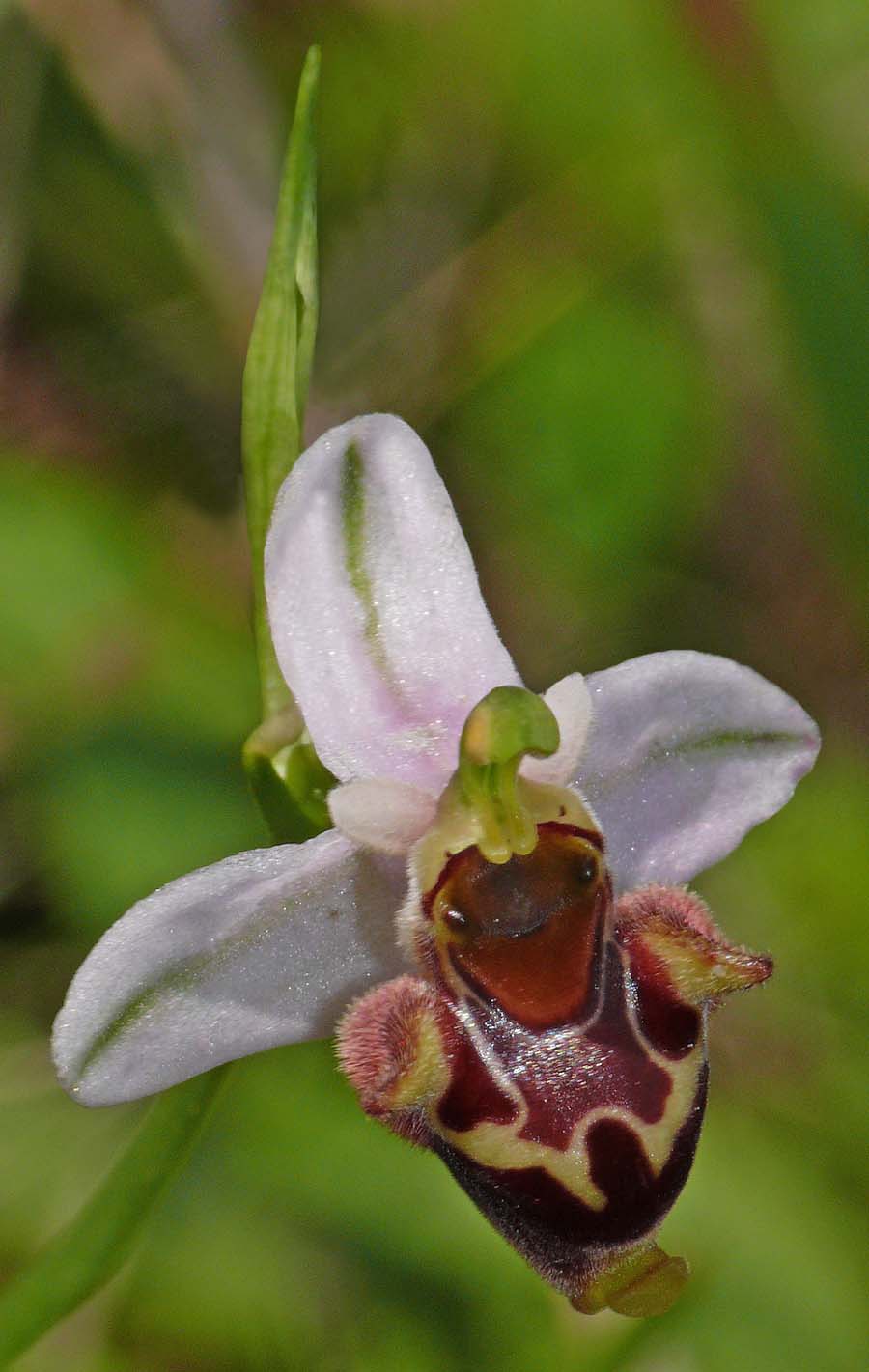
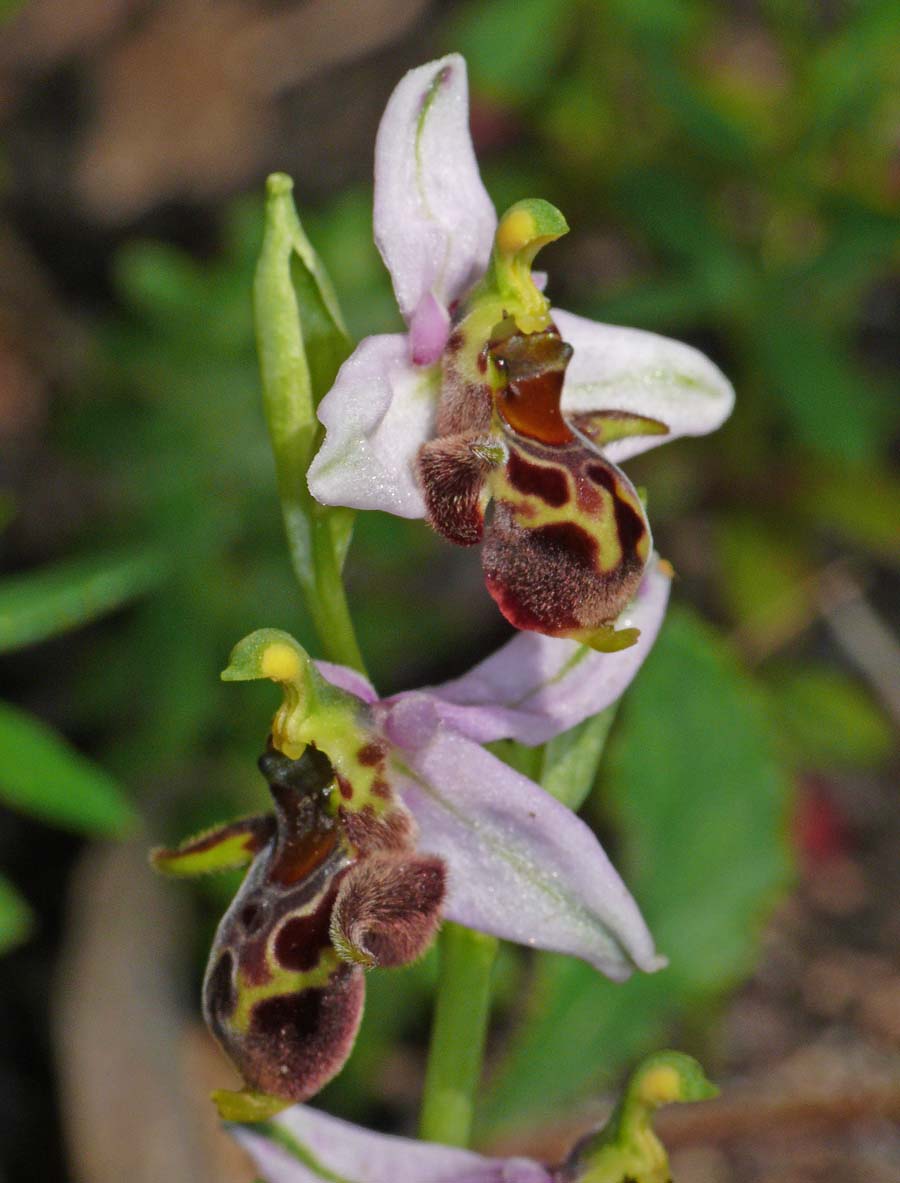
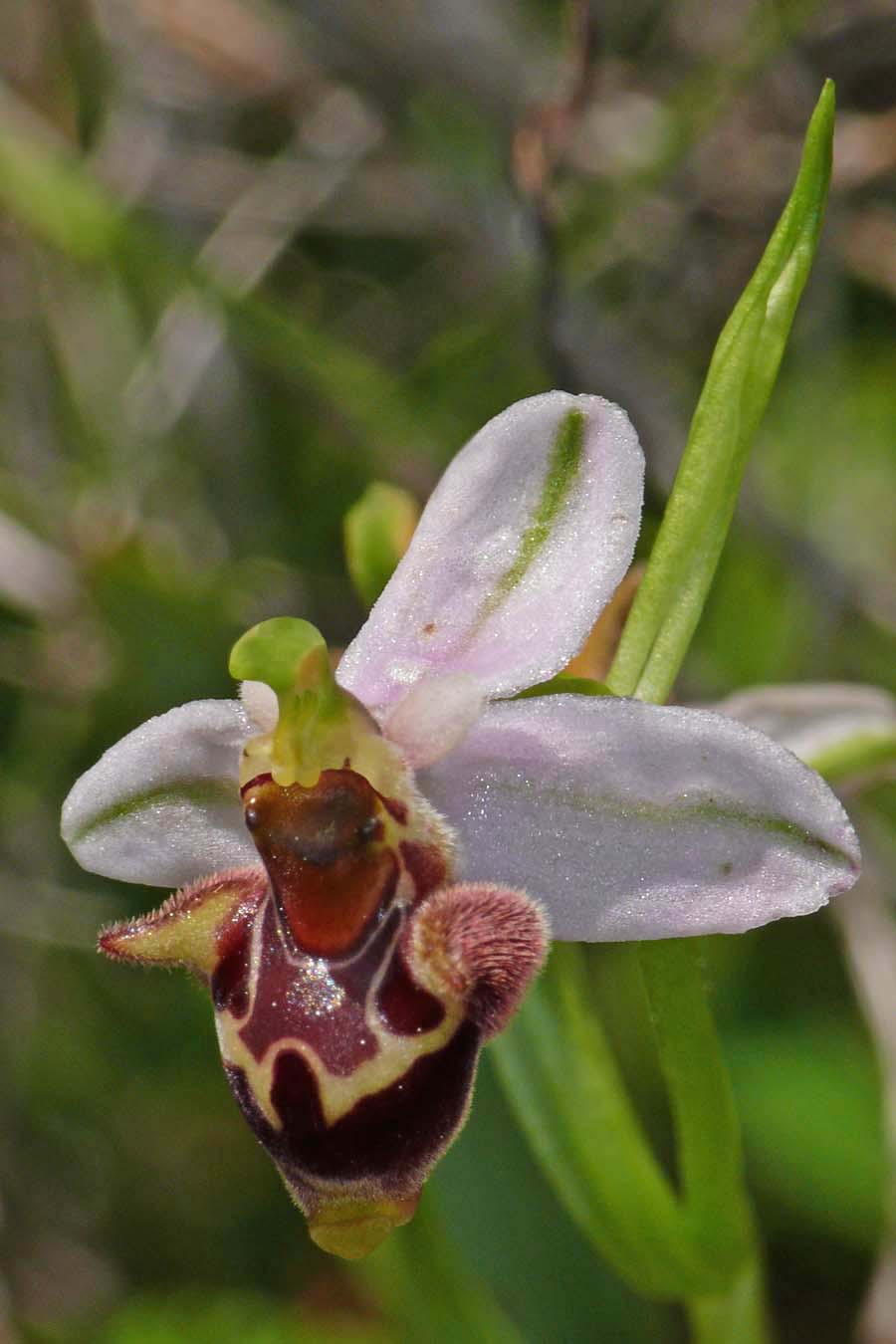
O. dodekanensis was originally described by Kretzschmar and Kreutz from Rhodes in 2001 but a similar species had already been described by Renz and Taubenheim from Turkey in 1991 and named O. heterochila. Following research by Paulus and Hirth into the latter taxon it was concluded that the two species were in fact synonymous and the name heterochila (meaning "variable lip") was retained.
This was the prevailing view until recently when the opinion was reversed and the two species were again regarded as separate taxons. This view is not at all universally endorsed with many pointing to the fact that they share the same pollinator and that both are reported as very variable with formal descriptions that do not satisfactorily distinguish them. These two species are extremely difficult to differentiate and the authors cannot present this page as authoritative.
O. dodekanensis has a similar range and often grows in close association with O. heterochila with both tolerating a range of habitat but favouring a degree of shade. The key distinguishing features are lip shape and flowering period. The lip of the former is strongly reflexed and forms a pleat at the rear which gives the lip a very narrow appearance whereas the latter tends to range from scolopaxoid to fuciflorid configurations. These are however variable species and lip shape can only be regarded as a guide. The second feature that shows a likely difference is flowering time and this in the authors experience is a more valid differentiator. O. dodekanensis flowers from the end of February to late March whereas O. heterochila does not start until early March and will therefore be fresh at a time when O. dodokanensis is fading. The pictures are from Samos and date from the last week of March.