This is a member of the large and expanding O. oestrifera group which until 2004 was known erroneously as O. bremifera. The name "Ceto" comes
from the Greek "Keto", meaning sea monster and from which was named the
sea Goddess Ceto who
was ill-famed as the incestuous mother of a family of little sea
monsters called the Phorcydes. Quite what it was about this particular Ophrys that brought this infamous God to mind is unknown ?
As with many of the Greek, O. oestrifera
group, this species can be naturally variable and will readily
hybridize with other group species. In its typical form however, it can
be a straightforward orchid to identify
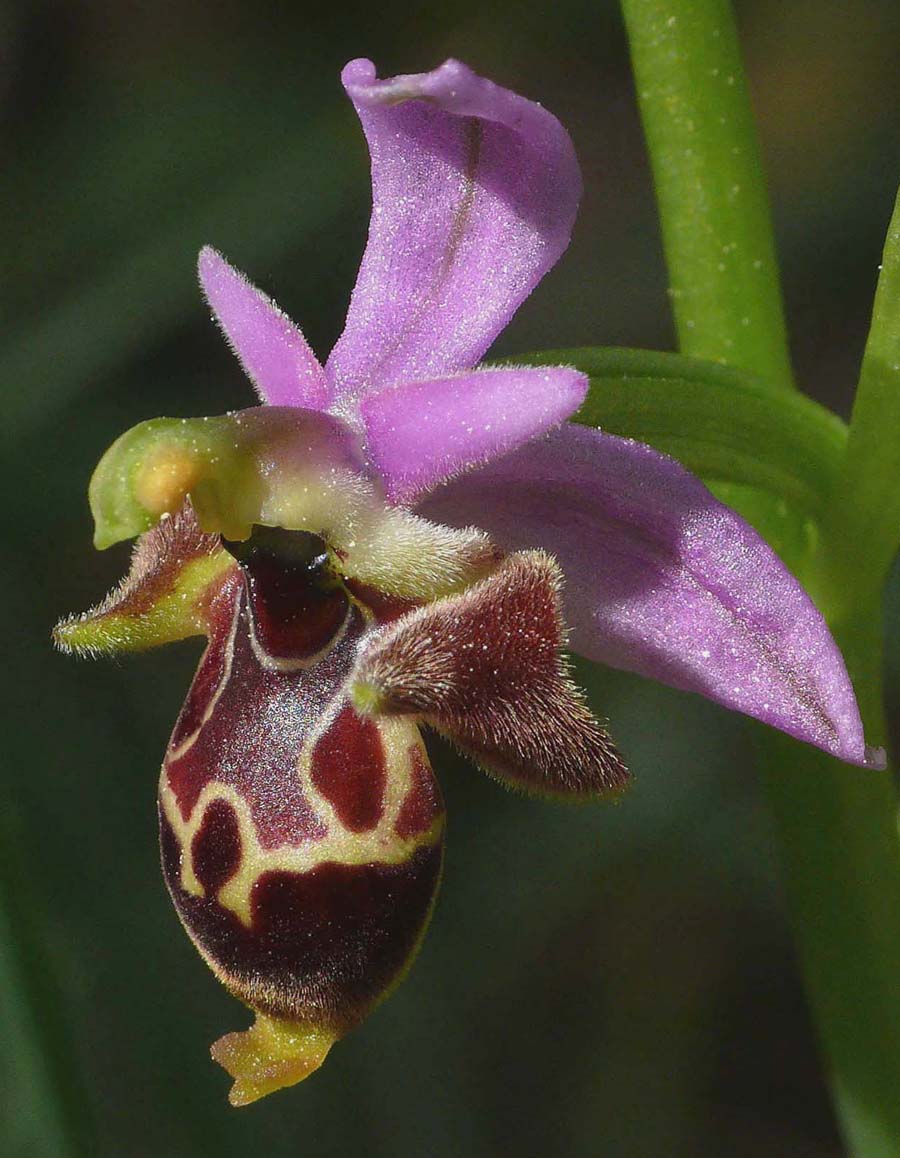
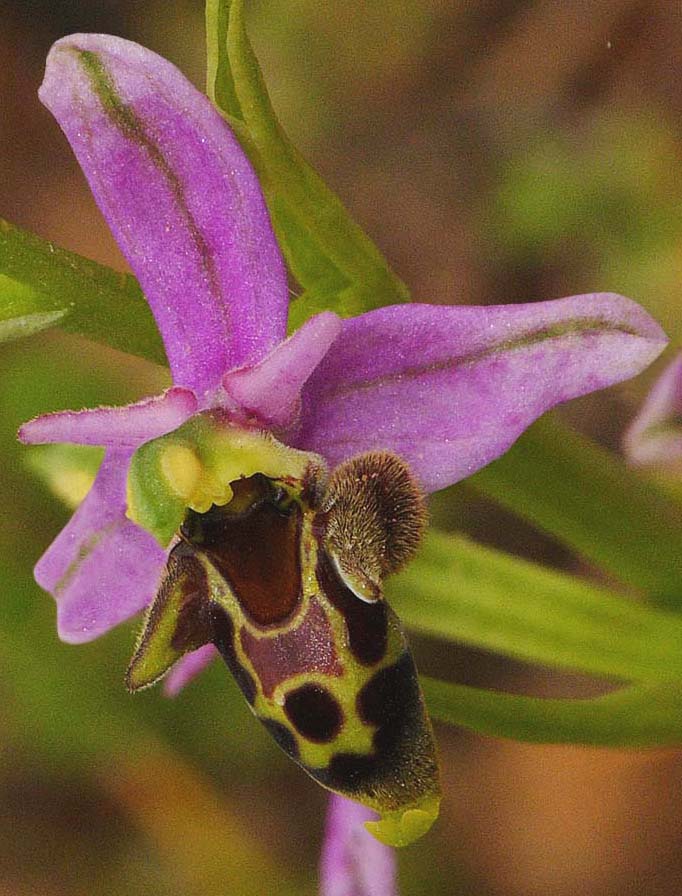
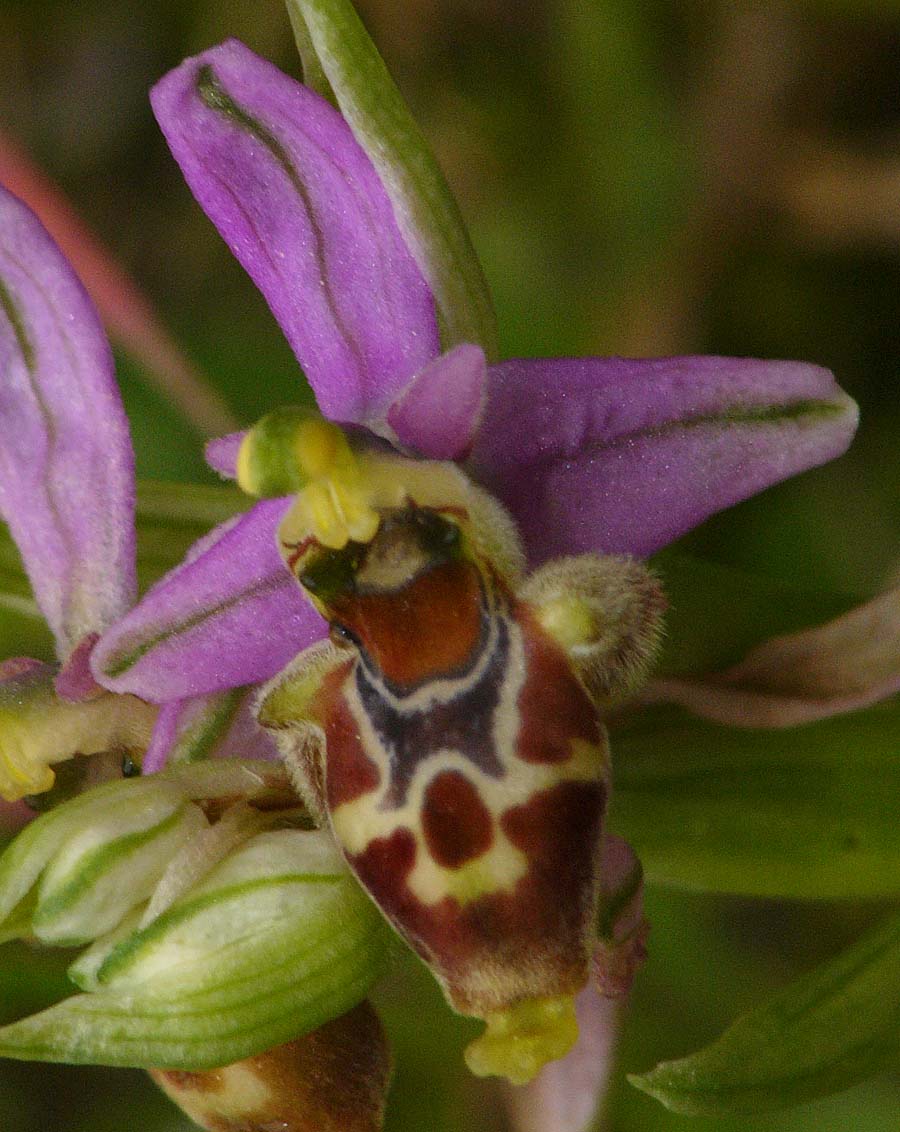
and there are three key features which assist recognition :- 1. it's a
robust, albeit slender Ophrys, the flowers being large
with a characteristically long lip. 2. it is one of the few members
of the group
that although variable, does not typically possess long lateral lobes (horns)
3. the stigmatic cavity is wide, being at least 50% of
the lip width. A final feature though less diagnostic is
the pseudo-eyes (and
ridge between them) that are very pronounced.
Its can be found from the Aegean basin and through central Greece to the Ionian islands. There are however some
question marks with regard to its status in the
Aegean islands where on Chios and Lesbos, plants previously thought to
be of this species are being newly
reclassified as O. masticorum or O. orphanidae.
It is probable that this situation is equally applicable throughout the Aegean basin.
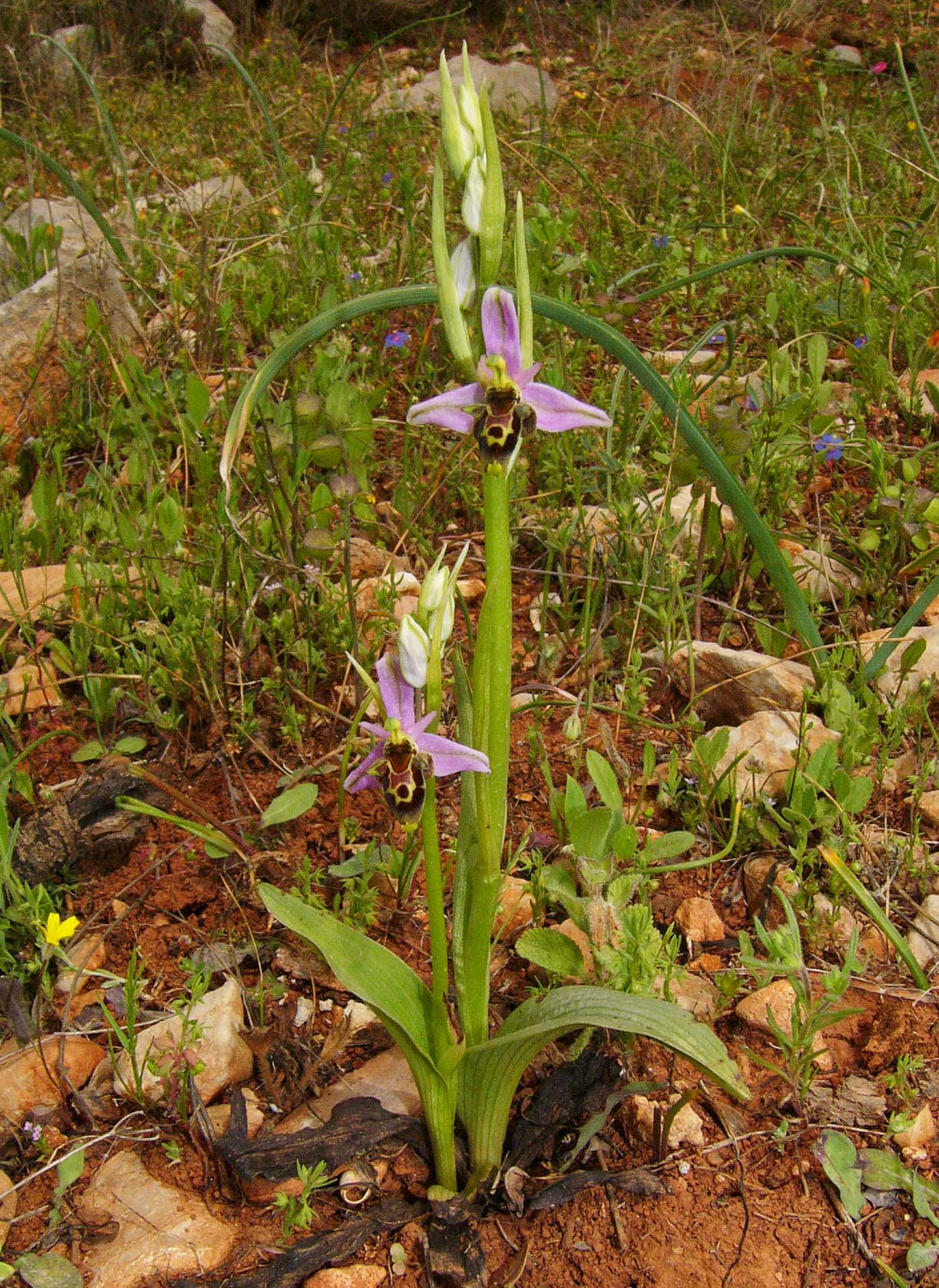
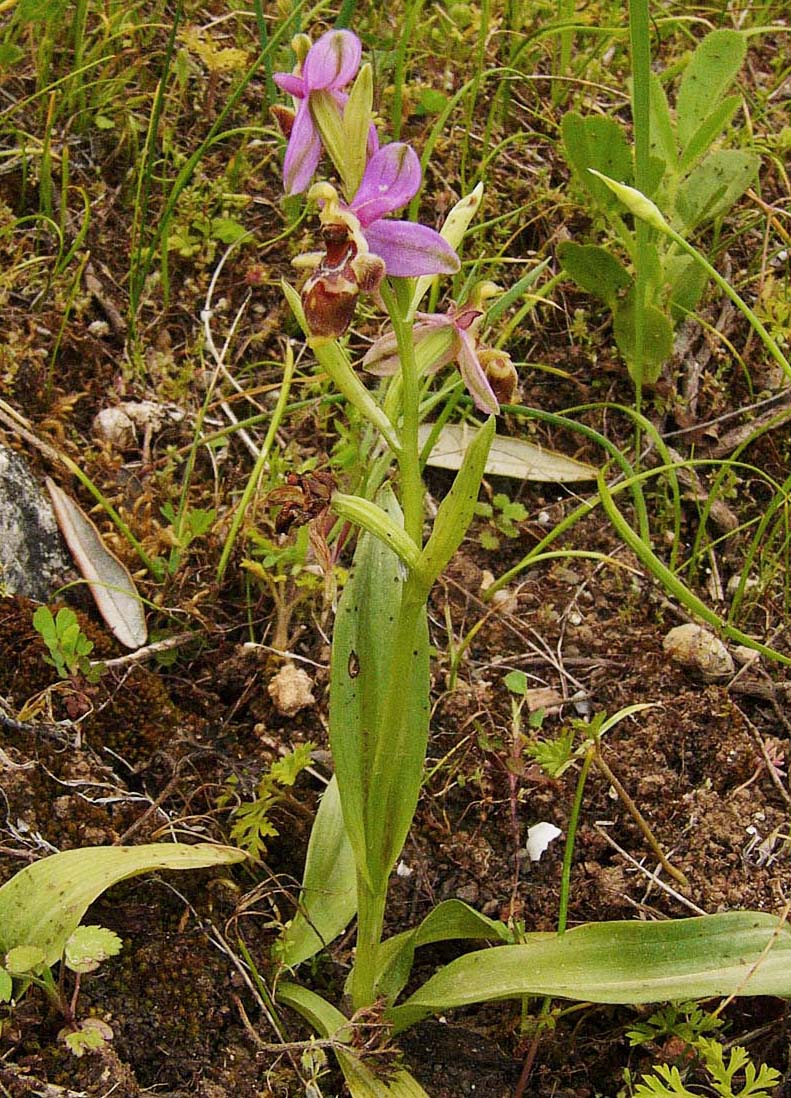
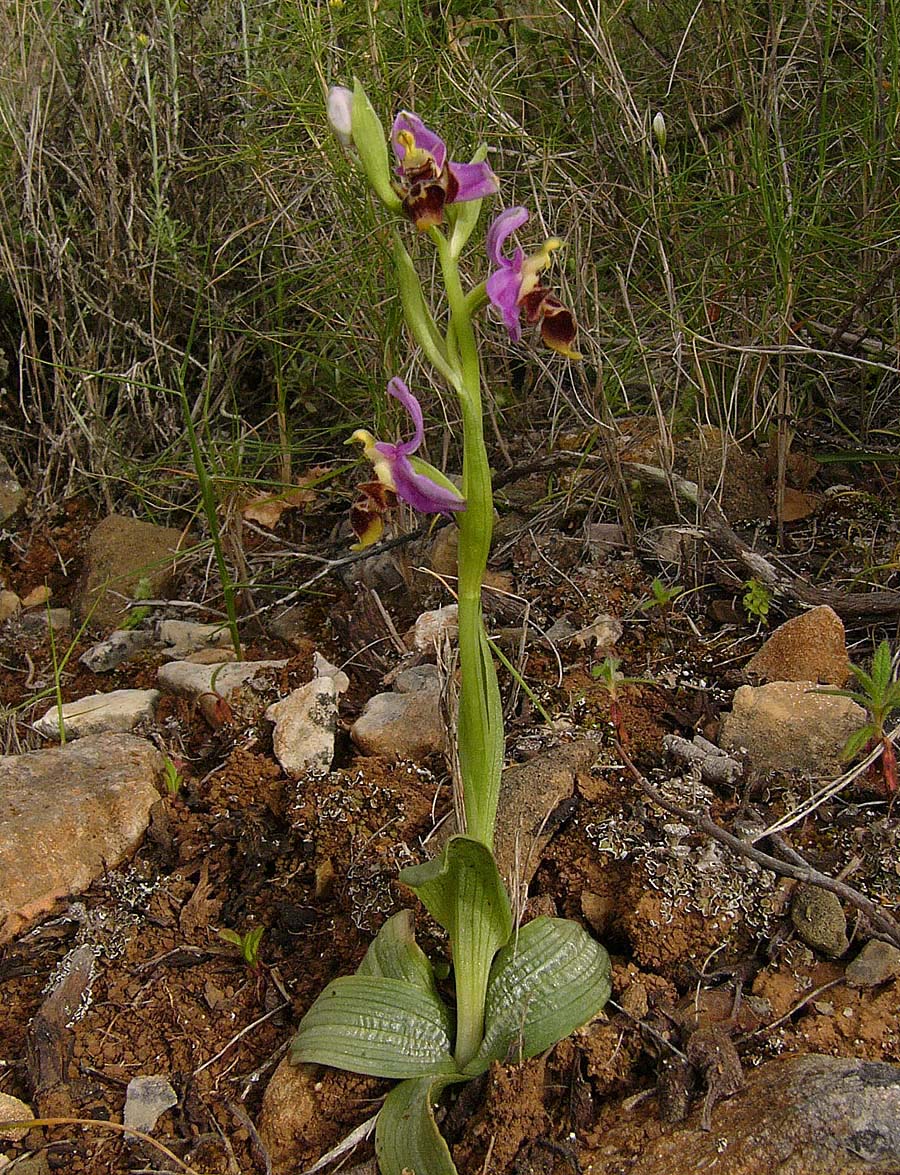
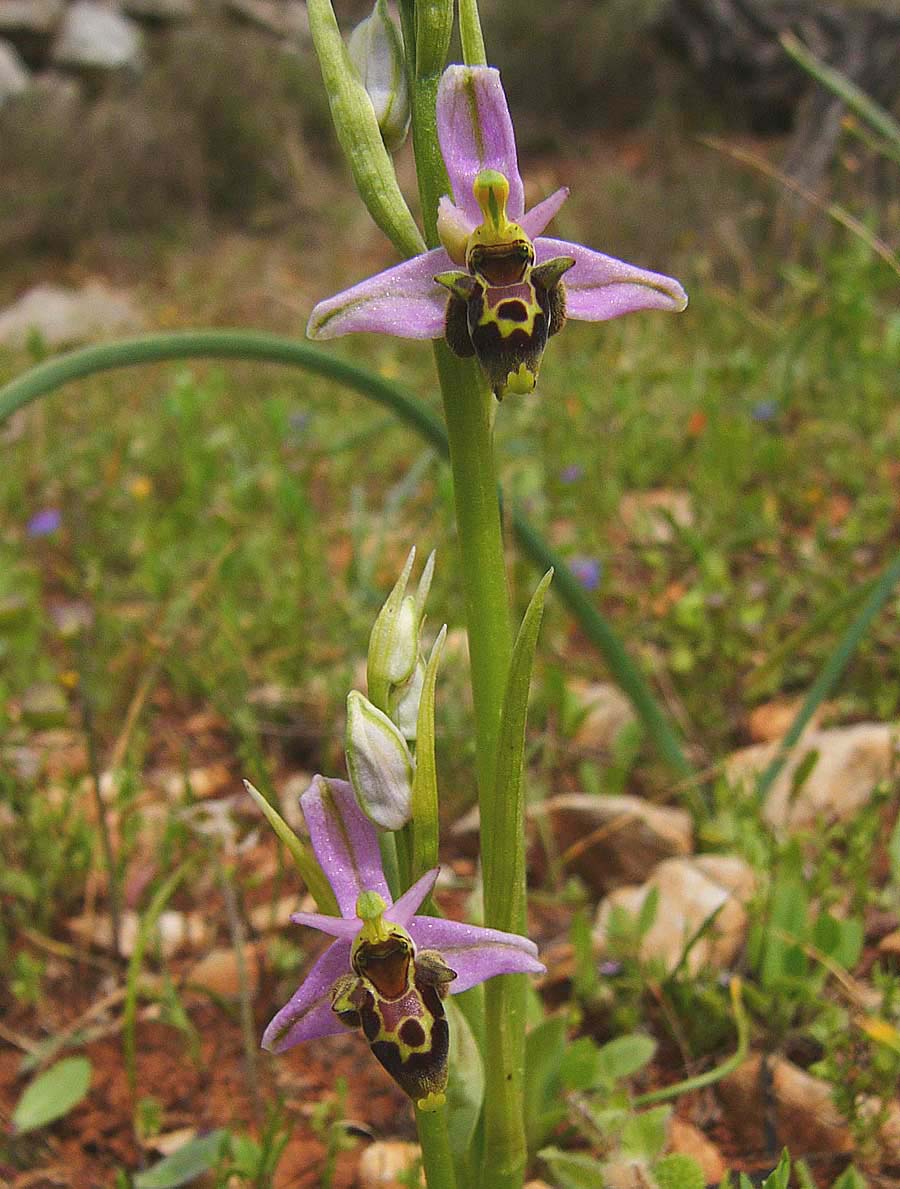
The illustrations are from Mt Hymettus, the
northern Peloponnese and Chios, dating from mid April.

.