N. tridentata was first described as Orchis tridentata from Slovenia in 1772 and is commonly known as the Toothed Orchid. Its name is a reference to the three canine like points surmounting the hood. The species, along with all the tridentata group were transferred to the Neotinea genus in 1977.
N. tridentata is a common orchid with a widespread distribution similar to that of N. lactea though it is somewhat rarer in the west and increases in frequency as it ranges eastwards. Its distribution is not however fully understood due to confusion with other group members, notably the morphologically similar but not closely related N. commutata. On Crete in 2008, a variety endemic to the island was formally recognized by Alibertis as Orchis commutata subsp. angelica, though this was eventually revised to N. tridentata var. angelica.
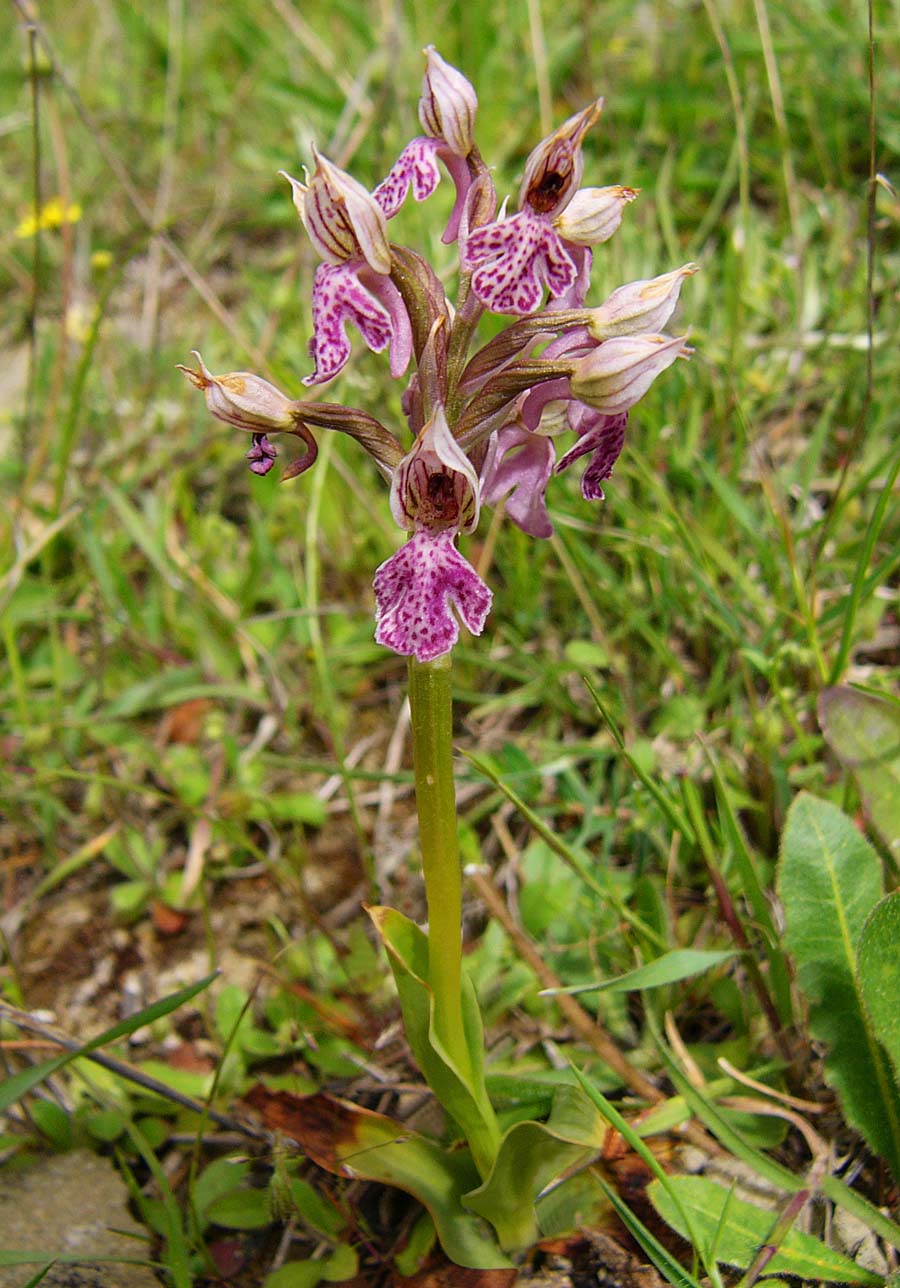
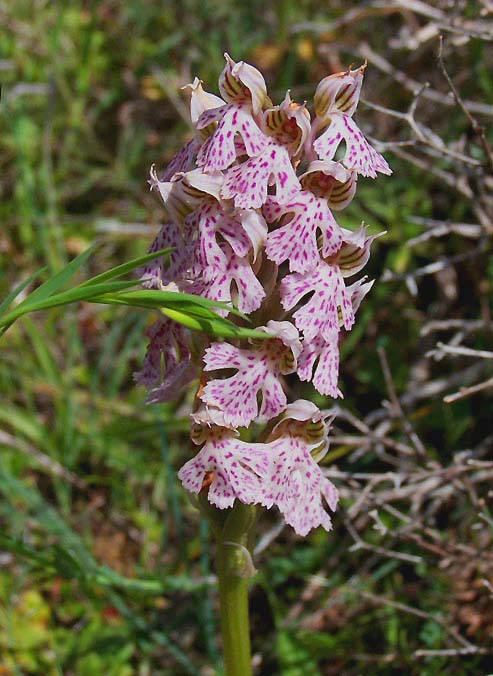
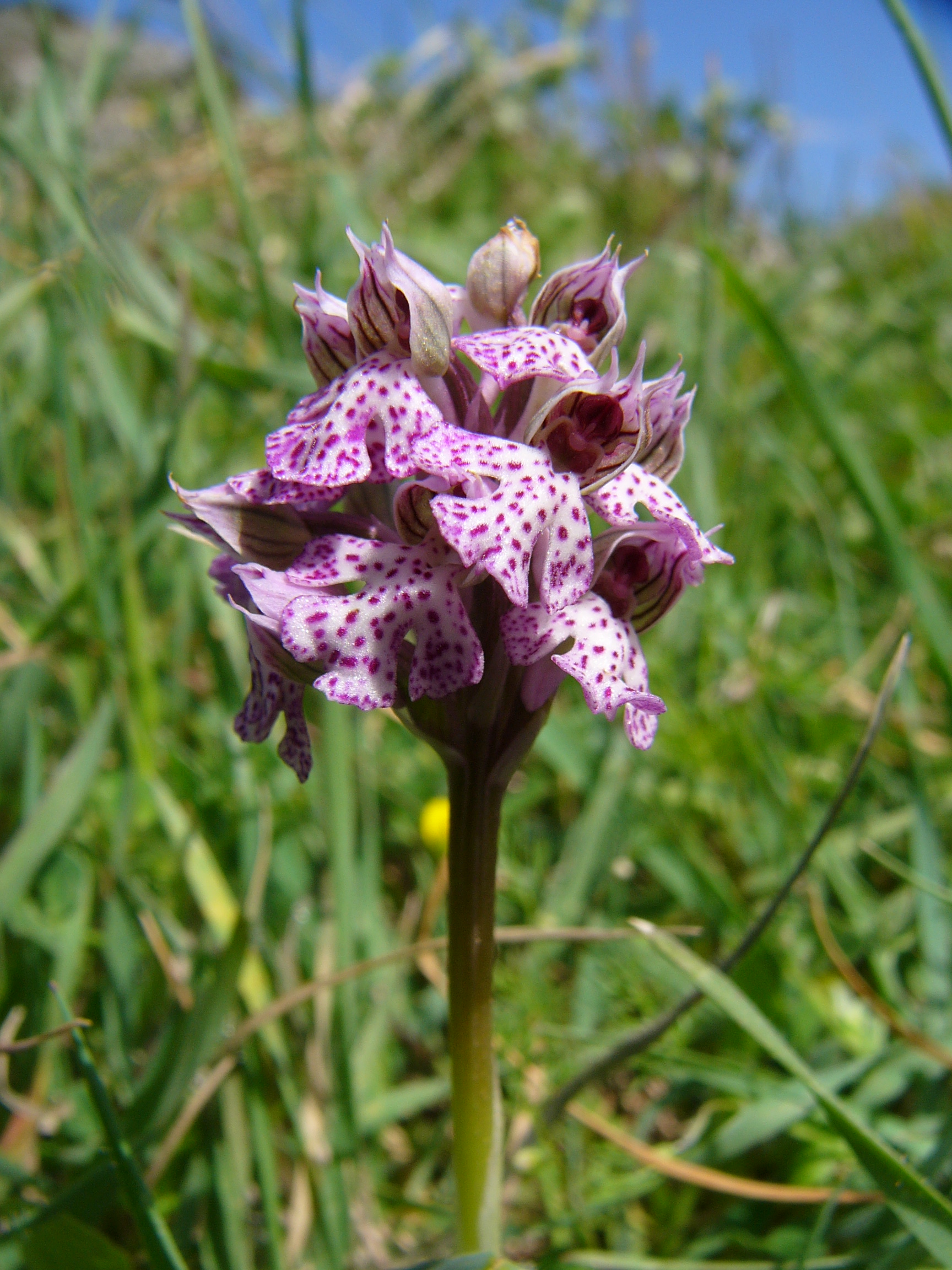
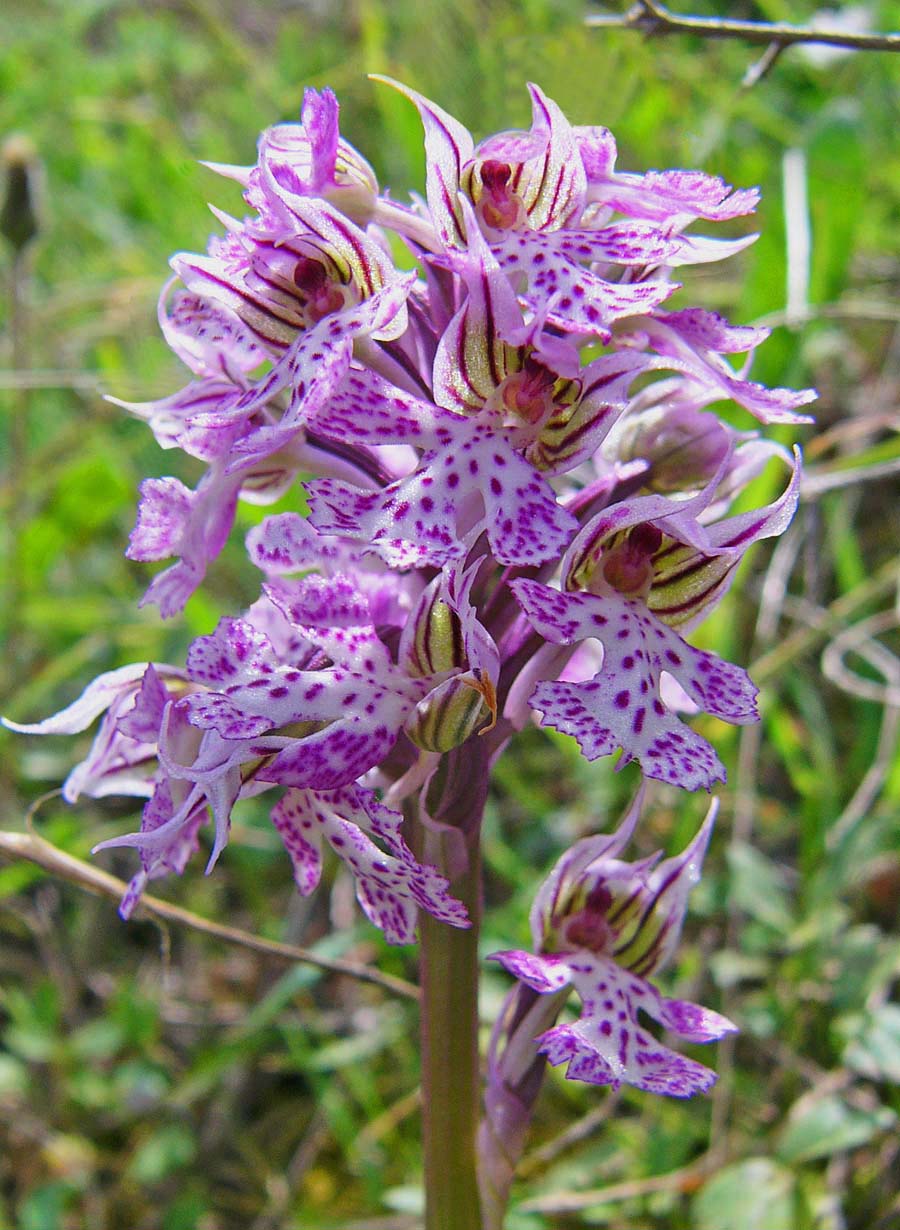
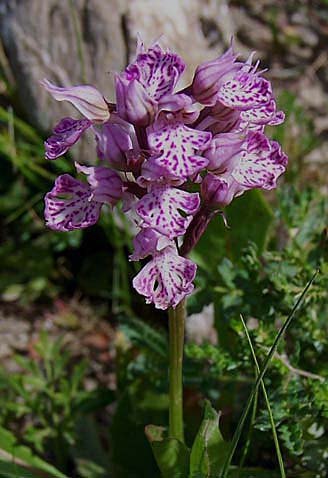
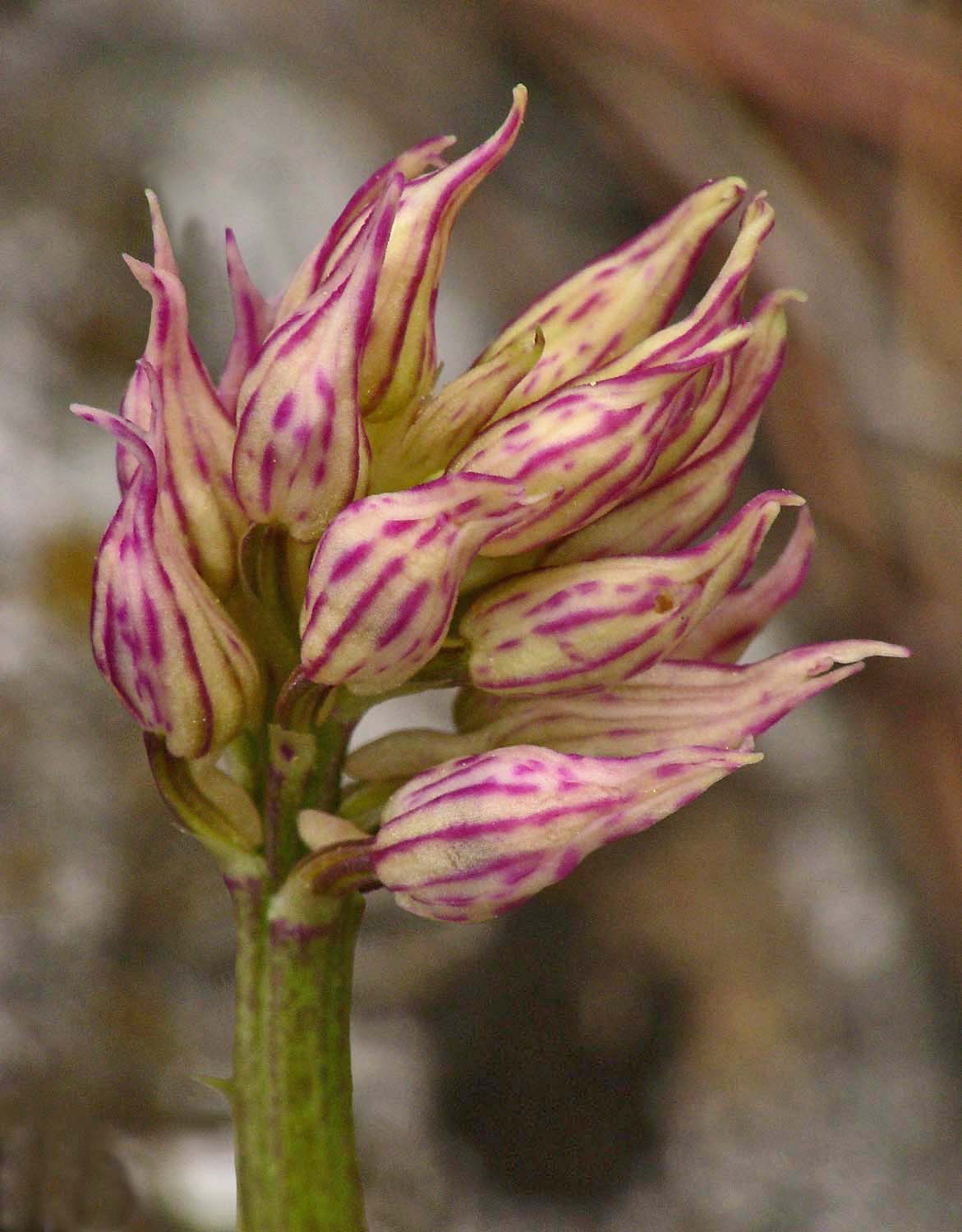
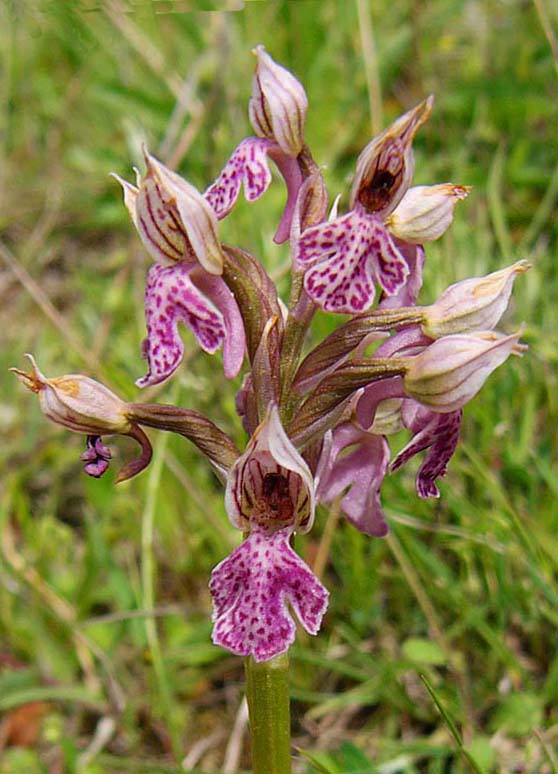
It differs mainly in its flower size and stature which are both smaller than the nominate species. This variety usually carries a loose, sometimes cylindrical inflorescence with an average of 10 individual flowers, though this can be as many as 20. The flower, although smaller, is not dissimilar to that of N. tridentata, having a relatively flat dentate lip, modestly upturned at the margins. In general however, the lip markings are bolder and more vividly cooured. The perianth forms a closed hood which often exhibits a green tinged internal underside, reminiscent of N. lactea and not normally present on N. tridentata. Overall this variant presents a somewhat weedy appearance unlike its elegant cousin with which it can be found growing in similar habitat on the island of Crete. The pictures all come from the Spili valley in central Crete and date from the first two weeks of April.
.