This is a member of the N. tridentata group which has recently been reclassified from genus Orchis into the Neotinea
genus. It was first described from
Sicily in 1842 and its name literally
means "changed" though it has always been commonly referred to as the Conical Orchid.
Its range is similar to that of N. tridentata though less extensive. Because of its marked resemblance to that species its exact distribution is not fully understood although it is known to get no further east than Anatolia. What is known with certainty however is that wherever you can find N. commutata you will also find N. tridentata and so the scope for confusion is apparent.
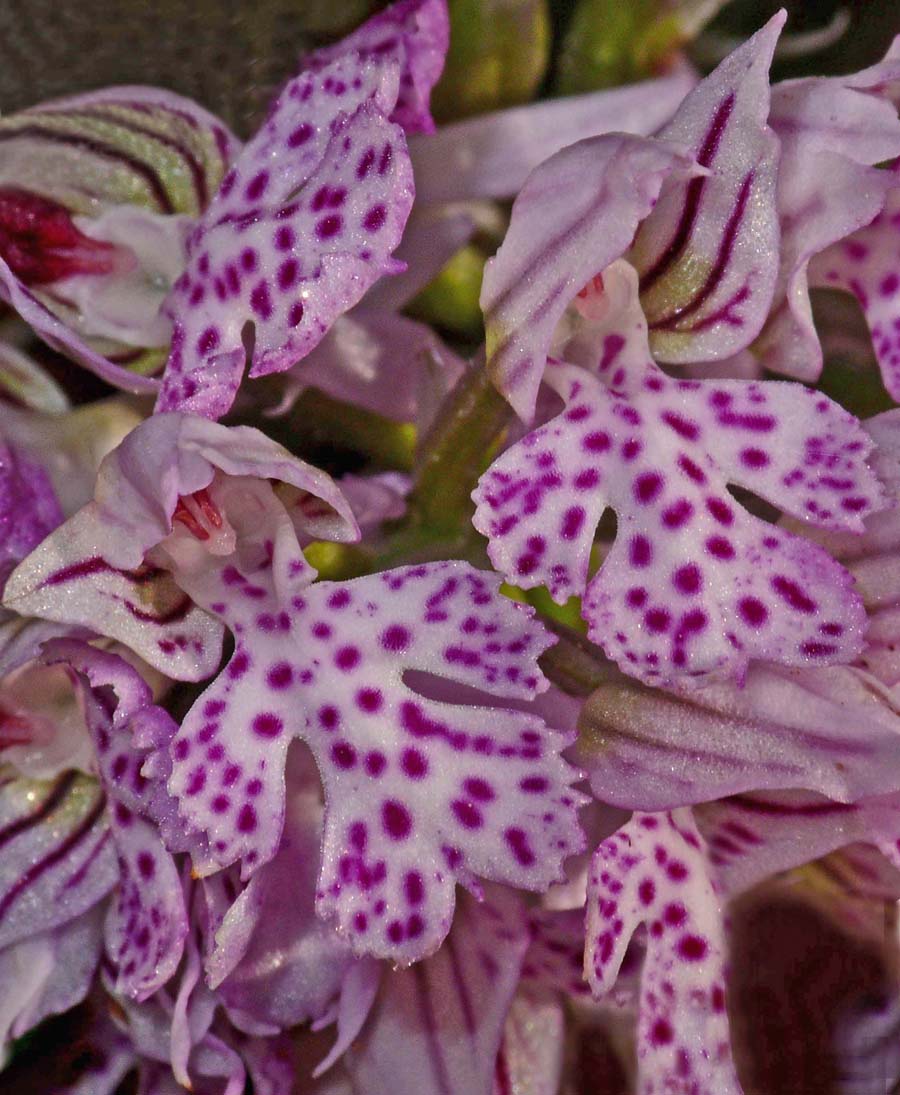
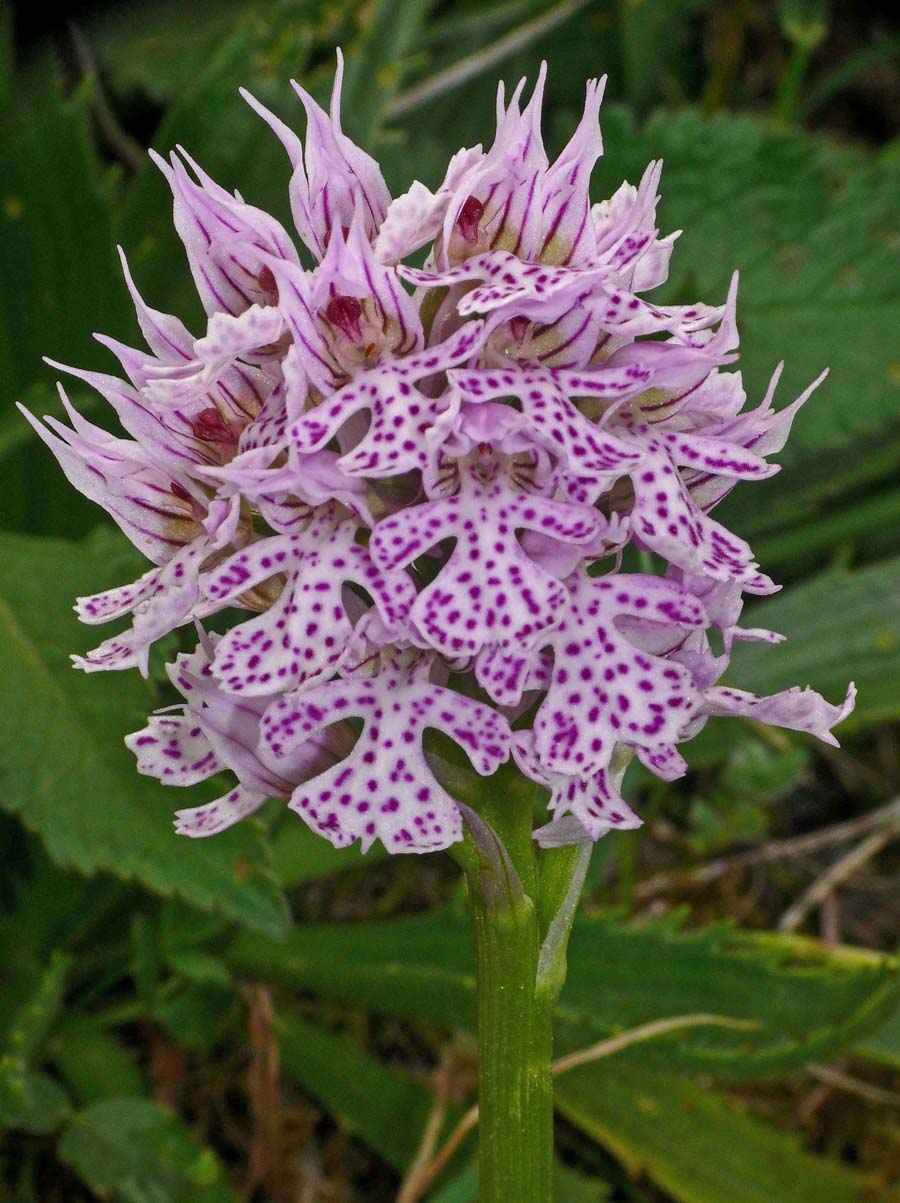
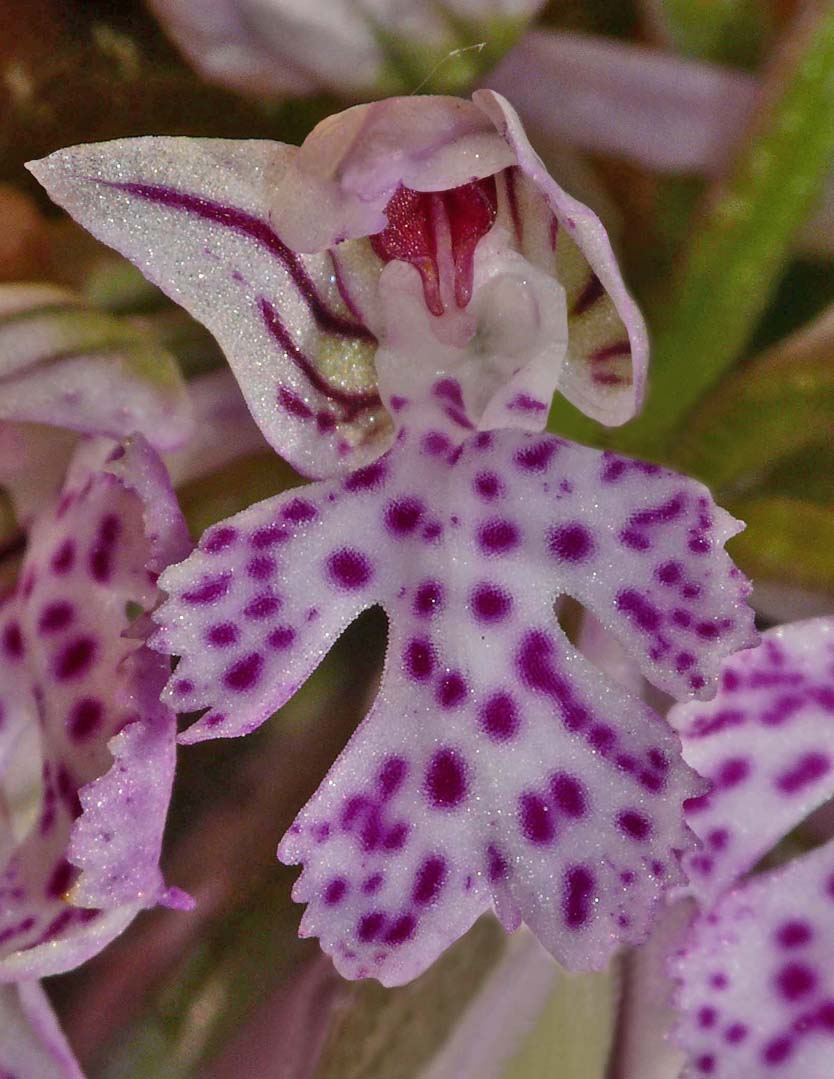
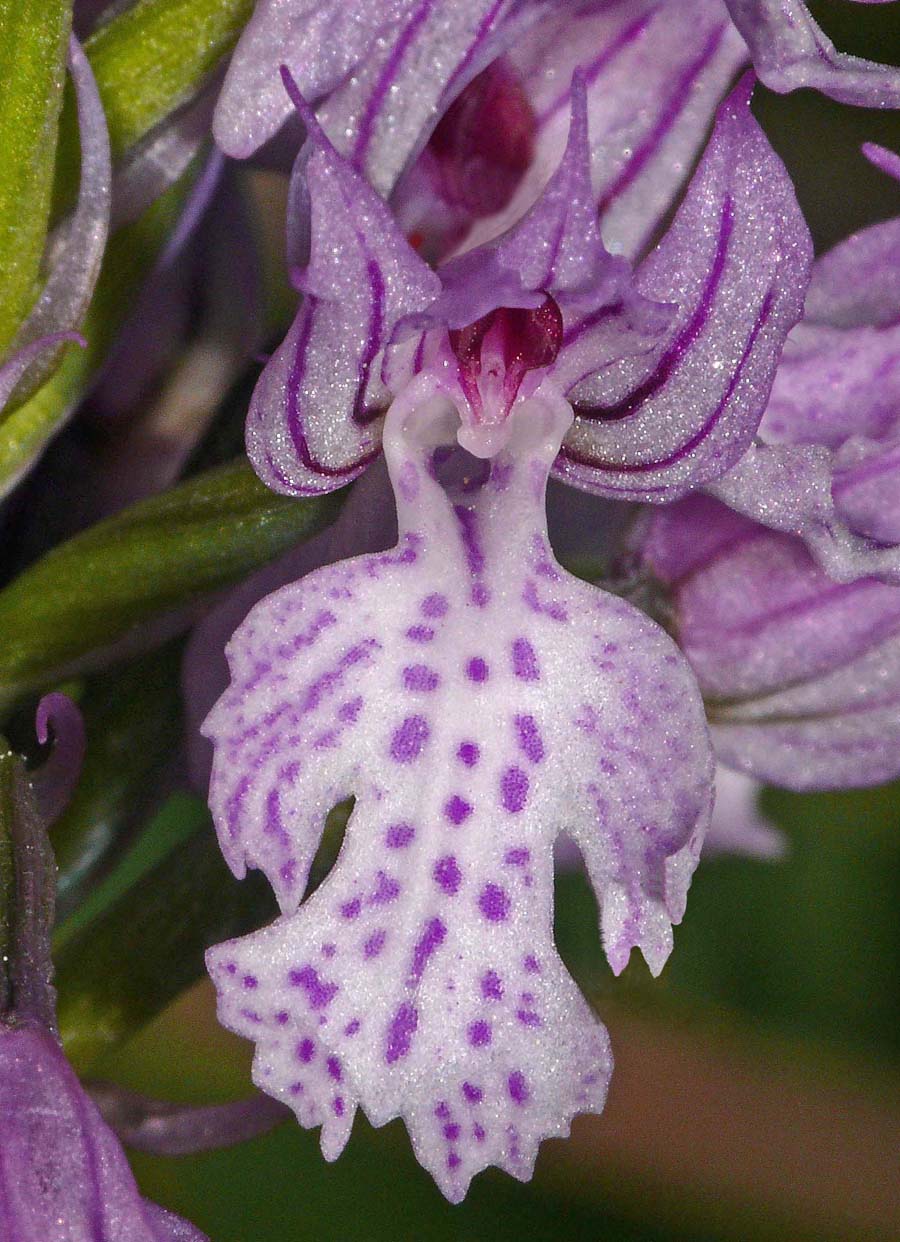
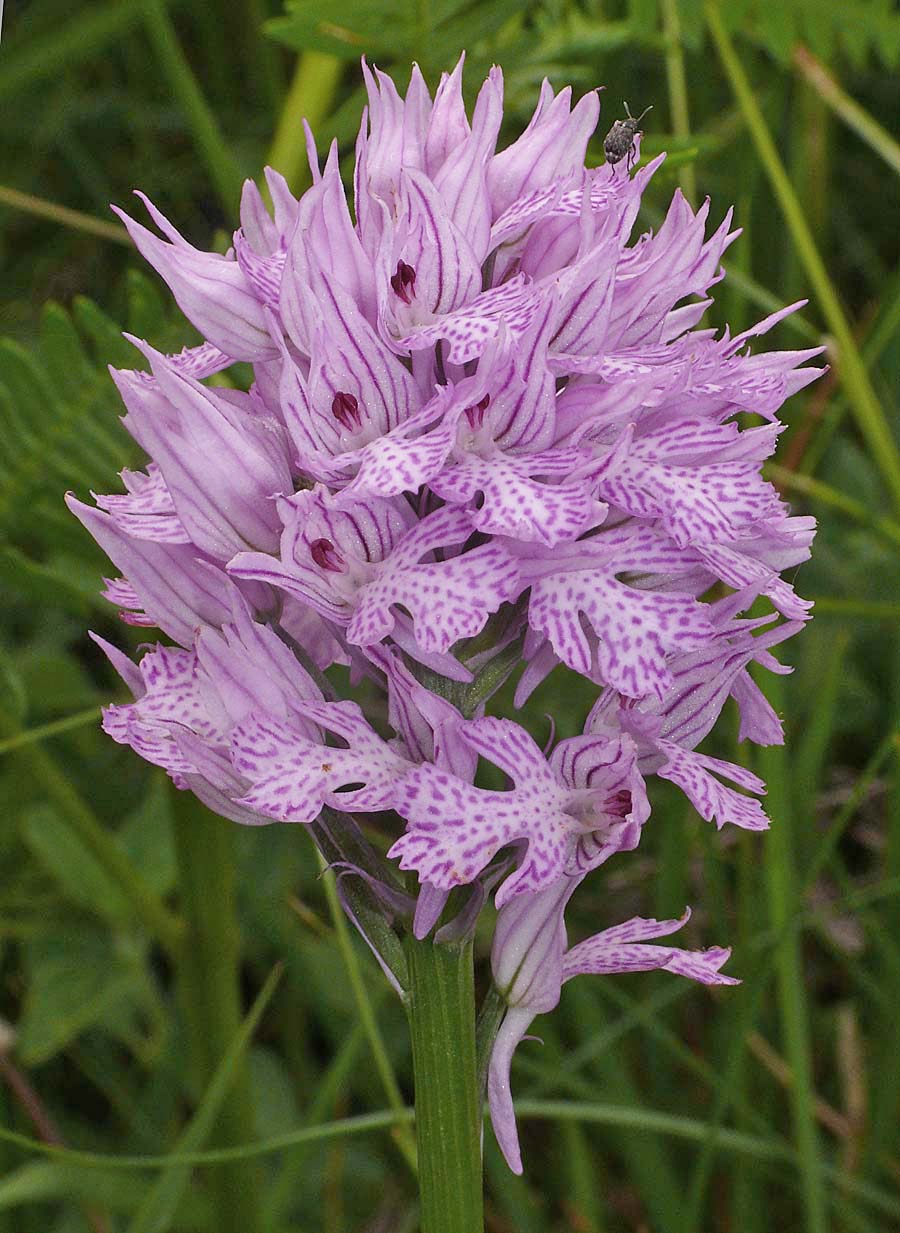
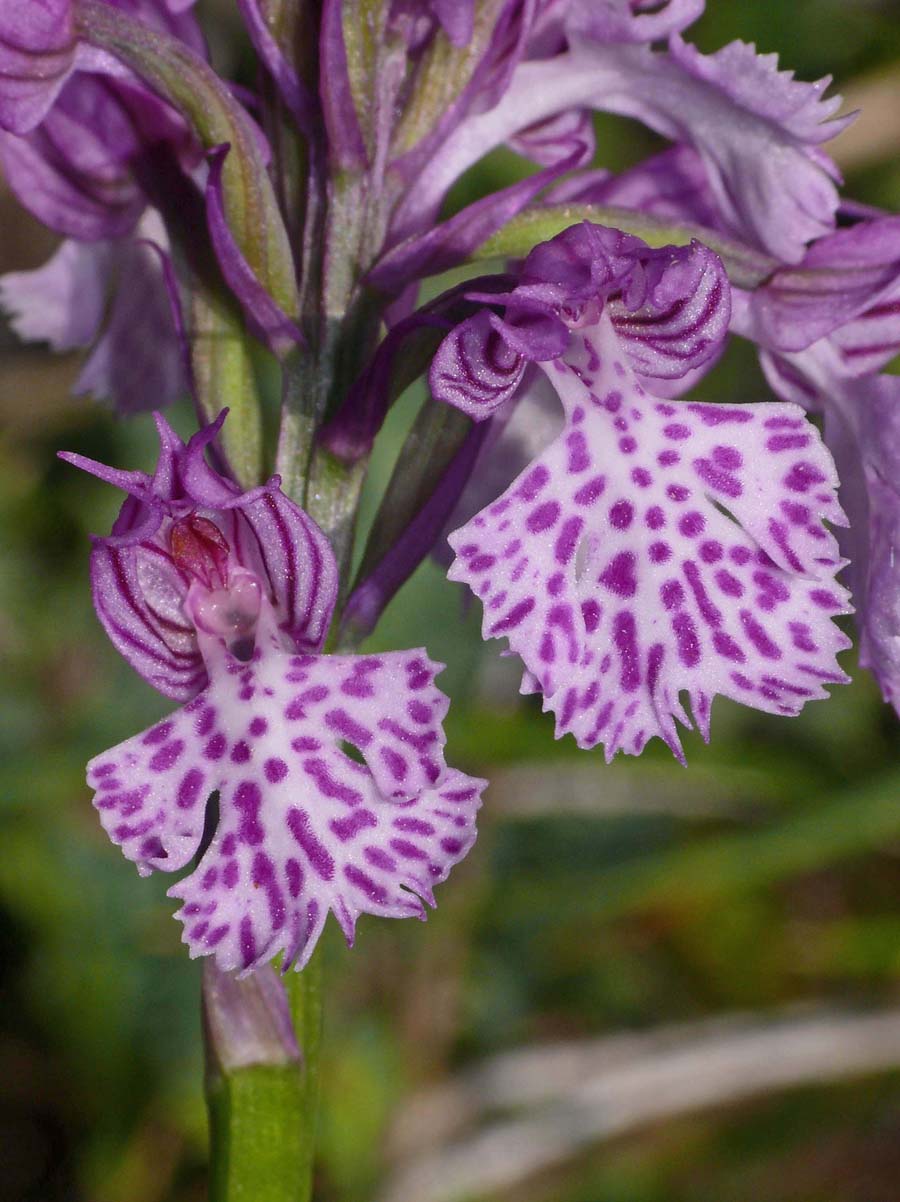
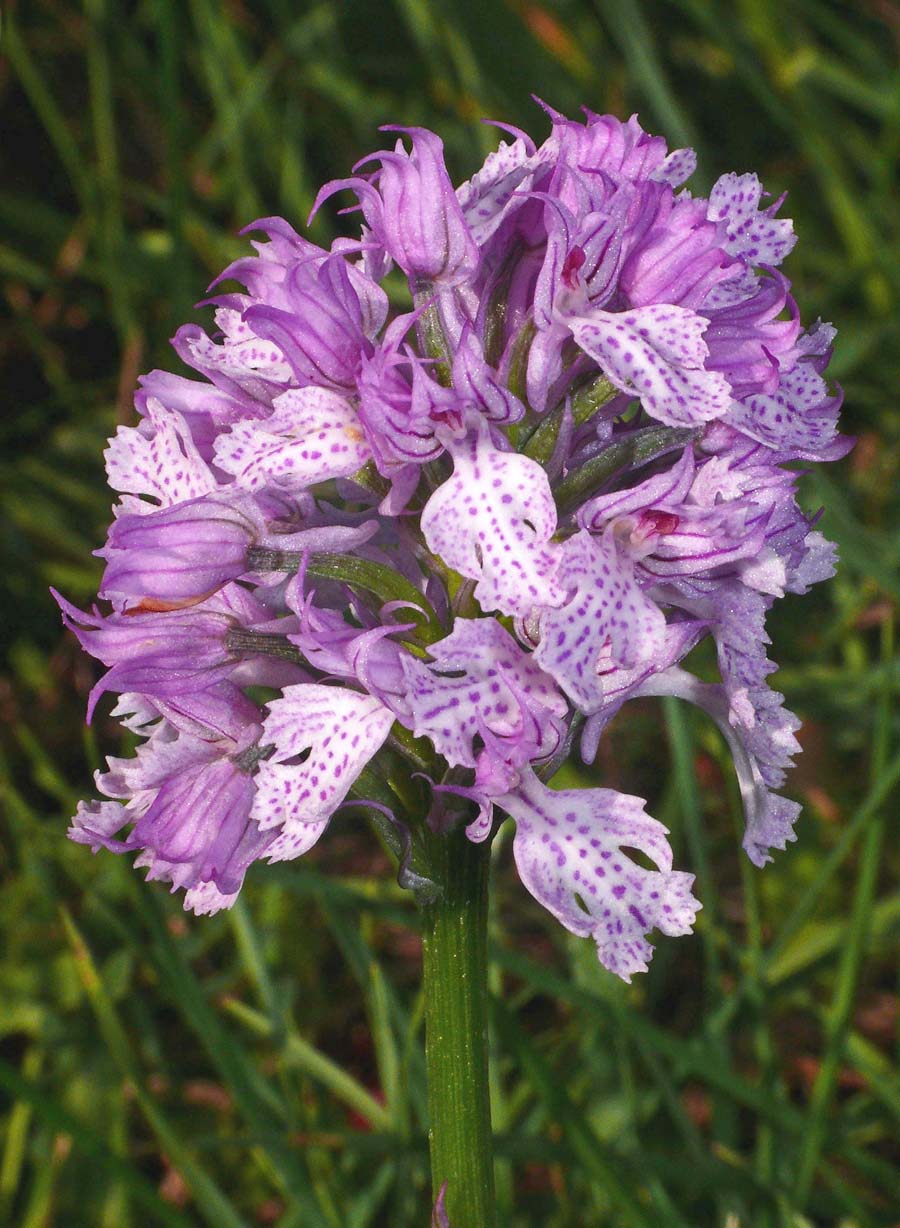
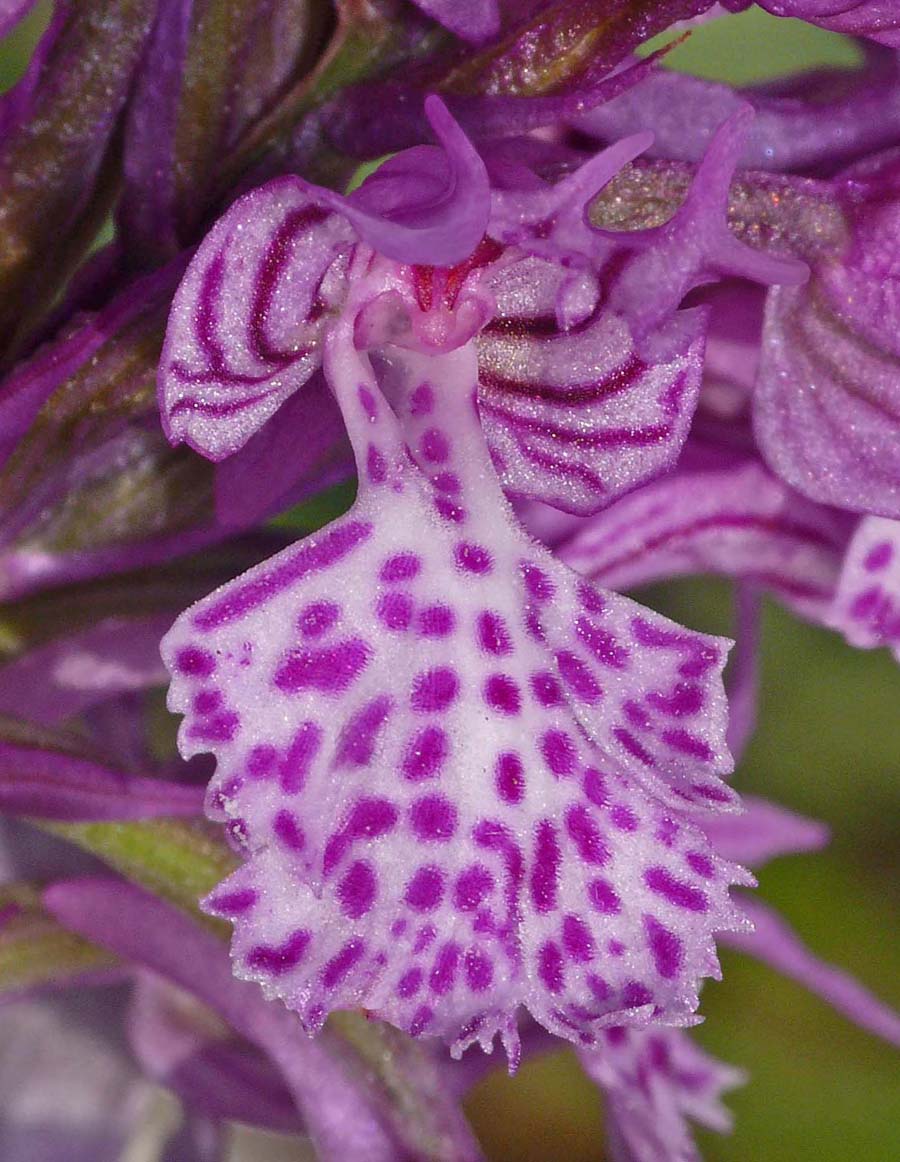
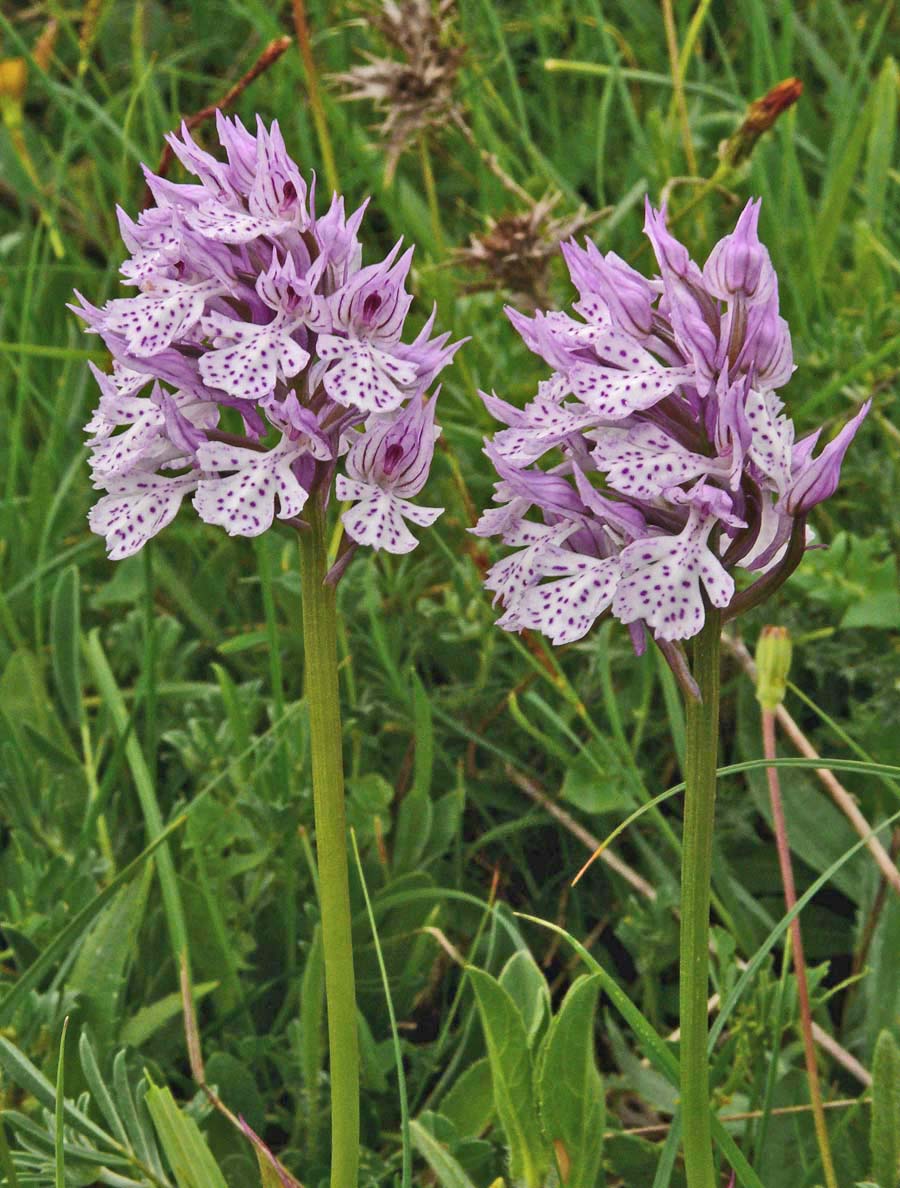
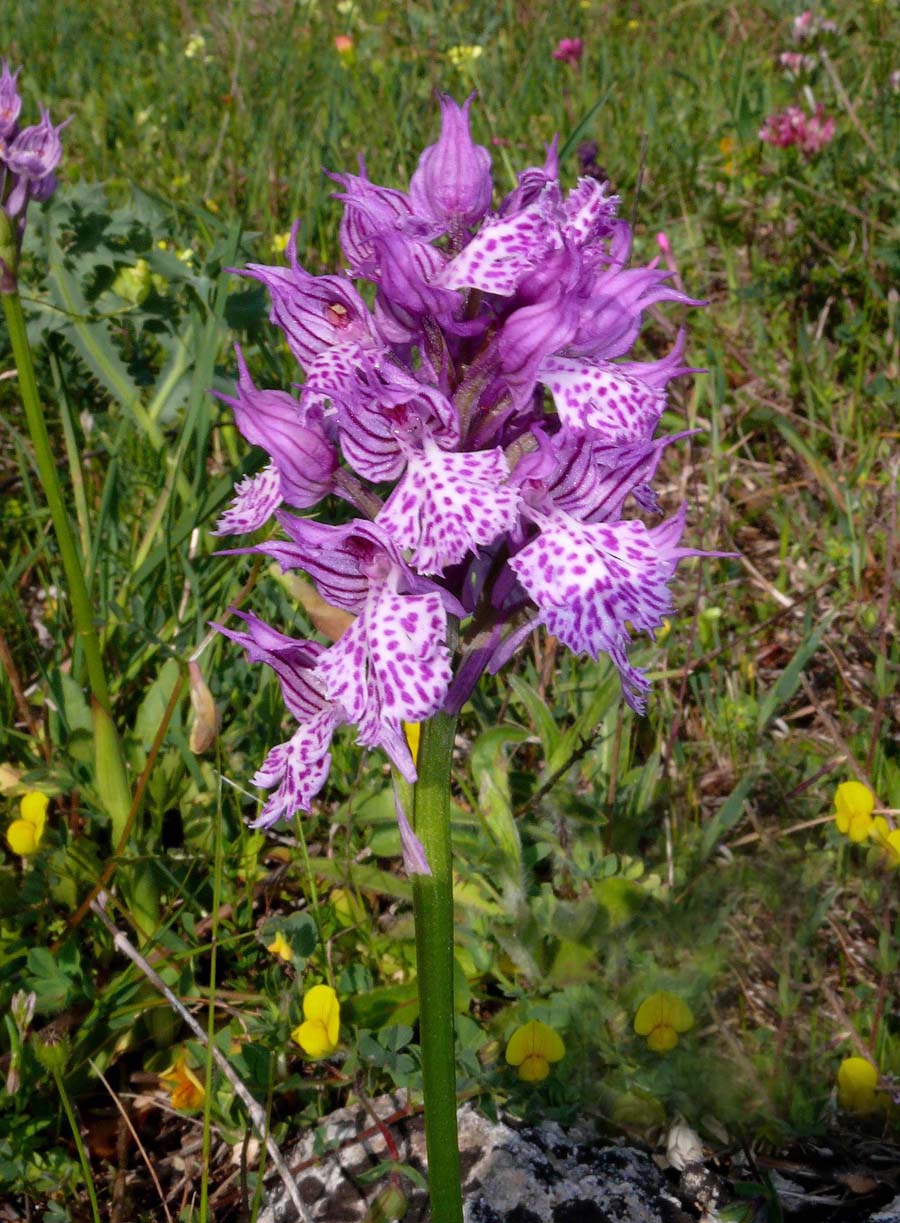
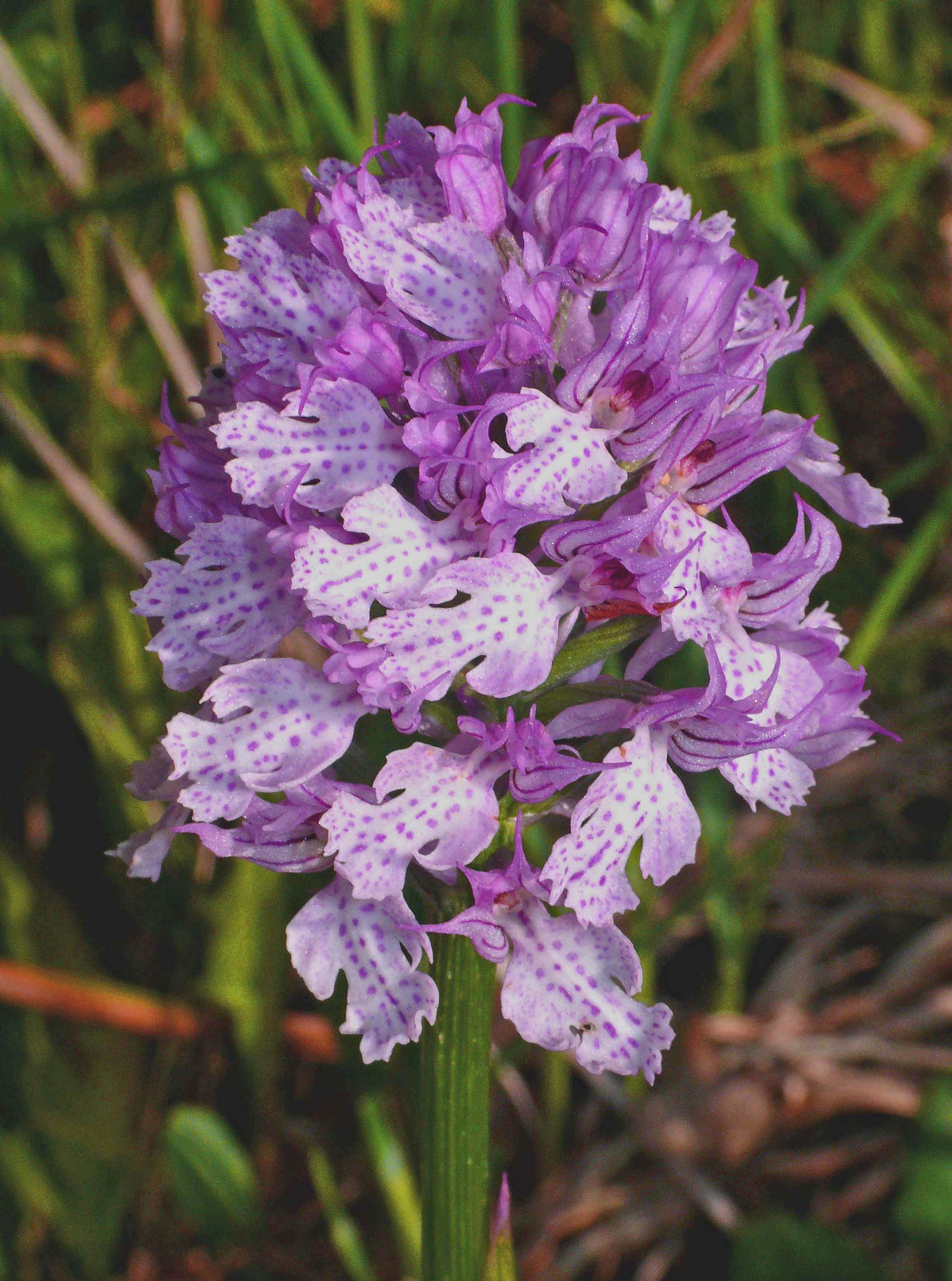
Despite the physical similarities of the two species they are not in fact genetically close, N. tridentata being diploid (2 sets of chromosomes) and N. commutataautotetraploid (4 sets) and its for this reason that where the two species meet, they do not hybridize and create intermediates. The main visual differences in the species are :- 1. The sepals forming the hood are distinctly seperated in commutata whereas they virtually touch in tridentata. 2. The lobes are slimmer, with edges that are ragged and saw-toothed. 3. The flower head is taller and more conical than the somewhat flat topped appearance of tridentata.
The pictures here are all from Sicily where this species seems to flower somewhat earlier than its cousin N. tridentata. The illustrations date from the second week of April and as can be seen, the plants were in full flower (many were if fact finishing by this time).
Its range is similar to that of N. tridentata though less extensive. Because of its marked resemblance to that species its exact distribution is not fully understood although it is known to get no further east than Anatolia. What is known with certainty however is that wherever you can find N. commutata you will also find N. tridentata and so the scope for confusion is apparent.
Despite the physical similarities of the two species they are not in fact genetically close, N. tridentata being diploid (2 sets of chromosomes) and N. commutataautotetraploid (4 sets) and its for this reason that where the two species meet, they do not hybridize and create intermediates. The main visual differences in the species are :- 1. The sepals forming the hood are distinctly seperated in commutata whereas they virtually touch in tridentata. 2. The lobes are slimmer, with edges that are ragged and saw-toothed. 3. The flower head is taller and more conical than the somewhat flat topped appearance of tridentata.
The pictures here are all from Sicily where this species seems to flower somewhat earlier than its cousin N. tridentata. The illustrations date from the second week of April and as can be seen, the plants were in full flower (many were if fact finishing by this time).
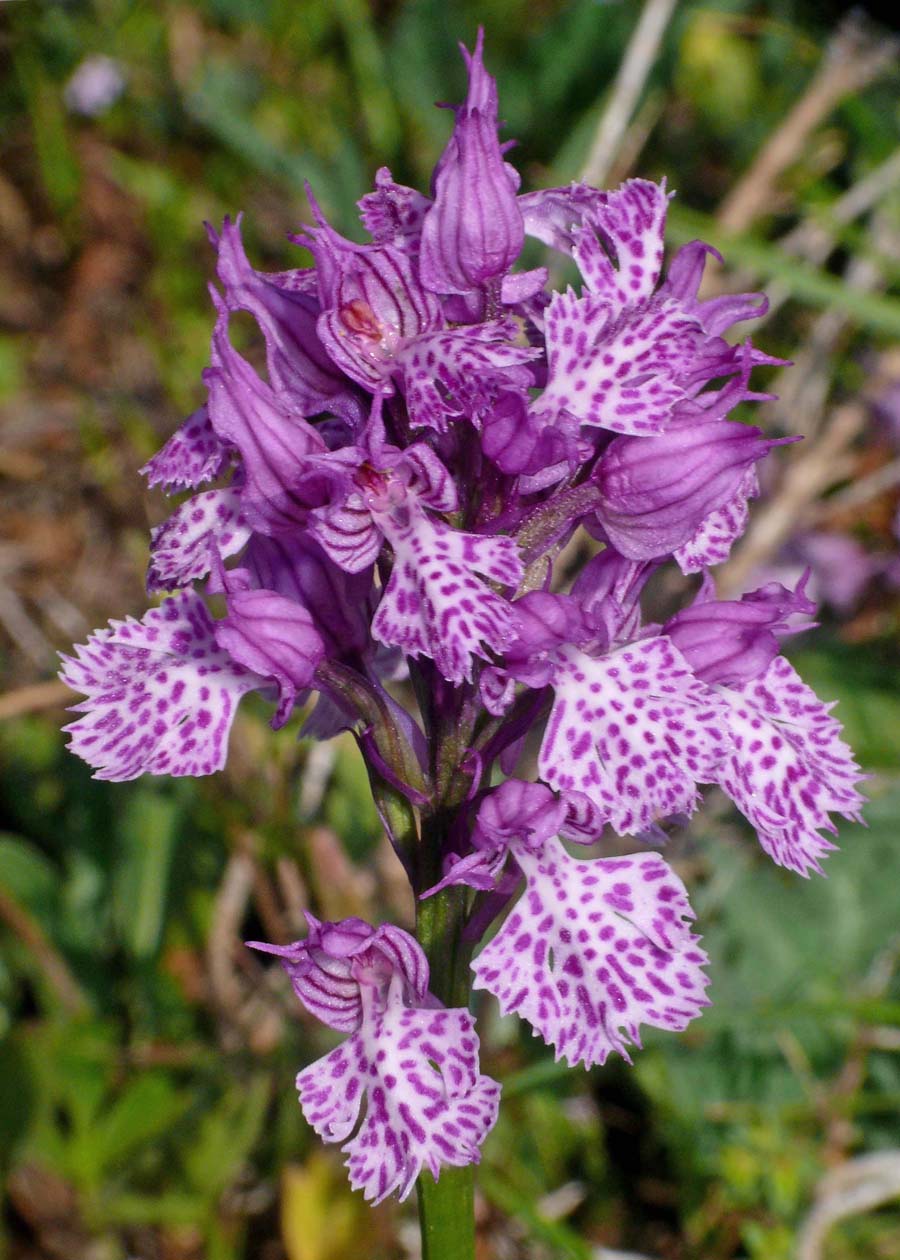
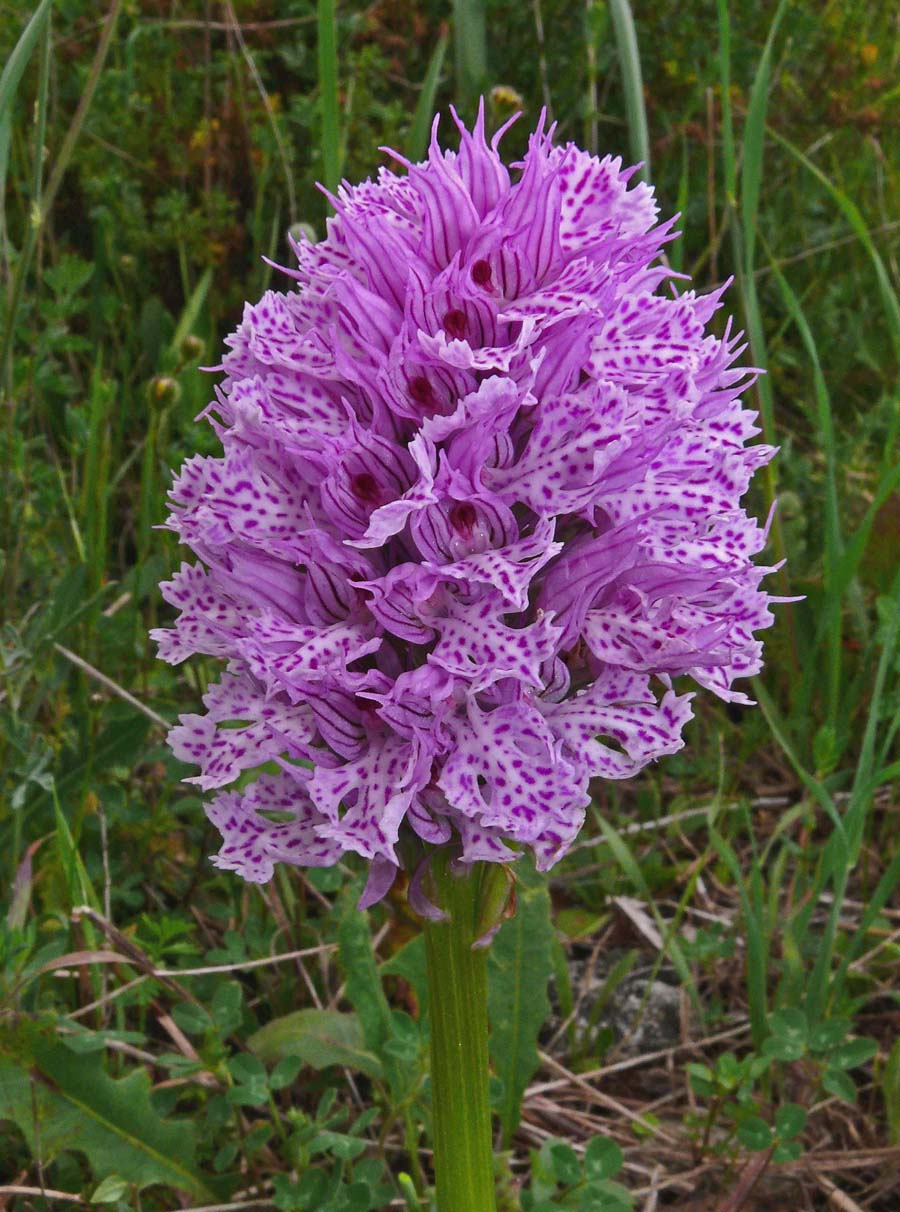
The following three pictures are also from Sicily and depict plants with green tinged sepals, that don't fit easily into the N. commutata description and are clearly niether N. lactea or N. conica.