L. loeselii was first described by L. C. M Richard from Uppland, Sweden in 1753 and was named after Herr
J. Loesel, a 17th century German professor of medicine.
This is an increasingly rare species throughout its range and many believe that the continuing pressures on its habitat are driving this orchid inexorably into extinction. In Britain the population of L. loeselii has contracted into two small areas, one in Wales and the other in East Anglia. In the rest of Europe it is widespread but nowhere at all common and drainage together with the general lowering of water tables, sees the species declining in numbers across the continent.
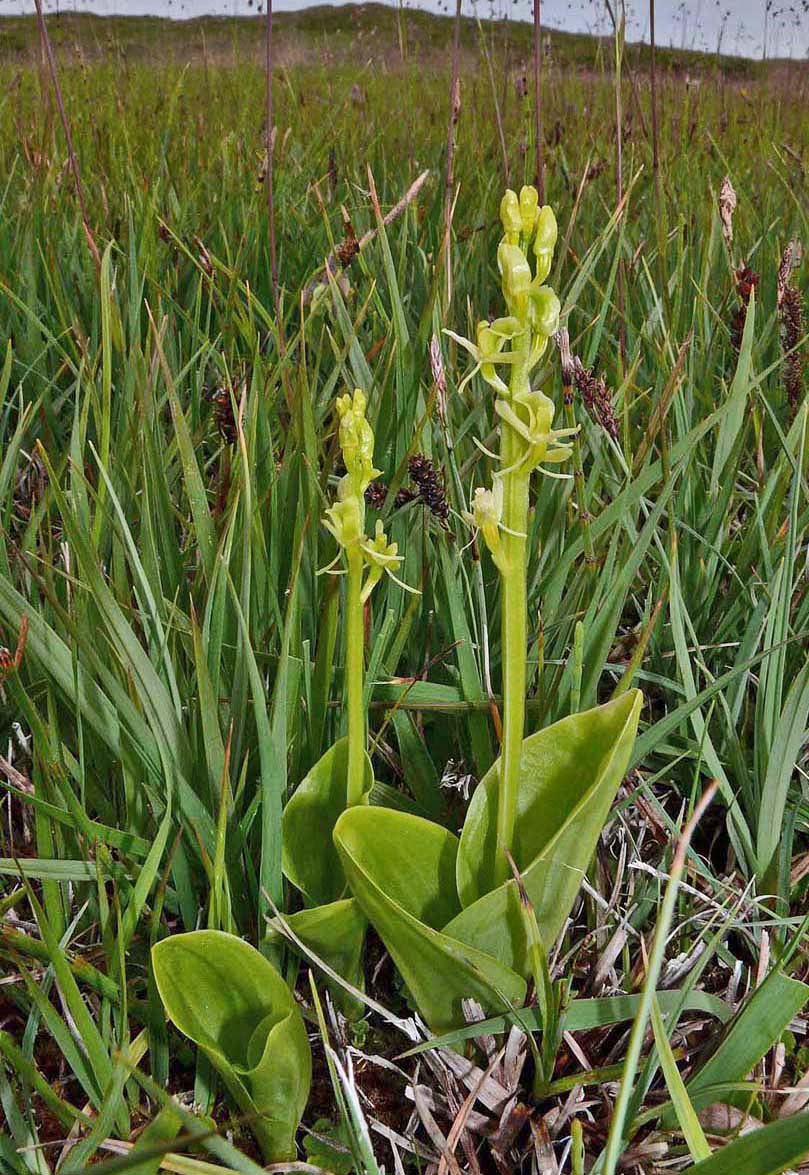
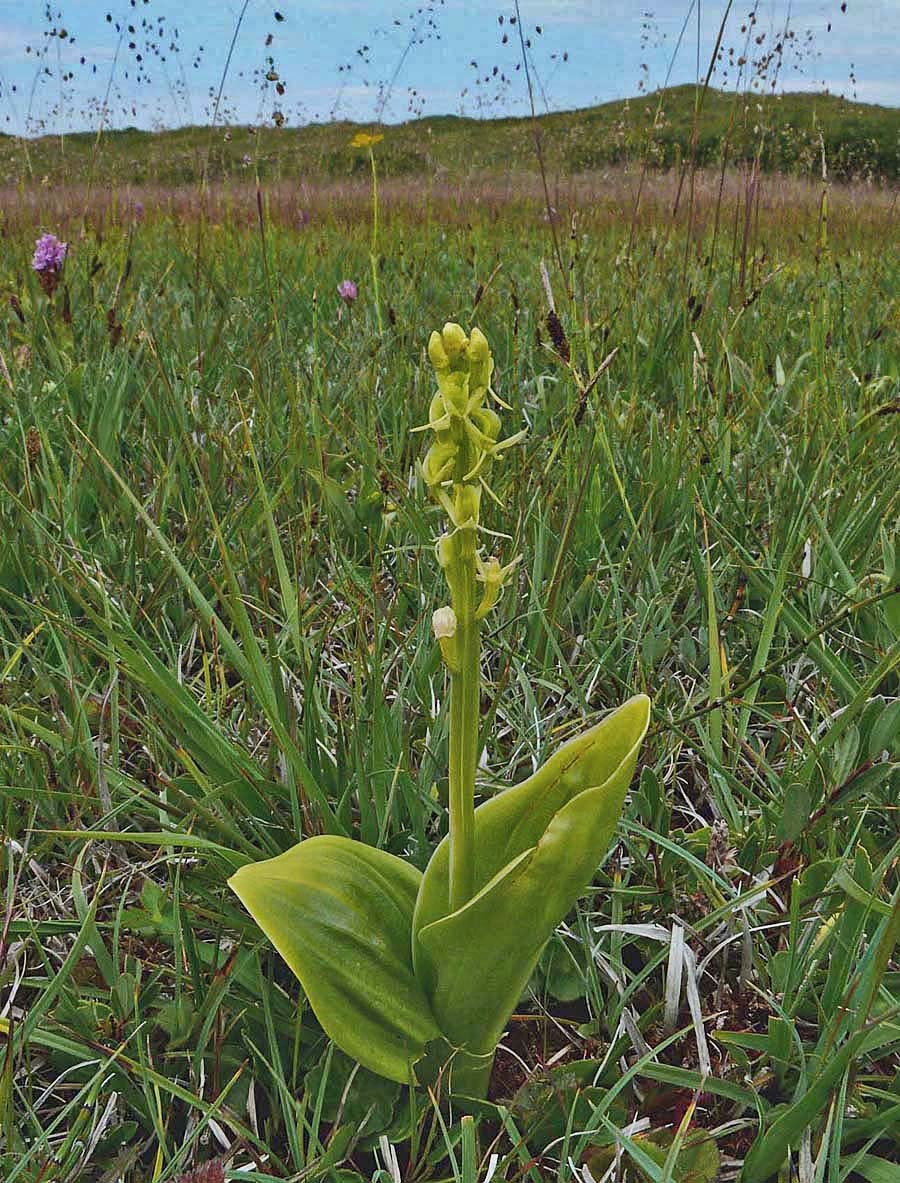
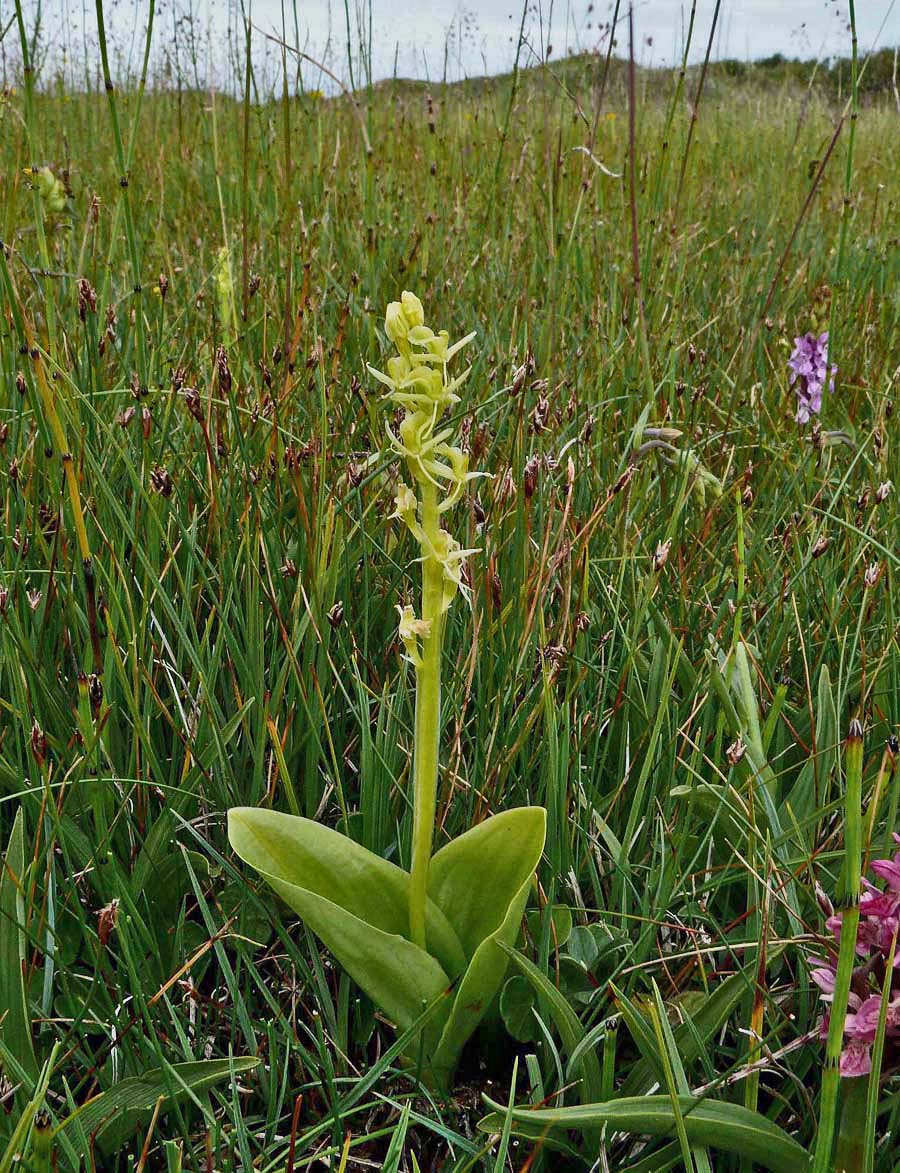
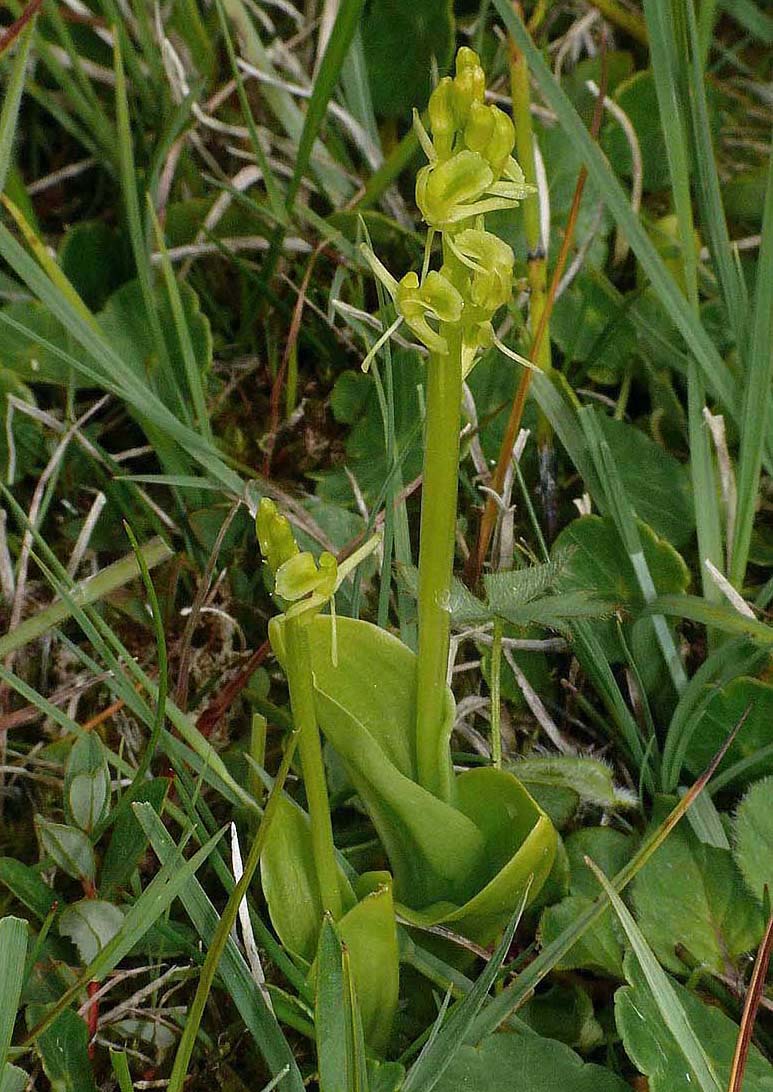
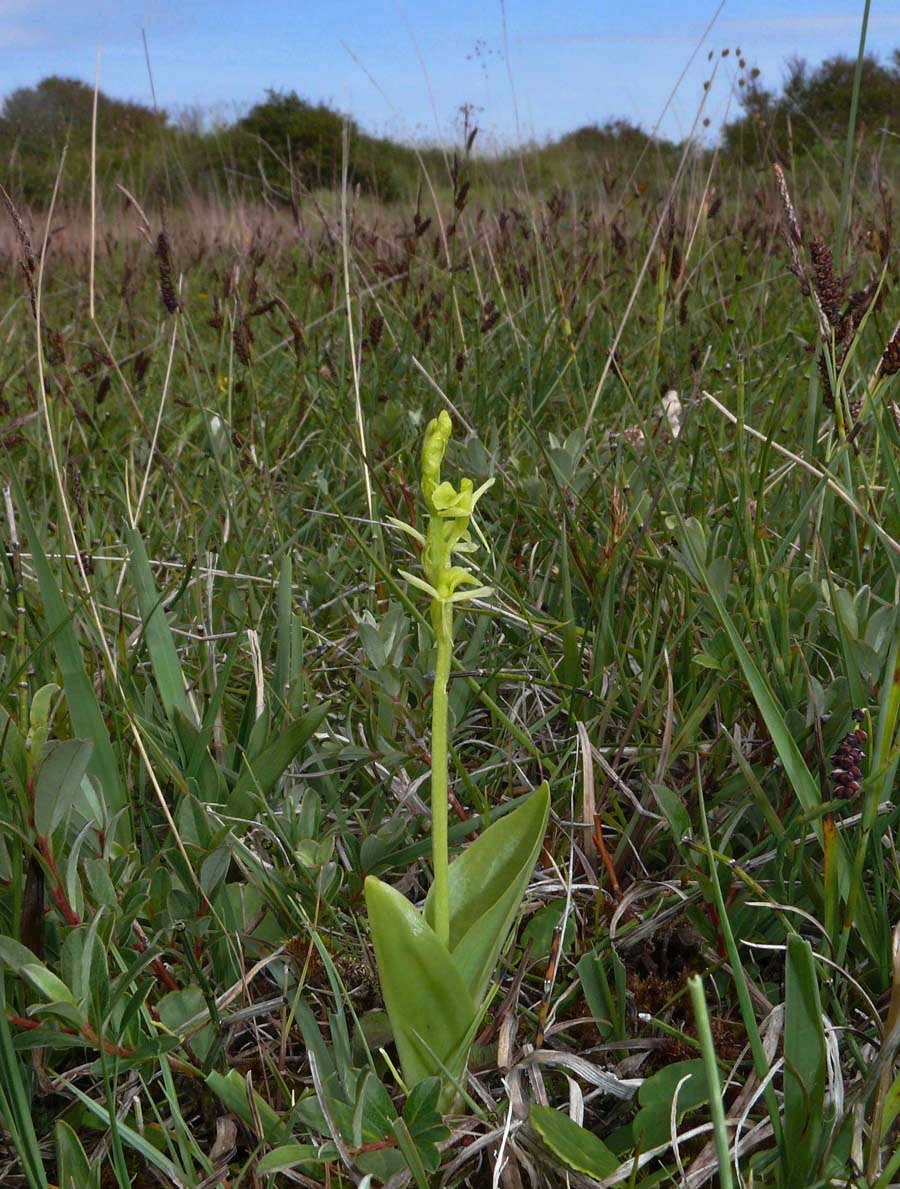
L. loeselii is an orchid of fens and wet dune slacks on alkaline to neutral substrates but although it needs a high water table, it will not tolerate any lengthy immersion and is always to be found well to the edge of any standing water. As can be seen from the pictures, the plants at this site in Wales are actually growing in the damp grassland alongside dune slacks rather than amongst the mosses within it. The key to the species survival (and consequently the reason for its disappearance) is a constant supply of moisture to its root tubers.
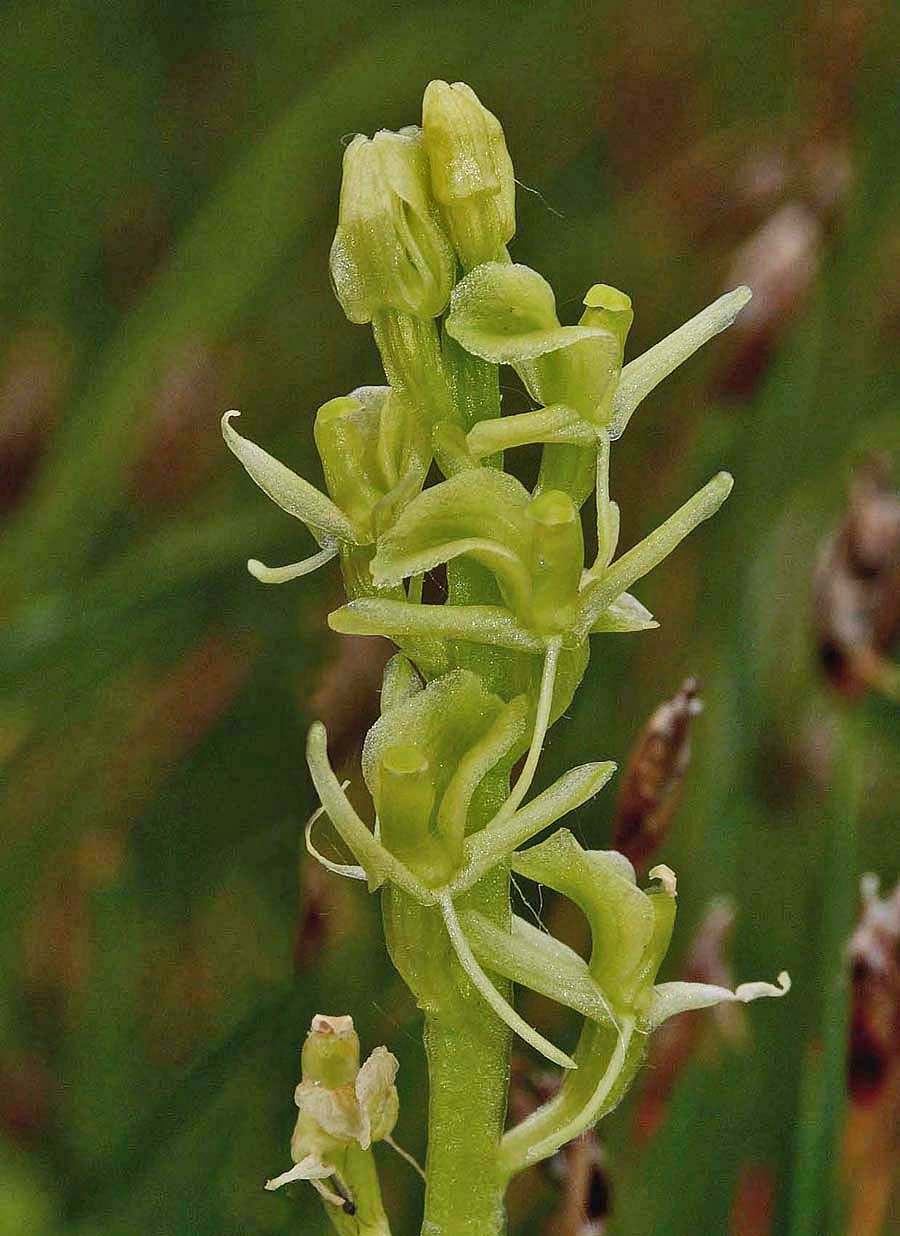
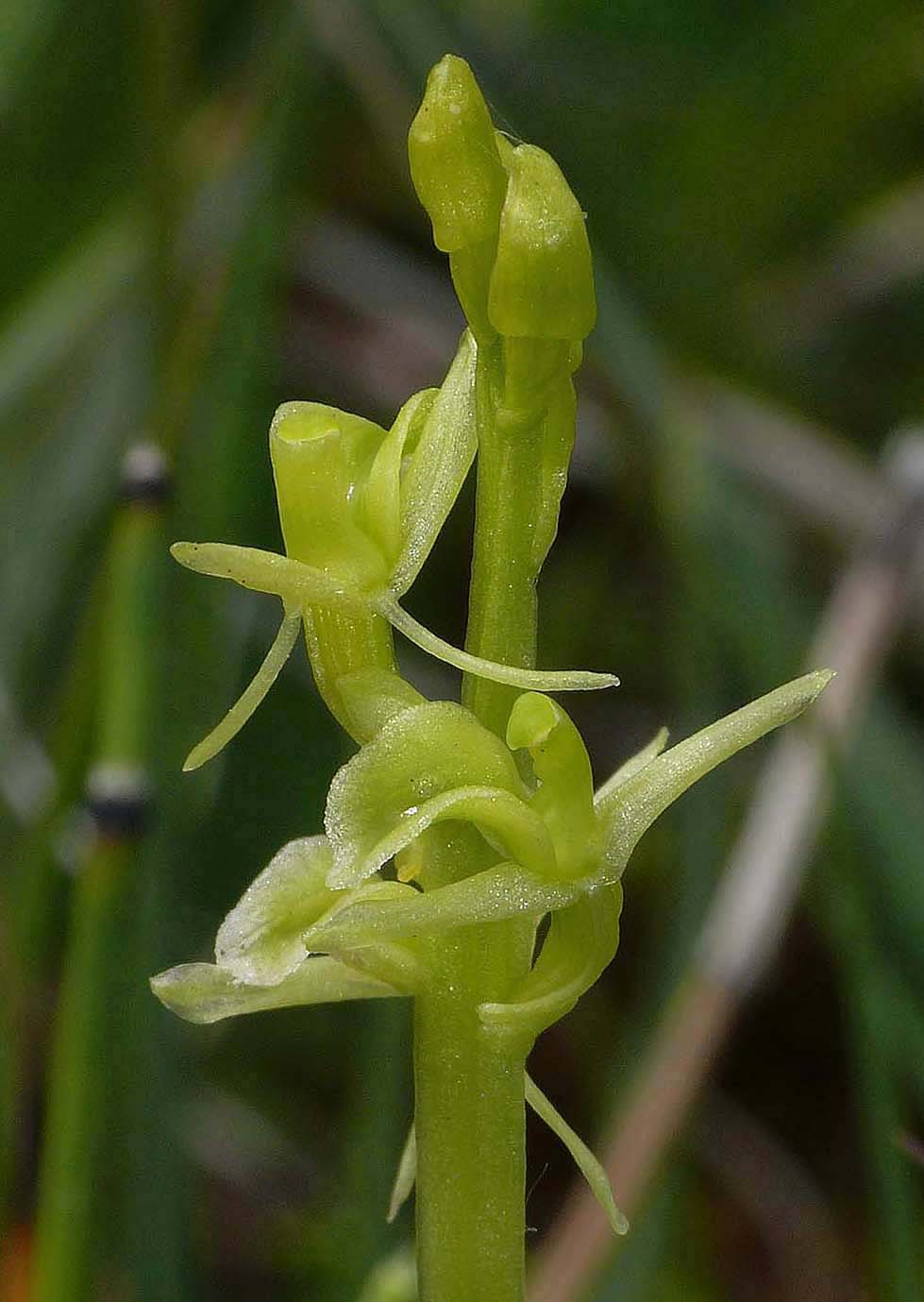
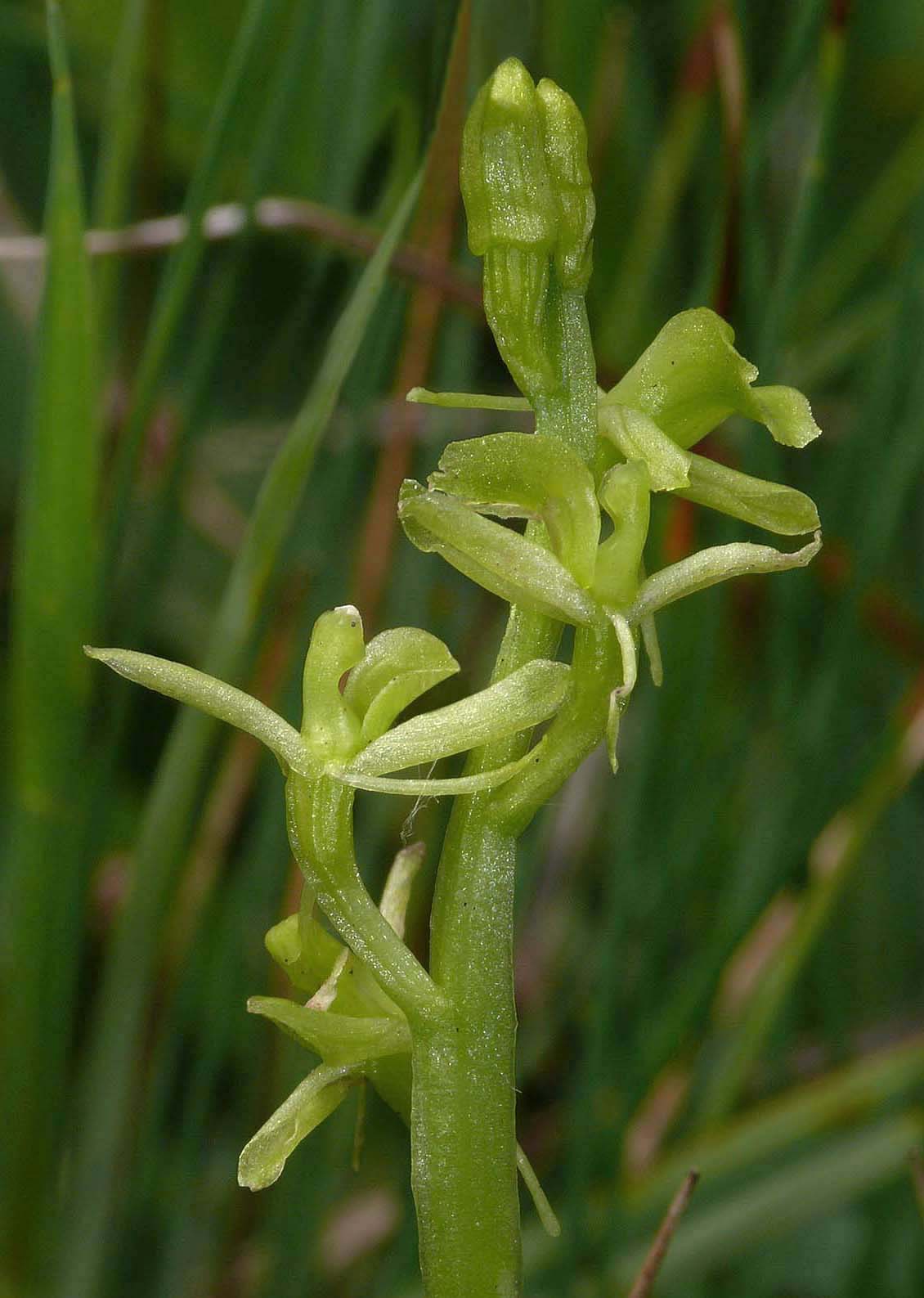
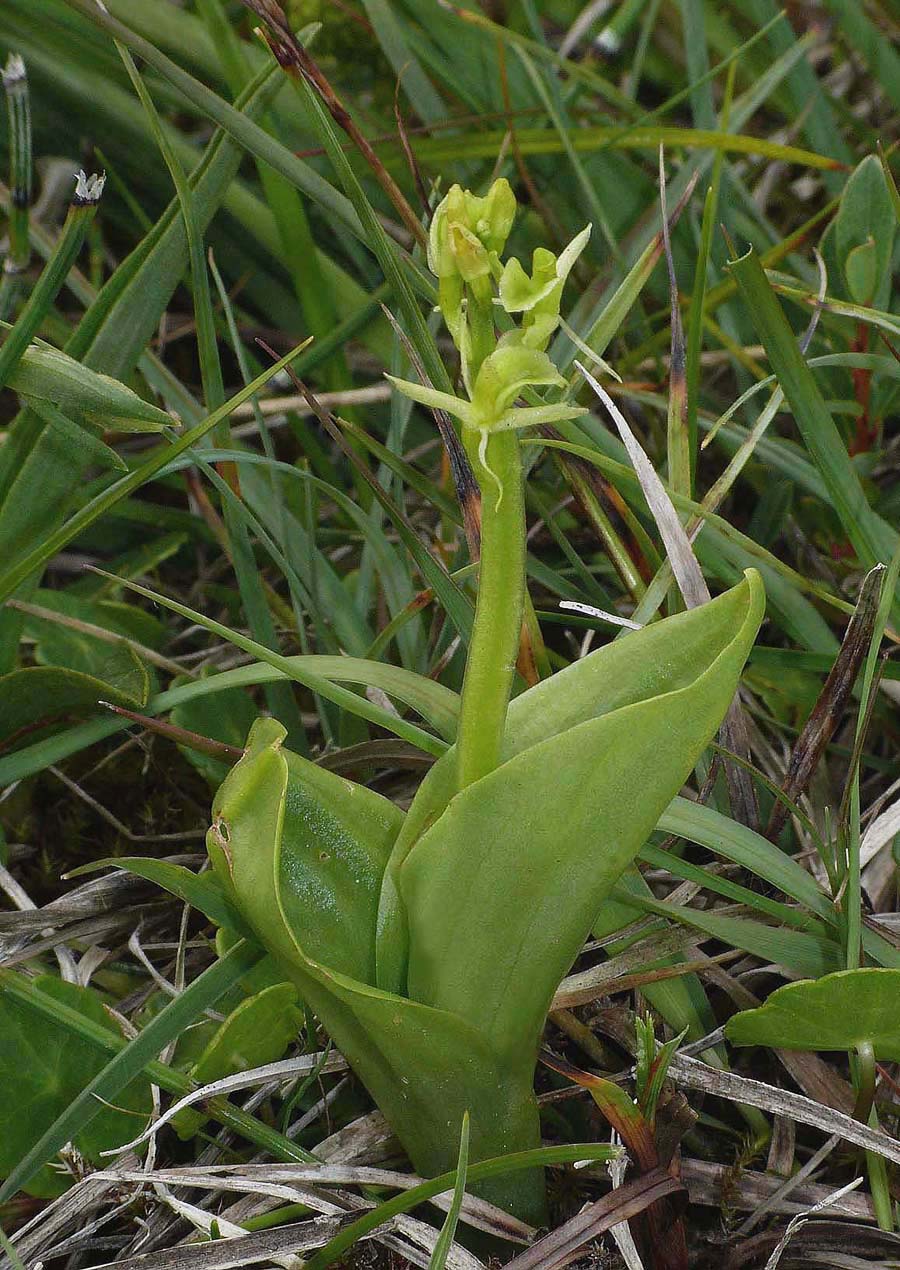
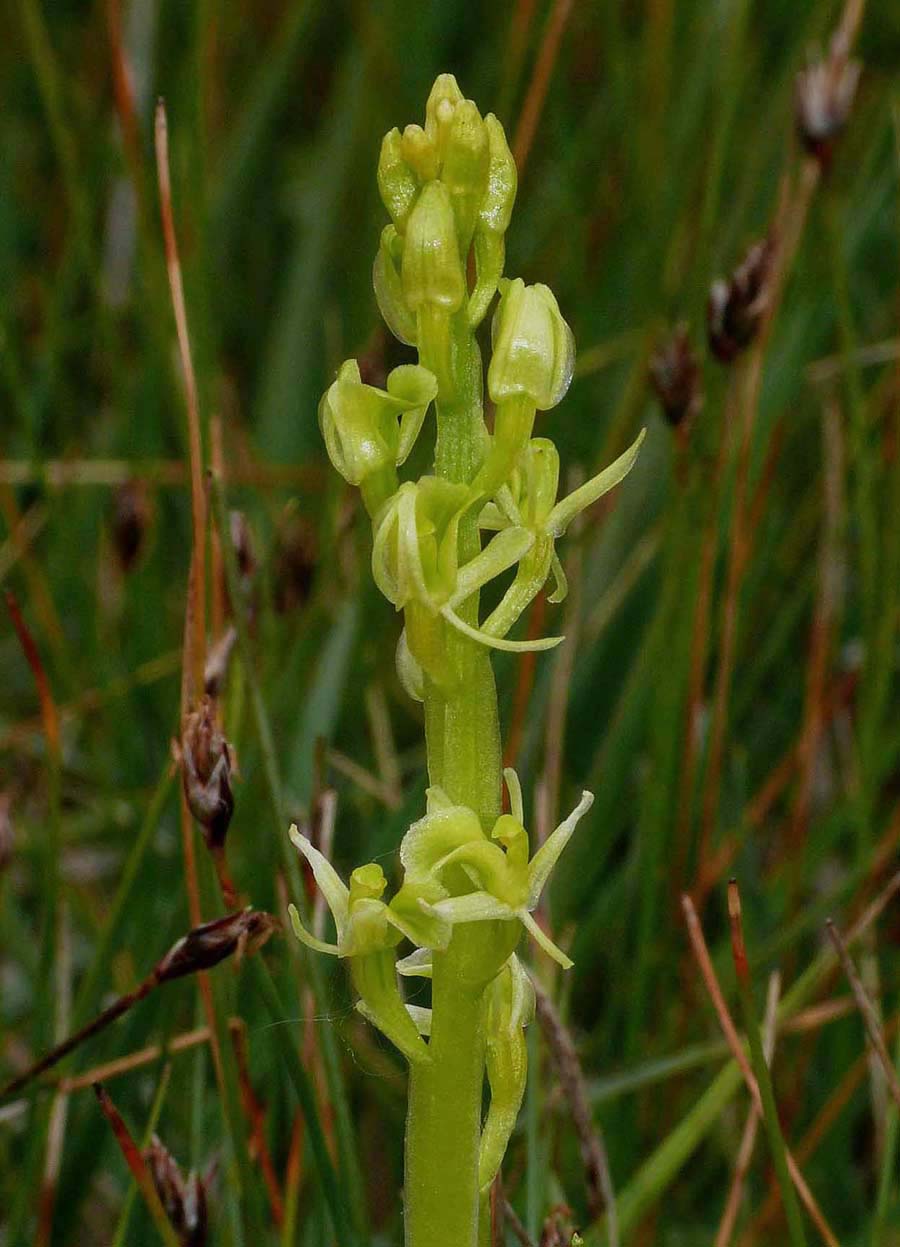
Due to its almost translucent green colouration it is not an easy orchid to find but when one does, it will not be mistaken for any other. When not in flower, the variant ovata (depicted here) strongly resembles a small Neottia ovata . This variety is found only in Wales and northern France.
These pictures date from the first week of June.
J. Loesel, a 17th century German professor of medicine.
This is an increasingly rare species throughout its range and many believe that the continuing pressures on its habitat are driving this orchid inexorably into extinction. In Britain the population of L. loeselii has contracted into two small areas, one in Wales and the other in East Anglia. In the rest of Europe it is widespread but nowhere at all common and drainage together with the general lowering of water tables, sees the species declining in numbers across the continent.
L. loeselii is an orchid of fens and wet dune slacks on alkaline to neutral substrates but although it needs a high water table, it will not tolerate any lengthy immersion and is always to be found well to the edge of any standing water. As can be seen from the pictures, the plants at this site in Wales are actually growing in the damp grassland alongside dune slacks rather than amongst the mosses within it. The key to the species survival (and consequently the reason for its disappearance) is a constant supply of moisture to its root tubers.
Due to its almost translucent green colouration it is not an easy orchid to find but when one does, it will not be mistaken for any other. When not in flower, the variant ovata (depicted here) strongly resembles a small Neottia ovata . This variety is found only in Wales and northern France.
These pictures date from the first week of June.