H. paludosa was first described from Uppsalaland, Sweden by Swartz in 1753 and was for many years referred to as Ophrys paludosa before then being reclassified as Hammarbya by Kuntze. The
species has recently undergone
further review and its status as a monospecific genus has been
questioned. Most authorities now consider the plant to be a
straightforward member of the more widespread
genus Malaxis which although having only two European representatives, has more than 200 worldwide.
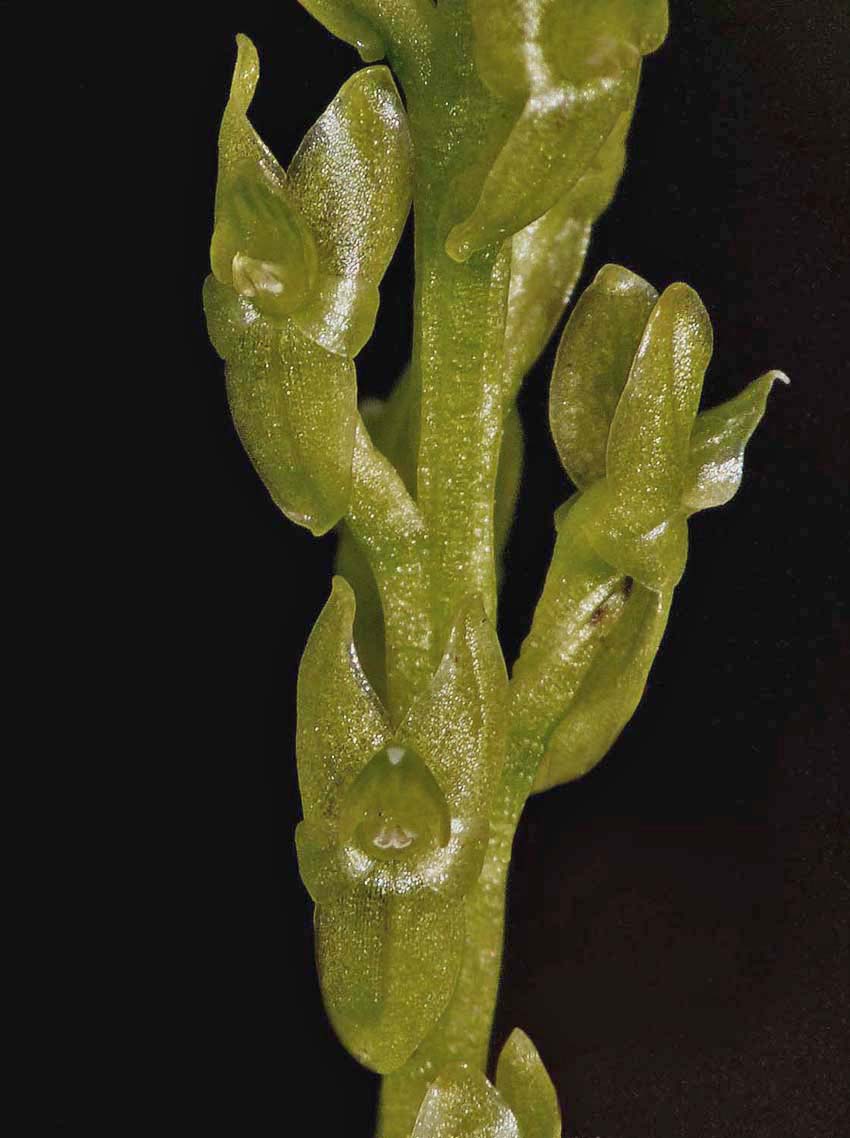
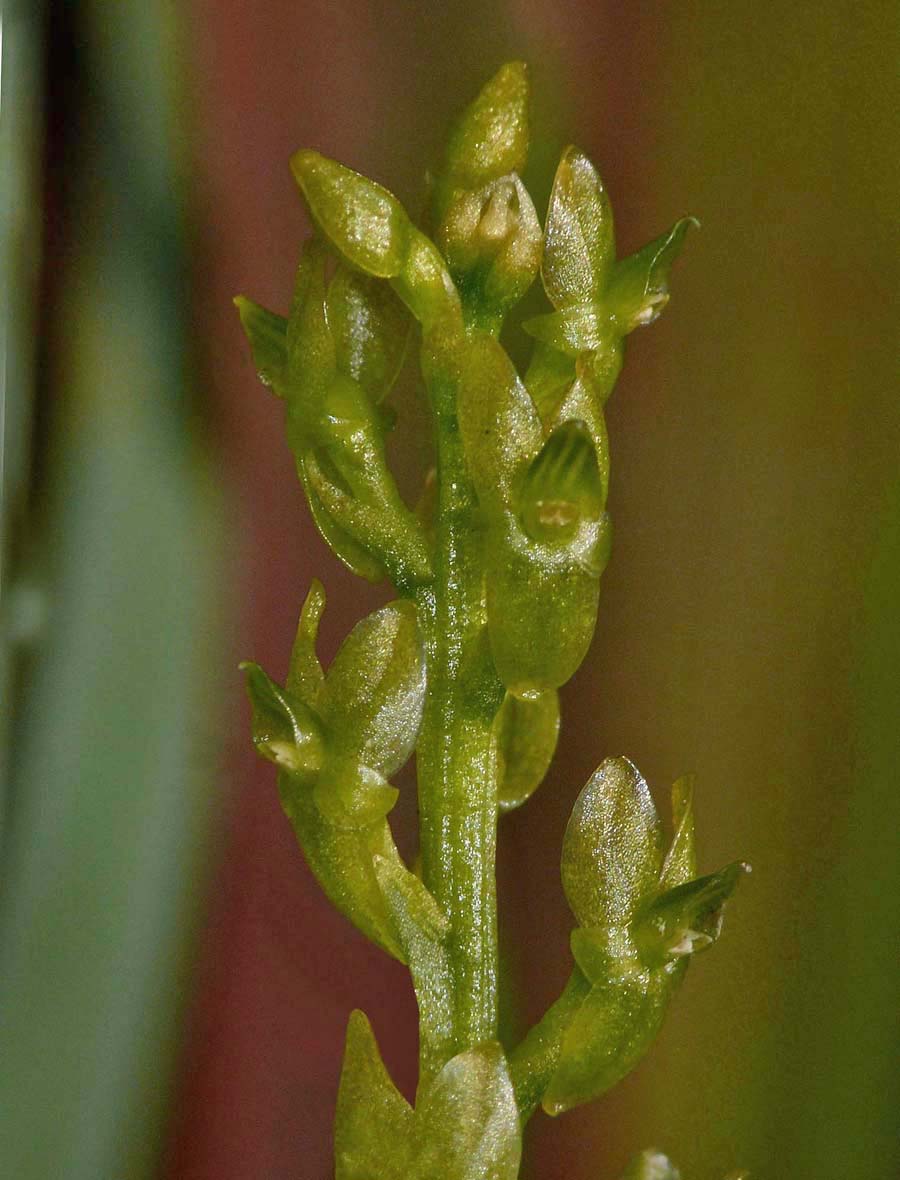
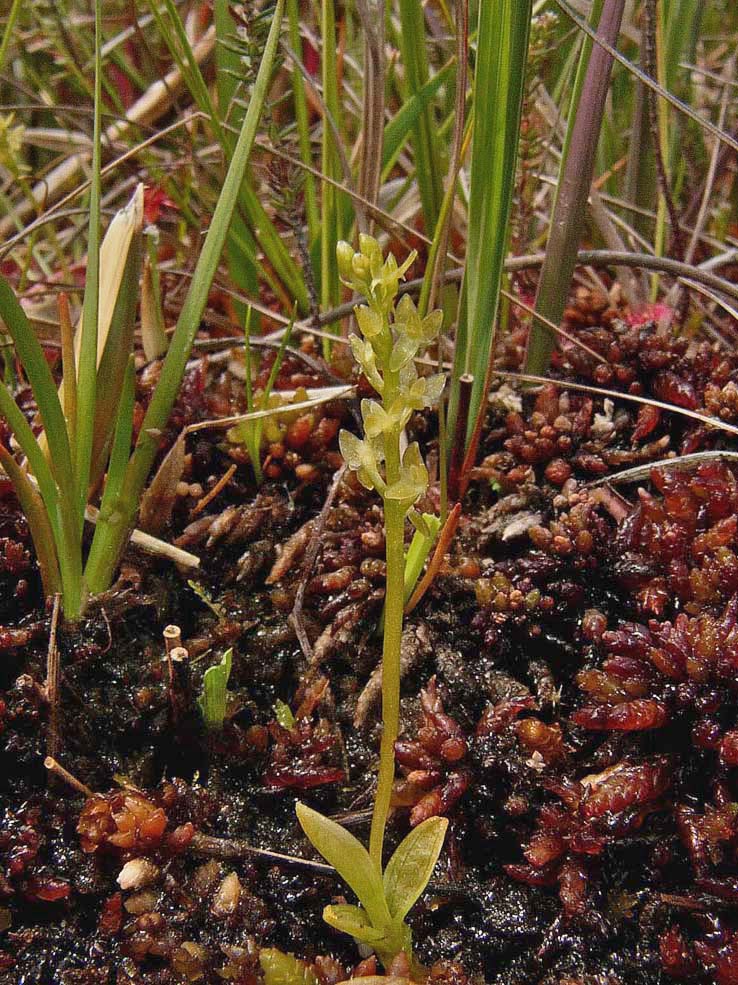
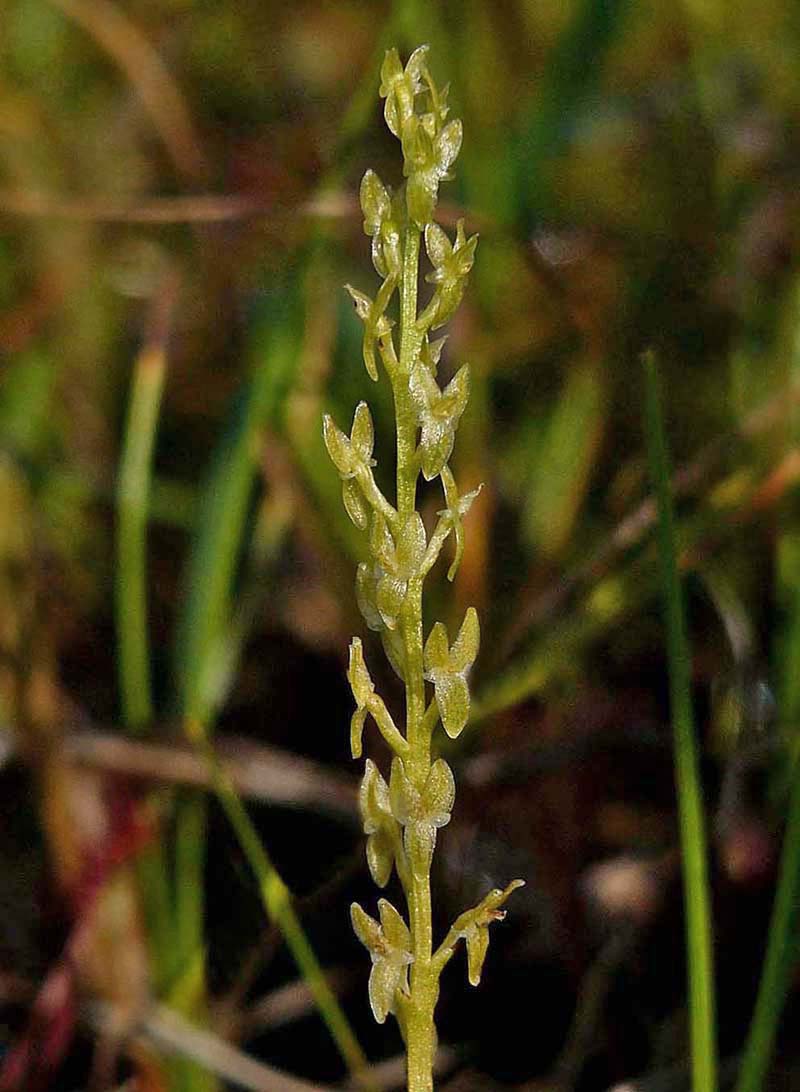
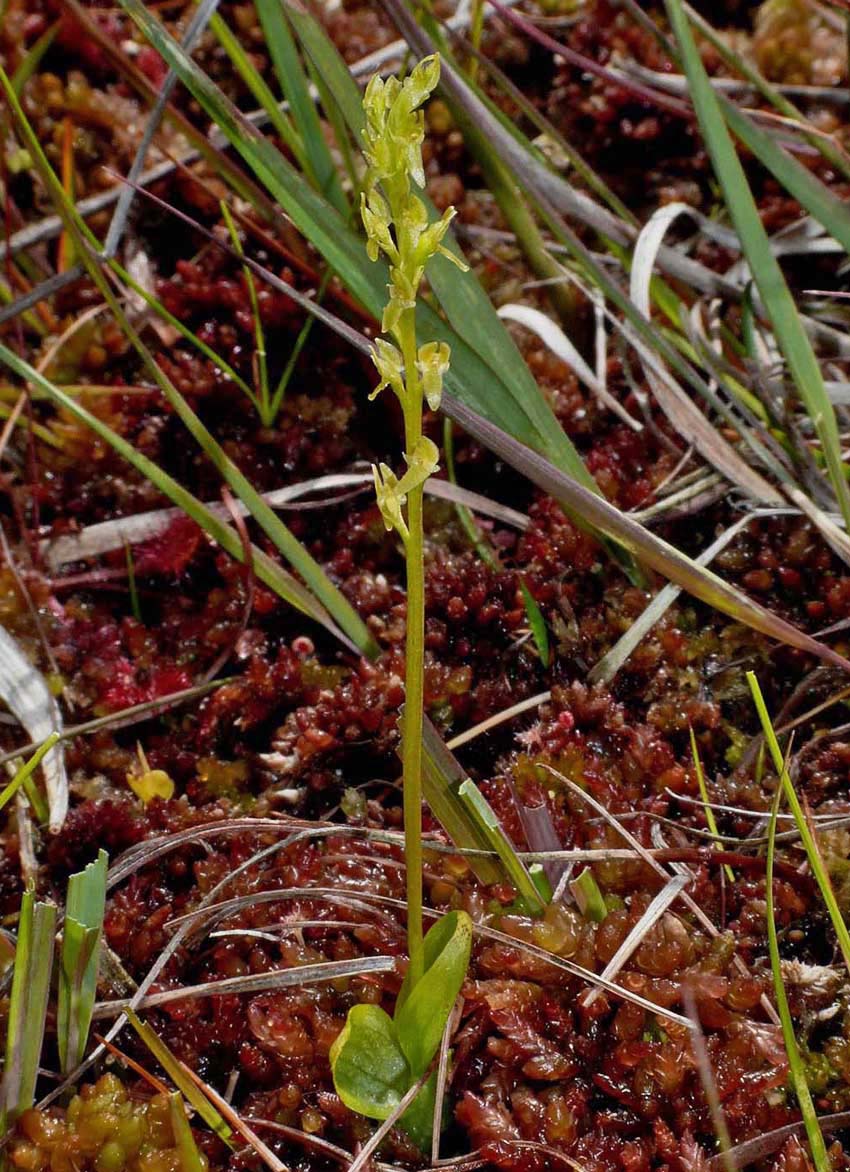
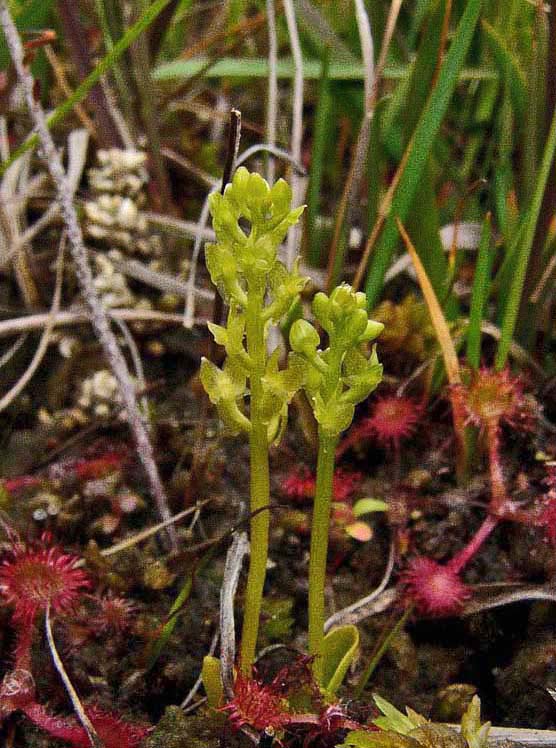
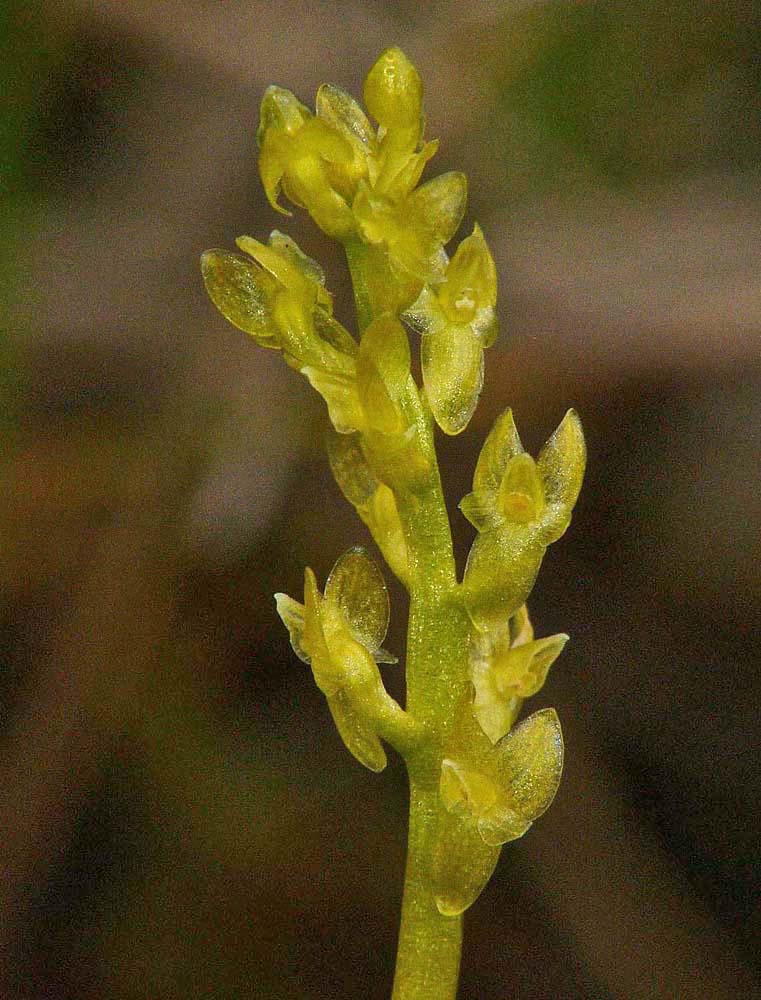
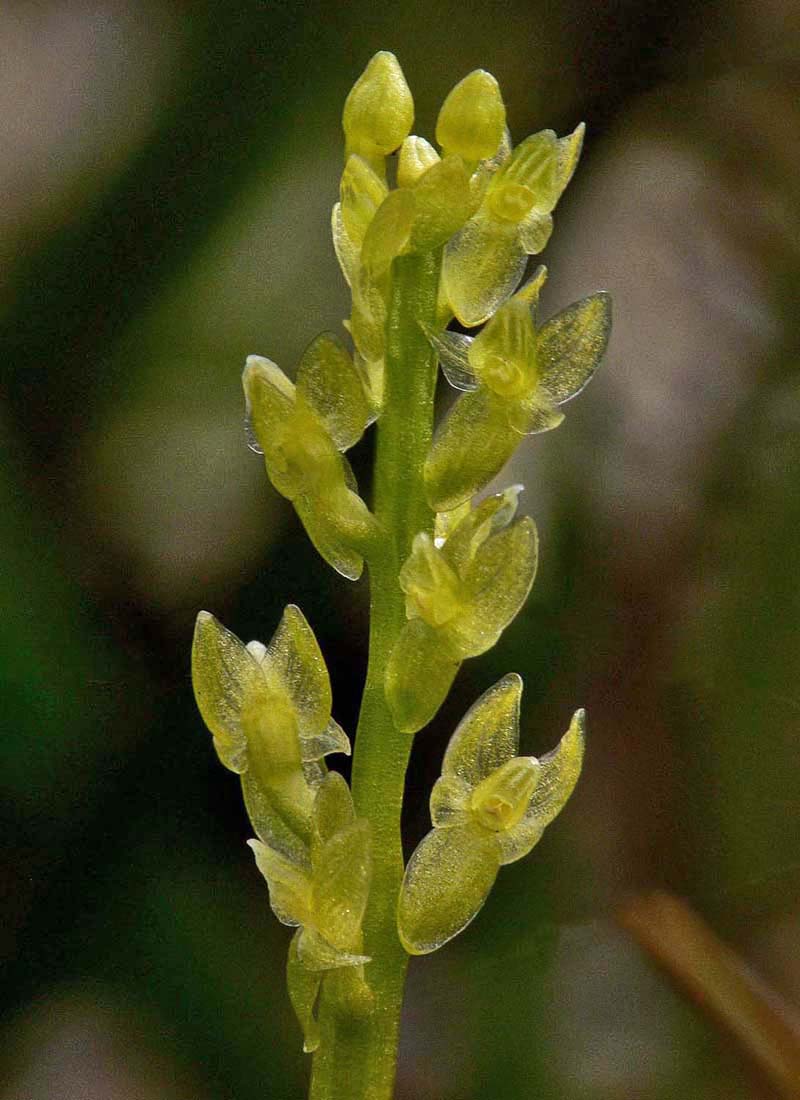
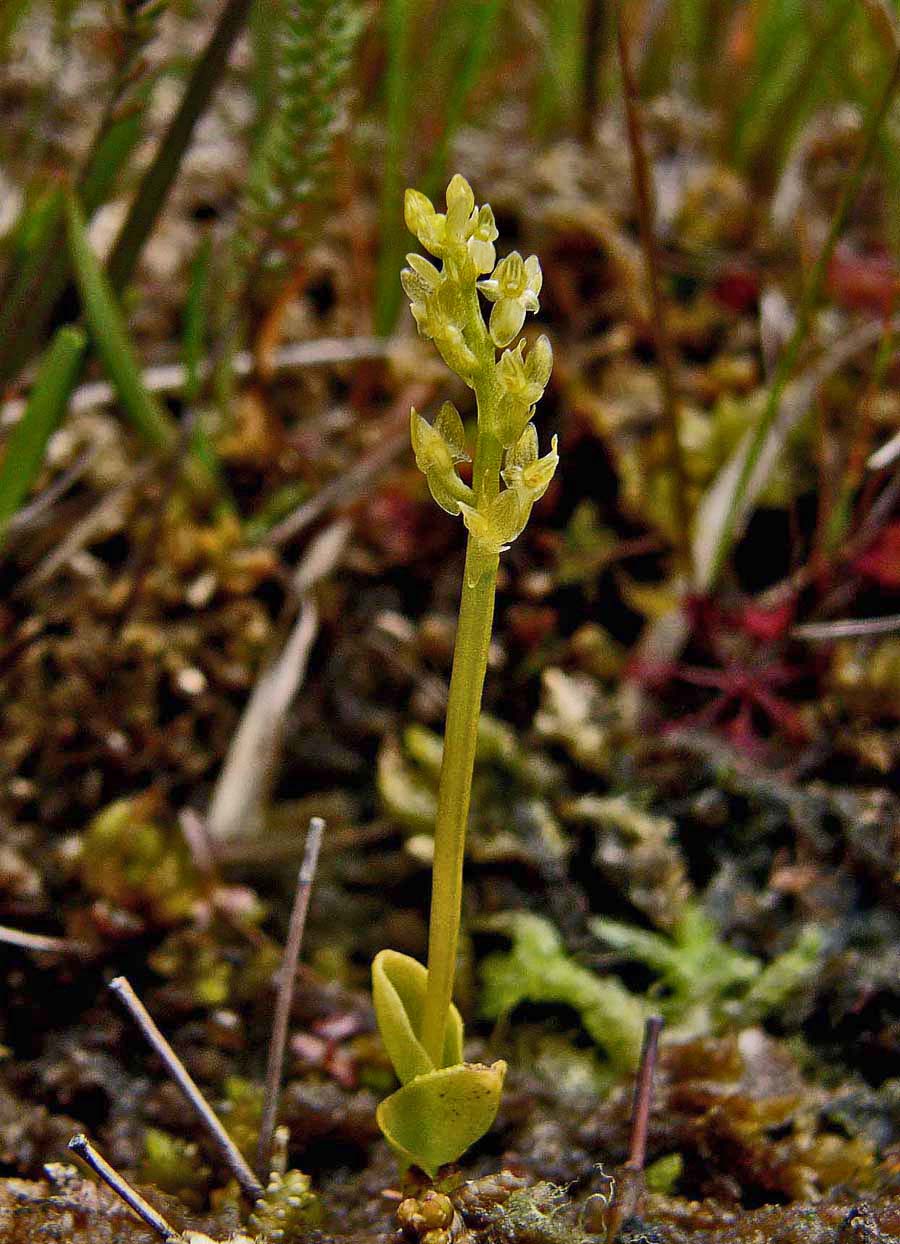
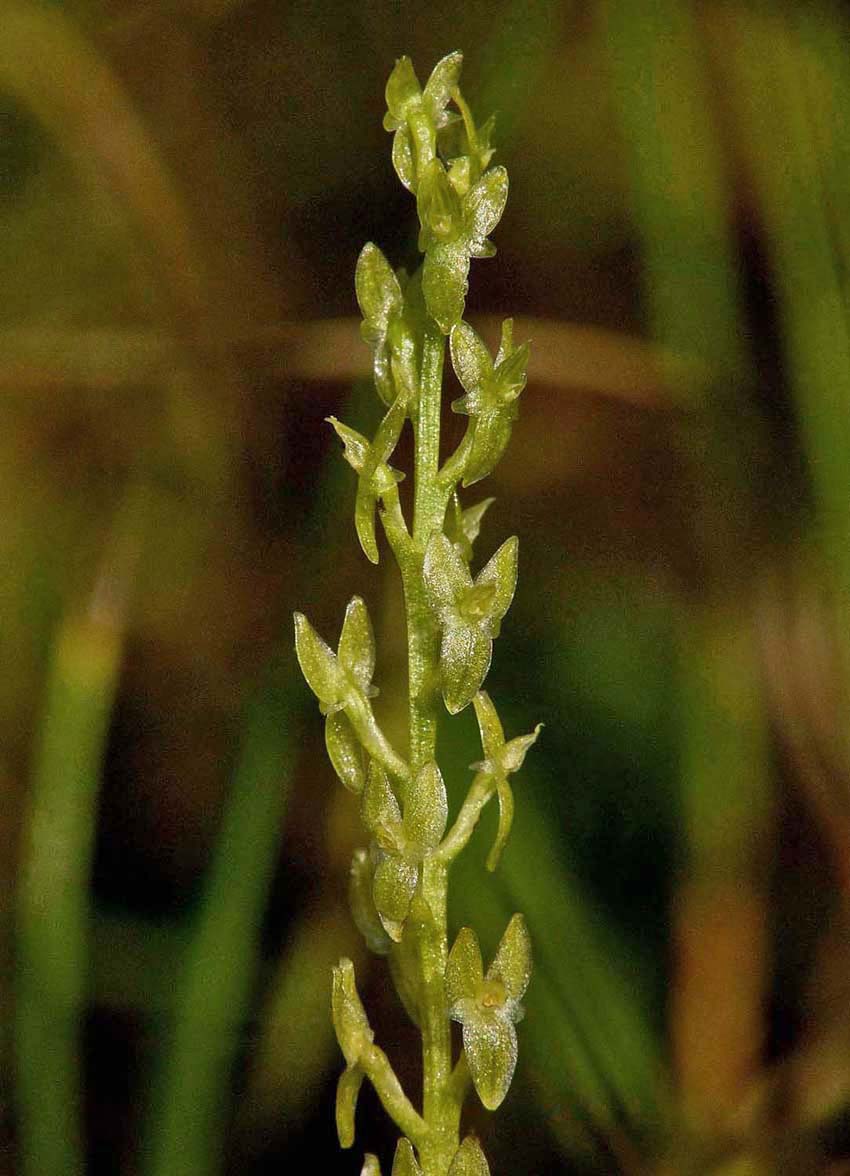
This is a tiny species which is uniformly a shiny and translucent, yellowish-green colour. Its home is amongst sphagnum in the acidic bogs and coniferous woodlands of temperate Europe and North America. Its insignificant size and bland colouration ensure that it's never an easy orchid to locate and its rarity throughout its range only serves to make this even more difficult.
In western Europe it's at it most frequent in Britain, notably in the west of Scotland and in the New Forest area of Hampshire (southern England). As with many of the species that depend on a wet habitat such as Anacamptis laxiflora and Liparis loeselii, the Bog Orchid is threatened throughout its range by drainage and the effects of hypertrophication.
Its unique habitat preference ensures that it is unlikely to be confused with any other orchid with the possible but very unlikely exception of L. loeselii which clearly favour alkaline soils (although it may stretch to a neutral substrate it is rarely if ever found in acid conditions ). The pictures are all from the New Forest (Hampshire, UK) and date from the last two weeks of July.
This is a tiny species which is uniformly a shiny and translucent, yellowish-green colour. Its home is amongst sphagnum in the acidic bogs and coniferous woodlands of temperate Europe and North America. Its insignificant size and bland colouration ensure that it's never an easy orchid to locate and its rarity throughout its range only serves to make this even more difficult.
In western Europe it's at it most frequent in Britain, notably in the west of Scotland and in the New Forest area of Hampshire (southern England). As with many of the species that depend on a wet habitat such as Anacamptis laxiflora and Liparis loeselii, the Bog Orchid is threatened throughout its range by drainage and the effects of hypertrophication.
Its unique habitat preference ensures that it is unlikely to be confused with any other orchid with the possible but very unlikely exception of L. loeselii which clearly favour alkaline soils (although it may stretch to a neutral substrate it is rarely if ever found in acid conditions ). The pictures are all from the New Forest (Hampshire, UK) and date from the last two weeks of July.