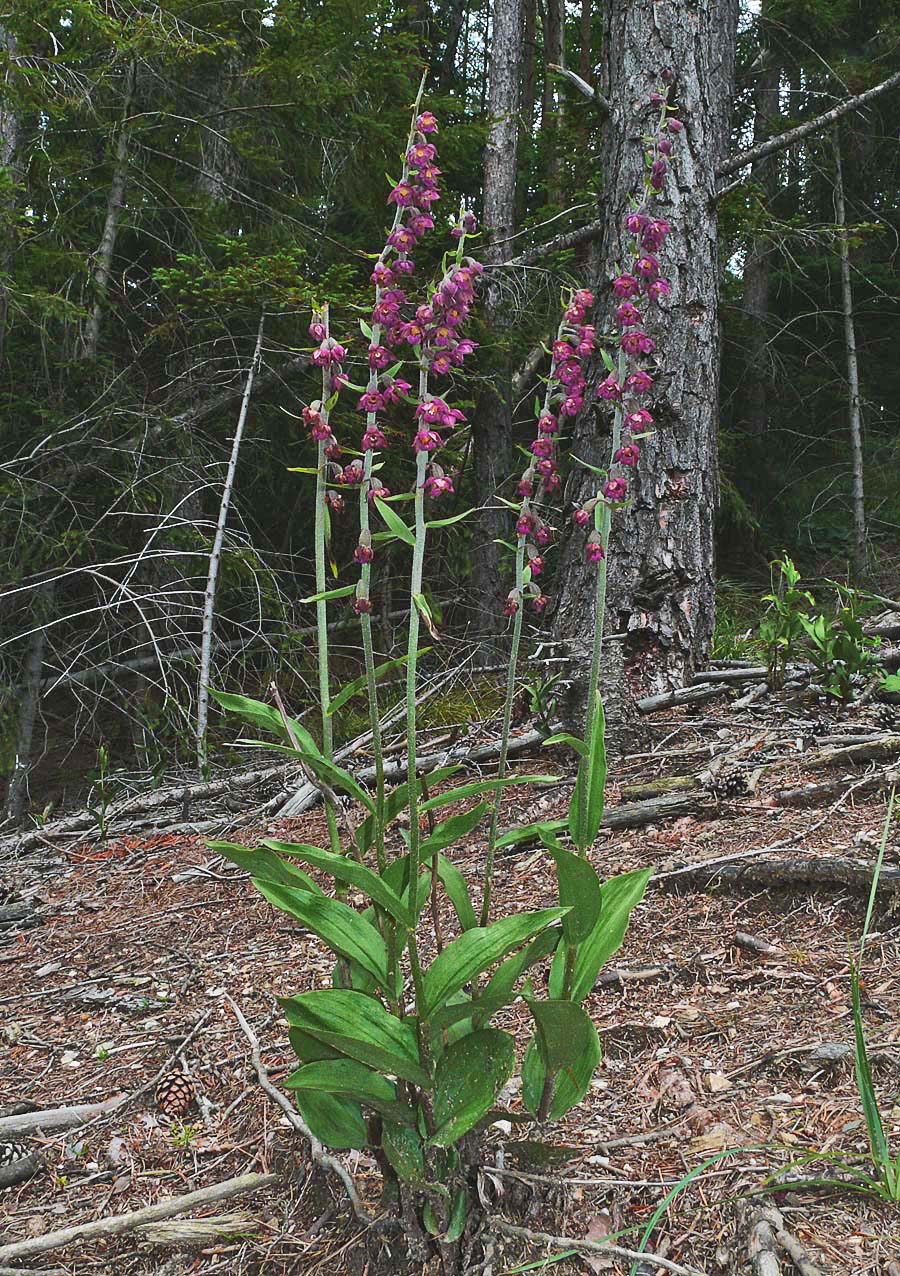
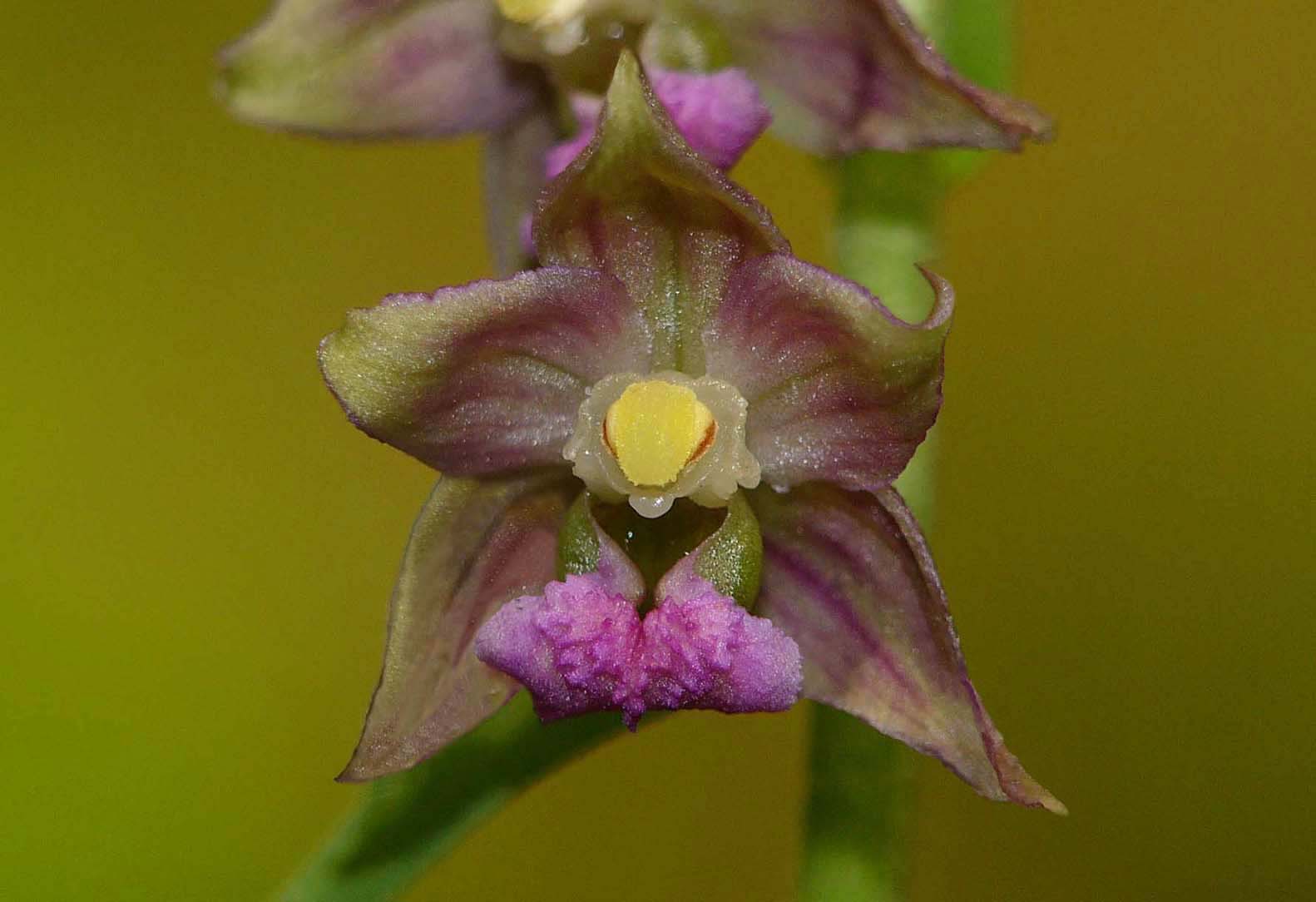
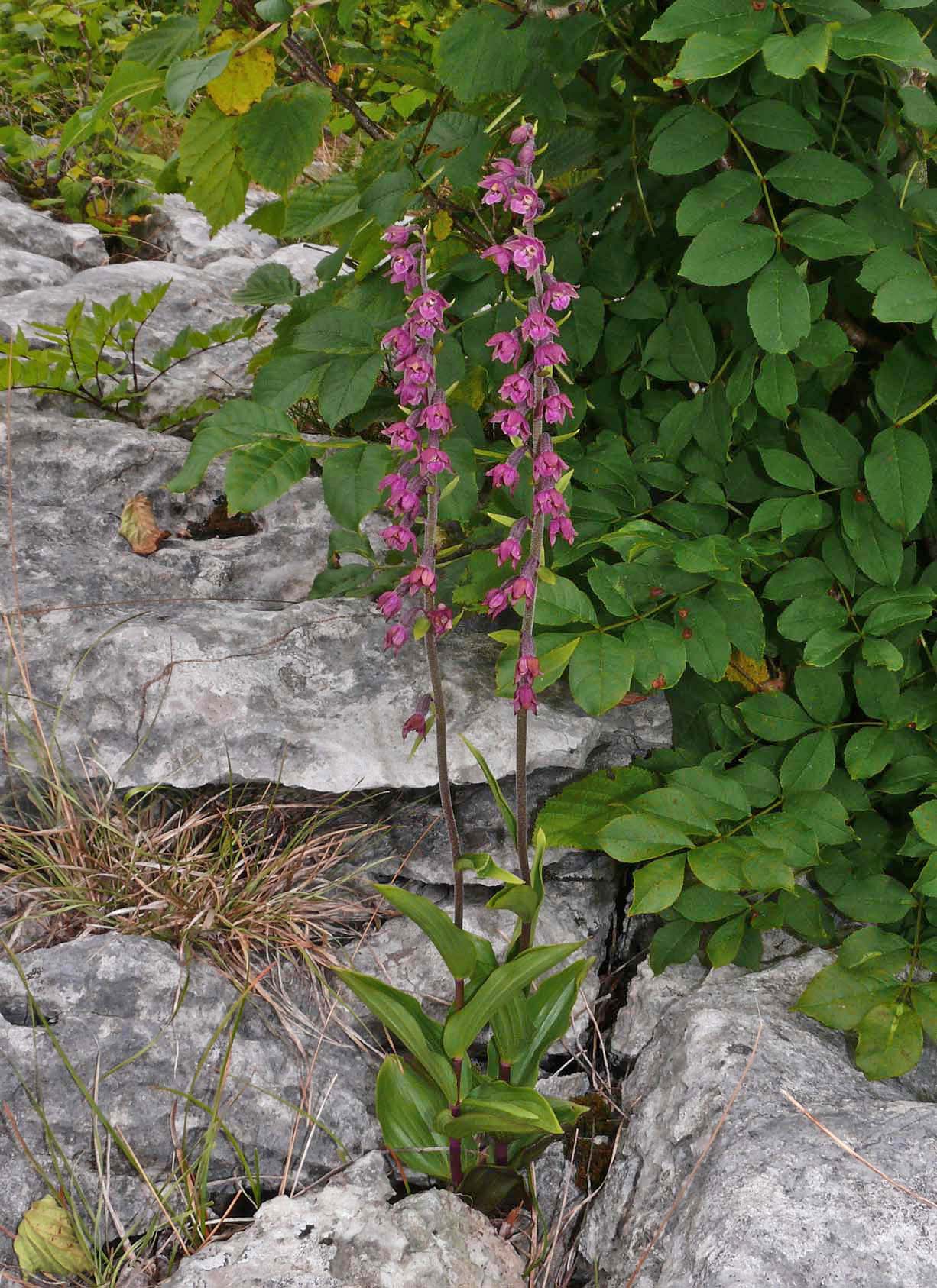
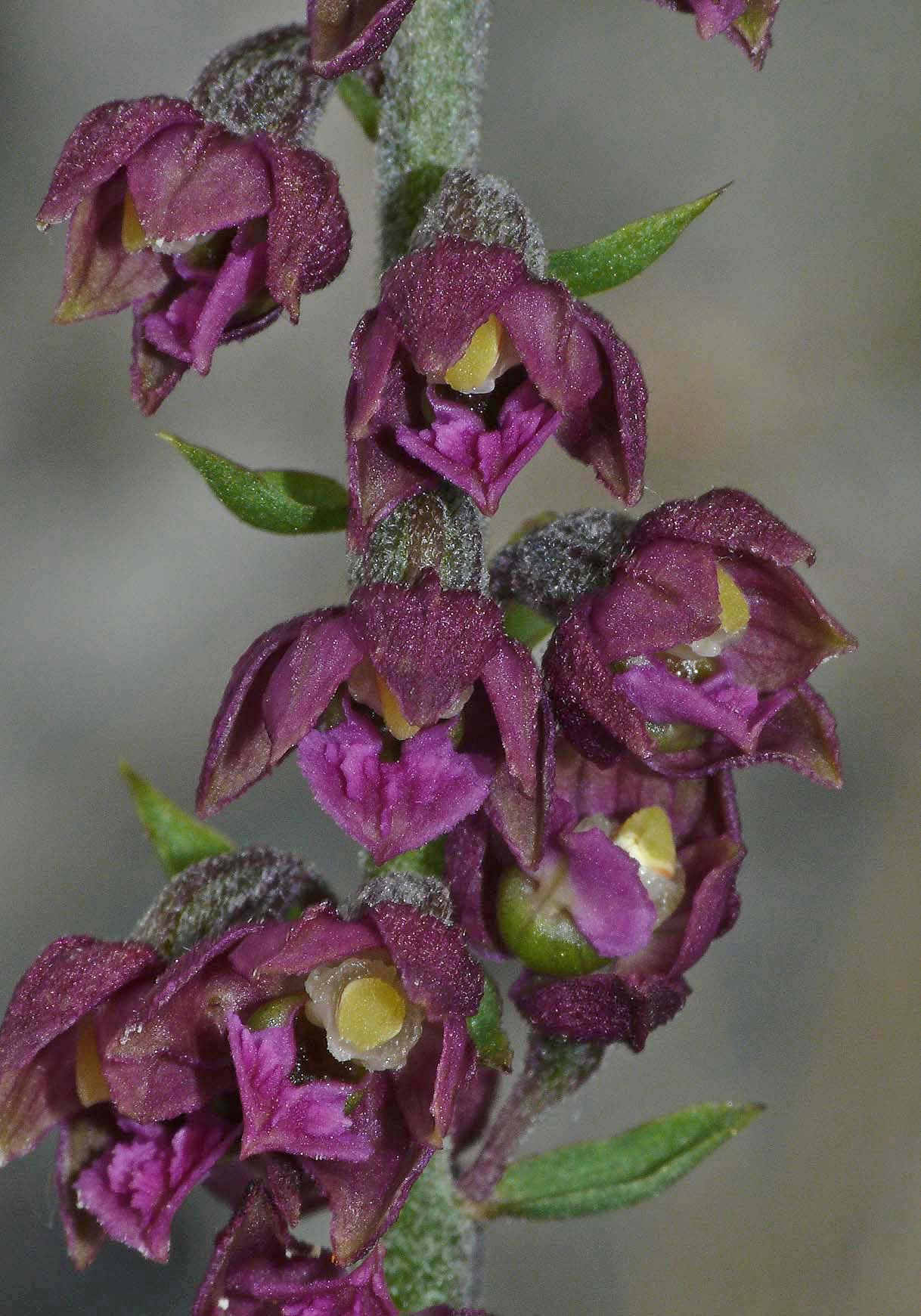
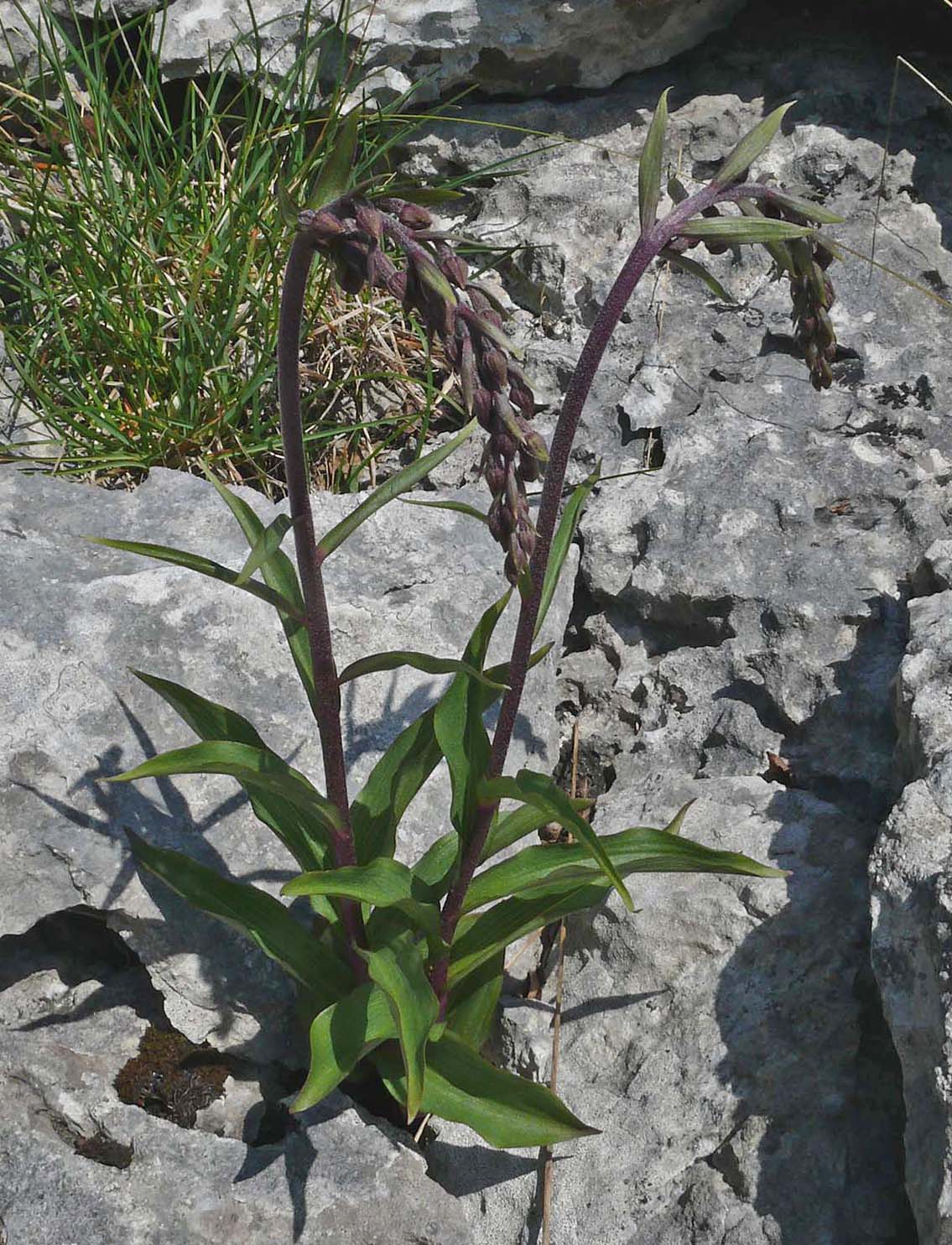
This species was first described from Germany in 1804 and its name refers to the dark red colour of the
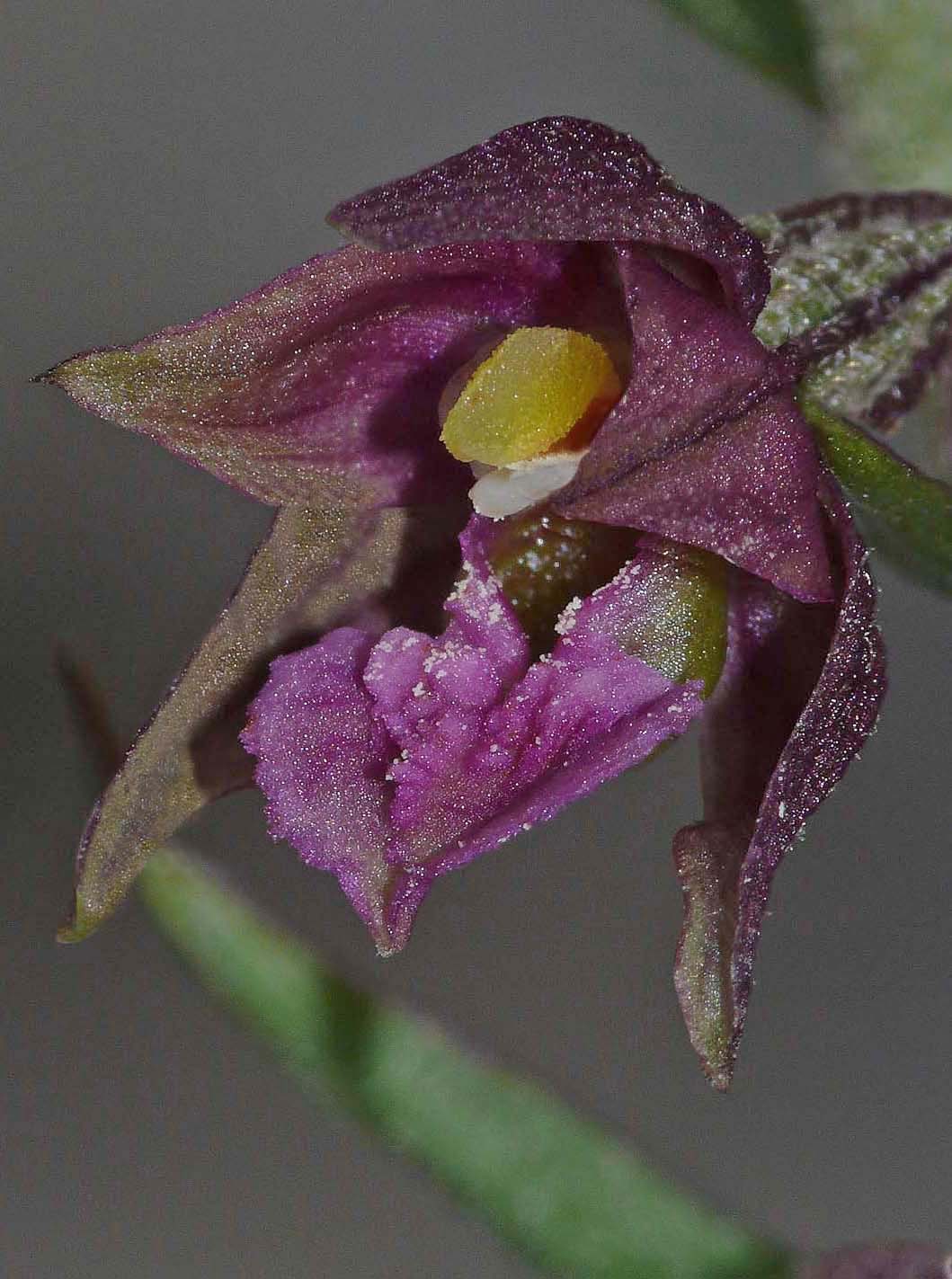
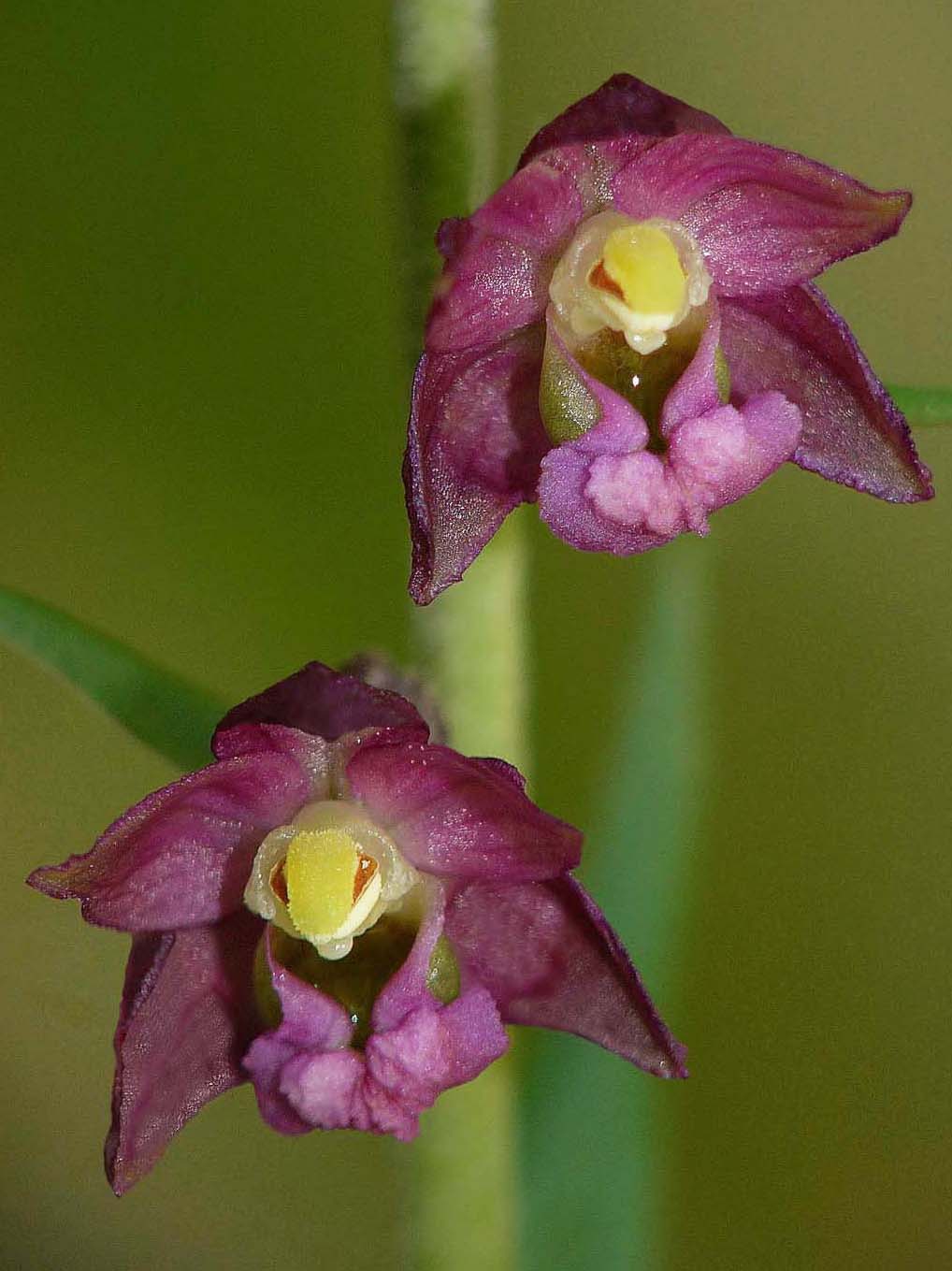
flower, although as can be seen from the photographs this colouration may vary from an almost mauve hue
through green to dark pink. It is one of the commoner and more familiar of the European Epipactis and is known commonly as the Dark Red Helleborine.
E. atrorubens has a widespread distribution throughout boreal and temperate Europe and occurs as far east as Siberia. It reaches Scandinavia in the north and the Mediterranean zone to the south, albeit a
rarity there. In its southerly range it can easily be confused with several other related species and most particularly E. lusitanica in the southern Iberian peninsula. It is an orchid that tolerates a wide range of climatic conditions and habitat, but is primarily a species of calcareous uplands and mountains to around 2500 metres. As with most plants it becomes more compact with altitude and this eco-adaption can be noted
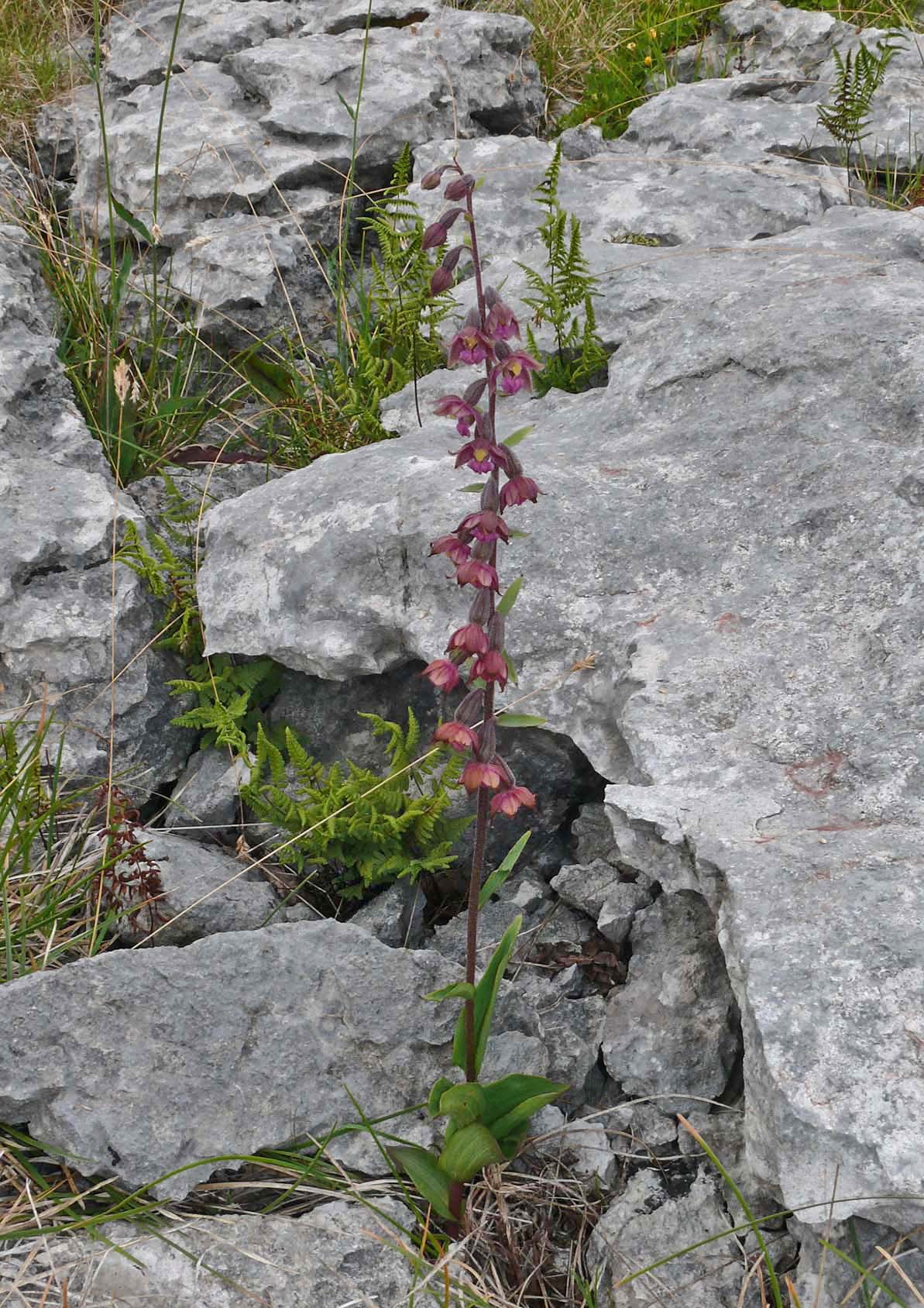
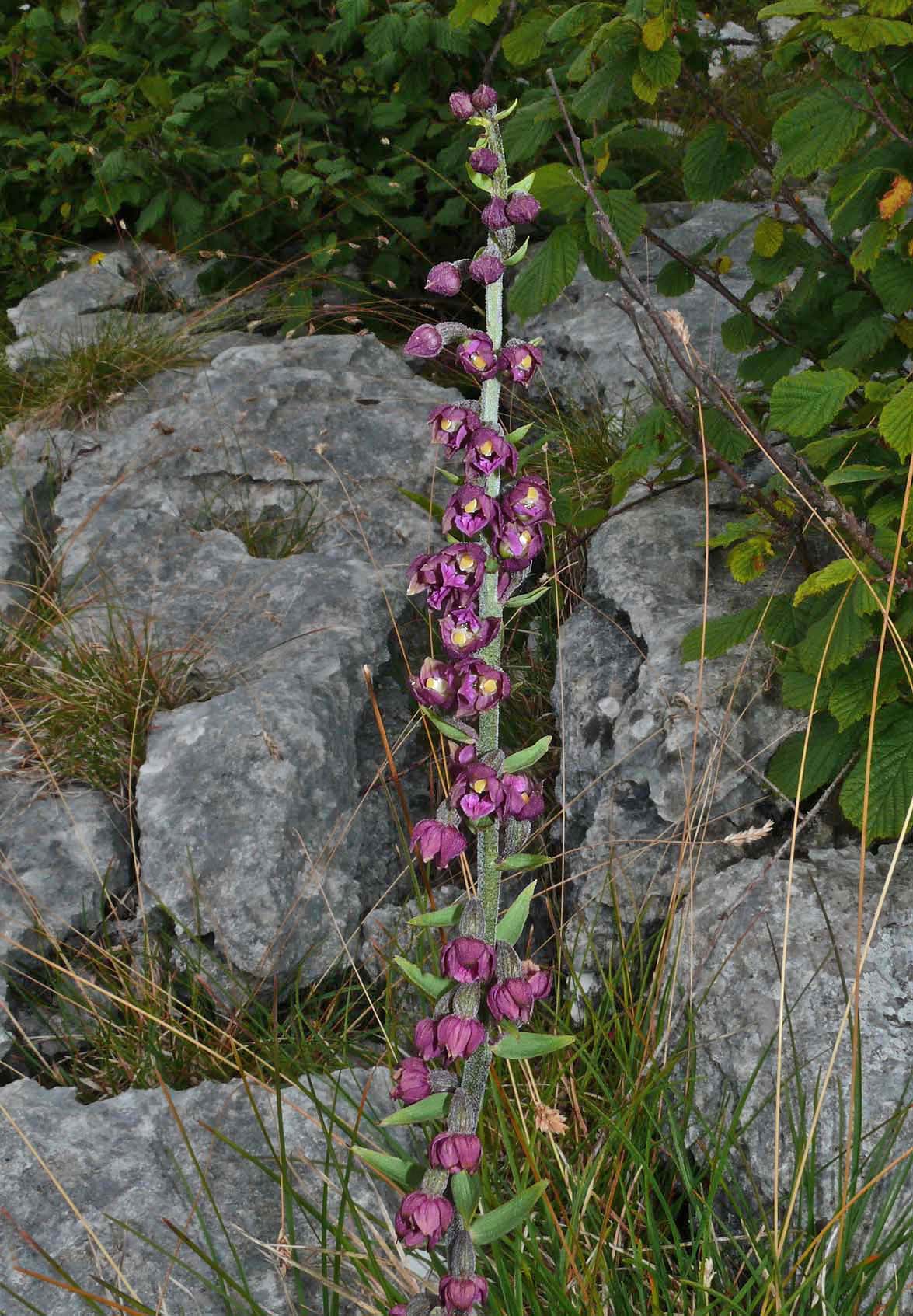
in the illustrations. The tall plant depicted in the title photograph comes from the lush environment of a low lying, wet valley in Austria whereas picture 3 is from the high Pennines of northern England where the species ekes out an existence amongst the clints and grikes of harsh limestone pavement.
In some of its colour forms E. atrorubens can be mistaken for E. helleborine but there are some easily
recognized features helpful in distinguishing the two species. Firstly the leaves of the former are
more pointed and held in an upward pointing position along the stem. Secondly if you study the lip you will
note a centrally divided "crinkly" boss on the lower part of the epichile which is absent from E. helleborine.
These two species will however hybridize and the results can sometimes be difficult to distinguish. The photos all date from the first two weeks of July.
flower, although as can be seen from the photographs this colouration may vary from an almost mauve hue
through green to dark pink. It is one of the commoner and more familiar of the European Epipactis and is known commonly as the Dark Red Helleborine.
E. atrorubens has a widespread distribution throughout boreal and temperate Europe and occurs as far east as Siberia. It reaches Scandinavia in the north and the Mediterranean zone to the south, albeit a
rarity there. In its southerly range it can easily be confused with several other related species and most particularly E. lusitanica in the southern Iberian peninsula. It is an orchid that tolerates a wide range of climatic conditions and habitat, but is primarily a species of calcareous uplands and mountains to around 2500 metres. As with most plants it becomes more compact with altitude and this eco-adaption can be noted
in the illustrations. The tall plant depicted in the title photograph comes from the lush environment of a low lying, wet valley in Austria whereas picture 3 is from the high Pennines of northern England where the species ekes out an existence amongst the clints and grikes of harsh limestone pavement.
In some of its colour forms E. atrorubens can be mistaken for E. helleborine but there are some easily
recognized features helpful in distinguishing the two species. Firstly the leaves of the former are
more pointed and held in an upward pointing position along the stem. Secondly if you study the lip you will
note a centrally divided "crinkly" boss on the lower part of the epichile which is absent from E. helleborine.
These two species will however hybridize and the results can sometimes be difficult to distinguish. The photos all date from the first two weeks of July.