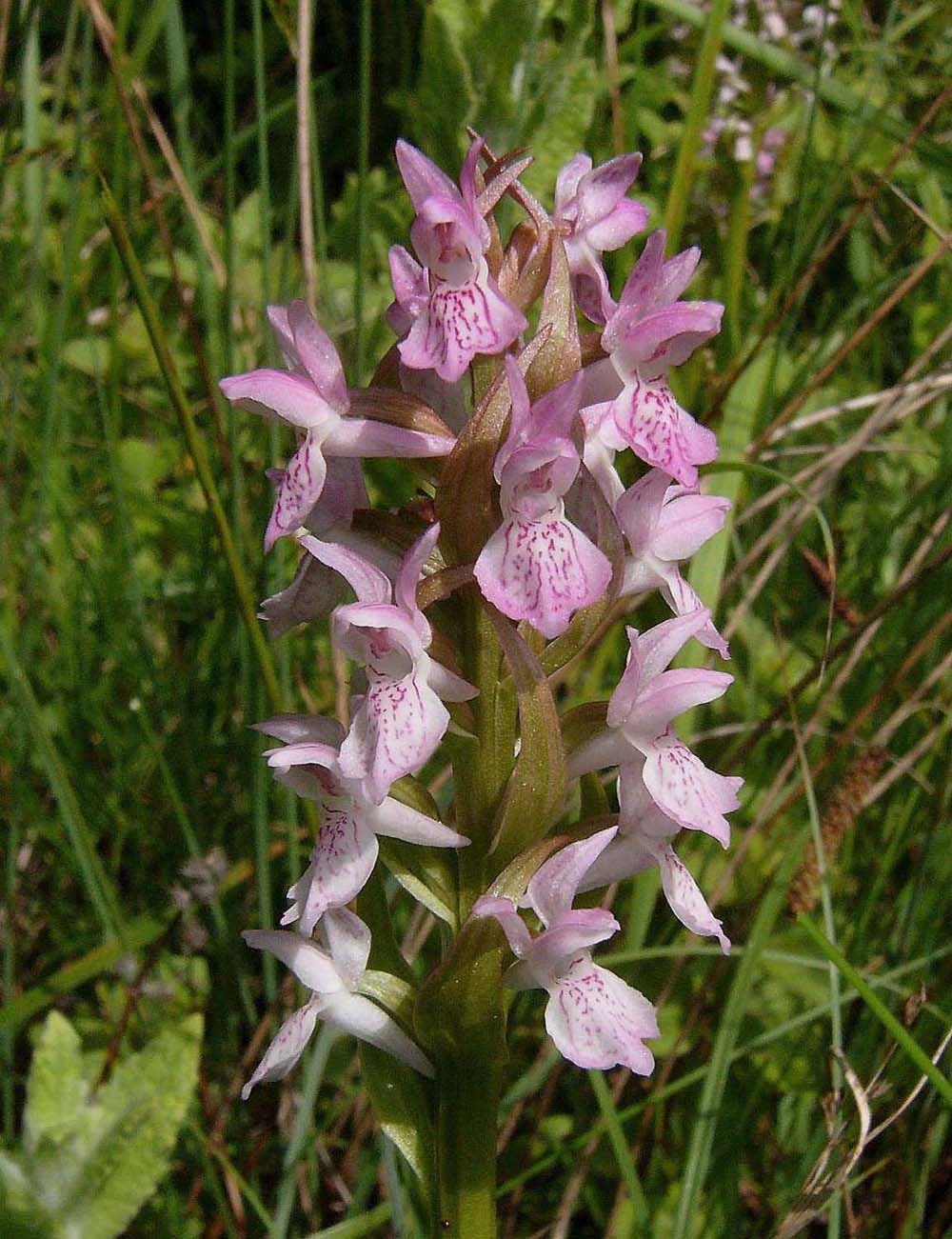
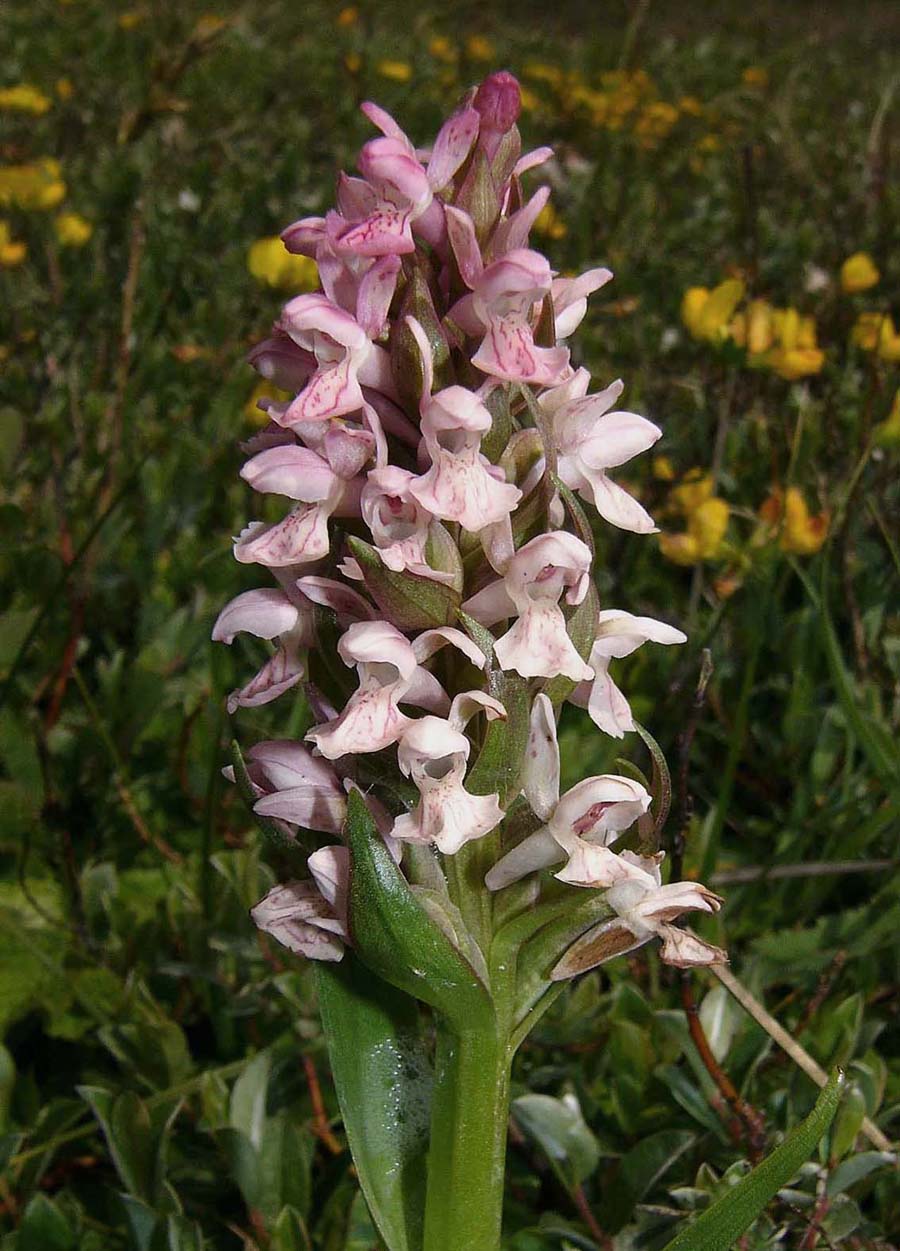
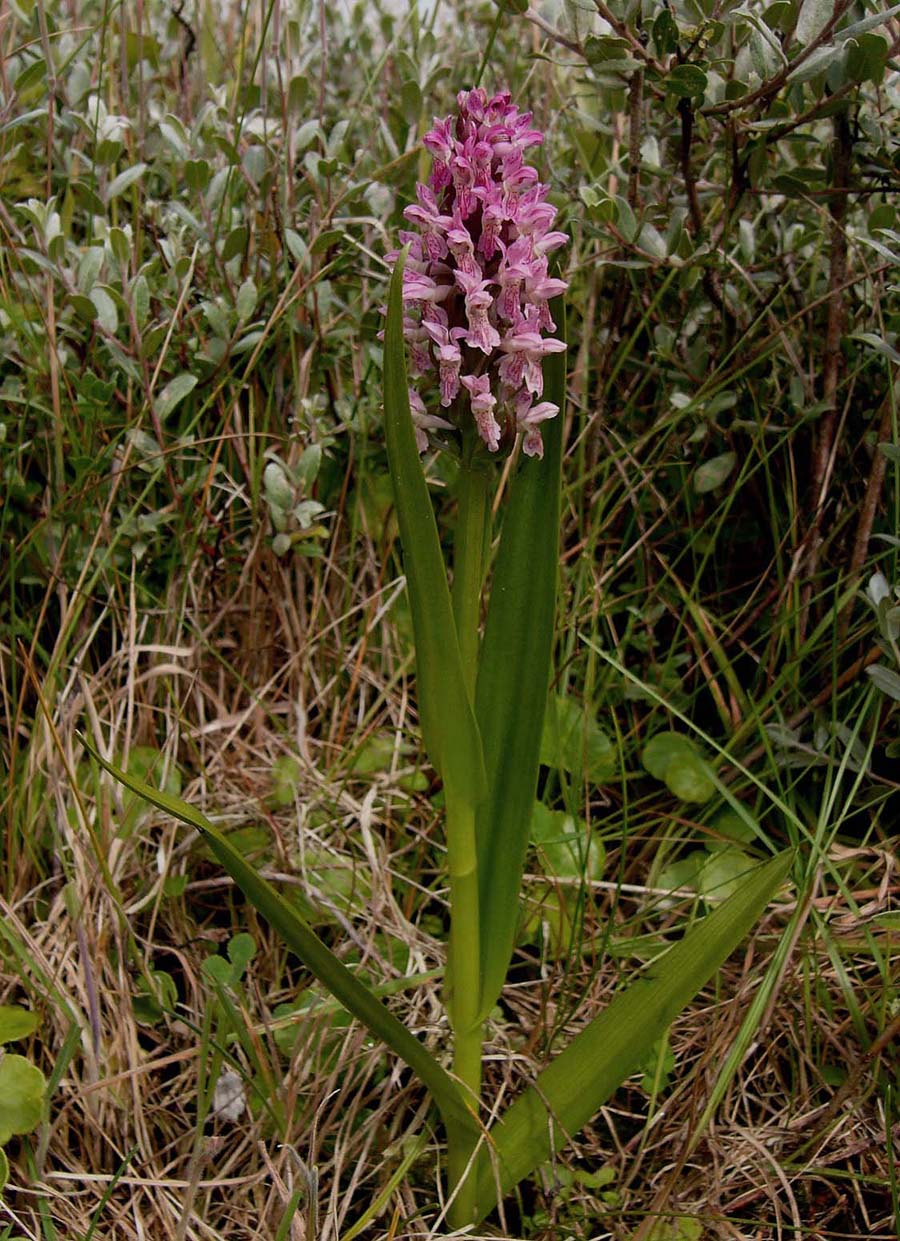
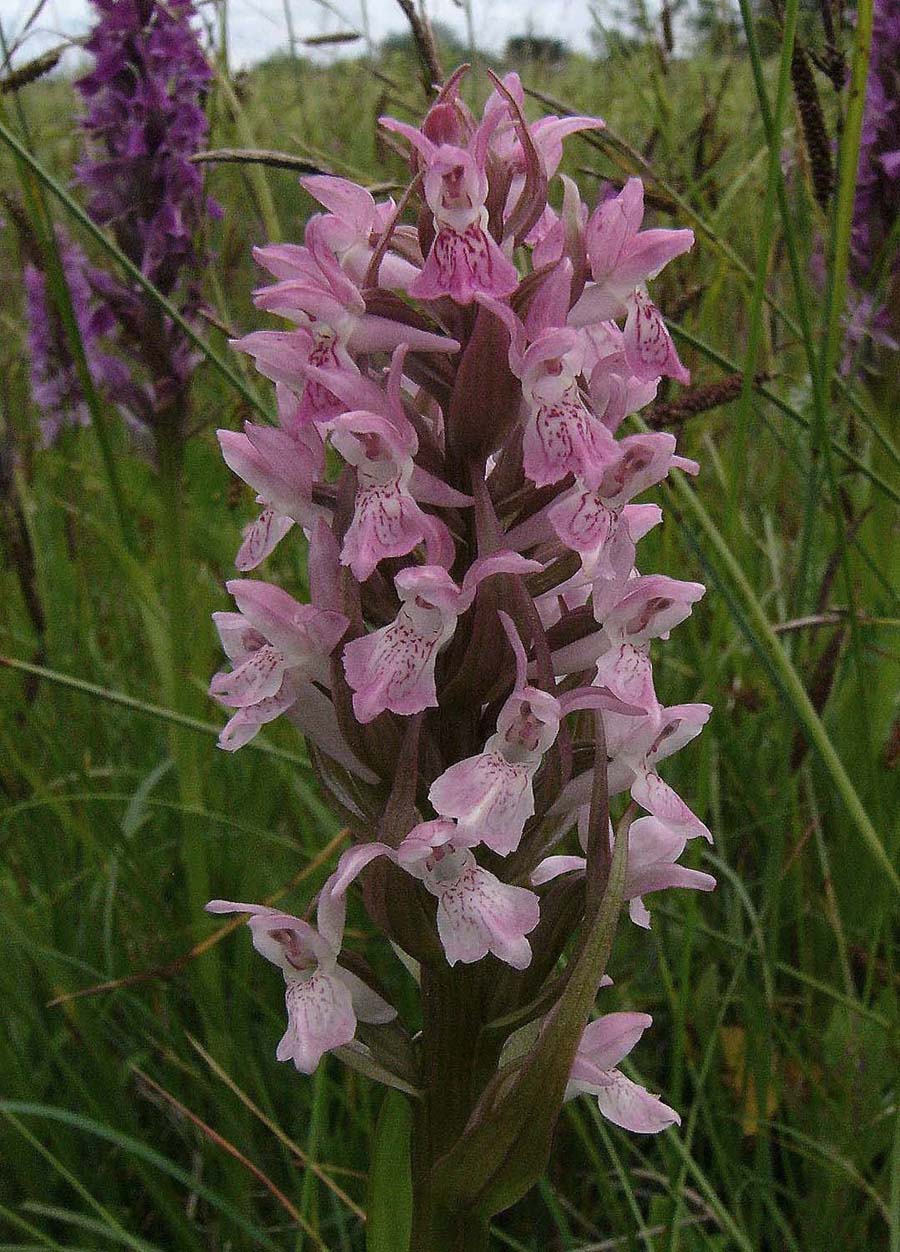
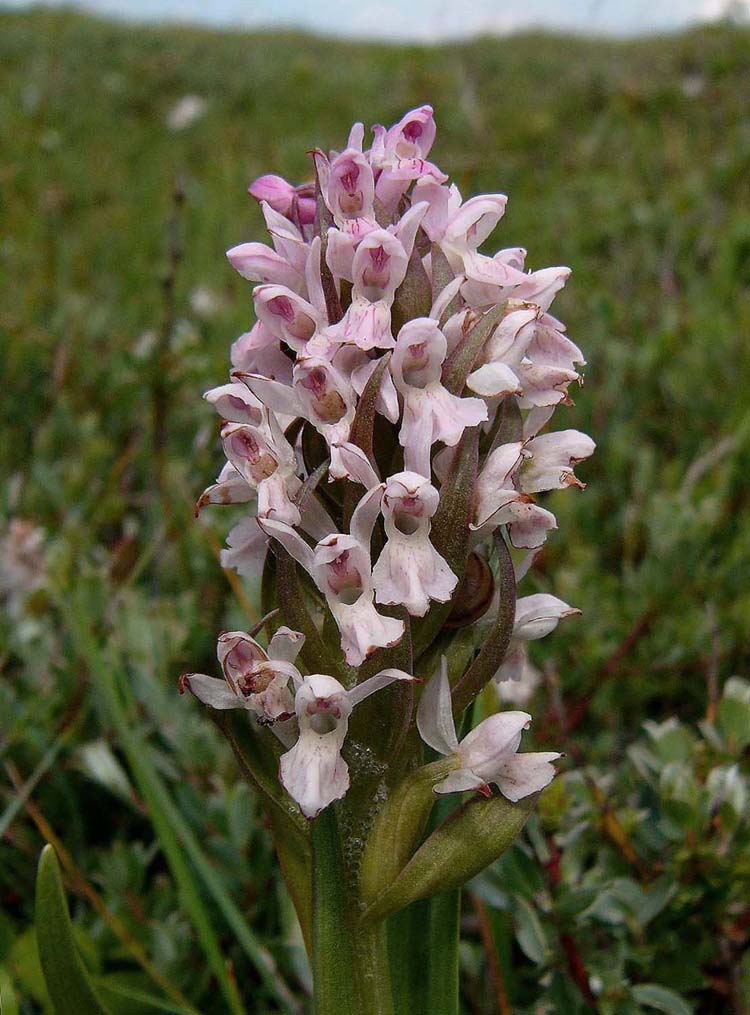
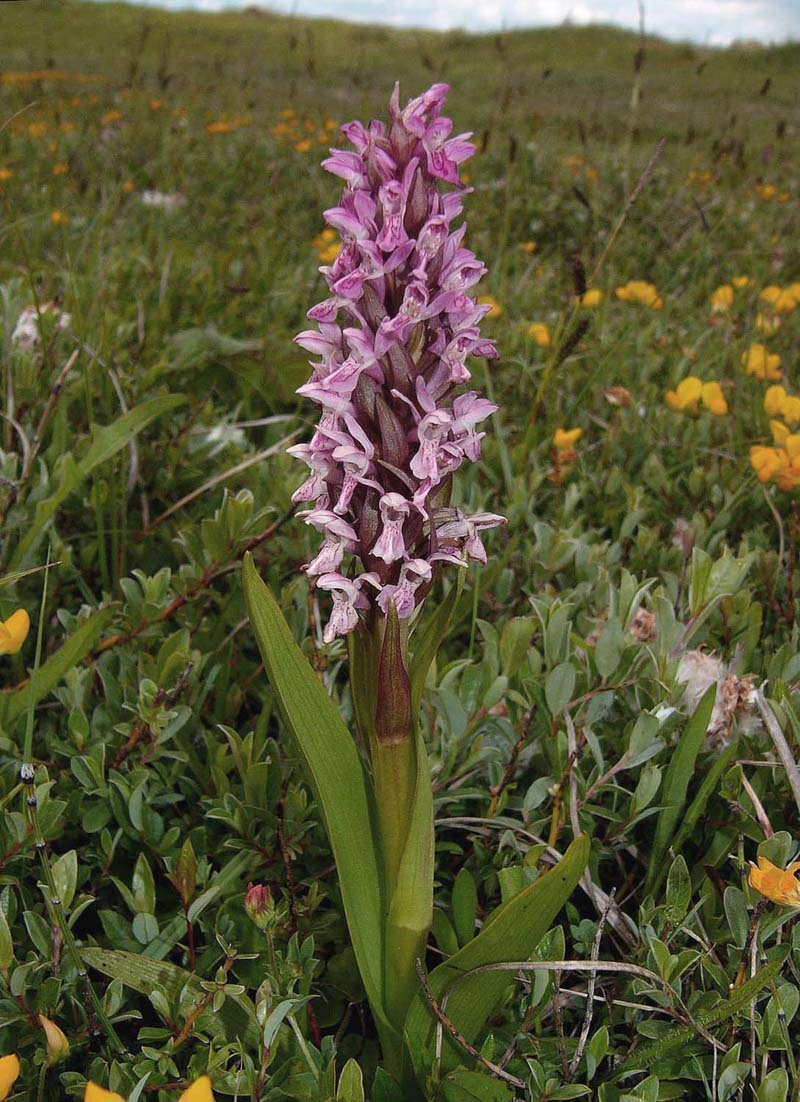
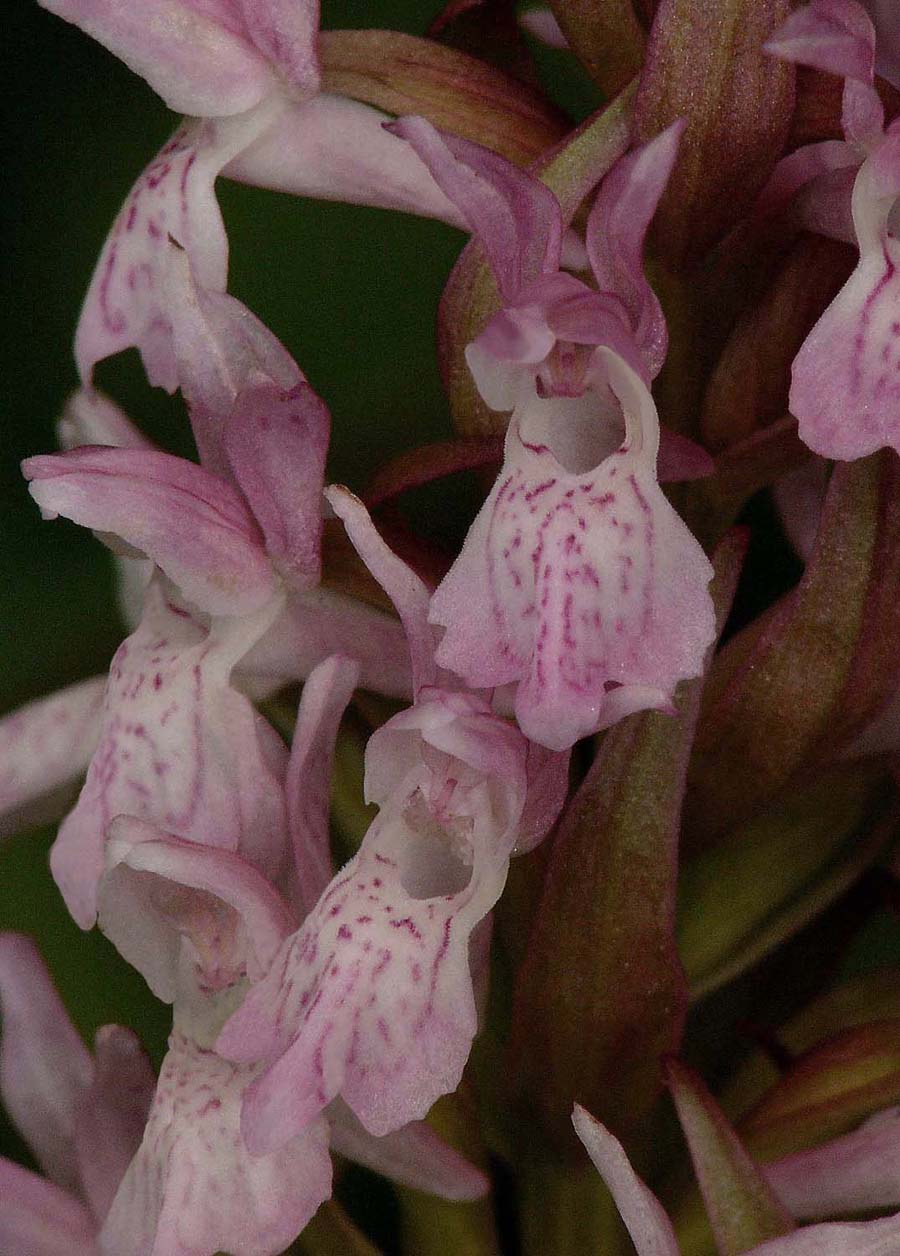
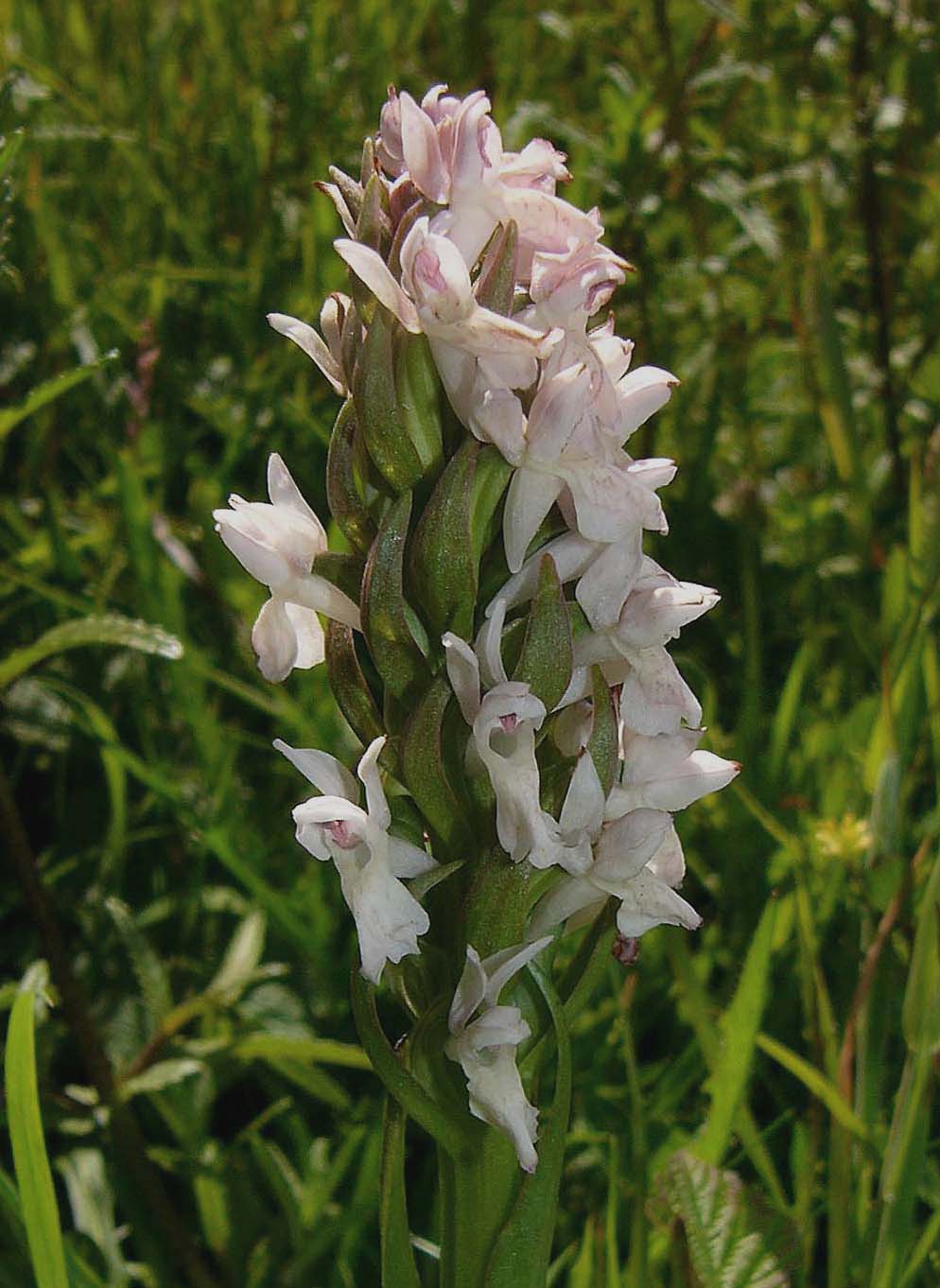
This species was first described from Uppsala, Sweden in 1755 and its name refers to the flesh coloured
flowers. This colouration, although most common is not diagnostic in itself and variations from dark pink
to lilac and even yellow or white examples have been found on rare occasions. D. incarnatais a relatively stable orchid and its only these colour morphs that create any confusion with identification. Some of these forms have received named recognition, including D. incarnata v ochrantha which is a rare pale yellow variation which can be found growing alongside its more normally coloured relatives throughout their range.
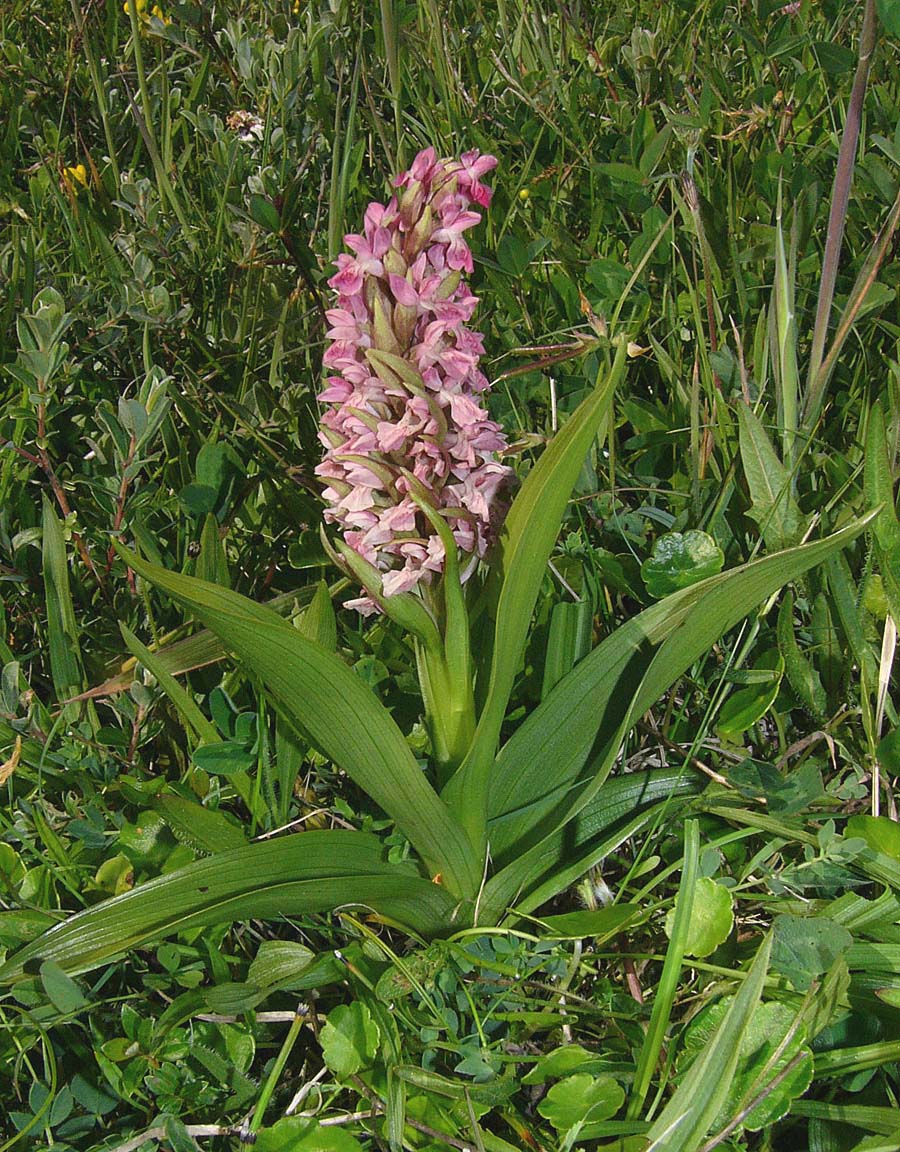
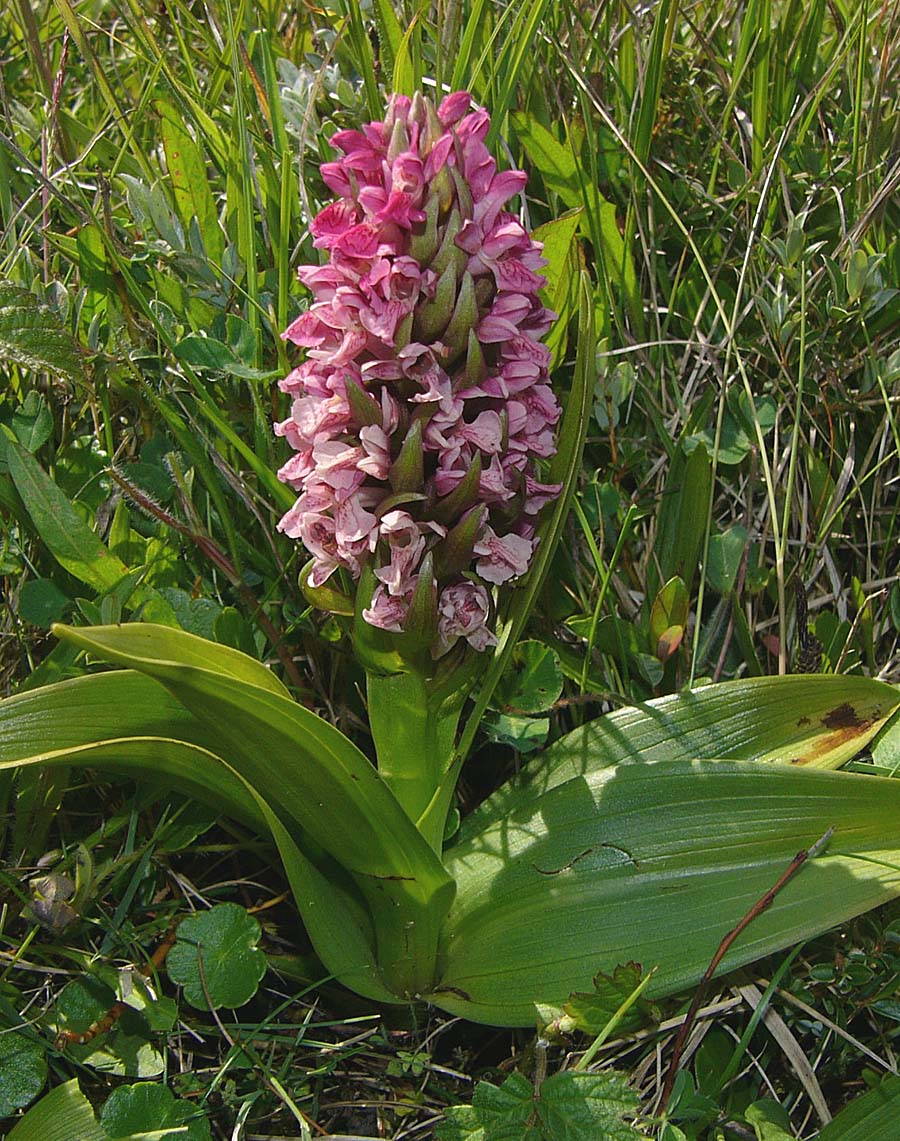
D. incarnata ssp lobelii is a squat variant, with very broad leaves that arch from the lower stem, colouration is however the typical light pink, though a form (dunensis) has recently been recognized that displays the distinct brick red, similar to that of D. coccinea. Two examples of this sub species are illustrated in photos 9 and 10. As with many species in the genus, hybridization is frequent and some populations have suffered from introgressive hybridisation that can make certain identification difficult. There is a well known population of marsh orchids at Ferring in the south of England where D. incarnata, D. fuchsii and D. praetermissa have inter-bred to such a degree that locating pure specimens amongst the thousands of plants is all but impossible. The distribution of D. incarnata is Euro-Siberian from Spain in the west to China in the east and in all these regions it is almost invariably to be found growing in damp or wet conditions from sea level up to a height of 2500 metres.
The pictures are from various dune systems in England and Wales, dating from the first three weeks of June.
flowers. This colouration, although most common is not diagnostic in itself and variations from dark pink
to lilac and even yellow or white examples have been found on rare occasions. D. incarnatais a relatively stable orchid and its only these colour morphs that create any confusion with identification. Some of these forms have received named recognition, including D. incarnata v ochrantha which is a rare pale yellow variation which can be found growing alongside its more normally coloured relatives throughout their range.
D. incarnata ssp lobelii is a squat variant, with very broad leaves that arch from the lower stem, colouration is however the typical light pink, though a form (dunensis) has recently been recognized that displays the distinct brick red, similar to that of D. coccinea. Two examples of this sub species are illustrated in photos 9 and 10. As with many species in the genus, hybridization is frequent and some populations have suffered from introgressive hybridisation that can make certain identification difficult. There is a well known population of marsh orchids at Ferring in the south of England where D. incarnata, D. fuchsii and D. praetermissa have inter-bred to such a degree that locating pure specimens amongst the thousands of plants is all but impossible. The distribution of D. incarnata is Euro-Siberian from Spain in the west to China in the east and in all these regions it is almost invariably to be found growing in damp or wet conditions from sea level up to a height of 2500 metres.
The pictures are from various dune systems in England and Wales, dating from the first three weeks of June.