This
species was first described by Chatelain from Norrbotten, Sweden in
1760 and its name means "three pointed", this being a reference to the sepal
configuration. The genus Corallorhiza gets its name from the resemblance of the rhizome to coral and this also accounts for C. trifida's widely used common name of Coralroot Orchid.
This is a saprophytic orchid but unlike the other European saprophytes (Epipogium and Neottia), it maintains a reasonable amount of chlorophyll within its stem and is consequently able to manufacture a modest level of its own food. This capability is one of the main reasons why Corallorhiza may be found in a wider range of habitats than species within the other two saprophytic genus. C. trifida is primarily a woodland plant but it may also be found in more open environments such as wet coastal dune slacks and alpine marshes.
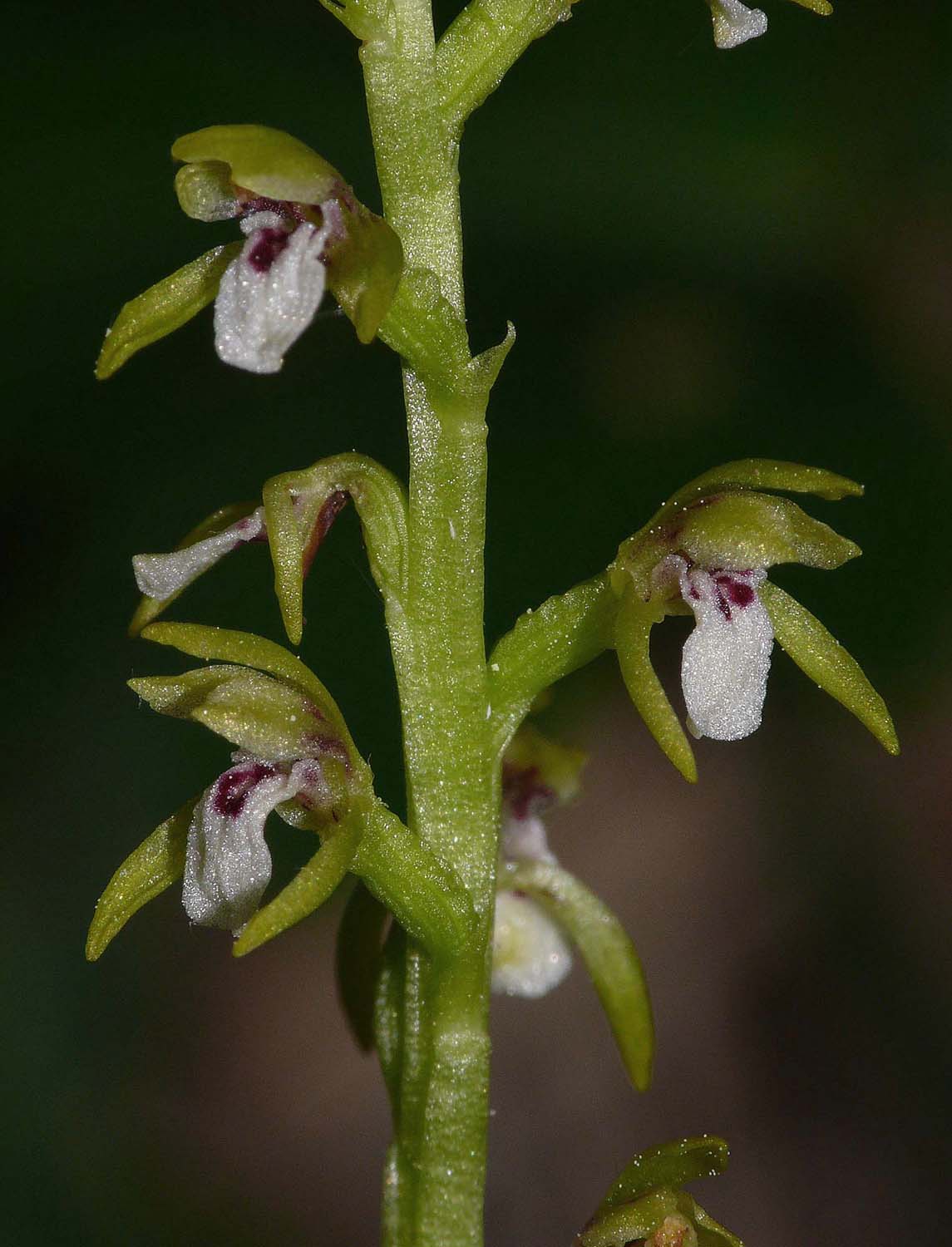
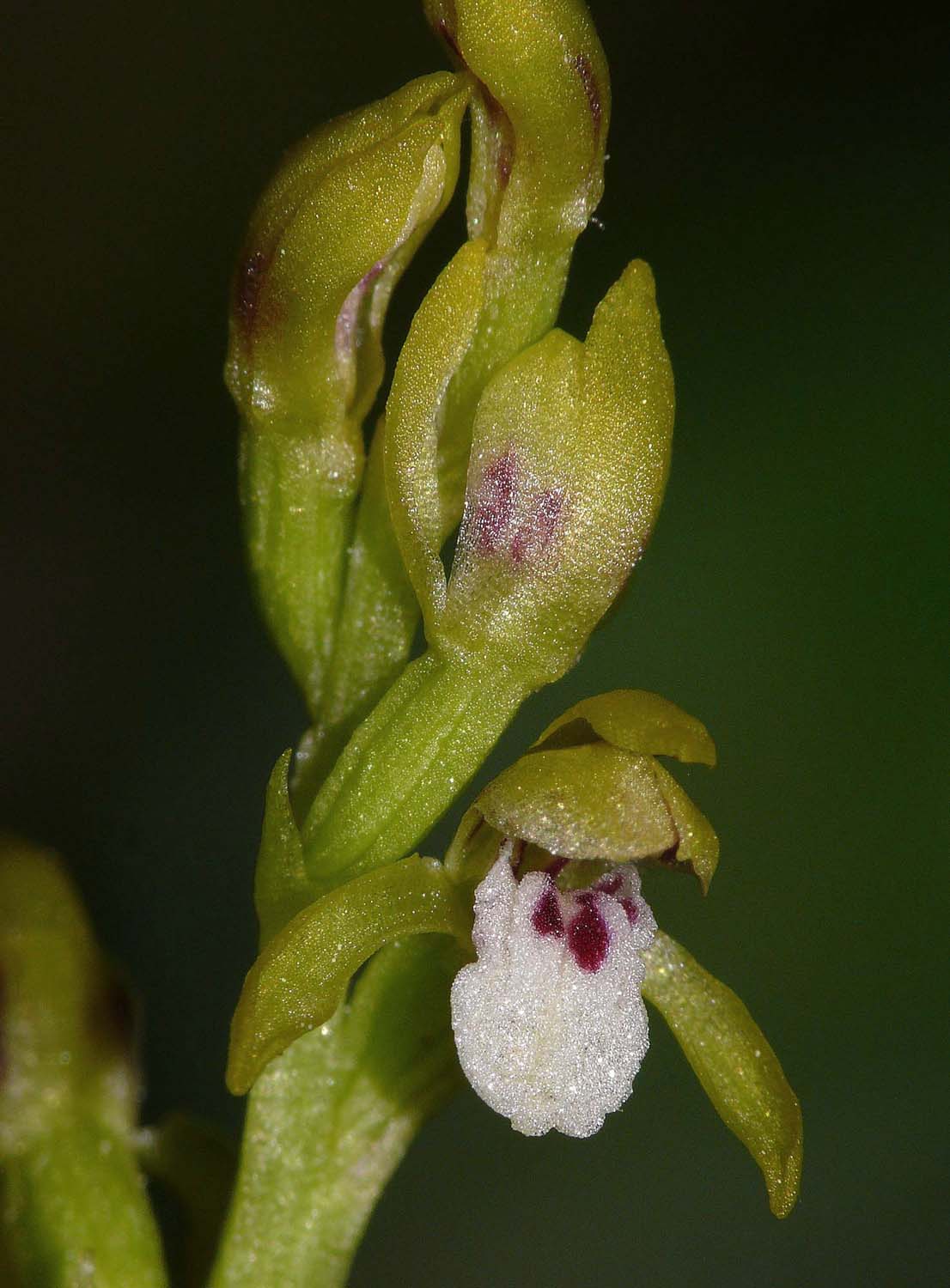
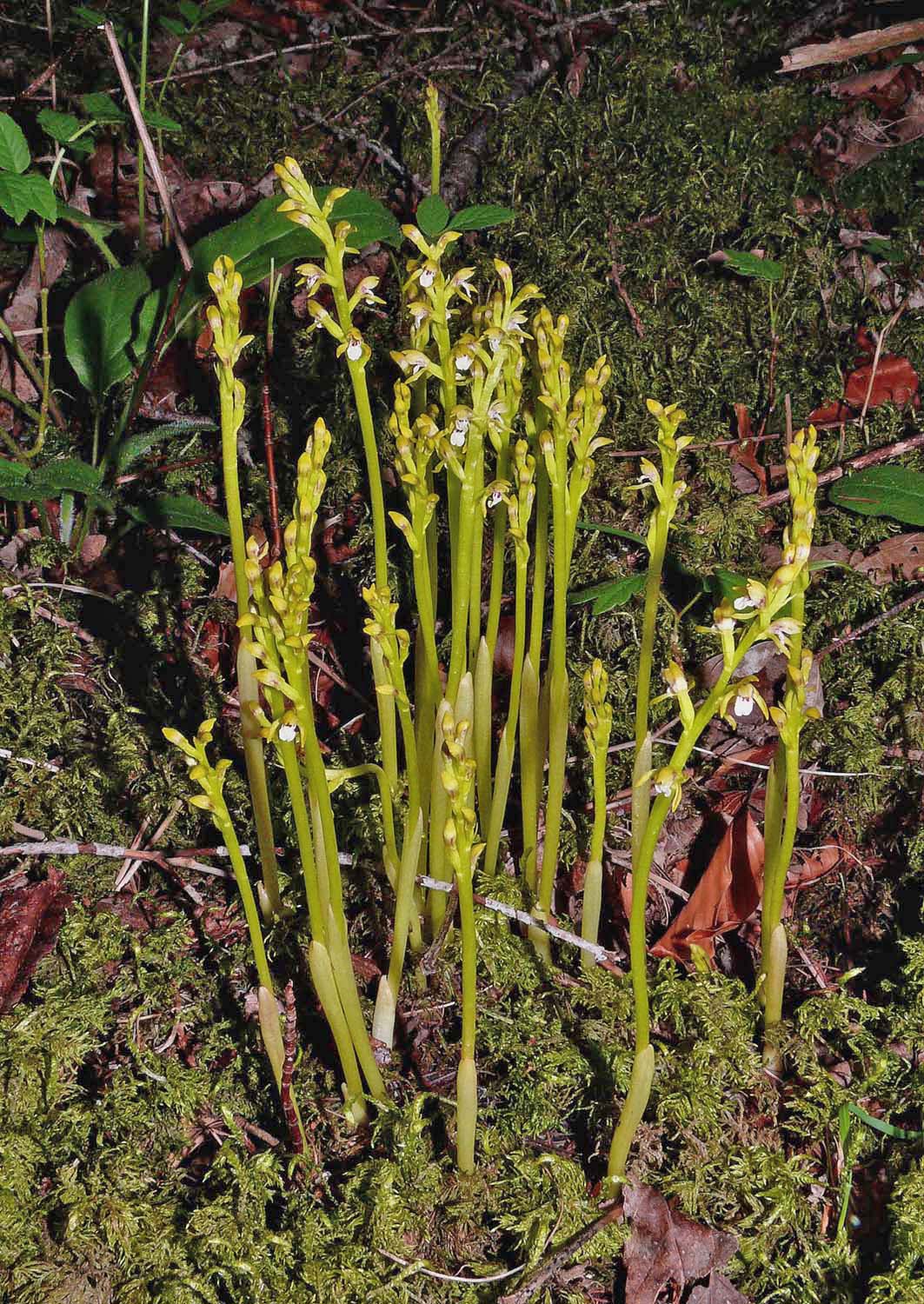
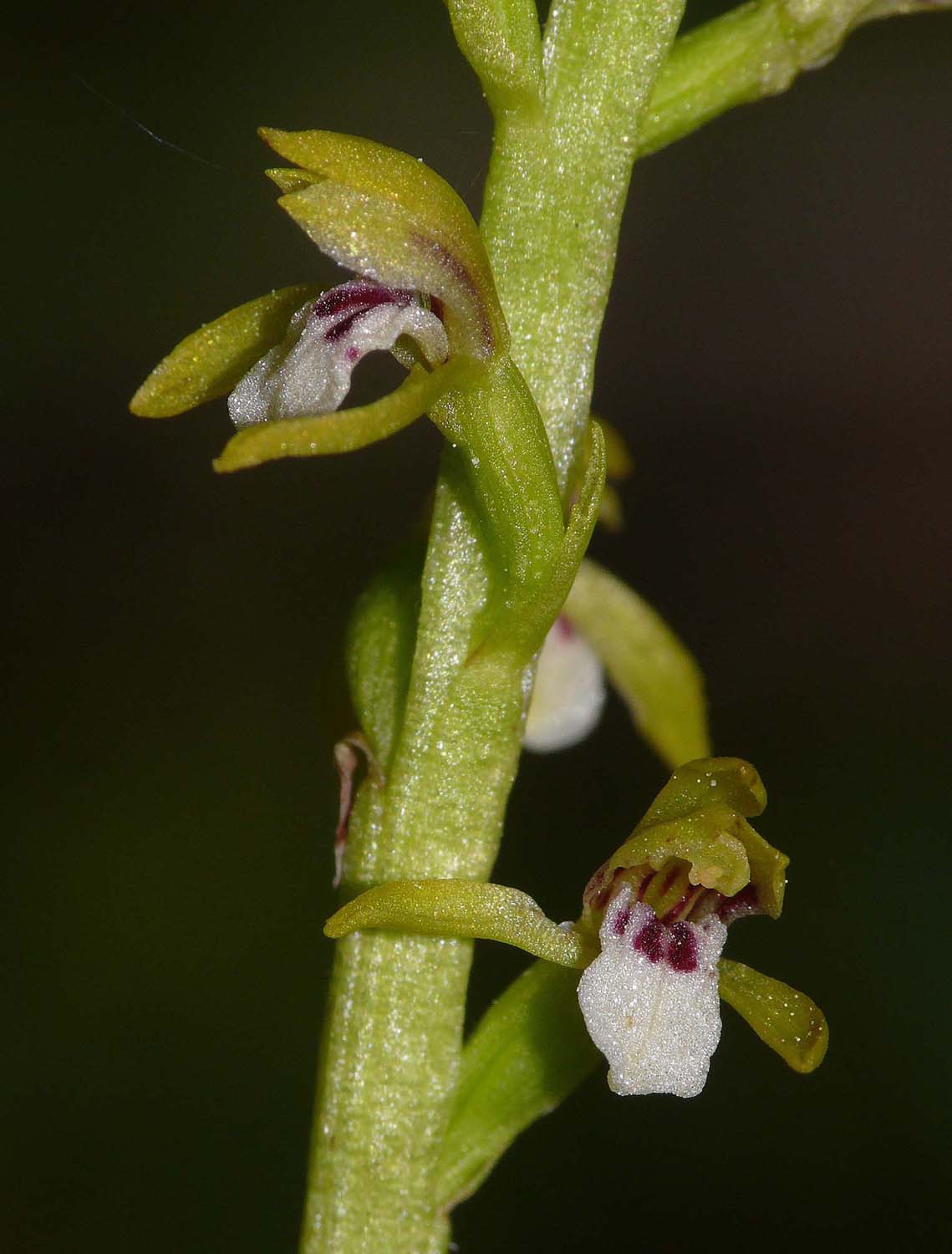
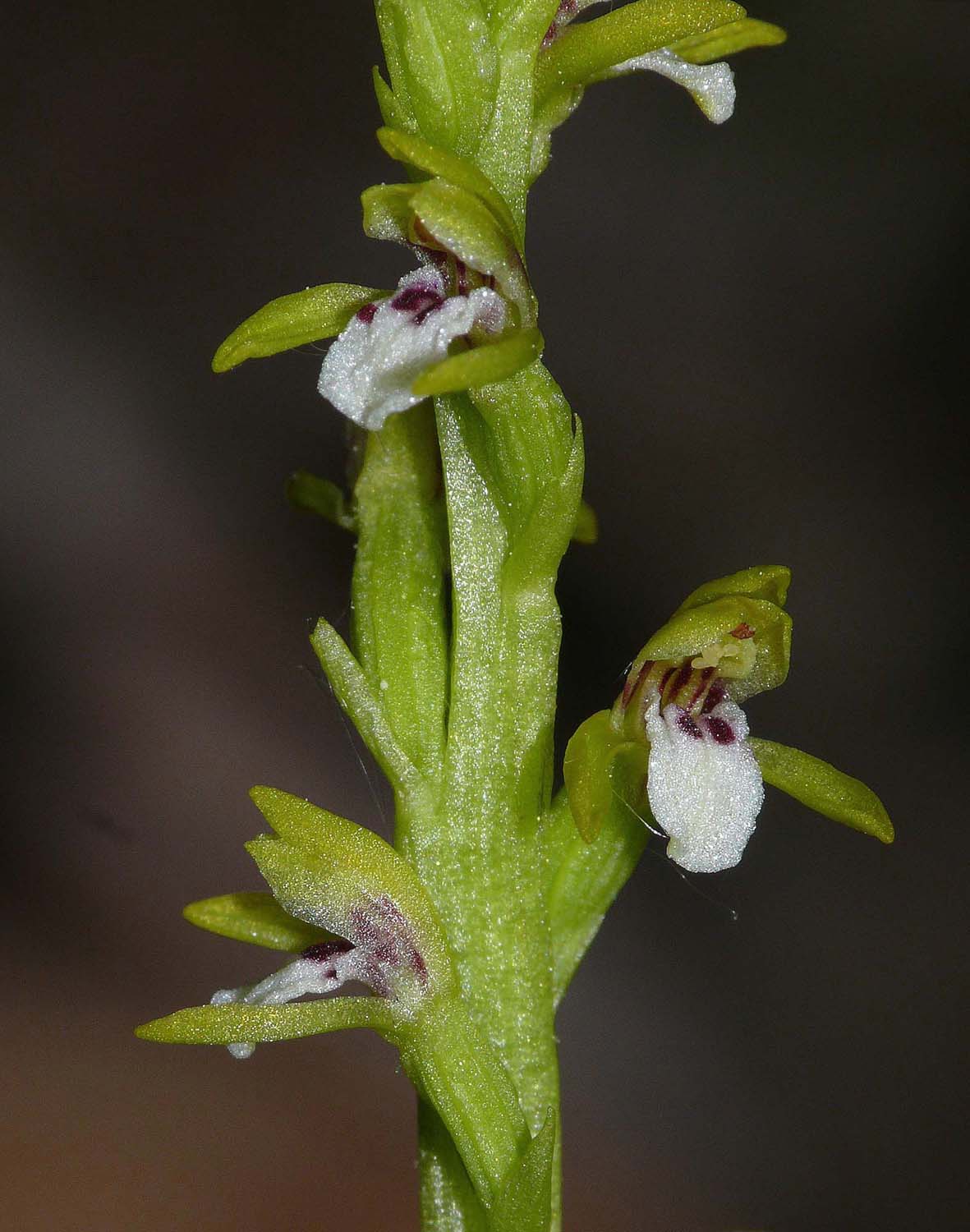
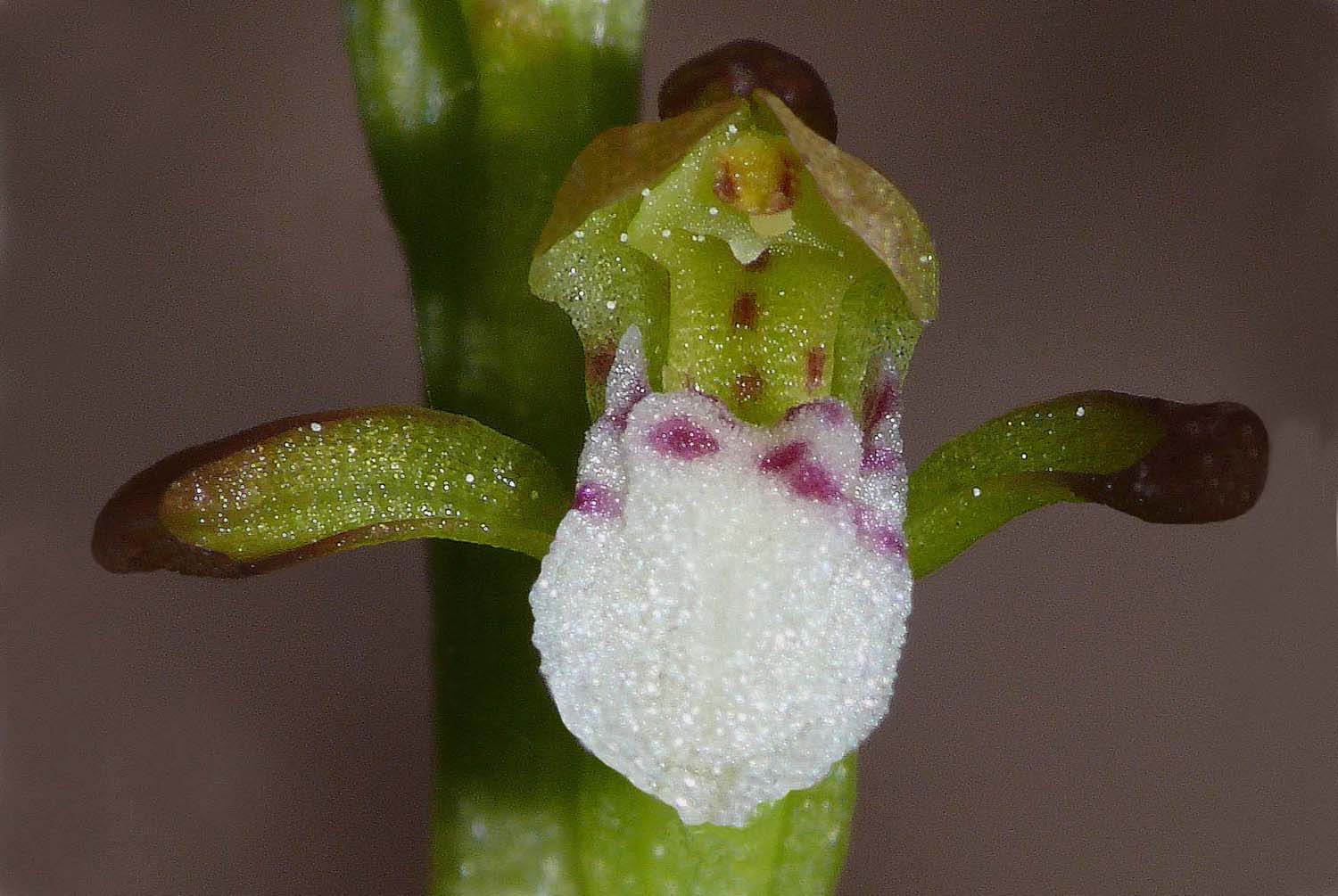
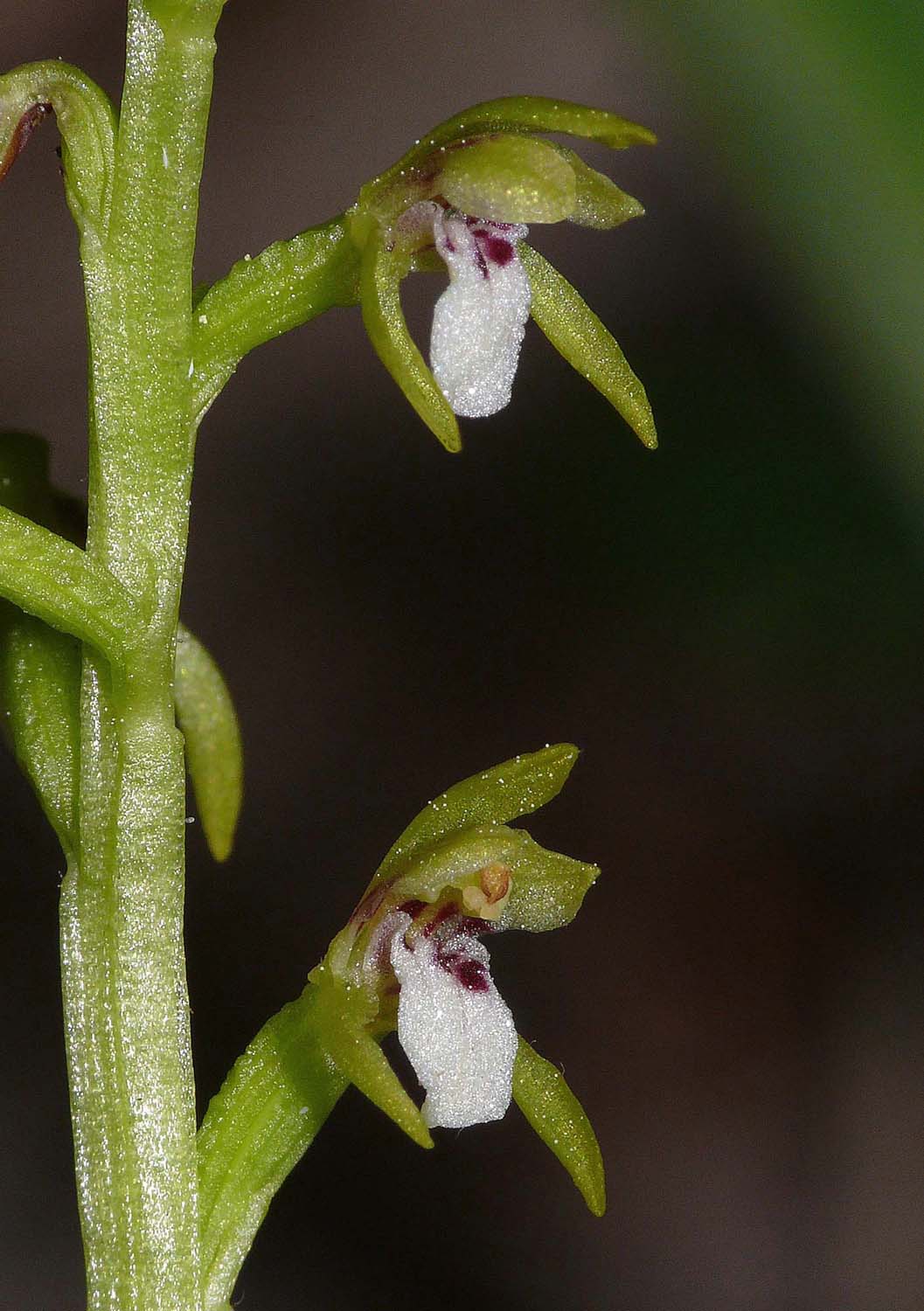
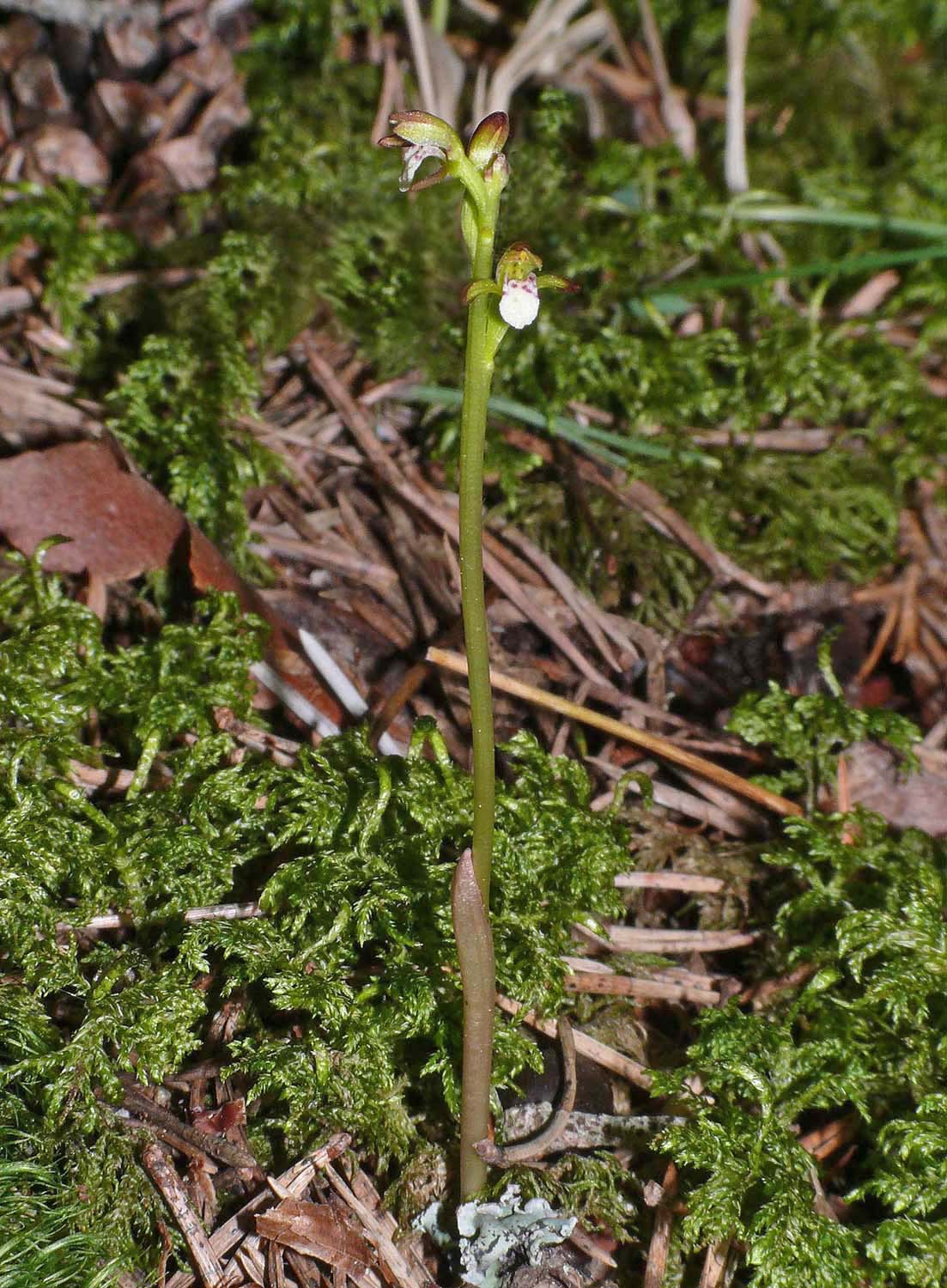
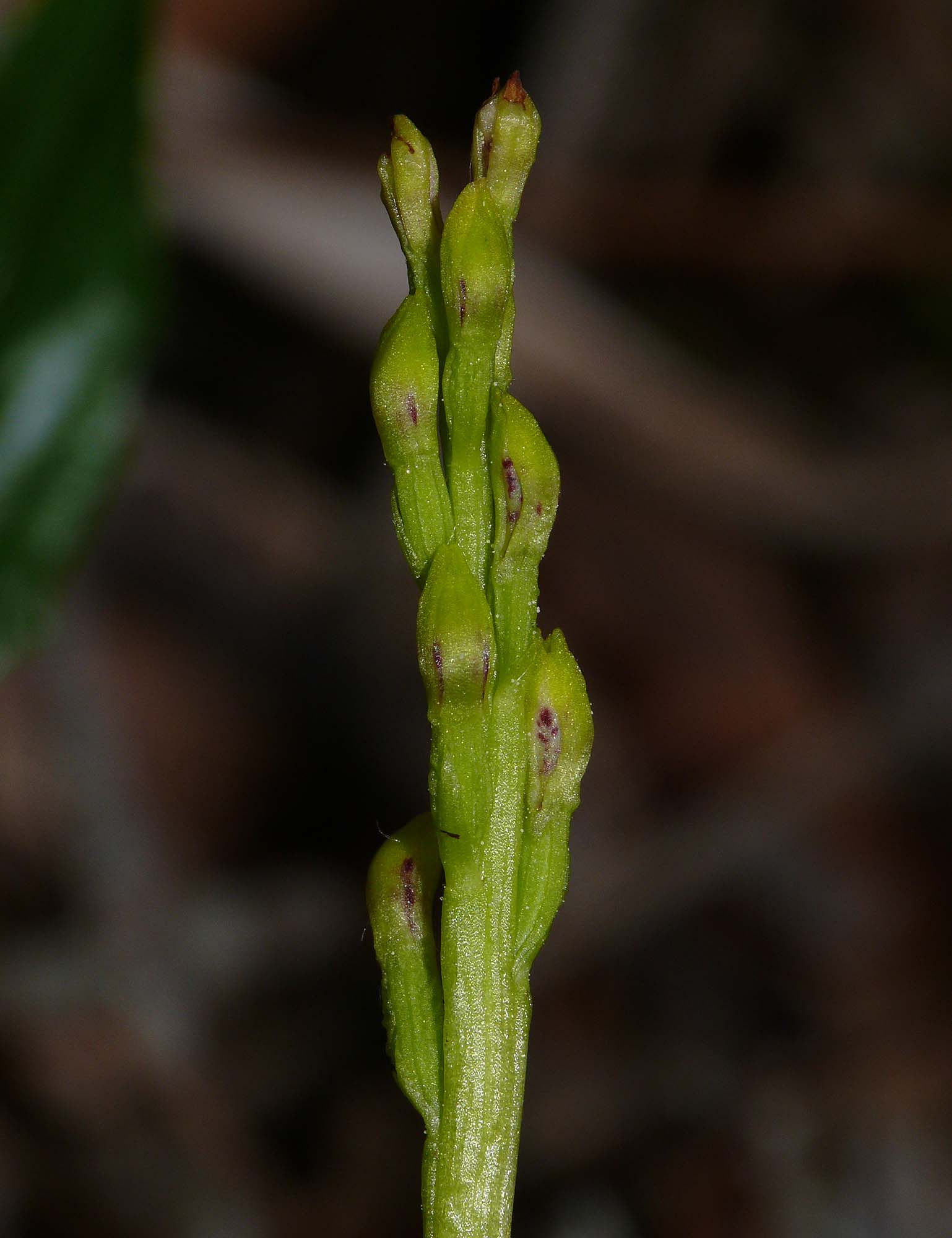
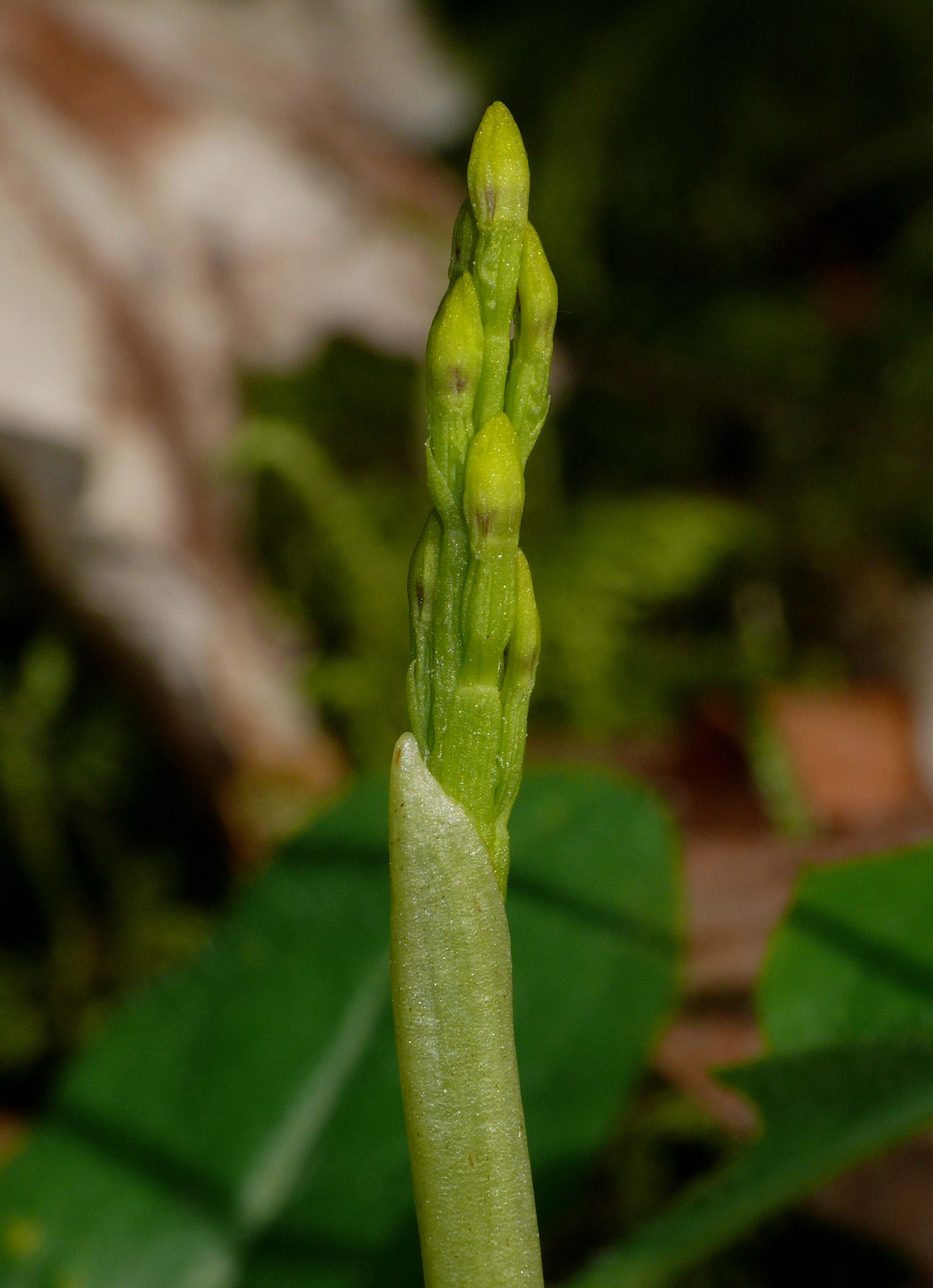
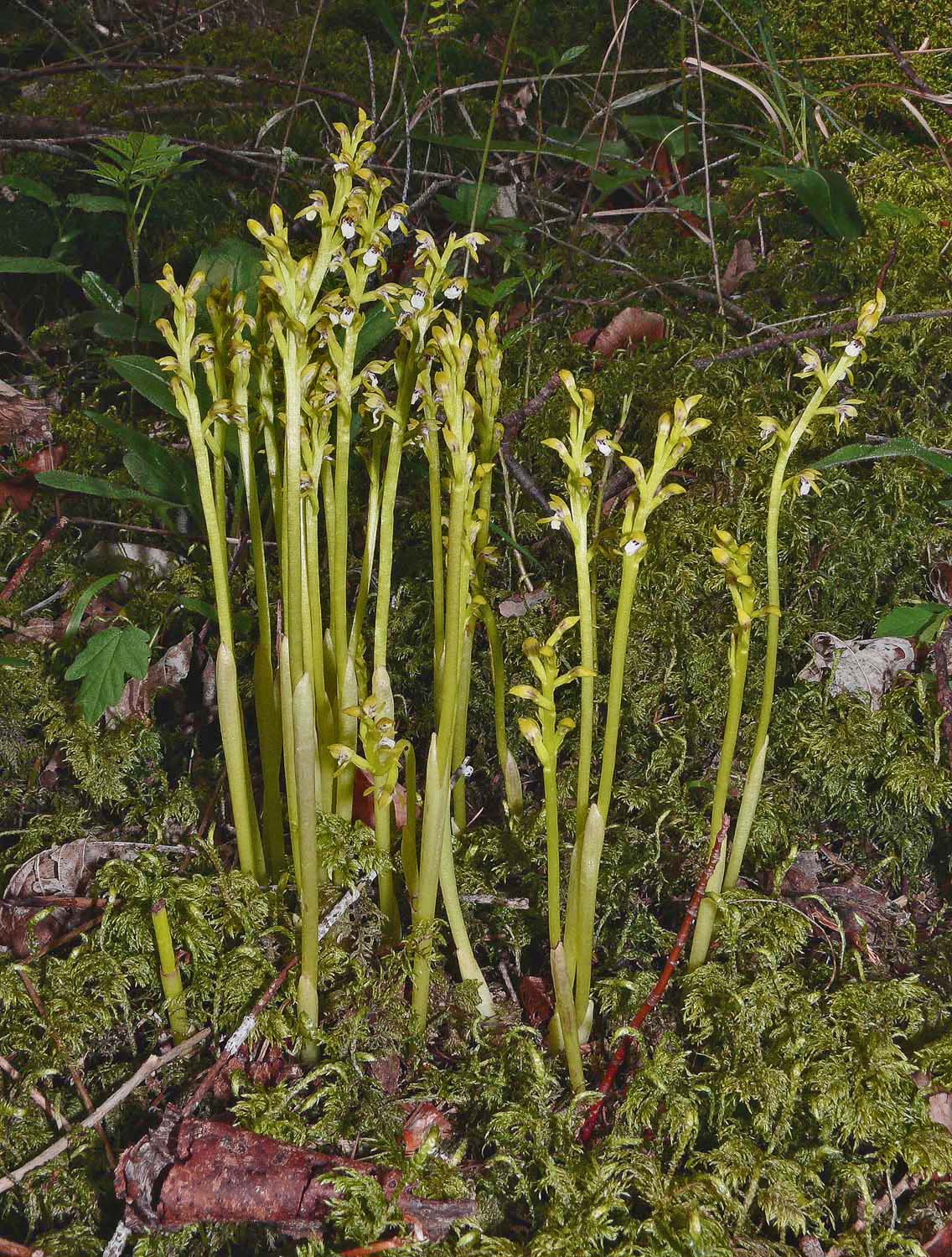
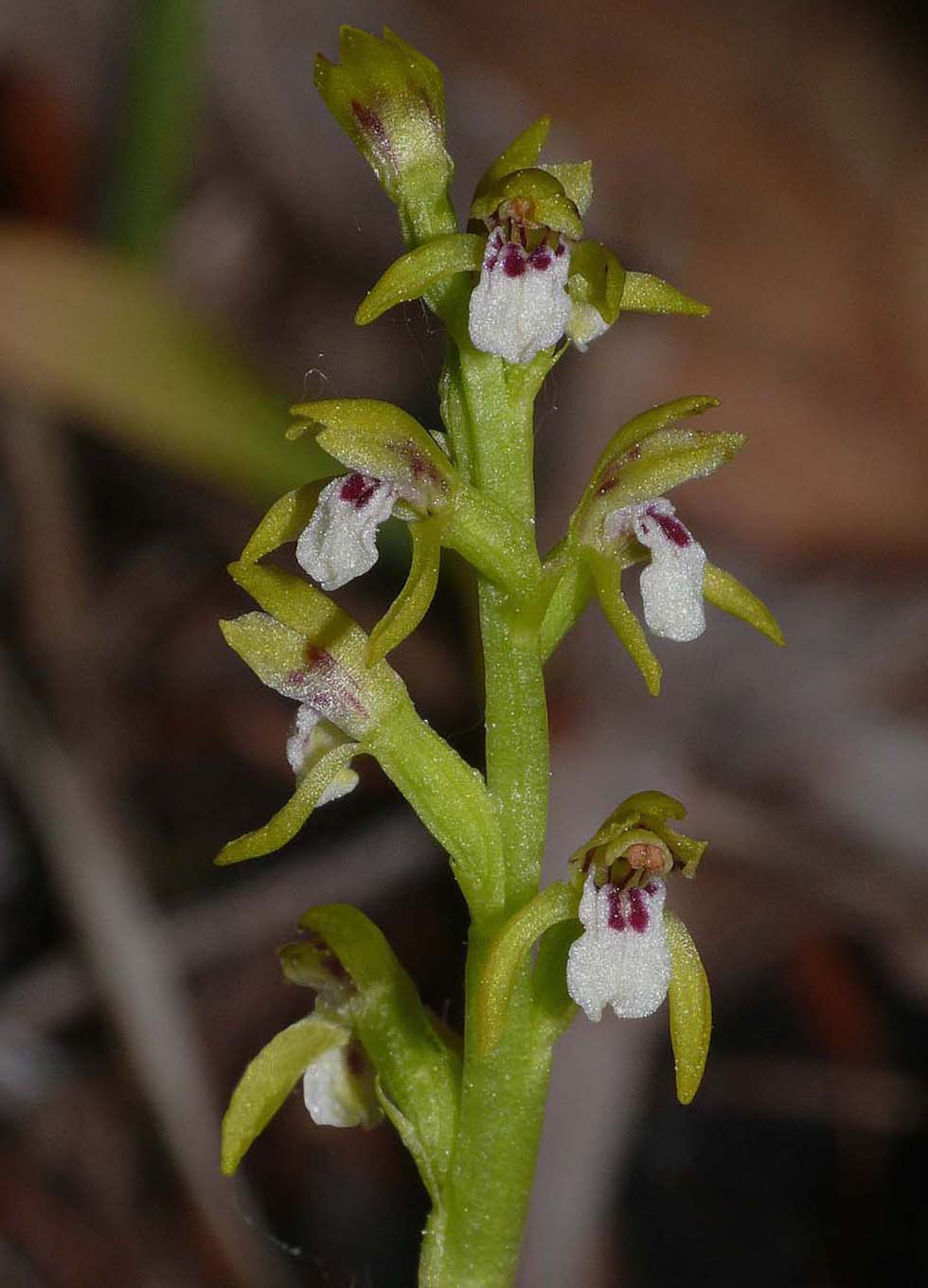
It's a small, leafless plant that can occasionally reach a leggy 25cm and as can be seen from the photos, established specimens may grow in impressive, many stemmed groups. C. trifida is not a common orchid anywhere but in its favoured locations it can be found in large numbers as was the case with the colony featured in the accompanying illustrations. It's range is enormous, occurring over much of North America, Europe and Asia.
Due to the large range of this species it can flower as early as May in warmer areas and as late as August in the north and east. The photos come from the Vercors of southern France, dating from the beginning of June.
This is a saprophytic orchid but unlike the other European saprophytes (Epipogium and Neottia), it maintains a reasonable amount of chlorophyll within its stem and is consequently able to manufacture a modest level of its own food. This capability is one of the main reasons why Corallorhiza may be found in a wider range of habitats than species within the other two saprophytic genus. C. trifida is primarily a woodland plant but it may also be found in more open environments such as wet coastal dune slacks and alpine marshes.
It's a small, leafless plant that can occasionally reach a leggy 25cm and as can be seen from the photos, established specimens may grow in impressive, many stemmed groups. C. trifida is not a common orchid anywhere but in its favoured locations it can be found in large numbers as was the case with the colony featured in the accompanying illustrations. It's range is enormous, occurring over much of North America, Europe and Asia.
Due to the large range of this species it can flower as early as May in warmer areas and as late as August in the north and east. The photos come from the Vercors of southern France, dating from the beginning of June.
.