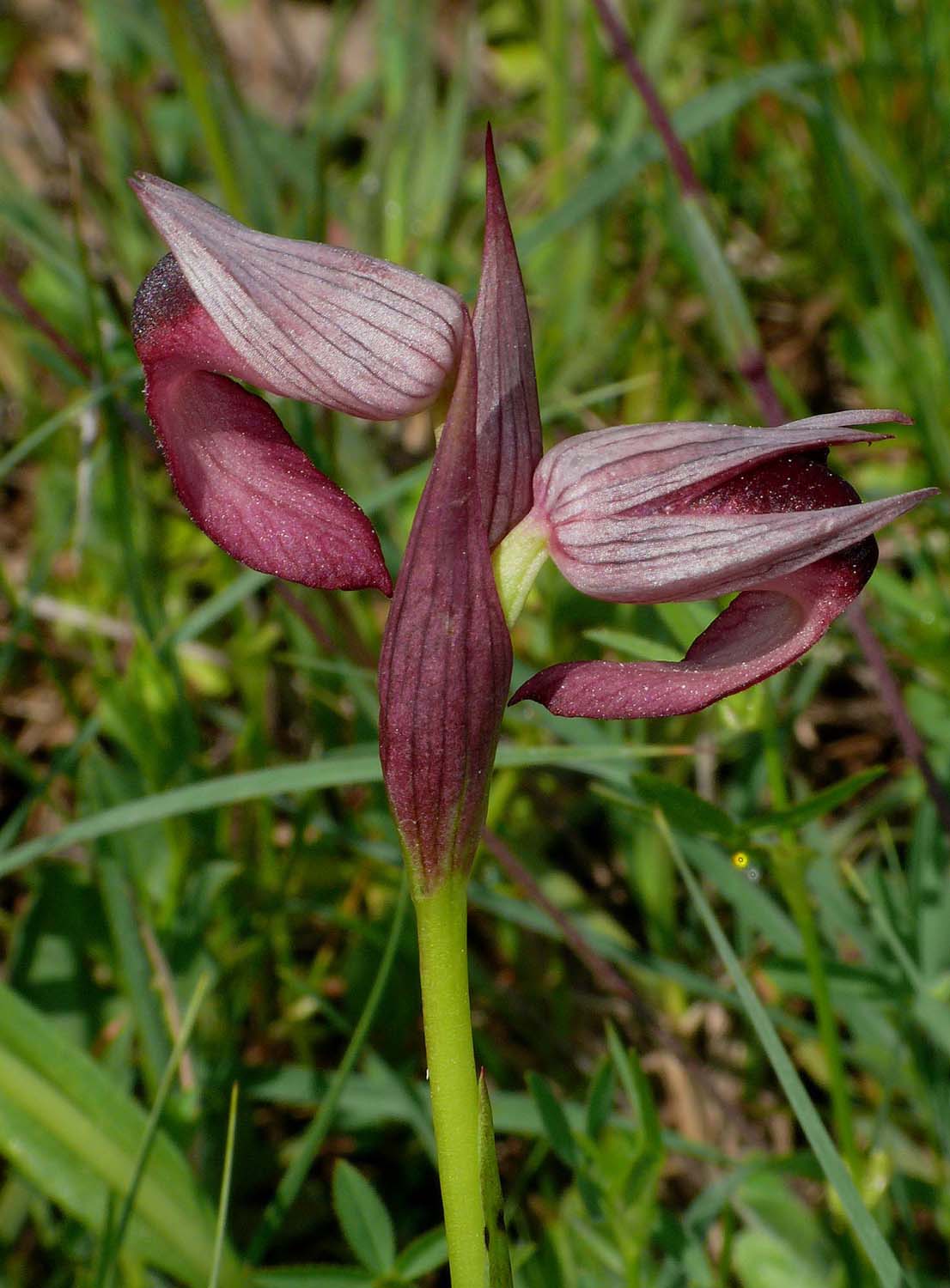
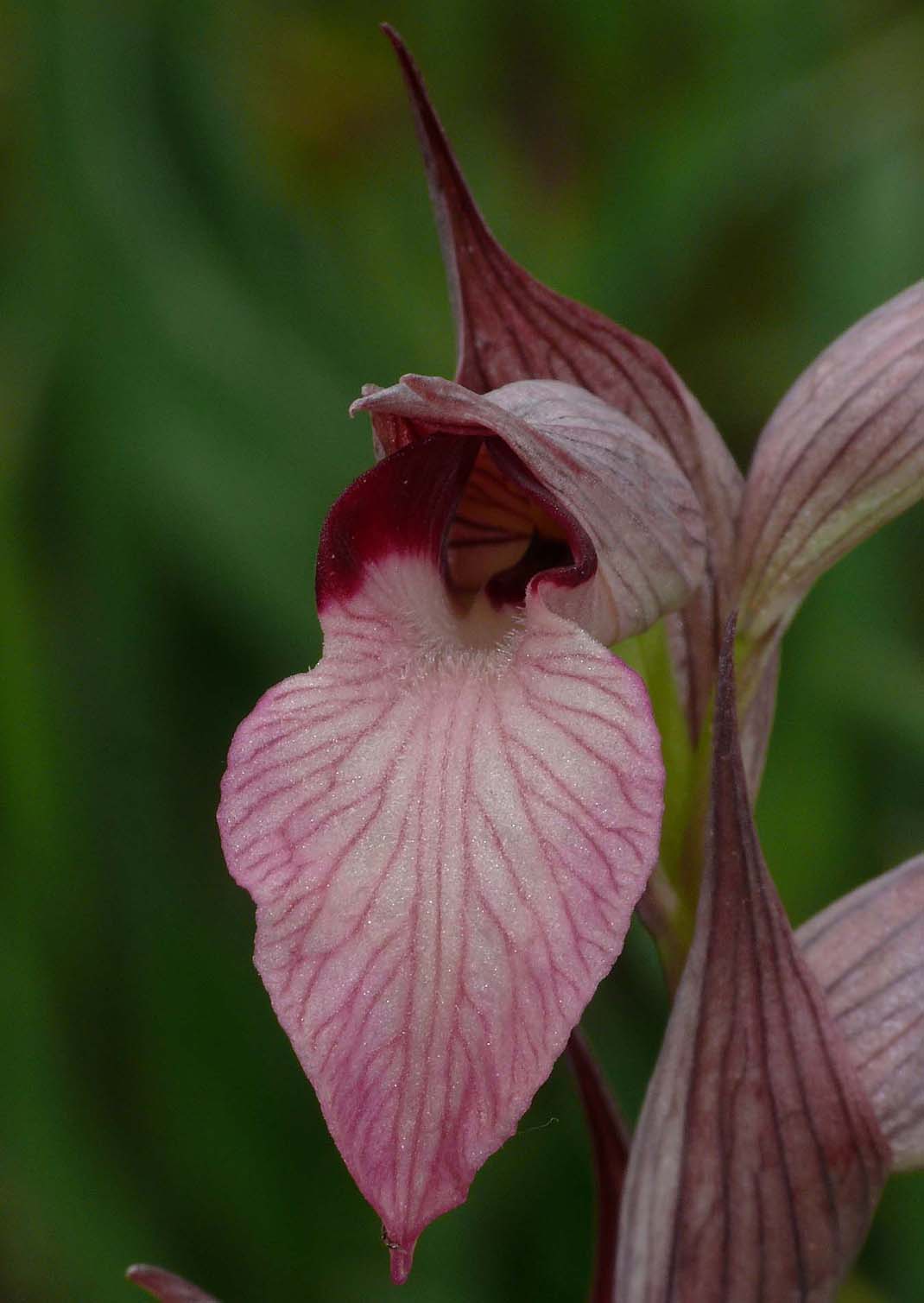
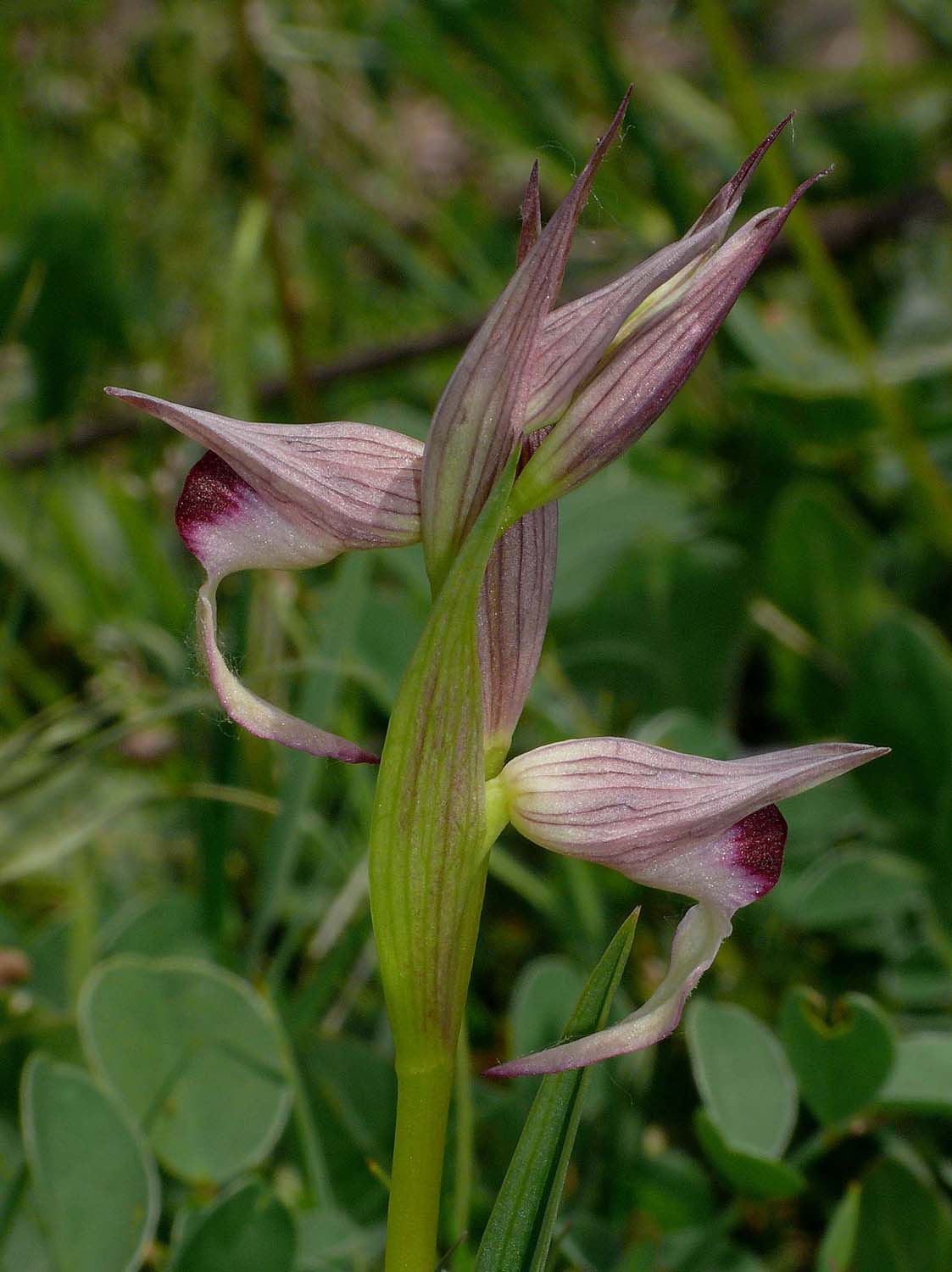
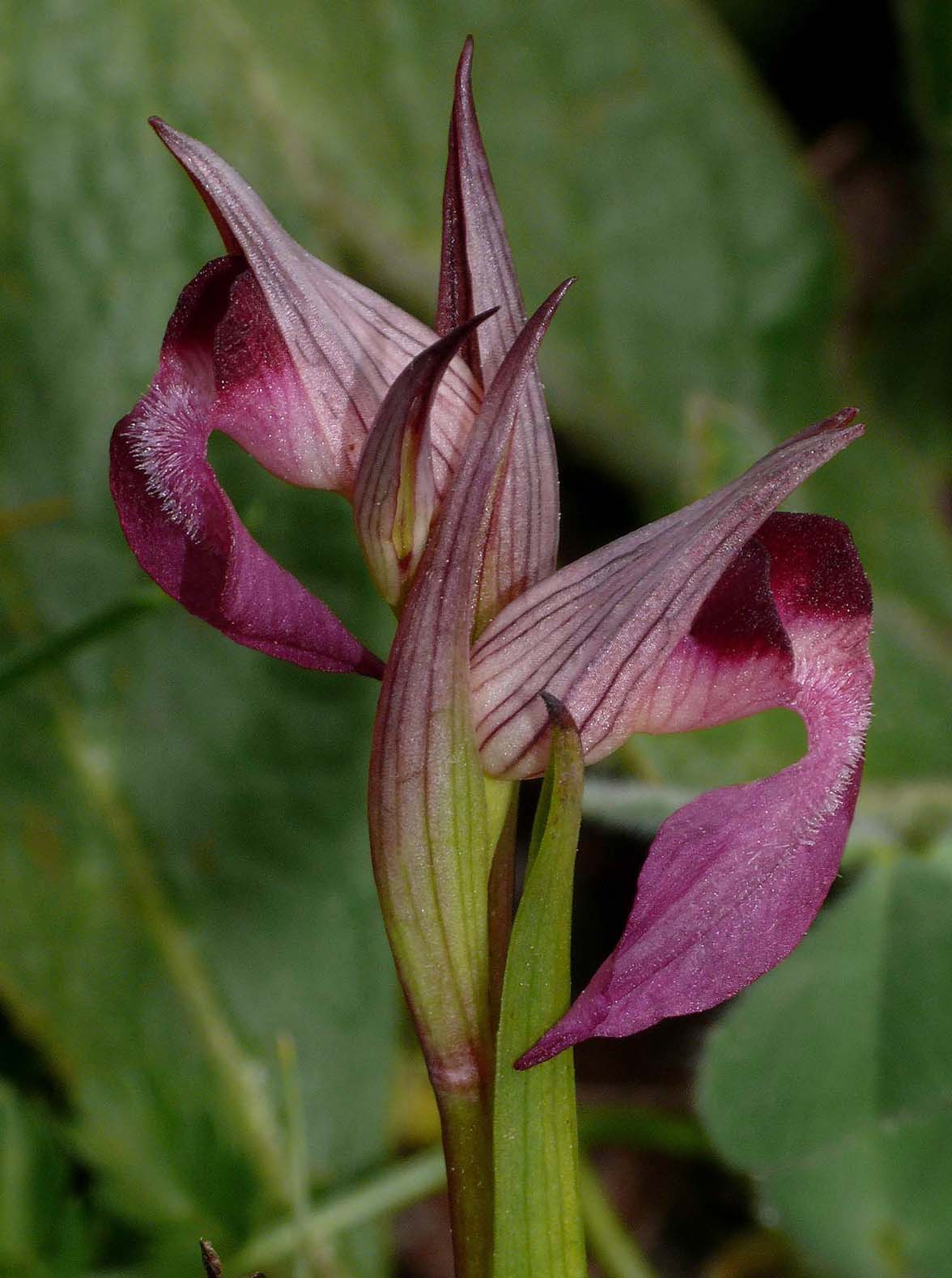
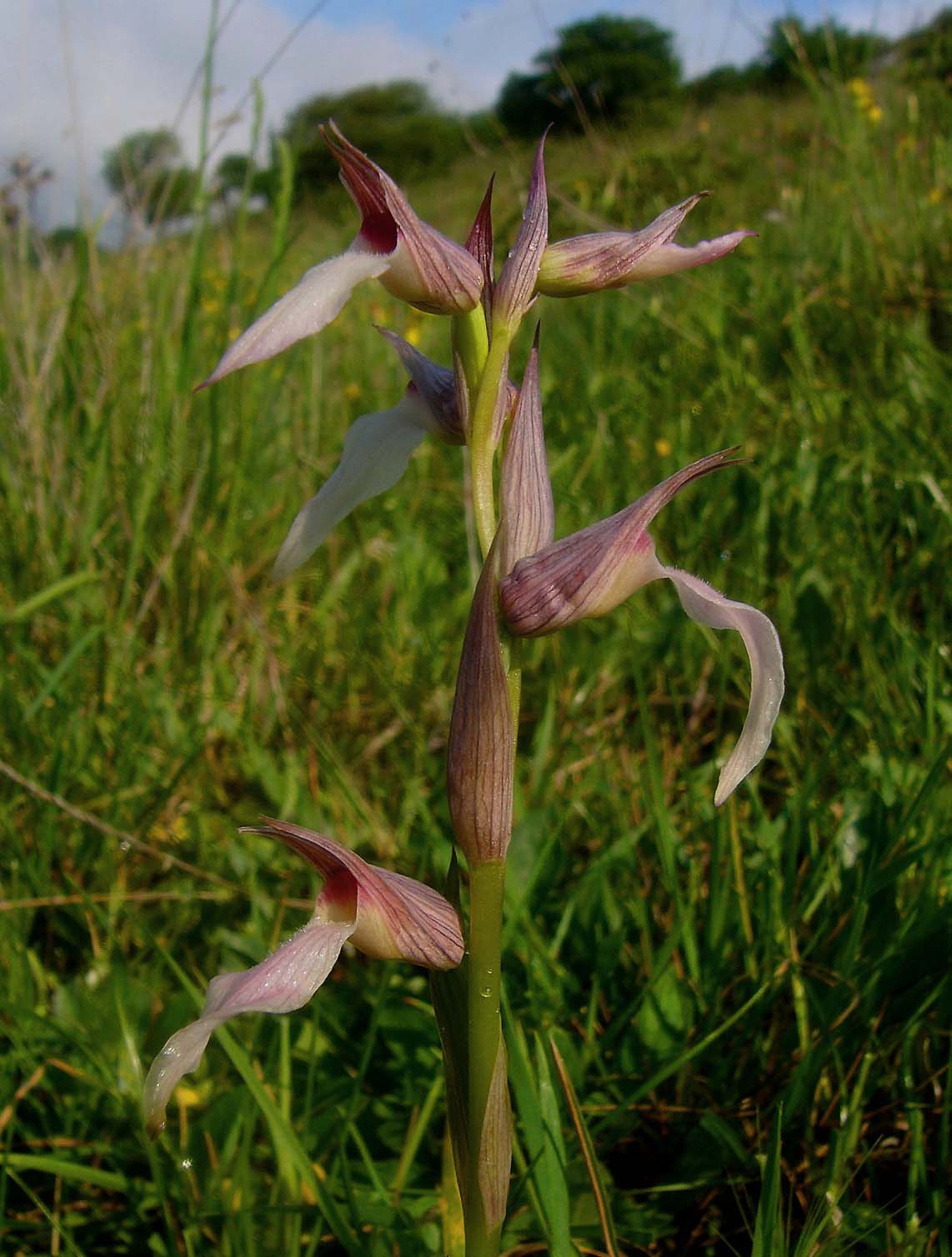
S. lingua was first described in 1753 from Naples, Italy and its name is a reference to the epichile which was thought to resemble a tongue. Its common name is unsurprisingly the Tongue Orchid.
.It has a large range covering an area from the Iberian peninsula through to the Aegean and to parts of North Africa in th south. Although widespread, it has a distinctly local distribution but can grow in quite astonishing numbers in its favoured locations. It prefers full sun but will accept a degree of shade and seems to be quite unfussy about the levels of soil alkalinity. S. lingua can be found growing in open, relatively dry scrub and grassland but tends to avoid completely arid areas, showing a distinct preference for marshy meadows, wet dune slacks and mountain flushes..
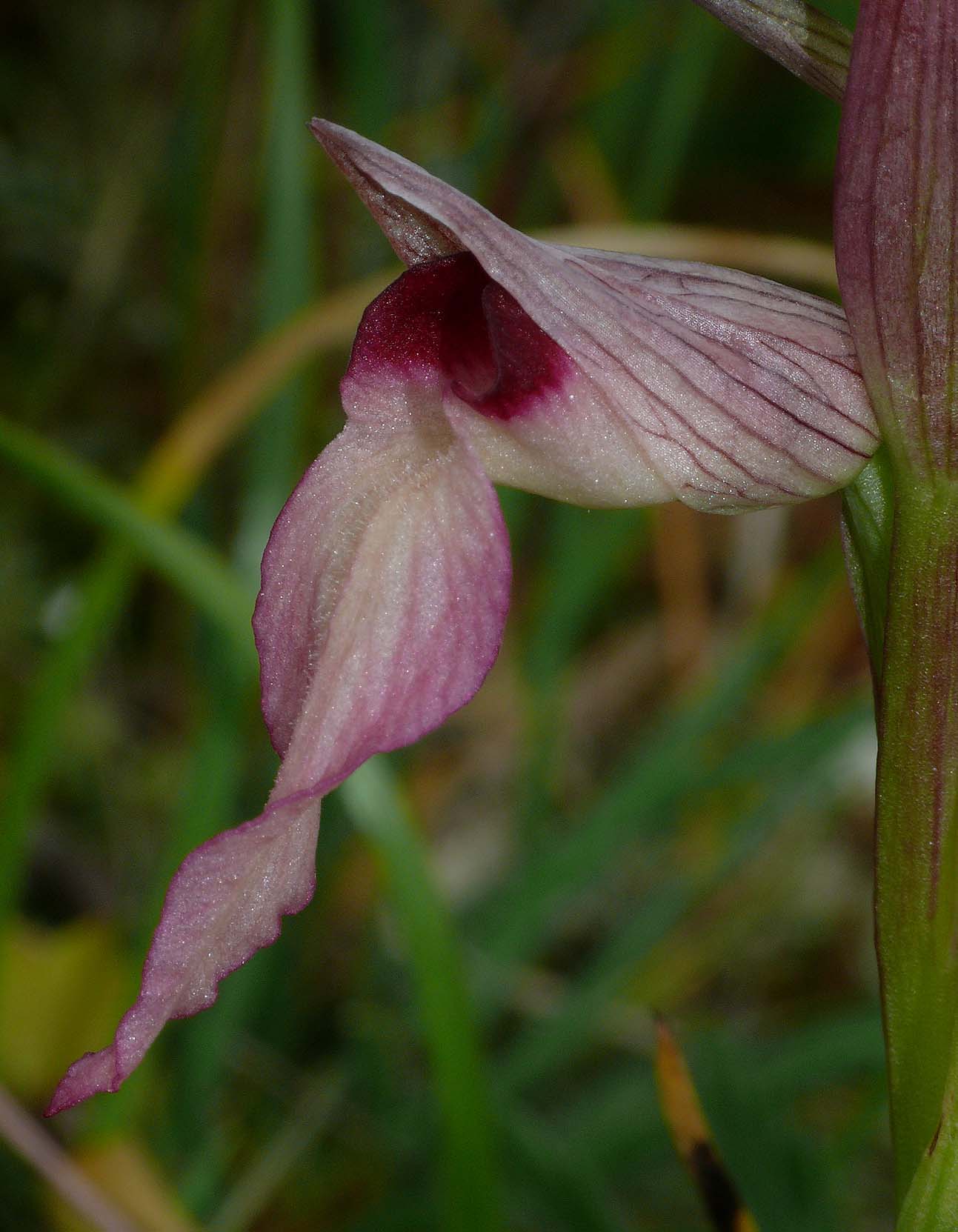
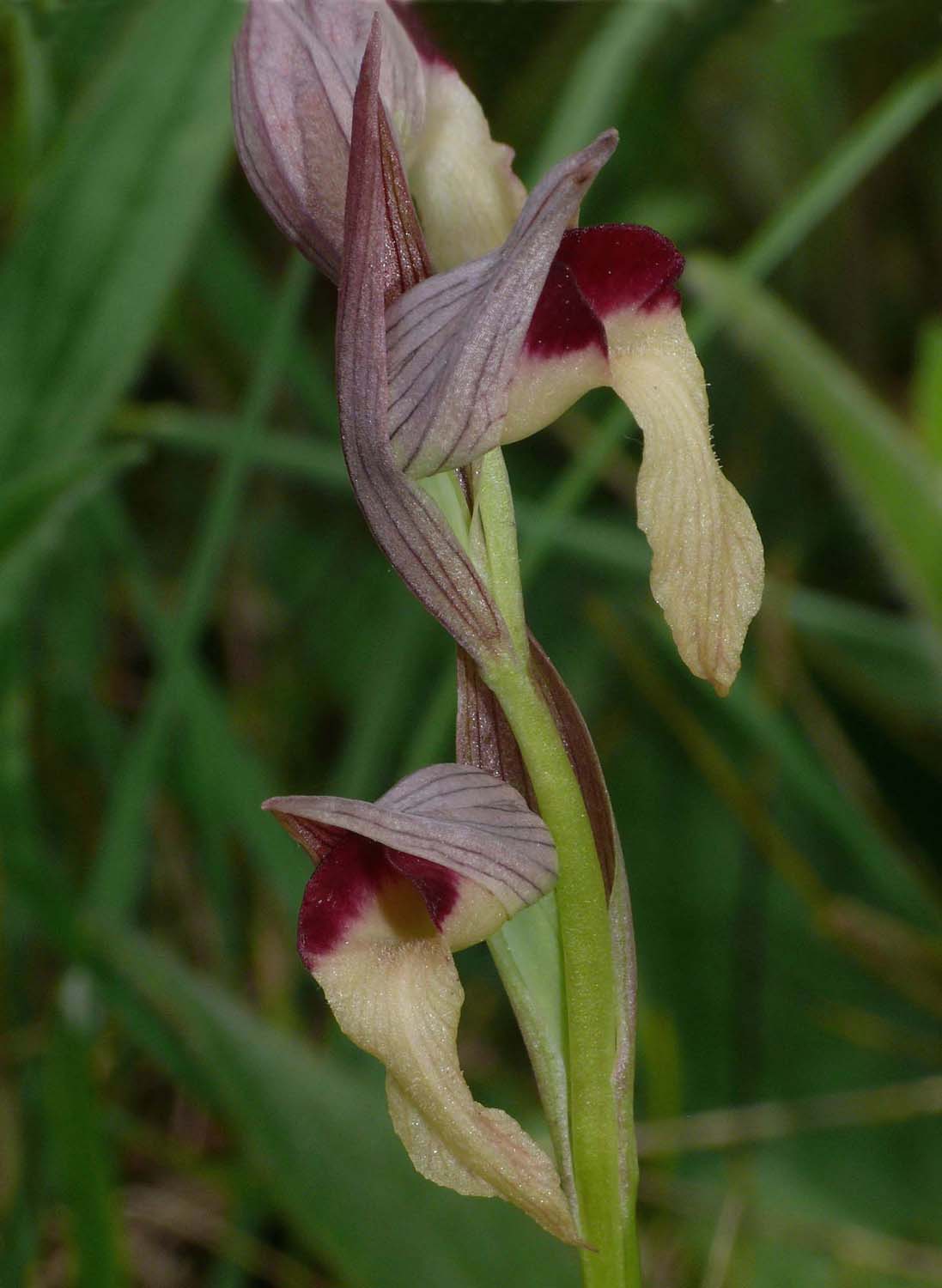
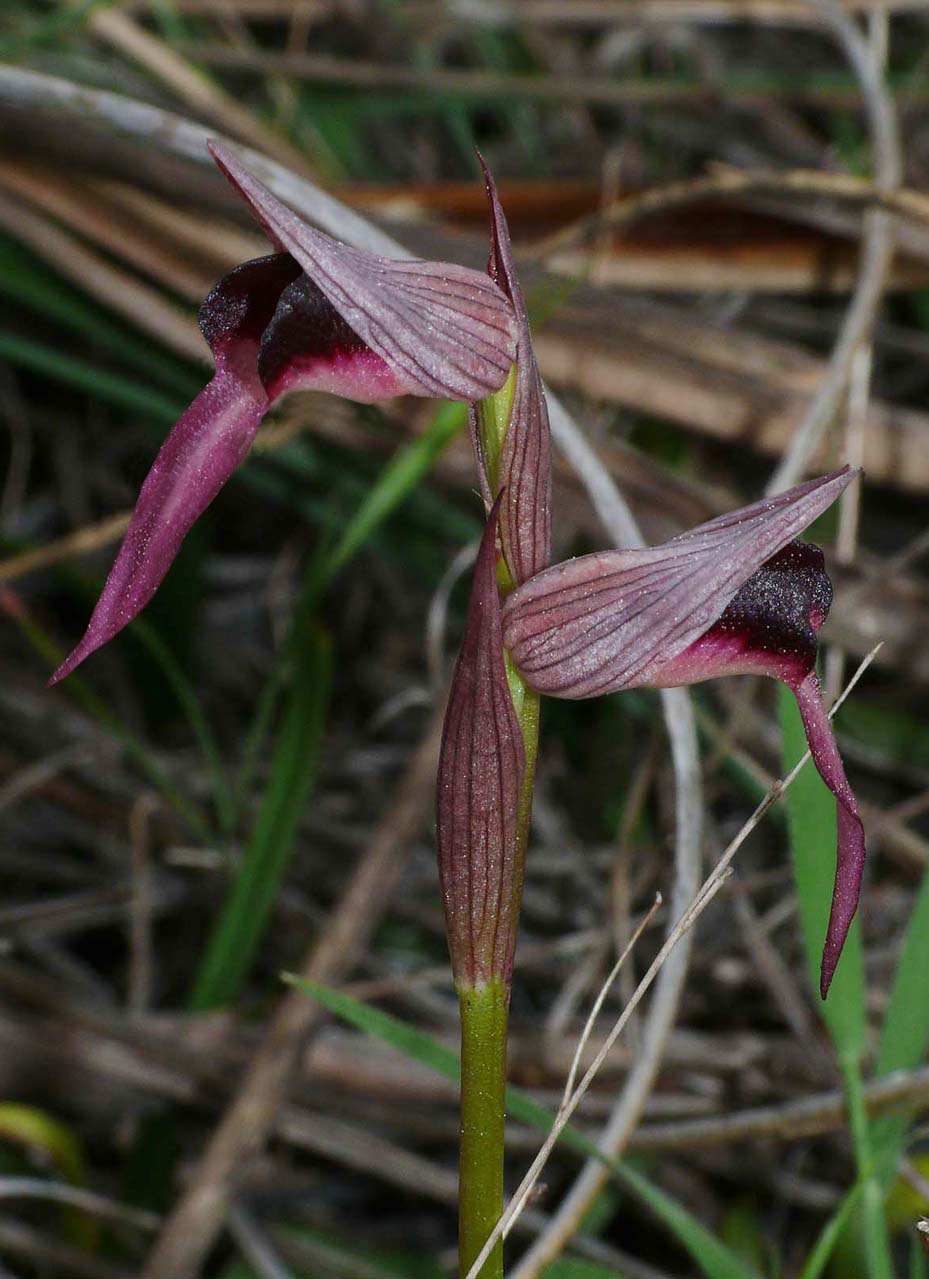
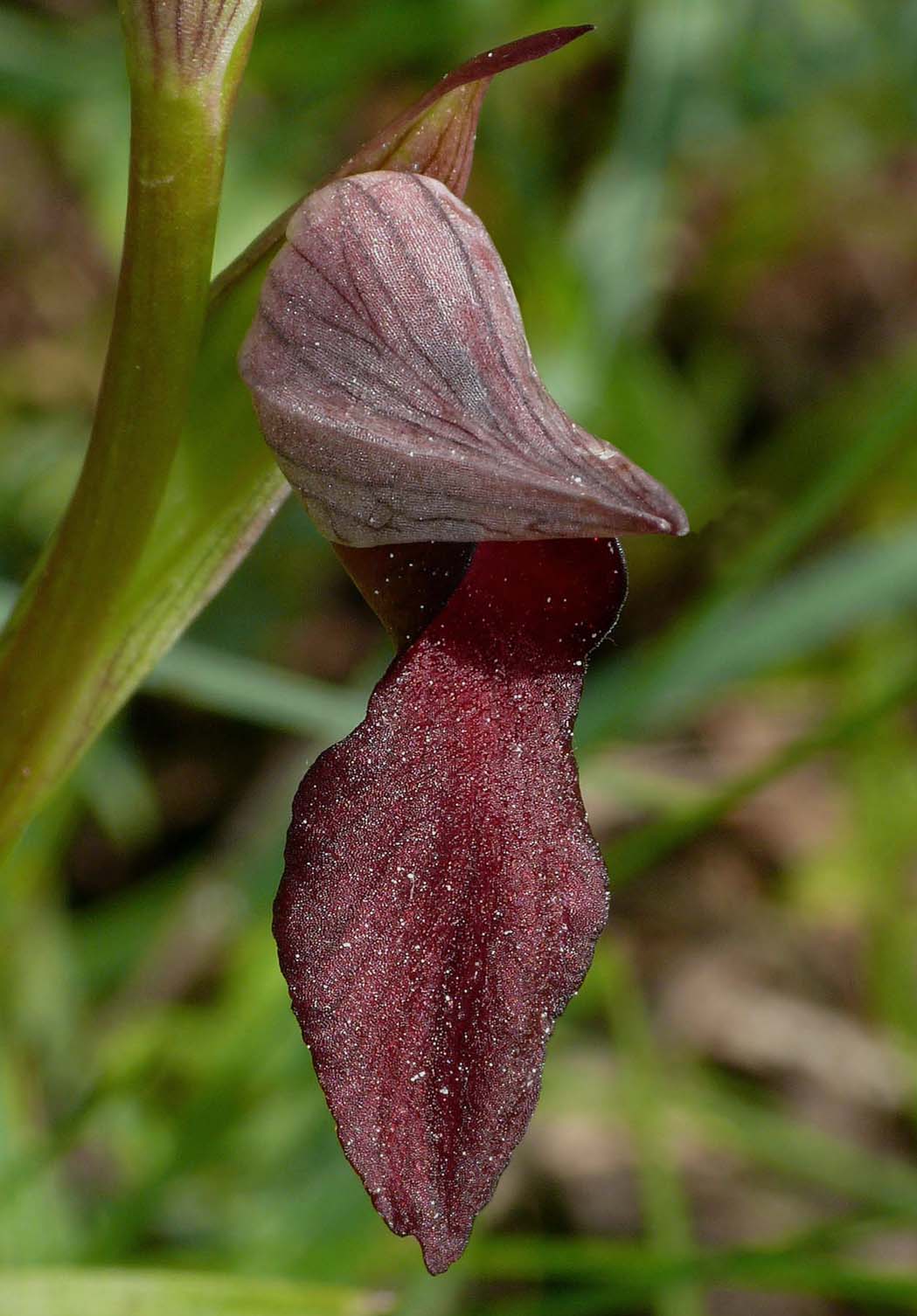
This species is one of the easier Serapias to identify with confidence although in Southern France there are two other species that can create some confusion (though they are both relatively rare). Both S. gregaria and S. olbia are restricted to the French districts of Provence and Alpes Maritimes, but they are very similar in flower formation and share similar habitat preferences to S. lingua. The most important distinguishing characteristic in S.lingua is the dark boss visible between the two hypochile at the top of the lip. This feature is not illustrated particularly well in the photos but can be glimpsed in picture 5.
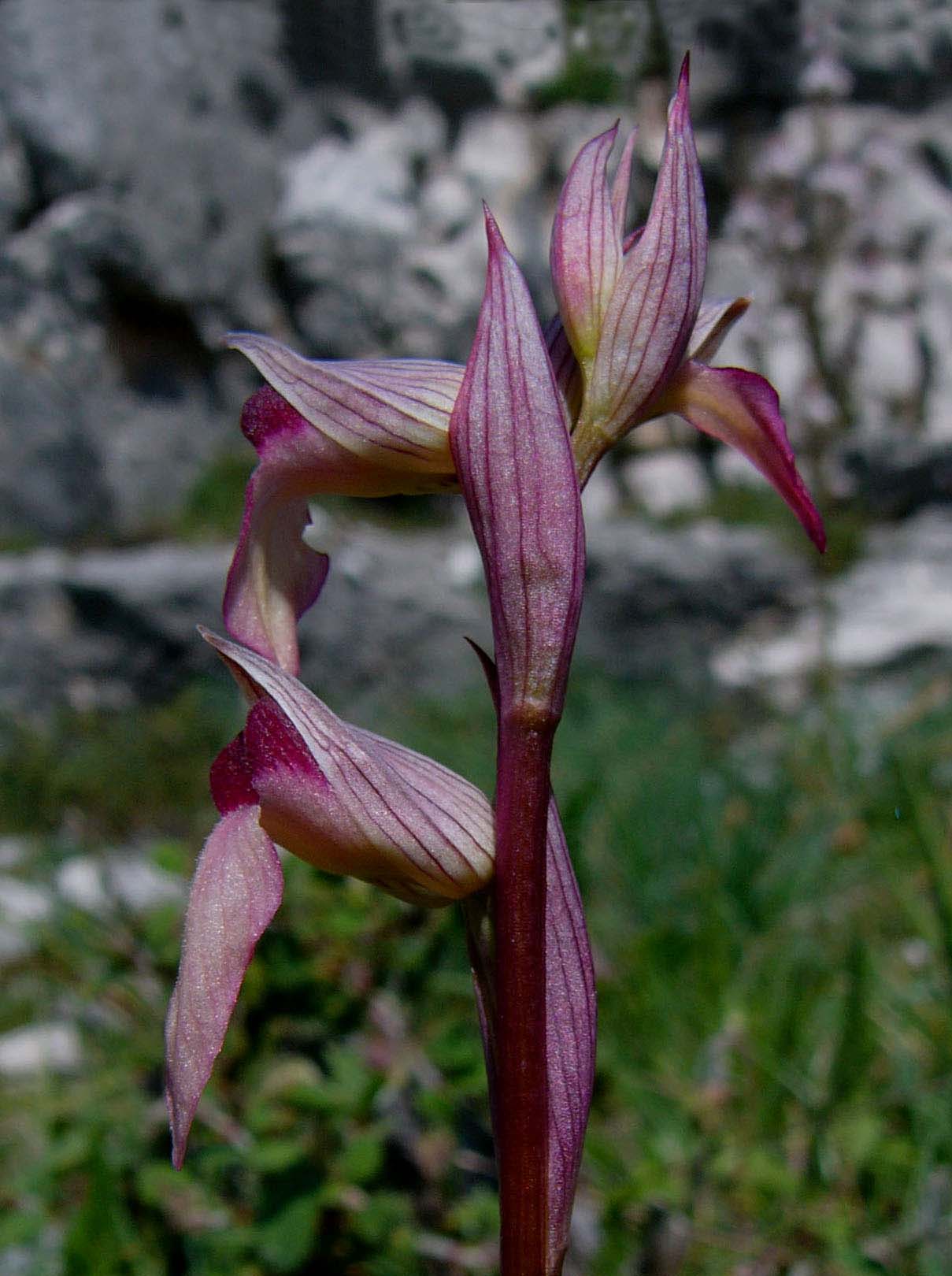
This species has a distinct and relatively stable appearance but can vary hugely in colouration and given that it frequently grows alongside other Serapias species, hybridization is common. These pictures are from a number of European locations and date from early to late April.
.