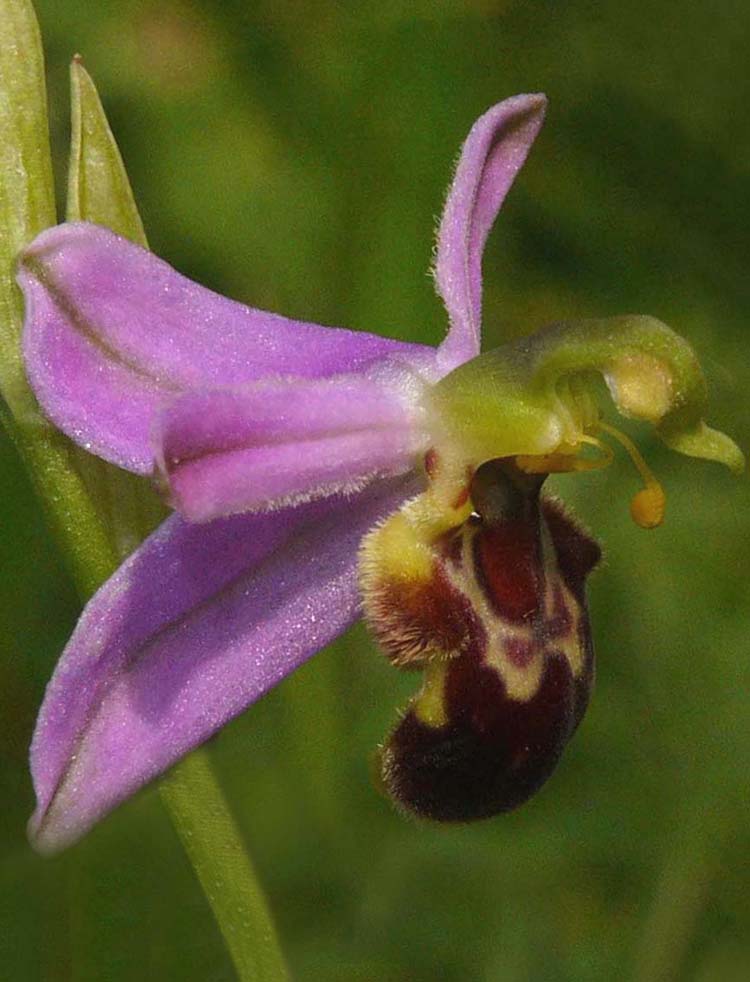
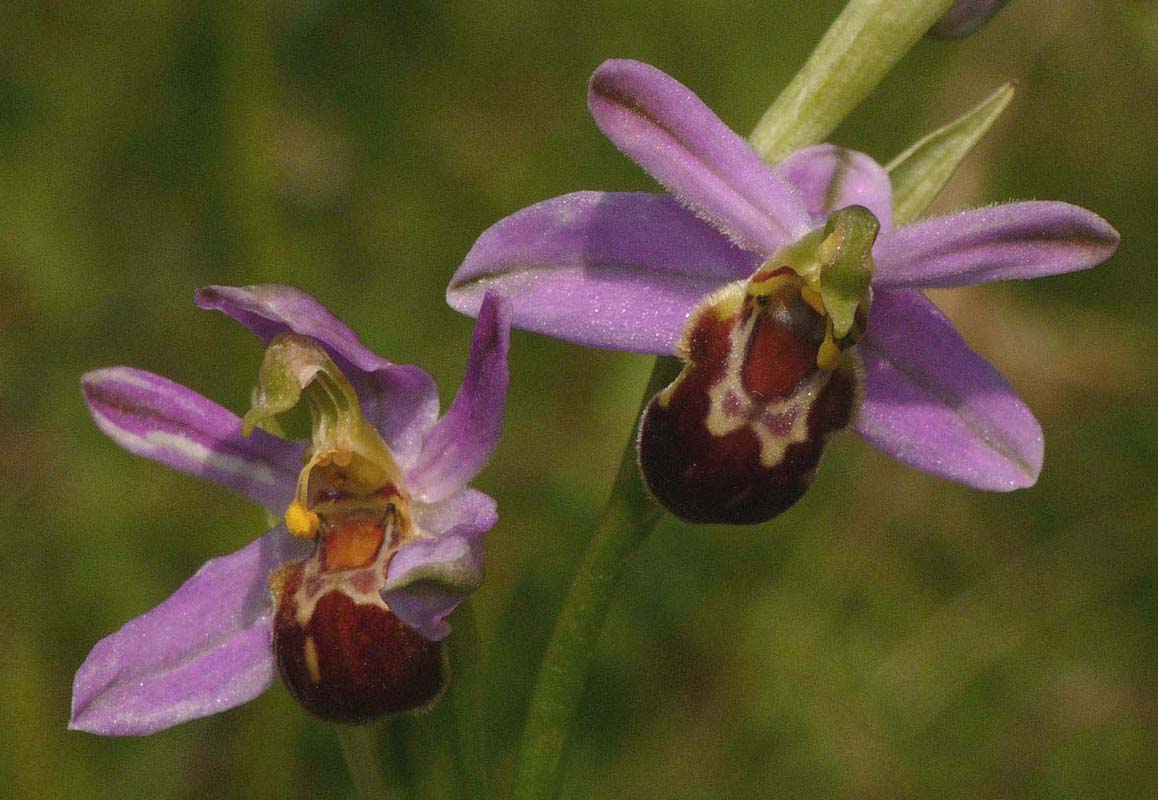
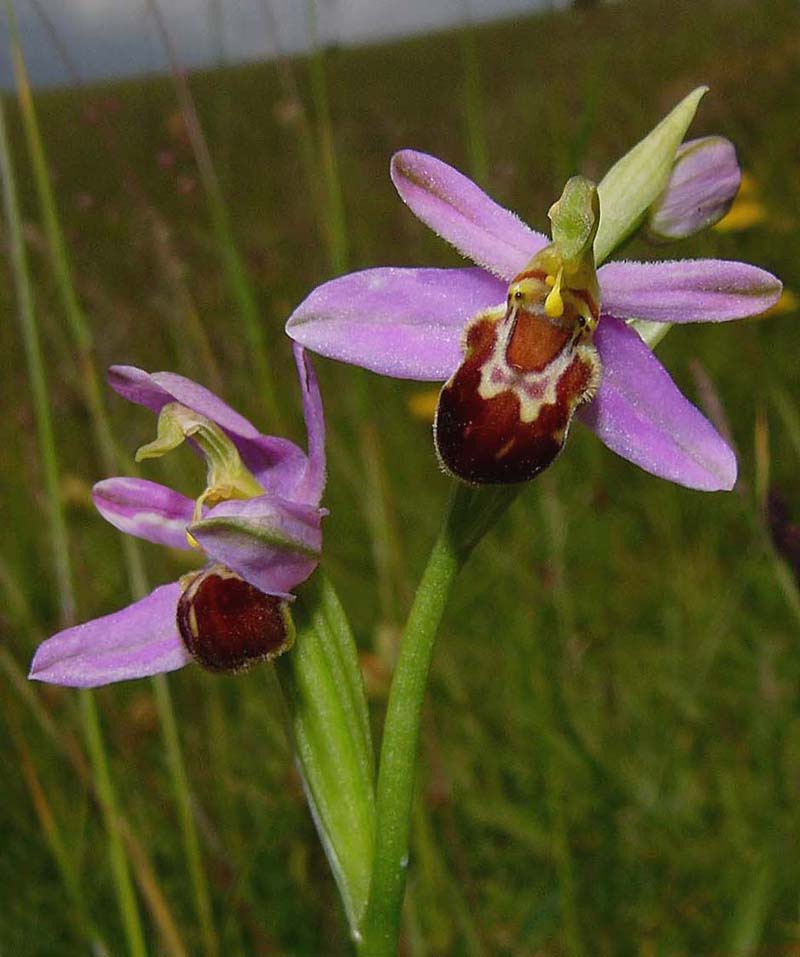
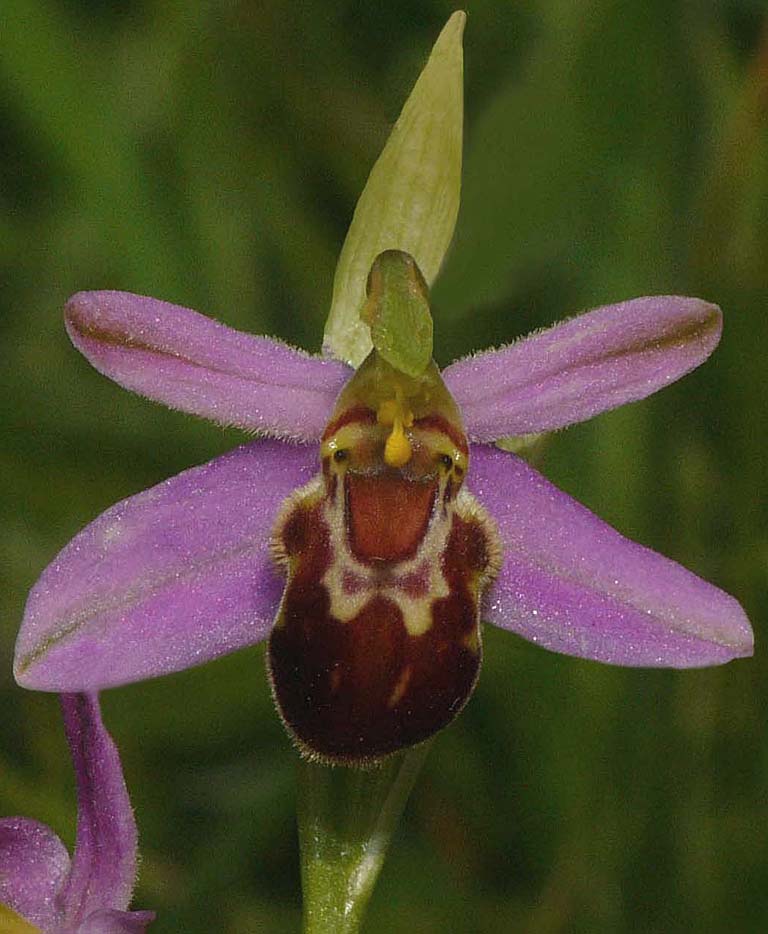
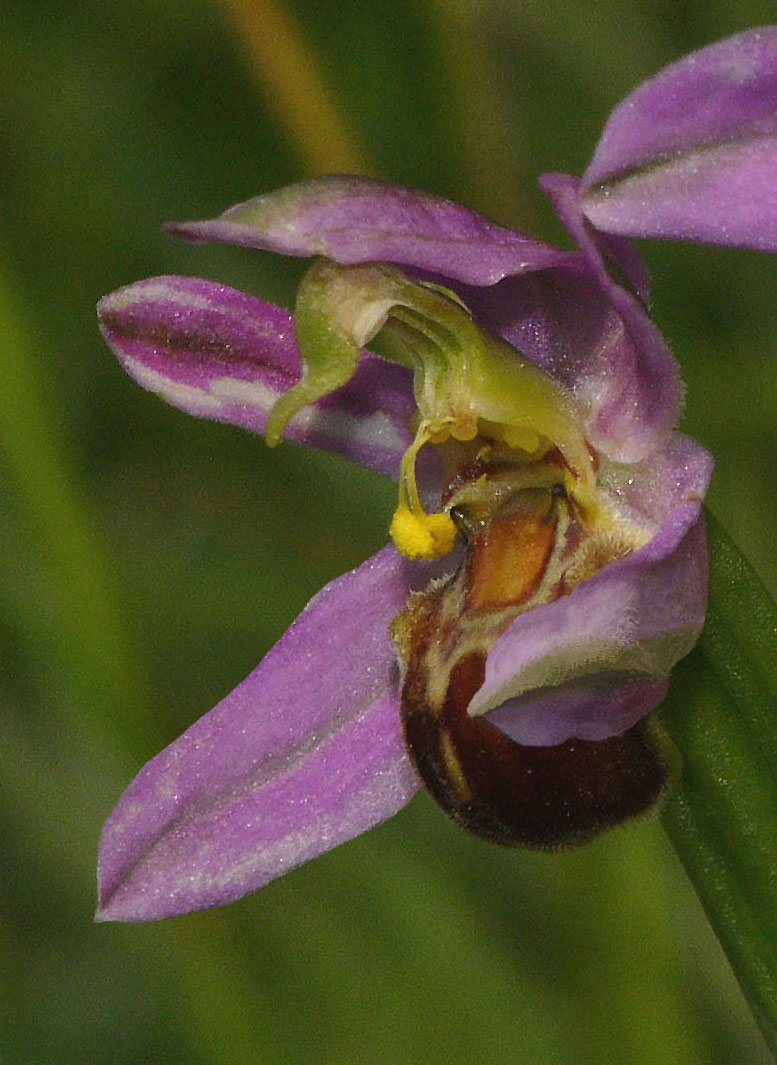
O. apifera was
first described by Hudson from England as far back as 1762. Its
name refers to the flowers similarity to a bee and accordingly
the species has long been commonly known as
the Bee Orchid.
It is a widespread orchid distributed across temperate and
Mediterranean Europe as far east as the
Caucasus. In its favoured locations it can be abundant and its
choice of habitat is wide, ranging from the driest
chalk grassland/garrigue to wet, even swampy conditions. Whilst it
prefers a full sun position, it will tolerate even significant shade. Sepal colouration is
normally pale pink but white is not uncommon and in the Balkans, white can be
dominant, with pink a real rarity. O. apifera is
largely self pollinating and this autogamy seems responsible for the
frequent appearance of variant plants, some of which,
although not of
evolutionary significance, occur on a sufficiently
regular basis to have acquired formal varietal
status.
O. apifera v friburgensis is
one of the rarer variants being found sparingly throughout the range of the
type species and differing from it, in the length and colouration
of the petals. As in O. apifera v aurita , lip pattern and shape is normal but the petals are noticeably
longer and usually rather more thickset than the insignificant
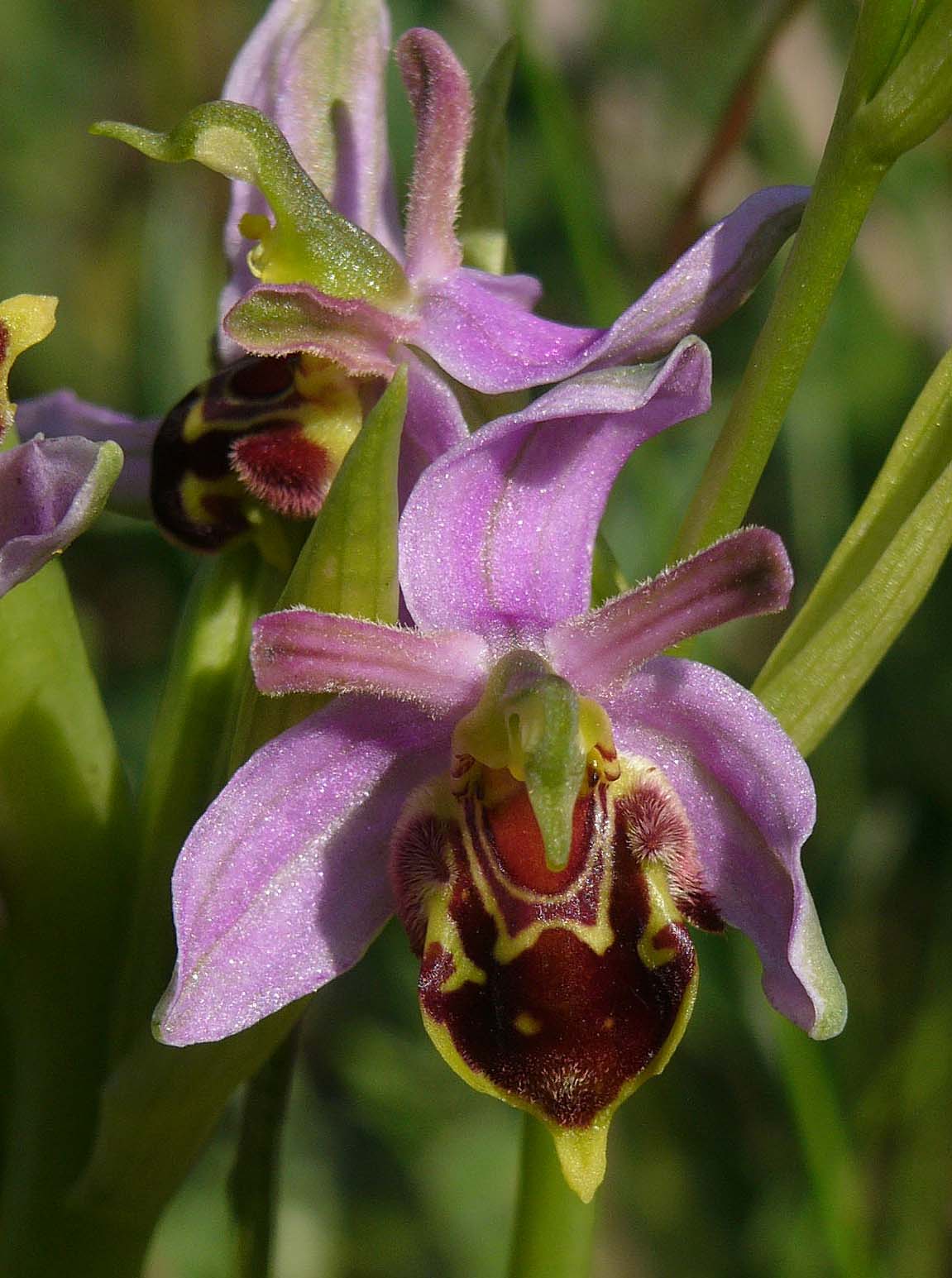
petals of O. apifera v apifera. With O. apifera v friburgensis however the petals are actually sepaloid, being larger, more rounded
and with the smoother, less hairy tissue texture of sepals. Instances
of plants with intermediate characteristics are not uncommon and the fourth picture depicts just such an example. In the UK this variety appears to be restricted to the southern counties and the pictures here are all from Dorset.